
Translated material
“Then the war and that’s it, there’s no money.” Communal collapse in the "golden city" of Bodaibo
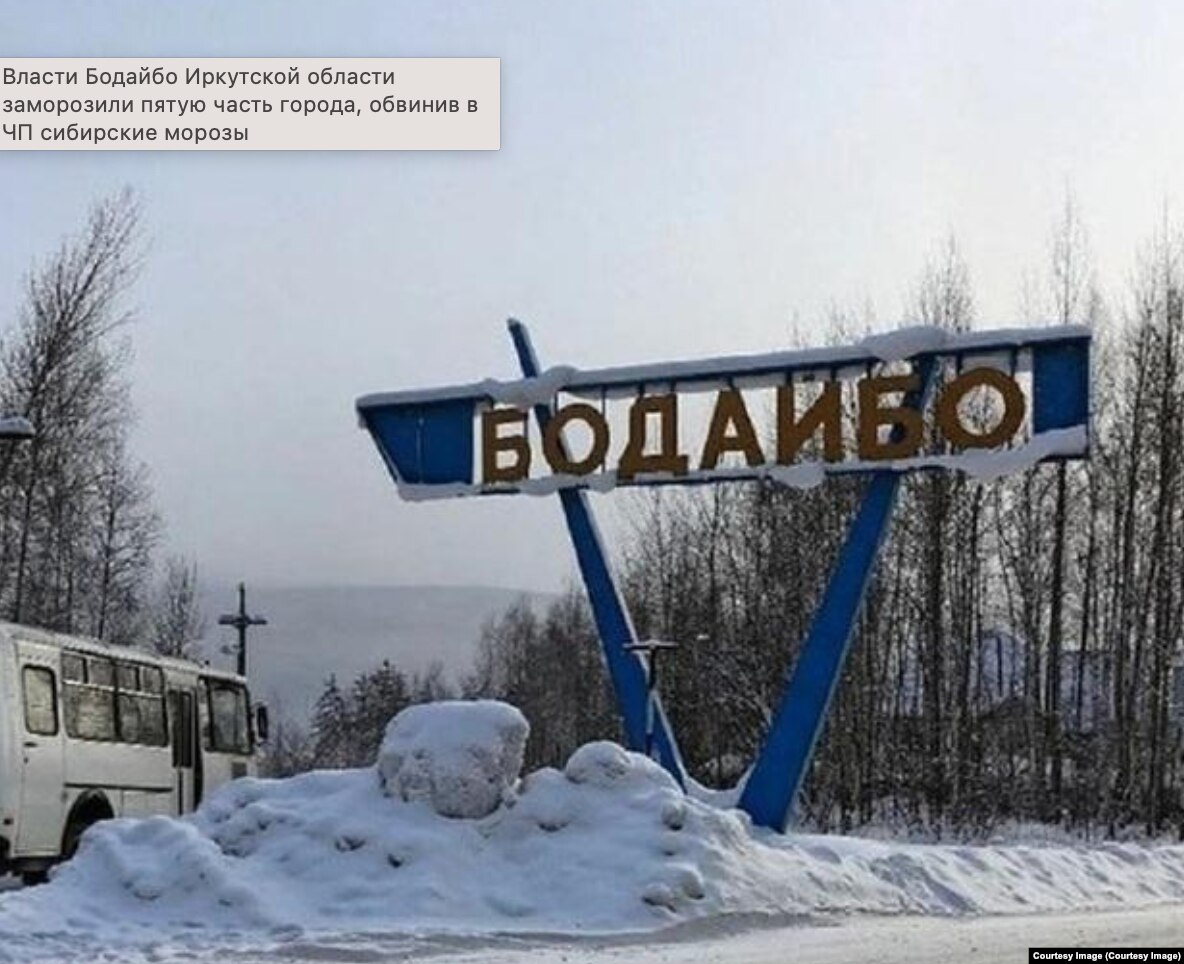
At the end of January, in the midst of winter, in the city of Bodaibo (Irkutsk region, population about 12 thousand people), which literally stands on gold and should prosper from its mining, thousands of people were left without heat. Officials promised to quickly solve the problem, but now they are reporting that during all this time they “were partially able to connect several houses.” Meanwhile, people move in with relatives or neighbors to live with several families in one room, heated by ovens and so-called “potbelly stoves . ”
Since the beginning of the new year, similar accidents have already occurred in many regions of the country. Experts talk about the deterioration of the communal infrastructure in the country and the lack of funds for its modernization by regional authorities.
“We’re sitting on gold, but it’s like we’re in hell”
At the entrance to the city there is a stele on which its name is written in golden beeches, which should remind of what exactly Bodaibo is famous for. Its gold mines were sung by Vladimir Vysotsky. And the first gold was discovered in these parts in 1846. Since then, Bodaibo has always remained one of the centers of gold mining in the country.
Now the volume of gold mining in the Bodaibo region is constantly growing: in 2025, 21.276 tons of gold were extracted here, which is 11.6% more than in 2024.
- For us, this is a subject for jokes - “we are sitting on gold, but it’s like we’re in hell.” All our money goes to Moscow, only pennies come back. How can a region with such mines be unprofitable?! And how can people now live with an ice crust on the window and sub-zero temperatures at home?! – local resident Sergei is indignant (the editors do not name the names of the interlocutors for reasons of their safety).
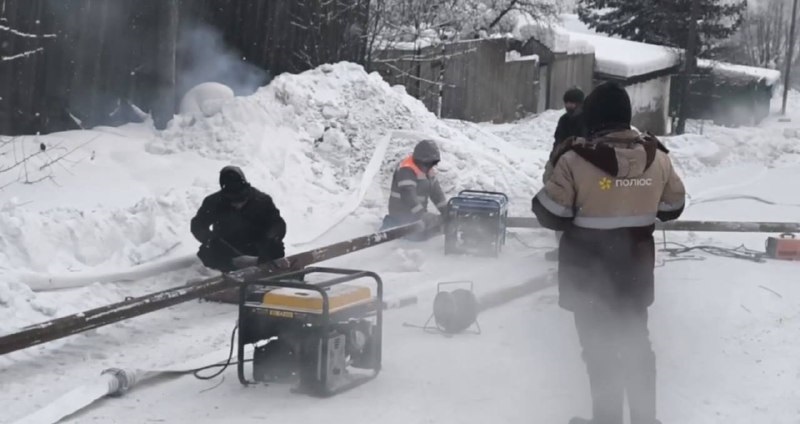
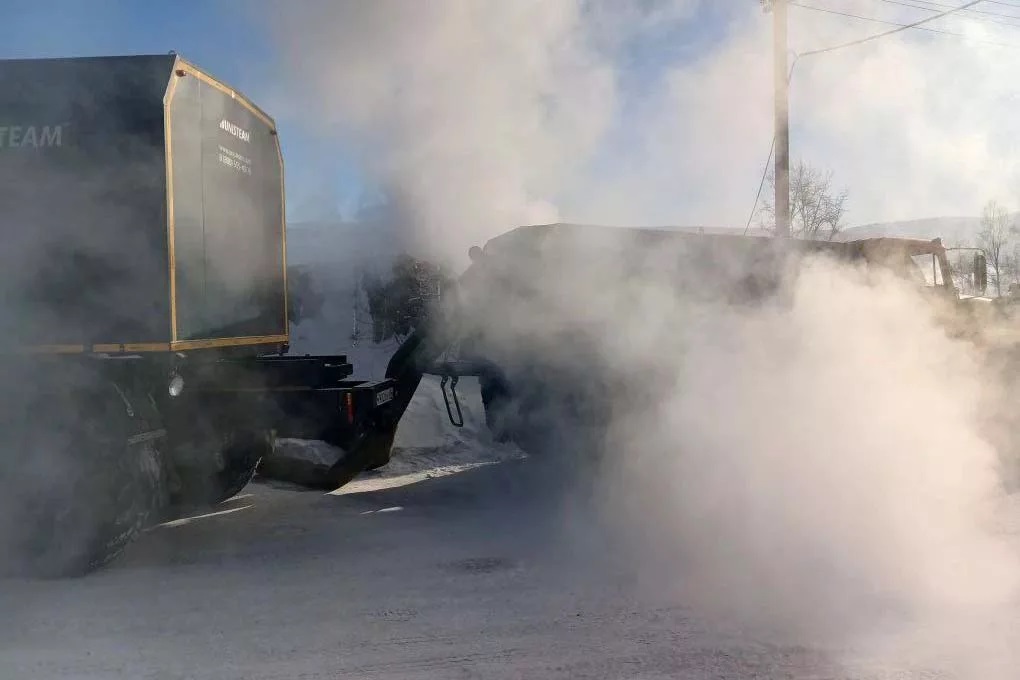
On the night of January 27, 2026, in Bodaibo, the central water pipeline that supplied water to the boiler rooms froze, and the operation of four heat sources stopped. 141 houses and almost one and a half thousand people were left without heat and hot water. And also two Bodaibo schools. The authorities said that it was not the dilapidated infrastructure that was to blame for the emergency, but the severe frosts. It was -40 degrees in Bodaibo for a whole month.
– All our people with children moved to their neighbors or relatives in private houses. Because it’s simply dangerous for small ones to stay here. My wife and I threw away all the blankets and outerwear, boarded up the windows and insulated the walls, the stove was steaming around the clock, so much so that it stank of burnt wiring, and in the only insulated room it was only minus two! – says Sergei.
Another resident of Bodaibo, Olga, says that she did not have time to fly to her relatives in Irkutsk because the authorities promised to solve the problem in a matter of days. Now she and her children live with neighbors.
- They also have two children, you can’t send them to school, we all sit together in one room - we keep warm. Nine people in 10 squares! We haven't washed since the beginning of February. It was about one degree warmer here today. In the remaining rooms there are windows covered in ice, and the walls with windows are also covered in ice. My husband brought a generator from the garage, we can’t turn on the stoves anymore - it knocks out the plugs, the networks can’t withstand such a load. And I don’t understand why he [the mayor of Bodaibo] had to lie and give hope when we could still go to Irkutsk - now you can’t even buy tickets! And there are not enough temporary accommodation centers!
“If you have the opportunity to move to apartments, residential buildings, relatives, friends, colleagues, where centralized heating is provided, I ask you to do this. This is due to the fact that we are now seeing an increase in power supply capacity. This gives rise to the following risks: possible emergency shutdown of these areas, which will aggravate the situation. This is bitter to realize. they have raised prices. Our municipal housing stock is exhausted, we are moving people into even unsuitable premises, but this is catastrophically not enough,” local mayor Evgeny Yumashev honestly admits in the telegram channel of the city administration.
Volunteers are trying to compensate for the inaction of city authorities.
- Water is delivered to homes. They offered us heaters for free - we have them, but the guys gave our neighbors, who have two other neighboring families, a potbelly stove for free. Ordinary people. Those who are lucky live in private houses with stove heating,” says Elena. - They invite everyone to their bathhouse, at least to wash themselves. It’s only from them, the same townspeople, that we see help today. Otherwise, they would have died, not from the cold, but from the horror of what was happening.
According to the draft budget of the Bodaibo municipality for 2026, the revenue portion is planned at 372.652 million rubles, including 125.579 million rubles of interbudgetary transfers. The expenditure part is almost 25 million more – 397.359 million rubles. The budget deficit of 24.7 million rubles is about 10% of annual revenues.
"Money is needed for the front!"
The regional governor, Igor Kobzev, arrived in Bodaibo only on the 11th day of the accident, February 6. The authorities introduced a state of emergency in the region only on February 7. On February 9, rescuers connected only six houses to heating, by February 11 - 18, said Igor Kobzev, governor of the Irkutsk region. Another 123 houses remained unconnected.
– 18 houses are approximately 13% of all those left without heating! It's not about anything at all. – local resident Svetlana is indignant. -And they are lying - in the governor’s cart they write, for example, that they connected the houses according to Lytkin. But we live on Lytkina and it’s as cold as the Pole! In the governor’s comments, ours even write: “Let’s not let him out of the city until they give us some heat.” This is what people have been brought to. I can’t understand where all the workers and rescuers are?! Why do we heat our own houses? Our entrance was lucky that the men-hunters themselves found heat guns, went into the basement and saved the sewer system of the house. Otherwise everything would be frozen. Can you imagine where the residents of the house are only pensioners and women with children? My friend lives like this on Artem Sergeev - they don’t even know if there is such a basement with pipes in the house or how to get there. The management company "Gorod", which is supposed to take care of their house, refuses to do anything. "Defrosting work is not our area of expertise!" - that’s what they told her.
Regarding her house, Svetlana herself was told by the press service of the Bodaibo administration that “the heat supply process is limited due to the unsatisfactory condition of the distribution network and the main line.”
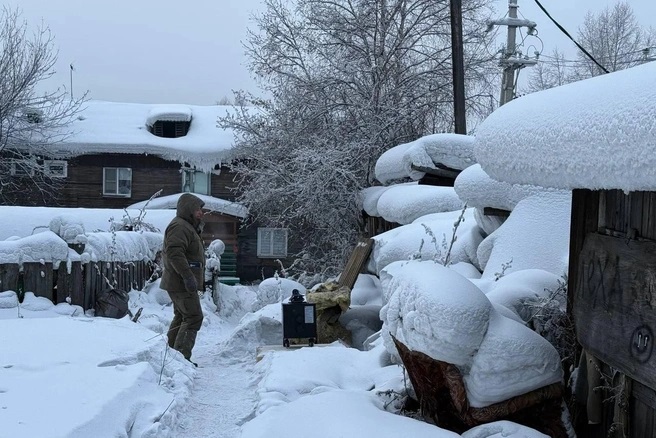
Residents of Bodaibo note that the townspeople have long been doing “such a small thing” as cleaning roads on their own. The day before, Nikolai Khrychov, the mayor of the neighboring Chunsky district, arrived in Bodaibo and made a video for residents of his district about how snow dumps in Bodaibo were removed by the townspeople themselves with shovels. Apparently, to encourage the population entrusted to him to follow the example of the Bodaybin people.
Those, meanwhile, assure that the problem is not so much the frost (“it’s been colder before”) and snow-covered highways, but the lack of preparation of communications and boiler houses for the winter season.
– We have been waiting for new pipes since 2015, they [officials] promised to finish the reconstruction by 2021, then they delayed it as usual. Then the war and that’s it, there’s no money. Now they explain everything by frost, although in fact the reconstruction of the heating supply was never completed, says Grigory , who previously worked at one of the four Bodaibo boiler houses. “Plus, they dispersed all the personnel who knew how to act in an emergency.” Some were mobilized, others, like me, were kicked out of retirement. Some people left because their salaries were greatly reduced.
The interlocutor’s version is confirmed by the representative of the Ministry of Construction and Housing and Communal Services of the Russian Federation, Kirill Kolmakov, who stated that the personnel of the municipal company servicing the water pipeline turned out to be “insufficiently competent.”
The Investigative Committee, meanwhile, announced searches in the administration of the Bodaibo rural settlement and the Teplovodokanal utility company. Cases have been filed for negligence and unsafe services.
“Everything needs to change now”
In January 2026, there were already 1,788 reports of power, heat or water outages throughout Russia, which is almost double the number in January 2025 (983 cases), according to a study by Novaya Gazeta Europe. The leaders in the number of communal incidents were the Belgorod region, located on the border with Ukraine, as well as the Krasnodar and Transbaikal regions, the Volgograd and Murmansk regions and Dagestan. Depending on the region of the country, the level of deterioration of housing and communal services networks ranges from 40 to 80%. According to government plans, the cost of network repairs should be reduced by 2% by 2028 compared to the 2025 level.
Experts in an interview with Siberia.Realities have already warned that due to underfunding of the housing and communal services sector, utility accidents will occur more and more often in Russian regions. And the time for repairs will stretch from several weeks to months. In 2024, Rosstat stated that a third of heating networks had reached critical wear. Russia's municipal infrastructure was built back in Soviet times and has not been modernized for decades. The number of accidents in heating networks has increased significantly in recent years, and in some regions - by orders of magnitude.
– That is, everything needs to be changed now. But municipal and regional authorities are afraid to talk about emergency areas, they are intimidated - “Money is needed for the front!” And they are waiting for it to explode in order to patch it up from the emergency budget,” says HOA fund expert Semyon Ignatov (the editors use a pseudonym for the safety of the interlocutor - SR) . – In the end, all this turns out to be 7-10 times more expensive than if it had been done in a planned preventative mode. Now the authorities have dumped years of rotting pipes on private companies or left them with municipal unitary enterprises that do not have money for any kind of prevention.
According to experts, what is happening with housing and communal services in Russian regions is “the result of many years of refusal from planned modernization.” In recent years, this problem has been exacerbated by the reallocation of budgetary resources to war. In 2025, the federal budget allocated more than 13 trillion rubles for national defense, and all expenses for housing and communal services amounted to about 1.7–1.8 trillion, a significant part of which is spent not on modernizing networks, but on emergency patching and subsidies.
If in 2024 886 billion were allocated from the federal budget to finance the housing and communal services system, in 2025 expenses decreased by 43 percent - to 506 billion. A further reduction in spending is planned for 2026 - by another 25 percent, to 381 billion rubles. Thus, over three years the budget of the housing and communal services system, financed by the federal treasury, will shrink by 2.3 times. This will be the minimum for the last six years.
According to contractors , replacing one kilometer of heating mains in Russia costs 10–20 million rubles, depending on the diameter of the pipes and installation conditions. Replacing heating networks in Atamanovka would cost hundreds of millions of rubles. To reduce the level of actual wear and tear of heating mains from 70 to 40 percent throughout the country, about 20 trillion rubles are needed. This is the assessment of the Ministry of Construction .
For comparison: experts believe that the war in Ukraine costs Russia about 30 billion rubles per day, or about 1.25 billion rubles per hour. In one day of war, up to three thousand kilometers of heating networks could be replaced, and in four years - 2–4.5 million kilometers. Thus, repairing a heating main on the scale of one village is comparable to several minutes of military expenditure. For the amount spent on four years of war, heating networks throughout the country could be updated at least twice.
“Then the war and that’s it, there’s no money.” Communal collapse in the "golden city" of Bodaibo