
Translated material
Revenge of suicide bombers
On March 29, 2010, during the morning rush hour, two terrorist attacks occurred in the Moscow metro: first there was an explosion at the Lubyanka station, and more than 30 minutes later at the Park Kultury. 41 people died, more than 160 were injured. Then-Prime Minister Vladimir Putin promised: “terrorists will be destroyed.” But the criminals could not be detained: they were suicide bombers who blew themselves up. Explosions in the metro that shook Moscow - in the material "Cold" .
In the Moscow metro, 41 people died due to two explosions. The attack was carried out by a teacher and a teenage girl. Why did they do this 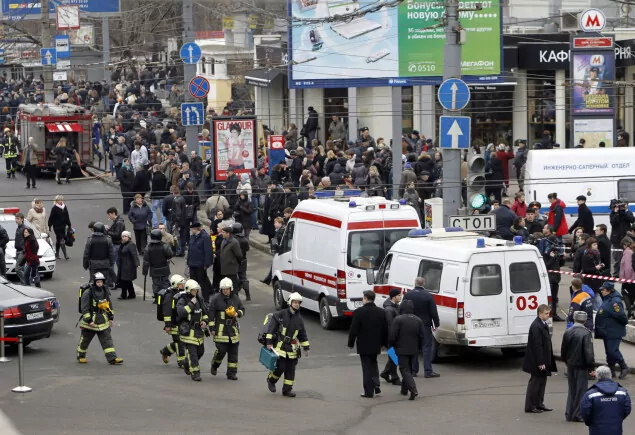
A few minutes before eight in the morning, one of the trains approached the Lubyanka station in the city center. This is one of the oldest stations of the Moscow metro. It is located on the Sokolnicheskaya (red) line, running from the northeast to the southwest of Moscow.
The train arrived from Okhotny Ryad and was heading towards Chistye Prudy. It was unusual: it was decorated in honor of the famous Red Arrow brand train. Therefore, it was not blue, like other Moscow metro trains, but red . Inside, it had yellow grab handles, red seats, and a reddish glitter floor covering.
When the train stopped at Lubyanka, an explosion occurred . Dozens of people were seriously injured. 24 people died on the spot. Soon the authorities recognized it as a terrorist attack. And on that day - March 29, 2010 - there were two of them.
" People Started Falling "
The explosion at the Lubyanka station occurred at 7:56 (according to other sources , at 7:57). Passengers on the blown up train did not immediately understand what had happened. “They thought that the ceiling had collapsed on the carriage. Everyone screamed,” said a woman who was riding in the next carriage that day.
Eyewitness Elena Egorovatold reporters that she saw a “gray cloud” of dust rise above the carriage and smelled burning.
“I was dumbfounded, I didn’t know what to do: rush to help someone or save myself,”said Egorova.
People who were in the underground lobby of the station or making a transfer to the neighboring Kuznetsky Most felt the shock wave. According to eyewitnesses, the doors of the carriage in which something exploded were “turned outwards.”
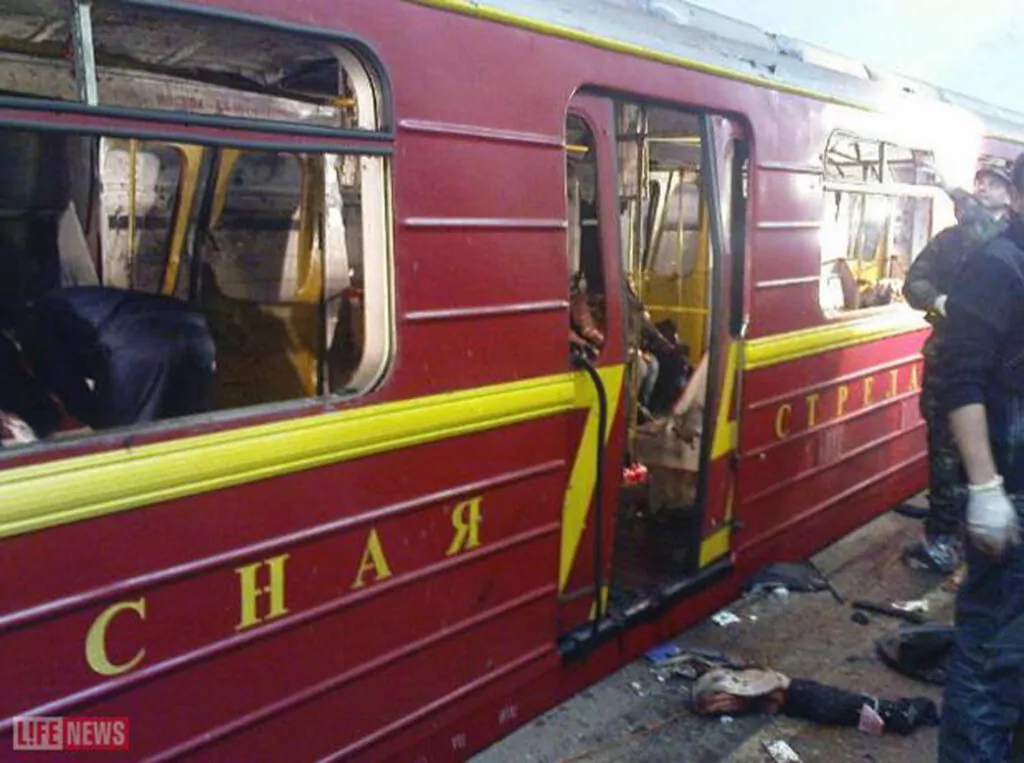
“I was directly walking up the escalator to the crossing and heard a bang and an explosion. The door near me, near the passage, was bent. A cloud of dust descended on the escalator from above, and people began running along the escalator. People began to fall, there were a lot of them. I ran too,” one of the witnesses told reporters.
One of the passengers was going down to the subway at that time and saw that a crowd of people was walking towards him. “The clothes were torn to shreds, one guy had a piece of meat stuck to his shoulder. Horror,” he described what he saw in a conversation with reporters.
Some people went into shock and didn't even realize they were injured. One woman recalled several years later that it was only when she got home that she realized that she needed medical help. “[After the explosion] I ran upstairs without feeling my legs. She jumped out and took the minibus home, not realizing anything. I noticed sidelong glances from passengers. And when I came home and started to undress, I saw that my coat was bleeding. I took off my boot, and blood poured out of it,” she said.
Traffic on the Sokolnicheskaya Line was not stopped . Trains, however, stood in tunnels and stations for a long time. One of the eyewitnesses wrote on his blog that after the explosion at Lubyanka, he was at the Lenin Library, where he waited for seven minutes for the train, which, having arrived, stood for the same amount of time. According to him, there were also delays at Kropotkinskaya and in the tunnel between Kropotkinskaya and Park Kultury. At this station he got off.
“I was already going up to the exit. Police officers are walking nearby. A woman turns to them: “What happened?” “Oh, there was some kind of accident, technical reasons,” wrote an eyewitness.
At that moment, an explosion also occurred at Park Kultury. A little more than 30 minutes have passed since the explosion at Lubyanka.
" They screamed terribly "
The explosion occurred at 8:39 (according to other sources, 8:37 ) in train No. 45 , when it stopped at the station. Shortly before this, the driver announced that the train would not go further, opened the doors and asked the passengers to vacate the carriages. Some managed to get out.
“I felt a vibration on me. The train had already been standing for about two minutes at this point. There was an explosion and there was a lot of smoke. Then literally two minutes passed - everything started smoking, apparently from gunpowder. People were screaming terribly,” one eyewitness told reporters.
The victim, Vladimir Sysoev, was in the carriage where the explosion occurred. “I just remember a bright flash. Then he woke up in the arms of rescuers. Covered in blood. It hurts a lot,” he said.
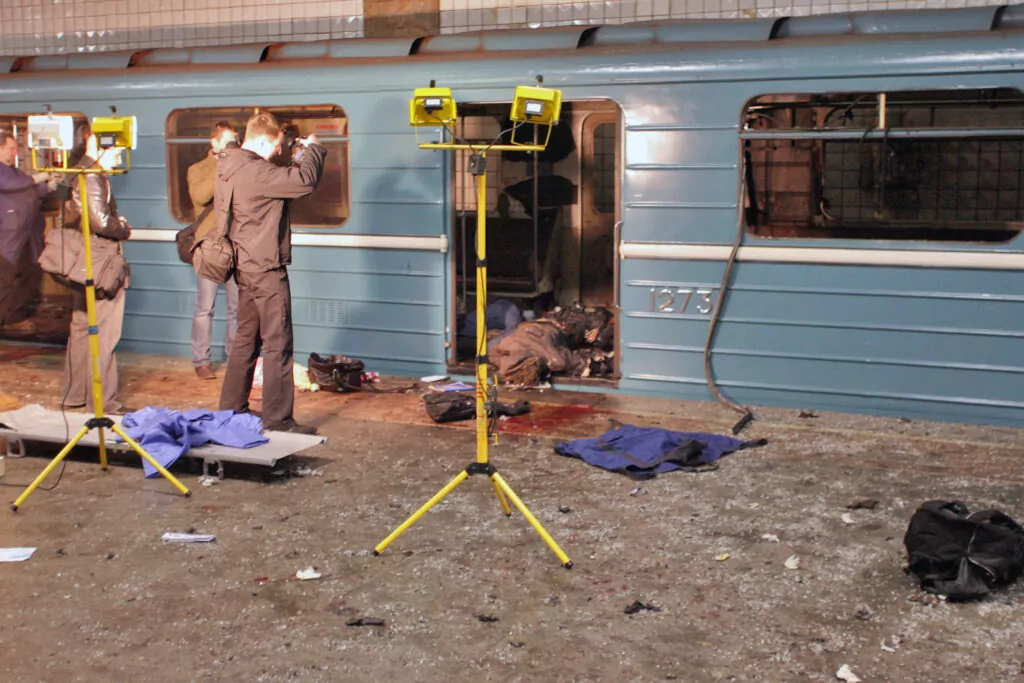
Alexander Makeev ( name and surname changed at the request of the interlocutor ) at the time of the explosion was on a train traveling in the opposite direction and just approaching the station. He didn't see anything, but heard a "loud dull bang" followed by a plume of smoke and dust appearing on the platform.
“I was driving with closed headphones and still heard it, because the sound wave was very powerful. Perhaps, thanks to the headphones, I didn’t feel much panic and didn’t hear the screams of the victims,” he said in a conversation with Kholod.
Makeev did not immediately understand what had happened. He automatically ran to the exit. Since the station is shallow and without escalators, he felt he was on the street in 15–20 seconds. According to him, there was no crowding at the station.
“Everything was so fast that consciousness returned to me only when I was already on the street. <...> I realized that it was a terrorist attack much later,” he said.
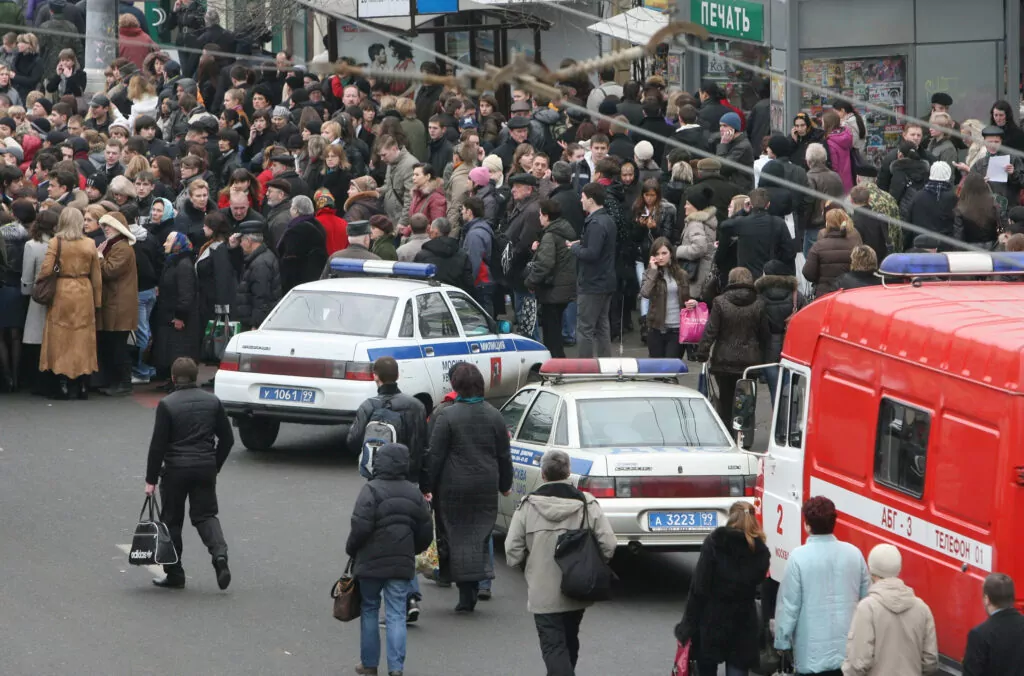
Passengers came out into the street covered in blood and with traces of burning on their faces and clothes. At 8:44 am, ambulances and rescuers had already begun arriving at the site of the second explosion. In total, about 3,500 people were evacuated from the Moscow metro in a short time. The Garden Ring near the Park of Culture was blocked - for a while it became a helipad for the immediate hospitalization of the seriously wounded. Until this day, rescuers had not used aviation in large cities.
The bodies and remains of 12 people remained at the station.
“They checked with their feet whether a person was alive”
By the time everyone was evacuated from the station, trains were still running through Park Kultury. One of them included 36-year-old Oksana Demidova, who was hurrying to work. In a conversation with Kholod, she said that she was initially traveling towards Lubyanka, but before reaching the station, her train stopped in a tunnel. As she later found out, the first explosion occurred on the train that was traveling “directly before her.”
“That is, this is a minute difference,” Demidova said that, after standing in the tunnel for a long time, the train went back to the southwest. He stopped at the Park Kultury station, but the doors did not open. Demidova saw from the carriage window that bodies were lying on the steps in the middle of the hall. According to her, “soldiers” walked next to the victims - people in dark, non-police uniforms, who “checked with their feet whether the person was alive.”
A minute later, her train moved on. Since it was rush hour, there were crowds in the subway. “There was a crush. I thought there would be nothing left of me,” Demidova described what was happening.
There was a crush that morning at other stations of the Sokolnicheskaya line. It is especially strong at Komsomolskaya. There is even a video on YouTube: a crowd of people trying to get forward up the stairs.
When Demidova finally managed to get out of the metro, she was completely disoriented. “I was at a loss, I didn’t even know <...> where I was,” she said. She managed to contact her husband, who helped her find her way, and she took a trolleybus to the meeting place with him near the University metro station. Already in the car, Demidova’s husband saw that her white down jacket was covered in blood—“the sleeves and the back.” However, she still doesn't know how it happened.
That day Demidova did not go to work. “I drank a glass of wine and sat in the kitchen for a long time in shock. I smoked one cigarette after another. We watched TV,” she described.
Only two hours after the first explosion they reported on television that a double terrorist attack had occurred. The explosive devices were detonated by suicide bombers.
41 dead
According to the FSB, the terrorists used hexogen as an explosive, as they did earlier in the bombings of houses in Moscow in 1999. At Lubyanka, according to FSB director Alexander Bortnikov, four kilograms were detonated , at the Park of Culture - up to two.
Although RDX is approximately 1.5 times more powerful than TNT, experts later determined that the first explosion was equivalent to approximately 1.2 kilograms of TNT, the second - about 2.4 kilograms. The terrorists used a plastic explosive: a mixture of hexogen and polymers.
A source in the group that worked on the analysis of the explosives told reporters that the plasticite was allegedly extracted from the dynamic protection of the tank. Such protection - reactive armor - consists of plates with a layer of explosive on top of the armor.
When one kilogram of TNT explodes, a person can die if he is at a distance of up to three meters from the epicenter of the explosion. Only if he is at least 15 meters from the explosion will he be relatively safe.
Immediately after the terrorist attacks, the capital’s police were transferred to an enhanced work regime: the number of patrol police officers at train stations and airports was increased. Large-scale passport checks began. Investigators began seizing CCTV footage from Sokolnicheskaya Line stations to establish who was involved in the terrorist attack.
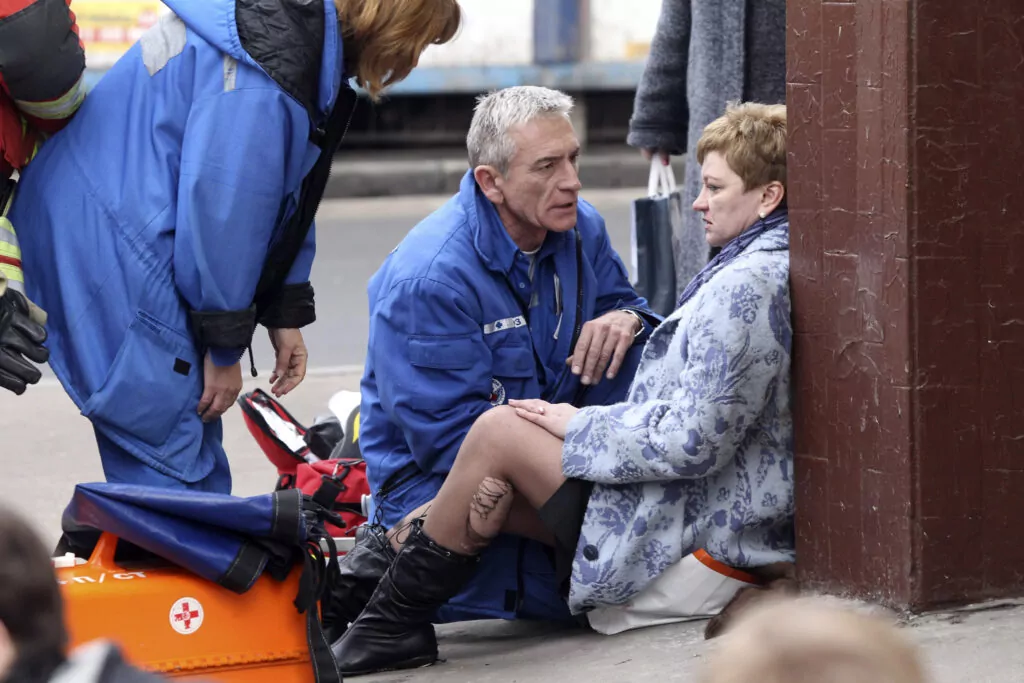
The then Russian President Dmitry Medvedev held an emergency meeting, at which the head of the FSB Bortnikov immediately announced the main version of the investigation - the explosions were carried out by “terrorist groups related to the North Caucasus region.” In connection with the explosions, criminal cases were opened under the article terrorism.
Why was the terrorist attack linked to the North Caucasus? The counter-terrorist operation regime (as the authorities called the Second Chechen War) was canceled only in April 2009. In the early 2010s, FSB branches continued to conduct separate special operations in the North Caucasus. Therefore, security officials assumed that the terrorist attacks were revenge from Caucasian groups.
In particular, on March 24, 2010, FSB officers shot and killed Anzor Astemirov, the leader of militants in Kabardino-Balkaria and Karachay-Cherkessia, who organized the attack on Nalchik in 2005. He was also the chief sharia judge (the person who pronounces punishments according to Islamic law, not state law) of the Caucasus Emirate, a terrorist organization banned in Russia that tried to establish its power in the North Caucasus.
Another FSB operation was carried out in early March 2010 in the Ingush village of Ekazhevo. Then the security forces killed Alexander Tikhomirov (he was known under the nickname Said Buryatsky), who was accused of organizing nine terrorist attacks (including the bombing of the Nevsky Express in 2009). As Kommersant wrote with reference to the Ministry of Internal Affairs of Ingushetia, Tikhomirov trained militants, many of whom were wanted at that time and could go to Moscow.
Vladimir Putin, then prime minister, cut short his trip to Krasnoyarsk, returned to Moscow and visited the Botkin hospital, where he told the press that “law enforcement agencies will do everything to find and punish the criminals.”
“Terrorists will be destroyed,” Putin said .
Within a few hours after the explosions, journalists, law enforcement officials, and Moscow Mayor Yuri Luzhkov arrived at the entrance to the Park Kultury station. Relatives of people who took the subway in the morning and did not answer calls began to arrive there. Communication at both Park Kultury and Lubyanka worked intermittently at that moment.
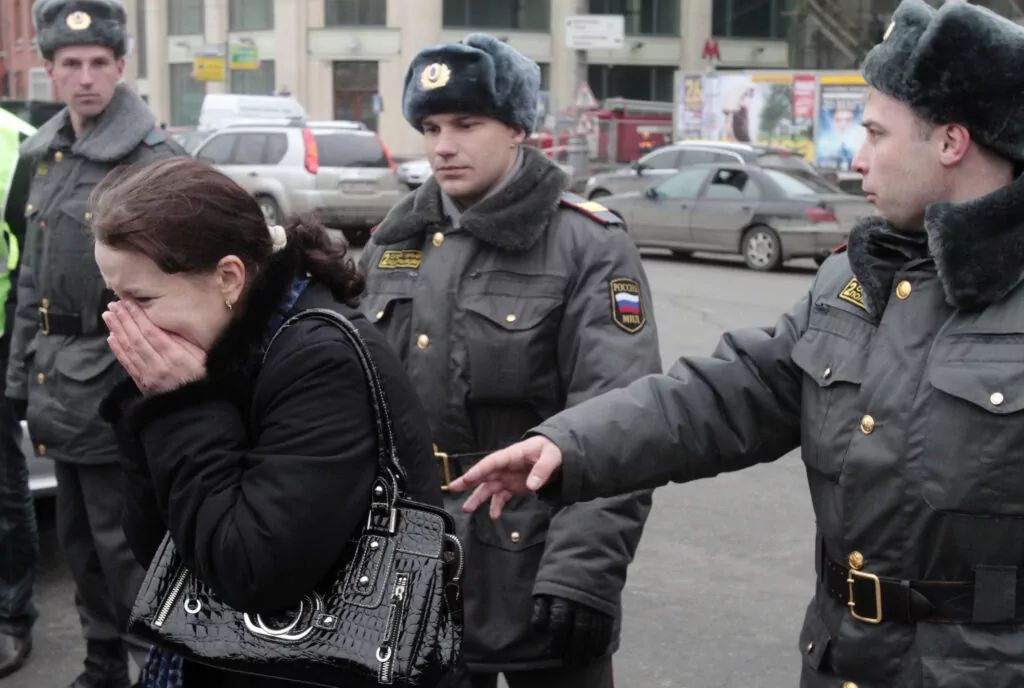
Train traffic on the section of the Sokolnicheskaya line from Park Kultury to Komsomolskaya (eight stations) was completely stopped . Because of this, as the media wrote, ground transport was heavily overloaded. Taxi drivers (at that time there were no aggregators for calling taxis) immediately raised prices: short trips around the center began to cost several thousand rubles.
At about two o'clock in the afternoon, the bodies of those killed at the Lubyanka station began to be raised to the surface. 168 people were considered injured, and 73 were admitted to hospitals with injuries of varying severity: many had cuts and pieces of metal stuck in their bodies.
Two explosions in the metro killed 36 people on the spot. Five more died in hospitals. At 17:00, work at the metro stations where the explosions occurred was completed . Train traffic on the Sokolnicheskaya Line has been completely restored. Towards the evening of March 29, Muscovites began bringing flowers and candles to Lubyanka Square. March 30 was declared a day of mourning in Moscow.
Shuttles from the North Caucasus
On the same day, fragments of the murderers' bodies were found and it became clear that they were women. The investigation showed that they were standing at the doors of the carriage - because of this, at the time of the explosion, not only those who were inside, but also the recently exited passengers were killed.
One of the rescuers from the Ministry of Emergency Situations told reporters that one of the terrorists would be easy to identify, since her head was preserved. But the body, in his words, “had to be assembled from fragments, like a mosaic.”
“Her torso was completely torn apart, but her legs and head remained completely intact. This gives reason to think that a suicide bomber has been discovered. After all, the explosion tore her body at the waist - exactly where the “suicide bomber’s belt” is attached,” the rescuer clarified .
There were no documents among the suicide bombers' clothes, but one of them still had a one-time metro ticket. It was established that the woman entered at the Yugo-Zapadnaya station (at that time it was the final station; it was necessary to go 10 stations to Lubyanka).
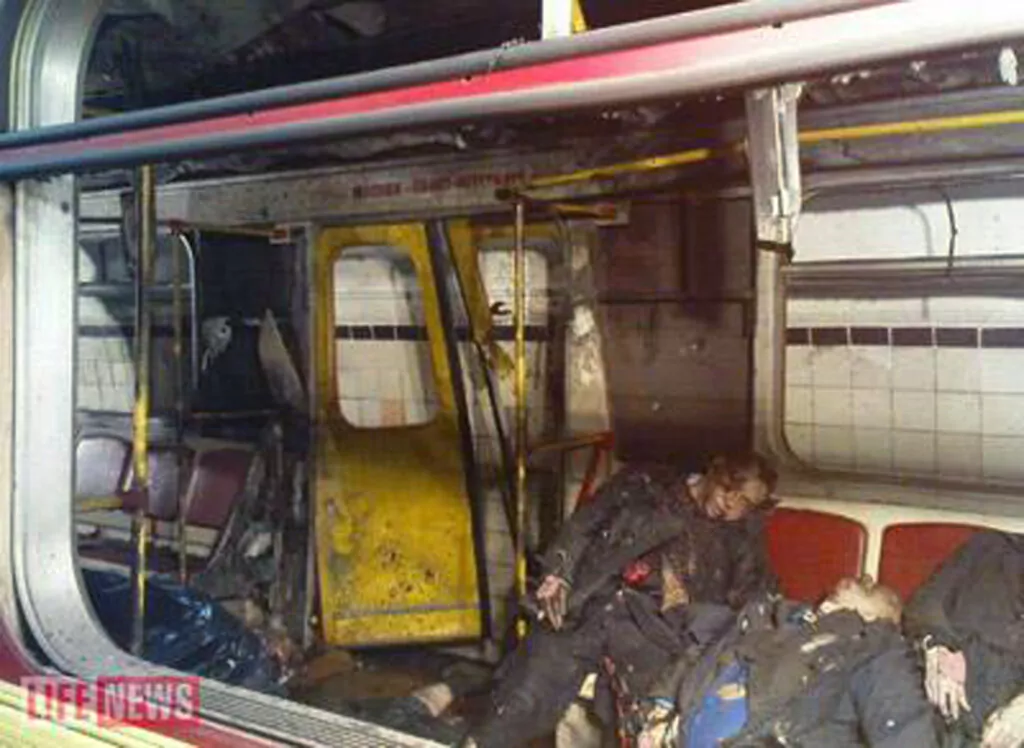
Investigators reviewed CCTV footage from the Yugo-Zapadnaya station. They showed that the suicide bombers went down into the subway together - and there were accompanying people with them. Perhaps they were suicide bomb operators and detonated the belts remotely. It was impossible to establish exactly who carried out the explosion.
The very next day after the terrorist attack, the media , citing their sources, reported that the security forces knew that a terrorist attack was being prepared in Moscow. According to them, the day before, investigators received three warnings about possible explosions in the subway.
The media wrote that the operatives were also aware that terrorist attacks could be carried out by women. According to Kommersant, on the morning of March 29, police officers detained women of “Caucasian appearance” in the metro, searched them and took them to police stations for document checks.
One woman was detained at 7:40 am at the Okhotny Ryad station on the Sokolnicheskaya Line. She had a passport with Moscow registration, but she was still taken to the department. As Kommersant writes, she did not know that a bomb had been detonated at Lubyanka, but while she was sitting there, another policeman entered the room and shouted to his colleagues: “How could you miss them, you had information!”
This information has not been officially confirmed. Attempts to identify the criminals continued. On March 31, the media, citing sources close to the investigation, wrote that investigators, having received photographs of suicide bombers from video camera recordings, went to Luzhniki.
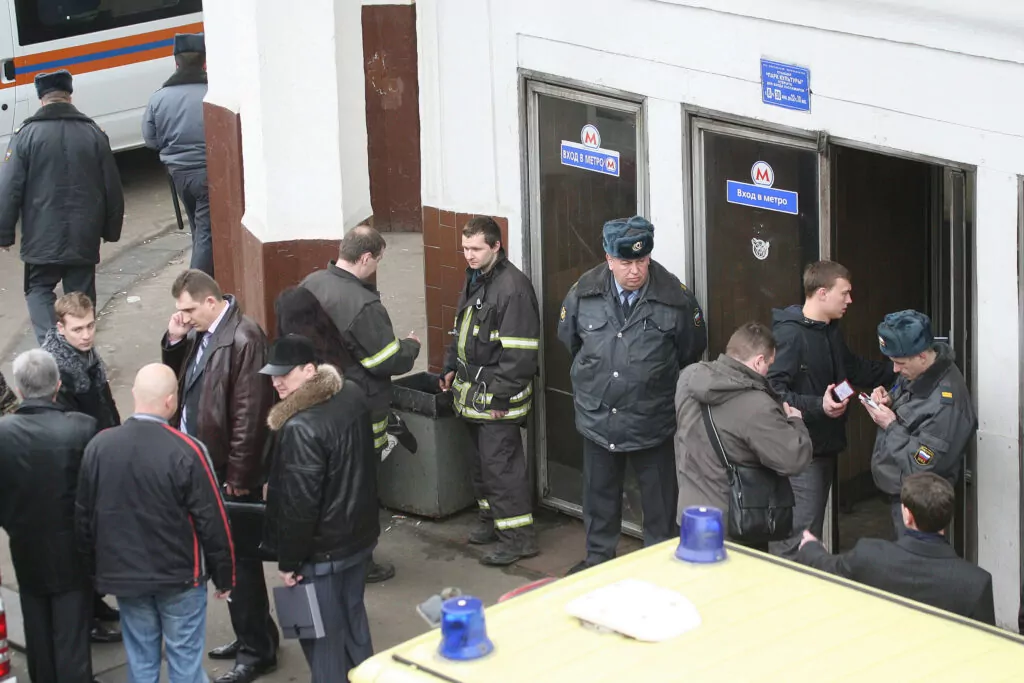
There was a large bus station in this area, where shuttle traders, including those from the North Caucasus, came to buy goods. Law enforcement officers assumed that the suicide bombers arrived in Moscow by bus under the guise of shuttle buses.
Why did this version arise? The security forces claimed that the perpetrators of other terrorist attacks in the metro came to the bus station in Luzhniki under the guise of shuttle buses. For example, Nikolai Kipkeev, who accompanied the suicide bomber on August 31, 2004 to the lobby of the Rizhskaya metro station.
In Luzhniki, police interviewed and detained hundreds of bus drivers. Many of them had their documents taken and fingerprints taken. This happened after Omar Khalduzov, one of the drivers who operated flights from Makhachkala to Moscow, recognized one of the terrorists in the photograph. According to him, he more than once drove a woman similar to her. However, after he was brought to identify the body of the suicide bomber in the morgue, it turned out that he was mistaken.
Widows of militants
Janet (in another spelling - Dzhennet) Abdullaeva was the name of the terrorist who blew herself up at the Park Kultury station. Her name first appeared in the media on April 1, and on April 2 the authorities confirmed this information.
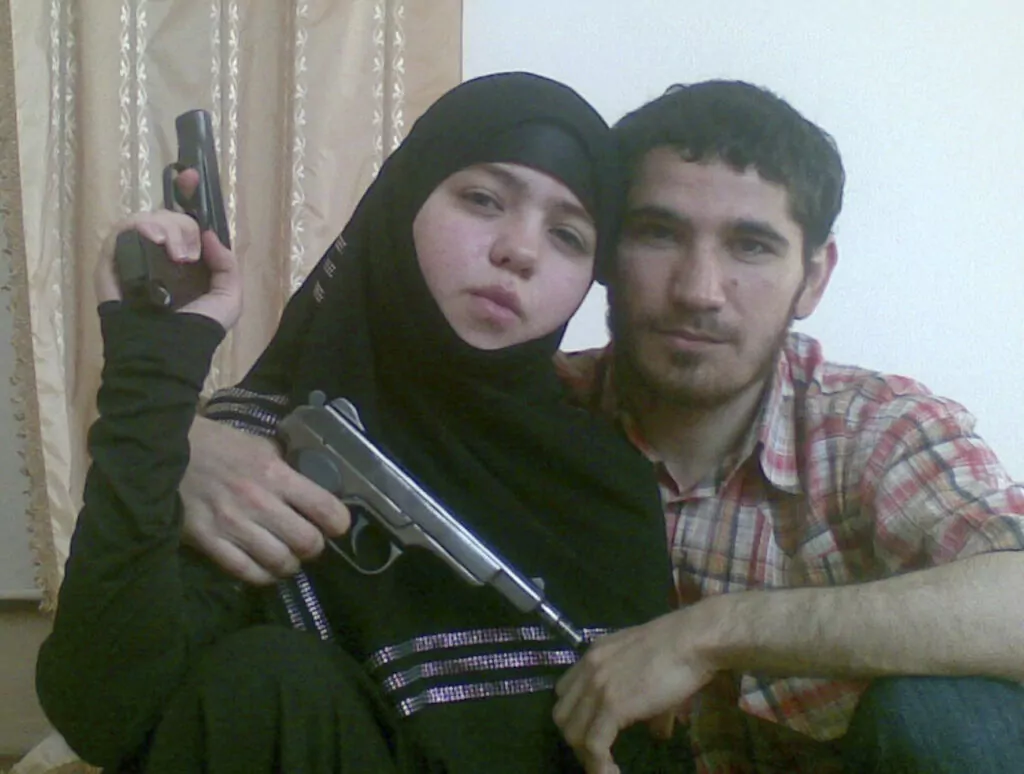
In 2010, Abdullaeva was 17 years old. She lived in Dagestan and was the widow of one of the leaders of the bandit underground, Umalat Magomedov (Al-Bara). He was considered the “emir” of Dagestani militants and was associated with the leader of the Caucasus Emirate, Doku Umarov. On December 31, 2009, he was shot dead during a special operation.
The media wrote that Magomedov met Abdullaeva on the Internet when she was 16 years old, and then, having made an appointment, he almost forcibly took her to his place. Local intelligence services told journalists that after his death she wanted to die.
Who the second terrorist was also did not remain a mystery for long. On April 3, a teacher from a secondary school in the village of Balakhani, Rasul Magomedov, contacted the prosecutor's office of the Untsukul district of Dagestan. He said that someone sent him a photograph of one of the suicide bombers from the Moscow metro. On it he recognized his daughter Maryam Sharipova (she received her surname in honor of her grandfather, Sharip).
According to Magomedov, the day before the explosions in the Moscow metro, she was in Dagestan. On the afternoon of March 28, Sharipova allegedly went with her mother to the market in Makhachkala, then went to visit a friend. She never returned to her family and did not contact them.
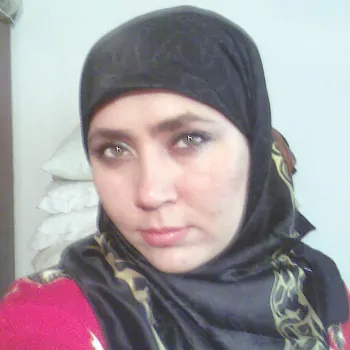
Magomedov’s words contradicted the official version that both suicide bombers arrived in Moscow by bus, boarding it in Kizlyar - after all, such a journey would have taken at least 20 hours. But the investigation insisted that the bus version was correct.
The Magomedovs' blood was taken for a DNA test. Rasul Magomedov told reporters about his daughter: she taught computer science at the same school where he and his wife worked. “Our daughter had no problems. Yes, she was devout, but she never had any radical inclinations or statements,” he said.
But Magomedov either did not know something about his daughter or hid it. He told reporters that he had heard rumors that Sharipova secretly married the leader of a gang from the village of Gubden, Magomedali Vagabov. But he, in his own words, did not believe them.
“I didn’t even really discuss this topic with Maryam. Such rumors had spread throughout the village before, but I know my daughter too well to attach importance to them,” he said.
On April 6, 2010, the Investigative Committee of the Prosecutor's Office (SKP) of Russia officially announced that the terrorist attack at the Lubyanka station was carried out by a 27-year-old resident of Dagestan, Maryam Sharipova. Moreover, she really was the wife of Vagabov, who was wanted.
Vagabov took her under guardianship after her first husband was killed (journalists wrote that such marriages were accepted in the terrorist underground). He was a terrorist from Algeria named Hamdan ben Zagnun and was known by the nickname Doctor Muhammad. According to security officials, he came to the North Caucasus back in the 1990s, in Chechnya he was part of the group of field commander Khattab, and since 2007 he has taken control of Dagestani bandit groups.
In August 2009, the house where Ben Zagnun was hiding was stormed. He died. The motive for Maryam Sharipova’s suicide bombing was considered to be revenge for the death of her husband.
I put a bomb on my love
The investigation established : on March 27, both girls left Dagestan for Moscow, but on different buses. They carried the bombs on themselves, hiding them under their outer clothing. Passengers who were traveling on the bus with Abdullaeva said during interrogations that she complained to her companions about the inconvenience. She was told that everything is done for the sake of Allah.
Having arrived in Moscow at different times, the suicide bombers met at the bus station and spent the rest of the night on one of the buses, after which they went to the metro in the morning. There they were seen by a woman who later, speaking with investigators, recalled that Abdullaeva was being stabbed. Sharipova, on the contrary, smiled.
Another witness was traveling in the same carriage as Abdullaeva. According to him, she was muttering something under her breath. He moved aside, and she kept coming up to him. When the doors of the carriage opened, he quickly got out - and then there was an explosion. He managed to survive.
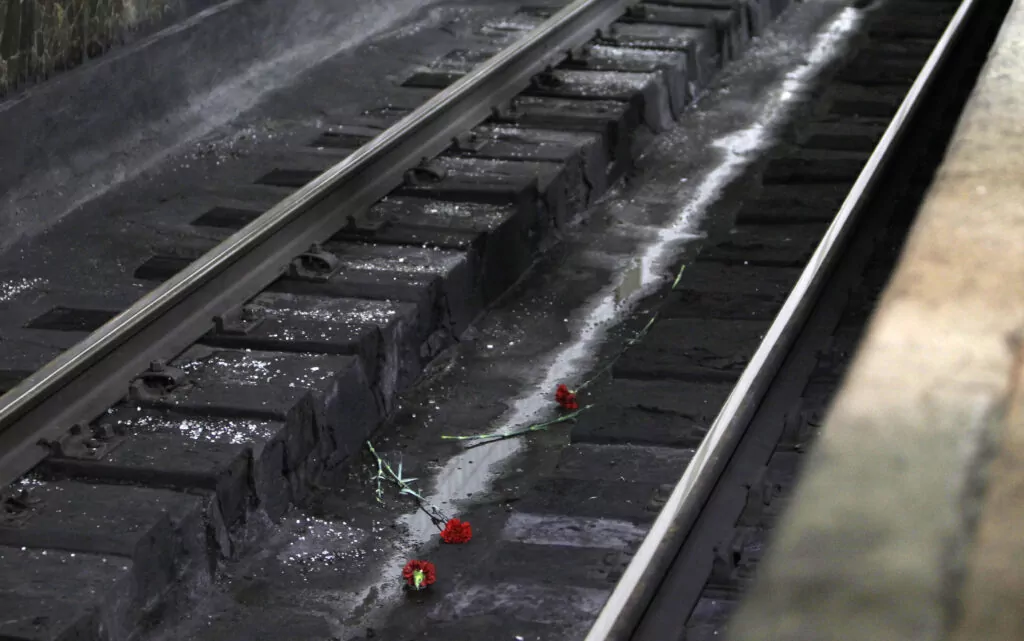
The women on the subway were accompanied by two men, who were also searched for. Soon they found the apartment where the explosives were stored. The organizer of the terrorist attack was named Magomedali Vagabov, who was the “Sharia husband” of Sharipova. In February 2010, he allegedly formed and led the so-called Novokostek bandit group, which was supposed to carry out terrorist attacks in Central Russia.
“Vagabov actually put a bomb on his love himself,” Anatoly Iskantsev, an employee of the main investigative department of the ICR, told reporters. According to him, Sharipova agreed that it was necessary to “struggle radically.”
Immediately after the terrorist attacks, security forces opened a hunt for Vagabov, who was hiding in the forests of Dagestan. Counter-terrorism operations have begun in the North Caucasus. It came to real battles: both militants and intelligence officers died in shootouts. Only in August 2010, the FSB reported the murder of Magomedali Vagabov.
Were Sharipova's other relatives involved in the terrorist attack? Sharipova had two brothers who were put on the wanted list. Ilyas Sharipov was previously detained on charges of possession of a grenade, kidnapping and involvement in illegal armed groups. Later, he was acquitted on all counts except the first. Since the end of 2009, he has been on the federal wanted list for an attack on cash collectors.
The second brother, Anvar Sharipov, in the early 2000s was associated with the jamaat of the village of Gimry, an association of radical supporters of a return to the previous norms of Islam that attacked the police. In 2005, Anvar was tortured by Dagestani security forces, but was released, and a year later he was given an amnesty. He moved to Moscow and allegedly broke ties with the underground. He stopped communicating with his family, left his wife and four children in his native village and married again in Moscow. According to his father, he worked in a car service center and drove a taxi . But after the terrorist attack in the metro, Anwar disappeared.
Only on January 6, 2011, the Italian police, despite the lack of an international warrant, detained him at the station in Venice. Anwar was traveling to France to seek political asylum there. He managed to stay in Italy, and his involvement in the terrorist attacks was not confirmed .
“I had a very strong quarrel with [my sister], there were family matters. But I [went into hiding because] I know how the special services work, because I was kidnapped before, forced to take on things that I didn’t commit, various crimes,” Sharipov told the Dozhd TV channel.
The father of the family, Rasul Magomedov, suddenly disappeared in November 2011. Later, law enforcement agencies came to the conclusion that he had gone underground with the militants in the forest.
The search for the younger one, Ilyas, continued. In 2014, almost his entire gang was defeated , but he himself was killed only in 2017.
Life sentences after 12 years
The militant accompanying Sharipova in the metro was named Akhmed Rabadanov. After the terrorist attack, he returned to Dagestan, where he was killed in a shootout by police in April 2010. By the end of 2010, almost all the other people who were called involved in the terrorist attack died.
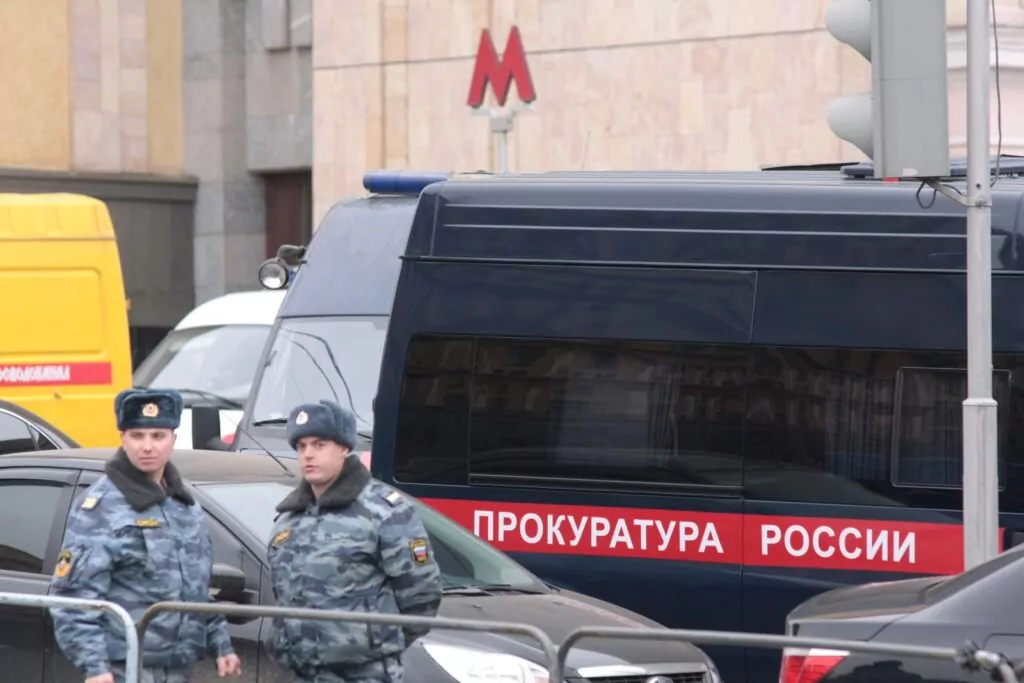
For some time, only the accomplice who took Abdullaeva into the metro remained alive. His name was Gusen Magomedov. He managed to escape - he immediately went into the forest, and Magomedov was never detained. But in February 2013 he was killed in a shootout in Dagestan.
And in 2019 - 10 years after the terrorist attack - an accused appeared in the case. The Investigative Committee detained a resident of Dagestan, Magomed Nurov. He was accused of helping Magomedov escape: when he returned from Moscow, he took him from the village to the forest.
Nurov himself admitted that he gave the militant a lift, but did not know that he participated in the terrorist attack on the subway. In addition, he denied his involvement in the armed Dagestan underground. The defendant's lawyer noted that he has eight children from two wives, and he works as a gym security guard.
“I can’t hide, I have children and work at home,” he said in court. In 2022, the court sentenced Nurov to life imprisonment in a special regime colony. He was accused not only of involvement in terrorist attacks, but also of participation in a criminal community and banditry. In addition, the Moscow Metro's claim for 17 million rubles against him was satisfied.
The head of the Department of Internal Affairs for the Kizlyar region of Dagestan, Colonel Gazi Isaev, was also detained . The investigation alleged that Isaev personally brought one of the suicide bombers to the bus station in Kizlyar, from where she left for Moscow. He was also sentenced to life imprisonment for associating with militants and helping them organize two terrorist attacks. Isaev did not admit guilt, saying that he was slandered by local bandits whom he had previously brought to justice.
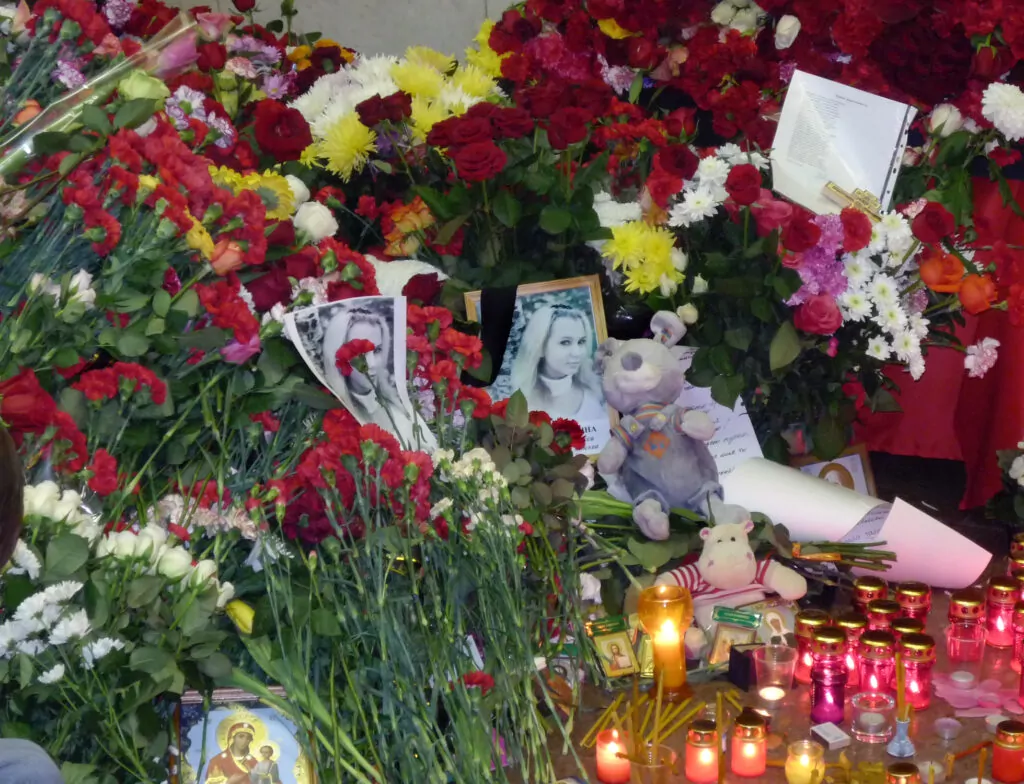
In 2026 it will be 16 years since the tragedy. Every year on March 29, Muscovites gather at the Lubyanka and Park Kultury metro stations to honor the victims with a minute of silence and lay flowers.
Photo: Denis Sinyakov / Reuters