Parliamentary elections were held in Bangladesh - the first in the country after the overthrow of an authoritarian prime minister. • The Insider • RIMA — Russian Independent Media Archive
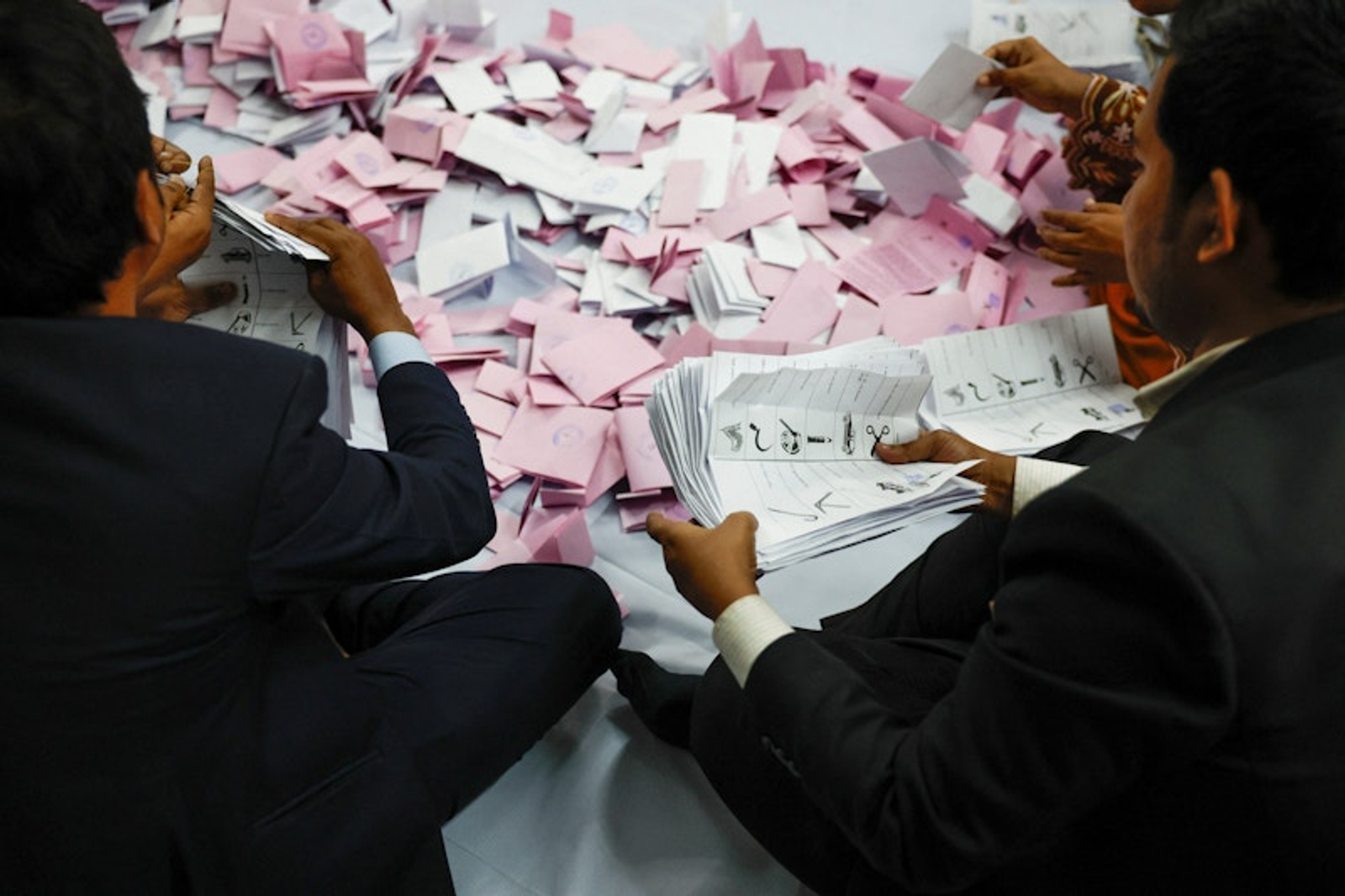
In the parliamentary elections held in Bangladesh, about 2/3 of the seats were won by a coalition led by the Bangladesh Nationalist Party (BNP). It is headed by the son of the country's first female prime minister, who spent about 20 years in exile.The elections are the country's first since massive youth protests in 2024 that led to the overthrow of authoritarian Prime Minister Sheikh Hasina.
According to Reuters, according to the latest data, the NPP and its allies have won at least 212 seats in parliament (Jatiya Sangsad). The party's main opponent, a coalition led by the Islamic Union (Jamaat-e-Islami), won about 70 seats.
The NPB has already announced that festive processions and rallies will not be held in honor of its victory, calling on citizens to join in prayer.
The main fight in the elections was between the NPB and Jamaat-i-Islami. The parties are former allies. They governed the country together from 2001 to 2006. Their leaders, namesakes Tariq Rahman and Shafiqur Rahman, were the main candidates for the post of prime minister in the last elections.
PNP leader Tariq Rahman (middle) during the final day of the election campaign, February 9, 2026
Reuters
Leader of the largest Islamist party Jamaat-e-Islami Shafiqur Rahman at a rally in Dhaka, July 19, 2025
AP
The NPB now has to assemble the government of the country - its composition is expected to be formed by February 15.
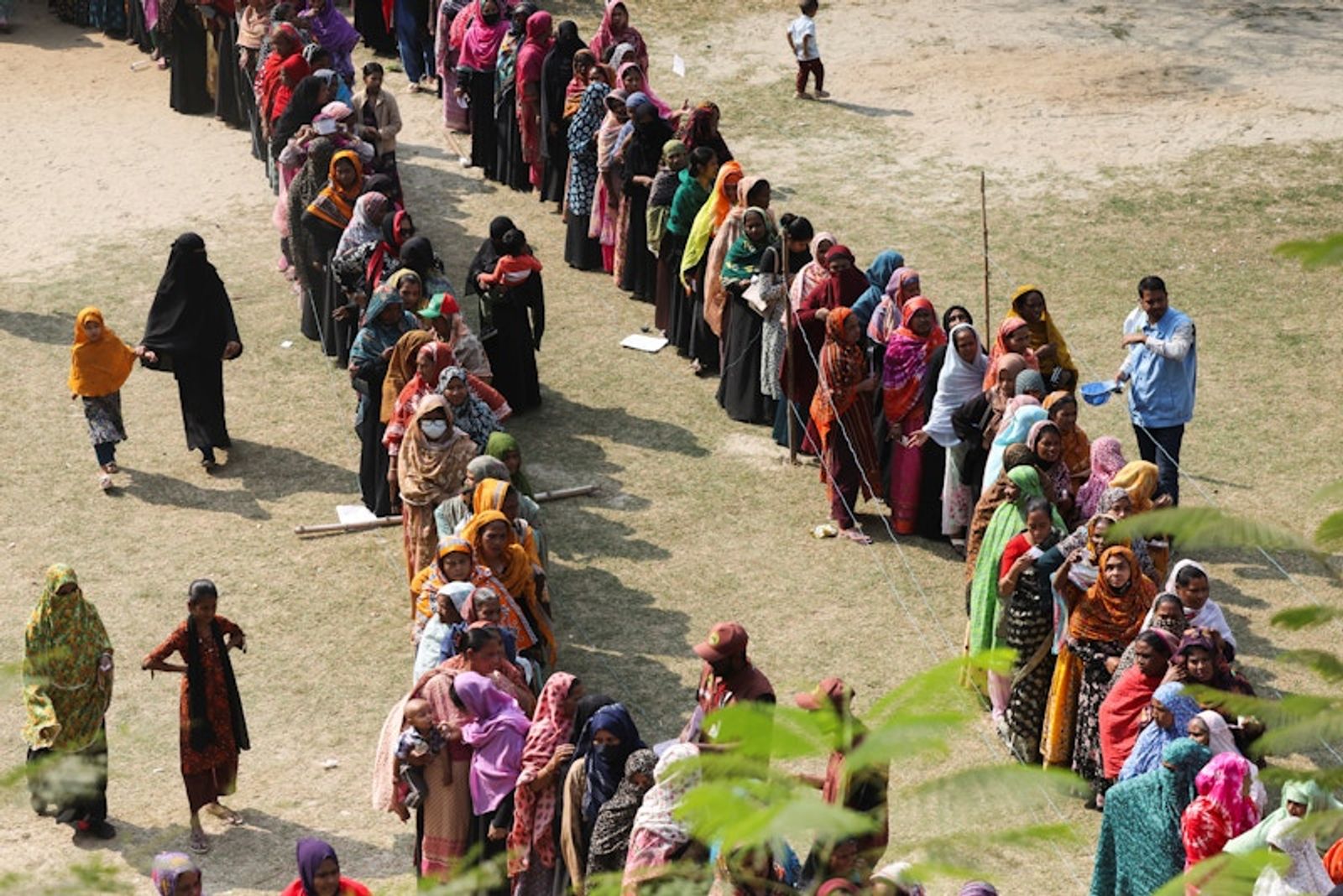
About 2 thousand candidates competed for 300 seats in the Bangladesh parliament. A total of 50 parties took part in the elections, which became a national record, notes Reuters. According to the latest data , voter turnout was about 60%, compared to 42% in 2024. In the country, approximately 128 million people have the right to vote - more than in Russia, where the Central Election Commission last week counted about 111 million voters (together with the population of the occupied territories of Ukraine).
Most often, in pre-election polls, it was the NPB and its head, 60-year-old Tariq Rahman, who became the leader. He is now expected to be sworn in as prime minister. Tariq is the son of Khaleda Zia, Bangladesh's first female prime minister, and Ziaur Rahman, who was president from 1977 to 1981 and was killed in a plot. During Sheikh Hasina's rule from 2008, Tariq lived in London in self-imposed exile and returned to the country only in December. Many party members and supporters who remained inside the country faced persecution and repression. Although Rahman was leading in the polls, many reformers were skeptical that there would be political continuity.
Both the NUP and the Islamic Union were confident of their victory: in early February, Tariq Rahman rejected the rival coalition's proposal to create a government of national unity, saying that his party was confident of an independent victory.
Shafiqur Rahman is a former political prisoner . His Jamaat-e-Islami party was banned during the previous government and several of its prominent leaders were executed. Rahman was arrested in 2022 and sentenced to 15 months in prison on charges of aiding terrorism. He was released from prison in March 2024. After the change of power in Bangladesh, the ban on the party's work was lifted.
Jamaat-e-Islami is the country's largest Islamist party. In Bangladesh, approximately 91% of its 175 million people are Muslim, making it one of the world's largest Muslim-majority countries.
The country's parliamentary elections on Thursday also coincided with a referendum on a number of constitutional reforms. In particular, it included initiatives to create a neutral interim government for the election period, restructure parliament (from unicameral to bicameral), increase the representation of women in politics, strengthen the independence of the judiciary and introduce a two-term limit for the prime minister.
According to the local television company Jamuna TV, more than 2 million voters voted for the reforms in the referendum, and about 850 thousand voted against it. The official results of this vote are not yet known.
Queue of voters in the capital Dhaka
Reuters
Protests in Bangladesh: from student rallies to the flight of the prime minister
The change of power in Bangladesh was led to mass protests that began with student rallies in July of the year before last. They demanded the abolition of the quota system in place for the distribution of government jobs: up to 30% of seats were allocated to family members of veterans who fought in the war for independence from Pakistan in 1971.
Opposition forces called the system discriminatory, arguing that it worked in favor of supporters of the Awami League party, led by Prime Minister Sheikh Hasina. Peaceful protests began to be brutally suppressed by the police, as a result of which they escalated into clashes with security forces. According to various sources, about 1,400 people died as a result of the protests.
In early August, Prime Minister Sheikh Hasina resigned amid the unrest. On August 5, 2024, when the army refused to use force against the protesters, she was evacuated from her residence and Hasina fled the country to India.
After the prime minister fled, the country's interim government was headed by Nobel Peace Prize laureate Muhammad Yunus. Last November, the former Prime Minister of Bangladesh was sentenced to death in absentia after being found guilty of crimes against humanity.