
Translated material
Expulsion of the Catholicos
The head of the Armenian Church was unable to convene a “council in exile”, becoming a suspect in a criminal case

Catholicos of All Armenians Karekin II during the liturgy. Photo: Alexander Patrin / TASS
There is a new turn in the protracted government-church conflict in Armenia. Nikol Pashinyan managed to block the exit of Catholicos Karekin II from the country, who, according to rumors, wanted to move his residence to Russia. Kremlin propaganda speaks of “persecution of the church” and the need for a “SVO in Armenia,” but the initiator of the conflict was the leadership of the church, which was drawn into an active political struggle (including attempts to violently overthrow the government) on the side of the pro-Moscow elites swept away by the Velvet Revolution of 2018...
The Bishops' Council of the Armenian Apostolic Church (AAC) was supposed to open on February 16 in the Austrian city of St. Pölten, the capital of the state of Lower Austria, 60 km from Vienna. It should have been, but it didn’t open. On February 14, the Armenian prosecutor's office opened a criminal case against the Supreme Patriarch and Catholicos of All Armenians Garegin II (Ktrich Nersisyan), thereby blocking his departure from the country.
In Armenia and beyond, this unprecedented act is associated with the confrontation between Prime Minister Nikol Pashinyan and the leadership of the church, which he inherited from the former pro-Moscow regime of Serzh Sargsyan,
swept away by the pro-Western Velvet Revolution of 2018, and belonging to the so-called “Karabakh clan” of former presidents Kocharyan and Sargsyan.
Taking advantage of the return of Nagorno-Karabakh to Azerbaijan and the mass exodus of the Armenian population from the region, the “Karabakh clan” tried to regain power, and Garekin II and his supporters took a direct part in this. In any case, this is what the investigation thinks ( Novaya wrote about the participation of hierarchs in these attempts).
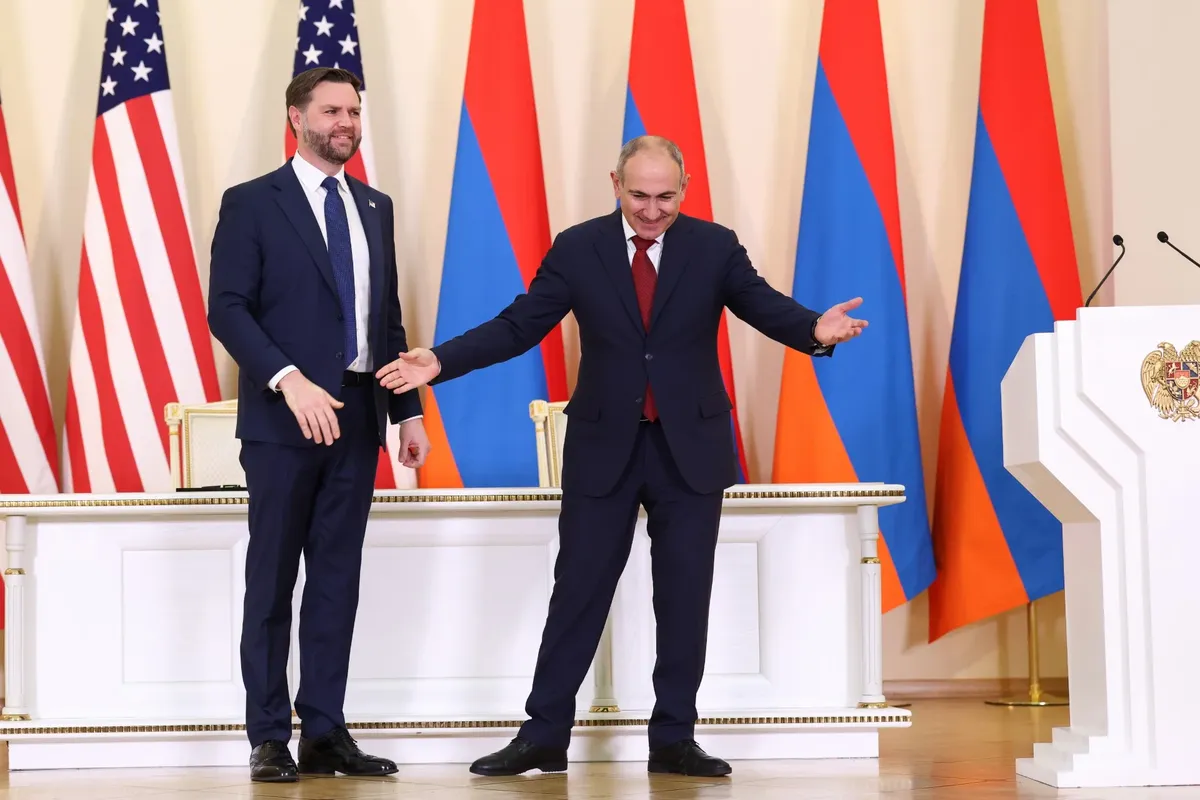
Obviously, Pashinyan’s determination for the next round of confrontation with Moscow - including on the church line - was given by the visit of US Vice President J.D. Vance to Yerevan on February 9-10. During the visit, a number of agreements of geopolitical significance were signed: in particular, on support in the military sphere and on the gradual transition of Armenia's nuclear energy industry to US control. Washington is taking upon itself the unblocking of transport corridors from east to west (from Azerbaijan to Turkey), which have been blocked since the collapse of the Soviet Union.
The “persecuted” Armenian bishops, led by the imprisoned Mikael Adjapakhyan, who are under criminal prosecution for participating in organizing the rebellion (three of them are even in custody or in prison), were also able to submit their petition to Vance through their lawyers. But it is unlikely that such an appeal will have any effect - the political activities of bishops convicted, arrested or under investigation, which led to various kinds of violent excesses, are being investigated in the legal field, and this does not cause any special complaints from the international human rights community.
At the end of January, the Investigative Committee of Armenia took a written undertaking not to leave the city from Archbishops Nathan Hovhannisyan, Haykazun Najarian, Bishops Vahan Hovhannisyan, Hovnan Hakobyan, Makar Hakobyan and Mushegh Babayan - Karekin II’s closest collaborators and supporters. The reason for new criminal cases against the leadership of the Armenian Apostolic Church was the failure to comply with a court decision (Part 2 of Article 507 of the Criminal Code of Armenia), which protected the right of Bishop Gevork Saroyan to govern the Masiatsotn diocese. Karekin II and the Supreme Spiritual Council of the AAC, which includes bishops suspected in the case, removed Saroyan from ministry after he supported calls for a change in the head of the church.
The court in Yerevan did not recognize the right of the AAC leadership to dismiss church workers without canonical grounds, based only on political motives or personal conflict, but the AAC leadership refused to implement this court decision and reinstate Saroyan. According to this logic, the church does not exist in a legal vacuum, and its ministers, like all citizens, should have the right to protection of their civil, including labor, rights by the state. One can only dream of such law enforcement in Russia (for example, in relation to priests of the Russian Orthodox Church “defrocked” for their pacifist position).
In response to the criminal case, the office of Karekin II expressed “strong condemnation and deep indignation.” Quite predictably, pro-Moscow parties also made statements in support of the Catholicos - in particular, the Republican party, led by Serzh Sargsyan (which has four seats in the National Assembly).
The party, without waiting for an investigation into the case, regards any accusations against the Catholicos as “fabricated, anti-legal,” and characterizes Pashinyan’s actions as “direct aggression against the church.”
It is important to note here that the current round of confrontation around Garegin II as the frontman of the anti-Pashinyan “Karabakh clan” has all the signs of a church schism. On November 29 last year, after a meeting with Pashinyan, ten hierarchs of the AAC published an appeal on the need to convene a council to elect a new Catholicos. In addition to purely canonical, moral accusations (of violating monastic vows, having an illegitimate child, refusing to condemn Archbishop Arshak Khachatryan, whose intimate videos were leaked online), the authors of the appeal also put forward political claims to Garegin II - in their opinion, he tried to turn the ancient and respected church into a proxy of a criminal group that was left out of work and dreaming of regaining power at any cost.
On January 4 of this year, Pashinyan signed with these ten bishops, representing half of all dioceses of the Armenian Apostolic Church in Armenia, a “road map” for the purification and depoliticization of the church, after which, on Christmas, a coordinating council of the episcopate, clergy and laity was created, advocating the resignation of Karekin II. The main points of the “road map” are the breakup of the AAC leadership with political groups (meaning primarily the “Karabakh clan”), a ban on cooperation with foreign centers of influence, the restoration of the canonical system and the cleansing of morally corrupt servants. It is planned to elect a locum tenens of the Etchmiadzin throne, who will have to convene a Church-People's Council to elect a new Catholicos.
After the Prime Minister’s statement about the cooperation of the AAC leadership with the Russian special services, Armenian society began to wait for the Catholicos to be officially accused of treason. Against this background, Garekin II thought about fleeing the country and options for organizing “Holy Etchmiadzin in exile.”
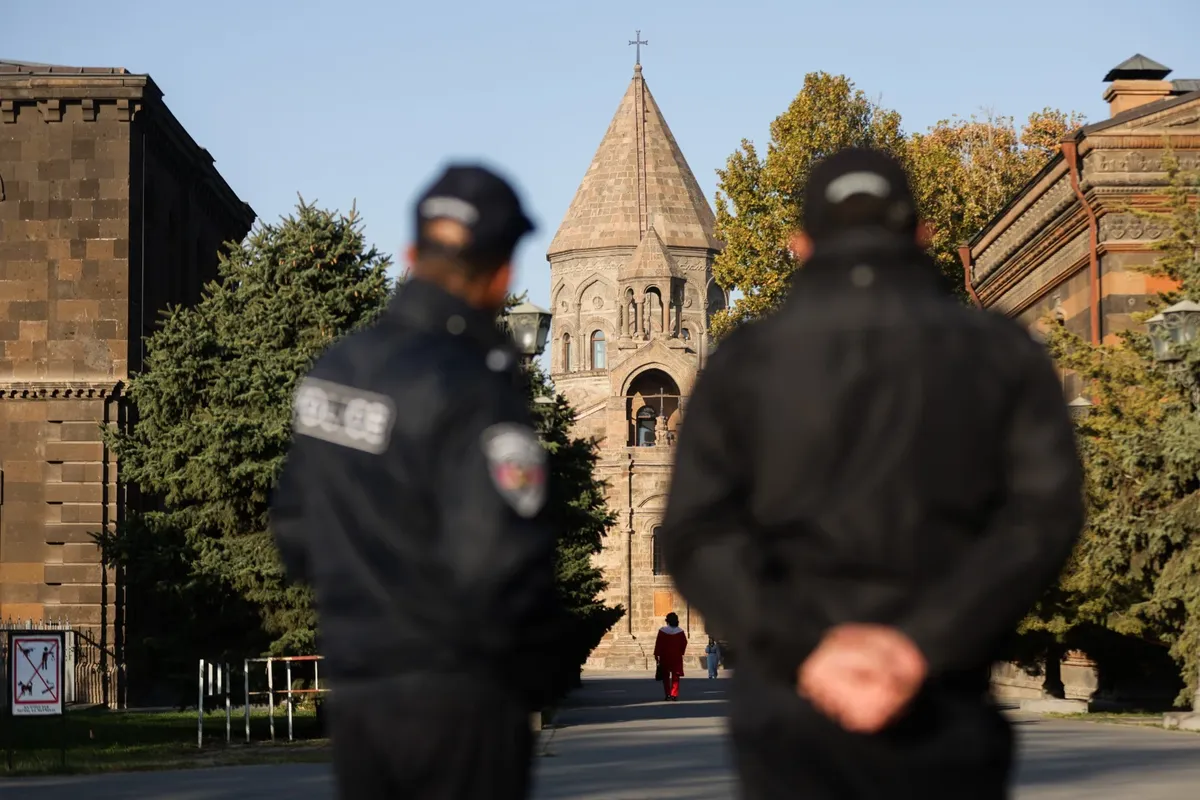
The corresponding decision was supposed to be made at the council in St. Pölten, since the Armenian diaspora, not so immersed in internal political conflicts in Armenia, is inclined to continue to perceive the Catholicos as the most important national symbol. The main foreign policy support of Garegin II quite naturally became the Armenian diaspora in Russia: it is the New Nakhichevan diocese of the Armenian Apostolic Church, centered in Moscow, that promises to curse Pashinyan to the seventh generation.
On this basis, the Armenian media began to suggest that the cathedral in St. Pölten would decide to move the Catholicos to the Russian Federation, thereby creating a “parallel” AAC, completely controlled by the Kremlin. So that no one has any illusions, on December 19 last year, the Armenian government website Civic.Am published the registration card of the head of the New Nakhichevan diocese, the brother of Catholicos Karekin II Archbishop Ezras Narsisyan, about his recruitment by the KGB of the USSR in 1986 with the agent pseudonym “Karo”. That year, the future archbishop had just entered graduate school at the Leningrad Theological Academy of the Russian Orthodox Church, and two years later he became rector of the Armenian church in Leningrad.
...At the time of writing, no information about the beginning of the council had been received from Austria, although efforts to hold it at least via video link continue. The position of the bishops and priests who criticize Karekin II is that he can convene and lead the council only after he responds to the serious accusations of a canonical, moral and political-legal nature brought against him.
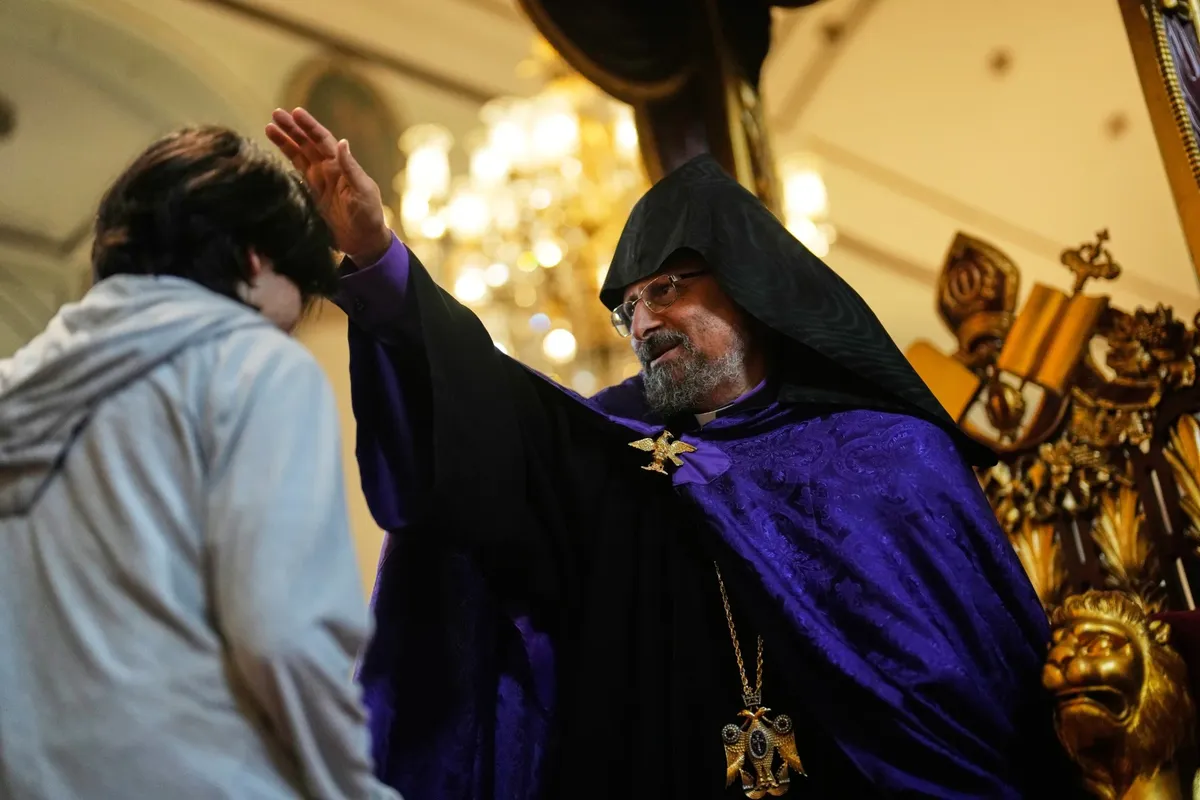
Novaya’s source in the AAC reported that the coordinating council for the purification of the church and the country’s authorities will seek the election of a new Catholicos before June 7, for which parliamentary elections are scheduled in Armenia, and the most likely candidate, supported by the West, is the 63-year-old Armenian Patriarch of Constantinople Sahak Mashalyan. Unlike Garegin II, who studied in the USSR and was closely associated with the Russian Orthodox Church, Mashalyan “did not have connections that would discredit him,” having received his education in Turkey, England and Ireland. However, worthy candidates may also emerge from among the new generation of the Armenian episcopate, which is also not bound by any obligations with the Russian Orthodox Church and the former imperial center.