
Translated material
Operation "Web". How truckers were made extreme for the failure of the Russian special services
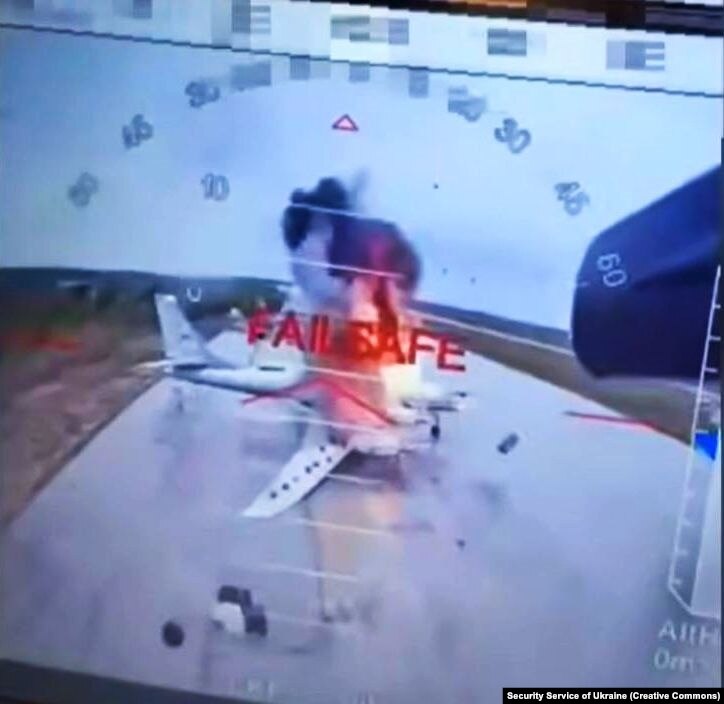
The Investigative Committee closed the criminal case against driver Vasily Pytikov, who died in a truck explosion in the Amur region. During the Ukrainian Operation Web , when drones attacked strategic aviation airfields deep in the Russian rear, Pytikov’s truck caught fire on the road, the driver tried to put out the fire and died. His relatives signed documents to dismiss the case “on non-rehabilitative grounds,” although they are absolutely sure that the investigation is wrong in blaming the drivers.
Text: "Window"
“The investigator essentially pushed us to close the criminal case. My sister and I didn’t want to agree to this at all,” says 46-year-old Elena Proskurnikov , the eldest daughter of Vasily Pytikov, who died in the Amur region. “We wanted to continue to insist on my father’s innocence - we knew him very well.” He was such a person... a ridiculously, to the point of tears, a patriot of Russia. I was very worried about SVO, that the guys were dying there. He constantly watched the news and reacted so emotionally that he was in tears. I can’t imagine how anyone can make him out to be a terrorist.
On June 1, 2025, 62-year-old Chelyabinsk resident Vasily Pytikov was driving a truck whose cargo caught fire on the Chita-Khabarovsk federal highway near the village of Seryshevo in the Amur Region. He was carrying an ordinary-looking new cabin - a small wooden house. The driver took out a fire extinguisher and tried to stop the fire, but then an explosion occurred and he died. As it became known later, combat drones exploded, hidden under the roof of a house, which the truck was supposed to deliver to a specific address. Pytikov missed it just a little: the Ukrainka airfield, which, apparently, was the target of the operation in this direction, is located about 8 km northeast of the village of Seryshevo.
At the same time, in different parts of the country, the roofs of exactly the same cabins, standing in the backs of other trucks leaving Chelyabinsk, opened, and drones with ammunition flew out of them. Dozens of “penny” devices, by war standards, flew to destroy aircraft worth tens and hundreds of millions of dollars.
In the Murmansk region, the target was the Olenya airfield - and, judging by the published videos, the drones managed to hit five aircraft: four Tu-95 and one An-12. The truck with the drones was driven by 56-year-old Alexander Zaitsev.
In the Irkutsk region, drones flew to the Belaya airfield. As analysts later saw from satellite images, at least seven long-range bombers were destroyed there - three Tu-95 and four Tu-22M. The truck transporting the cabins with drones was driven by 62-year-old Andrey Merkuryev.
In the Ryazan region, the target of the operation was the Dyaghilevo airfield. The Russian Ministry of Defense reported that the attacks were repelled. But OSINT analysts, relying on the SBU video, spoke about the defeat of several Tu-22Ms. The driver here was 47-year-old Sergei Kanurin.
In the Ivanovo region, the target of the attack was the Ivanovo airfield. Here, the Russian Ministry of Defense also claimed that the UAVs did not reach the target, but independent investigation teams said that single and very expensive A-50 long-range radar detection aircraft could have been damaged in Ivanovo. 55-year-old Mikhail Ryumin was driving a truck in the Ivanovo region.
In assessing the effectiveness of the "Web", the warring parties disagreed both with each other and with independent analysts. The Russian Ministry of Defense admitted only “the fire of several pieces of aircraft.” The SBU announced the destruction of 41 Russian aircraft. OSINT analysts reliably confirmed the defeat of 13 Russian strategic aviation aircraft: eight Tu-95, four Tu-22M3 and one An-12.
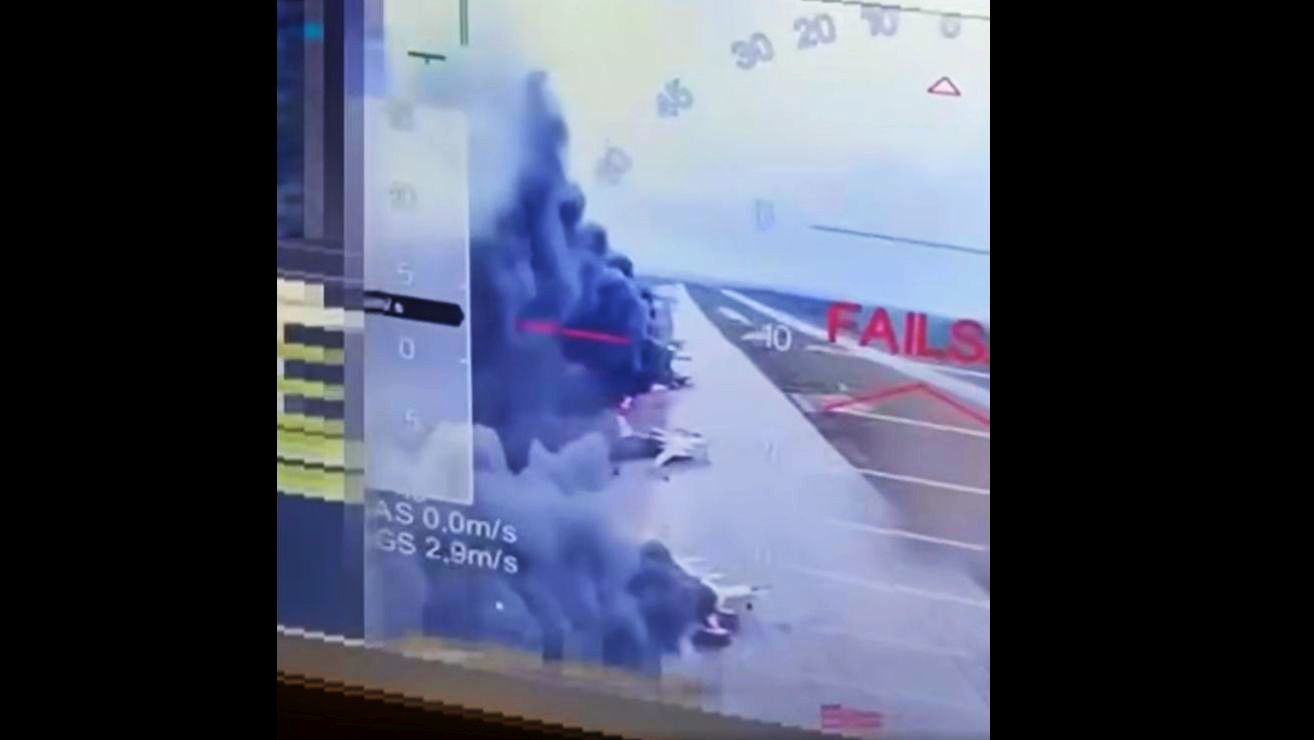
International commentators called the SBU operation “unprecedented,” praising both the preparation of the Web and its success. Ukrainian media later told the details : the operation was prepared for a year and a half in complete secrecy, and one day it almost failed when one of the drivers saw drones in the house. He was reassured that they were for hunting - they say, “they are used to track animals over large areas.”
"We did not agree that he was guilty"
Today, residents of Chelyabinsk Andrey Merkuryev, Alexander Zaitsev, Sergey Kanurin and Mikhail Ryumin are in pre-trial detention center. All were charged with committing a terrorist attack by a group of persons by prior conspiracy, resulting in the infliction of significant damage (paragraphs “a”, “c” of Part 2 of Article 205 of the Criminal Code), and in December 2025 they were tightened by adding an article on illegal storage and transportation of explosives (Part 4 of Article 222.1 of the Criminal Code). The drivers do not admit guilt.
“I am confident in my husband’s innocence and do not agree with the accusations against him. “I have nothing more to say,” Galina Ryumina, the wife of one of the accused, commented to Okna. According to her, her husband is being defended by an appointed lawyer, but she herself has not communicated with him.
There was also a fifth defendant in the criminal case - the deceased Vasily Pytikov. His daughters for a long time resisted the investigators' persuasion to agree to the termination of the criminal case in connection with the death of the accused.
“The investigator told us something like this: “Better shut it down. You won’t prove anything. Lawyers are fighting for the other drivers, someone hired them, but they can’t prove it. And you won’t prove anything.” And there were also words that sounded like pressure: if you don’t sign, they will call you constantly - anytime, from anywhere. They said, then show up. Wherever they say, you’ll go there: either to Moscow or somewhere else,” says Elena Proskurnikova. “We would have survived it, honestly.” We would go, we would go. But they kept putting pressure on something else: “There’s no point. You can’t prove anything anyway.” And they added: if you close the case, then your dad will no longer “figure”, because he is no longer there - the man is dead, “there is no point in judging.” And it sounded as if it was easier for everyone: it’s calmer for you, there’s less writing for us - “there’s no person, there’s no business.”
Elena’s sister Svetlana Pytikova mainly went to the Investigative Committee (they have the same mother, she died in 2021). Investigators told her that “they will practically be judged” - the daughters will sit in court as representatives of the deceased. The sisters consulted with lawyers. Everyone said the same thing: it’s better to sign.
“But no one explained to us that the termination of the case on non-rehabilitating grounds looks as if the family agreed with the investigation’s version.” We were not privy to this at all. If we had been told this initially, we would not have closed the case under any circumstances. They explained it to us differently: “You closed it – that’s all. The topic is closed,” says Elena. “We only agreed that the case be dropped, so that my father would not be “tried further” and that this would not drag on endlessly. We did not agree that he was guilty.
Vasily Pytikov raised Elena from the age of four and completely replaced her own father. She recalls that he always worked as a driver - first he delivered groceries, then he became a truck driver. He says that he loved the road, the highways and traveled almost all over Russia, “he didn’t know how to sit at home at all.”
He took the order, which, as it turned out, was the delivery of combat drones to an airfield in the Amur region completely by accident.
“This time he was just looking for a job: at his last job, the organization closed, collapsed - as it happens. Friends suggested an option based on an ad,” says Elena. “He usually crossed over like this before - not alone, but with fellow truck drivers with whom he communicated. There was nothing strange in this work. The usual long-haul salary, the usual conditions - like others. The first two months they mainly repaired cars: the equipment was old and broke down constantly. And he was such a person: he needed the car to be “tail to neck.” Responsible to the extreme - for the car, for the cargo, for everything. He was even planning to leave: he said that he doubted whether they would pay, because “business trips don’t work out, we don’t go out.” I wanted to wait for the settlement: if they paid as promised, he would stay, if they cheated, he would leave and look further. In the end, he was paid normally, he called me: “Imagine, we paid as promised.” He decided to stay for now.
The eldest daughter describes Vasily as a principled and honest person who was not afraid to argue with his superiors if he saw deception. His cars were always perfectly clean and in excellent condition - clients always praised them. Elena is convinced that Vasily would never have taken the order if he had known the details: “He loved us very much. If he had done such a thing - transporting drones - he would have thought about us first.” She is sure that her father would never agree to take an order that could endanger the family.
– And I’ll tell you this: I would be very surprised if he didn’t go to put out this container, this “house”. Because he always held on to the load as if it were his responsibility – without fear,” says Elena. “Over the years, everything happened to him: they tried to rob, and accidents, and capsized, and various situations - but he always tried to save the cargo, called services, did not leave, decided to the end. Therefore, if there were ordinary “houses” there, without any drones or explosives, then he would definitely go to extinguish it. Can you imagine that he knew about explosives or drones - and still calmly takes a fire extinguisher and goes inside? I don't understand this. And I also don’t understand the consequence that allows such a version. In my opinion, his action shows just the opposite: the man did not know what was there. And I think the same about other truckers: they are not to blame, they didn’t know.
"Someone needs to be held accountable"
Termination of a criminal case at the investigation stage on non-rehabilitating grounds (including in connection with the death of the accused) does not mean automatically finding him guilty, explains criminal lawyer Vyacheslav Ivanov (name changed at the request of the interlocutor). But it also does not allow his name to be cleared - his relatives are deprived of the right to rehabilitation and cannot demand compensation for illegal persecution.
For other defendants facing the same criminal case, stopping the prosecution of the deceased does not change anything.
– The fact that relatives agreed to terminate the criminal case does not automatically mean that everyone else is guilty. All circumstances will be assessed in their entirety: testimony of witnesses, suspects, and so on,” says Ivanov. – If we talk about a situation that could really have an impact: let’s say he gave evidence, the case against him would have been separated into separate proceedings, considered separately and a guilty verdict passed – then yes, this could already have significance for others. But this is not the case here.
Nevertheless, the lawyer very much doubts that the drivers sent to pre-trial detention will be able to prove their innocence - “simply because this is a political issue.”
– Because “someone has to answer for this.” It can’t be that everything happened – and it’s unclear why. This is a very serious operation carried out on Russian territory. Serious forces were involved in it, everything worked very successfully. And then what: they caught specific “perpetrators” - and suddenly it turned out that they were all innocent? It doesn’t happen that way, says a criminal lawyer. “Someone must bear responsibility.” Yes, perhaps someone somewhere behind the scenes will bear responsibility for the fact that everyone “overslept.” But in the public sphere there must be specific culprits. The authorities need to show both society and people the result: this is how we figured it out, this is who was punished.
Chelyabinsk residents will also most likely not be released from the pre-trial detention center before the verdict - even if the judge considering the extension of the arrest is convinced that the Ukrainian special services simply used the drivers in the dark. As an example, Ivanov cites a case from the Pskov region, where shortly before the war, in February 2022, four Ukrainian citizens were detained while trying to smuggle more than 100 kg of drugs into Russia. They were charged with smuggling narcotic drugs on an especially large scale (Part 4 of Article 229.1 of the Criminal Code of the Russian Federation) and their arrest was repeatedly extended, but at the next meeting they were released from custody. The suspects immediately left Russia, and an investigation was launched against the judge, Deputy Chairman of the Pskov City Court Svetlana Grigorieva. She got off with a remark . The criminal case has now been accepted for proceedings by the Pskov Regional Court in the absence of the accused put on the international wanted list.
– The judge released them because the FSB really had no evidence of intent. They were used in the dark: they transported huge amounts of drugs across the border, not knowing that they were carrying drugs. But everyone knows what happened to the judge afterwards. Therefore, of course, this will not happen again,” the lawyer is sure.
This is not the first time in Russia that people who have a casual connection to high-profile terrorist attacks find themselves in the dock.
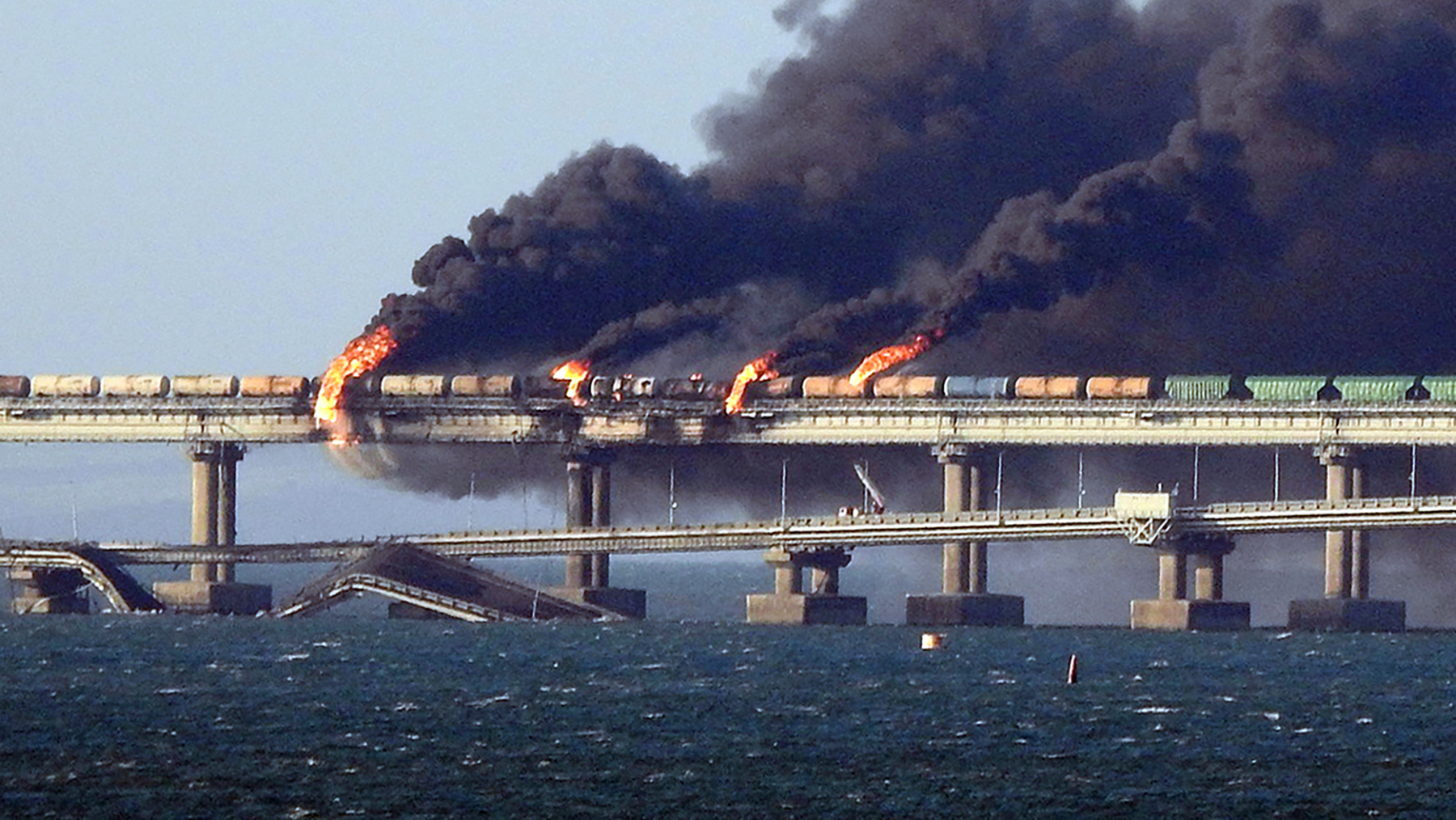
In the case of blowing up the Crimean Bridge on October 8, 2022, people who were responsible for logistics - cargo storage, transportation registration, equipment rental - were brought in as defendants. They were charged with a terrorist attack (clause “b” of Part 3 of Article 205 of the Criminal Code of the Russian Federation) and illegal trafficking/transportation of explosives or explosive devices (Part 4 of Article 222.1 of the Criminal Code of the Russian Federation), and two defendants were additionally charged with smuggling of explosive devices (Part 3 of Article 226.1 of the Criminal Code of the Russian Federation). On November 27, 2025, the Southern District Military Court in Rostov-on-Don sentenced eight people to life imprisonment. The defense’s position was that the people were doing ordinary work and did not know about the “stuffing” of the cargo.
In the case of a terrorist attack in the St. Petersburg metro (the explosion on April 3, 2017 on the Sennaya Square - Technological Institute section), the court in December 2019 found guilty under Art. 205 of the Criminal Code of the Russian Federation 11 people: the main accused Abror Azimov was sentenced to life , his brother Akram Azimov and Muhammadyusup Ermatov were given 28 years of strict regime, another defendant was given 27 years, the rest were given 19 to 22 years. All the defendants denied guilt, some alleged torture, and lawyers spoke about the bias of the judicial investigation.
Daria Trepova, sentenced to 27 years for the murder of military blogger Vladlen Tatarsky in April 2023, also spoke about using herself in secret. Trepova claimed during the investigation that she agreed to bring the bust to a St. Petersburg cafe, being sure that it contained a wiretap and not an explosive. The court didn't believe her.
Operation "Web". How truckers were made extreme for the failure of the Russian special services