
Translated material
Orpheus in Hell
Nikolai Kolyada died. The playwright and director, who during his lifetime became a modern Ural classic, is remembered by Yan Levchenko
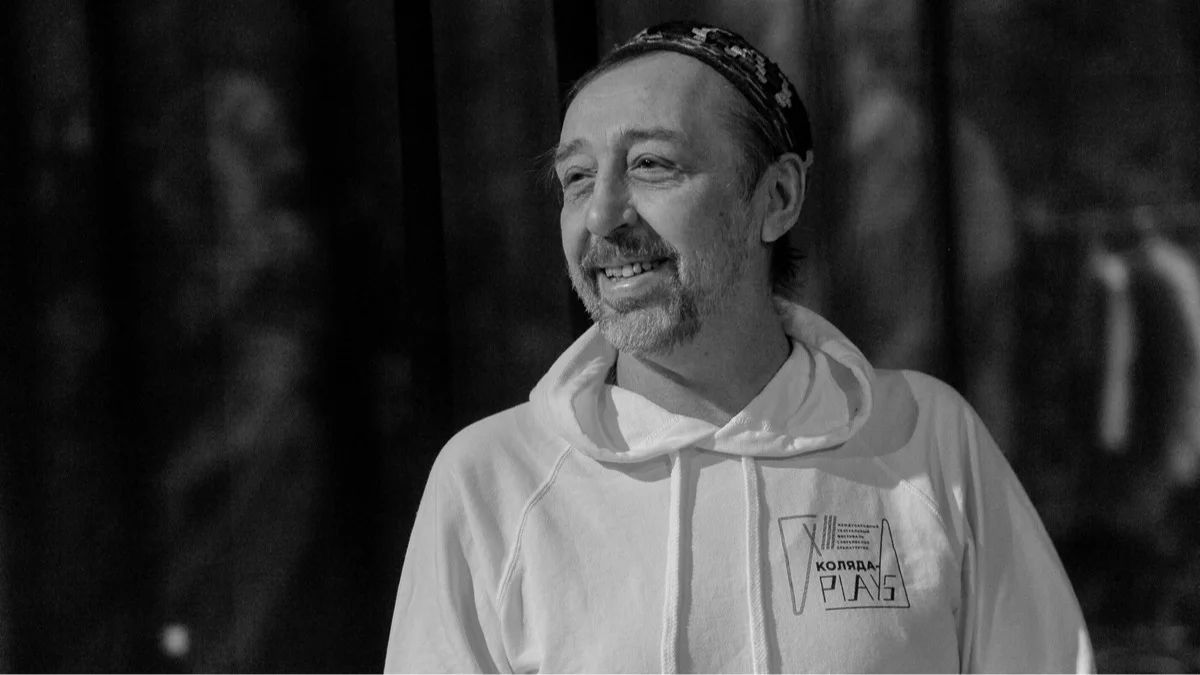
Nikolay Kolyada. Photo: Alexander Avilov / AGN “Moscow”
Kolyada died on the night of March 2, and on the same day his theater produced the play “Orpheus Descends to Hell.” During the rehearsal, the irrepressible artistic director ran away from the hospital, but a week ago he was connected to a ventilator, with which you can no longer escape. The premiere took place in the evening - everyone continued to cry. Not only Yekaterinburg residents saw this. The theater broadcast the premiere online, which Kolyada actually did not miss. He simply ran out of an inconspicuous side door, but the voice, the spirit and the design on the eternal skullcap remained.
The Ukrainian surname Kolyada dates back to the pagan holiday of the birth of the “new sun” on the winter solstice. He was, as his actors first called him, and now everyone repeats, “the sun of Ural drama.” Sometimes they say “modern”, although it is clear that it is not classical. As a director, Kolyada willingly worked with the classics, but in such a way that the most sensitive critics lost their feelings. However, if there is classical drama in the Urals, now it is definitely Kolyada.
Shukshinskaya landing
A village boy from northern Kazakhstan, who entered the theater school the first time after school, ended up at the Sverdlovsk Drama Theater at the age of 21. At the age of 26, he gave one of his hundreds of stories to the writer Vera Kudryavtseva, who organized its publication in the Ural Worker newspaper. In 2018, Kolyada will write in his LiveJournal that they laughed at that publication in the theater. He needed that old grievance as a motivation for his complete collected works, which would include mostly unpublished stories. He, who headed the Ural magazine for ten years of his life without interruption from directing, entered literature from the theater entrance. And having already become a classic of drama, I suddenly remembered prose.
Things didn’t come to a real PSS then - a little earlier, 12 volumes of plays were published in the design of Soviet waste paper series. Kolyada knew that after his departure there would be someone to take care of his legacy. Back then he was more concerned about the student playwrights he was publishing. One of the most eminent, playwright and screenwriter Vasily Sigarev, wrote in connection with the death of his teacher on his social network that he once gave him an embryo preserved in alcohol as the most precious thing he had then. In response, the allegedly frightened Kolyada buried the container in a Christian manner. Most likely it was an adequate completion of the conceptual gesture. Being a believer, Kolyada was not just a God-fearing peasant. He was a demiurge who left signs on earth that were visible from the sky.
120 plays, a third of which are lost or not published, and a third are staged all over the world in different languages, could only have been written by a graphomaniac playwright and a workaholic director, who created a theater named after, but not in honor of himself.
He cultivated the image of a nugget, and in this capacity he was lucky enough to do much more than Vasily Shukshin or Alexander Vampilov, who also seemed to come from nowhere and left really early. And Kolyada did it, as he once promised, “I’ll die at the rehearsal, you’ll see.” It was difficult to imagine him as a stately old man, brought to a plenary lecture by his wife and secretary. Apparently, the quality of life, as one would like to believe, has improved over the past 50 years. As it turned out, even in Russia you can remain cheerful and young even at less than 70, if you live by your own rules, which are not just an inscription on a souvenir T-shirt.
Gonzo theatricality
Kolyada did not create definitions for his method and did not seem to invent anything. According to him, he was bad at stage directions in plays, while the characters’ conversations went by themselves, he simply wrote them down. To say that Kolyada could act in each of his plays, you need to read them all, and this is not an easy and not the most rewarding task. But we can say for sure that in every play there is a hero who at least sometimes speaks in the words of the author. Without such identification, modern dramaturgy will not develop.
This type of literature took shape in Kolyada at the very end of the Soviet era. She, in all her rottenness, deserved satire and at the same time pity - and it was this strange combination that Kolyada the playwright managed very well. And since the era, still called “post-Soviet,” turned out to be even more crevice, cesspool and forever leaking, the style of Kolyada’s early plays like “Game of Forfeits” or “Murlin Murlo” organically developed and transformed in resonance with the reality of the 1990s like “Persian Lilac” and other everyday plays from the “Khrushchevka” cycle.
Short-term participation in foreign projects such as a scholarship in Stuttgart or a performance in the SchauSpielHaus in Hamburg was in the spirit of the early 1990s and probably only helped Kolyada find himself at home. He subsequently always went to Moscow as a fundamentally Ural man, a genius of the place and a local star, which only in this capacity can be of interest to the capitals. Kolyada quickly realized how to sell without betraying.
With his hard work and character, he managed to open a private theater in Yekaterinburg a quarter of a century ago, which operates as the embodiment of local identity and unique microclimate.
Kolyada wisely assembled a team of loyal people who shared his far from obvious bet. Perhaps the heightened Ural identity, atypical for a unified Russia, played a role. The region was and remains quite prosperous so that the Moscow vacuum cleaner did not clean out its best forces even at the stage of high school. Even tomorrow, the Urals are capable of separating from Russia, which until recently was considered “European,” and taking on a life of its own. And the Kolyada Theater became one of the brightest illustrations of this independence.
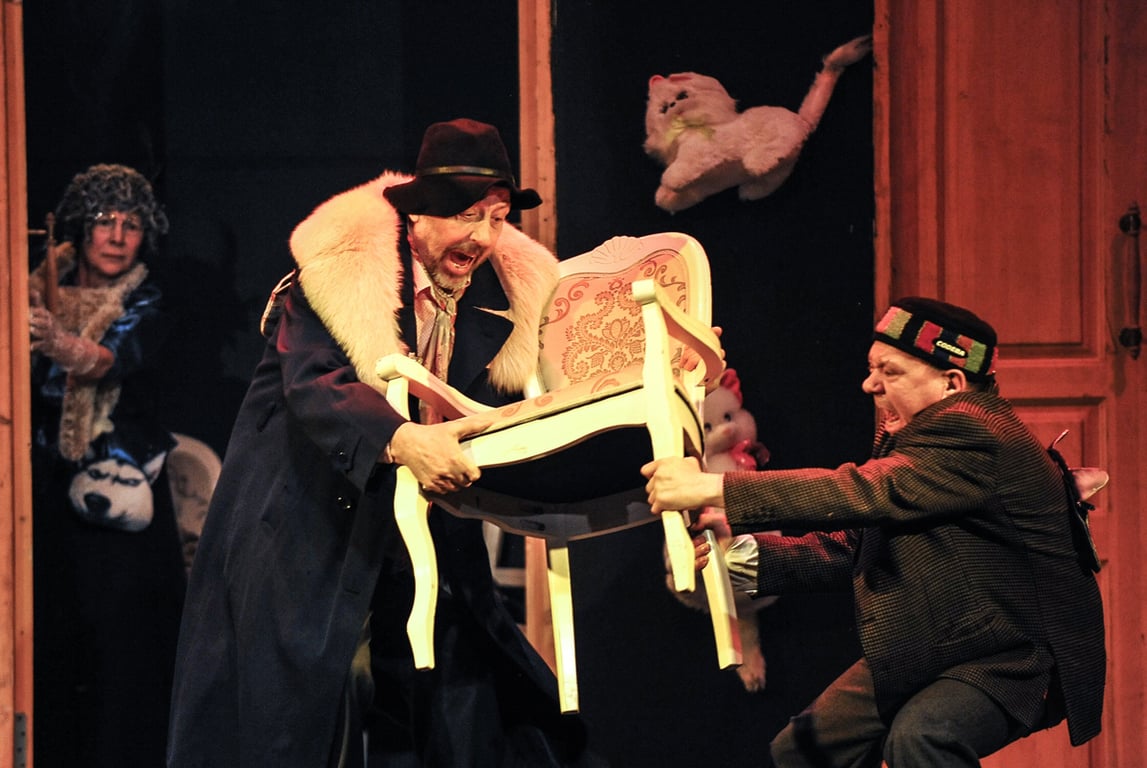
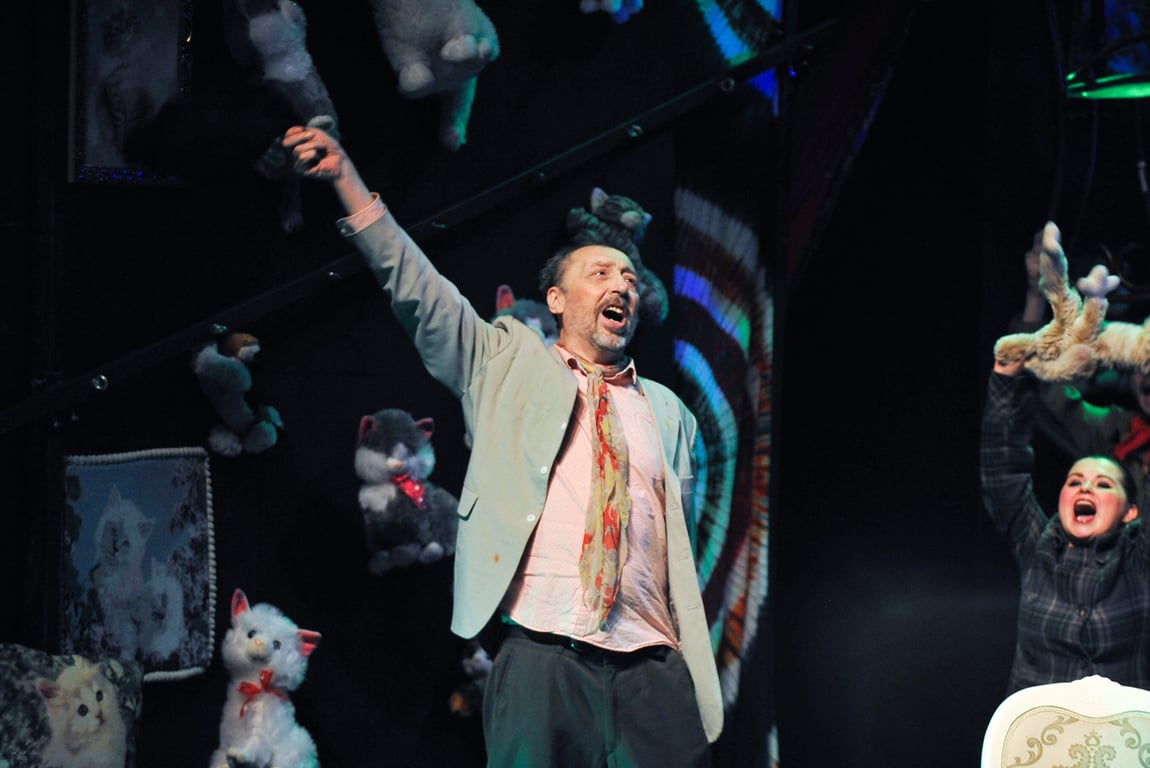
The legend of the productions of the Kolyada Theater became the props for which the actors, led by the master, went to the famous Uralmash flea market. Dressed in flashy, sometimes almost decomposed rags, the Ural gems made a goat for the audience, accustomed to the fact that they have to wear their best clothes to the theater and decorously eat a sandwich during intermission. Why are there regional lovers of beauty: at first, Moscow was choking with indignation at this grimy upstart, who would throw Shakespeare into the toilet and force the characters of Tennessee Williams to masturbate in shorts made from the American flag. Kolyada literally mastered any material and remade it so as to make it “his own.” So he created his gonzo theater, where everything is measured by the genius of one person and where everything is possible if it is commensurate with its scale.
Offerings to the cockroach
On the eve of 2012, Kolyada got into a scandal by declaring himself a confidant of the future - who would doubt it - president, who was then, coincidentally, the chairman of the United Russia party. At that time, the rugged region was still allowed to more or less express its attitude to the emerging prospects, and some people decorated the building of the Kolyada Theater with posters for the supposedly upcoming play “Masquerade,” staged by the artistic director with Putin in the title role. Kolyada became terribly angry, went to television studios and explained that, as a citizen and a free man, he would vote for the old president because he “likes him better.”
Already at the end of 2012, there was an improvement in the situation with the premises of the Kolyada Theater, and in 2014, this non-profit partnership moved into the premises of the former Iskra cinema. It was repaired at the expense of the administration of the Sverdlovsk region, which, like the Leningrad region, remained true to itself, despite any “burgs”. By that time, Kolyada had acquired a taste for Moscow chess and no longer cut discs with video recordings of performances on his personal laptop for sale in the lobby. Firstly, of course, CDs were already going out of fashion, being replaced by the universal YouTube. And secondly, the cultural institution has matured, and there was its own historical logic.
In the decade that has passed since then, little has changed externally. With the outbreak of the big war, only the most risky actors of the Kolyada Theater, such as the leader of the Kurara group and the first-rate star Oleg Yagodin, allowed themselves anti-war statements - and then rather in the form of isolated slogans.
In 2022, Yagodin was fined for “discrediting the army”, and in 2024 they demanded to be removed from the tour bill in Moscow. Kolyada remained faithful to his leading artist and canceled the tour.
However, Yagodin’s group was also soon canceled, declaring its concerts undesirable.
All this is so small compared to the scale of Kolyada itself that it is a shame to devote so much space to these ripples in the water. And yet, this has its own morality, which becomes noticeable in eras of triumphant rudeness. The huge world that Kolyada built throughout his working life will not go anywhere, but the shadow that fell on him “in the name” and “for the sake of” under the assurances that one must be friends with the authorities has also become history. Moreover, now the biography of the genius ends with it. By the way, he himself said that “smart people fight fools, but wretched dullness always wins.” Nikolai Vladimirovich knew life well.