
Translated material
Melissa Theriault: “Indigenous philosophies think in terms of relationships, not divisions”
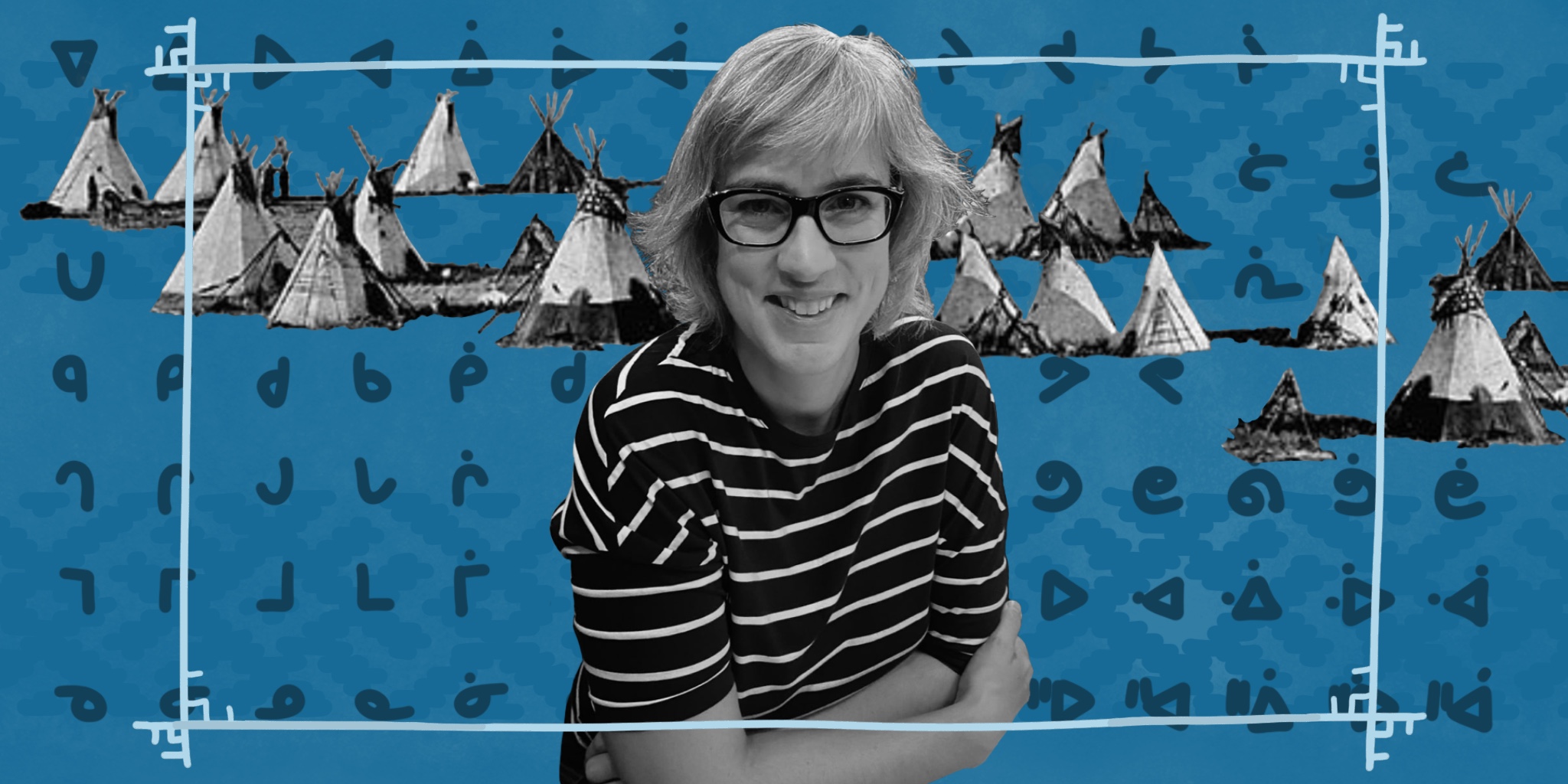
The Russian authorities are developing a unified philosophy course that all students will study. It will form “the idea of Russia as a separate civilization with its own values.” Western authors in the program will inevitably be replaced by domestic ones. In modern Russia, such initiatives are often supported by anti-colonial rhetoric (the fight against Western imperialism), behind which great-power chauvinism is clearly visible. We set out to explore what decolonizing philosophy as a university discipline might actually look like, and where Indigenous perspectives might fit into it. We talked about this with Melissa Thériault, professor of philosophy at the University of Quebec at Trois-Rivières (UQTR).
How did you decide to incorporate Indigenous perspectives into philosophy teaching? Was this preceded by the realization that philosophy as a discipline is in a certain sense colonial?
In my case it happened quite suddenly. I had an epiphany of sorts after meeting a student in a university hallway. The issue of representation of indigenous cultures has bothered me before, but I felt powerless. I felt that I had no control and that I was obliged to strictly follow the approved programs and course plans. In addition, at that time my position was contractual, with the possibility of extension, and this gives rise to caution in relation to any initiatives that could be perceived as unwanted or deviant.
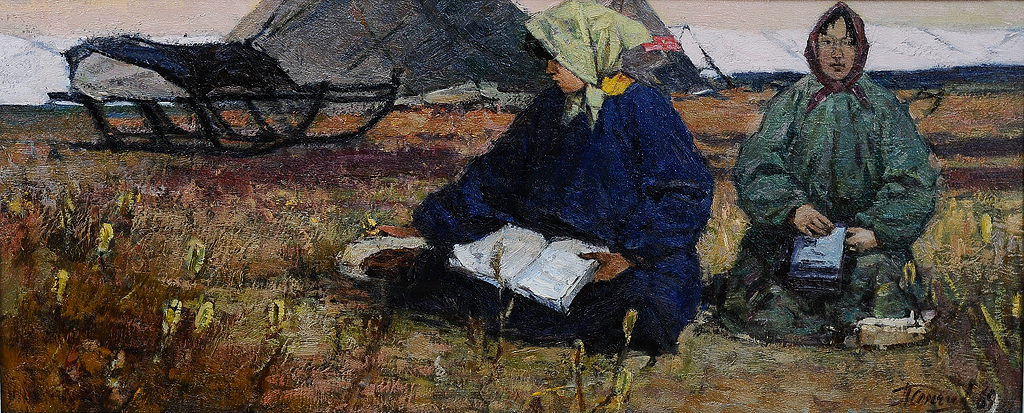
When I met that student, I realized that this was an indigenous woman who felt uncomfortable in the university corridors, and that shocked me. She needed to feel at home. I wanted her to have a good time at university. But she was afraid, she was intimidated, and when I came up to answer her question, I felt how difficult it was for her to be here. From that moment on, I began to gradually change my approach - through small steps.
Was it a long time ago?
In 2017. I have been working at UQTR for four years. What makes our university special is that it is located closer to indigenous communities than other universities. UQTR is located in Trois-Rivières, and in the Mauricie region there are autochthonous communities an hour's drive away or even closer. For example, La Tuque is the city with the largest proportion of indigenous people in its urbanized environment. These communities speak their native languages en masse.
It seemed especially abnormal to me to know nothing about the people who live so close. And I was embarrassed to pretend to teach some knowledge in a territory where many types of knowledge coexist. I myself am not from this region and at the same time I was discovering its special culture. I thought that my work on self-education could be useful to students and that they could discover it with me.
Were there many indigenous people among your students?
There are many Indigenous students at UQTR, but not all of them are identified. Some surnames are easily recognized, others are not. It is impossible to determine by name or appearance. The law does not allow us to request such information, and this is correct for many obvious reasons.
Until recently, in the Quebec cultural context, it was strategically advantageous for indigenous people to hide their identity rather than declare it, in order to avoid facing prejudice. There was therefore little incentive for people to identify as indigenous, and mechanisms to promote diversity and combat discrimination were relatively new.
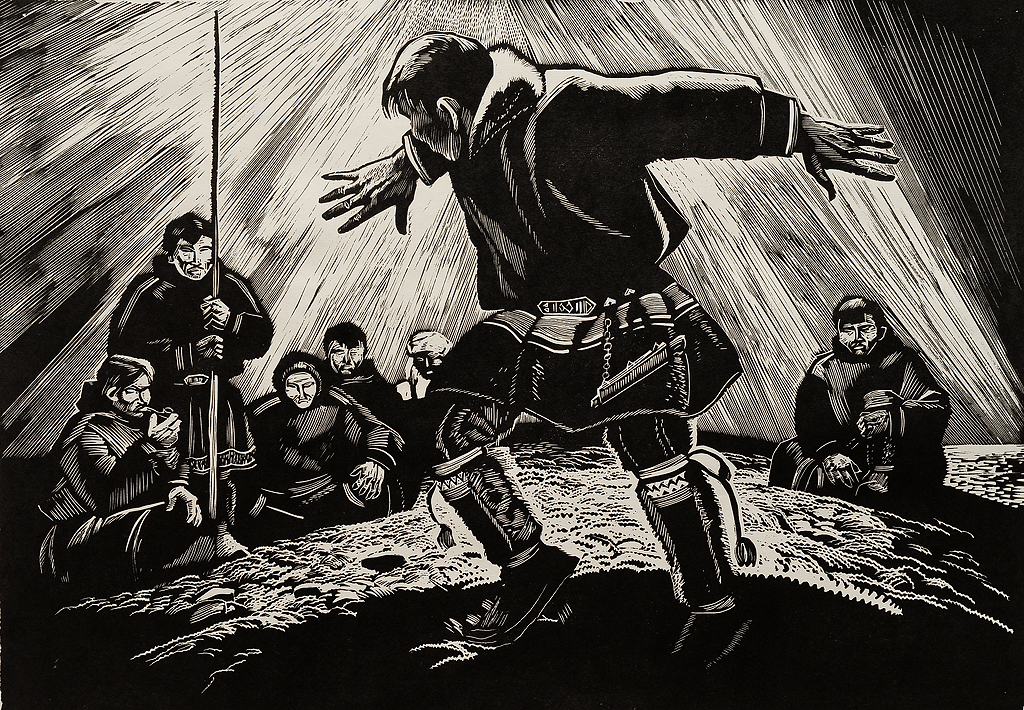
The cultural context has changed since the events of 2012 associated with the Idle No More movement. This was a wave of what is called the indigenous awakening ( la résurgence autochtone ), a wave of pride and concrete action by the communities themselves to organize themselves and support their culture. The movement was associated with environmental initiatives, but spread to all areas of life. By supporting each other, different communities were able to achieve concrete results.
Idle No More, a grassroots movement in Canada, began in 2012 in response to changes in federal legislation that affected land, environmental and treaty rights without sufficient consultation with First Nations, Métis and Inuit communities. The movement combined mass protests, circle dancing in public spaces, and active online mobilization, becoming an important stage in modern indigenous political self-organization.
For us at UQTR, this meant the need to provide more tailored, personalized services. Therefore, yes, there are many indigenous students, but they were not visible before. Now we invite them to identify themselves, offer special services, and together with them we try to understand what needs to be changed. In recent years, representatives of indigenous peoples have appeared among professors and teachers. This is very important because it sets an example for students. I believe that our university has become more hospitable and adapted to their realities than just a few years ago, in particular thanks to the construction of a dormitory for indigenous students.
Do you refer to the introduction of indigenous perspectives as “decolonizing philosophy”? If so, what does it mean for you in practice?
The terms are complicated because their meaning varies from place to place. For example, discussing decolonization with French colleagues is a very delicate matter, because for them the term has a completely different connotation. For colleagues from among indigenous peoples, this again has a different meaning. Therefore, I can only use this term as a metaphor for now. You probably know the famous text by C. Wayne Young and Eve Tuck Decolonization is not a metaphor . In it, the authors explain that for true decolonization it is necessary to redistribute power, restore access to decision-making, and share power, territory and resources. Otherwise, this is not decolonization, but only a way to calm the conscience with beautiful words. For me, unfortunately, I can only carry out metaphorical, intellectual decolonization, but this is a small step that can lead to something bigger.
I started with one single text in the program of one course. And it was rather a failure, because the responses received only repeated stereotypes and prejudices against indigenous peoples. But I insisted on my own. I returned to the text, began to teach better, and gradually added text to each course. One text per course is similar to “tokenism” [approx. ed.: the symbolic inclusion of a person in a group for the sake of the appearance of diversity] , but this was the beginning. Now, all of my courses have an explicit commitment to having not just one text, but several classes that address these issues. Decolonization occurs through the realization that the education we consider to be the best, that is, higher education, is only one form of learning among others, and it is not perfect.
So this is where I'm at at this point in the process: I'm trying to make people aware that there are indigenous philosophies that were shared in this area before us.
What texts did you use?
I started with my specialization – philosophy of art. At first I tried to take inspiration from a colleague who had applied this approach to political philosophy or legal philosophy and was doing excellent work. I tried teaching the same authors, but it didn't work for me. Then I began to include texts by indigenous authors in the course “Philosophy and Literature” and the course on aesthetics. This is how I discovered other authors living in Quebec. For example, Georges E. Sioui, an anthropologist and philosopher who has written extensively about what indigenous philosophy can be. I let him read his texts. I also used translations from Indigenous authors from other Canadian provinces, such as Lee Maracle Maracle) or Chelsea Vowell.
I am increasingly convinced that there are indeed many available sources. The only difficulty is that they are scattered across different disciplines. To engage with or be inspired by indigenous philosophy, I have to go into anthropology, sociology, literature, which requires additional work.
Are you talking about modern authors?
Yes, and I even have a huge selection. Many texts available. I also sometimes use the works of my allochthonous [approx. ed.: non-indigenous] colleagues. For example, Dalie Giroux has been working on this issue for a long time from the perspective of political philosophy. Reading her works helped me quickly deepen my own knowledge on this topic.
What was the reaction of your colleagues?
Many react with slightly mocking indifference. I have seen this reaction often. As if it were some kind of eccentricity or something absurd. Others thought it was a great idea and asked for examples, lesson plans, and asked how I did it. I participated in presentations to colleagues and created pedagogical tools. But in university philosophy I notice a reaction that oscillates between mocking indifference, outright hostility, or curiosity mixed with discomfort and fear on the part of those who do not know how to take it on and use excuses not to do anything. For example, I often hear: “Well, yes, but I’m not an indigenous person, I can’t take credit for these issues.” I suspect that this reaction is a ploy to avoid doing work or to avoid the discomfort of a guilty conscience.
What are they afraid of? Revision of canons?
Revising the canons is a painful issue. There is a belief - the same as when feminists demanded more works by women: if we add anything, we will lose the classics. Essentially, it is about the fear of losing power or moral authority. I understand that this is a sensitive moment for those who do not want to question their beliefs. But I'm a philosopher, and my job is to question my beliefs and faith. In terms of corpus texts, I have complete control over what I teach, so I make sure students still see the classics, but I integrate other things as well.
Another obstacle is the amount of work required. If you've been teaching a course plan for years and you're asked to do work where you'll make mistakes, change perceptions, adjust, or develop new exercises, it's easier to brush it off than to get to work. Some people just don't want to do the extra work.
Another reaction is a belief in some kind of moral superiority. Unfortunately, I still hear this a lot. There is a belief that indigenous peoples can have no real philosophy other than animal legends. This is still a common stereotype. But once you become a little interested, you will realize that animals are symbols, and they function in the same way as philosophical concepts.
Are there themes in philosophy that really change from the perspective of indigenous cultures?
Yes, in particular, philosophical anthropology. Colleges have a required course that discusses human concepts. Integrating an indigenous perspective would change the picture entirely, adding something radically different to the proposed models. Usually we start from Cartesian dualism and consider, for example, the relationship between body and mind through Freud. But the indigenous peoples' perspective on this issue is completely different and very fruitful. The indigenous anthropological concept sees a person as a set of connections with the living and inanimate world, so dichotomies like “body - spirit” are in some way resolved. Indigenous philosophies think in terms of relationships rather than divisions or divisions. I learned this from reading Leanne Betasamosake Simpson, an Anishinaabe woman from Ontario.
How might this enrich our understanding of the world? Does this perception of man meet the needs of today's world?
I believe that today's youth are more aware than ever of the importance of taking action in response to the current environmental crisis. They experience environmental anxiety and, from my observations, sometimes feel lost. They place great importance on connecting with others, even if in practice this is not always easy. Therefore, I believe that it will be very useful for them to know that we already have before our eyes models of possible life that prioritize connection with the territory and other people.
The history of Quebec is also an experience of colonization. Does this experience help or rather hinder the application of indigenous perspectives?
You are asking a very important and delicate question. From my observations - and let me remind you that I am not a political analyst, but a humble philosophy teacher - it seems to me that Quebecers have a lot of work to do in self-analysis and understanding their own feelings in this extremely difficult situation.
In short, French-speaking Quebecers have long suffered from economic inequality and a deeply alienating and oppressive cultural and political context. For centuries, my ancestors were poor, limited by strict religious boundaries, and subjected to economic humiliation. For example, until recently they were not judged in their language, they could not receive education in it, especially higher education. Today's youth do not seem to realize how oppressive the cultural context was for Quebecers just recently: outright discrimination, double standards, endemic poverty, etc. Because of this, Quebecers often saw themselves as both sufferers and survivors of difficult conditions.
The current conjuncture labels them with the very uncomfortable label of “oppressors.” And for many people, figuring out how these labels fit and collide is a difficult task. Instead of facing these painful thoughts, many choose to simply ignore the problem or turn a blind eye to it, unable to do anything better.
I also notice something similar to Quebec bashing - outside the province they often like to point the finger at Quebecers as those who are lagging behind on this issue. And this is also completely unconstructive, because it is useless to simply look for scapegoats who cannot defend themselves because, on the one hand, they are in a position of privilege, being predominantly the white majority and/or descendants of the colonialists. It is counterproductive to polarize the situation and say “you are bad” or “you are worse than them or us.”
The expression Quebec bashing in Canadian political and media discourse refers to systematic criticism, stereotyping or derogatory remarks about Quebec and Quebecers (especially French-speaking ones). Most often, the term is used by Quebecers themselves to describe Anglo-Canadian rhetoric in which the province is accused of “separatism,” “special privileges,” or unwillingness to integrate into the overall Canadian identity.
We are stuck in a situation where labels contradict each other, and it is difficult for us to recognize where our share of responsibility is and where are problems that are beyond us. In my opinion, reveling in shame or guilt is useless. It's helpful to admit your mistakes, understand what happened, make sense of things, and work together to fix what can be fixed. And we can do a lot. But to do this, we need to recognize both our mistakes and the benefits that we derive from situations in which others have suffered. For example, hydropower. Quebec became very rich from it, but at the expense of the people who lived in the flooded areas. We will not be able to return these lands. But we can acknowledge the damage that has been done, ensure it does not happen again, and better redistribute the resulting resources and wealth.
The first settlers from France lived for a long time in conditions of autarky and survival. Yes, they appropriated land, but their goal was precisely survival. However, they were poorly informed. The whole dynamic was problematic: the clergy told them that the indigenous people were not fully human, and they themselves were illiterate poor people. Unfortunately, prejudices have grown on this basis, and we have a lot of work to do. We, the descendants of the colonialists, must do this - educate each other, explaining that this is not in the past. Indigenous people live with the consequences of this today, and it is not something that can be forgotten, but something that needs to be corrected in the present.
You are also interested in feminist philosophy. Does this create tension? Among decolonial activists there are those who say that feminism is part of epistemic violence. In your experience, is it easy to combine these optics?
Great question. If you talk to local indigenous activists, their view is not a rejection of feminism, but rather a concern that there are so few of them themselves. Their concern is: “There are so few of us that if we only talk about women, we will forget about half the people.” And because they think in terms of relationships, speaking only on behalf of one group can be perceived as a declaration of war, although feminism does not strive for this, but can sometimes be perceived as such.
Therefore, in my opinion, labels or currents of thought should be ways to achieve worthy goals - equality, justice. Sometimes the means are imperfect, but an imperfect means for making progress is still worth considering despite its shortcomings.
But tension still arises?
Yes, yes, it happens sometimes. For example, in feminist discussions we see a serious clash. On the one hand are feminists of the older generation, whose feminism was focused on economic achievements. It is also often called “bourgeois feminism.” More modern feminism is intersectional, anti-colonial, anti-everything. This is great, but sometimes, by trying to apply all the labels at once, we become the worst enemies of our own allies. It saddens me to see a conflict between generations when the young do not understand that the work of their predecessors was a condition for their own activities. Again, you need to be able to think in terms of relationships, not oppositions.
What do you think a decolonized philosophy could be? Will it still be philosophy in the usual sense of the word?
Philosophy can be studied everywhere, it does not belong only to universities. Essentially, philosophy is the process of understanding fundamental values. This can be done from an Indigenous, decolonial or Western perspective. The main thing is that no one is left behind in this process.
I'm optimistic when I see things like Ways of Being in the World coming out in 2023. It was written by an indigenous philosopher who was educated in the Western tradition but brought together texts from various indigenous authors to offer a particular vision of the world. She says, “Here is an example of what has been done as philosophy in North America, keep up the work.” And it is possible. It is possible to have teaching that is decolonized or that integrates other values. I think philosophy will take the form that people want to give it.
