
Translated material
"It's a tough scenario"
The Ministry of Finance announced a reduction in “non-sensitive” budget expenditures by 10%. We explain how this will affect the pockets of Russians
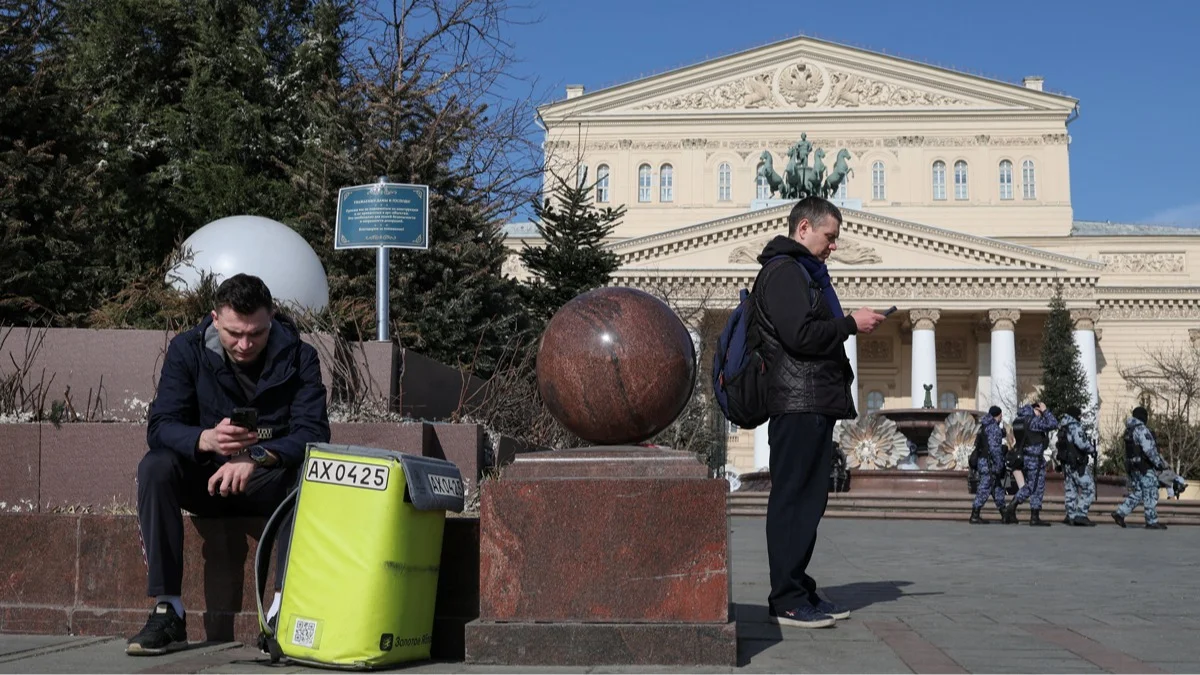
Passers-by in front of the Bolshoi Theater in Moscow, March 17, 2026. Photo: Ramil Sitdikov / Reuters / Scanpix / LETA
The Russian authorities have decided to cut some federal budget spending by 10% to help the economy and protect themselves from a new surge in inflation. This will not provide very large savings - approximately 0.6–2 trillion rubles. But, most likely, this measure alone is not enough: huge military expenditures will require another increase in taxes. Finance Minister Anton Siluanov last fall, in numerous interviews and speeches, convinced that the federal budget is a well-balanced financial document, because it will allow the economy to grow and there is enough money for war, pensions, benefits, development and “technological sovereignty.” Only a few months have passed, and it turned out that government spending, inflated to a historical record, is beyond the economic capacity, so it urgently needs to be reduced.
What will they put under the knife?
The Ministry of Finance is talking about a ten percent reduction in “non-sensitive” treasury expenses, but economists interviewed by New Europe do not have a common opinion on what exactly this includes.
Experts say that there are several budget items that the sequestration will definitely not affect, because now the state is waging a war, for which it borrows a lot of money on the domestic market and buys the loyalty of its citizens with various payments. These are defense, security, social policy and servicing the national debt - together they amount to 28 trillion rubles. If we subtract this amount from the total expenditures planned for 2026 (44 trillion rubles), we get 16 trillion rubles. Reducing these expenses by 10% will give the Ministry of Finance savings of 1.6 trillion rubles.
This is probably some kind of benchmark that the authorities are striving for. There are other estimates - both higher and lower, because even within the conditional “protected” articles, you can probably find something to refuse. An economist at a foreign bank told Novaya-Europa that he estimates the reduction could range from 1.3 to 2.2 trillion rubles.
Economist Dmitry Polevoy has a different opinion: he writes in his Telegram channel that the sequestration will not exceed 600 billion rubles. His calculation is based on the fact that not only defense, security, social policy and interest expenses cannot be reduced (remember, this amounts to 28 trillion rubles), but here we must also add various payments (1.5 trillion rubles) and interbudgetary transfers from the federal budget (9 trillion rubles). All together it adds up to approximately 38 trillion rubles - thus, it will be possible to reduce only the remaining part of 6 trillion rubles by 10%.
The skewed amount may include part of unprotected expenses on the economy, medicine, education, housing and communal services and the environment. The last four articles may suffer the most due to the fact that they themselves are very small in terms of funding, especially against the backdrop of colossal military expenditures of 13 trillion rubles. For example, medicine - 1.9 trillion rubles, education - 1.7 trillion, housing and communal services - 2 trillion, ecology - 1.1 trillion.
Therefore, any cuts here will be sensitive, and given that these are traditionally the most underfunded public spheres (New Europe wrote about this in detail), such a sequestration will directly worsen the quality of life of citizens. For example, residential buildings will continue to be left without heat and electricity and pipes will burst.
The wear and tear of utility systems is estimated to range from 40 to 70%, because even without reducing expenses, housing and communal services are underfunded by trillions of rubles, and what is already included in the budget is extremely small - officials themselves admit this.
And if we take the costs of medicine, they are small even without any sequestration: medical workers complain about a salary of 14 thousand rubles. Instead of improving working conditions , officials came up with labor conscription: now graduates of medical universities must work in state clinics for one to three years or pay a fine. There are the same problems in education: due to staffing shortages, teachers are overworked, parents complain about “double” classes, and schools are forced to introduce second and third shifts.

Why do you need to cut costs?
The Russian budget for 2026, in the form in which it was adopted last fall, carries at least two strong inflation risks.
First of all, there is a hole in the budget. Due to the collapse in the price of Russian oil at the beginning of the year, oil and gas revenues in January and February fell by half compared to last year. If oil remained cheap all year, it would almost double the annual budget deficit to about 7.2–7.4 trillion rubles—meaning the authorities would need to find an “extra” 3.4–3.6 trillion rubles somewhere.
To close the hole, according to the calculations of economist Dmitry Polevoy, it was necessary not only to spend half of the liquid part of the National Welfare Fund (that is, to deprive oneself of a safety cushion for a rainy day in the future), but also to sharply increase, by about a third, loans on the domestic market. And it is precisely this last measure that is the second powerful inflationary factor: by increasing the demand for rubles through the sale of federal loan bonds, the authorities are inflating inflation. And the announced spending cuts will make it possible not to significantly increase the domestic debt.
The second reason is that inflating costs to a historical maximum already works to increase prices. The Central Bank is fighting this with a high key rate, and it really works: economists expect inflation at 5.3–5.6% in 2026 (at the same level it was in 2025 after a peak in 2024 of 9.5%). But the high cost of borrowed money is one of the reasons why the economy is not growing. Economists say the first quarter of the year could be the first trimester of GDP decline since 2022. And if the decline continues for two quarters in a row, this will mean that Russia will enter a recession.
Economists call the reduction in spending a potentially disinflationary factor, because this will enable the Central Bank to lower the rate faster and allow the economy to “breathe” a little.
Will a war in Iran help?
Now we can assume that the budget deficit at the end of the year will not grow as dramatically as it could if Russian oil was sold at about 40–45 dollars per barrel, as in January and February.
The war in the Persian Gulf sent raw materials to record levels, which is why quotations of Russian fuel soared in price , first by 66%, and then by 120%, depending on the dates of shipment and the port of destination.
As of March 16, shipments sent to India (which accounts for approximately half of Russia's maritime exports) were selling for $99 per barrel. And on March 13, the United States, trying to stop the rise in oil prices and reduce its deficit that arose after the start of the war, issued buyers of Russian fuel permission for a period of 1 month to purchase cargo stuck on tankers at sea. And this is just a month after Donald Trump announced : he got India to abandon Siberian raw materials in exchange for lower tariffs (and in 2025, the White House included all the largest Russian oil companies in the SDN-list, which made their exports toxic for buyers).
Sergei Vakulenko, a senior fellow at the Carnegie Berlin Center for Russian and Eurasian Studies, says that when the price rises by every $10, Russia receives $2.8 billion in “extra” dollars a month. If the average price of Russian oil rose from about $30 to $75, at today's ruble exchange rate, tax collections would increase monthly by an additional about 680 billion rubles, which would close the deficit.
If the average price of Russian oil rose from about $30 to $75, at today's ruble exchange rate, tax collections would increase monthly by an additional about 680 billion rubles, which would close the deficit.
Already in March, budget revenues from the export of raw materials could double - to approximately 600 billion rubles, according to Reuters calculations . The 2026 budget is balanced at an oil price of $59, that is, in order for the deficit not to go beyond the forecast, Russian Urals for the rest of the year should be sold at a price above $62, given the dip in price at the beginning of the year. At the same time, with the high cost of oil, the budget not only earns additional income, but also shares it with oil workers, returning it to them in the form of damper payments. This is to ensure that they keep gasoline prices low.
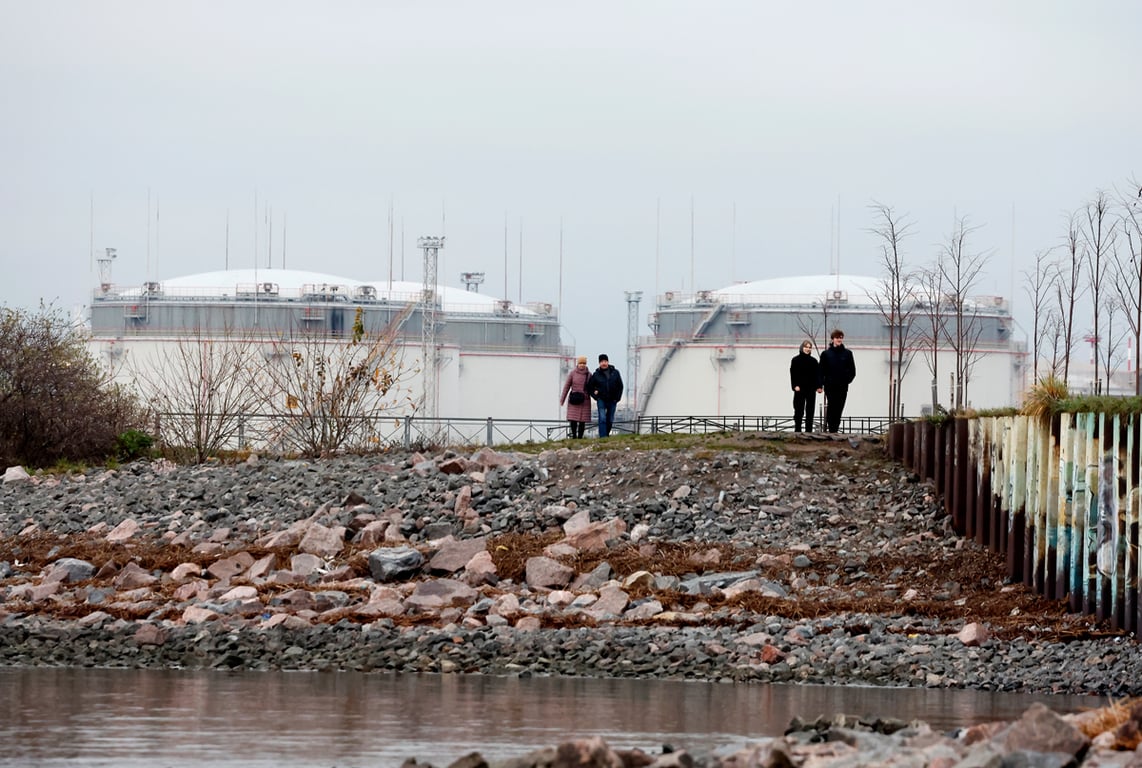
The main unknown in this whole equation is that no one knows how long high oil prices will last: it all depends on the duration of the fighting in the Middle East and the timing of Iran's blockade of the Strait of Hormuz. As Vakulenko says , if the movement of ships along this transport artery is stopped for a long time, then oil could reach $150 and even cost more. And if the blockade is lifted, the price will drop to the previous 65–70 dollars, although, Vakulenko believes, the discount on Russian oil may be less than the “pre-war 25 dollars.”
The price peak that we are seeing now looks short-lived for now, and therefore is not capable of solving budget problems even in terms of one month’s expenses, a Russian economist who requested anonymity told us.
“I don’t see any possibility for such energy prices to remain high for quite a long time, because the rest of the world, and primarily the United States, is not very interested in this, they have a rather painful issue of inflation,” he added.
Where else to look for money?
The Ministry of Finance developed its plans for budget sequestration even before the rise in oil prices, and it is important for it to insure against negative developments of the situation, two economists working in Russia told us.
“They ( the authorities) are proceeding from the worst-case scenario, that oil prices will fall back,” one of them explained. “And they need inflation to be manageable.”
At the same time, another interlocutor said, minus 10% of “non-sensitive” expenses is a fairly strict sequestration scenario. Beyond this, in his opinion, it is no longer possible to find “extra” expenses in the budget that could be abandoned, given that a lot of money is needed for the war and buying the loyalty of citizens through social payments. But the Kremlin will definitely not bite off trillions from the financing of the military machine, and other tools for balancing the budget are precisely what make inflation unmanageable.
The first and obvious tool is new taxes and fees, which experts tell us about the possibility of increasing. At the same time, an economist at a Western bank reminded us, the government has been increasing the tax burden on the non-oil and gas sector for several years in a row, and now it is at a historical maximum - and this is painful and puts pressure on economic growth.
Economist Oleg Buklemishev, in an interview with the Living Nail channel, said that the authorities are now discussing new options for taxing excess profits of companies, gold miners, banks, and online platforms.
The government will most likely simultaneously cut spending and increase the tax burden,
the expert believes. The trouble is that this not only puts an end to economic growth, but also deprives the budget of planned revenues. Buklemishev cited the example of a failed increase in the recycling collection for cars: in 2025, they collected 40% less than the plan, because people stopped buying cars because of their rise in price.
“People will say: “We don’t want to continue working, such a tax burden does not allow us to achieve normal profitability, we will close,” which, apparently, has already begun to happen en masse with public catering,” explained Buklemishev.
And when sequestration and taxes do not help, the government will be left with the last, and worst, scenario in which inflation could go wild, argues one of our interlocutors. If oil becomes cheaper, which means the hole in the budget begins to spread again, the government will have to sharply increase borrowing. In order for the Ministry of Finance to be guaranteed to attract an additional 1–1.5 trillion rubles in debt, a scheme of veiled lending through the Central Bank can be used: the law prohibits it from directly lending to the government, but does not at all prohibit it from giving loans to commercial banks that will buy bonds.
“This means printing money, and this means goodbye to controlled inflation,” says one of our interlocutors.