
Translated material
The 20th century begins: what do Sergei Sergel’s photos from a trip to Komi say?
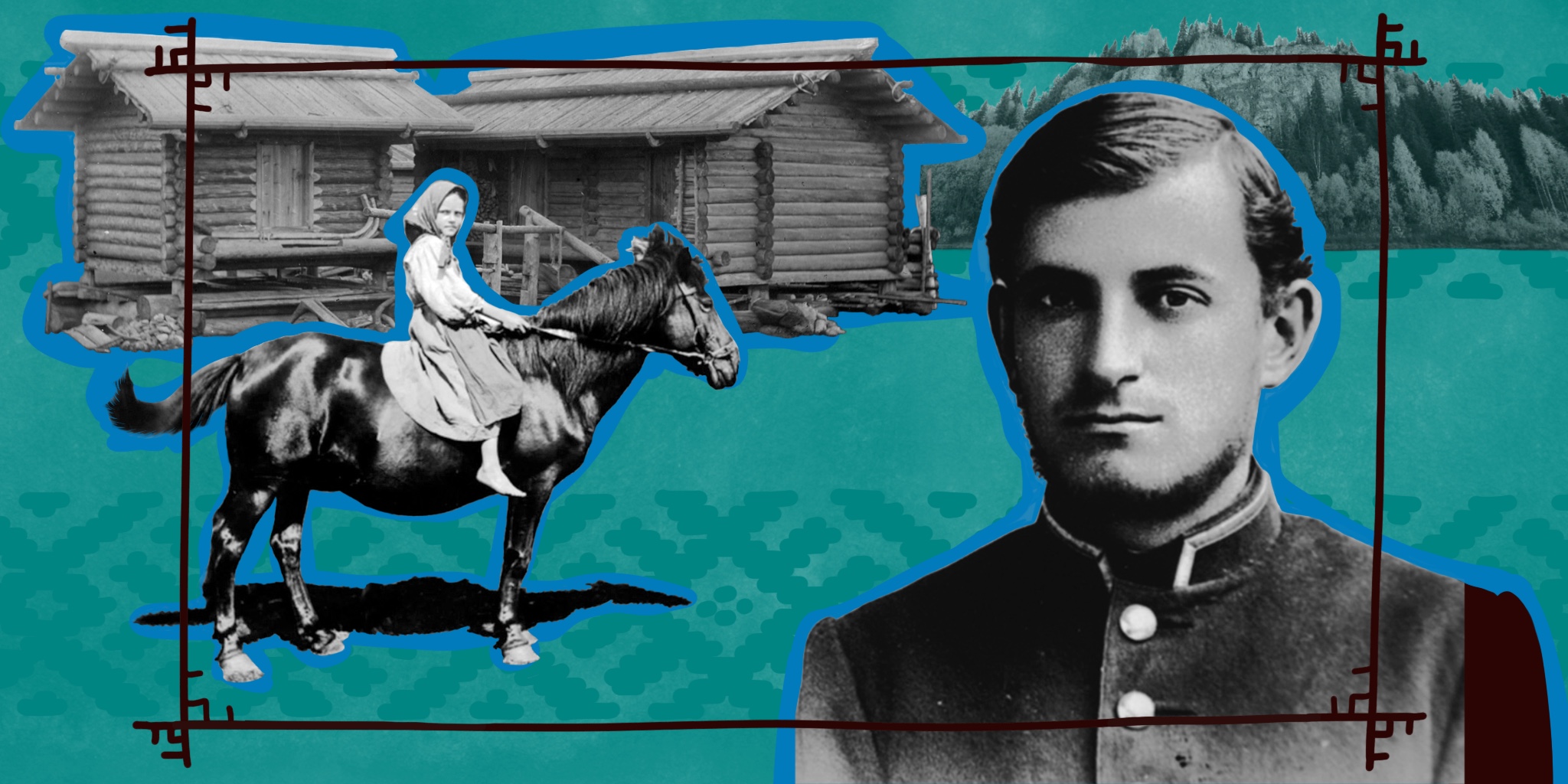
Do you want to take a real time travel to the era of the early 20th century in the Komi region? See with your own eyes what people’s lives and Komi national identity, the Komi “collective unconscious” were like in its original form? Do you want to see and read something about what everyday life looked like, to look at the first clash of Komi and all-Russian identities? See living people in their hard work, sorrows, joys, aspirations and realities? To see, already knowing what was, what has become, and what will be. And what won't happen.
“The government of the Russian Empire strove for the unity of the state through the merciless Russification of the peoples inhabiting this state. National aspirations were not taken into account, and territories inhabited by a single people were often striped and administratively distributed between different provinces and districts.”
Sometimes, in a hundred years and three government systems, everything changes, but nothing changes.
The author of these lines is Sergei Ivanovich Sergel. They open his book “In the Zyryansky Territory”, published in 1928 and written following the results of his ethnographic expedition to the Upper Vychegda - in Pomozdino, Bad-Yol (today Badyolsk), Yugydtydor and other villages and hamlets of the Komi Territory in 1906.
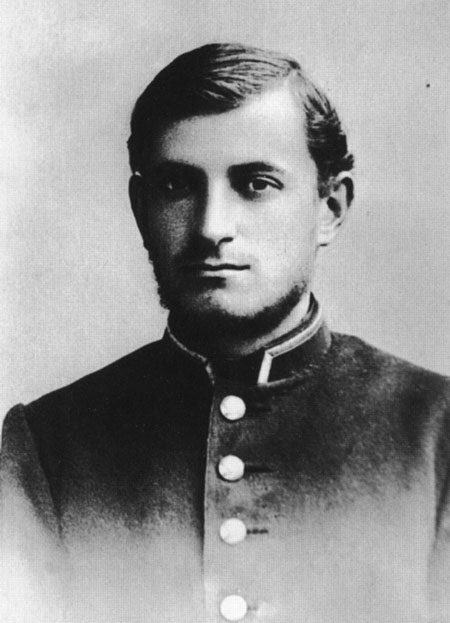
During the expedition, Sergei Sergel collected a collection of 490 ethnographic monuments, took more than two hundred photographs, and also prepared a manuscript containing a description of Zyryansk buildings with drawings attached. The subjects in the photographs taken by the researcher during the expedition work reflect the main components of folk culture: types of villages, layouts and designs of buildings for various purposes, types of traditional economic activity of the Komi: shifting agriculture, fishing, haymaking, as well as the traditional costume and anthropological types of the Upper Vychegda Komi.
We will show and analyze some of these photographs. The most complete collection of photographs available (137 photographs of Sergei Sergel's 1906 expedition) can be seen HERE .
And here is the full text of the book “ In the Zyryansky Territory ” with a description of his journey.
Hard work and benefits of pink salmon
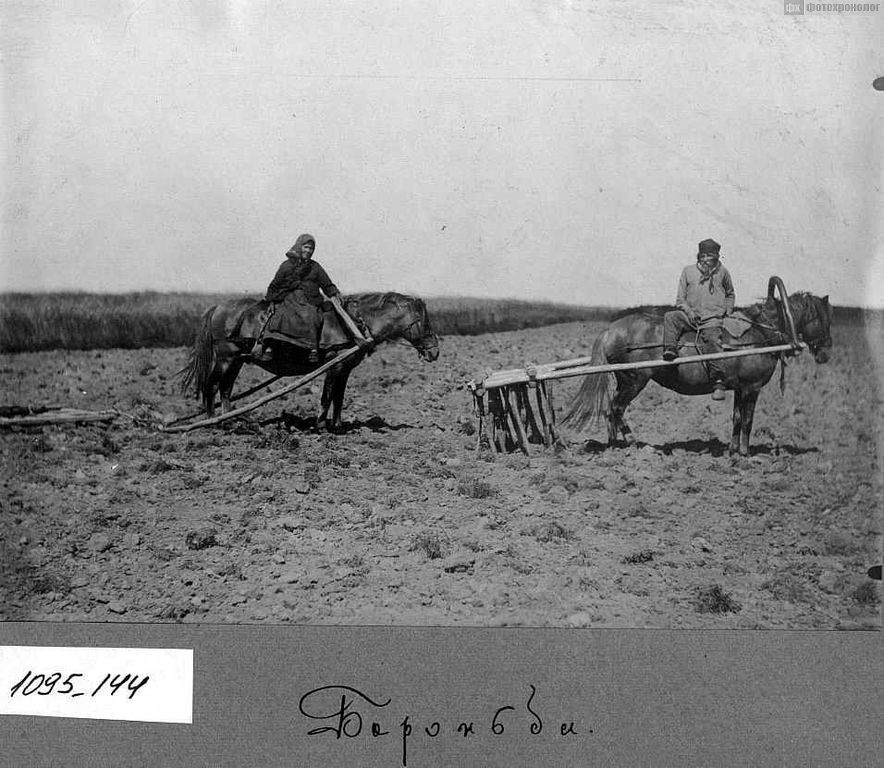
A significant part of the photographs reflect the daily work of the residents of the village of Bad-Yol - haymaking, field work, preparing arable land, building houses and procuring materials for construction. Both through the photographs themselves and through the author’s descriptions, we can see very hard primitive everyday work, which, in harsh natural conditions, ensures survival, but not well-being and wealth. Tools and instruments for work are adapted to the conditions in a particular place, often made from scrap materials that are available in abundance.
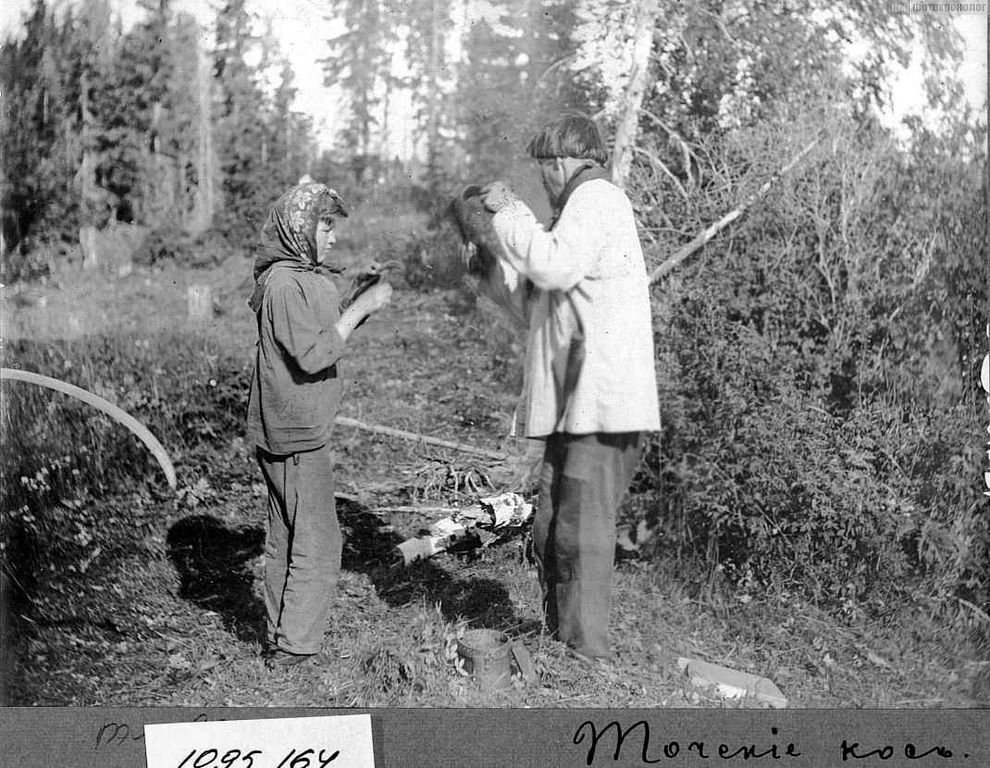
Here is what Sergei Sergel himself writes about the labor processes in his book about the photograph, which he called “Turning Scythes”: “The work of pink salmon is more tedious than the work of an ordinary scythe, but in forest hayfields it probably has its advantages. These hayfields are replete with stumps and hummocks that need to be mowed down on all sides; logs and branches are often found in the grass, so it is impossible to mow sweepingly here - the scythe will immediately break. Pink salmon are mowed down with short strokes, reminiscent of swings with an axe. And pink salmon, however, often break.”
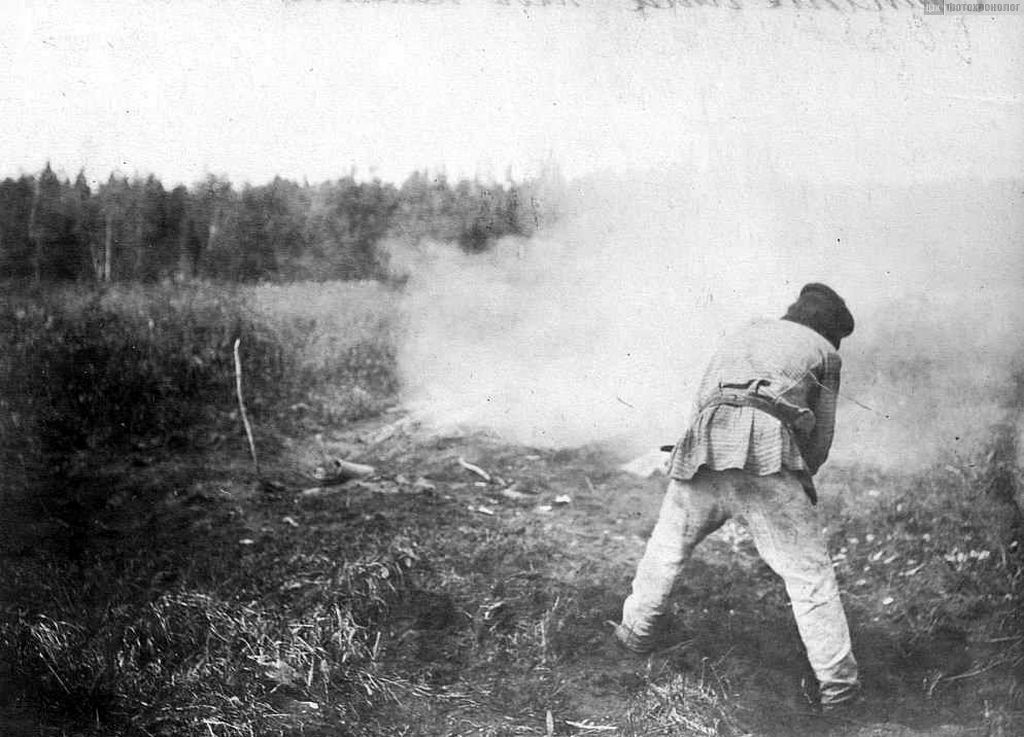
Sergel describes the photo “Uprooting stumps and burning the forest for sowing (bread)” as follows: “Here Terenty cleared a place for sowing […] The only tool for Terenty was a “kopanets” - an ax in the shape of a hoe. Using a digger, the stumps with their roots were torn somewhat off the ground, after which they grabbed the massive stumps with their hands and, with a good effort, swung them and pulled them out completely. Then they dragged the stump by its tentacle roots to the nearest burning pile and threw it on top.”
Why does a man need felt boots?
In everyday photographs of people busy with everyday worries, the heroes are captured in rough and not the newest clothes, most often homespun. On their faces and in their physique, this is especially visible in women and children, is the imprint of constant hard work, not the most healthy and nutritious food, and difficult living conditions.
In many photographs of labor scenes, women and children can be seen. Women harrow the field, mow, and ride horses in transportation as equals. Obviously, our ancestors did not live in circumstances where an extra pair of hands could be neglected, even if they were female. In one of the photos above, a young girl in a hayfield is captured in trousers. This is not typical, but it is also not surprising, since mowing pink salmon in a forest meadow, among insects, in a sundress or a long undershirt is completely impractical. Apparently, convenience and efficiency were more important than decency.
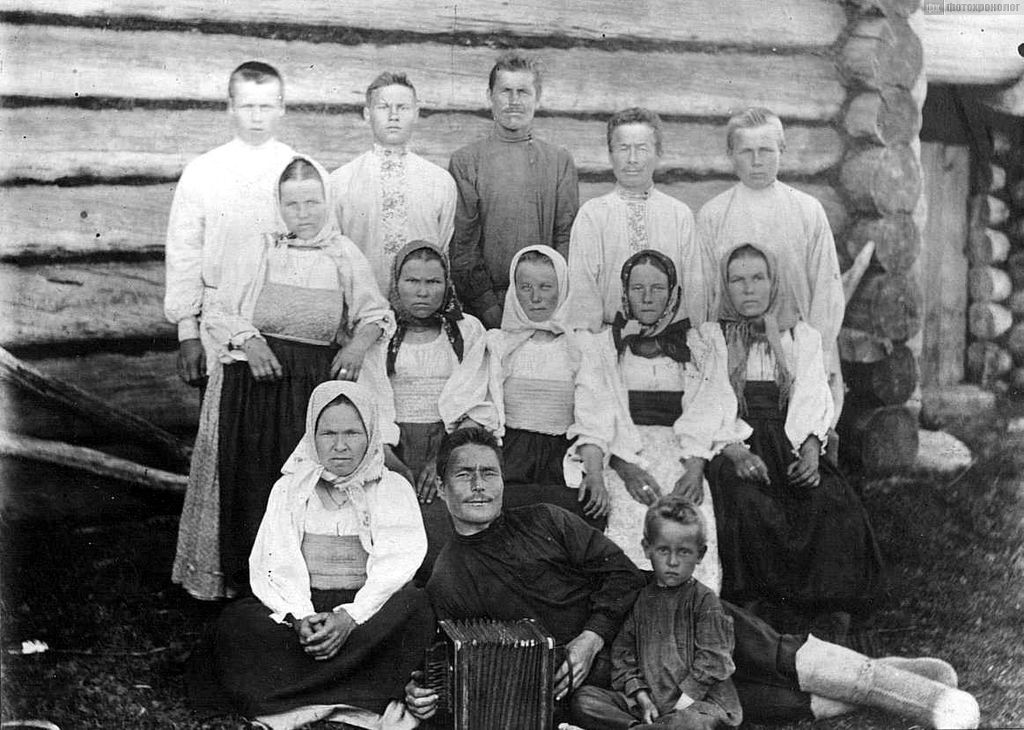
And this group photo is one of several that are definitely staged. The men and women prepared for the shooting: although they were wearing traditional, they were wearing festive clothes, obviously not everyday clothes. Girls and women in white embroidered shirts with frills at the ends of the sleeves. In the photo there are mostly unmarried girls, and the married one is only in the foreground, this can be seen from the type of headdress and hairstyle under it.
Most of the men also wear light-colored shirts, richly decorated with embroidery along the collar fastener. There is also a harmonica player with an Italian harmonica. Despite the fact that the photos were taken in the summer, in many of the heroes of the photographs you can see felt boots and traditional woolen socks, which contrast quite strikingly with the bare feet of other heroes. This also indicates that the photo is staged, or that people are dressed up in honor of the holiday. There was often no money for good shoes or boots, and it was indecent to pose barefoot, especially if we are talking about the head of the family.
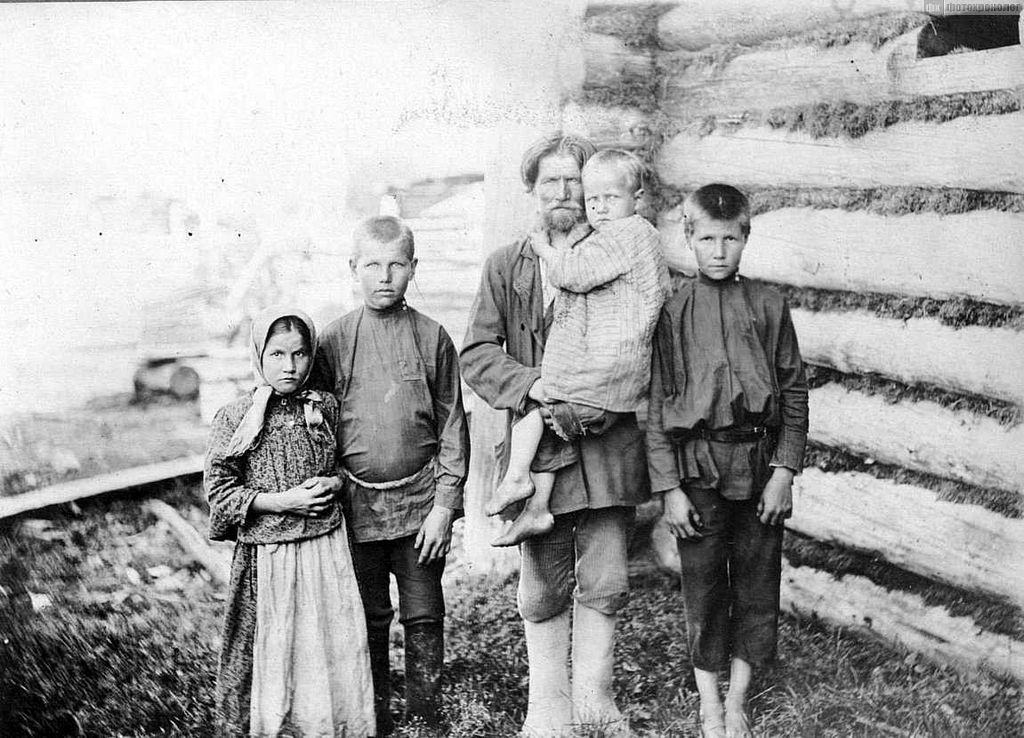
In a number of photographs, the author himself draws attention to the obviously existing social stratification, even in fairly equal conditions of one locality. There are photographs depicting families of wealthy and poor peasants, their houses and farmsteads.
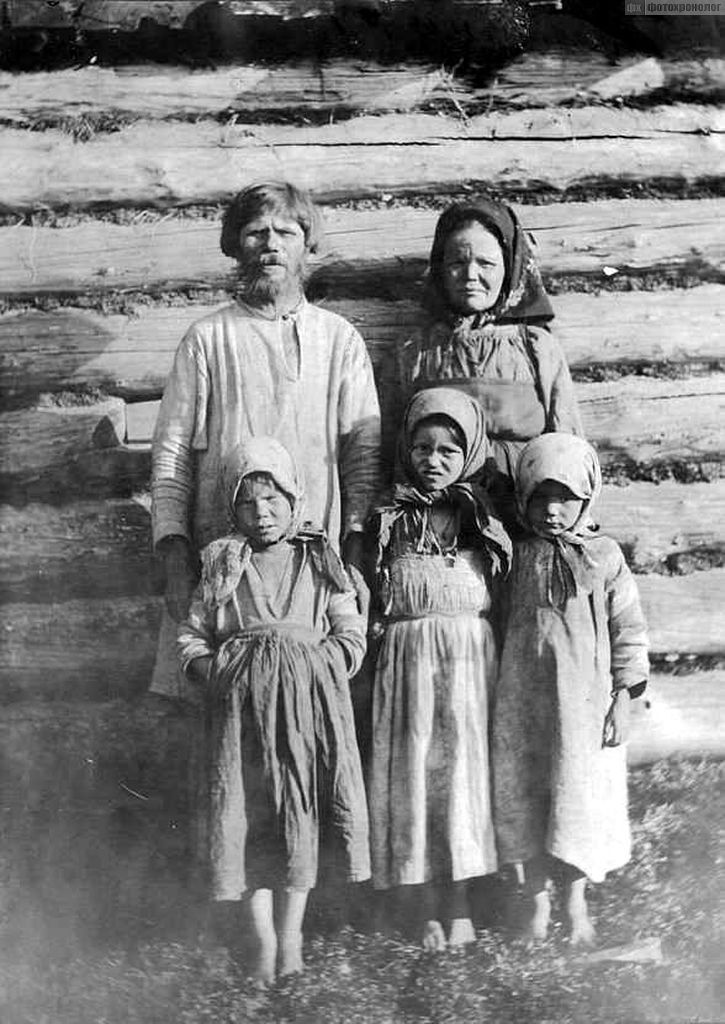
The author indicates this in the photo titles. Prosperity is visible to the naked eye by the well-groomed and newness of the house, by the neatness and cleanliness of people’s clothes, by the presence of shoes in the subjects of photographs and by various other signs. In approximately equal natural conditions, prosperity could be the result of either the hard work of all members of a large family, or the presence of a well-paid craft in one or more family members, which they were engaged in outside the agricultural season. This includes hunting, logging, and migrant work - work in construction, river transport and industrial enterprises in other cities and localities.
Let us remember that this happened because even before the abolition of serfdom in 1861, the inhabitants of the Komi region were state peasants, that is, they did not belong to any landowner. After the reform, they paid taxes directly to the state through a multi-level system of volost and rural self-government, rather than to specific landowners, on whom peasants in the central part of the Russian Empire continued to depend.
Without a single nail
The bulk of the households' income and expenses was in kind: they grew it themselves, caught it, collected it, prepared it, and then consumed it themselves. But this was never enough. Hard money was needed both to pay taxes and to purchase livestock, industrial goods and some products.
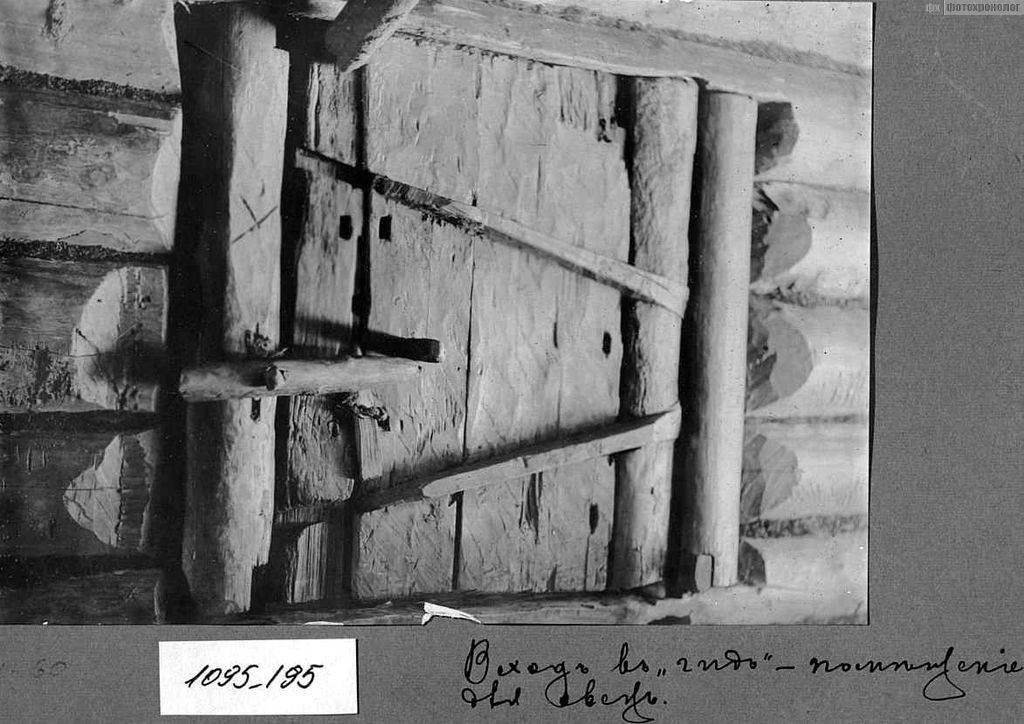
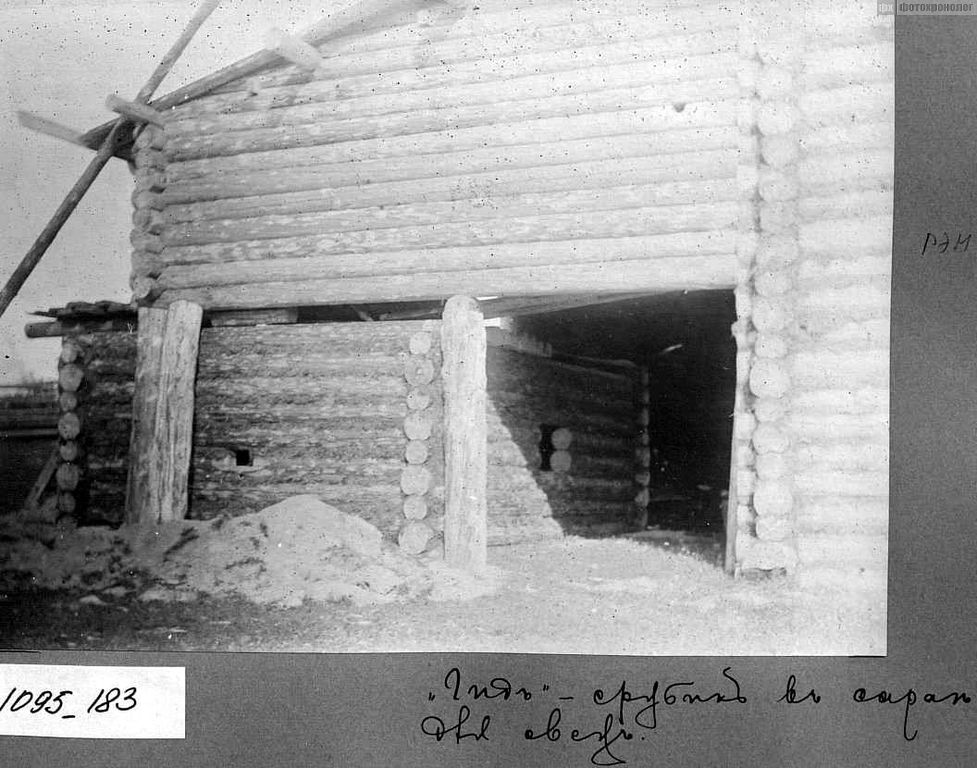
In the book, the author describes how people used every opportunity to make do with what was in abundance and did not require purchasing with money. For example, in carpentry work, where possible, they did without nails and metal products. The photo shows the door to the guide (room for small livestock), made entirely of wood, including the connection of the boards and the locking device.
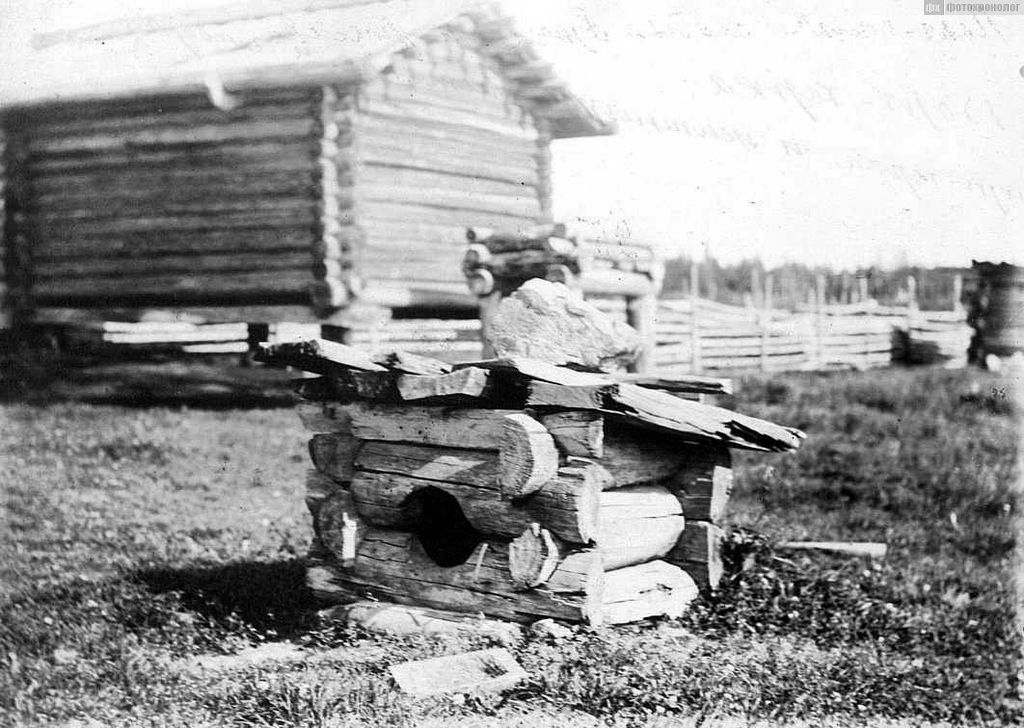
The second photo shows a chopped dog house. Yes, in that reality it was cheaper and easier to cut down a booth from round timber than to make one from boards. Planks are much more labor intensive. The roof is made from scraps of boards that are not nailed to the booth itself; a stone rests on them and, with its weight, acts as nails.
“Both in the buildings considered, and in the threshing floor, barn, barn and cellar, the ability of the Zyryans in their forest country to do without iron is striking. Instead of door hinges, the door is often attached to a vertically mounted post that rotates with the door. Instead of door handles and locks, ingeniously designed wooden locks and bolts are used. In order not to waste nails on knocking together steps to some outbuildings, they are carved out of a whole log,” writes Sergel.
It is important to add here that in the Komi region (especially in the areas of the Sysola, Vychegda, and Vym rivers) there was an ancient tradition of “swamp iron”. Families themselves dug ore in the swamps and smelted it in small furnaces. But even Peter I declared all natural resources to be state property, which significantly limited the extraction and smelting of iron for private needs.
In the 1750s, decrees were adopted that actually prohibited small-scale “peasant” iron production in areas where large state-owned or private factories were being built. It was more profitable for the state to have one large plant, which was easy to tax, than hundreds of timber smelters. When the Nyuvchimsky, Kazhimsky and Nyuchpasssky factories appeared in the 18th century, handicraft production could not withstand the competition - factory iron was cleaner, better and cheaper. At the same time, free ore mining was persecuted as illegal.
Costume: urban vs. rural
I would especially like to draw attention to the costume of the heroes of the photographs. In most of them we see people in national costume. This shows that people still wear such clothes on a daily basis. That is, they did not put it on for photographing or to show it to a visiting tourist researcher. It is familiar, normal and convenient for them.
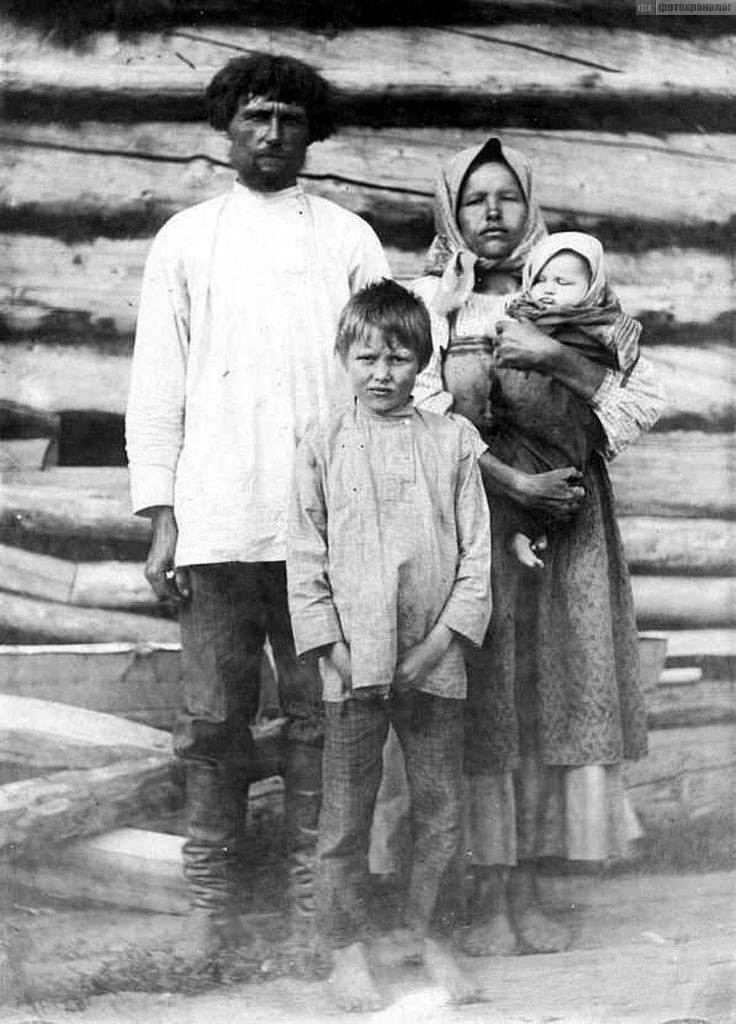
These clothes were made at home. Fabrics could be either homemade or purchased. But the styles themselves of men's and women's shirts, pants, sundresses are simple, sewn from fairly narrow panels and have a minimum of joints, that is, they are very economical in terms of material consumption.
Linen and woolen fabrics were made at home. The maximum width of the fabric was 60-70 cm - this was what the weaving machine, which was in almost every home, allowed. These are the same looms that are still used today for weaving “joj dora” - rugs. And in those days they were used to create all fabrics; only the reed frequency changed, that is, the “pitch” or density of the teeth in the comb of the loom. The more frequent these teeth are, the denser and thinner the fabric is. Homespun products were made mainly from linen, and cotton and silk fabrics were mainly purchased.
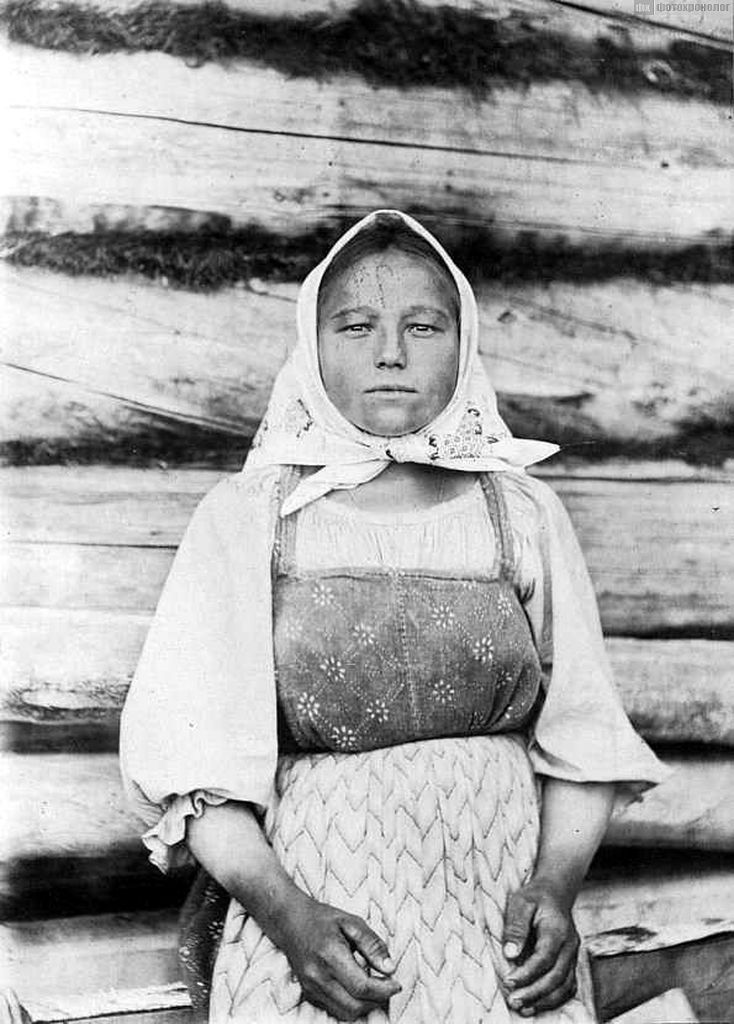
Pay attention to this photo, or more precisely, to the heroine’s hands. The girl apparently put on a festive shirt for the photograph. The regular shirts she wears for her daily work have longer sleeves, leaving her arms tanned and chapped up to the wrists. Above - no tan. The arms above the wrists are only visible in this dressy shirt, which has shorter, fuller sleeves and a frill at the bottom.
Both the sundress, the scarf, and the apron this girl is wearing are made from purchased cotton fabrics with a printed pattern, but the styles are completely folk, which means the clothes are made at home.
But there are also photos of women in sundresses made of linen small checks, sewn into a small pleat above the waist.
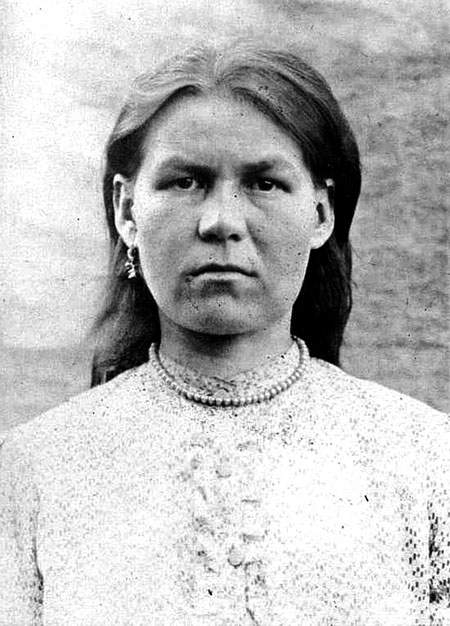
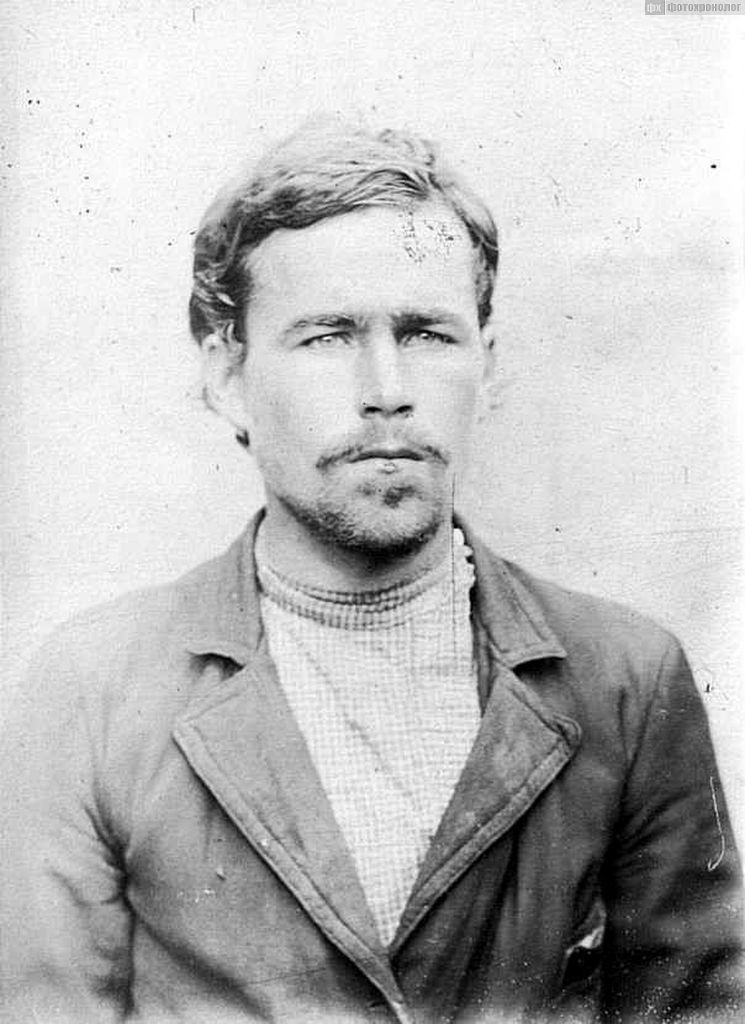
And in these photos we see people no longer in folk clothes, but in the usual universal urban costume of that time. There are also images in which folk and urban styles are mixed. Such clothes and shoes could not be made at home, and were either bought ready-made or sewn to order in Ust-Sysolsk or other cities where the subjects of the photographs had the opportunity to go for the needs of their work or study. It is unlikely that a jacket with an English collar, a blouse with frills, a cap or even boots can be made at home in Bad Yol or Pomozdino.
That is, from these photos we can record the very moment when the common Russian identity first penetrates into the environment of the Komi village. It penetrates with people who are its guides and carriers: officials, teachers, skilled workers, their own village residents who went to study, military service or work in a more central settlement and returned from there with a slightly changed appearance, new experience and knowledge, including knowledge of the Russian language. Even the author of these photos, who came to Bad-Yol, is also a bearer of all-Russian identity, a scientist-ethnographer.
Local identity, expressed including through clothing, is still strong, and no one is in a hurry to abandon it. But at least the appearance of joining the dominant culture and identity in the state, expressed in knowledge of the Russian language and in the manner of dressing, was obviously prestigious.
As we know, in the future, folk costume will remain the lot of only older people, and then it will completely fall out of use, remaining only in the form of stage and historical costume.
Tree that saves life
Now let's talk about architecture. We are used to seeing large courtyard houses, in which everything is under one roof, that are already very old. Leaning walls, logs grayed by time, structures that have grown into the ground and are 70, 80, 100 years old.
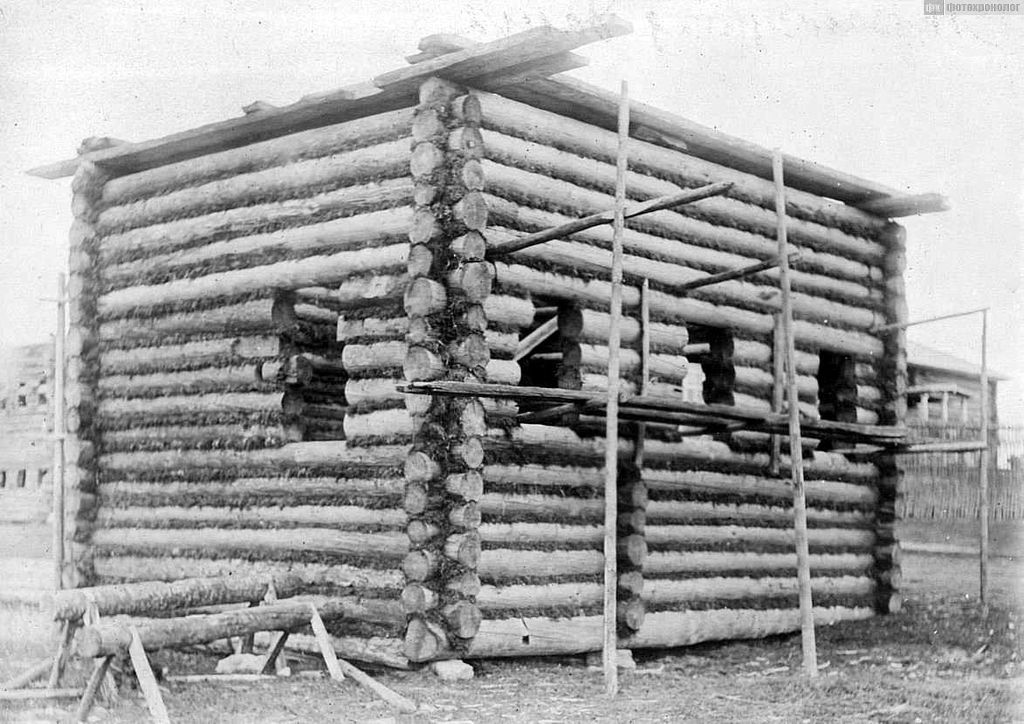
And these photographs capture the moment when such houses are just being built. The photos are black and white, but in them we undoubtedly see fresh pine logs with red spots on the bark. New, straight, even, which just recently grew in the forest. If you use your imagination, you can even smell the real smell of droplets of pine resin, green and red moss, and fresh wood chips. Who knows, maybe these houses still stand in Badjelsk? They were built in 1906, and they have a whole difficult century ahead of them with their creators. The people in them, and with their help, will survive two wars, collectivization, famine, the advent of technological progress, and several changes in political formations.
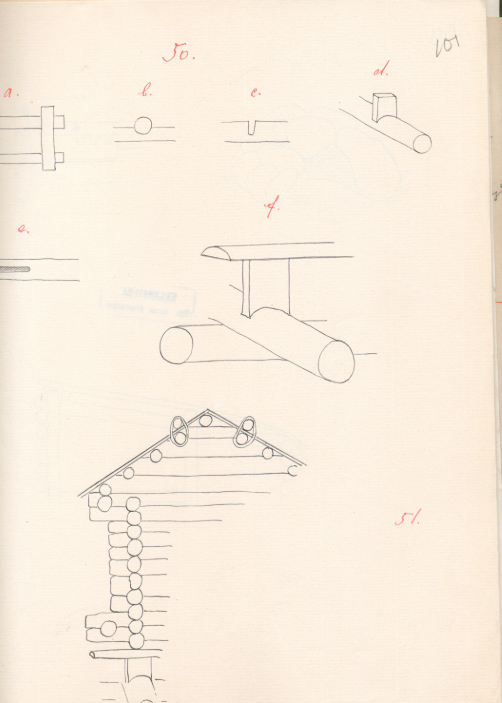
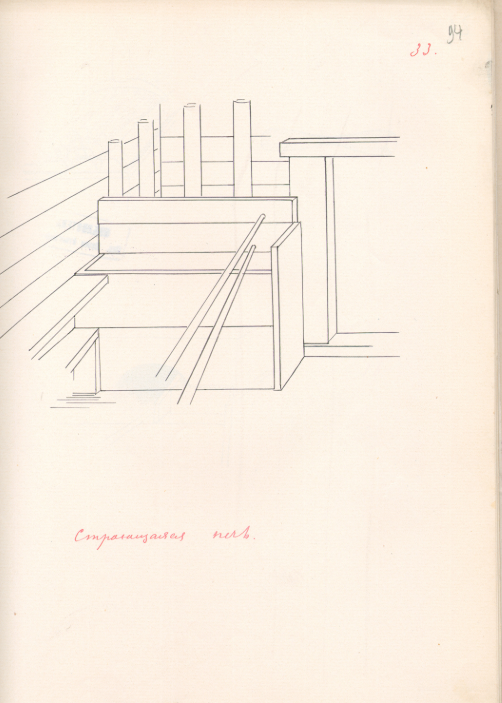
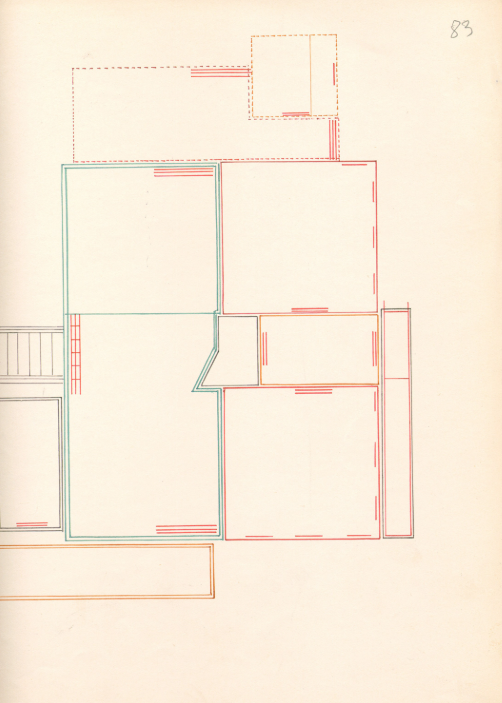
These are drawings and drawings for the manuscript by Sergei Sergel “Description of Zyryansky buildings in the Pomozdinsky volost of the Ust-Sysolsky district of the Vologda province” from the collection of the Russian Ethnographic Museum.
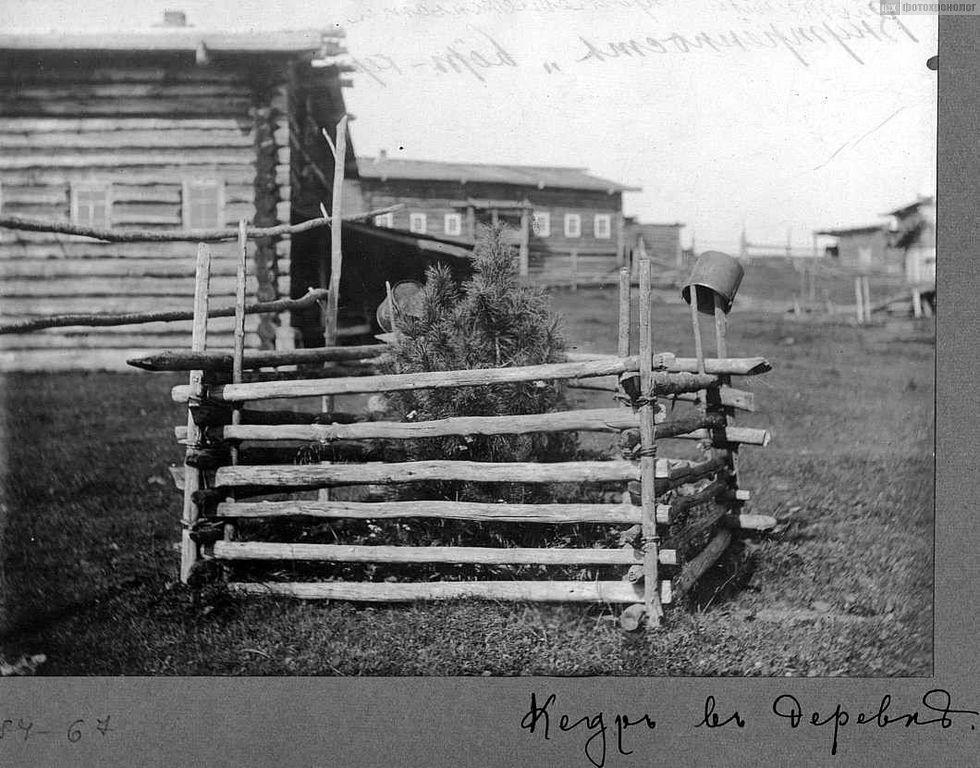
One of the most amazing photographs in the entire collection, which is impossible not to pay attention to. A cedar sapling planted in a village and carefully fenced with an individual fence so that carts are not damaged or trampled by cattle. What is this if not an expression of ecological and aesthetic feelings that are not alien to even the simplest peasants in the most distant village? What is this if not part of identity?
Cedar, as Siberian pine is popularly called, is a rare tree even in the forest. Beautiful, eye-catching in any season of the year, powerful, useful, providing food for animals and birds. Cedars still grow in villages and hamlets of the Ust-Kulom region; they are planted specifically as an ornamental tree to decorate the yard and street. More than a hundred years ago, our ancestors already understood the beauty and importance of living trees in people's lives, as well as the fact that this fragile beauty needs to be protected.
Photos and time
In conclusion - about the second chapter of the book “In the Zyryansky region”. The book was published in 1928, and in it the author, with great love, great hopes and dreams, describes the situation and his expected future of the Komi region.
More than 20 years passed between the moments captured in the photographs and the publication of the book. A revolution has already happened, and the Russian Empire has gone into oblivion. Soviet power had already come to Komi, and it turned out to be tsarist power that was not indirect and far from the people - it changed the life of every person in Komi. The Civil War, which also affected the Komi region, has already died down; the First World War is in the recent past; nothing foreshadows the Second World War. There was already a famine in 18-19. Komi gained autonomy and borders more consistent with the ethnic composition of the population. The era of oil, coal and gas is still very far away; its arrival, prosperity, and then its departure are not imminent. The era of the Gulag is near. Very soon all this will come to Komi with the decisions of the central government, with technical progress, with railways, electricity, with waves of migration flows of free and forced people, it will completely and forever change the life, composition, identity of people, geography, economy and political situation of Komi.
Sergei Sergel does not know any of this yet and cannot know. He makes his own assumptions about the future of Komi and its inhabitants. Paints a very optimistic picture, in which Komi is one of the socialist republics, along with the other fifteen. The Russian Empire, which oppressed Komi, can already be scolded, but the Soviet government and its actions should not be scolded, despite the ever-widening prohibitions and neglect of the needs of the people, which the author still mentions. It is very interesting to compare this amazing picture of the future with what actually happened in the following decades.
Something came true, something did not come true, something exceeded both the best and worst expectations.
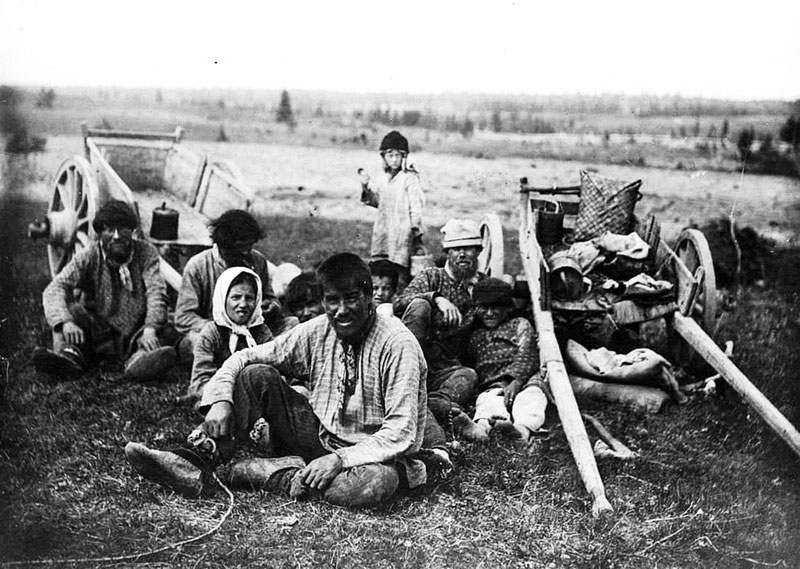
And in the photographs there were living people whose lives all these events took place. Young and old, men, women, children. One can only guess how their life turned out, where and how it passed and ended. But, thanks to these photographs, we have a unique cross-section of the life of society, a cross-section of the economy, culture and identity of the Komi people in an era when the incredible, tragic, great and terrible twentieth century was just on the threshold.

Text author: Elena Klyuchko