
Translated material
When and how might the war in Iran end?
Donald Trump's critics say he has no plan for what to do next
The US military command has prepared several options for ending the war with Iran, the American press claims. But at the same time, the US President and Iranian leadership often report diametrically opposed information on these issues.
For example, on March 23, Donald Trump’s 48-hour ultimatum expired, in which he threatened to destroy Iranian power plants if Iran did not open the Strait of Hormuz to shipping. However, in fact, Trump said that he ordered a five-day delay in energy strikes because the United States and Iran had “very good and productive negotiations” regarding “a full and comprehensive settlement of our military activities in the Middle East.”
In order not to miss new texts from “Layout”, subscribe to our telegram channel
As Trump later told a Fox News reporter, the negotiations were led by Steve Witkoff and Jared Kushner, “Iran really wants to make a deal” and an agreement with Iran could be reached in five days or less (“Layout” previously reported that Witkoff and Kushner also represented the American side at trilateral peace talks in Ukraine in Geneva. Although there were no breakthroughs at the meeting, Witkoff assessed the negotiations positively).
At the same time, the Iranian side denies the very fact of negotiations with the United States and explains Trump’s statement as an attempt to reduce energy prices, as well as fear of retaliatory attacks on the energy facilities of the Arab Gulf monarchies.
According to Axios and CNN, Türkiye, Pakistan and Egypt are acting as mediators in the negotiations. At the same time, representatives of the United States and Iran communicated separately with mediators (the first rounds of negotiations in Istanbul in 2025, which did not lead to an end to the war in Ukraine, took place in the same format).
Earlier, a message appeared about the resumption of direct contacts for a possible resolution of the conflict between Witkoff and Iranian Foreign Minister Abbas Araghchi. Araghchi also denied the existence of these contacts with a similar wording: “The statements are aimed solely at misleading oil traders and the public.”
What is known for certain is that Trump asked to postpone the meeting with Xi Jinping, originally scheduled for April 1, by a month. Apparently, the US President does not see the point of meeting with the Chinese leader until there is at least some clarity in the dates and configuration of the end of the war in Iran.
In the meantime, “Verstka” provides several hypothetical scenarios - when and how this war might end.
Why did the US go to war with Iran?
According to Axios, during mass protests in Iran in January of this year, Washington felt it could overthrow the ayatollahs' regime. Donald Trump was prepared for immediate strikes, but decided to postpone them for better preparation and use this time for negotiations.
Under the threat of military action, Iran was once again demanded to close its uranium enrichment and missile programs. However, Tehran refused this and did not comment on the financing of groups under its control in the Middle East. The last round of negotiations took place on February 26 - already on the 28th Israel and the United States went to war.
In a statement that day, Trump called Iran a threat to the United States and its allies around the world. He publicly accused Iran of resuming its nuclear program and developing missiles capable of reaching the United States.
The country has been named the world's largest state sponsor of terrorism, with authorities accused of killing tens of thousands of anti-regime protesters. “Just imagine how emboldened this regime would be if it ever actually had nuclear weapons,” Trump said. “This regime will soon learn that no one should challenge the strength and power of the United States Armed Forces.”
However, the former head of the US National Counterterrorism Center Joe Kent, who resigned due to disagreement with the operation in Iran, called the wars in the Middle East a “trap” in an open letter to Donald Trump. He noted : "Iran did not pose an immediate threat to our country, and it is clear that we began this war under pressure from Israel and its powerful lobby in America."
Under what conditions will Washington stop the war with Iran?
At various times, the US President said that Washington demands that Tehran destroy its nuclear program, regime change and “unconditional surrender.” Whether some of this is a minimum program, and some are maximum goals, is unknown.
From the White House's explanations, it follows that Trump reserves the opportunity to declare victory over Iran at any time he wants. Thus, unconditional surrender means that the president himself will decide when Iran will no longer pose a threat, explained his press secretary Caroline Levitt.
According to her, from Washington’s point of view, capitulation can take place even if Iran does not recognize it. CNN draws attention to the fact that the words of Trump and his press service do not contain any specific demands on Tehran at all.
Could the Iranian regime collapse due to war?
On the first day of bombing, the US and Israel killed Iran's Supreme Leader, Ayatollah Ali Khamenei. Subsequently, the head of Iran's Supreme National Security Council, Ali Larijani, whom the media sometimes calls the real leader of the country, was also killed. Several other senior officials and the paramilitary Islamic Revolutionary Guard Corps were also killed.
“To the great, proud people of Iran, I say tonight that your hour of freedom is at hand,” Trump said at the time. When we're done, take over your government. This will be your job. And this will probably be your only chance for generations.”
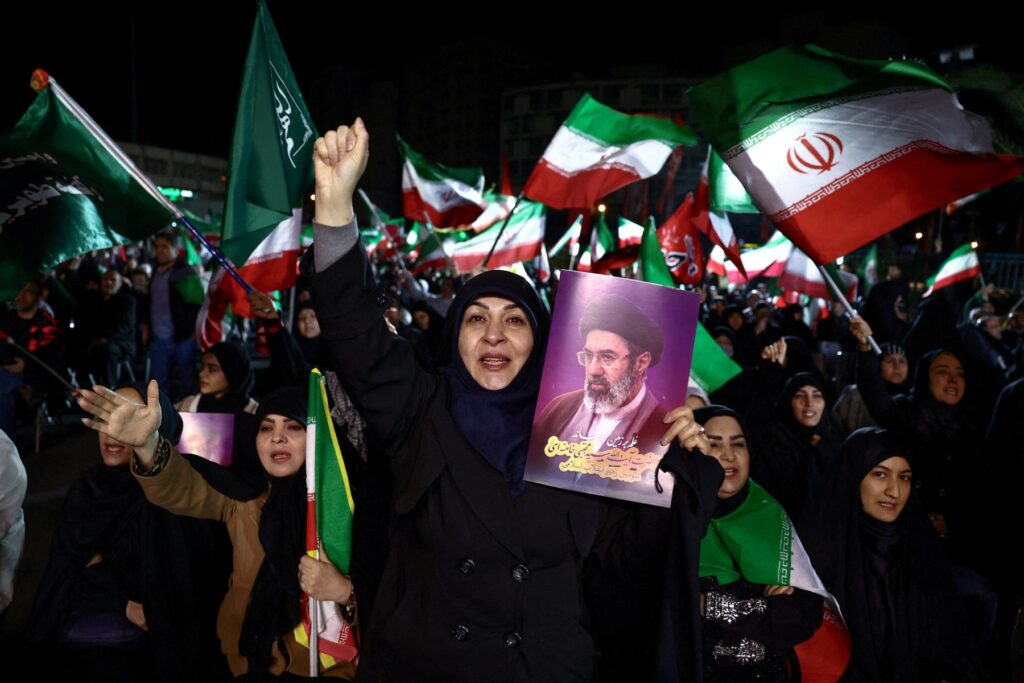
The US strikes have not stopped, but there is no evidence yet that the Iranian authorities have lost control of the situation. On March 1, a Provisional Governing Council was created in the country. On March 8, the country's Council of Experts, in full accordance with the constitution, elected a new supreme leader - the son of the murdered Ali Khamenei, 56-year-old Mojtaba Khamenei . By the third week of the war, no one from the top leadership of the state declared their readiness to go into opposition to Khamenei Jr. or to cooperate with the West.
American officials and experts see no signs of serious splits in the country's leadership, NBC News notes. “The regime was not harmed,” Alex Vatanka, a senior researcher at the Middle East Institute think tank, told the channel. A Tehran-based sociologist told the Israeli newspaper Yedioth Ahronot that the airstrikes could lead to increased support for the government and increased nationalism. According to him, residents may be frightened by the prospect of the collapse of the country.
How can the war in Iran end?
The US military command has prepared several options for ending the war with Iran, the American press claims. Experts are considering several main scenarios for ending the war.
- The United States and Israel discussed the possibility of sending special forces to Iran to physically destroy stockpiles of highly enriched uranium. This scenario would end the war by eliminating the threat itself, but if it fails, it could result in high losses. In addition, uranium can be moved to deeper underground storage facilities.
- The US kills Mojtaba Khamenei and negotiates with his successor, following the Venezuelan scenario, suspending the military operation. At the same time, there is no reliable information about the whereabouts of Khamenei Jr. In addition, the scenario would require the disruption of new elections for the supreme leader.
- New Iranian leadership agrees to nuclear deal. However, this will require significant concessions on the part of Mojtaba Khamenei, who lost his father, wife and son in an airstrike on the first day of the war. In addition, many experts note that the ayatollahs consider missile and nuclear programs to be the key to the regime's survival.
- There is a popular uprising and the collapse of the regime in Iran. But the Iranian opposition has neither a single leader nor organized forces on the ground. The most popular exile politician, Prince Reza Pahlavi, has not lived in the country for almost 50 years.
- Trump declares Iran's nuclear and missile capabilities destroyed, declares historic victory and withdraws forces. The US President has already told the Republicans that the war has been won, and this scenario does not require a real settlement and achievement of goals.
How long will the war in Iran last?
In the second week of the conflict, Trump's press secretary stated that the war could last another 4 to 6 weeks. However, already in early March, the US Central Command requested additional officers from the Pentagon to support the operation for at least 100 days, and most likely until September, Politico magazine says .
According to NBC News, the US military command has prepared several options for ending the war with Iran and options for further escalation of the conflict. The estimated timing of hostilities may change every day, the TV channel claims.
Trump's team did not foresee the large-scale consequences of the war, Politico believes. The president's Democratic critics have directly accused him of not having a plan for what to do next.
Former US ambassador to Yemen and Middle East specialist Gerald Firestein calls the military operation improvised: “It looks like they just woke up on Saturday morning and decided to start a war.”
Against the background of the oil crisis caused by the war, the United States will have to take some concrete steps to change the course of the conflict. On March 16, Trump called on other countries to take part in opening the Strait of Hormuz, blocked by the Iranian army.
On March 21, EU countries, Japan, Canada, South Korea, New Zealand, Australia, Bahrain and the UAE expressed their willingness to “contribute” to ensuring safe passage through the Strait of Hormuz. However, what this contribution will be expressed in is unknown. In the meantime, ships from countries “unfriendly” to Iran are trying to use the scheme previously used by tankers of the Russian shadow fleet - to pass through the strait under the call signs of ships from other countries, which in reality were scrapped several years ago.
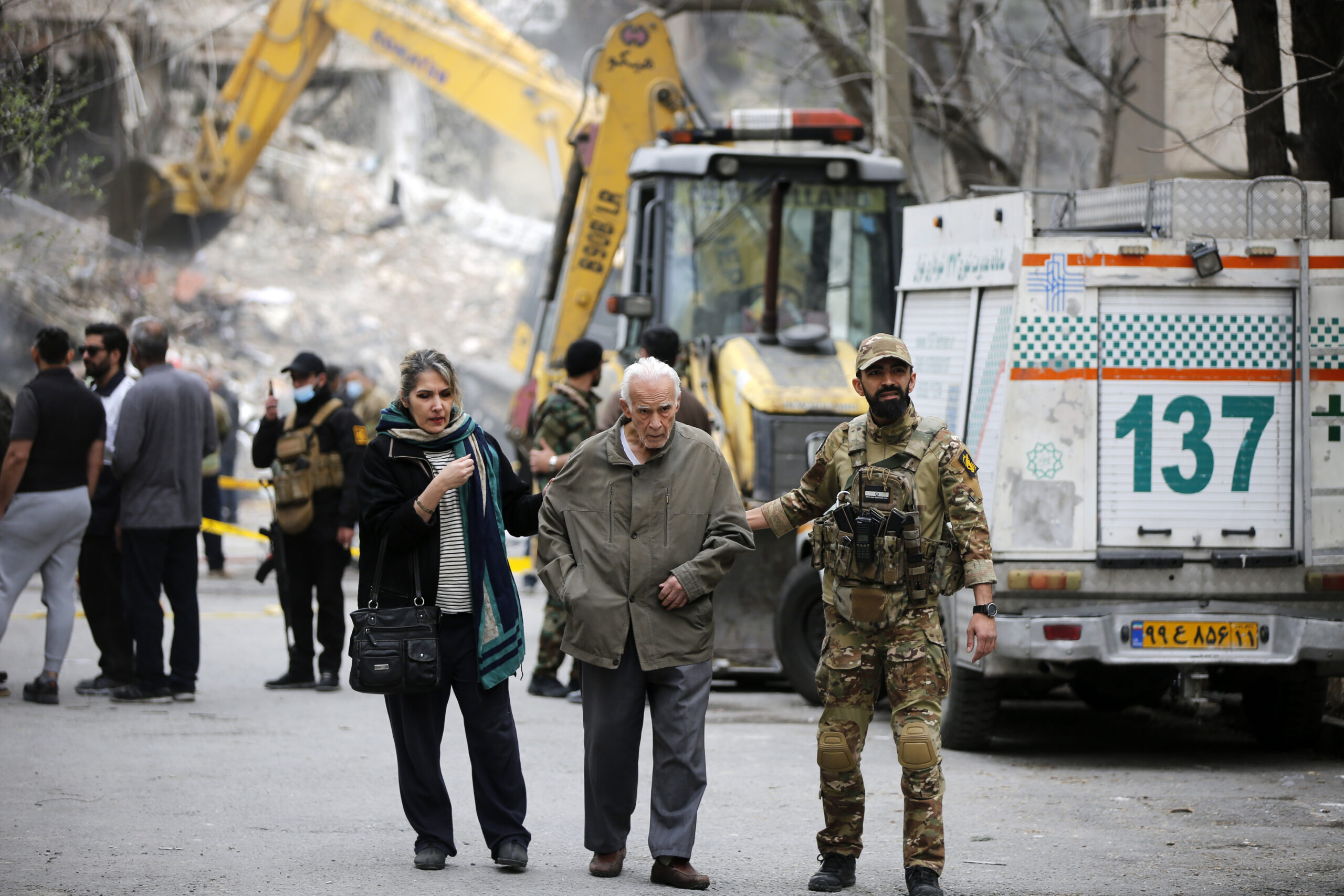
Photo: Clearing the rubble of a building in Tehran destroyed by US shelling. Fatemeh Bahrami/Anadolu via Reuters Connect