
Translated material
“Komi is not a souvenir language”: our readers about shame, identity and the future of the language
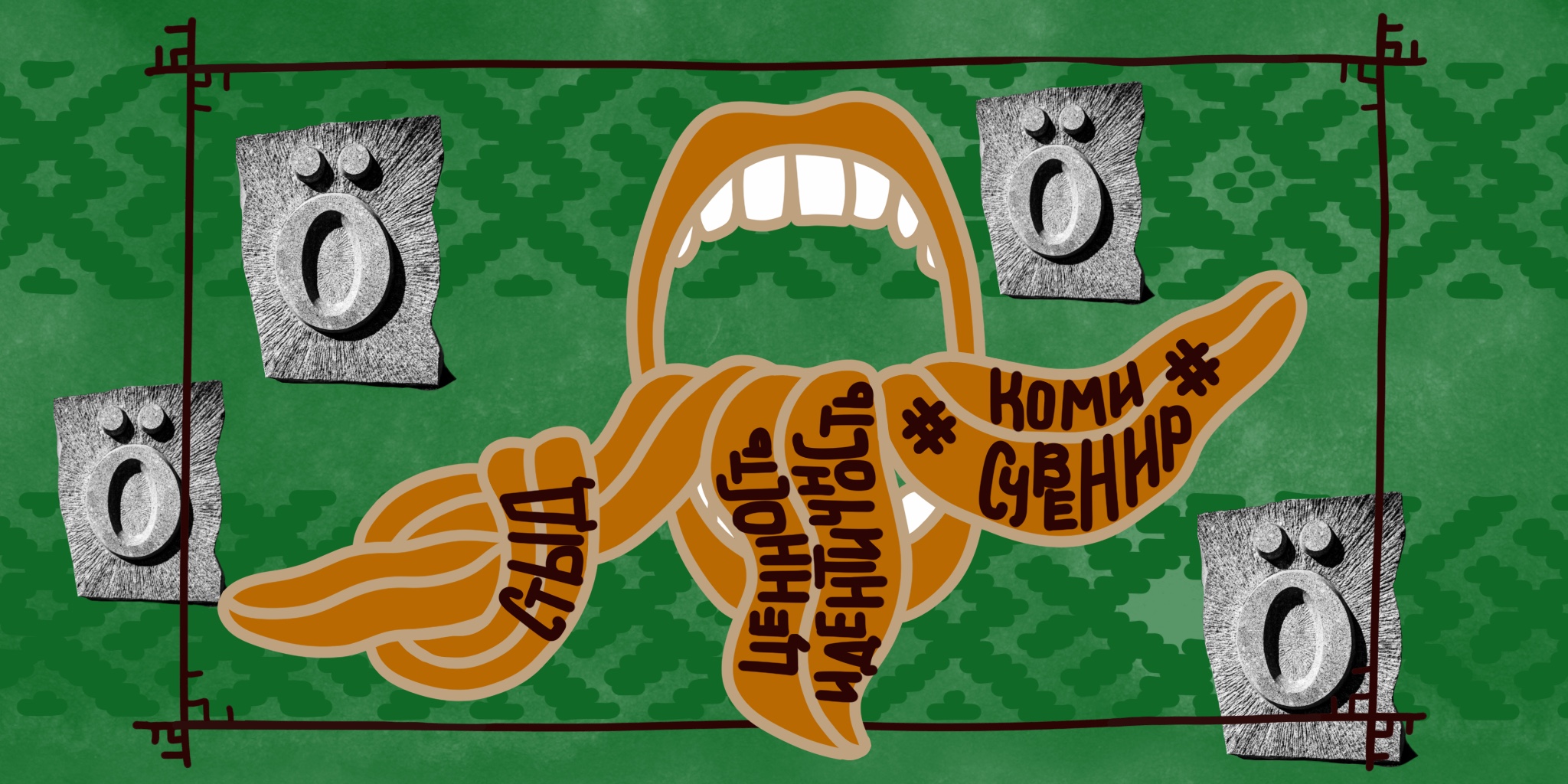
A month ago, the editors of Komi Daily received a letter from a reader living in one of the European countries. The letter contained a story: emigration as a child, parents who chose to call themselves Russian and remain silent about their Komi origin as something shameful, internal conflict, crisis and overcoming it. This story inspired us to discuss with other readers their attitudes towards the Komi language and identity, as well as the feelings associated with it. We received 30 personal stories: about the fear of speaking “not pure enough,” the pain of losing a language, and hope for a new generation.
It was important for us to collect personal stories and hear how our readers experience their relationship with the Komi language and identity. We asked our subscribers to fill out an anonymous four-question survey. Several dozen people responded to it. We asked if they were embarrassed by the Komi language, if they encountered a negative reaction to it, how they experienced their belonging to Komi, and whether they wanted more people to speak Komi.
The questionnaire did not include questions about age, gender, profession or place of residence for security reasons. But the answers still allow us to trace some patterns.
What makes you feel shy about your native language?
The feeling of linguistic shame does not arise out of nowhere. It appears in an environment where one language is considered “normal” and prestigious, while others are considered secondary and superfluous. This is often accompanied by beliefs that it is acceptable to use only one language in society (sociolinguists call these “monolingual attitudes”). The Komi Republic, unfortunately, is no exception in this regard. Such an attitude can manifest itself in ridicule and disdain, or it can simply exist as a background against which a minority language always appears inferior to Russian. This also affects the speakers themselves: their native language begins to seem “low-prestige” to them, or even something shameful. In some ways, this is reminiscent of the experience of peoples who survived colonization, when a collision with a foreign culture gave rise to a kind of inferiority complex. It was well described by Frantz Fanon in the book “Black Skin, White Masks.”
The answers from our readers turned out to be very different, but they have a lot in common. Respondents have repeatedly heard the Komi language called “rustic,” “useless,” and “dead.” Someone writes that he has never been embarrassed by the Komi language and continues to speak it in the Russian-speaking environment. Some, on the contrary, recall that they were ashamed to speak Komi in childhood, even with their relatives.
In many stories, shame is presented not as an individual weakness, but as a feeling shaped by a social environment where one language is considered prestigious, while another is a marker of provincialism and inferiority. Komi speech in such an environment is often perceived as something inappropriate.
“I didn’t want to seem like a hillbilly”
Some of the answers show that the pressure comes not only from the Russian-speaking environment. Several respondents write about awkwardness and shame among Komi speakers themselves - when the language becomes not only a subject of external ridicule, but also of internal control: do you speak “cleanly enough” and do you have the right to speak it at all.
Shame extends not only to the language itself, but also to the traces it leaves in Russian-speaking speech. In one of the stories, the respondent recalls how, after moving to St. Petersburg, she tried to get rid of her accent for almost a year, because they reacted to it as a marker of otherness. If her accent was mistaken for Finnish, it was treated with respect. But when it came to Komi, the same accent began to be perceived as “village”.
In another story, a song in Komi became the cause of direct aggression:
“The last time I sang a song in Komi, and two people told me to stop, one called the language “moronic””
For many, this negative experience is a thing of the past. Someone writes that they were shy only in their youth, and then this feeling gave way to pride. Someone explains the change by practice: the more often you speak, the weaker the fear of error. Some – because the opinions of others have ceased to be decisive over time. At the same time, in some stories, the reaction from the outside also changed: some Komi speakers began to more often encounter not ridicule, but interest, surprise and sometimes even admiration.
The problem is that such a reaction does not always mean recognition of the language as equal. One of the survey participants writes that Komi is often perceived “as a souvenir in the presence of Russian, and not as a living language.”
Shame and overcoming it
Many people’s attitude toward Komi identity has changed over time—sometimes very dramatically. For some, being Komi has always been a natural part of their biography, while others only began to understand in adulthood how important language, origin and a sense of connection with Komi were for them.
“I was overtaken by a tsunami of realization that I was actually not Russian”
In many answers, language turns out to be not just a means of communication, but a way to understand who you are. For some, this process begins with the language. For others - from music, films, travel, museums, ornaments, knitting, communication with the diaspora or family memory. Several people remember grandparents, summer trips to the village and songs that were heard in childhood. Later, it is these details that become a way to reconnect with yourself.
It is characteristic that attitudes towards Komi affiliation often change as a result of political events. For some respondents, the question of their own identity arose in a new way after the start of a full-scale war in Ukraine.
“After February 24, 2022 – the first period of rethinking”
“2022 in bӧryn me kuti donyavny, my me komi”
(“After 2022, I began to appreciate that I am a Komi”)
In these stories, the conversation about Komi language and belonging was directly related to a reassessment of Russian identity and an attempt to see Komi not as a “region of Russia”, but as a space with its own history, culture and the right to a separate voice.
“Now to the question “Where are you from?” I would like to answer not “from Russia”, but “from the Komi Republic””
For others, this reinvention was also associated with a sense of political community and pride.
“I felt great pride when I learned that the Komi Republic was among the regions whose residents voted against amendments to the Constitution in 2020. I also became part of this statistic.”
Along with pride there is pain, a sense of loss, regret that the language was not passed on in the family, fear of losing along with it cultural memory and a sense of identity. One of the survey participants writes about the sadness that he was “robbed of the opportunity to know his language.”

The Komi language is important not only for those who speak it fluently or consider themselves ethnic Komi. Some respondents write that they do not speak the language, but still perceive it as an integral part of the culture of the republic and a value that cannot be reduced to a school elective. For many, it is not only an ethnic marker, but also a way to talk about place, memory and personal identity.
The language will not preserve itself
Answers about the future of the Komi language differ in tone, but agree on one thing: the language will not survive on its own. Even where hope is heard, it is almost always associated with the need for environment, effort and new forms of presence of language in everyday life.
Some respondents write about the reduction in the number of native speakers, the washing out of the language from everyday life, the weak effect of school teaching, and the fact that Komi has long been perceived as a secondary thing. These responses often contain the idea that the language is slowly dying out.
But next to this line there is another – cautiously optimistic one. Some survey participants notice that young people have a growing interest in the language, and Komi itself is gradually ceasing to be a “school requirement.”
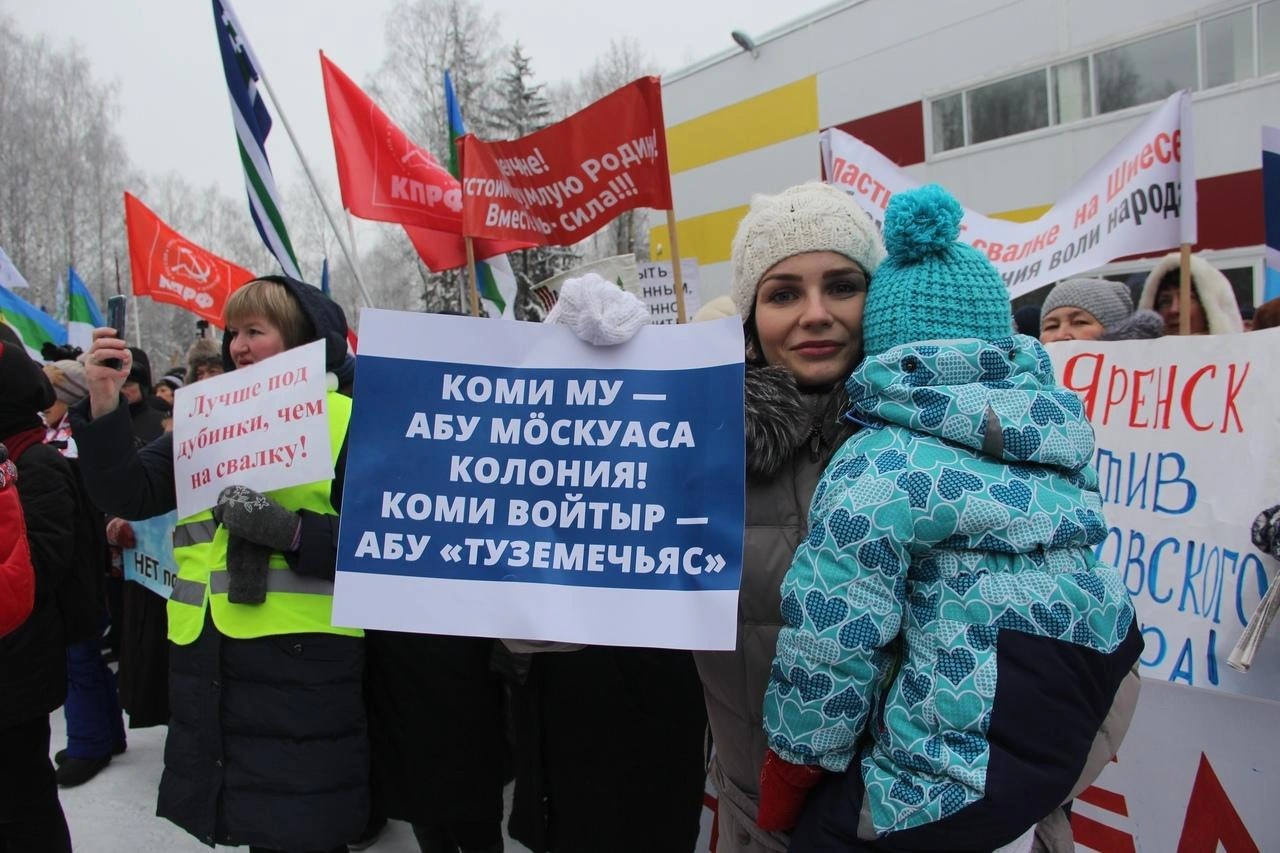
At the same time, even in the most pessimistic answers there is an idea of what could help. First of all, the family: several respondents directly write that without transferring the language to children at home, school will change little. Equally important is an early and natural language environment, as well as recognition of bilingualism as a value rather than an unnecessary burden.
According to survey participants, the Komi language is sorely lacking in texts: songs, blogs, news, books, translations of films and TV series, subtitles, speaking clubs and accessible materials for people with different language levels.
“The language needs small reforms and huge support”
Several survey participants write that they would like to see a more confident, visible and modern image of the Komi language - when there is no shame in speaking it, when they joke, sing, and conduct media. Tatarstan serves as a positive example for readers.
At the same time, opinions differ on how to preserve the language. Some people advocate compulsory study in schools and kindergartens. Some, on the contrary, emphasize that no amount of coercion will make a language alive and that only interest and the opportunity to use the language in a natural environment can give a real effect. This dispute is clearly visible in the responses. But something else is even more noticeable: almost no one argues that the Komi language should not remain only a symbol of the past.
“This language, like any other, deserves the right to live and thrive.”
A conversation about the future of the Komi language is not only a conversation about the number of its speakers, but also about whether it can again become a natural part of life. Not a rarity, not a souvenir, not a reason for awkwardness, but a living way of talking, thinking, remembering and getting to know each other.
Our readers' stories contain a lot of pain and anxiety. But they also indicate that linguistic constraint can be experienced, rethought and transformed into interest, solidarity and pride.
Thanks to everyone who filled out the form. It was very important and interesting for us to read your answers!

Text authors: Vika Lampovaya, Nikolay Vokuev