
Translated material
There's a foreigner everywhere
Why the media campaign did not help Ruben Vardanyan

Ruben Vardanyan. Photo: azertag.az
18+. THIS MATERIAL (INFORMATION) WAS PRODUCED, DISTRIBUTED AND (OR) SENT BY FOREIGN AGENT KRIVOSHEEV KIRILL SERGEEVICH OR CONCERNES THE ACTIVITIES OF FOREIGN AGENT KRIVOSHEEV KIRILL SERGEEVICH.
The most famous of the Karabakh leaders tried in Baku, billionaire Ruben Vardanyan, received a sentence. 20 years in prison - although the Prosecutor General's Office of Azerbaijan asked for life imprisonment. Regional specialist Kirill Krivosheev, especially for Novaya, figured out what Baku wanted to say by this and whether Vardanyan could be released earlier.
Defendant number one
Azerbaijan has drawn a line under one of the main image projects in its history. About as important a task as the restoration of Karabakh cities and villages and the return of the former inhabitants there (gradually even the capital, Stepanakert, which has now become de facto Khankendi, is being populated by Azerbaijanis), for Baku was the trial of the leaders of the unrecognized republic, which disappeared in 2023.
About a year ago I already wrote about this trial, and even then it was obvious that Ruben Vardanyan was the main trophy. This is not surprising - both Armenians and Azeris consider Vardanyan the last hope for the Republic of Artsakh. It’s just that for some it looks like a feat and self-sacrifice, while for others it looks like a crime.
Back in December 2022 (after the start of the blockade of “ eco-activists ” in the Lachin corridor), Azerbaijani Foreign Minister Jeyhun Bayramov, at a meeting with Lavrov, insisted that Russia influence Vardanyan, and he left Karabakh. According to Bayramov, this would help the integration of the Armenian population, which was allegedly going well - until the (former) Russian billionaire arrived. “In this direction, before its appearance, there were already positive contacts, there were positive projects, and we believe that this factor today is very harmful and destabilizing,” the Azerbaijani minister insisted.
It is difficult to understand exactly what “positive contacts” of integration he was talking about. Shortly before the blockade, the Armenians, under pressure, handed over the city of Lachin (in Armenian Berdzor) and two villages near it. But none of the residents began to integrate - they simply left, mainly to Armenia .
Armenians who voluntarily agreed to live under the Azerbaijani flag did not appear until October 2023. Then several old people actually decided never to leave - rather out of indifference to their future fate (“what difference does it make where to die?”).
How many Armenians remained in Karabakh under the Azerbaijanis? What happened to them?
To find out exactly how many such old people there were, you have to compare scattered data. Ukrainian Sergei Ogoltsov, who taught English at Artsakh University and unexpectedly moved to Armenia in the summer of 2024, gave an interview to CivilNet. In it, he said that there were 15 such people with him. Accordingly, after his departure, 14 remained. In October of the same year, the Azerbaijani media reported the death of one Armenian woman, Vera Varashakovna Agasyan, born in 1954. So there were 13 of them.
Then, in September 2025, there was a strange story when an elderly man - Karen Avanesyan - was accused of preparing a terrorist attack on the very day when Ilham Aliyev was in the city. After his arrest, 12 people were believed to remain at large. In January of this year, 11 of them left for Armenia.
At one time, the Azerbaijanis even tried to set them as an example - “and others could stay if they wanted.” But they themselves realized that this was not a very good idea. These people were extremely antisocial, lonely and, against the backdrop of all this, mentally unstable. As a result, they stopped showing them in the media - if you don’t take the social networks of the odious blogger Kamran Razmovar, who posted a video of a short man named Fred carrying “Azerbaijani bread” from a store.
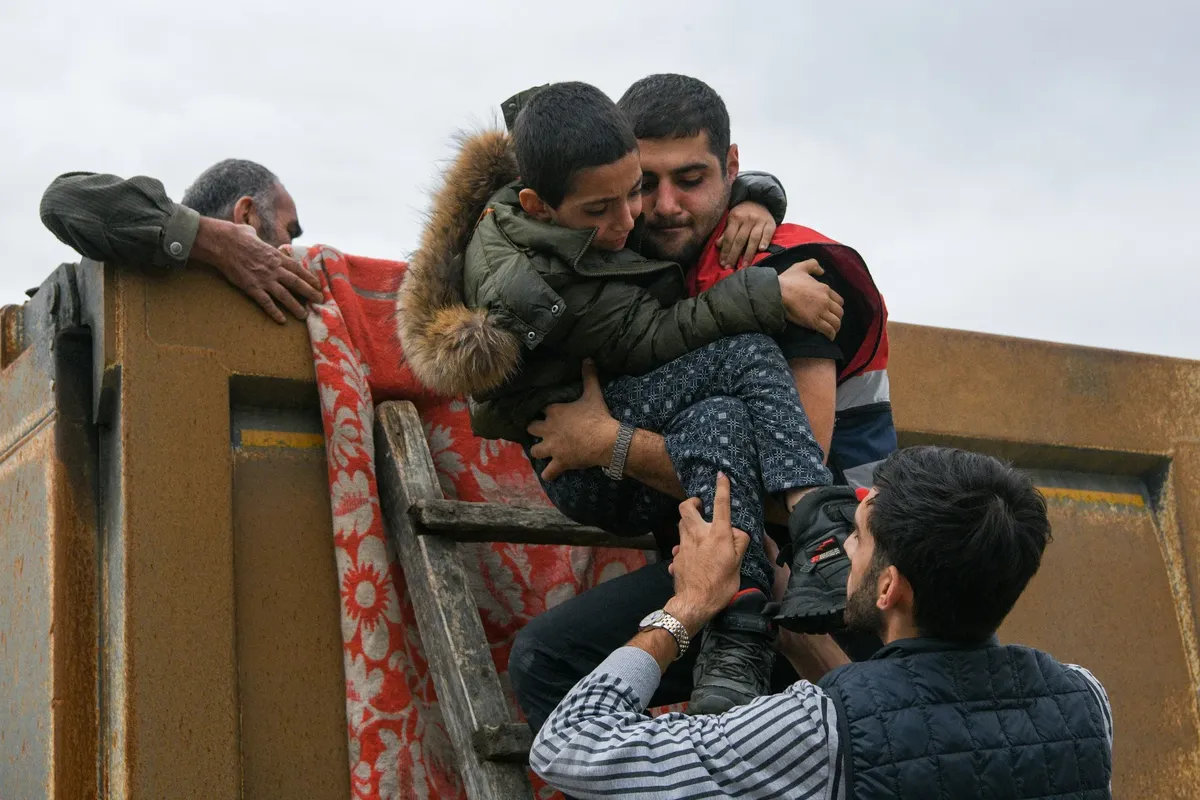
After almost all the Karabakh Armenians left for Armenia ( this was at the end of January), we can say: the only one who was able to successfully “integrate” into Azerbaijani society did so thanks to Ruben Vardanyan. This is Mushegh Grigoryan, who testified against Vardanyan in court.
Public figure from Karabakh Tigran Petrosyan, in a conversation with Novaya, said that when the bus approached the bridge on the Khakari River, Grigoryan panicked and asked to leave him in Azerbaijan, fearing reprisals. Petrosyan does not know what happened to another Armenian who spoke in the Baku court, Kamo Hayrapetyan .
Azerbaijani media disseminated his words:
“The Armenians living in Khankendi also knew that mining work in Karabakh had become widespread after the arrival of Ruben Vardanyan. Informational posters related to these mines were placed in schools, around buildings, in forests and near empty areas. Although before the 44-day war there were no posters with mines.”
Mines are an important episode that Azerbaijani prosecutors have included in Vardanyan’s case. According to Baku, the impetus for the “military operation” in Karabakh on September 19-20, 2023 was the bombing of four Azerbaijani police officers on the Ahmedbeyli-Fuzuli-Shusha highway - that is, outside the area where Armenians lived at that time. Nevertheless, the Azerbaijanis confidently stated that “the mine was laid by a sabotage group of Armenian illegal armed groups operating in the territory of the temporary deployment of Russian peacekeeping forces.”
The list of charges that the prosecutor’s office brought against Vardanyan was enormous and concerned, as he himself said, “everything that happened since 1987.” As a result, the court reclassified “the charges under Article 228.3 of the Criminal Code to Article 228.2.1 of the Criminal Code of the Republic of Azerbaijan” - that is, “ illegal sale of firearms, their components, ammunition, explosives and devices” became “ illegal acquisition ”, but with an aggravating circumstance - the action was “committed by a group of persons by prior conspiracy or by an organized group.”
There is no point in looking for logic here - this is unlikely to be the reason for the slight reduction in the assigned sentence: 20 years instead of the life sentence requested by the prosecutor's office. Moreover, the list of articles for which the billionaire was found guilty still looks huge and absurd.
Under what articles did the Azerbaijani court find Ruben Vardanyan guilty?
planning, preparing, unleashing and waging aggressive war;
forced relocation of the population; persecution; forced disappearance of people;
unlawful deprivation of liberty in violation of international law; torture; mercenary work;
violation of the laws and customs of war; violation of international humanitarian law during armed conflict;
illegal business;
terrorism and terrorist financing;
creation of a criminal community (organization);
illegal acquisition, transfer, storage, transportation and carrying of weapons, their components, ammunition, explosives and devices;
acts that pose a threat to aviation safety;
violent change of the constitutional system of the state;
creation of armed formations and groups not provided for by law;
illegal crossing of the state border of the Republic of Azerbaijan.
President, diplomat, soldier
There is also no clear logic in the sentences handed down to other leaders of Karabakh a little earlier. Not only Arayik Harutyunyan, who actually led the republic during the war, received a life sentence, but also David Babayan, a diplomat who “fought” exclusively with words and surrendered to the Azerbaijanis voluntarily. Nevertheless, the list of his articles is the same as that of Vardanyan - there is the waging of an aggressive war, and forced resettlement, violation of the laws and customs of war.
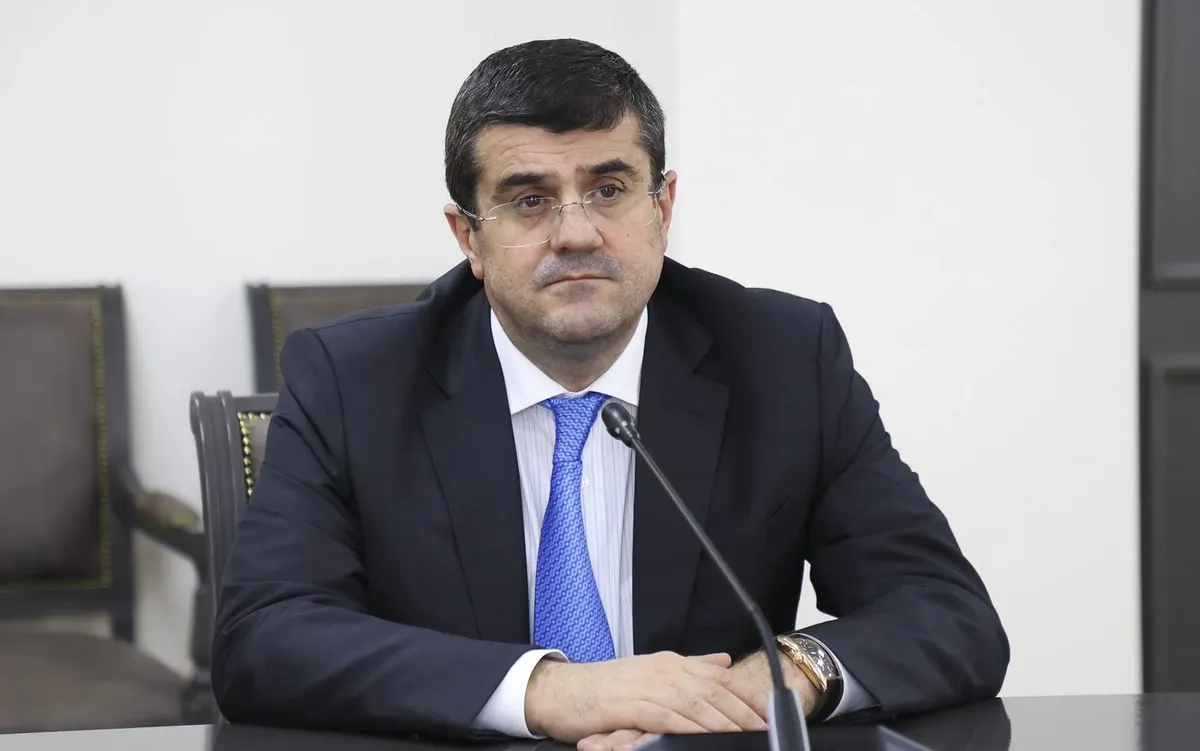
Artsakh Parliament Speaker David Ishkhanyan and two military leaders also received life sentences: Levon Mnatsakanyan (Minister of Defense in 2015–2018) and David Manukyan (First Deputy Commander of the Artsakh Defense Army in 2019–2022). By the way, the Azerbaijani TV channel AzTV was going to broadcast an already filmed interview with Harutyunyan and Mnatsakanyan in March 2023, but then for some reason they “ changed their mind .”
Two presidents of the unrecognized “peacetime” republic, Arkady Ghukasyan (1997–2007) and Bako Sahakyan (2007–2020), received 20 years like Vardanyan. True, at the trial it was noted that such a mitigation was only possible because they were both over 65.
A participant in the First Karabakh War, Madat Babayan, who allegedly admitted his participation in the murder of civilians in Khojaly, received 19 years.
Military personnel (at trial it was stated that “a large number of weapons, their components and ammunition, including anti-personnel mines, were discovered and seized from them”) Melikset Pashayan, Garik Martirosyan, Gurgen Stepanyan and David Alaverdyan, who were captured on September 20, 2023, received 19, 18, 15 and 16 years, respectively.
Vasily Beglaryan and Erik Ghazaryan, detained after the exodus of Armenians from Karabakh began (September 26 and 27), received 15 years each.
If any conclusion can be drawn from all these verdicts, it is this:
in Azerbaijan they sincerely consider propaganda of Artsakh’s independence a crime even greater than direct participation in hostilities.
Most recently, on January 14, Azerbaijan transferred Gevorg Sujyan, David Davtyan, Vigen Euljekdzhyan and Vagif Khachatryan to Armenia. Each of them received a sentence comparable to those listed above: 15 and 20 years. Vagif Khachatryan was even accused of a war crime in the village of Meshali - but nevertheless, he is also free.
A “mitigating circumstance,” in turn, is cooperation with Azerbaijan and recognition of its rights in the territory of Karabakh. On this basis, Vitaly Balasanyan, for example, received freedom. He is mentioned in the court materials in the lists of the main villains - veterans of the Karabakh movement (Robert Kocharyan, Zori Balayan and Monte Melkonyan are also there), but despite this he calmly left the region. Apparently, because he helped negotiate the transfer of the Lachin region to Azerbaijan.
This, apparently, helped Samvel Shahramanyan, who signed the document on the liquidation of Artsakh statehood, to remain free. Later, he began to claim that this was not so, and even sued the author of a history textbook where this fact was mentioned. But this attempt to rehabilitate himself in the eyes of the Armenian society was immediately followed by revenge from the outside - the Azerbaijani media wrote that the last president of Artsakh “ surrendered everyone ” and that was the only way he was able to get into the helicopter that brought him to Sisian.
Vardanyan, obviously, did not cooperate with Baku in any form. Even in the last word, he compares Ilham Aliyev with the greedy eastern padishah from the poem by the poet Fuzuli and repeats:
“Artsakh was, Artsakh is and Artsakh will be existentially. This is not a question of legal form, but the fact that this cannot just be taken and erased by anyone.”
After this it would be very naive to expect leniency.
Inconvenient details
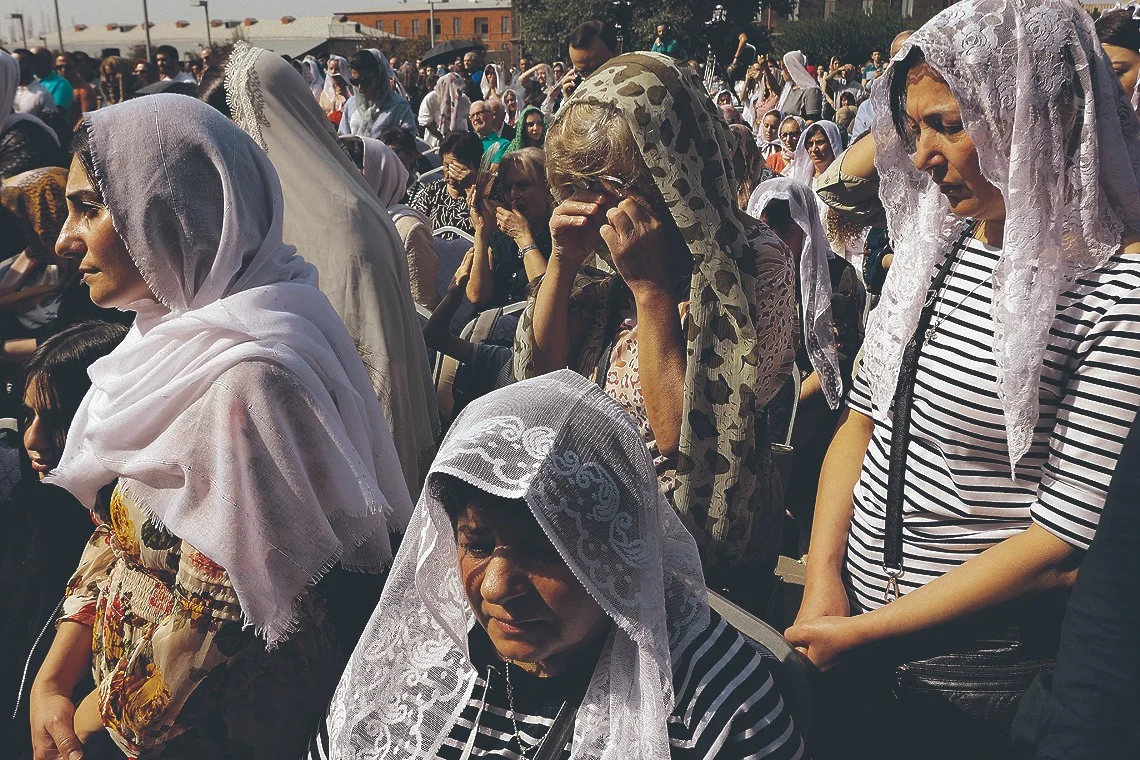
Although the family and supporters of Ruben Vardanyan conducted a very powerful media campaign in her defense, it must be said that Baku also managed to get its bearings. Shortly before the verdict, the Azerbaijani TV channel AnewZ released the film “The Oligarch’s Plan.” It can simply be shown to any Western politician who talks about the release of Vardanyan (although in fact the European Parliament resolution calls for the immediate release of not only him, but also all other Armenian prisoners).
As with any propaganda, there was a lot of emotion. But there was also something that would almost certainly catch the eye of a European official. And after that he will explain: it is now risky to actively stand up for Ruben Vardanyan. Indeed, since he is under sanctions from Ukraine, deputies of the Verkhovna Rada from the film confidently call him Putin’s oligarch. In addition, he was indeed a member of the management of the KamAZ and Volga-Dnepr companies. And everyone knows about their cooperation with the Russian state. And the head of the European Party of Armenia party, Tigran Khzmalyan (the authors of the Azerbaijani film interviewed him and other Armenians under the guise of Spanish journalists) also supported the popular version in Azerbaijan that Vardanyan wanted to become a pro-Russian leader of Armenia in the future.
After this, Baku can say that they thwarted the Kremlin’s insidious plan to return Armenia to its orbit of influence—and Vardanyan’s supporters will have to justify themselves.
In Russia, Vardanyan's verdict was not very actively covered . But even there, the voices of political scientists were heard, as if Moscow could help get the billionaire out of prison - both diplomats and business circles . And probably, in “peacetime” such a scenario could be possible - and even refusing a Russian passport would not be a serious argument. But now, when the conflict between Russia and Azerbaijan continues, no one will voice such a request. Azerbaijan is clearly aggravating the situation with Moscow and is not going to let go even of the IT specialists who fell under the distribution. Moscow is also hinting that it is ready to imprison representatives of the Azerbaijani diaspora in Yekaterinburg for a long time. The appearance of such a huge figure as Vardanyan in this equation will make a solution simply impossible. In Baku, such a proposal will be understood as an admission that Vardanyan is a Russian agent. Which is most likely not true at all. Otherwise, even at trial, he would have behaved differently, leaving Baku the opportunity for a compromise.
Yerevan is least interested in the release of Ruben Vardanyan. If he were free now, he would be able to legally participate in parliamentary elections and aspire to the prime minister’s chair. Considering that he renounced Russian citizenship in the fall of 2022, he could ask one of his associates to become technical prime minister from June to October - when he has the opportunity to lead the country according to the Constitution. Yes, this is also a scheme, but not as sophisticated as that of another billionaire - Samvel Karapetyan, who promised to rewrite the long-suffering Constitution of Armenia. And it is quite likely that Ruben Vardanyan could become an even more dangerous opponent for the government than Samvel Karapetyan, precisely because of the image of a “man of peace”, which is common both in “Moscow living rooms” and for the American diaspora.
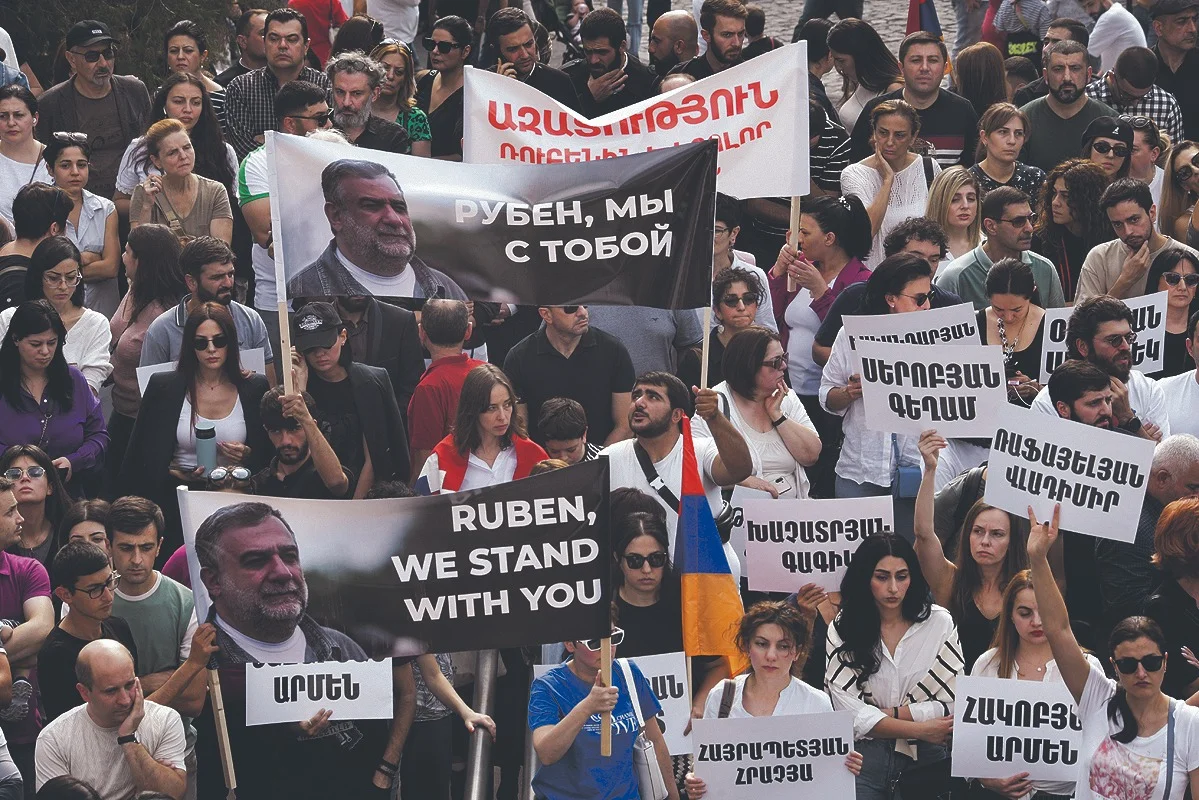
Therefore, for now, initiatives to release Ruben Vardanyan will probably be limited to a dry request from US Deputy Prime Minister J.D. Vance, to which Aliyev gave the same dry answer . Perhaps someday the circumstances will change, but for now the Armenian philanthropist will really go to prison.
The hopes of many people in Russia, Armenia and other countries to whom Vardanyan was dear can be understood. But they were based only on the inner feeling that a person with such money and connections could not suffer so seriously. As life shows, this is not so.
The politician was captured by Azerbaijan after the September aggression against Nagorno-Karabakh.
As the channel's press secretary Rufat Seyidov told local media, although it was announced in advance that the interview in question would be aired on March 28, this information was later deleted from AzTV's social media accounts.
“The broadcasting of interviews depends not only on us. We are faced with the question of whether it is advisable to publish it now. Yesterday we didn’t even announce that the interview would be shown on the evening broadcast. It's true that we gave an announcement at the beginning of March. However, it later became clear that some clarifications were necessary in connection with the publication of the interview. Therefore, in order to avoid misunderstanding among viewers, we have removed these advertisements from all our accounts on social networks,” Seidov said.
Kirill Krivosheev*