
Translated material
Izhemsky rebels: five years of struggle against the empire
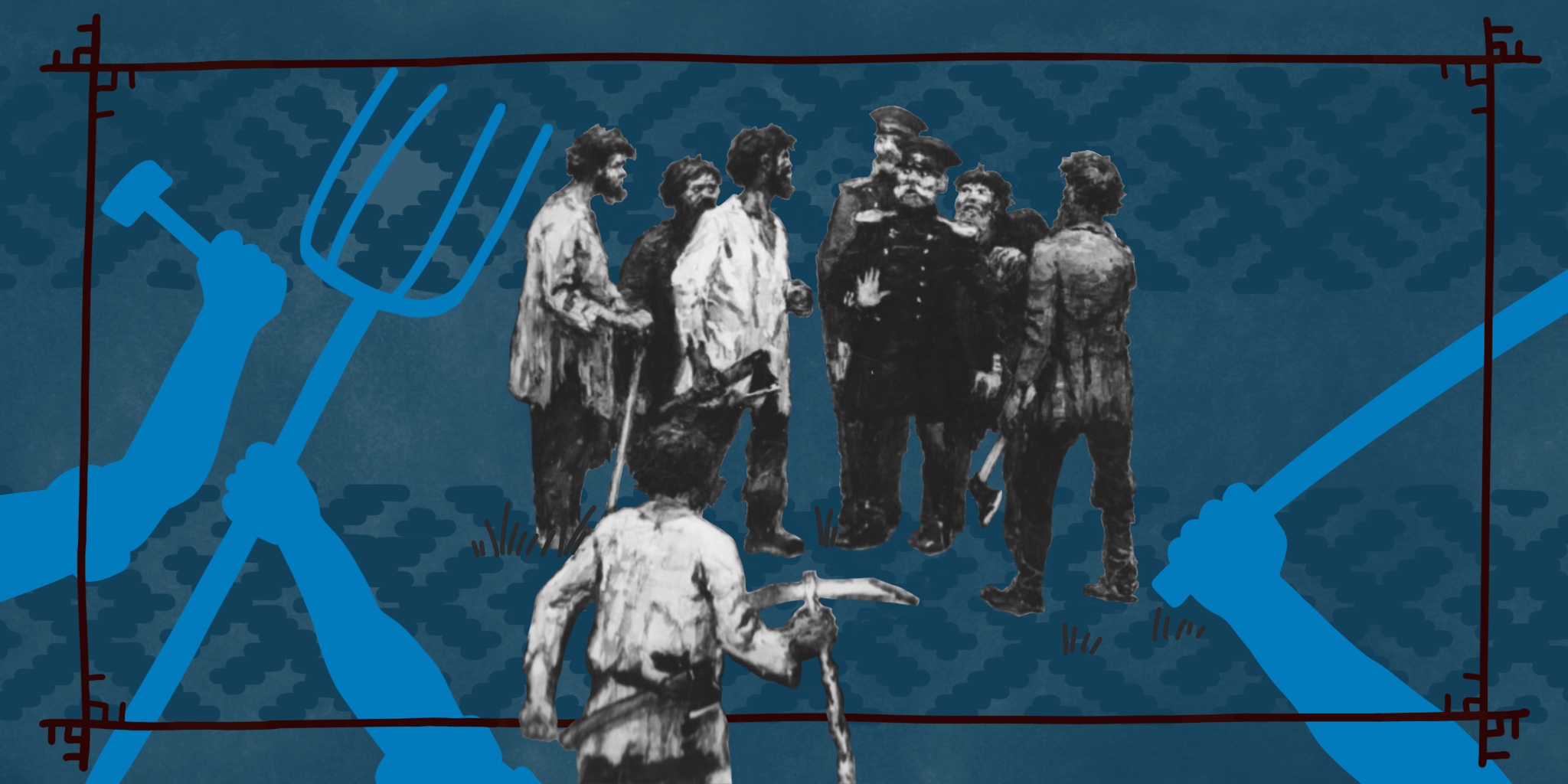
In the late autumn of 1839, not far from Izhma, a military detachment with two guns and a small group of gendarmes under the command of Captain Pilyuskin were located. In addition to them, 200 armed Nenets were supposed to prevent the possible retreat of the Izhemtsy. The military was given the task: to arrest the head and clerk of the Izhemskaya volost, and force the peasants to build the Pinego-Mezenskaya road. This was the final stage of a five-year confrontation between peasants and officials. The military was waiting for the arrival of another person who was supposed to put an end to the protracted conflict.
"Everyone went hunting"
Izhma peasants have been looking after roads for a long time; they knew how to build them, repair them, and maintain them in good condition. During the times of serfdom, they, like other residents of the Komi region, belonged to the so-called state peasants; road maintenance was their duty. So in 1833 they had to service 1668 versts in winter, and 2435 versts in summer. During this period, the Komi region was divided between Arkhangelsk (northern part) and Vologda (southern part) provinces.
In 1826, Arkhangelsk Governor Nikolai Bukharin (you will come across familiar names more than once in this text) undertook a rare task for his superiors - a summer tour of the province. He didn't like the road. Having discovered that the journey from Pinega to Mezen was too long, he decided to “show diligence”: he ordered the construction of a permanent route where previously they had traveled only in winter. The presence of swamps in these places did not bother Bukharin; the work on developing a new direct road was set in motion.
On August 26, 1828, the road construction project was approved. State peasants who lived in the Pinega and Mezen districts, through which this road was supposed to pass, were involved in the construction.

The then Minister of Finance Yegor Frantsevich Kankrin carefully criticized the decision to build the road. The work was supposed to take place in the summer, when the peasants were busy working in the fields, hunting, fishing and preparing for the winter. Diverting them to build the road would lead to the decline of farms and tax arrears.
However, in October 1829, peasants began cutting down the forest. Despite the initially cheerful reports from officials, by the beginning of 1831 it became clear that the work was being delayed. The Pinega Zemstvo Court reported that “the peasants had neither the opportunity nor the time to engage in either housekeeping or crafts, which is why their payment of taxes was associated with considerable frustration for them.” Later, the court reported about crop failures that it was impossible to attract peasants to construction, since they all “went hunting” in order to somehow feed their families and pay taxes.
Things were even worse in the Mezen district, since many peasants went for personal needs to Arkhangelsk, where there was an outbreak of cholera. To prevent the spread of the disease, the peasants were placed in quarantine and could not reach their county. They started work only in 1832.
It became clear that there were not enough people and we needed to find them somewhere.
Peasants and the fierce Gall
In February 1833, the board of the Izhemsk volost received an order from the Mezen zemstvo court. It required sending peasants to the construction of the Pinego-Mezen road, namely a section 12 versts and 90 fathoms long (a little more than 13 km), which ran mainly through wetlands. It was about the construction of a road that was located almost a thousand kilometers from Izhma.
On August 23, 1834, Izhem and Ust-Tsilma peasants, who were also trying to be involved in the construction of the road, sent a petition to the capital of Russia, St. Petersburg. In it, they remind us that they have always been loyal to the authorities and would really like to help with the construction of the road, but it will not work.
“Insurmountable reasons do not provide either the means or the opportunity,” the peasants write. “These reasons are the following: 1st, extreme remoteness, 2nd, impassable swamps, 3rd, cruelty of the climate and 4th, four consecutive years of crop failures, threatening disastrous consequences.”
In the struggle for the Pinego-Mezen road, the peasants are opposed by Roman Romanovich Gall. Not long ago, in 1830, he was appointed military governor of the Arkhangelsk province and desperately wants to make changes. At the time of his appointment, Gall was already 69 years old, he had been promoted to admiral, and his entire previous career was military service. The governor is sure that the whole problem with the road lies in the laziness of the peasants and it can only be solved by forcing the latter to work.
On March 30, 1835, responding to a request from the Minister of Internal Affairs Dmitry Nikolaevich Bludov about the progress of work, Gall replies that they are still not completed, “solely because the peasants of remote volosts (Izhemskaya, Ust’tsilemskaya and Pustozerskaya) did not take part in processing it at all.”
Previously, the county road commission found the demands of the Izhma residents to be reasonable, but the provincial commission standing above it, headed by the civil governor Ilya Ivanovich Ogarev, decides otherwise. Izhemtsy give forced consent to continue construction of the road. The summer of 1836 arrives. After completing the field work, the Izhma residents disperse to their trades, without ever setting off to develop their own plot of more than 12 miles. Only at the end of August, under pressure, the Izhma people conclude a contract with the peasants of the Zherdsky volost to continue work. They themselves do not participate in the construction for the reason already mentioned - the road is a thousand kilometers away from them. However, the Izhma residents were not going to pay under the contract, since they signed the obligations under duress.
“The satraps, enraged by the stubbornness of the peasants”
In October 1836, the Izhma residents gathered again and drew up a new petition to be sent to the very top - to St. Petersburg. They again list their grievances, the problems they have to face, and talk about harassment and pressure from their superiors. At the very end of the year, attorneys Anisim Belyaev and Semyon Terentyev hand it over to the Minister of Internal Affairs, who forwards it to the new Arkhangelsk governor Joseph Ivanovich Sulima. The latter replaced Gall in his post, but remained true to the opinion of his predecessor that the peasants were to blame for everything, they just needed to be asked more strictly. His answer puts Bludov in a difficult position: the minister really wants to finish the construction of the road as quickly as possible, but he is afraid of a peasant revolt.
In 1837, the peasants of the Zherda volost, having not received money for their work, refused to further participate in the construction of the road and turned to the road commission with a request to let them go. At the same time, Governor Sulima, by the way, just like Gall, who devoted his life to military service, convinces Minister Bludov that the Izhem peasants are not poor at all and should not shy away from building the road. The frustrated minister decides that the provincial authorities must deal with the problem themselves. “Their fate was completely transferred to the hands of the provincial satraps, enraged by the stubbornness of the peasants and their complaints,” writes historian Dmitry Khonkin about this.
In response, the Izhemtsy sent new attorneys to the Russian capital - Vasily Popov and Evstafy Filippov, who filed a complaint against provincial officials with the Senate. Governor Sulima is worried. We know how bribery and abuse of power in the localities flourished in those years not only from the works of Nikolai Gogol, but also from numerous historical evidence. Sulima was no exception.
Chief troublemaker
At the center of the peasant protests is the peasant Dmitry Balin. He is not from Izhem, but a native of the village of Shezham (now Ust-Vymsky district). It was he who initiated many peasant uprisings. Perhaps the people of Izhma themselves turned to him for help. Although Balin lived far away, he was probably widely known as a champion of the peasants. This is evidenced by a legend preserved among the people.
“Balin was a peasant. His superiors did not like him because he exposed bureaucratic abuses. There is a reaping called “Shyd Vidz” (shchi-pozhnya). During the hungry year, local rich people bought it from the poor for a cup of cabbage soup. On this matter, Balin wrote a petition, and added that officials and the rich like hungry years more than manna from heaven, because manna, if it falls from the sky, goes to everyone, and in a lean year, the harvest and fields and people’s labors go only to the rich and officials (officials - bosses and rich people have long lived together). For such a request, Balin was seized, put in a dark carriage and driven on six horses (major criminals were carried on six horses) down the Vychegda River. Balin was accused of having been forbidden to write petitions long before the Shyd Vidzem incident, but he did not listen and wrote again. We were taken first to Vologda, then further. They drove it for more than a year. In one place, they finally told him: “Here is the archive for you, disobedient servant of God Balin. Find Mikhail Fedorovich’s original decree within a week, if you find it, we’ll acquit you, but if you don’t find it, we won’t release you.” Balin was saddened, sitting in the archive under lock and key: there are a lot of books in the archive, and you need to sit in it for years, not a week, to find anything here... One of the archive employees took pity on the rebellious one: at night, through the hole, he whispered to the prisoner: “Look there, in the corner!” Balin was saved."
Komi legends and traditions
The gendarmerie notes mention that Balin was twice punished with a whip, but he did not stop leading active protest activities, and also that the Izhemtsy were demanded to hand over the rebel, but they refused to do so.
The significance of this man lay, apparently, not only in his bright charisma, ability to persuade and desire to resist the authorities, but also in the fact that he knew the laws well and was able to very competently draw up petitions, complaints, requests and other papers. Throughout 1837, provincial authorities made unsuccessful attempts to arrest Dmitry Balin or at least remove him from Izhma, suggesting that he was the main troublemaker and the reason for the stubbornness of the peasants.
At the beginning of 1837, 13 military men were sent to Izhma, supposedly for arrears, but the Izhma residents refused to accept them: the local volost government explained that there were neither apartments nor food for them. In Krasnobor, peasants simply drive the military out of the village. Locals refer to the fact that the provincial government is not a decree for them, and their government sits in St. Petersburg. It is obvious that even then the entry of the Komi region into the Arkhangelsk province was perceived by local residents as artificial and unfair.
The authorities accept the last option to resolve the matter peacefully and send a priest to the Izhemskaya volost, who must call the peasants to submission. But the sermon only outraged the Izhemtsy, who demanded “that in the future he should not make similar admonitions to them and that they do not love them.”
“We won’t give in alive!”
At the beginning of 1838, the same attorneys, Popov and Filippov, submitted two petitions - to the Senate and to the Ministry of State Property. And the head of the Izhemsky volost, Job Popov, filed a complaint on his own behalf against the police officer and members of the zemstvo court for illegal collections from peasants in his favor in 1835 and 1836. He describes in detail the abuses of officials, demanding justice for them. Such appeals are made to several authorities at once in the hope that at least somewhere they will work.
Civil governor Ogarev, in response to this, orders that posts be set up on the roads to keep track of the peasants' representatives. But, as you know, you can always find workarounds. After the attorneys finally file a complaint with the Senate, Ogarev writes a request for transfer to Perm.
He is replaced at the post by State Councilor Alexander Muravyov. The forty-year-old official had already managed to start a brilliant career, take part in secret societies, go into exile as a Decembrist and serve as the civil governor of the Tobolsk province. There he quarreled with his superiors, after which he was sent to Arkhangelsk.
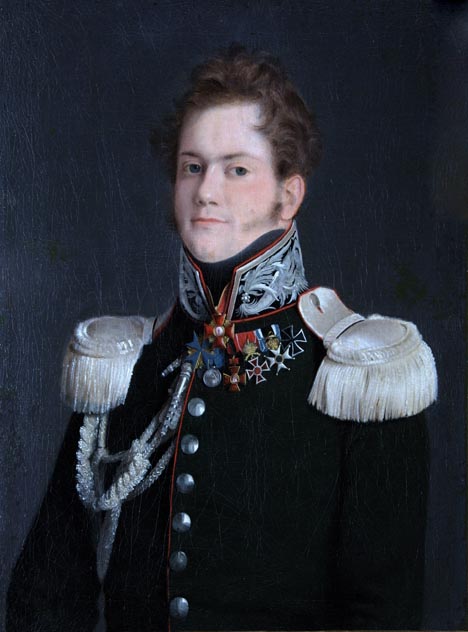
And so Muravyov decides that it’s time to take the toughest measures against the Izhma people. In an appeal to the Minister of Internal Affairs Bludov, the governor paints the Izhma people in the blackest possible terms, demanding 200 infantry and a cannon to suppress the peasants. A lengthy correspondence begins between officials. And a police officer is sent to the Izhma residents with a warning about the measures being prepared.
Krasnoborsk peasant Leonty Filippov responds to the police officer’s warnings like this: “What a police officer you are! You're not on our side. I have already prepared a petition for you. We have already replaced more than one such police officer. If the troops come, then I have 50 spears and many scythes. I myself will lead my family towards the soldiers, and as long as we have hands, we will not give in alive!”
Meanwhile, Governor Muravyov decided to assemble a detachment of 200 Nenets, reinforced by a group of military men, and send them to conquer the peasants. He hoped that many years of friction over pastures for reindeer in the Bolshezemelskaya tundra could become the basis for armed confrontation between the Izhemtsy and the Nenets.
And officials are sent from the capital to the province to figure out what is ultimately happening there. They check, among other things, the ill-fated road and come to the conclusion that it is being built on impassable swamps and is essentially a “bridge on pillars and rows.” Minister Bludov reads the reports and still cannot understand the reason for the disobedience of the Izhma people - either in heavy duties, or “in the Zyryans’ tendency to riot.”
Special envoy on the side of Izhemtsy
The authorities see the problem as so serious that they send an adjutant outhouse to the Arkhangelsk province, authorized personally by Tsar Nicholas II and not subordinate to Governor Muravyov. His name is Nikolai Ivanovich Kruzenshtern, and he is the son of the same Ivan Fedorovich, who at the beginning of the 19th century led the first Russian round-the-world sea expedition and is now known to us as “the man and the steamship.” On November 24, 1838, he arrived in Izhma, next to which a military detachment with two guns sent by the governor had already settled down.
Five days later, the special envoy gathers a volost meeting. The negotiations are followed by an investigation, during which Kruzenshtern takes the side of the Izhma people. In his report, he reports that two-thirds of the peasants live in extreme poverty, and that their complaints are justified.
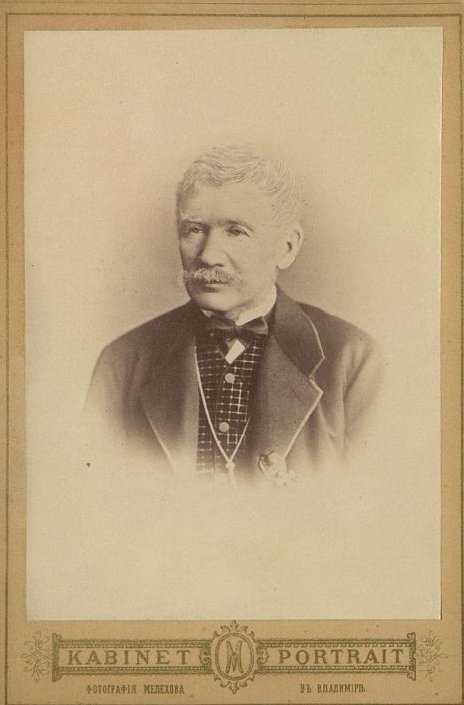
But not only the situation of the peasants is being investigated, but also the arbitrariness of officials, primarily the governor. Kruzenshtern completes the investigation in April 1839. He makes a report at a meeting of the cabinet of ministers, where the tsar is present, and talks about the abuses of local and provincial officials, as well as the plight of the Izhem peasants. Kruzenshtern explains a seemingly obvious thing: a road a thousand kilometers from Izhemsk villages and hamlets will not be useful to the peasants and will only be a burden to them.
After the speech, several officials, as well as Governor Muravyov, lost their positions. Later he will be assigned to another position, become the governor of Nizhny Novgorod, and then a senator.
A commission sent to check the condition of the Pinego-Mezen road under construction comes to the conclusion that it is impossible to complete it due to impassable swamps and due to the fact that the site for construction was initially chosen incorrectly.
In August 1841, the Izhma residents were announced that they were exempt from legal proceedings. But the volost mayor, headman and clerk are deprived of their positions, and at the same time the right to be elected in the future.
As for Dmitry Balin, he was captured and arrested back in 1838. He went to prison for four years, and upon leaving it, he led the uprising of the Ust-Kulom peasants.
“Offended people came to him from afar for advice and help, and Balin helped with words and writing, since he, having a safe conduct with him, was no longer afraid of local officials. After his death, legend says, his coffin was not made of boards, but the butt of a thick tree was hollowed out so that his corpse would not decay longer.”
Komi legends and traditions
But a year-round road to Mezen was built after all. But this happened already in 2008.

Text author: Elena Solovyova
The following works were used in preparing the material:
“Unrest of Izhemsky peasants 1833-38”, Dmitry Khonkin
“Komi Legends and Traditions”, compiled by Yuri Rochev
Engels Kozlov’s painting “A Link of Times” was used in the design of the material.