
Translated material
Where does the garbage go: why the new Komi term scheme raises questions
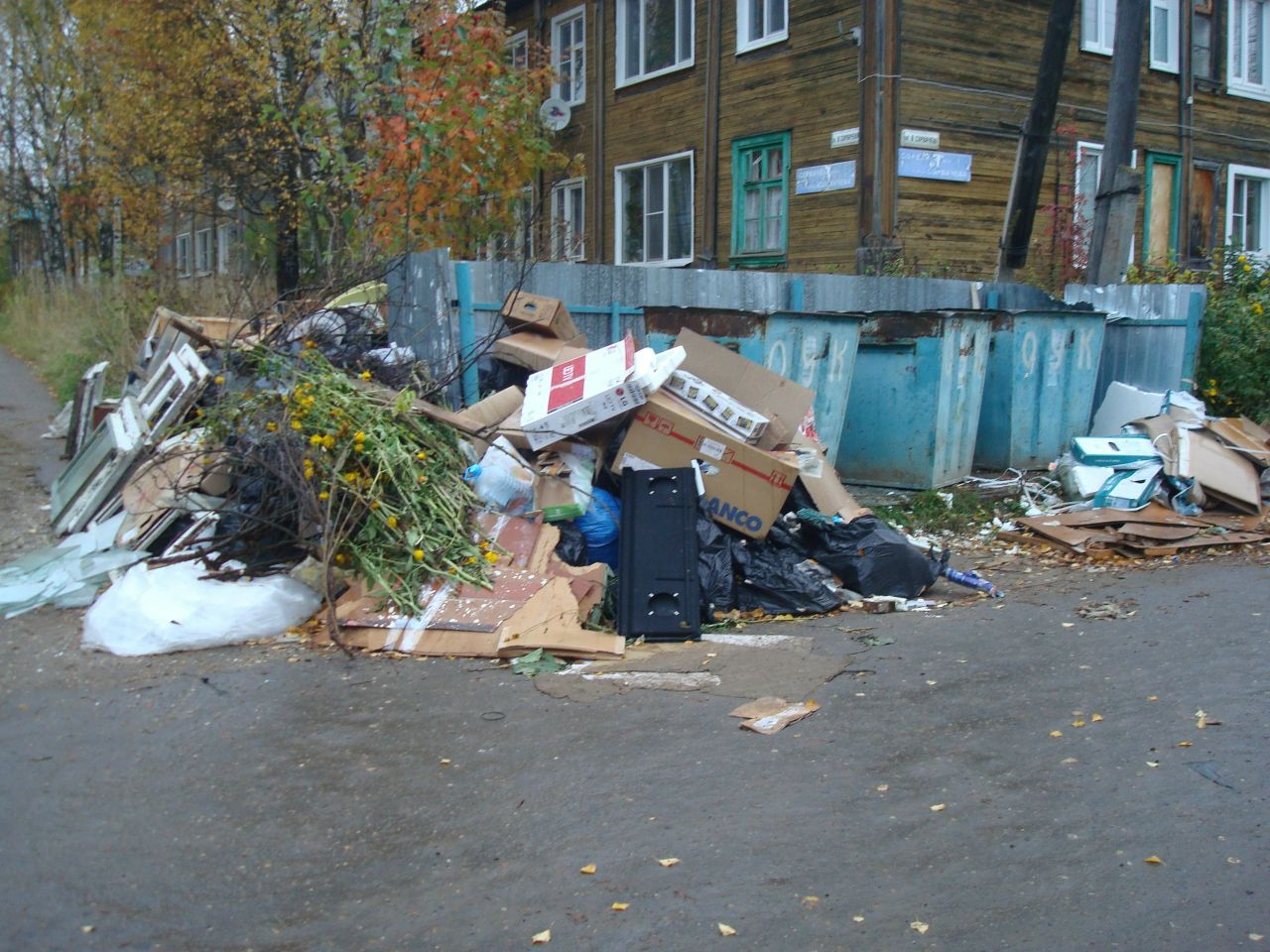
At the beginning of March, Komi approved a new waste management scheme designed until 2035. A few months earlier, an independent environmental assessment showed that in its current form it was contrary to the law, contained errors and could lead to an increase in illegal dumping. However, the problem is not only in numbers and calculations, but also in the very logic of waste management. Problems with garbage did not start yesterday; system failures have been observed for a long time, and citizens’ distrust of new government proposals is growing.
What is a territorial waste management scheme
The Terscheme is a key document that determines how the entire waste management system is organized in the region: from the moment waste is generated to its processing or disposal. It states how much waste is generated in the region, where it is transported, where it is sorted, processed or stored, as well as what waste management facilities already exist and what are planned to be built.
The scheme also describes waste movement routes and makes forecasts for the years ahead - how much waste there will be and whether the existing infrastructure will be sufficient. According to the new document , until 2035, residents of the republic will send an average of 188.5 thousand tons of municipal solid waste (MSW) per year to landfills. Now their volume is estimated at approximately 200 thousand tons.
Calculations are based on the forecast that the population in Komi will decline and reach 650 thousand people.
But this is only household waste, of which there is not much. The bulk of waste, which includes MSW, is class IV and V (low-hazard and practically non-hazardous). In general, we are talking about 5.15 million tons per year. The majority comes from the industry, energy and public utilities sectors.
The work of the regional operator is built on the basis of the terscheme, decisions are made on the construction of landfills and factories, and tariffs for residents are largely formed.
If the scheme is drawn up with errors, the consequences are quite real: waste begins to be transported hundreds of kilometers away, costs and tariffs rise, and some waste may simply fall out of the official system.
Who is involved in waste management in Komi?
Regional authorities are responsible for drawing up the territorial map; they order the development of the document. A separate role is played by the regional operator - the company that is responsible for waste removal. Formally, he should not develop a scheme, but in practice he often influences it, since it is precisely this scheme that he has to work according to.
In the Komi Republic, the regional operator for waste management is LLC Regional Operator of the North . In the districts, he has contractors, various municipal unitary enterprises and LLCs, which, before the start of the garbage reform, handled the garbage themselves.
The regional operator is not involved in building a separate waste collection system in the republic, since the main goal of its work is the circulation of solid waste. It collects recyclables as an image-building activity, although the garbage reform assumed that the institution of regional operators was created specifically to solve environmental problems - reducing landfill disposal and increasing the share of waste recycling.
This system was designed for large cities, with high population density, developed infrastructure and concentration of sorting and processing facilities. It is difficult to apply in sparsely populated regions like Komi.
Confirmation of the unviability of the Territorial Waste Management Scheme can already be seen. “Regional Operator of the North” has difficulty coping with solid waste, receiving regular subsidies from the budget for its work. In such circumstances, we are not talking about creating new capacities and separate flows for working with recyclable materials. New logistics schemes are not being built, as well as infrastructure for receiving and sorting waste for processing.
The operator is limited to PR campaigns - he sends an eco-mobile to the districts and collects separate fractions of recyclable materials: plastic, waste paper, aluminum cans, two types of combined recyclable materials. This is a limited set of fractions that have at least minimal profitability.
At the same time, in its VK group , “Regional Operator of the North” shows work with only one type of recyclable material – PET (polyethylene terephthalate). This is the most common and expensive type of recycled plastic. Part of the waste is processed into plastic crumbs (flex) and transferred to the Komitex enterprise. However, neither the volume nor the frequency of such processing is disclosed. Moreover, there is a complete lack of information about the fate of the remaining factions gathered at the protests. The result is an impression of transparency and recycling, while much of the waste stream remains undescribed.
Also, judging by the information in the group, the reoperator widely uses administrative resources to increase the coverage of its shares.
What's wrong with the new term scheme?
An examination conducted by the St. Petersburg company Global Eco showed that the draft scheme for Komi does not comply with Russian Government Decree No. 775 - this is the basic document that regulates how such schemes should be developed. The project is missing required sections, some data is included in appendices instead of the main text, and key elements, such as a waste flow diagram, are either missing or incorrectly formatted. Simply put, it is not clear how the document passed approval in the first place.
The reliability of the data also looks doubtful, since in a number of places in the terschema there are no references to sources and explanations of how the calculations were made. One example states that about 5.8 thousand tons of waste were processed, but “after processing” suddenly more than 200 thousand tons appear. This is most likely not a simple arithmetic error.
The presented model lacks a key element – the volume of extracted secondary resources. Without it, connections between indicators are broken and calculations become opaque. Moreover, even if we restore the authors’ logic, another problem arises: the laid down indicators for the extraction of recyclable materials look unrealistic. There are virtually no automated sorting capacities in the region, and manual sorting gives a significantly lower result.
The diagram shows that in a number of areas there are simply not enough waste management facilities. This means that somewhere garbage will have to be transported hundreds of kilometers away. Such logistics make the system expensive, unstable and dependent on long transport chains. And this provokes the emergence of unauthorized landfills. The expert directly warns that working according to the adopted scheme can lead to systemic problems and financial risks for the operator.
Strange decisions and environmental risks
On the website of the Ministry of Natural Resources and Ecology of Komi, in addition to the draft technical scheme and examination, comments and objections from the administrations of the regions of the republic, as well as representatives of business and environmental organizations are given. A discussion of the project showed that the key problems of the scheme are inconsistencies in calculations, unrealistic processing rates and poor infrastructure development. In a number of cases, the data in the document contradicts each other, and some of the decisions do not have an economic or technical justification.
The plan for installing an incinerator in the village of Ust-Tsilma raises certain questions in the draft territorial scheme. We are talking about a waste incineration plant, which should appear in the coming years as part of the waste management infrastructure.
At first glance, this looks like an attempt to solve the problem of remote territories: the Ust-Tsilemsky region is difficult to access, logistics are complex, and the construction of a local facility seems rational. However, upon closer examination, serious questions arise.
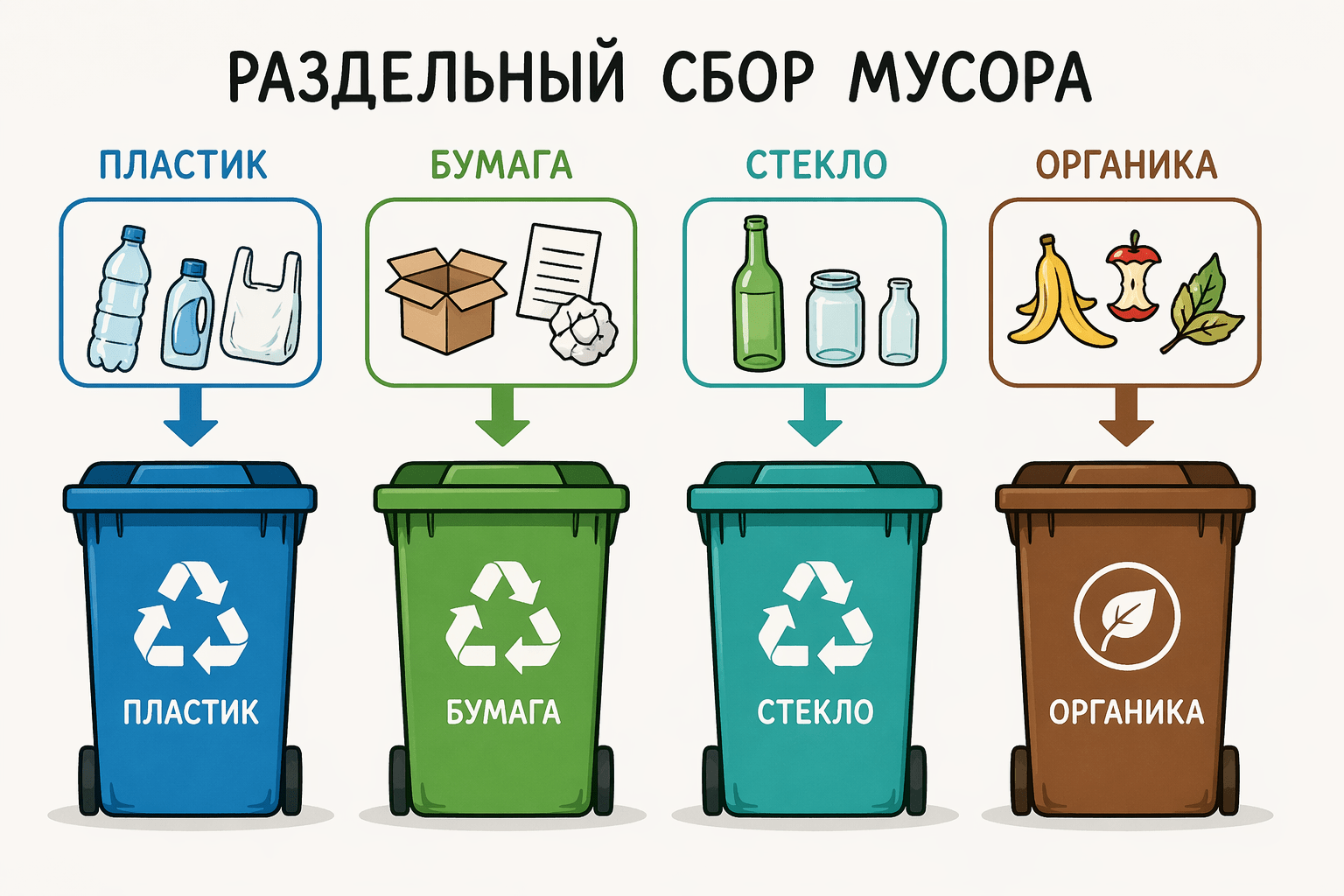
In theory, the modern waste management scheme is divided into several stages: separate collection of raw materials, sorting, extraction of recyclable materials, processing. And the remains can be buried or burned.
However, in reality, separate collection in the region is poorly developed, and sorting capacity is limited. As a result, there is a high probability that recyclable materials will not be separated, but everything will be burned. In such a situation, not only does it make sense to separate waste, but also the environmental risks for local residents increase. It is for these reasons that in recent years there has been a shift away from waste incineration in Europe. The carbon emissions from such recycling are high, and it conflicts with “circular economy” policies that require maximizing the extraction of resources from waste. Research and experts indicate that incineration not only increases CO₂ emissions, but also reduces incentives to recycle because it requires a constant flow of waste.
A landfill that should be closed but continues to operate
The situation around the Ukhta landfill well illustrates how the waste management system is structured in practice in the republic. As the Tribune writes , the court ordered the authorities to bring the activities of the landfill into compliance with the requirements of the law and actually eliminate violations associated with its operation. The landfill is overcrowded, it is difficult to use it further, but the main thing is that it is dangerous. Its service life expired back in 2008. However, despite the court decision, the problem remains unresolved.
At the same time, the site in the Pozhninsky forestry area, which the Ministry of Natural Resources has designated as a site for a new landfill, is still only at the stage of transferring land from one category to another. This allows the authorities to formally avoid accusations of inaction without actually solving the problem for years.
This is not only about a formal failure to comply with a court decision, but also about a deeper conflict between reality and governance. The landfill continues to operate because there is virtually no alternative to it: closing the facility without creating new infrastructure means the collapse of the entire waste removal system. In such conditions, even obvious environmental and legal problems are postponed “for later.”
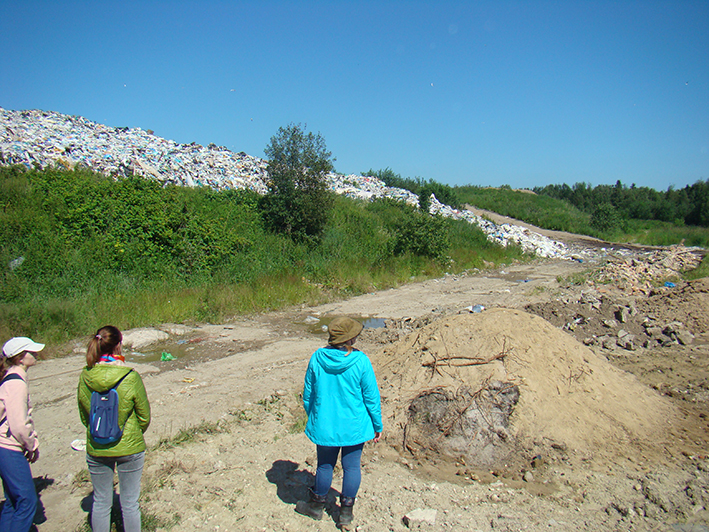
This creates a vicious circle: the landfill must be cleaned up or replaced, but this requires resources, time and new facilities, which, in turn, face resistance from residents and institutional barriers. As a result, neither old decisions are brought to completion, nor new ones are implemented.
The history of the Ukhta test site shows that the problem in Komi is not only a lack of infrastructure, but also the inability of the system to implement its own decisions. And this is precisely what undermines confidence in any new projects - from the reconstruction of existing facilities to the construction of new landfills.
Who is busy with separate collection
Separate waste collection in Komi exists and works, but not thanks to, but in spite of the regional operator and new schemes. This system was created throughout the republic by environmental activists in collaboration with receivers and processors of recyclable materials.
People can donate recyclable materials at volunteer eco-points and at periodic events :
- in Syktyvkar (eco-centers “Na Chkalova”, “Rodnik”)
- in Krasnozatonskoye, Sosnovaya Polyana (EcoHouse "RoStOk")
- in Kirula
- in Maksakovka
- in Vylgort
- in Shoshka
- in Nyuvchim
- in Ust-Kulom
- in Izhma
At the moment, eco-points can accept 14 fractions of plastic, 7 fractions of paper and cardboard, glass, 7 fractions of metal recyclables, textiles, and several fractions of combined recyclables. The lists differ at different eco-points and change over time.
Then the recyclable materials are transferred to large receivers: PVS LLC, Komiekovtor LLC and Promholding LLC.
Who in Komi is engaged in processing secondary resources into new products:
- JSC Komitex - processing of PET bottles into flex with subsequent production of non-woven materials and finished products based on them;
- Tissue Group LLC - processing of recycled paper into base paper and products for household and hygienic purposes;
- Greentech LLC - processing of polyethylene and other types of soft plastic into polymer-sand products for landscaping; the company also conducts its own collection of recyclable materials in Syktyvkar;
- LLC "PVS" - independent processing of part of soft plastic into polymer-sand products;
- LLC "Plast" - processing of complex plastic fractions into equipment and products for landscaping.
Why is it difficult to make money from recycling?
Everything that is not processed in the republic is redirected by receivers to other regions to processing enterprises.
Both the regional operator and the volunteers actually make no money from recyclable materials. In conditions when primary plastic has become cheaper than secondary plastic, its supply on the market is high, and sales due to war and sanctions are limited mainly to the domestic market, it is becoming increasingly difficult for processing enterprises to work. Added to this are inflation, rising costs of electricity, space maintenance and transportation, technological degradation and wear and tear of equipment, as well as the country’s isolation and limited export opportunities.
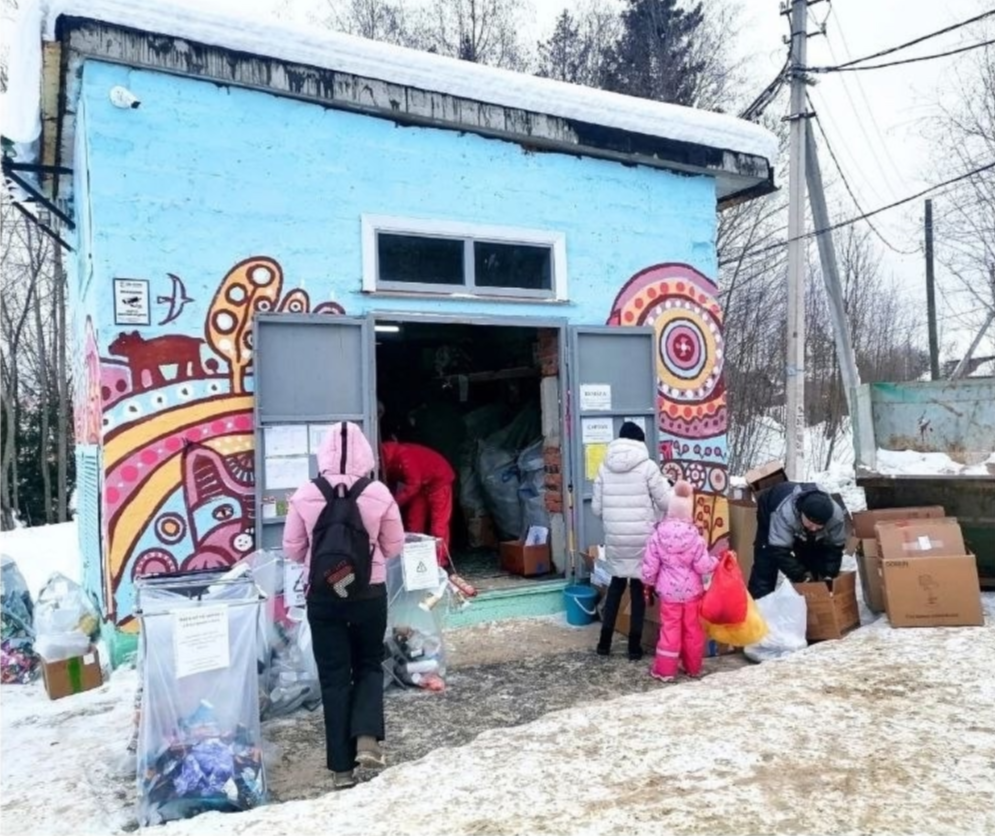
Taken together, this leads to a reduction in the cost of recyclable materials and a reduction in the list of fractions, the processing of which remains economically justified and does not lead to losses.
The regional operator makes money on something else, so it can afford to participate in charitable and image initiatives, while maintaining the main source of income - tariffs and budget funding.
Volunteers act for ideological reasons and do not have sustainable funding. For example, even large eco-centers in cities with a population of over a million, even before the war, survived only through a combination of different sources: grants, income from the sale of recyclable materials, processing of individual fractions and related activities, such as educational or consulting projects. Relying solely on revenue from recyclable materials was impossible even then.
In these conditions, volunteer initiatives try to minimize costs and efforts in order to preserve the opportunity for people to manage waste competently and environmentally for as long as possible. At the same time, public demand for such practices has clearly formed and continues to grow.
Overcrowded landfills and growing mistrust
In fact, there is only one landfill left in the republic that retains a resource for receiving waste - the same overflowing one in Ukhta. In many ways, this is what allowed the Ukhta enterprise to become a regional operator for the entire Komi Republic. How it was supposed to transport waste from the entire territory of the republic to Ukhta remains an open question.
In other areas, the situation is more complicated: landfills are either also overcrowded (including a facility near Syktyvkar that receives waste from the south of the republic), or they use outdated sites and landfills, many of which have been in operation since Soviet times and do not meet modern environmental requirements.
With poorly developed separate collection, the bulk of waste becomes solid waste and requires disposal at modern landfills. Volunteer initiatives are capable of accepting only 1-3% of the potential volume of recyclables: separate collection in its current form requires effort, knowledge, has no financial motivation and is associated with everyday inconvenience for people. This share can be significantly increased only by creating a full-fledged RSO system that removes these barriers.
However, after Shies, a persistent distrust of new landfill projects developed in the republic - and in many ways justified. Discussions are taking place formally, without the real participation of independent experts and activists; there is no transparency in the selection of sites, technologies and construction control. In conditions of high corruption risks, there is no confidence that the declared environmental standards will be met.
In such a management system, decisions are promoted administratively, and public participation is formal. As a result, any attempt to design new objects almost inevitably meets resistance. Against the background of budgetary restrictions, this leads to a deadlock: overcrowded landfills continue to fill up, but it is becoming increasingly difficult to count on the appearance of modern and safe facilities.
As a result, the new term scheme captures not so much a solution to the problem as its current state: weak infrastructure, dependence on landfills, lack of economic incentives for recycling and a deep crisis of confidence. In such conditions, any new projects - be it landfills or waste incineration - inevitably face resistance. And until this system becomes transparent and managed in the interests of people, and not just reporting, we cannot count on real changes.

Text authors: Elena Klyuchko, Elena Solovyova