
Translated material
"It was a terrible night"
Smoke from a fire at the Tuapse Oil Refinery spreads over the sea. It hangs along the coast, reaching Gizel-Dere and Shepsi - a village a few kilometers from Tuapse. A train passes them, heading into the city from Sochi.
Judging by satellite images, the smoke spread at least 140 kilometers in the first hours after the new Ukrainian strike. Governor of the Krasnodar Territory Veniamin Kondratyev said that the authorities “for safety” began evacuating residents of houses on Koshkin and Pushkin streets and in alleys located next to the terminal (there are no clear statements from officials regarding the drone attack and the large-scale environmental disaster in Tuapse).
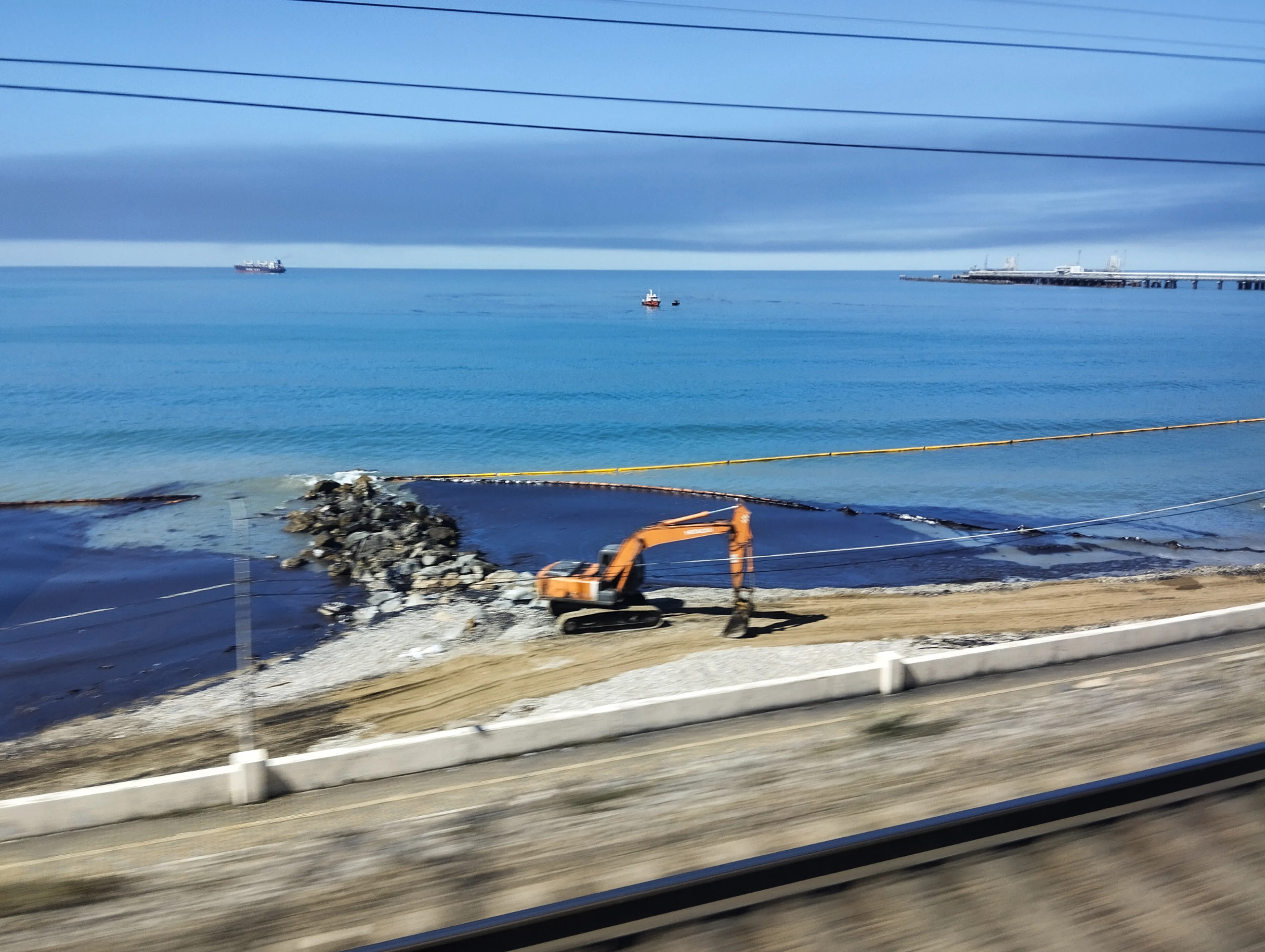
A strongly built man with a khaki backpack and a girl of about ten in a cap look out the compartment window at the approaching black sky. The daughter asks her father: “Is that red fire there? Smoke? Are there drones lying around? Shall we take it as a souvenir? Are they still there?
“They’ve already flown away,” the father answers. - Shot down.
— Can they [fly] to Magri ?
- No, they don’t need anything there.
— What do you need in Tuapse?
- There's oil there.
— Why do Ukrainians need oil?
- Yes, it’s just a tactic.
Approaching the station, located across the river from the refinery, passengers, without saying a word, take out their phones and take pictures of the smoke. They don't discuss the view from the window.
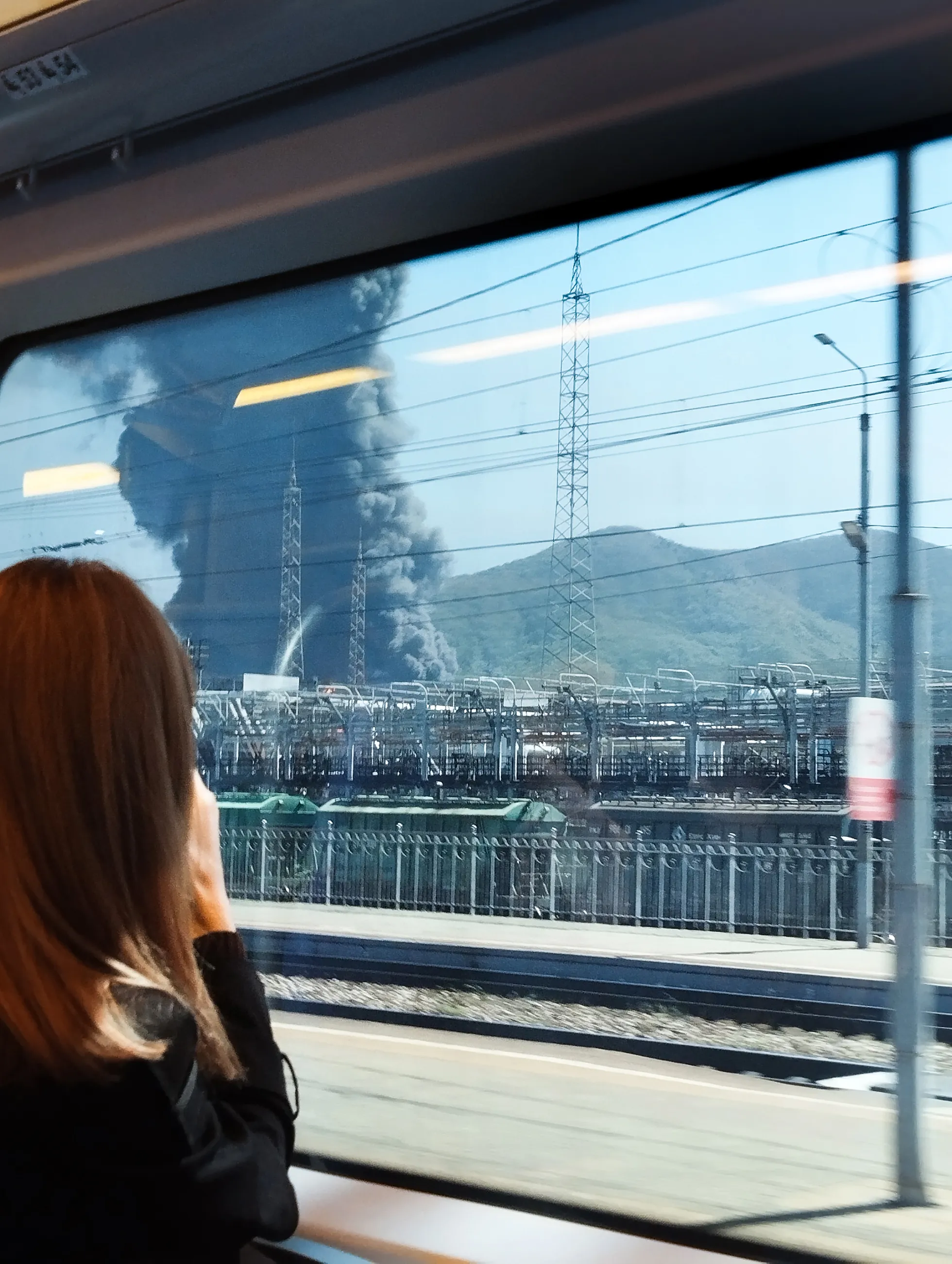
On the street you can immediately smell the burning smell. For the first few minutes, breathing is unusual and unpleasant for them.
A man of about fifty, wearing a windbreaker and cap, is fussily pushing his way to the entrance to the station. He swears loudly and films on his phone a black column of smoke, from which flames constantly burst out. There are no coherent thoughts in his speech. He seems simply shocked by what is happening.
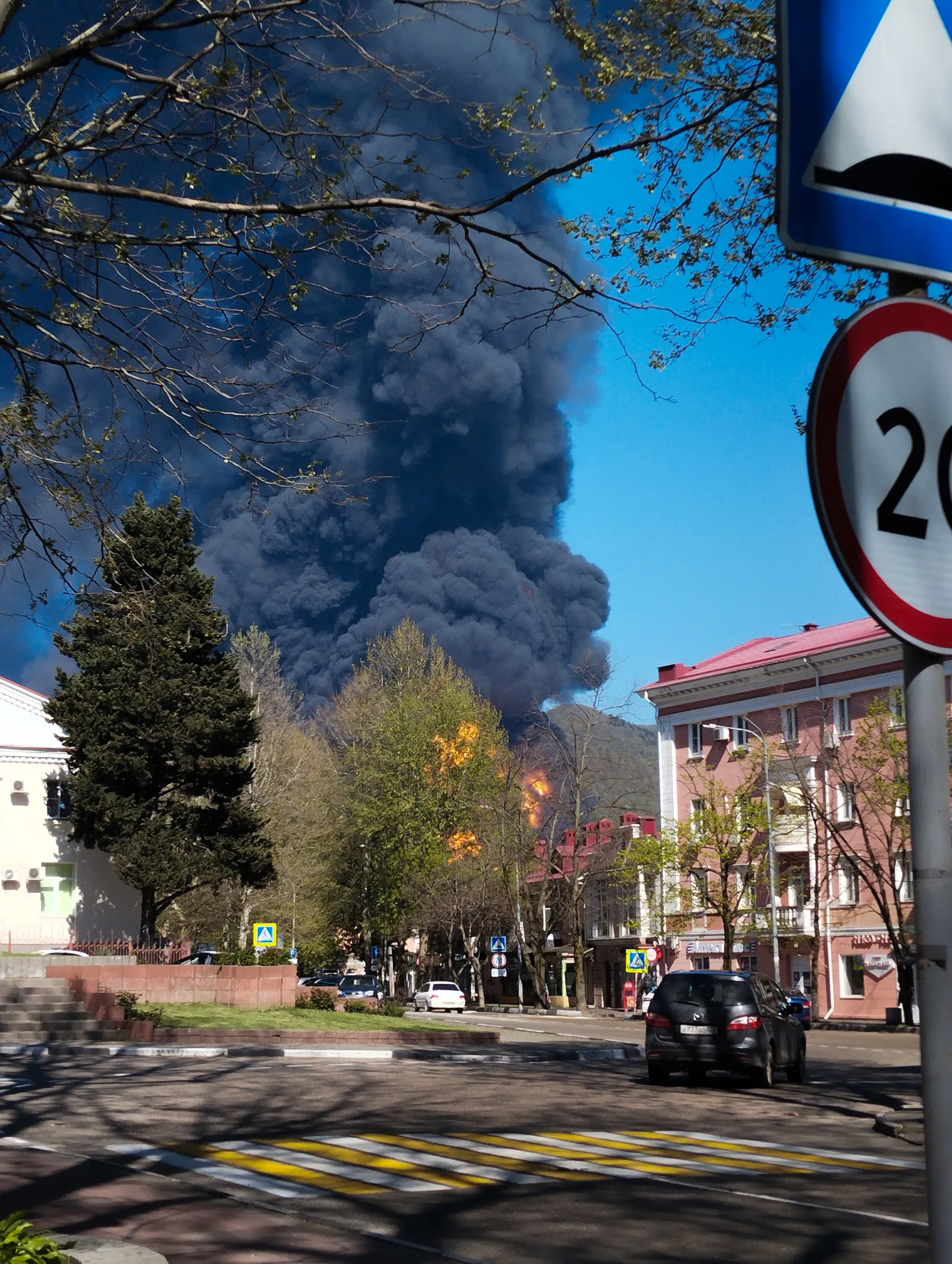
Taxi drivers meet passengers at the station. They offer their services without much enthusiasm: one gets the impression that they are much more interested in continuing the conversation interrupted by the arrival of the train.
“But they say that someone from the oil depot taxied them [the drones] ( probably meaning the theoretical gunner - note from Berega ). They circled and circled... And then one time! — and went [to descend]…” the taxi driver retells the quickly emerging urban legend.
Residents of Tuapse do not seem to notice the black sky above their heads. Some are in a hurry to get to work, others are rushing to buy coffee and a quick breakfast at the stalls of the opening market.
The black puddles that appeared on the sidewalks after last week's oil rain have already disappeared. The remaining soot and black stains are now clearly visible only on light surfaces: signs and the white slab of the monument to the Glorious Soviet Military Sailors, which stands near the port.
Market sellers with glasses of coffee in their hands, lighting cigarettes, discuss the night raid. “The fire was up to the skies and then at times these things, flames, were even higher,” one merchant says to another. “I hear bang-z-z-z at night and say: “Okay, get ready, now it’s going to bang.” And then again bzzzzzz.”
— Will there be a cigarette? - a passerby asks me.
— Don’t you have enough smoke in the air?
He grins: “It was a terrible night. [UAVs] were flying constantly... But what do we have to be afraid of? Now they will finish it [the oil depot] and then that’s it.”
When I ask what, in his opinion, will happen to the sea due to the oil spill, he replies: “There probably won’t be a season.”
A saleswoman in a small station cafe says that working in the smoke is difficult. “What should I do? Masks don’t help,” she argues and offers a cheburek.
People wearing medical masks or respirators are rare in Tuapse. However, it is difficult to find protective equipment in pharmacies. “There are no masks. Today we are waiting for a delivery,” one of them explains to me. - No, they didn’t end today. One of these days." You can only buy a mask at a third pharmacy.
Karl Marx Street is located near the port and leads from the sea to Lenin Square. It's more of a boulevard, and despite the smoke in the air, there are a lot of people there.
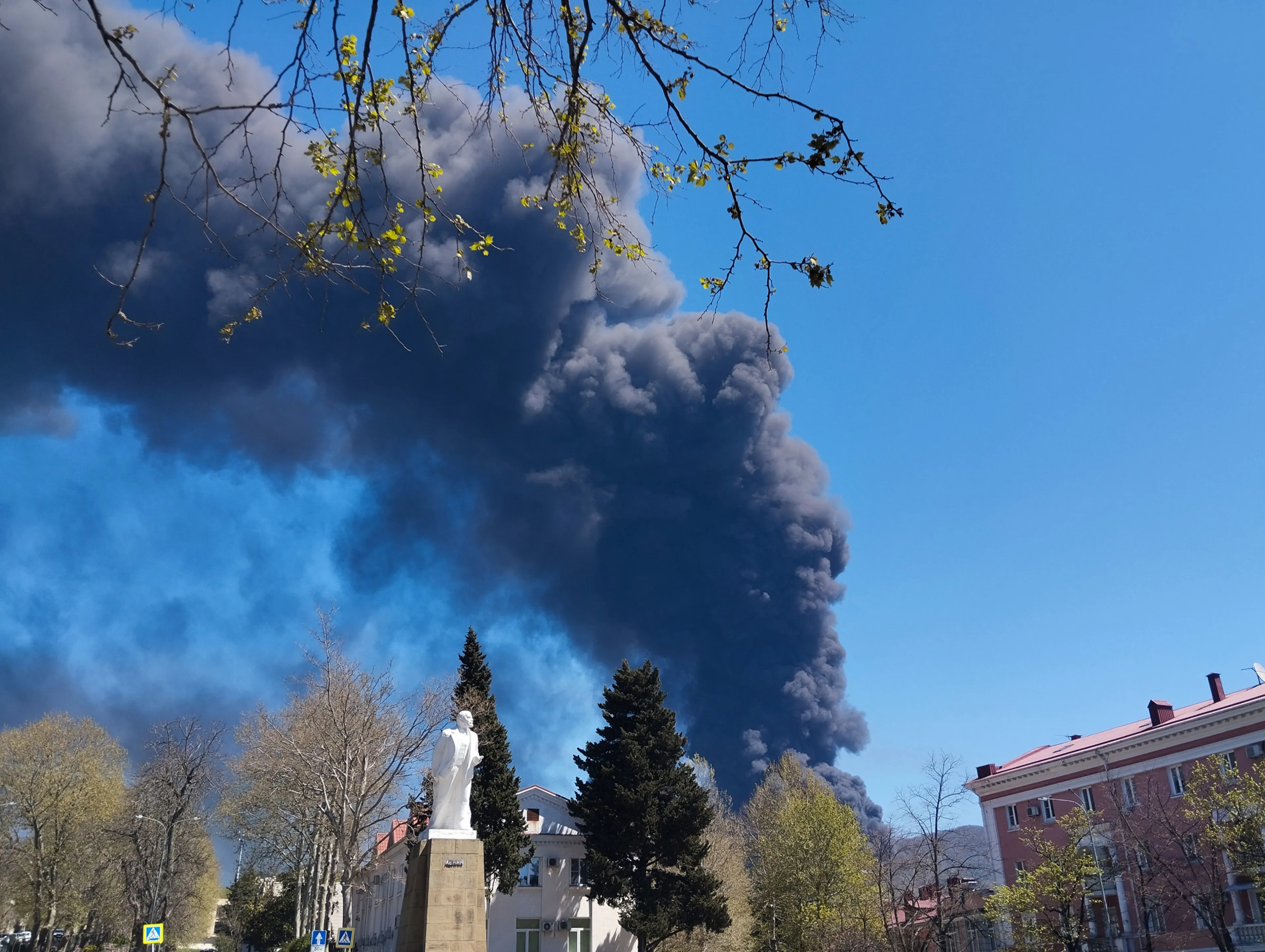
Teenagers are playing catch, families are walking, one Tuapse resident is doing push-ups on a bench, another is jogging. Grandmothers who have occupied the benches are busy with their grandchildren. Old people sit looking at their feet. Young people are glued to their phones. Tourists look at souvenirs in shops. Young workers dressed in overalls are painting booths: the smell of paint is mixed with the burning.
From time to time, townspeople stop at Lenin Square and the adjacent intersections, from where they can clearly see how a huge column of smoke above the city is growing in breadth. They take out their phones and take pictures of the fire.
- Can I take it off? — I ask a resident of Tuapse, who, like me, watches people.
- Don't know. As if it’s not a secret already...” she answers indifferently.
—Aren't you afraid of smoke?
— I live in another area. The smoke does not reach ours: the wind is in the other direction.
— Do you think any tourists will come in the summer?
- Our people are desperate. They may come.
A resident of Tuapse, apparently 35 years old, in a coat and sunglasses, is spinning around her axis with her phone: she is filming a panorama of the fire. I ask her too if it’s allowed to film all this. "Yes. Just don’t send it to anyone,” she replies. “No one.”
I'm also trying to take a photo of the smoke column.
“Don’t take it off, don’t,” an elderly man in a light short jacket politely reprimands me. “Otherwise they’ll swoop in and take the phone away.” No need.
- But they’re still filming...
“Well, fools,” explains the pensioner. He walks briskly next to me, leaning on a cane. — I am a retiree myself. I know. No need. This is our problem. And that’s all Ukrainians need—when they take pictures.
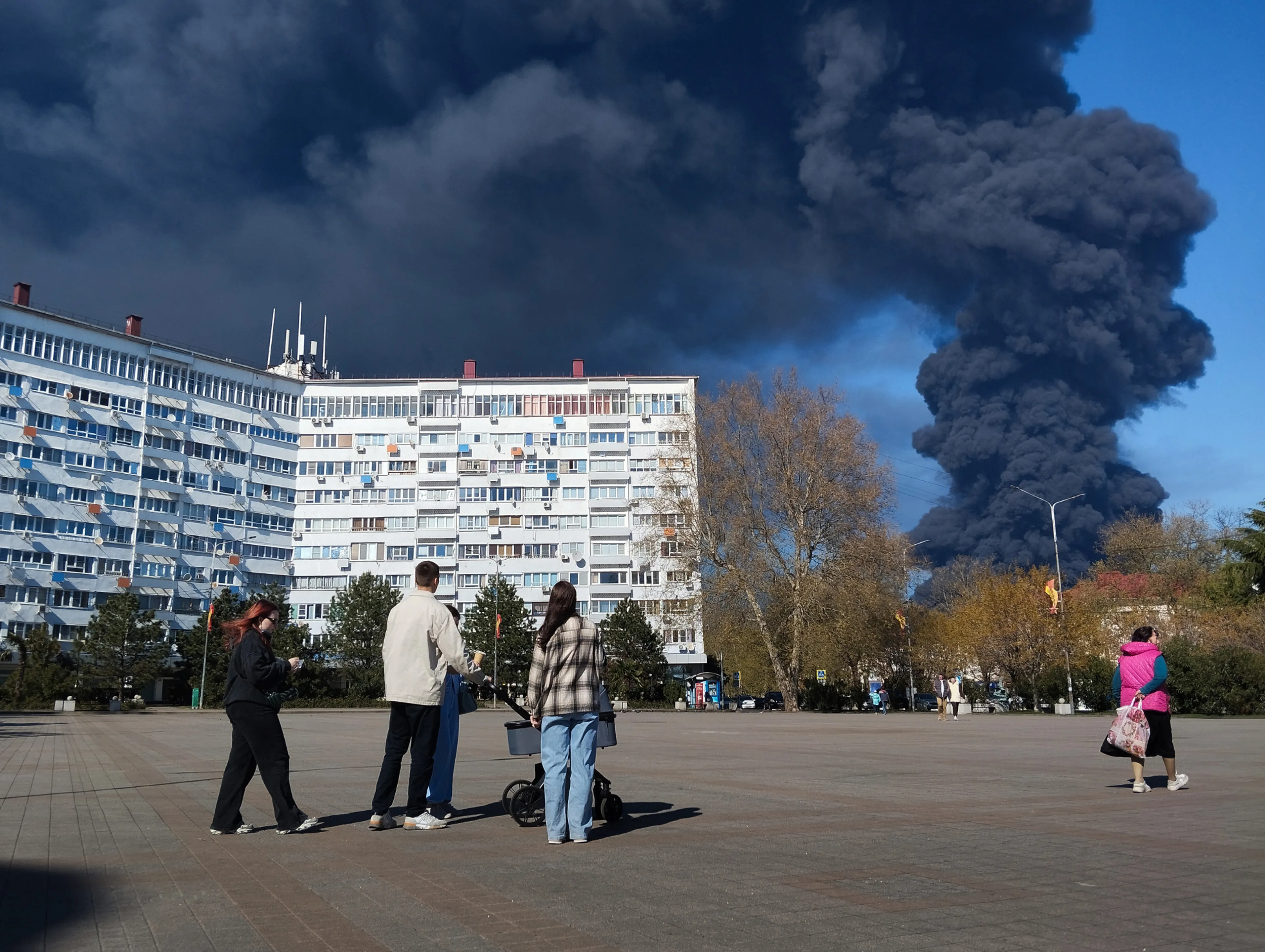
The pensioner is distracted from me and jokingly shouts to the townswoman who was filming the panorama: she stopped at an intersection and pointed the camera at the black sky: “Hey girl, now we’ll take away the phone!” She laughs in response, but still leaves quite quickly.
Around the same time, Anastasia Troyanova, a journalist from the independent environmental publication Kedr, was detained in Tuapse. Later, when she leaves the police station after about five hours, it turns out that she was detained precisely because she was photographing the fire.
“They talked politely, but were interested in my work. As I understand, now all over Tuapse they are looking for people who post footage of the fire on social networks,” Troyanova told reporters. Such shootings are widely distributed on social networks and telegram channels.
Two taxi drivers complain to each other that their cars are covered in soot again. “Well, I was clean yesterday,” says one, with glasses and a gray beard.
Suddenly, dull explosions are heard from the direction of the refinery. The column of smoke becomes even larger and even blacker; huge tongues of flame a couple of hundred meters high flicker in it. Taxi drivers look at the fire as if nothing unusual is happening.
- Doesn’t this surprise you? - I ask.
“Nooo,” they answer almost in unison.
“It’s not the first time,” says the bearded man. Last time there were the same [sounds]. This is how it is stewed.
A man in a jacket with a patch in the form of the Russian flag is crossing the road near Lenin Square. He looks at the smoke and spits at his feet. “Welcome, damn it, welcome to the resorts of the Krasnodar region,” says the man, not addressing anyone in particular.
Taxi drivers grin. I ask them what to do with the beaches now. “What happened in Anapa was just diarrhea [compared to this],” says a taxi driver with a gray beard. —Have you heard about dolphins? Yes, fuck all the dolphins. They have already found...
According to local media reports, on April 27, volunteers discovered dead dolphins on the Black Sea coast. However, according to environmentalists , there is no evidence yet that the animals died precisely because of the oil spill.
Volunteer chats do not subside: there are constantly requests to buy additional shoes or protective suits, to pick up something, bring it or give it a ride. There are not enough hands to clean the shore from the oil spilled as a result of the attacks.
Equipment is working on the Central Beach; people in protective suits are shoveling oil and packing it into bags. Two washing stations have appeared in and near the city - they clean street animals soiled in soot and oil after the oil rain on April 20.
By noon, the column of smoke becomes even higher and wider.
“Oh-oh-oh, whore... Nuclear mushroom...” says a man leaving the eatery with shawarma in his hand to his friend.
“I live behind the mountain - I thought it was booming somewhere over the sea,” he answers. “And then the woman who lives there said [that this is not so]. They were evacuated. It's just a volcano!
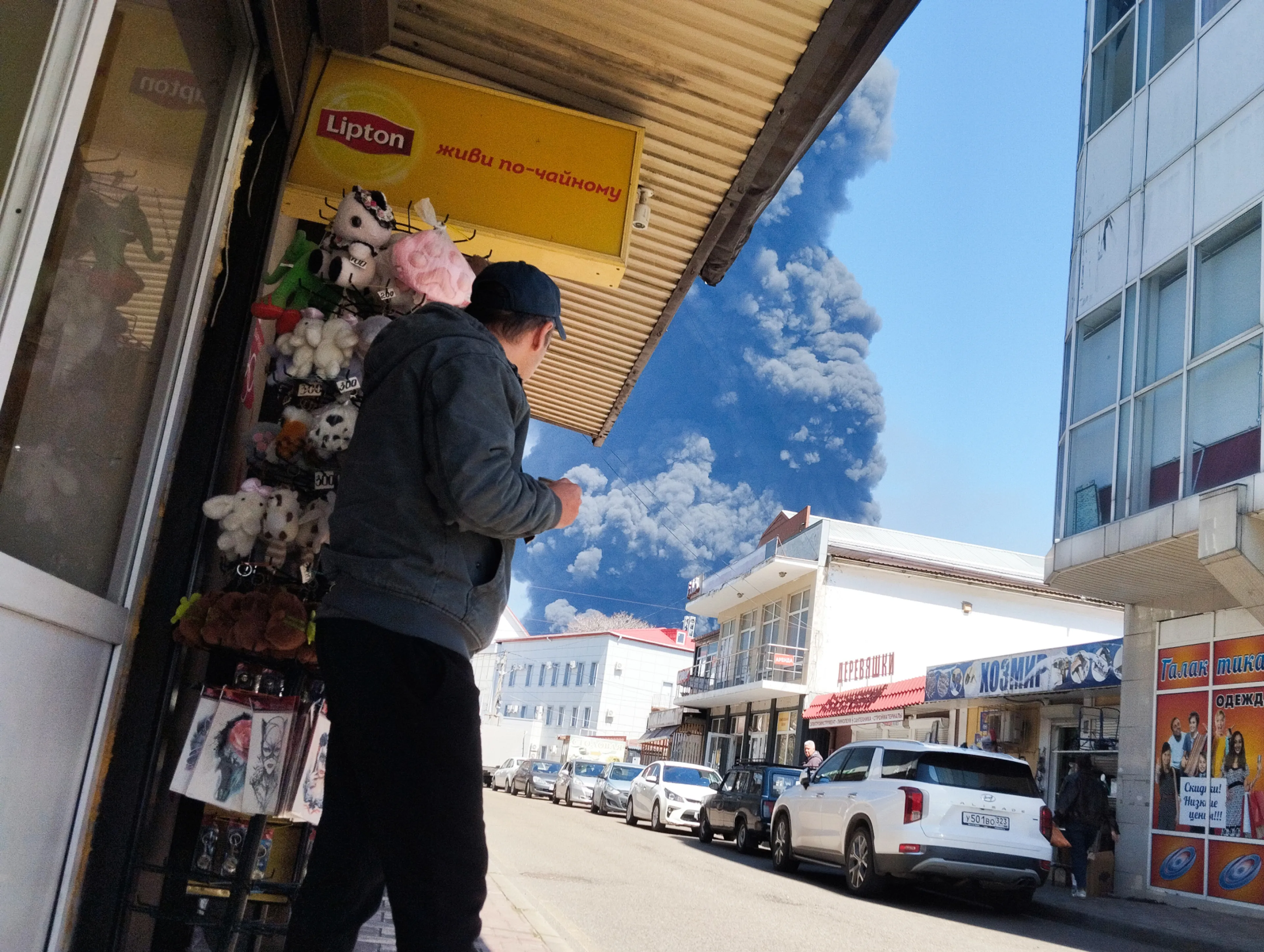
A Tuapse resident passing by speaks on the phone. She complains to her interlocutor that it is “impossible to leave” her house: the wind carries fumes to the top of the mountain where the residential areas are located. “All this smoke is settling on our mountain,” she explains.
On the embankment, a middle-aged man with a bandaged hand asks his little son to take a photo of himself next to large letters spelling out the word “Tuapse” - so that smoke is visible in the background. On the case of his phone there is a double-headed eagle and a Russian flag. I ask if he is a military man. "No. From the police,” the man says, somewhat embarrassed. And looks at the screen to see if the photos turned out well.
An elderly woman walks past me, slouching. After a few meters she stops abruptly and returns:
- Young man, do you know that this mask of yours is for four hours? Then you need to change it! I work in a hospital. In general, take selenium . It removes all the crap from the body.
- Even this one? - I point to the column of smoke behind her, which by midday had become gigantic.
- Even her.
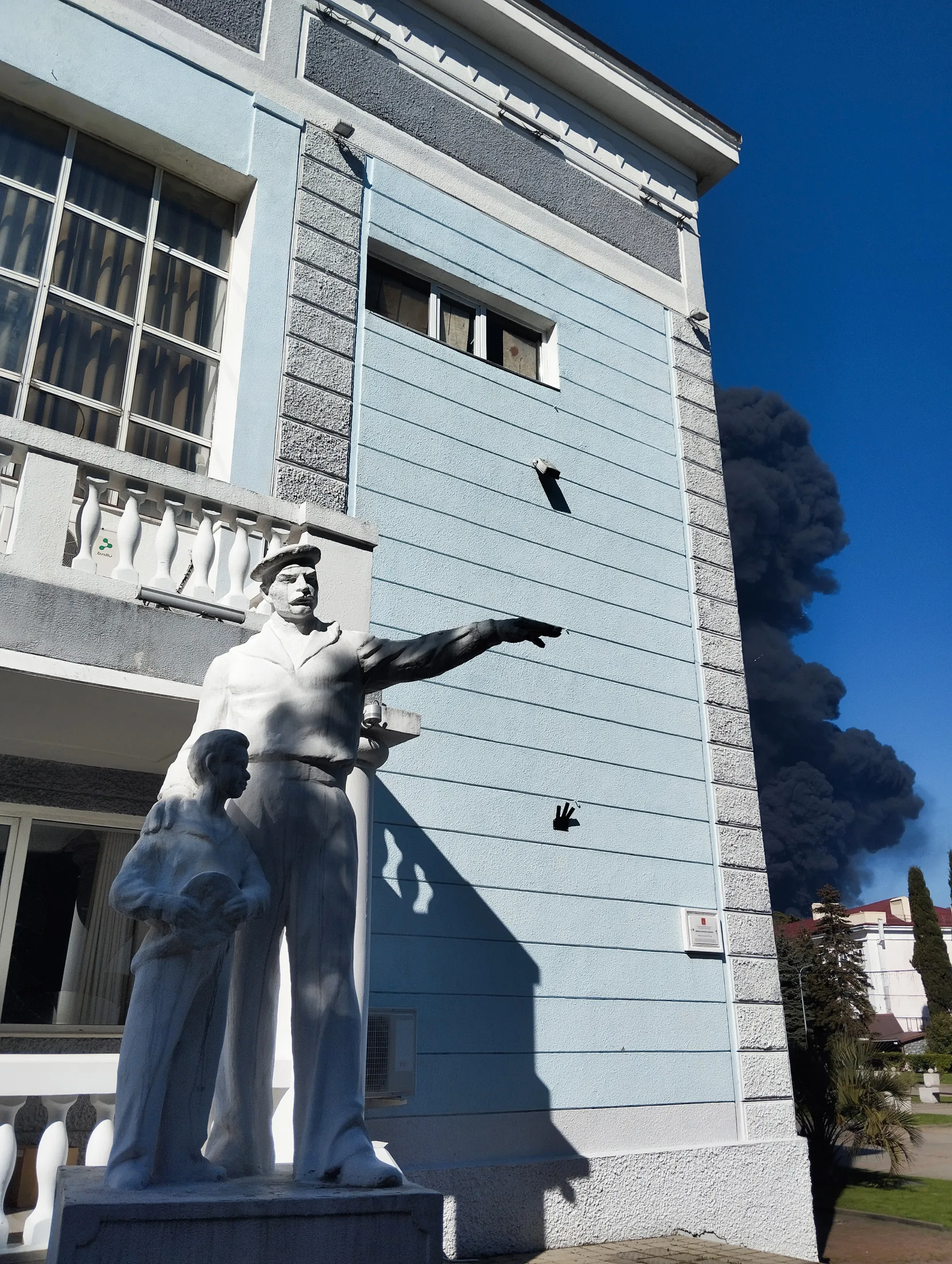
I look at my watch. It's time to change your mask. The sky is increasingly covered with a gray-black veil.
On the evening of April 28, a state of emergency was introduced in the Tuapse municipal district. Boiling oil splashed onto Koshkin Street.
"Shore"