
Translated material
“Peter and the Wolf” is 90 years old!
Why is Sergei Prokofiev's symphonic tale not as simple as it seems? And what does it have in common with the music of Wagner, Stravinsky and Schoenberg?
On May 2, 1936, at the Central Children's Theater under the direction of Natalia Sats (modern RAMT), the premiere of the symphonic fairy tale “Peter and the Wolf” by Sergei Prokofiev for reader and orchestra took place. In the field of academic music, this is still the most famous composition for children. Music critic Stepan Furin invites adult readers to listen carefully to “Peter and the Wolf” in order to discover in this seemingly simple work parallels with “adult” music and an atypical happy ending with a catch. And also talks about the main film adaptations, from Walt Disney to Susie Templeton.
The music of Sergei Prokofiev is not all fairy-tale - it could be dark, barbaric, artificially rough and as if turned inside out. And yet the composer constantly returned to fairy tales. Among his works there are “The Ugly Duckling”, and “Cinderella”, and “Old Grandmother’s Tales”, and much more. It is difficult to say exactly where this love of his came from: Prokofiev never explicitly talked about it. Nevertheless, the words “fairy tale” and “fabulousness” constantly appear in conversations about Prokofiev, and some researchers even devote articles to this topic.
Almost certainly, the composer’s interest in fairy-tale plots is connected with his childhood memories: at the age of nine, for example, he wrote his first opera, “The Giant,” which was staged the next year at his friends’ estate. In addition, Prokofiev probably sought refuge in magical worlds - and for good reason. He returned to the USSR from emigration in 1936, just before the start of Stalin’s terror, the fight against “formalism” in art and World War II. His first marriage to Spanish singer Lina Lubera was unhappy, and he suffered from depression and hypochondria. However, his fairy tales were not entirely escapist, but rather gloomy, full of grotesques.
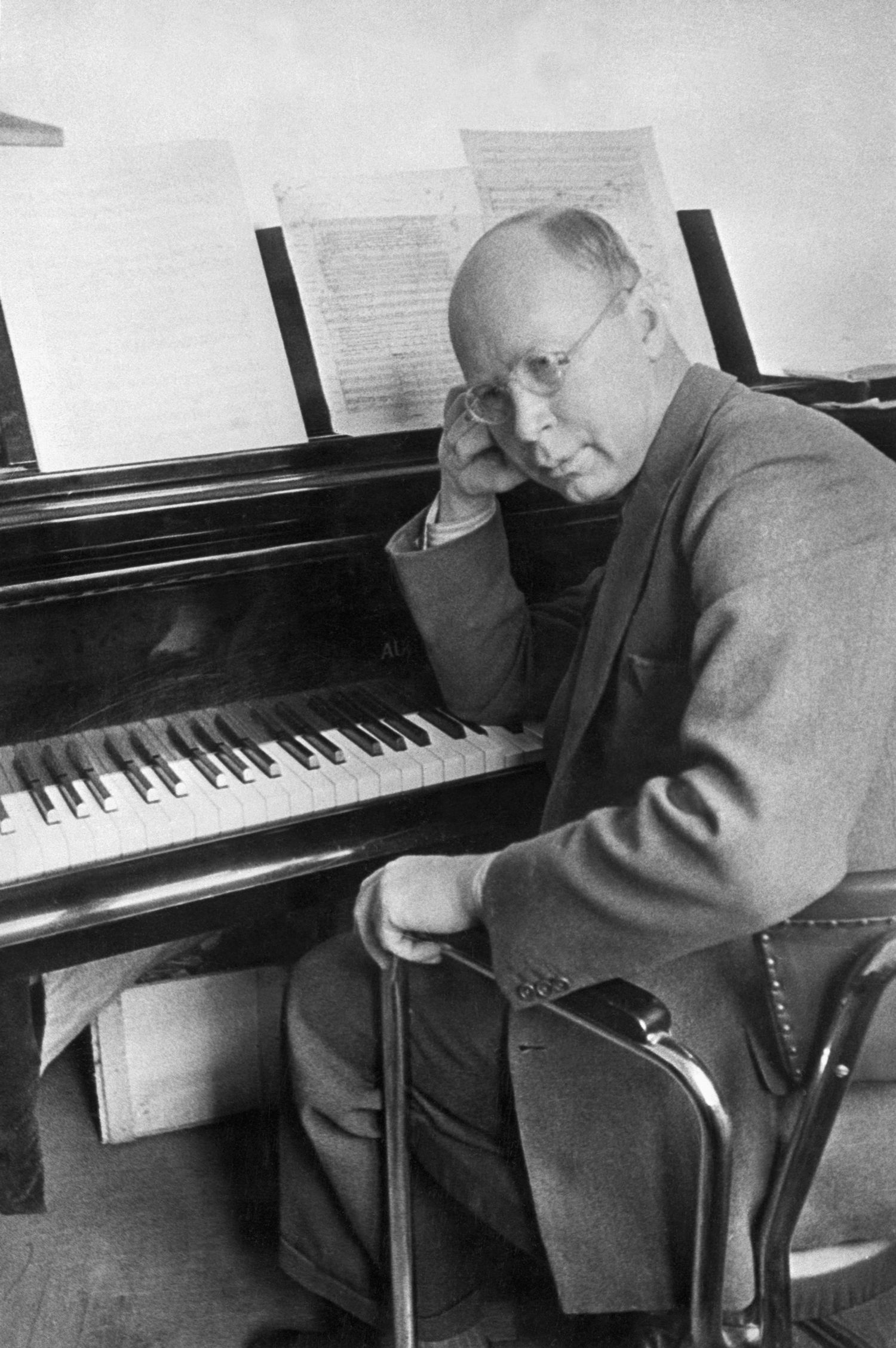
In Europe and America, Prokofiev is known to the masses primarily as the author of the ballet “Romeo and Juliet” (also, by the way, somewhat fairy-tale) and the fairy tale for a reader with an orchestra “Peter and the Wolf.” This work was commissioned by the composer Natalia Sats, the creator of the world’s first theaters for children, musical and dramatic (one is the modern RAMT, the other is the Sats Musical Theatre). The composer rejected the first version of the libretto, written by Nina Sakonskaya, and ended up writing the text himself.
“I was afraid that Sergei Sergeevich would write a children’s symphony in such a complex musical language that would be highly appreciated by musicians, but inaccessible to children, and for several evenings we spent several evenings having him play me various pieces of music,” Sats wrote in her memoirs. Her fears were not justified - a few pages later she stated: “There is now no children’s symphonic work in the whole world that would be more popular than Peter and the Wolf.”
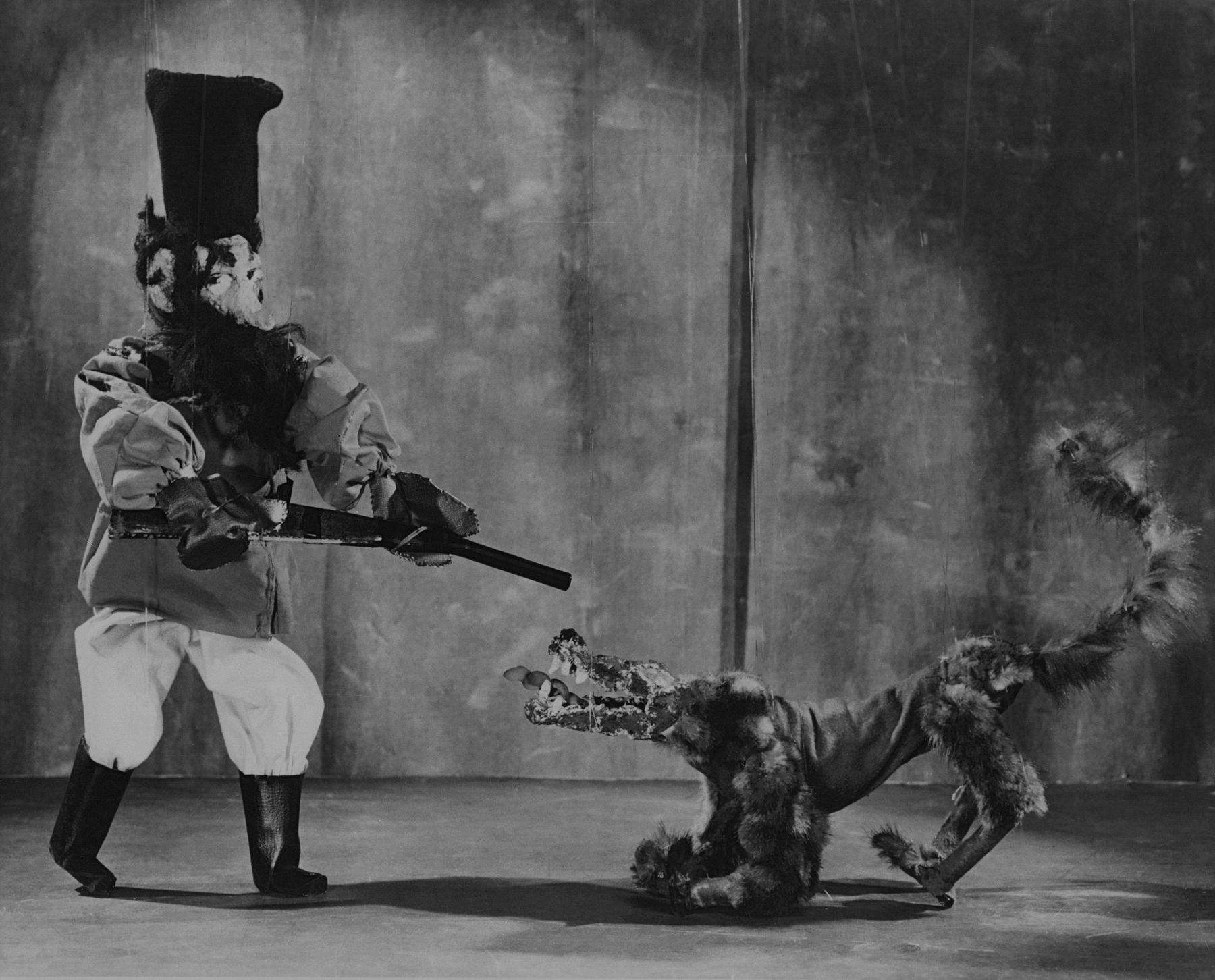
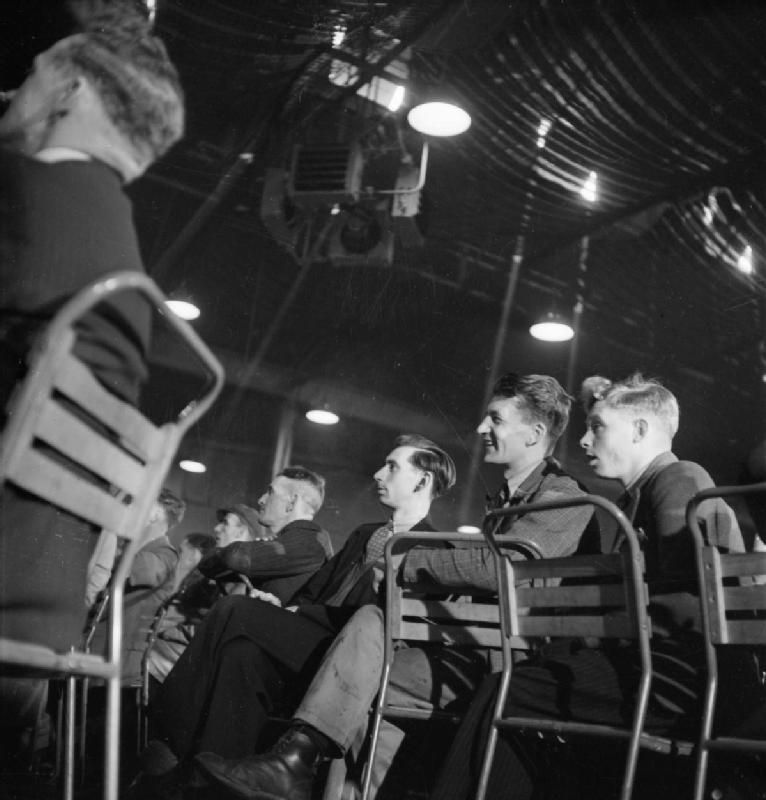
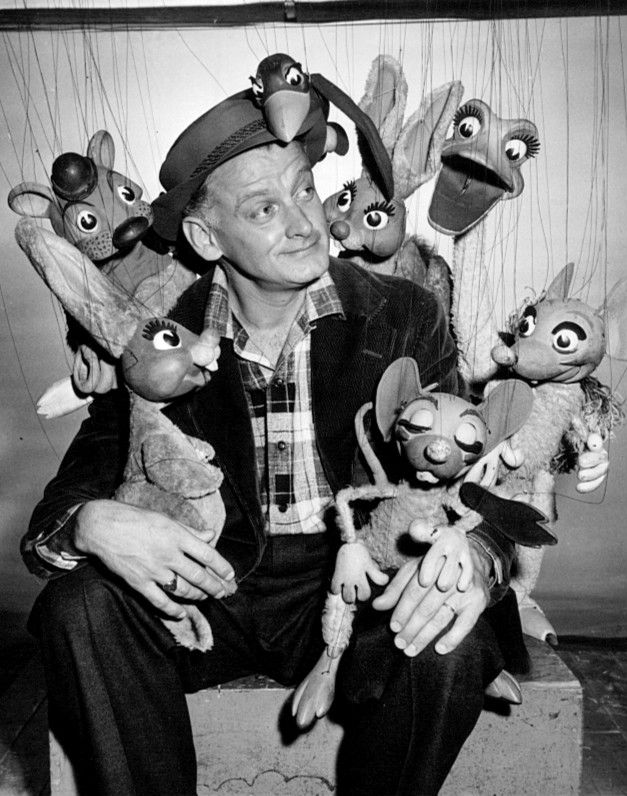
In the 20th century, many great composers created works for children. Benjamin Britten wrote A Guide to the Orchestra for Young Listeners, Maurice Ravel wrote the piano cycle My Mother Goose and the ballet The Child and the Magic. Countless “children’s albums” have been created - they are found even among radical avant-garde artists, like Sofia Gubaidulina or Helmut Lachenmann . But what is so childish in all this music, as in “Peter and the Wolf”?
Art for children is sometimes understood as a simplified version of art for adults. Children, they say, don’t know anything yet, so you can’t talk to them about difficult things; children are inattentive, so you need to speak briefly with them; Children are not demanding, so you don’t have to try too hard for them. If you really want to, Peter and the Wolf can be adjusted to these perverted criteria: each character is portrayed by some instrument in the orchestra (much simpler), the whole tale lasts about half an hour (much shorter), the narrator does not sing the text, but pronounces it clearly (much more understandable).
In fact, art addressed to children - if it is real art - is more complicated than it seems. “Peter and the Wolf” is a good example. Yes, each character is tied to an instrument and a certain set of melodies - but neither Richard Wagner in Das Rheingold nor Howard Shore in the soundtrack to The Lord of the Rings disdain such techniques. In general, leitmotifs (or reminiscence themes) have existed in music for a long time, approximately since the 17th century. Tying a small, memorable melody to a place, character or object (like a magic sword) is a very effective technique, because leitmotifs can be recognized by almost any listener, which means that with their help it is easy to control attention and emotions. It is not surprising that in the 20th century this technique was adopted by filmmakers, and today we hear leitmotifs both in blockbusters and in auteur films.
At the same time, Prokofiev develops the themes of his characters throughout the story. The music of the fairy tale captivates not so much with its hauntingly memorable motifs, but with its original games with timbres and rhythm: from simple components a complex whole piece begins to be assembled. The string quartet (Petya) flirts with the flute (Bird), oboe (Duck) and clarinet (Cat), is interrupted by the double bass (Grandfather), and the horns (Wolf) wake up from time to time. The instruments don't just play the same thing in different combinations - their themes mix, argue and influence each other.
The choice of a reader, rather than a singer, is also quite an adult technique, which can be found even in Igor Stravinsky’s opera “A Soldier’s Story”, or in Arnold Schoenberg’s cantata “A Survivor from Warsaw”. A voice that speaks rather than sings not only reliably conveys plot information, but also interacts with the orchestra in a very special way, forcing listeners to constantly switch between different types of audio information.
The plot of the symphonic fairy tale itself is also not so simple. Petya is a “pioneer” - this word is released in the English text - which means his story can be viewed from a political angle. The boy then becomes a young revolutionary, his Grandfather, who forbids hunting the Wolf, is the embodiment of the old reactionary generation that does not accept the great revolution, the Wolf is an image of bourgeois evil, and the hunters are brave security officers.
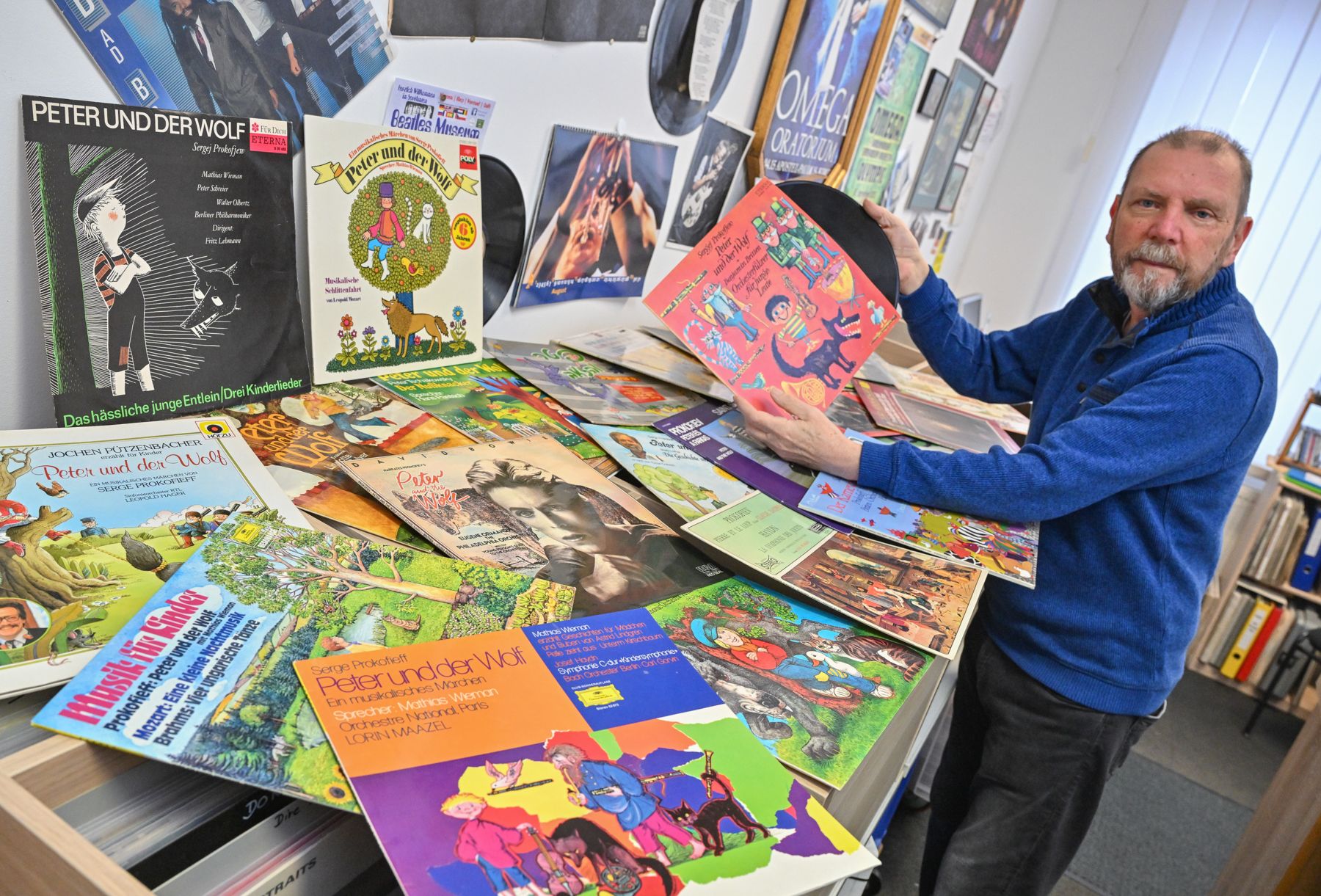
However, Prokofiev's music is more original than propaganda propaganda - it has too much character, wit and his signature brilliant angularity. So, although its politicized interpretation has the right to life, it seems too crude. Moreover, there is nothing primitively Soviet in the score. You can be convinced of this by listening, for example, to Eugene Ormandy’s interpretation with the Philadelphia Orchestra, in which the text is read by David Bowie.
You can find a second bottom in this story, even without resorting to political analogies. It seems that the fairy tale ends with a happy ending: the wolf is caught, and all the heroes go to the zoo to find him. But suddenly it turns out that the duck, which the Wolf swallowed in the course of events, and which everyone had forgotten about, is alive - she is quacking in the predator’s stomach. At this very moment, the fairy tale ends, and every first child looks questioningly at their parents: how can they free the bird without killing the wolf?
Bonus: the most notable cartoons based on Prokofiev's fairy tale
“Peter and the Wolf” was first filmed by none other than Walt Disney. The composer shared the score with him during his last American tour in 1938. It was the 1946 Disney cartoon that introduced English-speaking children to this story. In the film adaptation, Petya became Peter, and the animals got names: the bird was called Sasha, the duck - Sonya, the cat - Ivan. With the exception of some cuts, the cartoon follows Prokofiev's script. The style is typical for Disney of those years: with a lot of jokes, a happy ending and funny inclusions of cranberries - like the Cossack hunters wearing a red caftan on the main character.
In the Soviet Union there were two puppet cartoons based on Peter and the Wolf, both directed by Anatoly Karanovitch. The script of the first , released in 1958, is noticeably different from the original. When Petya prevents the cat from eating a duck and ducklings, she calls a wolf from the forest - and then, as soon as the birds escape, she herself becomes the gray predator’s lunch. But the most important difference is that the cartoon does not have a narrator, which Prokofiev had. The 1976 cartoon is much closer to the original - and kinder towards cats: in the finale everyone is saved and happy, even the wolf caught by Petya managed to spit out the duck. And the narrator is back in place.
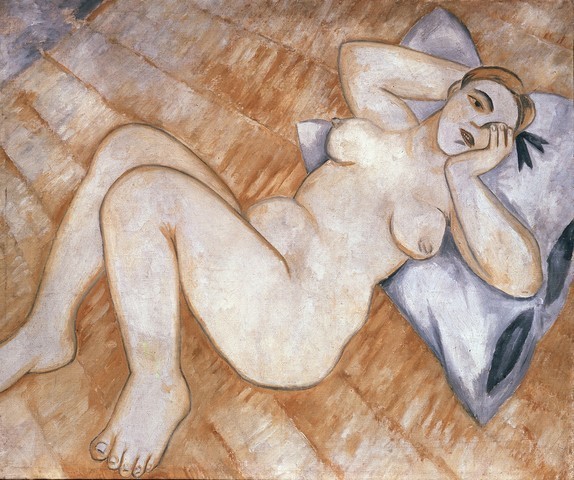
It is also worth paying attention to the film adaptation by Günter Retz, released in the GDR in 1973 - with a very unique visual style: color combinations are as bold as in the painting of Paul Klee or the architecture of Friedensreich Hundertwasser , the forms are reminiscent of “Les Demoiselles d’Avignon” by Pablo Picasso or “Venus” by Mikhail Larionov.

One of the latest cartoons based on “Peter and the Wolf” is Susie Templeton’s version, which was awarded an Oscar in 2008 as best animated short film. Her reading is noticeably different from the previous ones. Petya and his grandfather live here on the outskirts of the forest near a giant sewer; In general, the world of the cartoon resembles the dystopia of Laszlo Krasznahorkai . Prokofiev's score is heard in full, but without the narrator's voice, and the fairy tale turns into a philosophical parable about friendship, freedom and forgiveness.