
Translated material
With a slight movement of the hand, “Nazism” turns...

Victory Day has long been appropriated by Putinism. May 9 parades justify Russia's military expansion, and solemn speeches about victory over Nazi Germany justify the invasion of Ukraine. But could it turn out that under the slogans of “denazification” the Russian authorities will come after ethnic activists? Nikolai Vokuev discusses this in his column.
A national holiday is often a way to enact myths that are significant to the state in the form of a ritual. For modern Russia, such a myth was Victory - always with a capital letter - and the fight against Nazism, taken to an almost metaphysical level. This did not happen today. Ritual speeches about victory over Nazi Germany have accompanied May 9 for decades. During this time, from a family holiday (“with tears in our eyes”), this day turned into a tool for pumping up society with a militaristic spirit. After the annexation of Crimea, Ukraine was declared a new stronghold of Nazism. Therefore, it is not surprising that Victory Day has become a kind of ideological sting of Putinism.
All this has already become commonplace. Therefore, I did not even attach importance to the April news that the Center for Emergency Psychological and Pedagogical Assistance of the Komi Republic sent out a manual about Putin’s fight against the Ukrainian “Nazis” to regional schools. Unless the ideological apparatus chosen for this mission was, let’s say, not obvious. In fact, what does the fight against Nazism have to do with emergency psychological and pedagogical assistance? However, the text of the manual and the accompanying video (they say that it used materials from the Moscow City Hall) turned out to be intriguing.
The video, at first glance, is made up of propaganda clichés. In Ukraine they are committing “genocide of Russian culture.” Russia is “a large multicultural and multinational country.” In it, “the Russian language and Russian culture connect, and do not divide, peoples.” A fascist state accuses its neighbor of fascism. Nothing new. Except that unusual accents have crept into the definition of Nazism.
“The word “Nazism” was first heard at the Nuremberg Tribunal in 1946,” the video tells schoolchildren. I’ll take a factual error out of the equation: this word sounded quite imaginable back in the 1920s. The mention of the Nuremberg trials entails a whole chain of connotations: the ideology of blood and soil, racism, anti-Semitism, leaderism, territorial expansion, war crimes...
But that was not the case. The propaganda clip takes a twist and defines Nazism as “pride in one’s nationality while humiliating all other nationalities.” The training manual echoes him. In this interpretation, Nazism turns out to be surprisingly close to patriotism. The authors of the same video mean by it “pride in one’s nationality while respecting all other nationalities.” The difference is two letters. Also, the second is based on love, and the first is based on hatred. The distance between them, as you know, is one step.
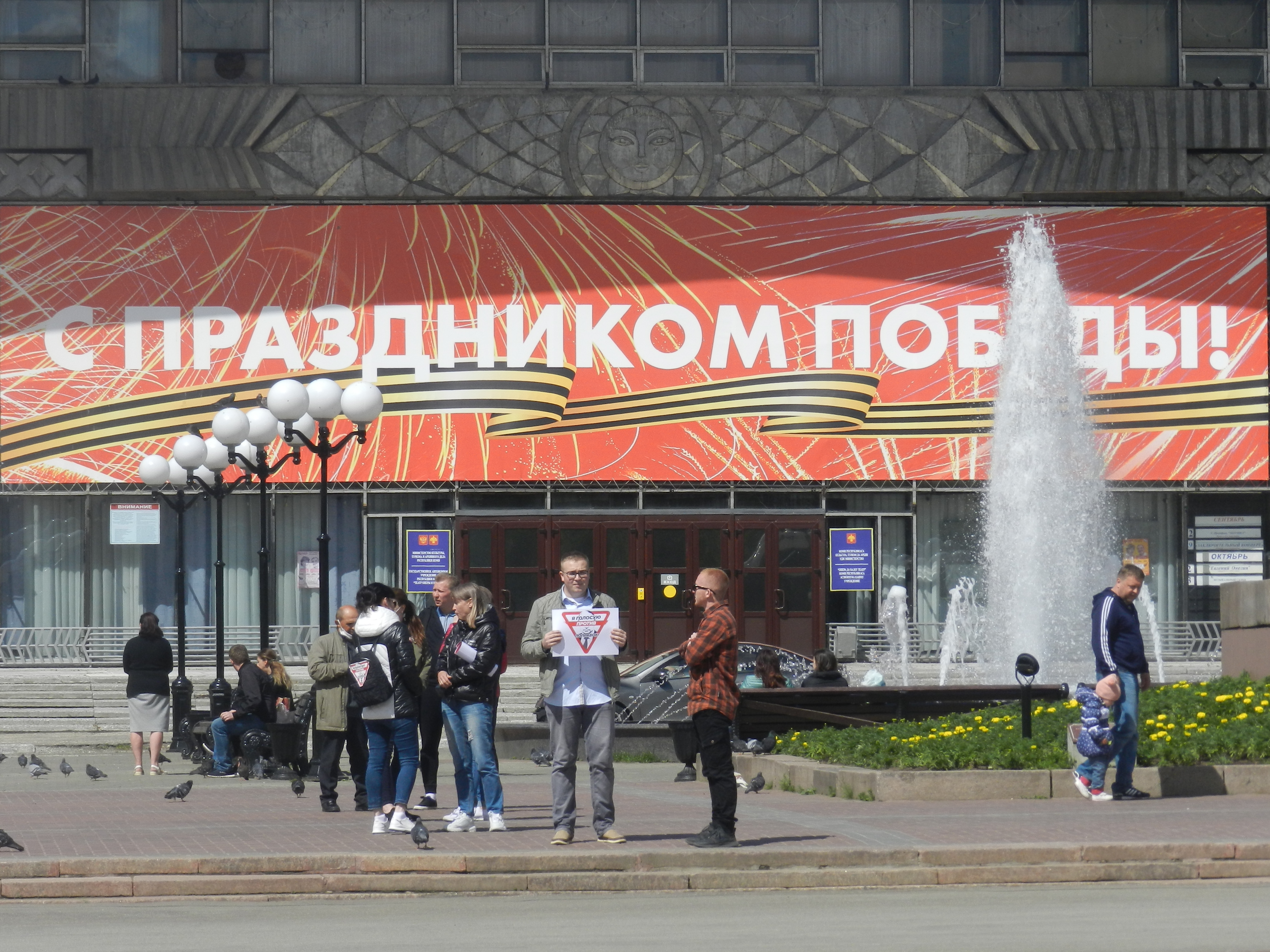
To quote an anonymous Komi Daily reader : “I felt great pride when I learned that the Komi Republic was among the regions whose residents voted against amendments to the Constitution in 2020. I also became part of this statistic.” Here it is, the common denominator between “patriotism” and “Nazism”. But what about the rejection of amendments? After all, the video also quotes Putin’s words: “I am Lak, I am Dagestani, I am Chechen, Ingush, Russian, Tatar, Jew, Mordvin, Ossetian.” Couldn't hatred of the Russian dictator be interpreted as “the humiliation of all other nationalities”?
Speaking of nationalities. This concept is a translation from the French nationalité . In the 19th century it was close in meaning to “nation” and “nationality”. But under Stalin, “nationality” turned out to be a column in the passport and a synonym for ethnicity. In the same sense, it continued to be used after the collapse of the USSR.
“Nationality” and “Nazism” refer, I beg your pardon, to different discursive orders. “Nazism” has been used in discourses against the far right within the country and, more recently, against its external enemies. They will object to me: reports about skinheads and other neo-Nazis have long featured “crimes on national grounds” and even “persons of Caucasian nationality,” whatever that means. And yet, the definition of “Nazism” through “pride in one’s nationality” turns the vector of the notorious “denazification” – and this is what the manual is dedicated to – into the area of Russian national policy. Given the stalemate in the war in Ukraine, ethnic activists may become a new target of Putinism.
Of course, ethnic activists have been persecuted in Russia for several years now. And attempts to manually regulate word usage are not new. You can recall how in 2017 the Ministry of Culture, headed by Vladimir Medinsky, sent out a circular to subordinate institutions. The letter obliged the employees to mean by “contemporary art” all the art created by our contemporaries, and by “contemporary” - that art that remains relevant to this day. The meaning of these terms does not seem to have changed since then. But times, as they say, were vegetarian times. And Medinsky’s personal hostility to Sovrisk, in contrast to the “fight against Nazism,” was not the cornerstone of the ideology of the Russian state.
It is quite possible that behind the manual and the video is the desire of individual officials to be greater Putinists than Putin himself. In the end, we are not talking about some kind of policy statement or document, but about “educational activities” in schools (no matter how deplorable the attempts to indoctrinate children themselves may be). I suspect that by studying the texts of other similar manuals, one can discover more than one “discursive shift.” And yet, when you hear another speech about Nazism on May 9, listen. Perhaps they are talking about you.
