
Translated material
Why are music festivals closing in Russia?
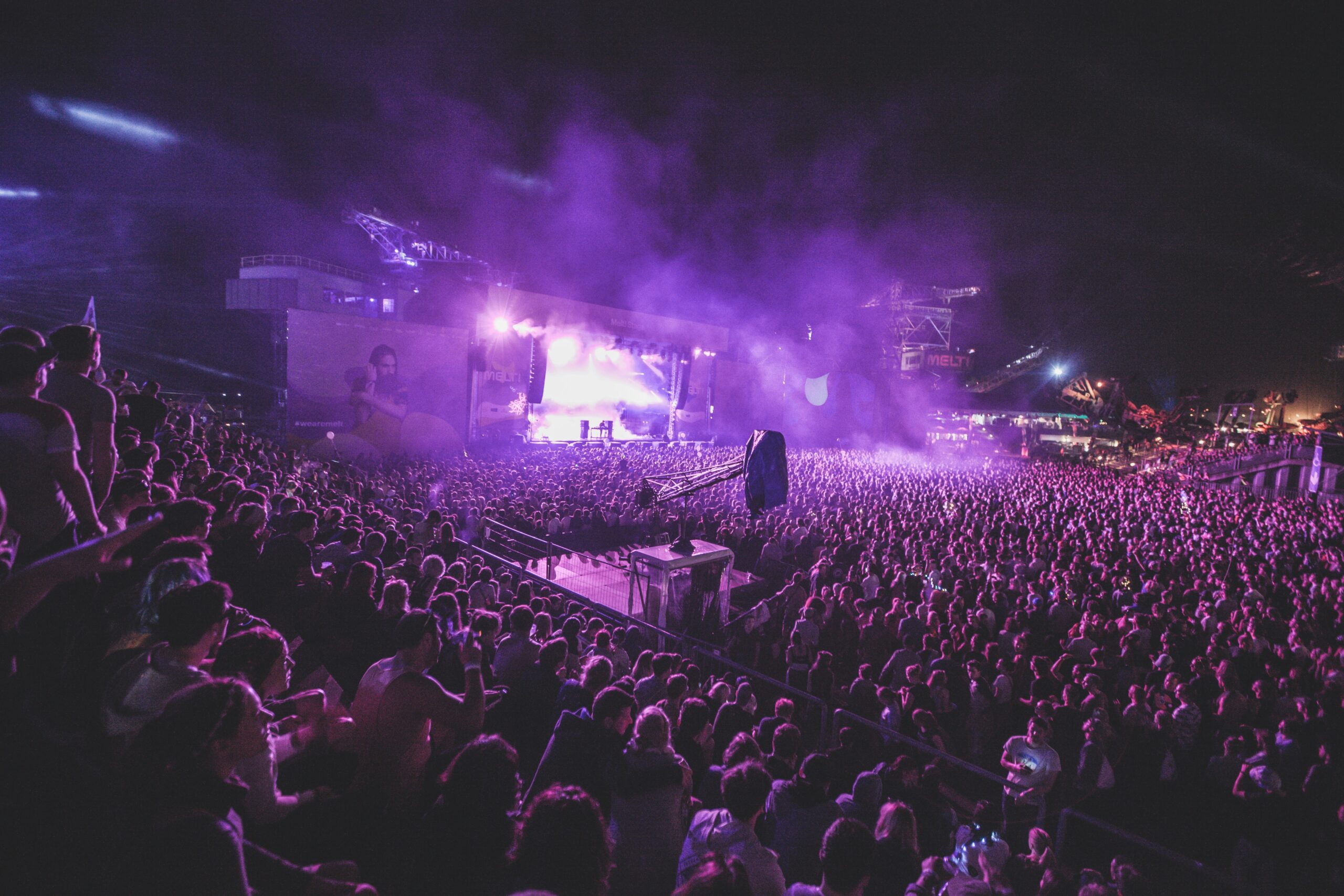
Why independent summer festivals are closing in Russia
In 2026, many private summer festivals with no ties to government or major sponsors said they were taking a break from the season. The Leningrad region, a place where dozens of events traditionally take place, suffered perhaps more than others in this sense. Festival organizers told Cherta what the event industry in the region looks like now, how it is affected by rising prices and war, and why producers believe that everything could be even worse.Music on pause
Russian independent festivals and open airs are trying their best to survive in 2026, but not everyone is succeeding.
“We are taking a break to rest and think about where to move next,” announced the organizers of the Kupalo forest festival, which is dedicated to the summer solstice and has traditionally been held in the Leningrad region since 2011.
For the first time in 11 years, one of the main local festivals, Red Fest, will not take place in Perm. Some events have not been held for the second year. The producers of the Arkhangelsk Taibola wrote that they were “taking a break to implement other projects,” and the organizers of the St. Petersburg Beltane declared back in 2025 that they “do not have the financial and technical capabilities to hold the festival at the proper level.”
Other organizers are trying to adapt - not canceling the event altogether, but holding it in a truncated form. The electronic festival Solar Systo Togathering this year “ transferred the event to a private format.” Instead of a large-scale open air, the organizers are organizing a private party for their own.
According to a source in the local event industry, in 2025 the festival lost about half of its audience because the security forces were trying to fight it: “Buses with riot police come and organize a search. The event is patrolled by people in uniform with dogs that can pull out anyone they don’t like and take him for examination. It scares people away."
Why are private outdoor events that have attracted audiences for years, often promoted local culture, were largely run by volunteers, and were meaningful events for tens of thousands of people across the country, in such a crisis?
The people are getting poorer
“We realized that we couldn’t coordinate even a small event and pull it off financially,” says Kirill*, the organizer of the festival, which took place in the Leningrad region for more than 10 years and attracted up to 5,000 guests in different years. It was a three-day event in the forest with two music stages, master classes, quests and a fair. This season, like many others, the festival took a break.
One of the key reasons why festivals are canceled in Russia is rising prices. Living in the country is becoming more and more expensive, people are saving andgiving up travel and entertainment. Not everyone is ready to pay 20 thousand rubles. For example, a ticket to the Wild Mint festival in 2026 costs from 10,500 rubles, a place for a tent costs another 3,500, parking for a car costs 3,000 for three festival days in a tent.
The rise in prices hits private independent festivals that operate without government support or major sponsors the hardest. For such events, ticket sales are the main source of income.
“When calculating the economics of an event, you try to fit everything into the ticket price,” explains Kirill. — In 2024 and 2025, we sold tickets below cost. Tickets for a three-day event with two stages, a lot of entertainment, near the city, on a beautiful site cost from 3,500 rubles in pre-sale to 6,000 at the entrance. And we heard from many that it is expensive. In 2026, tickets should start from 10-12 thousand rubles - and this is literally the cost price.” He believes that “the price increase is the final nail in the coffin,” and the audience can no longer afford it.
Kirill sees a strong decline in festival activity in the region. In addition to organizing the festival, he provides technical support for open airs: he rents out autonomous power plants, decor and other things. “In 2023 I had about ten events per season. This year there is one order in question for the end of May and, possibly, an event in the city in August. This is all. Now I’m selling off small stations to free up the warehouse.”
And so it is for many. In specialized groups on social networks for the rental and sale of festival sound equipment, dozens of advertisements for sale appear daily at prices several times lower than the market price. People sell equipment for almost any money, just to gain something.
Hosting an event is becoming more expensive due to the fact that prices for literally everything are rising: venue rental, fuel for equipment and generators, transport for artists, food. Sometimes partners bear part of the costs, but this also does not guarantee profit. Kirill recalls how they once agreed with a restaurant chain that it would feed the festival employees: “But suddenly they were sent to work on these dates at the St. Petersburg International Economic Forum . We had to order food for all the employees at the last minute. It cost us almost a million rubles.”
According to him, the economics of such open airs are so fragile that one such cancellation dies the hope of profit for years to come. “Organizing a festival has never been a profitable business. Over the past four years in the North-West I have not seen a single winning open air,” Kirill is sure.
Co-founder of a concert label from St. Petersburg, Daniel*, also notes that “people are getting poorer” - this is especially noticeable in receipts from bars. “We recently had an event. If earlier they drank for 210 thousand rubles, now - for 150 thousand. In six months this is quite a noticeable difference. This is not a one-off event, this has been going on steadily since the beginning of 2026.”
The label organizes about 200 events a year - concerts, festivals, showcases . An event where aspiring artists, musicians or theaters show their work to experts, producers and the media to receive feedback, connections and promotion , not all of them pay off. The organizers regularly bring musicians from different cities of the country and notice how logistics have become more expensive.
“To bring a group from Yekaterinburg to Moscow costs about 100 thousand rubles. And in the summer, tickets become even more expensive. That’s why you’re always looking for some kind of loophole,” explains Daniel. — If a group rides on Russian Railways a lot, they can accumulate bonuses. Or make a Yandex card and pay for a taxi with a 20% discount. You just adapt to the current environment and look for new opportunities.”
In order not to go into the red, the organizers raised the ticket price by about 20%. Daniel notes that previously they only sold tickets directly, but in recent years they have been cooperating with aggregators: who sometimes give buyers bonuses and cashbacks. “This is super unprofitable for us, because we will pay the aggregator and also this discount, but we understand: it’s better for a person to buy a ticket like this than not to buy it at all.”
The organizers of festivals, for whom everything is not so critical so far and who continue to work, also report an increase in prices. The organizer of the Insomnia animated film festival, Konstantin*, notes that due to rising prices and taxes, the organizers are looking for “opportunities to narrow their appetites and plans for this year.”
“ We were hit hard by the reduction in the VAT exemption threshold. And the real inflation for our purchases is significantly higher than that declared by the authorities. We have to tighten our belts and impose tight budget controls across the board .”
According to Konstantin, “many regular guests refuse to attend the festival this year.” He adds that the team does not make the festival for profit: “This is our hobby, not a business: the founders of the festival do not receive salaries or dividends. All profits are reinvested into the festival, into its material assets, into a financial safety net.”
Anton* is the marketing director of an electronic festival in the Leningrad region. In 2024, the festival attracted 5,000 guests, and in 2025 - only 2,000, which is why it suffered heavy losses. This season, the organizers are hosting a small private party with no headliners and expensive production. Tickets for it are selling normally.
The big festival “feels bad”: “Everything is becoming more expensive, purchasing power is lower. Young people are less interested in electronic music, and the old audience is growing up, they have a family, children, crises, war. Many are leaving, overall demand is falling,” comments Anton.
According to him, it is now very difficult to hold a festival without major sponsors who cover expenses. Income from ticket sales is not enough. In order not to go into a big minus, you have to set a price “that is difficult for guests to pay.”
He is skeptical about the situation in the industry: “The event in Russia is now mostly dead. The festival industry is one-fifth of what it was pre-Covid - and there is no prospect of improvement.”
“You may be banned at the last moment”
Another difficulty that kills independent open air events is the coordination of government services. According to Anton, organizing a festival in nature is “twice as difficult as in the city”: you need to collect more documents and invest in infrastructure.
His festival failed to gain a foothold at one venue: “Local authorities are constantly trying to send us away. Various power structures always intervene. We collaborated with Ust-Luga, Kingisepp district - there is a war there now. And when you hold a festival every year in a new location, everything is reset: you spend a lot of money on infrastructure, and you can’t save the money invested.”
Due to the consequences of the war, government-related activities also suffer. At the end of April, it became known about the cancellation of the VK Fest music festival . The VK company belongs to the Russian technology holding VK Company Limited. The general director is Vladimir Kiriyenko, whose father Sergei Kiriyenko has held the post of first deputy head of the Russian Presidential Administration in Sochi since 2016 . The organizers did not name the reasons, but most likely they are related to security in the region: the Krasnodar Territory is regularly attacked by Ukrainian drones.
“Previously, to coordinate a forest festival, it was enough to agree with the forester or the owner of the field and call it all a tourist rally,” recalls Kirill. “The rules for coordinating events in the Leningrad region were prescribed in an ancient decree from 2007, no one remembered about it.”
District administrations “interpreted the document quite freely: “In essence, the Leningrad region was a gray zone. That is, we, of course, warned the administration about the event, but the most they wanted from us was to agree on the venue and notify the police. But in 2022, the authorities decided to restore order in this area, and they began to demand the entire set of contracts from us.”
To coordinate the festival, the organizers must enter into commercial agreements with a dozen different services: ambulance, firefighters, rescuers, security, toilets, garbage collection, energy.
“All these services have become more expensive. In 2021, a completely formal agreement with a private ambulance cost us 35 thousand rubles. They didn't even come. And last year, more than 200 thousand were spent on an ambulance - not counting the doctors who actually worked there and also cost money.”
How a formal but necessary agreement with commercial services is structured can be clearly seen in the example of a medical service: according to the agreement, the organizers pay for the round-the-clock duty of an official ambulance with one paramedic inside - they pay about 70 thousand rubles per shift. But one paramedic is not enough for several thousand people relaxing in the forest.
“Basically, they only take people to the hospital for fractures or severe injuries,” explains Kirill. “But besides this, there are hundreds of calls to doctors for little things: ticks, cuts, bruises, dislocations, poisoning. Their processing requires 5-7 specialists on duty around the clock. Therefore, we hire doctors ourselves, but they are on the site “incognito”, not under a contract. There are many more such specialists, they cost less, but the main thing is that they know how to handle such a flow of people and have everything they need.”
After 2022, according to him, in order to conclude all contracts, you need to pay up to 2.5 million rubles - which is comparable to the cost of “a very cool lineup List of participants (artists, DJs, stand-up comedians) performing at a concert, festival or party, usually indicating the time of their performance .”
At the same time, concluding agreements does not guarantee anything: “You can be banned at the last moment: if you want, you can always find a violation. At any moment they can come to you and say: we have an unmanned danger here, we are canceling everything. There is a war going on, and you can always pull up some new decree.”
Kirill suggests that “it’s unlikely that anyone at the top is very interested in any local events.” According to him, the problem is with local administrations and security forces, who “are not interested in the commotion”: “A festival is a large gathering of people: someone got into a fight, something went wrong, a scandal. They are trying to reduce risks for themselves.”
In 2023, the Kirill festival was canceled less than a day before the start: “The reason was not explained to us, but then it turned out that Prigozhin’s rebellion had begun . An armed uprising of the paramilitary formation of the Wagner PMC on June 23-24, 2023. ”
The Wild Mint festival also faced sudden cancellation. In 2021, it was canceled 12 hours before the start: the authorities of the Tula region banned holding mass events due to the epidemiological situation. The organizers then lost almost a hundred million rubles.
In this case, the state does not support the organizers in any way. As a support measure, officials allowed Kirill’s event not to return money to guests for tickets. “This is a poultice for the dead - once you don’t get your money back for tickets and no one will buy them from you again. We gave people a choice: either return the full cost of the ticket or transfer it to next year. About half chose money, the other half transferred tickets to next year. But this, again, is a blow to the economy next year, because these people will no longer buy tickets, and next year you will be left without half of your own budget.”
In 2025, after the terrorist attack in Crocus, the legislation was tightened: changes were made to the laws “On Culture” and “On Physical Education and Sports” , which are almost impossible for a forest festival to implement. New requirements for sites have appeared: now it must be fenced with a stationary fence; a regular mesh is not suitable.
“There are no sites that meet these requirements near St. Petersburg at all,” says Kirill. In his opinion, such legislative changes are not justified by the desire to “squeeze all open air events”: “It’s just that their existence is not taken into account. Safety rules are written for city events.”
Some colleagues, according to Kirill, are trying to fulfill these requirements: “I know that [founder and general producer of the Wild Mint festival Andrei] Klyukin was going to change the mesh fence to a solid one. He decided that he would play for the long haul and invested in the site: sponsors helped him.”
The label, which holds events in St. Petersburg, also faced cancellations of concerts. Daniel admits that “the government puts a lot of spokes in our wheels.” Organizers, he said, always have a fear that the event will be canceled at any moment:
“The electricity at the site may go out. The police may come to check - simply because information has been received and this site needs to be checked. This happened to us too."
He adds that Covid restrictions are still in effect in the city : they prohibit holding events with more than 300 people - or obtaining approvals from four authorities . Approvals from the Committee on Industrial Policy, Innovation and Trade, the Committee on Culture, the Committee on Physical Education and Sports, and Rospotrebnadzor are needed. In addition, event organizers must ensure the availability of personal protective equipment and other anti-Covid safety measures . According to Daniel, if desired, based on these restrictions, the authorities can “disperse any objectionable event.”
"Back to Sovok"
Cherta's interlocutors agree: even more difficult times await the festival industry in Russia. Daniel is sure that clubs will continue to close - they will not withstand the tax burden.
“Any platform is an enterprise, in most cases it is a small business. But, as I see it, small businesses are not needed at all in Russia. I talk to people who do their little stories and they don't feel very good. There are no prerequisites for it to be good. There is a dance on the bones,” says Daniel.
Due to numerous cancellations of festivals, it was primarily small traders who suffered, Kirill adds. “They rode to all events with a similar theme and sold their handmade products. Many kitchens have now closed their off-premises operations and moored their food trucks in cities, which is much less profitable.” Equipment rental companies also suffered. For them, according to Kirill, open airs were not the only source of income, but provided an opportunity “to earn a monthly plan in two or three days.”
It will also become more difficult for festivals that had sponsors. According to Kirill, in the fall of 2025 he talked with Yuri Subbotin, an expert in the field of festival business and sponsorship integrations. “The general picture he outlined to me regarding sponsors: small companies cannot afford advertising budgets that require sponsorship. They are not talking about development. The goal is to survive. Large companies have cut their budgets very heavily and are trying to consolidate them in one direction: they choose one or two significant major events for themselves and try to work more precisely.”
Producers are also concerned about the experience of neighboring Belarus, where since 2022 it is prohibited to hold concerts without being included in the state Register of organizers of cultural and entertainment events.
“The commission studies the reputation of the organizer, his ideological loyalty, professional level and the absence of “undesirable” connections, and the request is sent to the police. If a company is excluded from the register (for example, for violating the law or the “low artistic level” of events), it does not have the right to reapply for two years,” says a former concert organizer in Belarus.
For each specific concert you need to obtain a tour certificate. It is issued by local authorities, who check not only the organizer, but also the artist: his social networks, past statements and song lyrics . This year, several major music festivals have already been canceled in the republic.
“So back to Sovok. In Russia , musicians sign [a pledge] that they will not speak from the stage about politics. You can still somehow live with this. But agreeing on the lyrics of a song is another matter. God forbid they introduce something like this here. In general, everything is possible,” says Daniel.
In his opinion, “there is some limit that we will all reach”: “A person cannot drink 5 liters of water. He'll drink two and puke. Now we are somewhere at the level of 2 liters: a little more and everything will break.”
"The Line" has approached many independent festivals across the country. Most of them are not ready to communicate with the media, even to talk about their own problems.
* the names of the characters have been changed at their request