
Translated material
Decree of special designation. Why did Putin simplify the admission of residents of unrecognized Transnistria to Russian citizenship?
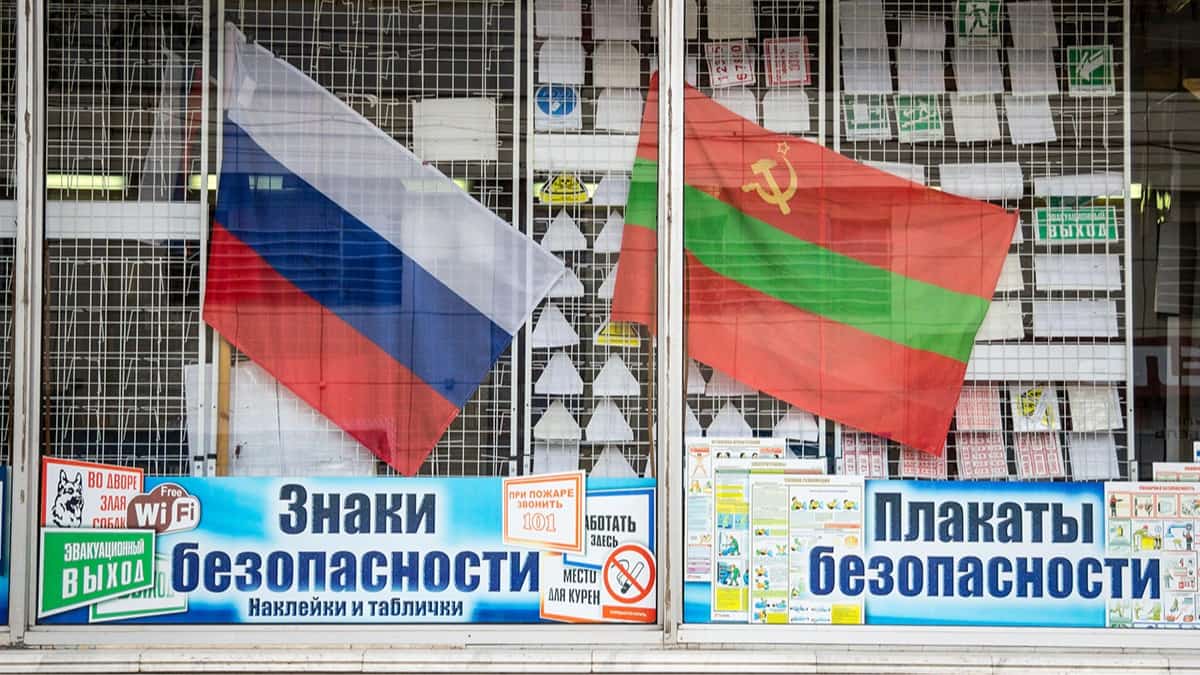
Why did Putin simplify the admission of residents of unrecognized Transnistria to Russian citizenship?
From May 25, the Russian Embassy in Chisinau and the Russian consular service point in Tiraspol will begin to accept residents of Transnistria who wish to obtain Russian citizenship under a new, simplified procedure. It is spelled out in the decree of Vladimir Putin, published on May 15. The decree caused a lot of noise. The leaders of Moldova and Ukraine see him as a threat. Given Moscow's previous similar actions, it really should be viewed that way.
On May 25, the Russian Embassy in Moldova begins to accept residents of the unrecognized Transnistria into Russian citizenship using a simplified procedure. “The embassy team will make every effort to ensure stable and prompt reception. The number of places in the electronic queue will gradually increase,” the diplomatic mission’s website reports .
Residents of Transnistria will be able to submit documents both to the Russian diplomatic mission in Chisinau and to the consular service point in Tiraspol. There is a separate story connected with this point. At the beginning of the 2000s, it really was a traveling event - the Moldovan authorities refused repeated requests from the Russian Foreign Ministry to open a consulate in Transnistria. But in 2012, Moscow unilaterally agreed to open a full-fledged diplomatic mission in the unrecognized republic, for the needs of which the Transnistrian authorities provided a building in the center of Tiraspol. It differs from a consulate only in that it is called a point of exit consular service.
Putin’s decree cancels the extension of clauses 1–3 of part 1 of article 15 of the law “On Citizenship” to Pridnestrovians. They no longer need to know the history of Russia and the basic legislation of the Russian Federation. They are also not subject to the requirement of permanent residence in Russia “from the date of the decision to issue a residence permit until the day of filing an application for citizenship for a period of five years.”
After the decree, passportization in Transnistria will obviously accelerate. Although there are already a lot of Russian citizens there. Earlier, Russian Security Council Secretary Sergei Shoigu said in an interview that 220 thousand Russians live in the unrecognized republic. This is really quite a lot: in total, according to various sources, 300–450 thousand people live there.
But you need to understand that, along with a Russian passport, the average resident of Transnistria has citizenship of at least one more country - Moldova (according to the country's authorities, we are talking about more than 90% of the residents of Transnistria), Ukraine, Romania or Bulgaria.
It is not uncommon for one person to have a collection of two, three or even four citizenships.
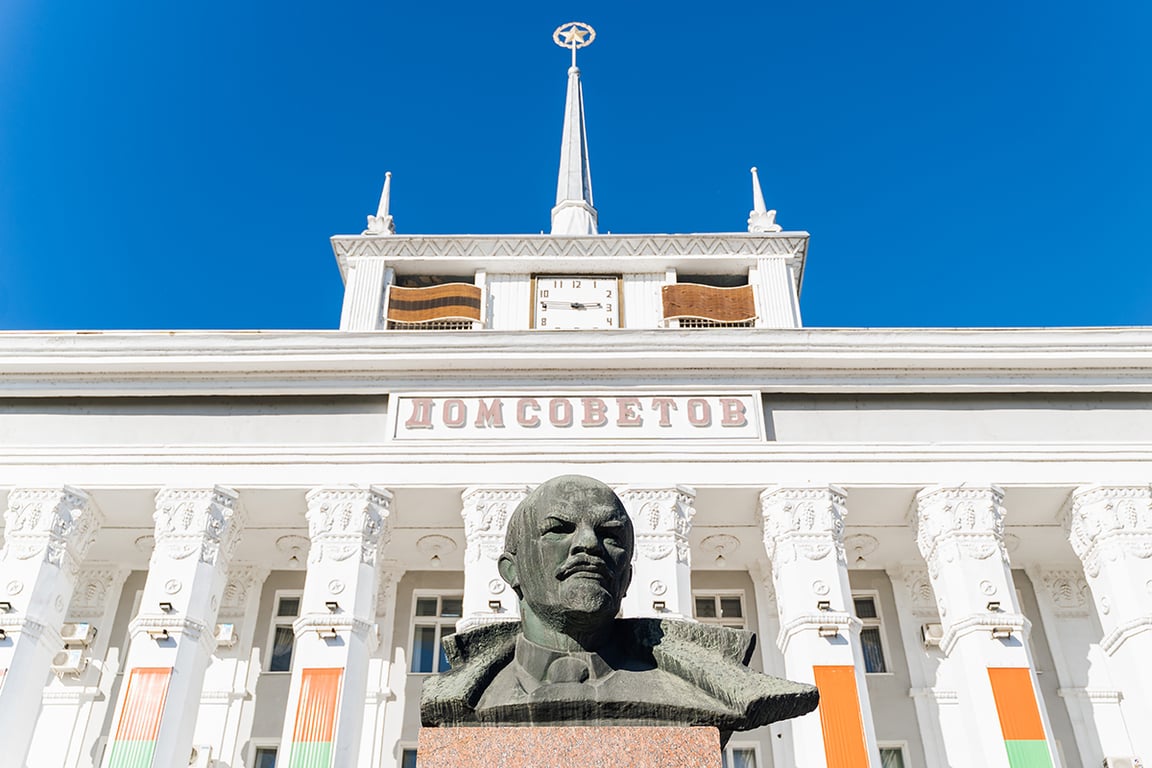
Over 35 years of unrecognition, local residents have learned pragmatism and survival. For them, a passport is often not a question of identity, but an opportunity to simplify their life.
Although the passportization of residents of Transnistria has been going on for decades, Putin’s decree should not be considered as an ordinary event. Since the beginning of the war, the Russian leader has not touched the Transnistrian issue in any way. He did not comment on it and did not take any action regarding the unrecognized republic, which Russia has always considered part of Moldova.
In this sense, the decree on citizenship is a wake-up call, if only because previously in all official documents Moscow referred to the unrecognized republic as the “Transnistrian region of the Republic of Moldova.” Now Putin does not indicate affiliation, but calls the region as the Transnistrian authorities themselves call it.
The Kremlin's decision drew critical comments from both Chisinau and Kyiv. Moldovan President Maia Sandu called the decree an attempt to intimidate Moldova and a way to recruit people for the war against Ukraine. She later noted that residents of the left bank of the Dniester “want to be citizens of the EU, not Russia.”
How Moscow and its allies are waging an undeclared war with Chisinau
How Moscow and its allies are waging an undeclared war with Chisinau
Ukrainian leader Vladimir Zelensky also responded. “The day before, Russia took a new step in relation to Transnistria: the Russians simplified the procedure for obtaining citizenship for people from this region of Moldova. The step is specific and not only means that Russia is looking for new soldiers in this way, because citizenship implies military duty,” he noted .
Vladimir Zelensky also said that Russia thereby designates the territory of Transnistria as its own: “They in Moscow often tell different interlocutors that they are supposedly only interested in Donbass. In fact, it’s not just Donbass. We must react to this. Moreover, the Russian military contingent and the location of special services in Transnistria are also a challenge for us.”
How realistic are the chances of a new war? We assess the forces of Moldova and Russia in Transnistria
How realistic are the chances of a new war? We assess the forces of Moldova and Russia in Transnistria
The Ukrainian leader knows what he is talking about. In 2019, when Zelensky had just been elected president of Ukraine, Vladimir Putin made it easier for residents of the so-called “DPR” and “LPR” to obtain Russian citizenship. What followed is known. Therefore, it is difficult to dismiss the analogy with Donbass in the Transnistrian case.
However, former Deputy Prime Minister of Moldova for Reintegration, head of the Initiative for Peace organization Alexander Flenkya believes that it is incorrect to compare Transnistria with Donbass. “I would not draw direct analogies, if only for the simple reason that there is no common border.
The fact that the Republic of Moldova does not have a common border with the Russian Federation is one of the primary reasons why Moscow did not recognize Transnistria;
in contrast to almost all other separatist regions created by Moscow on the territory of the former Soviet Union,” the expert noted in an interview with New Europe.
According to him, one of the goals pursued by the Kremlin was to raise an information wave - and this was successful, since everyone in Moldova is discussing the decree: “They are discussing and wondering, but what would this be for? And all this brings confusion and fear. This is not the main goal, but one of the pursued goals.”
Alexandru Flenkea thinks that the decree was also Moscow’s response to Chisinau’s recent actions. Firstly, those Pridnestrovians who serve in the Russian armed forces in Transnistria began to be deprived of Moldovan citizenship. Secondly, Chisinau recently declared the Russian military persona non grata, including the commander of the Operational Group of Russian Forces in Transnistria, Dmitry Zelenkov.
“Moscow is tense because Chisinau is clearly raising the stakes. Moscow has now responded to this: do not touch our military,” Flenkä said, adding that replenishment of Russian contingents is also one of the goals of the Russian Federation.
Transnistria turned to the Russian Federation for “help”; the State Duma has already promised to consider the request. Should we be afraid of a new conflict?
Transnistria turned to the Russian Federation for “help”; the State Duma has already promised to consider the request. Should we be afraid of a new conflict?
The former Deputy Prime Minister drew attention to another aspect in the context of the recent expansion of the powers of the President of the Russian Federation to use armed forces abroad to “protect Russian citizens.” “To paraphrase the old sad joke that Russia is limited by those states with which it wants to border...
If the Kremlin decides that there are Russian citizens in one country or another who need to be protected, they will appear there and they will be protected there,” Flenkä said.
Political scientist, former member of the Transnistrian parliament and ex-presidential candidate of the unrecognized republic Anatoly Dirun believes that Putin’s decree should be read as Russia’s designation of its presence on the Dniester. “Russia needed to return. Show your presence here in the context of the regional situation related to the war on the territory of Ukraine and difficult relations with Chisinau. It was necessary to declare: we support Transnistria,” Dirun told New Europe.
The decree, he said, has a multiplier effect. Next, the expert believes, Pridnestrovian pensioners will switch to Russian pensions: “This whole story with the provision of Russian citizenship is a political lead to the fact that Moscow will take the region for tighter financial support. And, in particular, provide humanitarian financial assistance.”
The financial situation of Transnistria, after free Russian gas stopped flowing into the region through Ukraine at the beginning of 2025, has indeed deteriorated significantly . And it is important for Moscow to support the viability of the unrecognized republic in order to freeze the situation there in its current form until better times for Moscow, given the absence of any negotiations with Russia’s participation on resolving the Transnistrian problem.
How Chisinau and Tiraspol (fail) to cope with blocking the transit of Russian gas
How Chisinau and Tiraspol (fail) to cope with blocking the transit of Russian gas
“Some kind of unfreezing will begin only after the parameters of a peaceful settlement between Kyiv and Moscow are determined. We will automatically fall into this orbit, and the next wave of [ discussions. — Approx. ed. ] will affect Chisinau and Tiraspol, certain negotiations will intensify, and so on,” Anatoly Dirun suggested in a conversation with New Europe.