
Translated material
I wear a colostomy bag and look more fashionable than anyone else
At the age of 19, Olga Selina from Novokuznetsk was diagnosed with a tumor in her intestines. She experienced, as she herself says, “two years of hell.” They refused to give her chemotherapy, prescribed the wrong treatment, and then sent her to a hospice to die. But Olga did not give up: she achieved the right treatment in the capital and was able to cope with the disease. Years of struggle for survival, according to Olga, radically changed her character. She learned to appreciate life like never before, despite the fact that she now has to walk around with a colostomy bag. Now she sews beautiful colostomy covers - and has found a purpose in life. Olga told Kholod about her experience and how a stylish cover for a colostomy bag can change a person’s life.
I almost died, I even ended up in a hospice. This experience has radically changed me, now I enjoy life and have a mission 
I survived
In the fall of 2022, a tumor was found in my intestines. I was operated on at the Novokuznetsk City Hospital: the tumor and part of the intestine were removed and a colostomy was removed. But this was only the beginning of my troubles. Due to an incorrectly chosen diet, I developed an intestinal obstruction; the doctors mistook the accumulated feces in the MRI image for metastases and gave me another oncological diagnosis. They said I only had a month to live and sent me to a hospice to die.
But my misadventures did not end there either. The diagnosis, as it turned out later, was incorrect, and the treatment greatly ruined everything. I have already told in detail about all these ups and downs and how my mother and I fought for my life and proper treatment. If you're interested, you can read the story here .
Now, in 2026, I feel great, living a full life without restrictions. I play sports, go dancing. Only every six months I go to check my health at the Blokhin Oncology Center in Moscow: I get tested for tumor markers, do an MRI and CT scan. Since September 2025, I have been living in Novosibirsk: I feel better here than in Moscow, because I am closer to home, friends and family.
When I escaped from the hospice and began to receive proper treatment in Moscow, I, of course, had side effects, and I felt exhausted from chemotherapy. But all this was unimportant to me.
The joy that I survived overpowered the desire to lie at home and feel sorry for myself. My mother was very supportive. She said: in order to heal, I myself need to become the energy that I want to attract. I need to feel healthy, even when I don't feel well. Following her advice, I returned to all the activities that I had left due to illness.
I passed my license and was reinstated in my studies. All punctured and thin, I put on a wig and went to classes in those two weeks of the month when I did not undergo chemotherapy (the scheme was such that I injected for two weeks, rested for two). I paid off all my debts and closed my sessions, and last month I became a certified computer design specialist. Of course, I listened to my condition and, when I was completely unbearable, I rested. But I realized that I needed to keep moving and do what I love in order to let my body understand: we are not giving up, we are staying afloat.
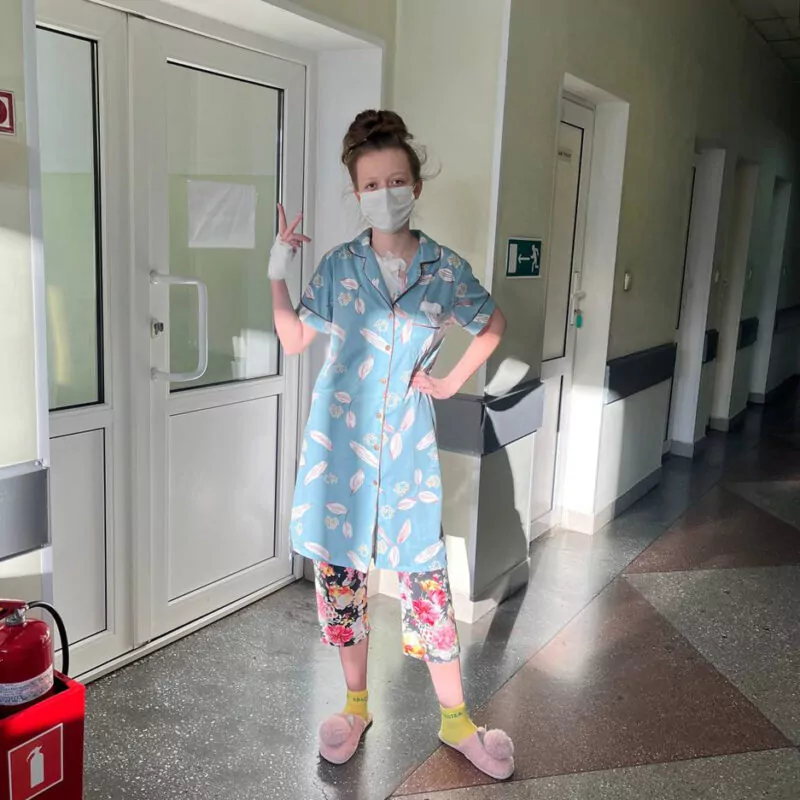
With such affirmations I moved on. I painted pictures (I love to draw since childhood), joined the creative association DELLARTE, where the guys organize dance performances. I helped them with makeup and filming. “To tell someone from our team that you were wearing a wig and undergoing treatment at the time, they wouldn’t believe me,” the dance coach, who was aware of my story, later told me. And I really tried to make it look like that. I didn’t want to associate myself only with cancer, colostomy bag and side effects from chemotherapy.
“Olya, thank you, now I won’t be embarrassed to go to school”
Reminding myself that I am strong, beautiful and can cope with difficulties helped me in my new business. Back in 2022, I had a colostomy - that is, part of the intestine was removed, and another section of it was taken out and sewn to my stomach. Since then, I have lived with a colostomy bag and often wondered:
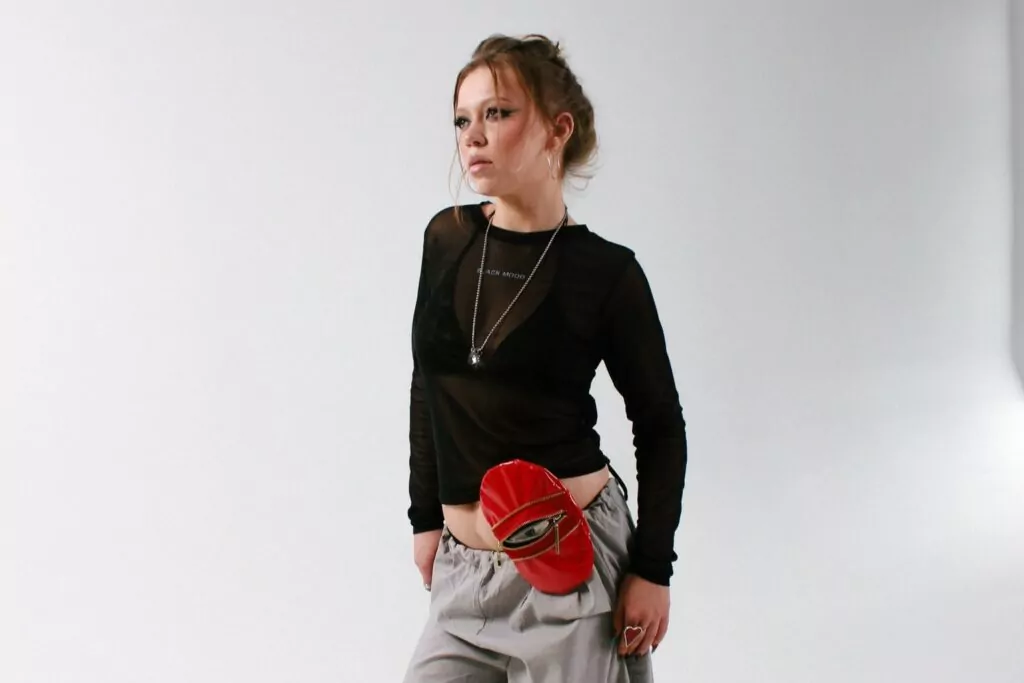
“How should I decorate you, little bag? Make it more beautiful, so that you lift my spirits and I feel that I came out of this situation as a winner?” One day—I was undergoing treatment and living in Moscow—I came up with the idea of sewing something beautiful out of fabric, like a cover, for a colostomy bag. I went to a wholesale store and bought a lot of different materials. At that moment, I didn’t think at all about practicality and how comfortable these fabrics would be to wear, but simply chose the colors and textures I liked. In the evening I took out my small sewing machine from Wildberries for 500 rubles and sewed the first cover. I tried it on and realized: it looks like an interesting bag. Strangers will never suspect that there is a colostomy bag inside.
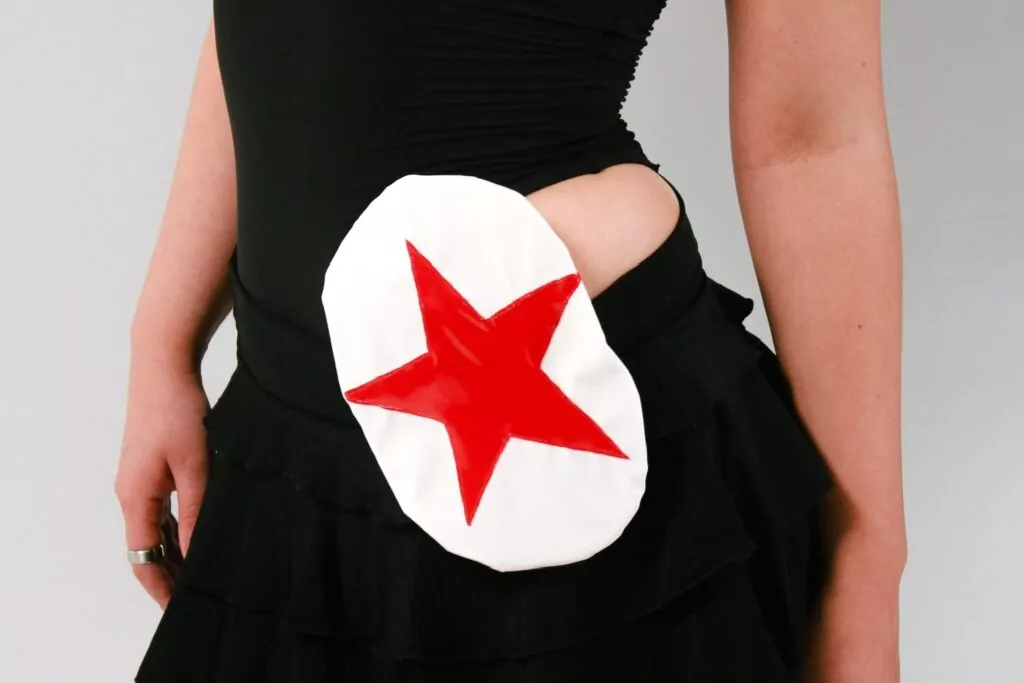
I posted a video of my work on Instagram , and overnight it collected 100 thousand views. People living with a colostomy wrote to me about what a great idea it was, and those who didn’t know my story mistook the case for a purse and asked for its part number.
So I started making custom cases. At first it was scary. I was worried whether they would hold well and not slip, but after receiving the first reviews, I exhaled. I asked the customers to be honest with me and give truthful feedback, but everyone said that everything was fine.
Now I realize that I make something more than just covers. They thank me not for the product itself, but for how it changes a person’s attitude towards himself and his characteristics. People are often given transparent bags for colostomy bags as a government benefit. And they see their feces. It’s uncomfortable to look at it yourself, and you also have to hide the bag under your clothes from strangers. Many people feel embarrassed about this, and beautiful covers allow them to forget about embarrassment and the need to hide their colostomy. On the contrary, it is a way to emphasize your uniqueness.
I am often approached not by the people themselves who have a colostomy, but by their relatives. Recently, the mother of an 11-year-old boy wrote to me and said that her son loves dinosaurs and is into football. I sewed a case for him with a picture of soccer balls, and he recorded a touching video for me with the words: “Olya, thank you, now I won’t be embarrassed to go to school.”
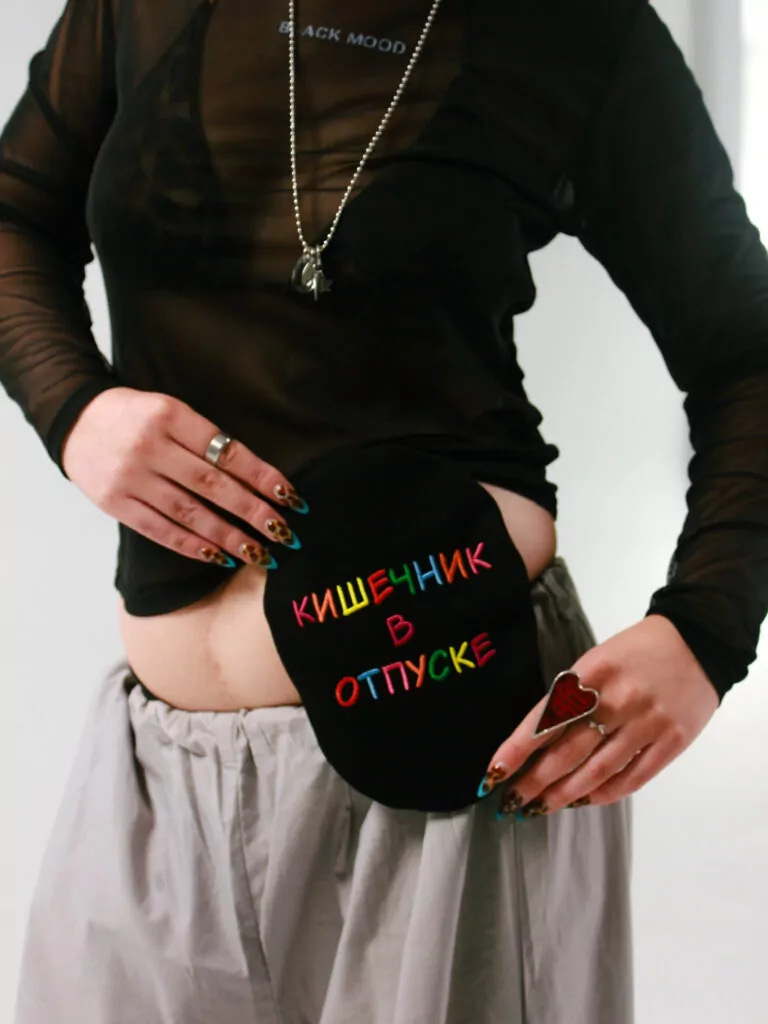
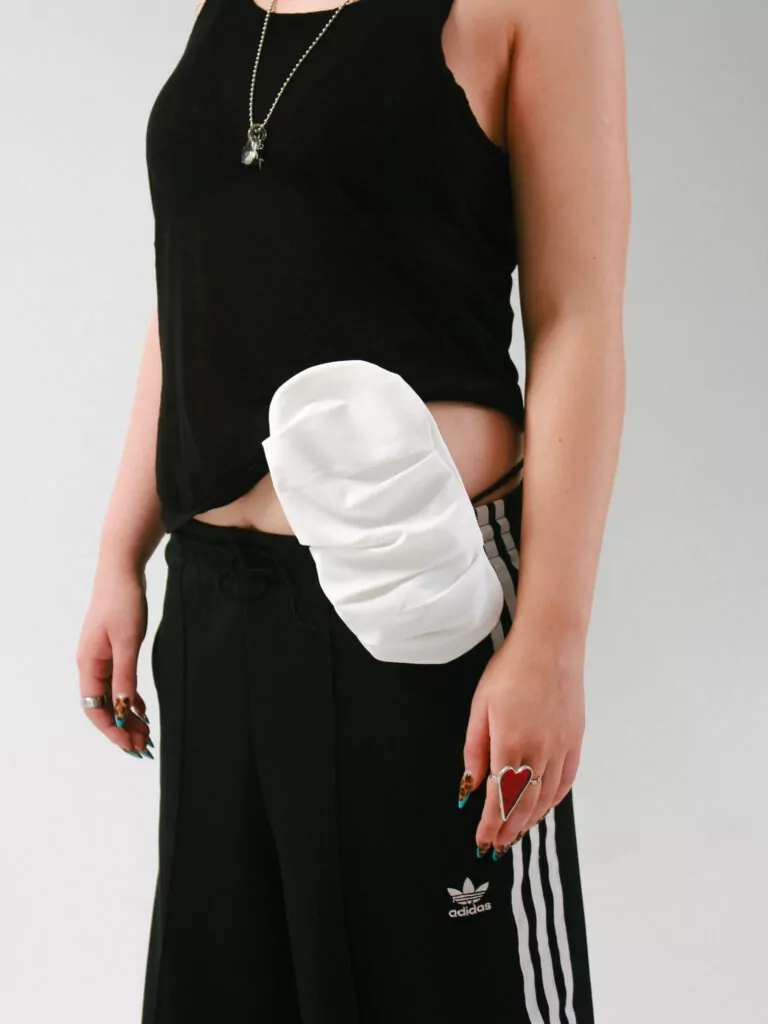
Another girl said that her mother recently had a colostomy and that she loves everything related to Africa. I sewed an African-style case for her and then watched the unboxing video: a woman receives my case as a gift from her family and laughs at the sticker that I put in the package for her.
A young girl with scars very similar to mine ordered a white case with flowers for herself and also wrote me touching words. She said that she no longer wants to hide, but on the contrary, she is ready to experiment with style and wear a swimsuit. At such moments, I understand that I am doing a good deed.
“Which hole, which gut?”
In the future, I would like to scale this project of mine. I want to continue working on custom orders, producing covers in basic colors for everyday use, but also turning them into a creative and socially relevant statement. I came up with two beautiful case designs that highlight how strength and beauty can come from illness. In the first design, an eye is depicted on the case; in the second, it looks like flowers are sprouting from the colostomy. I would like to show them and several other thematic installations at exhibitions. More than one hundred thousand people with an ostomy live in Russia. And yet many feel invisible and alone.
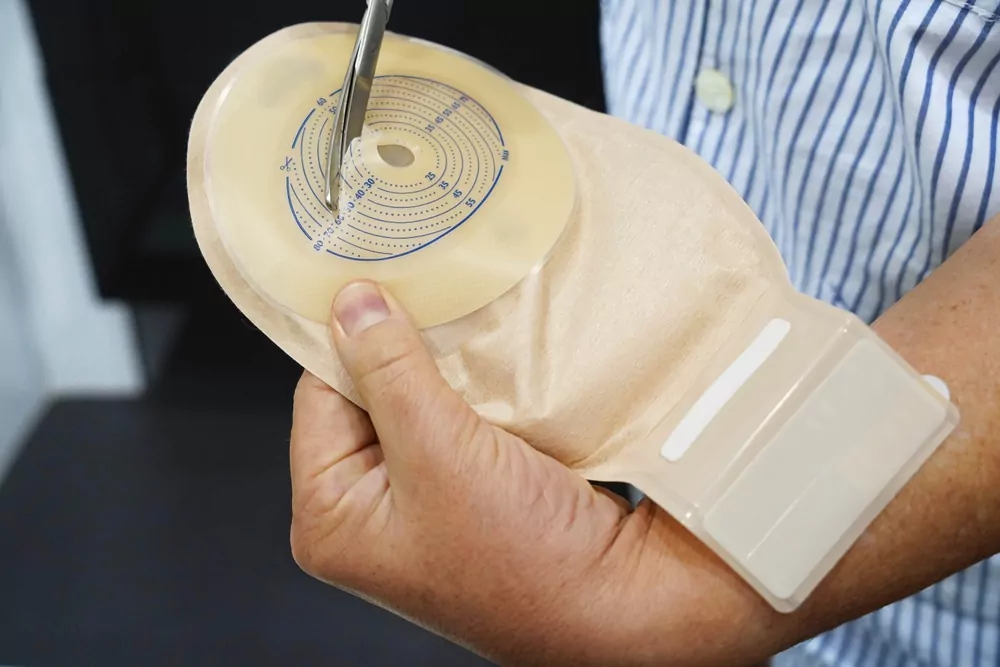
I myself had to learn how to change bags from videos on the Internet. In the Novokuznetsk hospital after the operation, no one clearly told me or showed me how it was done.
The nurse said: “You tear off the bag, cut a hole under the intestine and attach a new one.” For me, like for all the other patients in the ward, who had barely recovered from operations and anesthesia, all this sounded incomprehensible. Which hole, which gut? But there were no further instructions, and I had to figure it out myself. When I first took the bag off, I was still scarred and topsy-turvy. The sight was scary, but my survival instinct probably kicked in: feelings of disgust and self-pity turned off, and I learned to change the bags on my own.
Moreover, I changed them not only for myself, but also for my elderly roommates. I especially remember one of them - her name was Galina Vasilievna. She was afraid not only to change the bags, but even to “look in there,” and no one helped her. Due to the accumulation of feces, she developed severe irritation of the skin around the colostomy, she was in pain, she cried: “Daughter, help me.” I helped: I changed her bags in the cold hospital toilet and smeared her irritated skin with zinc anti-inflammatory ointment.
I don’t change bags for old ladies anymore, but essentially I continue the same mission: I tell people that it is possible to live with a colostomy, and I remind them that each of us is more than our stoma or any other feature or disease.
I don't give a shit at all
At the age of 19, I had a very close experience with death, but the disease was an important test for me, and through this experience I learned a lot about myself. Before that, I was an insecure girl. I was engaged in eternal soul-searching and did not know where to go. I had no internal support, and I did not receive it from the outside: my parents divorced, and as a teenager I was left to my own devices. I took on a lot, began to simultaneously receive two degrees - in web design and in the field of artificial intelligence, went to work as a waitress, but I did not have the feeling that any of these occupations were “mine”, and I gave up every job halfway through.
I only liked to be creative - draw and dance, but financially I couldn’t afford it. I remember one day, falling into despair, I cried and mentally turned to God: “Lord, if you hear me, help me. I don't know where to go next. I don't know who I am, what I am. All my peers are already doing something, studying, and they like everything. But I just can’t find myself. Help me, show me the way, and I will pass any test.”
I don’t know who pulled my tongue, but the test was not easy for me. However, thanks to my experience, I finally stopped doubting myself and my abilities and began to take responsibility for myself. I realized that if I didn’t fight with all my might, I would simply die. Because the situation was such that either I give up, stay in the hospice and die, or I cling to life.
I chose the second and I believe that my love of life and positive thinking is what ultimately saved me. Of course, the key role in my recovery was played by Moscow doctors, who selected the right treatment for me, and the support of my mother, who climbed over the fence for me and did whatever she did (I have already talked about all this).

Over these four years, I realized that I was not “shit” at all - not weak and worthless, as I previously thought of myself. I am a strong person who knows how to laugh where others would give up and cry. Maybe this is a characteristic of a not entirely mentally healthy person, but I wouldn’t trade it for anything.
People who have experienced terrible things tend to look for meaning in what happened to them. And I found him. My journey against cancer and medical abuse showed me that limitless resource of light and love for life and people, which, it turns out, has always been in me.
I want to influence the system
Now I want to benefit people by sharing my experience. I believe that there is nothing shameful or shameful in this, moreover, my example can help many. Someone who is sick will hear my story and wonder if they are being treated correctly. Someone, I hope, will decide not to give up. Maybe someone will order my colostomy cover and feel stronger. And someone who is not sick will look at my work, get inspired and decide that he also has nothing to be ashamed of, and will begin to show his creativity.
I will be glad if someone comes to my page and thinks: “Oh, the girl survived cancer, she has some kind of bag on her side and scars, but I just have financial difficulties.” If my experience helps a person breathe out and understand that in fact his problems are not a matter of life and death and he can handle everything, I will feel that everything I do is not in vain.
Some people wrote to me that it is worth trying to restore justice and sue for poor treatment and treatment. I’m not yet ready to go to hospitals and courts, collect documents, pay lawyers and return to the hell from which I got out. I want to direct the life resources given to me to creation, creativity and direct help to people. But I do not rule out that over time my position may change. Perhaps I will return to this issue when I have reconstructive surgery to close the stoma (that is, to restore intestinal continuity) and I get better.
I imagine that if you talked to every medical professional, there would be explanations for why they treat patients the way they do and why they make mistakes. Therefore, I would not like to punish everyone who harmed me in one way or another. I believe that only those who showed cruelty to me and because of whose wrong decisions I almost died deserve punishment. I want to not only punish individual specialists, but also influence the system that allows this to happen in our hospitals. Who knows, maybe I will succeed. After all, I’ve already accomplished the impossible once.
Author: Inga Olshanskaya
Photo: Ulyana Korkina