
Translated material
“In the album I return to them, at that time. And I really like it there"
Paul McCartney released an album about his childhood and friends with The Beatles. This is touching and extremely honest music.
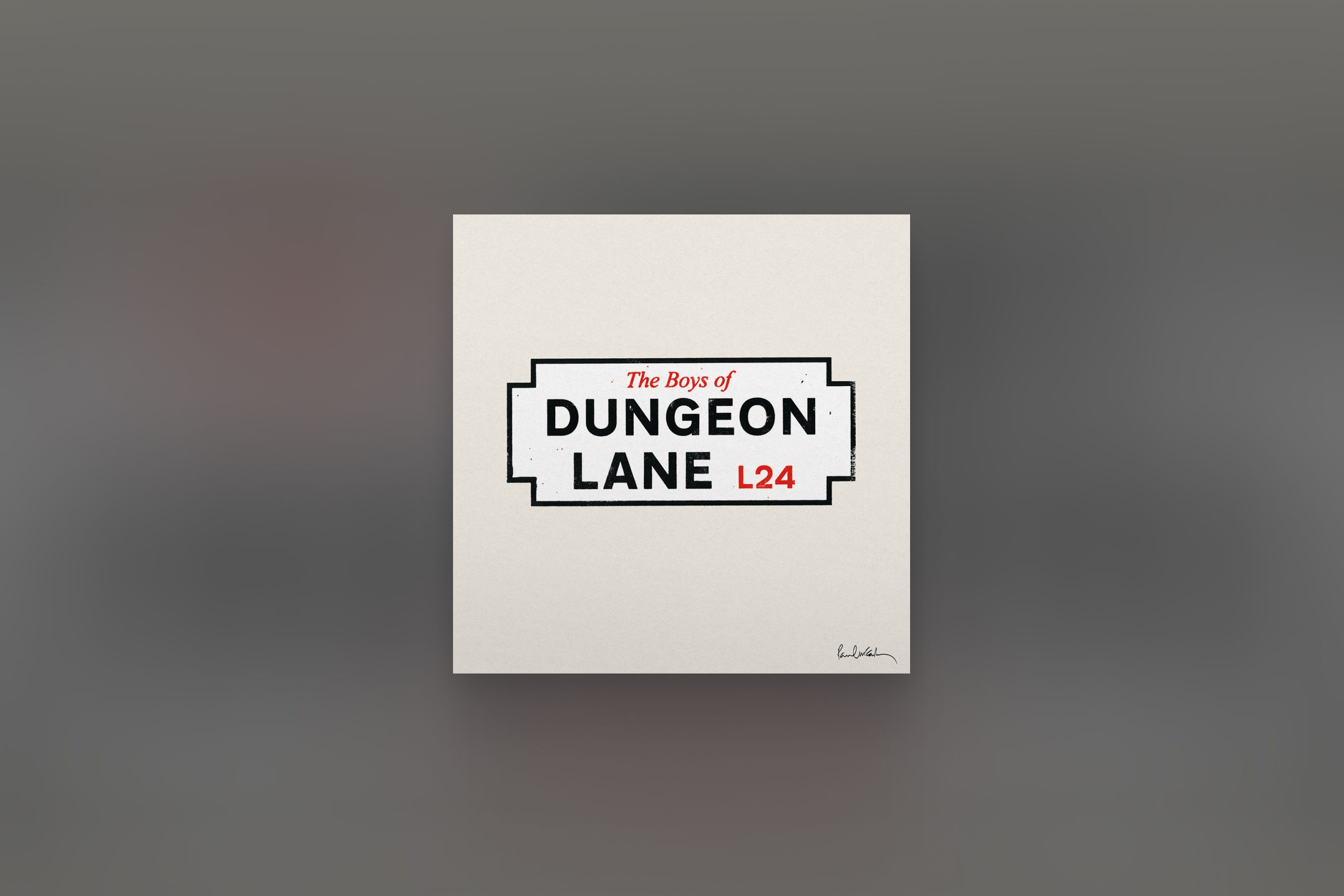
At the end of May, Sir Paul McCartney, who will soon turn 84, released The Boys of Dungeon Lane, the twentieth solo album of his career. The album is named after an alley in the suburbs of Liverpool where The Beatles often spent time. In principle, the entire album is dedicated to the past: McCartney remembers not only his friends, but also his family, neighbors and his entire childhood. Music critic Artem Makarsky talks specifically for Meduza about this honest and touching work.
You know, some people like to say: “Oh, nostalgia, I don’t like it that much.” I will never understand them. If you are lucky, you will have many good memories. And I was lucky: I grew up in Liverpool in a very loving family. I thought it was the same for everyone. But when I met John, I learned that his father left when he was three. It's the same with Ringo. Then I realized how lucky I was, that I was raised wonderfully by good people. Cheerful people. And those who love music. In the album I return to them at that time. And I really like it there.
This is how Sir Paul McCartney talks about his new album “The Boys of Dungeon Lane” for BBC2 radio - and he, of course, can already afford to refer to the past as much as he pleases.
Primarily because a member of The Beatles for a long time went against the stereotype of a sophisticated rocker who has been recording the same thing for decades. You can recall his experiments with synthesizers in 1980's McCartney II, or his interest in modern electronics in the project The Fireman, which appeared in 1993. Or 2000's Liverpool Sound Collage, where he transformed the Beatles' music beyond recognition.
This century alone, for example, he photographed himself with a watch camera for an album cover and collaborated with Starbucks to test new ways of distributing music. Following the album of covers “Kisses on the Bottom”, typical for a musician of his level, he released “New” in 2013, in which he essentially worked with producers who were new to him. And in the previous “McCartney III” he invited for a collection of remixes not only the obviously familiar Damon Albarn, Beck and Ed O'Brien from Radiohead, but also the younger Blood Orange, Dominic Fike and Phoebe Bridgers.

Having satisfied his experimental ambitions, he continued to do what he does best - write Paul McCartney songs. Not forgetting about working on mistakes. While 2018's Egypt Station was, for the most part, rather old-fashioned and a little drawn-out, McCartney III, recorded and conceived largely during the Covid pandemic, is filled with a sense of the excitement of being able to do nothing but create. At times, the almost silly, playful approach then benefited the British rock classic.
Despite the return to an old-school sound, "The Boys of Dungeon Lane" is not at all like "Egypt Station", although here McCartney moves away from the spirit of "McCartney III" towards more serious themes and self-absorption. Primarily because he moves from more abstract topics to specific stories and recipients. From the neighbor he liked on the opening "As You Lie There" to Ringo Starr recording his first song with McCartney since the Beatles broke up on "Home to Us." He also remembers other classmates - meeting John Lennon in the lyrical “Days We Left Behind” and hitchhiking around Britain with George Harrison in “Down South”.
Just as in Peter Jackson's massive documentary The Beatles: Get Back, the Fab Four finally appeared as living people and not status classics, McCartney writes about them primarily as his friends, those whom he knew almost from childhood. That's why this look back seems touching and devoid of those unpleasant effects of nostalgia that younger generations now talk about.
To some extent, this is an album about escapism through creativity and more - after all, the Dange lane in the title led to the beach near the River Mersey and became for McCartney, Lennon and Harrison a symbol of escape from boring municipal buildings. It is noteworthy that the musician warns against pilgrimage to this place, saying that it is not worth visiting at all - it is simply dear to his heart. This honest approach to one's own memories is worth a lot - and it is what makes The Boys of Dungeon Lane one of McCartney's most interesting solo albums.
The sound of the album, which McCartney worked on with producer Andrew Watt, also contributes to this. Although he collaborates with pop stars like Lady Gaga, Justin Bieber or Post Malone, he is no less loved by honored rockers from Iggy Pop and Eddie Vedder to The Rolling Stones. Watt's knowledgeable veteran approach allows the songs to blossom with a mellow sound with somewhat fuzzy guitars and vocal effects. It's like memories: the images never appear clearly in our heads, and voices from the past sound as if from afar.
Many have noted the emotional power of the Beatles' messages in "Days We Left Behind" and "Home to Us", but it is the album's ending that is most powerful. In it, McCartney, without metaphors, almost in a documentary style, talks about his parents. On "Salesman Saint," trumpeter Mike Davis provides a contrast to the album's familiar sound—but his playing is reminiscent of the music that was likely played in McCartney's home as a child. The musician tries to step into the shoes of his parents and feel what it’s like to raise a child during the war. And in the final “Momma Got By” he already paints a portrait of a mother who loved her father, despite his addiction to alcohol.
Although work on The Boys of Dungeon Lane began in 2021, McCartney appears to be entering into a dialogue with future Beatles films, which will be released in April 2028. Because of them, his conversation with Paul Mescal - who will play the musician in the film - aired a week ago on McCartney's channel, seems primarily to draw attention to the Sam Mendes tetralogy .
But the sensitive direction of Charlotte Wells, who directed My Sunshine , a poignant film about memories of her father, still takes the video conversation to a new level - especially with its touching ending. McCartney and Mescal leave the cafe, and inside we see the world of the past, as if from the forties. The musician and actor are already leaving, but still turn around to look back one more time.
Now, as we see withBohemian Rhapsody and Michael , musical biopics are not the place for deep reflection. The focus is increasingly on the genius, and not on his world, which was not at all black and white. This is what the new album seems to be trying to counter. In him we see, first of all, not McCartney the musician, but McCartney the person. And the main thing is that he does not close his eyes to the difficulties of his childhood - he has a really honest conversation with himself.
Artem Makarsky