
Translated material
Sent to the pampas
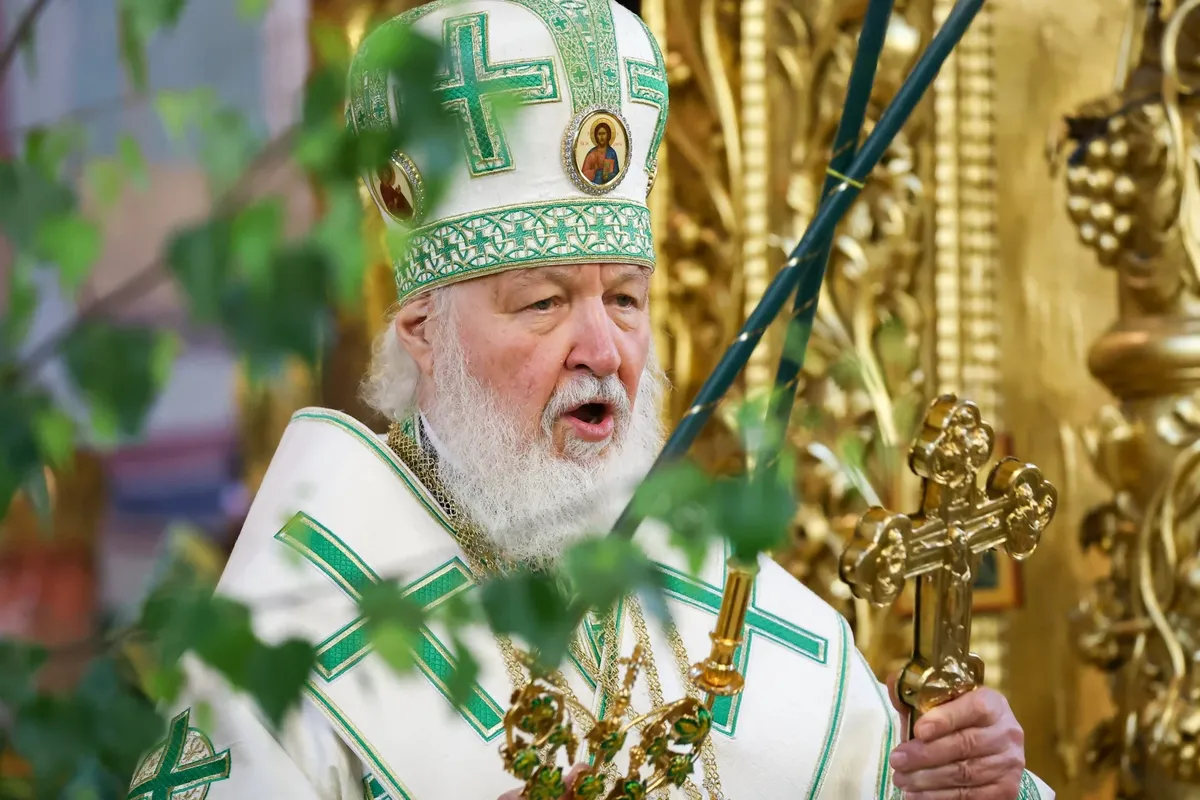
The cocaine scandal in Metropolitan Hilarion’s car became a spectacular reason for his transfer from Europe to South America. What's there?

Metropolitan Hilarion. Photo: Alexander Shcherbak / TASS
There was a boy. What about the powder?
The Czech police officially confirmed on June 3 that the white powder found 10 days earlier in the car of Metropolitan Hilarion (Alfeev) of the Russian Orthodox Church was cocaine. This statement was made by the press secretary of the police of the Central Bohemian Region, Martina Richterova.
As Novaya reported , on May 24, not far from Prague, the former “Minister of Foreign Affairs” of the Moscow Patriarchate and his driver-operator were detained. They spent two nights in the bullpen, and after their release, Hilarion recorded a pathetic video message , comparing himself to the ancient martyrs, the apostles Peter and Paul.
Czech police cannot explain on what basis Hilarion and his companion were released without any obligations and were able to freely leave the EU, although the case of cocaine being found in their car continues to be investigated.
According to Hilarion himself, during the entire 48 hours of his stay behind bars, “the entire staff” of the Russian Embassy in the Czech Republic was nearby at the police station, which, however, was allegedly reduced to two people. By listing the people to whom he is especially grateful, the Metropolitan makes it clear that Patriarch Kirill and Foreign Minister Sergei Lavrov took an active part in his fate. In any case, the veil of secrecy over the story of his release has yet to be lifted...
Almost simultaneously with the message about the completion of the examination of the substance found in the car, a decree of the Patriarch appeared on the official website of the Russian Orthodox Church on the determination of new places of ministry for Hilarion: “The Church of the Holy Apostles Peter and Paul in Santa Rosa, Brazil, as well as the Church of the Holy Apostle and Evangelist John the Theologian in Campina das Misões, Brazil.” The subtlety of the patriarchal irony is difficult to overestimate: since the metropolitan was “caught on cocaine,” it is logical in its own way to send him to the country that ranks first in the world in terms of traffic of this substance. At the same time, Brazil has a reputation as one of the most LGBTQ+*-friendly countries in the world.
How can one not recall the previous scandal with Hilarion in the leading role, which was followed by his “exile” to Karlovy Vary. A young cell attendant of Japanese origin, George Suzuki, who fled from Hilarion, accused the Metropolitan of harassment, publishing relevant video and audio materials, which Hilarion was never able to refute in court.

If no one questions the story of Suzuki (young men of Asian appearance had been seen around Hilarion before), then most experts do not believe in cocaine. Deacon Andrei Kuraev**, who lives in Prague, is inclined to believe that the authorities themselves found such a “persistent way” to expel almost the personal representative of the patriarch from the territory of the EU. Publicist Ksenia Luchenko*, on the contrary, strongly doubts that the Czech intelligence services are capable of planting prohibited substances. Hilarion himself claims that he has never used or even held cocaine in his hands, and his lawyer Michal Pacovski points out a lot of procedural violations and oddities when containers with the substance were discovered and seized from the car.
A version is circulating in the Orthodox blogosphere that the powder was “planted by their own people” in order to evacuate it from the “satanic” West.
But this version is unconvincing, given the legal risks accompanying the seizure of the powder, detention and further judicial proceedings.
On the one hand, I want to believe that the hierarch is telling the truth. On the other hand, Hilarion’s reaction to the story of Suzuki leaving him reveals in the metropolitan a person subject to affects, or, in church language, passions. On January 15, 2024, he admitted in a letter to George’s mother Veronica: “I was haunted by thoughts of suicide, and I thought what would be better: to swim across Lake Geneva in winter and drown in the middle (...).” It is clear that in the Christian tradition, suicide is a more serious sin than drugs or false witness. In general, a lot can be expected from a bishop who shares suicidal thoughts with the mother of a loved one.
Missionary spaces
Whether the patriarch was making fun of his old favorite (Hilarion had worked on Kirill’s team since at least 1995) or not, he will now have to master a completely new space for himself - the Argentine-South American diocese. By the standards of the Russian Orthodox Church, it looks modest: about 30 parishes, poor, as a rule, parishioners - distant descendants of emigrants of the early-mid-twentieth century, most of whom have forgotten the Russian language. There are few fresh emigrants in the diocese - several thousand people flew to South America after the start of the North American War, but among them there are practically no churchgoers.
The first wave of Russian emigration reached Argentina in the 1860s, after the abolition of serfdom in the Russian Empire and the emergence of a class of free landless peasants. In Brazil and Paraguay, the first refugees from the distant northern country began to appear in 1874, after the introduction of universal conscription in Russia.
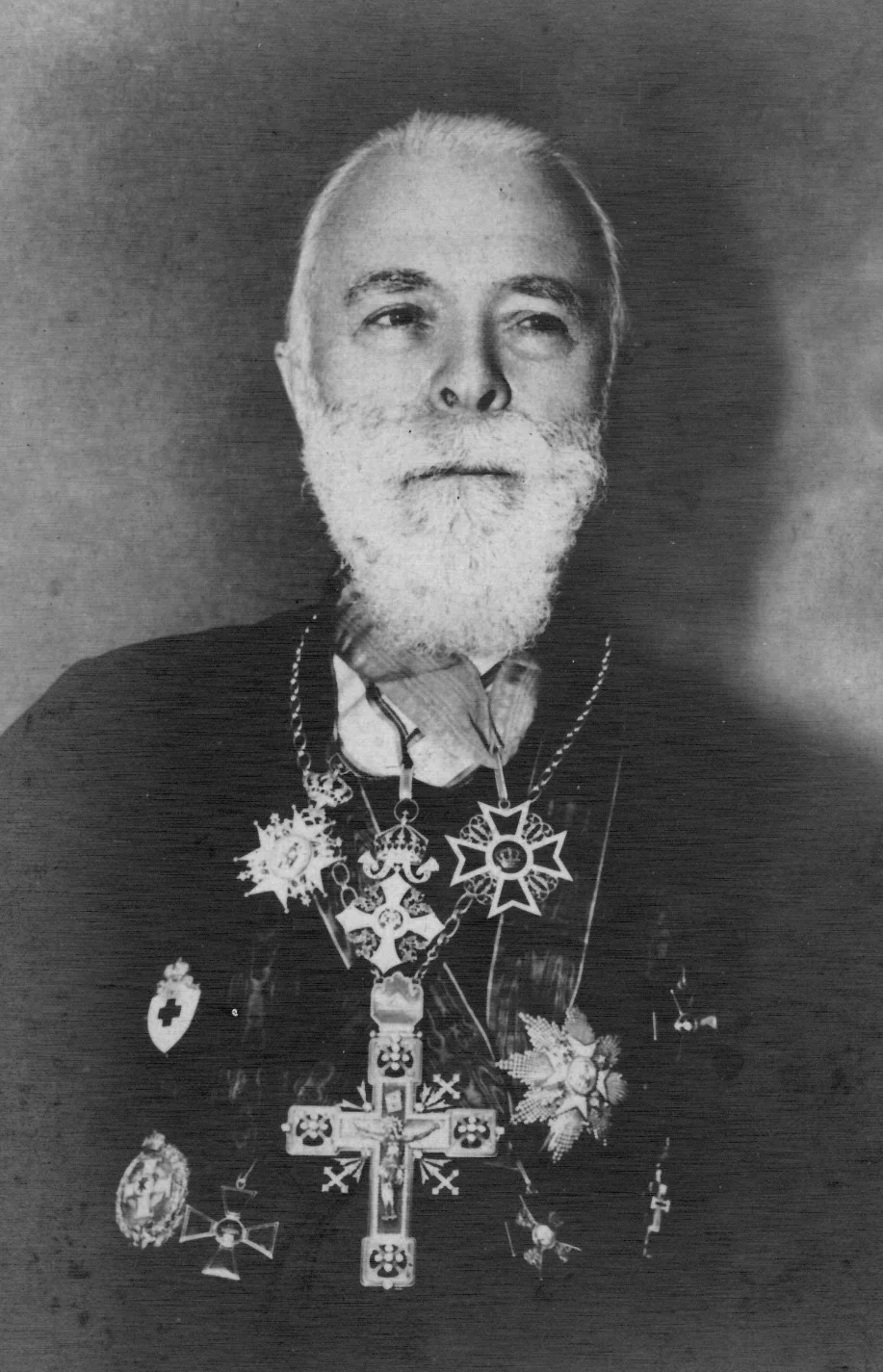
For almost 70 years, the formation of Orthodox life on the South American continent was associated with the vigorous activity of Protopresbyter Konstantin Izraztsov, who served the first liturgy in Buenos Aires in 1889. Having secured the support of the chief prosecutor of the synod, Konstantin Pobedonostsev, he collected considerable funds for the purchase of land and the construction of the Trinity Cathedral in the center of the Argentine capital, which was completed in 1901. Later, Izraztsov supervised the construction of several temples in Argentina, Brazil, Uruguay and Paraguay. After the revolution, he changed several church jurisdictions, the consequences of which are still visible in the administrative fragmentation of Russian Orthodox structures on the continent. In South America, there are parallel dioceses of the Moscow Patriarchate, various branches of the Russian Church Abroad (both those that recognized and those that did not recognize the Russian Orthodox Church) and the autocephalous Orthodox Church in America.
Since the early 1930s, Paraguay has become a stronghold of radical White Guard emigration, inviting Russian officers into its army during the war with Bolivia of 1932–1935. In turn, there were many German officers in the Bolivian army, which gave the Whites a reason to view this war as a continuation of the First World War and as revenge on the Germans for “financing the Russian revolution.” Attempts by the Moscow Patriarchate to open its parish in Paraguay were unsuccessful - the state did not recognize the USSR and established diplomatic relations only with the new Russia in 1992.
The Russian emigration in Brazil was replenished with a “White Guard element” only after World War II, when first the so-called displaced persons, including former Soviet prisoners of war, were forced to move from Europe and then from Manchuria. A large group of Old Believers-chapels arrived from China, turning Brazil into an important center of this movement.
The center of Orthodox life in Brazil became Sao Paulo, where Fr. Izraztsov opened the first church in 1925. Today there are about 10 Orthodox churches in different jurisdictions in the city, and four more churches in Rio de Janeiro.
Their services are conducted mainly in Portuguese. Some sources estimate the total number of the Russian diaspora in Brazil at 70 thousand people.
Mentions of the Argentine diocese of the Russian Orthodox Church in the world press are mainly related to, excuse me, the “cocaine case” of 2016–2018, in the scandal of which journalists also mentioned the Foundation of Russian Orthodox Philanthropists. At the Russian Embassy in Buenos Aires, suitcases containing white powder intended to be sent overseas were then discovered. At the time of the scandal, the diocese was ruled by Leonid (Gorbachev), who fell into disgrace after the Prigogine rebellion. The current ruling bishop is his namesake, Leonid (Soldatov), who, by his own admission , had never lived outside his native Alapaevsk before his appointment to Argentina.
Does it smell like Russia here?
However, the Patriarch sent Metropolitan Hilarion not to Buenos Aires or Sao Paulo, with their metropolitan style familiar to the intellectual hierarch, but to the remote and poor parishes of Santa Rosa and Campina das Misões, consisting mainly of small farmers.
The parish of St. has been around for more than 100 years. John in Campina das Misões, a town with a population of about six thousand people, a third of whom are descendants of pre-revolutionary settlers from the Russian Empire. At the entrance to the town there is a monument: a woman and a girl are holding sheaves of wheat and sunflower flowers in their hands, and a man is looking thoughtfully into the distance. Historical Church of St. Ioanna burned down in the 1940s, and in 1955 a modern building was built, architecturally unremarkable. It is located not in the town itself, but 10 km from it, not so far from the Argentine border. Next to the temple is a huge “salon” where parishioners roast churrasco and socialize after the liturgy.
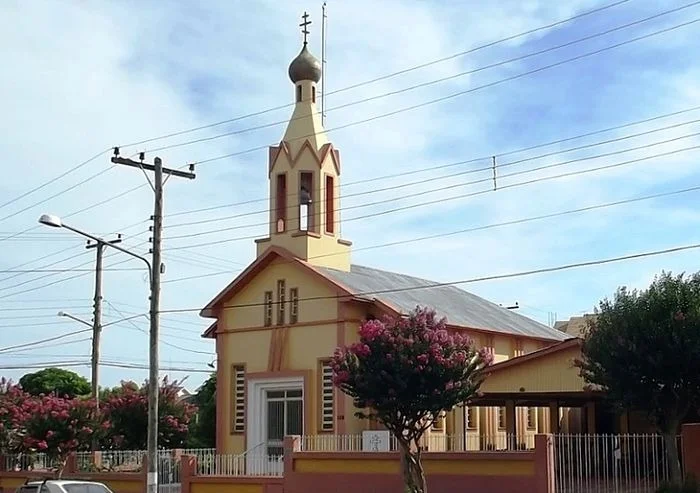
The Church of Saints Peter and Paul in Santa Rosa, a “regional center” with a population of 64 thousand people, is more interesting from an architectural point of view. It resembles a Protestant church, with a Russian tented bell tower rising above the entrance. The temple was built through the efforts of Archpriest Peter Zavadovsky with the help of the Parisian newspaper “Russian Thought” in the 1970s. In 2006, while still a metropolitan, Kirill (Gundyaev) visited the temple.
As Fr. found out. Andrei Kuraev, the immediate superior of the exiled Hilarion will be the rector of both churches, Archpriest Oleg Mokryak, an ardent adherent of the “Russian world”. When the Euromaidan and the flight of Yanukovych happened, Mokryak headed the department of religious education and missionary work of the Odessa diocese of the Ukrainian Orthodox Church of the Moscow Patriarchate. He fled from Odessa to Moscow after the SBU searched his home as part of a case involving the organization of separatist marches under the slogans of the “People’s Republic of Novorossiya.” Father Oleg was first appointed temporary cleric of the temple in Shcherbinka near Moscow and the “main temple of the RF Armed Forces” in Patriot Park, and then, in 2024, by decision of the synod he was sent to Brazil. The archpriest’s views are popularly stated in his interview with the Interfax-religion portal: “Now all hope is in Russia... People [in Ukraine] are forgetting their roots. I remember that it was one country, one people.”
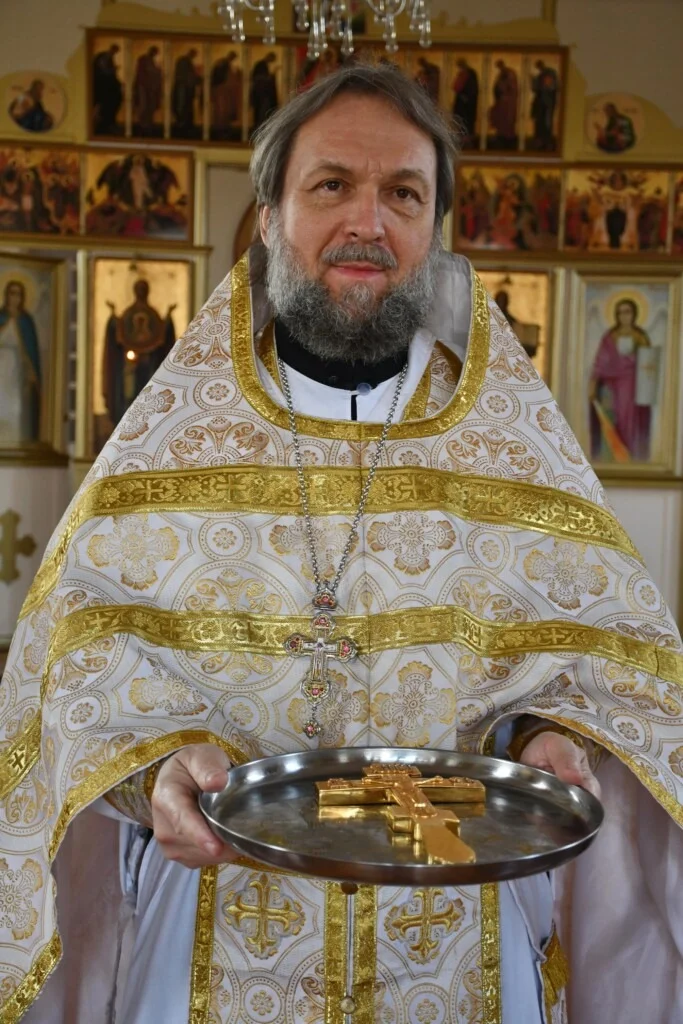
In a word, the rector is what it takes; one can be entrusted with ideological and moral control over the erring metropolitan.
...The myth that Metropolitan Hilarion so carefully built for decades around his scientific and artistic image is, of course, destroyed. However, the absence of an ecclesiastical (and secular) trial against him, or even a ban on him in the priesthood, in itself testifies to the certain inviolability of the hierarch. For much more modest sins that spilled into the public space, bishops in the Russian Orthodox Church are banned, exiled to remote monasteries and defrocked.
Obviously, Hilarion has patrons with whom the patriarch is forced to reckon. It remains in demand “on the outer contour” - in non-CIS countries.
It is possible that Brazil is “part of the scenario”; it is not without reason that Hilarion, back in Budapest, asked his cell attendant George Suzuki (in his words ): “If I am sent to Latin America, will you go with me?” In any case, some powerful system keeps Hilarion for itself - when necessary, taking him out from under attack, and then returning him to the forefront.
We will hear more than once about this extraordinary figure of the Russian Orthodox Church in various senses.