
Translated material
Karelian journalist Natalya Ermolina: “We are against the tsar. It's in our blood and we can't stop."
How to be yourself when the memory of Vepsian ancestors, love of Ukrainian songs, Old Believer thoroughness, Karelian craving for freedom and the desire to learn the Moldavian language coexist within you? We spoke with journalist, activist and arts manager Natalya Eromolina about multiple identities and Finno-Ugric roots, why the North remained a territory of freedom for many years, how and why the Karelian language disappeared, and why the Kalevala epic, for which materials were collected in Karelia, is now known as Finnish.
This is the first part of the interview with Natalia, we will publish the second in a few days.
Attention! There are swear words and expressions in the text. If this is unacceptable to you, do not read this text.
- Let's talk about multiple identities. Here you are from Karelia, but at the same time you are not a Karelian. Who do you feel like, how to describe you? Maybe in some cases one identity dominates, and in others another?
— Activist, feminist, journalist, criminal on the run, athlete. Who else? Just crazy, you can choose what you like best.
— I like everything, but you and I are both from Finno-Ugric regions, so that’s where we’ll start.
“I have Finno-Ugric roots and can feel them—this is the blood of my Vepsian grandmother. There are no Karelians in my family, but there are Vepsians, 25 percent. But, unfortunately, I did not pick up the language from my grandmother. Except, perhaps, for a few ditties, like “I walked through the mountains, through the valleys, I tore off my entire pussy, and came home tired.” My grandmother sang something like that to me, and now I think: “Well, Natasha, couldn’t you take something more from your grandmother?” Grandma is a simple person, she didn’t graduate from university. When I tried to learn the language, she taught me as best she could: “ Lähkam mecha senihe, babukoihe marjoihe!” . As a result, my knowledge about the Vepsians is “Let’s go for mushrooms” and “Let’s go for berries.” In principle, I would have survived in the Vepsian forest.
There is such a Vepsian scenario: when mobilization begins, all the guys go into the forest. This was later called “quiet resistance.” The Vepsians are very cunning people, and there are many all sorts of jokes about how China attacked the Vepsian volost, and the Vepsians are considering where to bury all the Chinese now. In general, such a quiet, modest, resistant, free people, among whom, by the way, matriarchy was widespread. My grandmother was very powerful, and despite her difficult fate, she was very strong; all her sons-in-law were afraid of her. Therefore, I really respect this identity in myself.
Since I grew up in a Russian-speaking environment, I identify myself as Russian. But I grew up partly in Ukraine, I studied at a Ukrainian school, I know the language, so I have a lot of Ukrainian identity. Despite the fact that I have poor hearing, I can’t sing, a Ukrainian song explodes inside me once or twice, because I remember all these Ukrainian weddings, where money was thrown around and gifts were given. It’s like in Emir Kusturica’s film “Black Cat, White Cat,” where at a wedding people stand in line with gifts, and then together look at which family gave what.
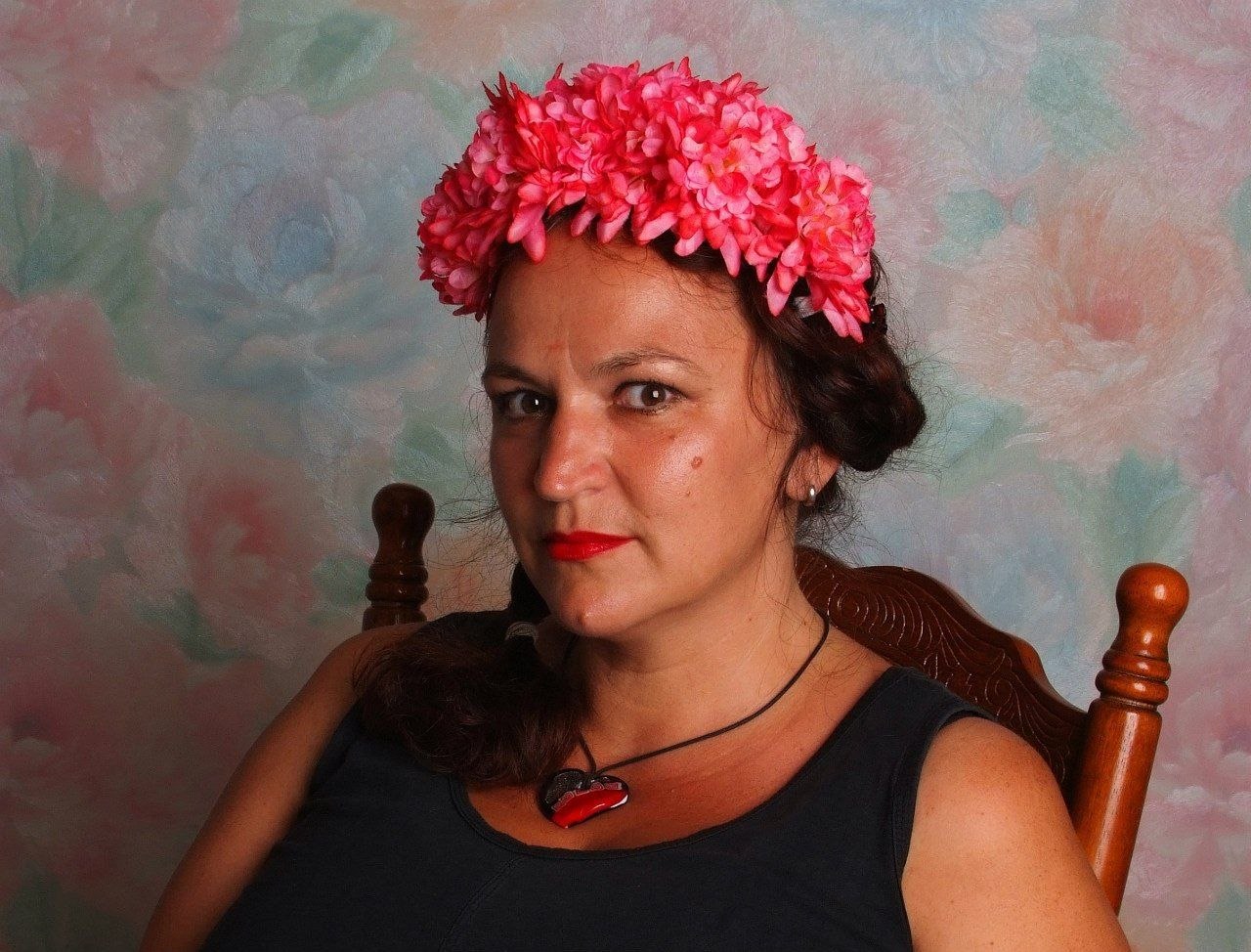
All this lives in me, I have this Ukrainian craving for the rural community, when everyone gets together and sings. Maybe that’s why I later took up community building, because I remember it from childhood.
I also have a little Moldavian identity, such as Santa Barbara-Natalia. I don’t know the language, but I was born in Moldova, in the city of Bendery, this is Transnistria, then it was the Soviet Union, the Moldavian SSR. At 11 months I was taken away from there. But I have kept my birth certificate all my life, and I still have it, on which it says “Adeverince de nashtere.” You see, I had this phrase sitting inside me all the time, and I kept it like some kind of crystal. Now my Russian passport is running out, I’m on the run, and they won’t let me renew my document, they won’t give me a new passport at the embassy, they say: “You’re wanted, we won’t give you a passport.” Soon I will become an illegal immigrant. Well, I wrote to Moldova. And they told me: “Natasha, come, you have the right to Moldovan citizenship.”
That is, now, many years later, this crystal is working for me! At the age of 54, I began to learn Romanian in order to pass the exam. From scratch, with my shitty brains, eaten away by activism and Putinism. And since I started learning the language, this Moldovan identity has also awakened in me. And it’s so strange that, as if not only by blood, but by some little Easter egg planted in childhood, the Moldavian woman also awakens in me.
“ As a person fascinated by folklore, this reminds me of the story when a good fairy puts a magic object in a newborn’s cradle. And then the child grows up, and the moment comes when a wonderful thing can be useful to him. But let's backtrack a little. You are now in Montenegro. How did you end up there?
- I won’t start with the king of peas. In September 2022, mobilization was announced in Russia. And I have a child raised in the difficult 90s. I was a student when I gave birth to him in terrible poverty. And then Putin offers to send him to fight with Ukraine, with his native people, with my childhood friends. I said: “Fuck you, dear Vladimir Vladimirovich!” First, my son left for Montenegro, and then I followed him.
When I left, I had already prepared an article for discrediting the army, my first court case, and then it started: after leaving there were countless protocols, I stopped counting them. I paid the first fine because I thought it could somehow improve my life.
Then it turned out that the more you pay, the more they add to you. And I thought: I need to stop, because they will never stop, and I don’t play this game, let them play it themselves.
They started to attract me for something, but I wasn’t there, as they say, “in my absence you can even beat me.” I left for Montenegro in November 2022, and in April 2023 I was recognized as a foreign agent “for public support of Ukraine.” This is their wording.
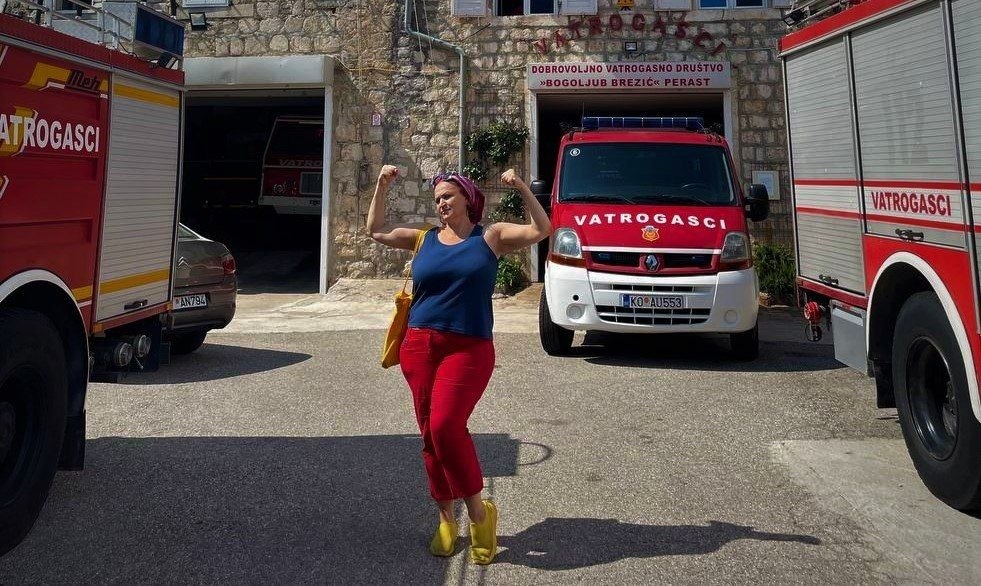
On the same day, I was automatically expelled from the Union of Journalists of Russia, and my art space, which continued to work, was automatically closed because the team remained in Petrozavodsk. I wanted to close my NGO, but I didn’t have time, I understood that I had to run, otherwise I might be arrested. They have already started knocking on my door, these “scrapers” began to scratch each other in the morning and hand me subpoenas. At that time I was really afraid that they wouldn’t put me on the plane and would take me straight to prison.
— What do you think was not the formal, but the real reason why you were recognized as a foreign agent?
— In Karelia, despite the smallness of the region, there are eight foreign agents. These are journalists and one lawyer - human rights activist Max Olenichev . One lawyer who went to court saw the definition, for which I was recognized. They never write the wording, they simply recognize him as a foreign agent and that’s it. It turned out that I was recognized “for supporting Ukraine.” Well, I have always supported Ukraine, since 2014, when Crimea was already squeezed out. I had a lot of posts and just some funny notes about Ukraine, because I often went there, I have friends and relatives there. Then it all turned into a political statement. Naturally, I was like an eyesore. And therefore, all of us, journalists, one after another, were recognized as foreign agents, for our texts, for our statements, for our position.
They probably also took into account that I write on Facebook . Petrozavodsk, he loves VK more, and there were a lot of people sitting there, everyone was reading each other. I have a large audience and had 15 thousand subscribers on VK, that is, I was considered a leader of public opinion, and the leadership of Karelia did not like this opinion. So my page there was blocked.
I think that for Moscow I am a no-name from the region, I am not a person of federal significance. But I was recognized as a foreign agent, because, apparently, they have some kind of quotas in the regions to recognize those who stir things up locally. You probably became a foreign agent based on the same principle - as a person who wrote and fucked in regional media. Here I am in my region - a noticeable person who does not adhere to the “general party line”, not [political scientist Ekaterina] Shulman and not [rapper] Noize MC.
— By the way, our colleague Seryozha Markelov from Karelia was among the very first five foreign agents. My fellow foreign agency member, Andrei Zakharov, with whom we were recognized on the same day, once called me on his “Wiretap” program to discuss our material about the FSB palaces, and there he suggested that Komi and Karelia are regions where the security forces are especially fierce. How can you comment on this?
— Karelia has always been freedom-loving. Firstly, because we were one of the first to travel abroad. We are a border region, and we were the first to open the window to the West. And we were the very first to go to Finland, began to go on journalistic internships to Sweden, to the Fojo Institute, where we were taught liberal journalism of fact, and not, as we were used to, writing without checking and everything else. There we saw for the first time how media really works. You know Barents Press – an excellent network of journalistic contacts. Then I was on their team, representing Karelia.
Secondly, the most objectionable people have been exiled to Karelia, as well as to you in Komi, since tsarist times. As soon as you cheat too much, they immediately send you to where? You can go to Siberia, but you can also go closer – to Karelia. A lot of freedom-loving people were sent to us, and, apparently, their descendants continue the work of their forefathers - they fuck against the kings. And since we now have a king on the throne, we are fighting against the king, it’s in our blood, we can’t stop.
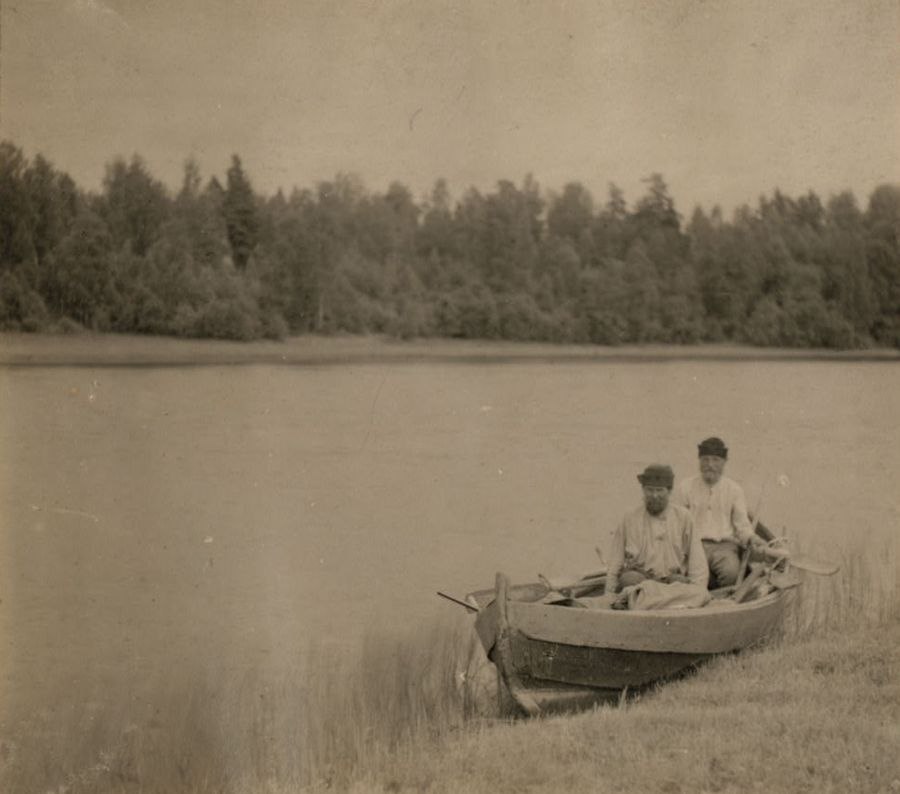
The specificity of the region is this: we saw the West earlier than others and began to apply Western knowledge and adapt it. It is these liberal values that have spread from us, we have spread this infection. It’s all to blame for Peter’s “window to Europe,” which we climbed through and then didn’t want to climb back in (laughs).
— We know that Elias Lönnrot collected runes (songs) for the epic “Kalevala” in Karelia, but there is another story. There was a folklorist Pavel Rybnikov , who in the middle of the 19th century was exiled to Karelia, which was then part of the Olonets province. And there, among the Pomors, he discovered those same Russian epics about Ilya Muromets and the rest of the heroes. And then everyone was amazed, because no one thought that these epic songs could have been preserved somewhere. But in general, major folklore works in Russia were better preserved where there was no private serfdom.
- Yes, the Pomors are a free people, they sat by their lake and by the White Sea, and the kings did not reach them. And if some boss arrived, he was immediately sent. Because the Pomor sits, fishes, the center of his world is here, he doesn’t know any other universe. Therefore, he is in his own right, on his own land.
And this is everywhere. Both the Vepsians and the Karelians, they too are the kings of their lake, the lords of their fish. And they have freehold and a sense of entitlement to this land.
Now people live without rights, and more and more are being squeezed and taken away from them, they are trying to take away from the Karelian his true free nature. These are the free people of the forest. You are also from a forest region and you know what a forest is for the Finno-Ugric people and, in general, for people from the North, from Siberia.
One of my identities is not national, it is connected with Zaonezhye, this is where Kizhi is, there was traditionally the territory of the Old Believers. They settled there after the church schism of the 17th century. Well, remember, “Father Onuphry, walking around the vicinity of Lake Onega...”. Local legend says that Nestor built the temple in Kizhi using only an ax without a single nail. But this is all bullshit and provocation. The truth is that, after the schism, the holy fathers began to gather here in the North, after they expressed dissatisfaction with the center.
— In Komi there is the Ust-Tsilemsky district, also traditionally Old Believers, where schismatics fled.
- So, on my father’s side, I come from one of the ancient Old Believer families, and my last name, Ermolina, comes from an ancient Old Believer house. There was a grandfather there, Kirill Ermolin, who controlled this entire Old Believer community, everyone was afraid of him. And then I read from some researchers about an Old Believer house in the village of Kibitka, my dad was born there. I kept asking him: “Why Kibitka?” They explained that supposedly gypsy* camps stopped there, who loved this village very much, and gypsy blacksmiths shoed the horses. This is one of the versions of the origin of the name of the village. She's small, but the legend is cool.
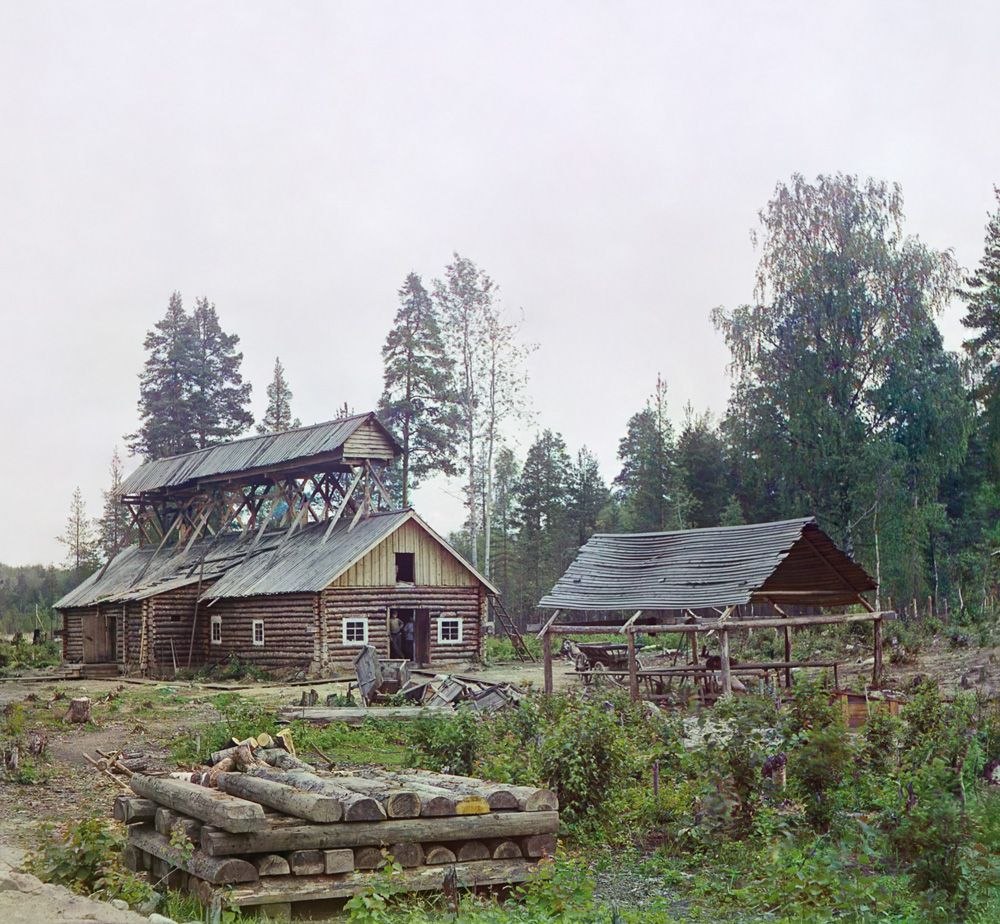
One of my identities came from this Ermolinsky house. Naturally, there in 1937 the Ermolinsky part of our family was dispossessed, everything was taken away, the house was plundered, the horse was taken away. Grandmother then worked as an accountant on a collective farm, she missed a ruble, and was sent to prison for two years. That is, she came from a rich home, but ended up being forced to go to a collective farm and spent two years in prison for a shortfall of one or two rubles. She already had little Fedya, my father.
On my Vepsian side, everyone was also dispossessed that same year. My other grandfather was the merchant Morozov from the traditional Vepsian village of Sheltozero. And near the village there was the village of Rybreka. In general, my roots are from Kibitka and Rybreka.
They also took everything away from this grandfather, sent him around the world, and forced him to drive around the city and carry a barrel of shit. Well, you know, it’s not enough to just take everything away, you also have to humiliate it. And he died of humiliation, because he was afraid that he would meet someone from the Vepsian volost, that his people would recognize him. He died at the age of 37, a very young, strong man.
And when they say to me: “Natasha, you are a beggar,” I understand that we are afraid of money, we are afraid that everything will be taken away from us. They say that the children of the dispossessed live as beggars, so that, God forbid, nothing else will be taken away. Therefore, my activist poverty is very understandable to me.
- Don’t you want to write your big family history?
- Listen, well, I often write about this in posts, I have written a lot of things. Or do you mean collect something like a book? I’ve already written so much on social networks, if I put everything together, then the book will probably come together there. Because all the time I wrote about my grandmother, and about one, and about the second, and about these grandfathers, and about how I came to the village for an interview, and my grandmothers told me: “Are you Ermolina? And here we have some grandmother, Nyura Ermolina, who lives. Would you like to go see her? I walk in and there’s a family tree of my kind on her wall! She looks at me: “Are you Fedya’s daughter?” I say yes. This also really blows your mind. I photographed this family tree on her wall hanging. The children gave this to her - they went to the archive and collected the tree. And they did everything beautifully, and on the carpet, instead of patterns, there were portraits of her ancestors. It was so cool! It's very catchy and it's very deep.
— And your husband [musician Leo Sevets] was Karelian.
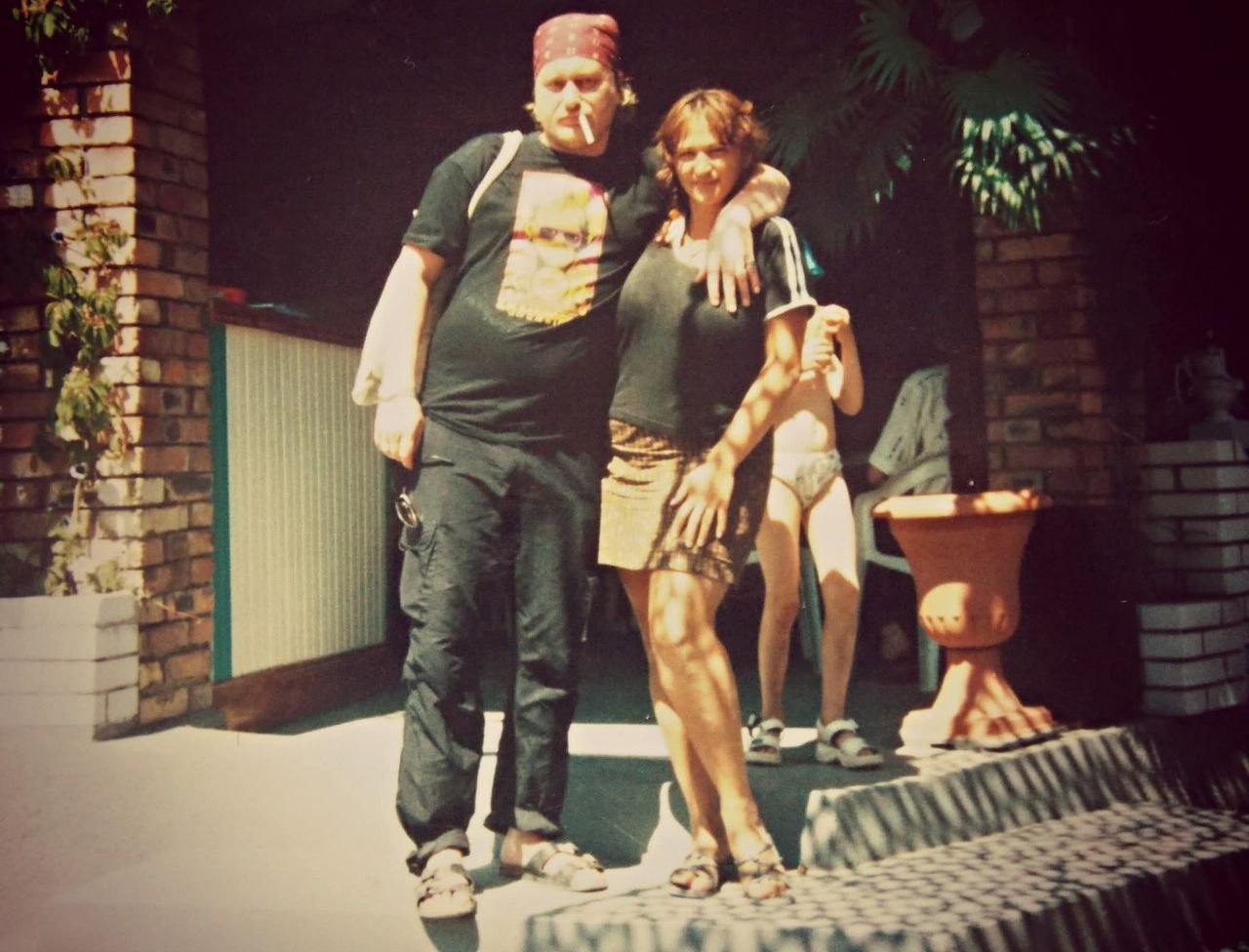
- Yes, and a Karelian who did not know the language. Then he entered the university, studying Finno-Ugric philology, and studied there. And it was as if he began to catch up with the culture. He was a musician, studied folklore and joined the Toive folk music ensemble at the university. There he began to learn Vepsian, Karelian, and Finnish songs. And somehow this culture entered into him, he returned to himself, to his roots.
- Why is a person sometimes so drawn to the roots? Why is this happening to him?
- Yes, I don’t even know why. But usually it starts to drag in adulthood. In our youth, if we had thought about the fact that old people are finite, then maybe we would have talked to our grandmothers more. My grandmother told me such stories! But I didn’t write it down, for some reason it didn’t occur to me. Well, now there are social networks, and my children and grandchildren can record the digital trail.
Why is this revealed in a person? There are such things, for example, music starts playing and you start dancing. What is this? Or you try some food, and that’s it, and something opens up in you. I have a girlfriend, Valya Sovkina. She even spoke at the UN as a representative of the indigenous peoples of Russia, she is a Sami.
They once told her: “Valya, we invite you to a conference in June.” And she replies: “I won’t go to New York, I have cloudberries.” At this time, the cloudberry picking begins. And she cannot live without the tundra, without deer, without cloudberries, and she does not go to New York, although no one forces her to refuse. It’s part of her nature, and it’s cool.
You know, my grandmother, when she ate saffron mushrooms, smacked her lips so much that you just sat and thought: “Lord, I need to write this down.” When she ate this and enjoyed it, it was clear that the whole village was eating these salted saffron milk caps. She didn’t need anything, just potatoes and saffron milk caps with onions and vegetable oil. She chops them finely with a knife and sits and devours them. I remember now and salivate because it’s so delicious. The person simply ate what thousands of generations of Vepsians ate before her. Food of generations that grows through thousands of years, and a grandmother who eats these saffron milk caps along with all her ancestors.
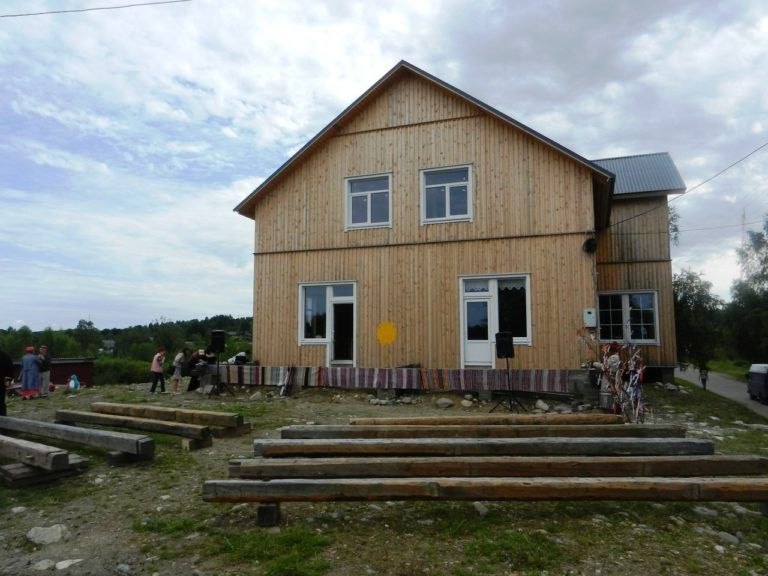
There is one activist, Olya Gokkoeva , now she lives in Finland. She and her sister built a house for the Karelian language in the village of Vedlozero in our Pryazhinsky district. She once told me: “When I watched Avatar, I immediately understood everything. It’s exactly the same with our Karelian relatives.” When you make a decision at some difficult moment, your entire branch is simply before your eyes, and you mentally confer with all your ancestors. Like a consultation: we made a decision, make a summary, and, so to speak, announce what we decided with our ancestors. She says that's exactly how it works. I don't know how it works, honey.
- Magic!
- Magic, yes. And we Vepsians are sorcerers, we have that. When I get very angry with a person, he will then take it and break his leg. Oh, sorry, I didn't mean to. Or a person will do some kind of dirty tricks on me, I walk around thinking all sorts of crap about him. Then bang, and his business went bankrupt. I’m like, “Well, fuck, I shouldn’t have done that shit” (laughs). You see, my Vepsian mafia is taking revenge on the people who harmed me. I’m just sure that my Vepsian grandmothers are standing behind me like a wall and giving ladles to everyone, like feminists.
- From this joyful note I would like to move onto a sad one. For me, Karelia looks robbed from the outside. Everyone knows the epic “Kalevala” as Finnish, and it was recorded by the Karelians in Karelia. The Karelian language is disappearing, unfortunately, fewer and fewer people speak it. There is a beautiful island of Valaam, and our colleague Gleb Yarovoy, ten years ago, wrote how people were evicted from there, simply because Putin and his friends, supposedly Orthodox, liked the island. And so it turns out that something beautiful is constantly blooming in Karelia, and it is being taken away.
— Yes, it so happened that virtually everyone knows “Kalevala” as a Finnish epic. Do you know why? Once upon a time, the Finns served wealthy Russian aristocrats, and at the same time they were contemptuously called Chukhons. And now this is the happiest and most prosperous state, people who have taken first positions in all of Europe. Even 150 years ago, various Russian classics wrote and directly boasted that whoever in the family has a Chukhonka in the kitchen. And now these Chukhons have shown it to everyone, they have wiped the noses of the Great Russian chauvinists. The Finns, after they gained freedom and statehood, began to look for what their specialty was, what they had that was cool. They discovered epic poetry among people with a very similar language and decided that they needed to invest in it. You see, you can’t take credit for something until you invest in it. They invested in this by supporting culture, publishing books, recording runes, and supporting expeditions.
After the opening of the borders with Finland in the 90s, these 20 years of freedom, there were many Karelian-Finnish projects. Then we all went to visit each other. And they remembered that once the forests in Karelia were common. I don’t remember whether my husband’s grandfather or great-grandfather, Leo, a Karelian, was a peddler. These were the kind of people who walked through the forests of Karelia and Finland - to exchange goods, carry hardware, because there were many craftsmen in Karelia, and took Finnish Paulig coffee, which was already available then. And Karelia drank coffee before all of Russia, because we didn’t have normal bean coffee anywhere else.
There was a cultural exchange, it came into the house, including through goods. There is a village called Chalna, where in Soviet times, post-war, communist, romantic youth from Finland came to logging. And they came with their coffee makers, their coffee, their musical instruments. And the small village of Chalna had its own orchestra, there was the smell of freshly brewed coffee, there were cinnamon buns, that is, they brought this culture with them from Finland. They were invested in it. But the Soviet government did not invest, it invested in propaganda. Then the Russian authorities tried to invest for some time, but over time they gave less and less money for culture. And if you don’t give money for culture, it gets lost, goes to Finland, and, as a result, the epic “Kalevala” goes to Finland! And we're screwed.
“ Now I’ll play the devil’s advocate.” In 2018, compulsory learning of the native language was abolished in Russia. And there were people who said that if a language and culture disappear, it means that people don’t need them that way, they weren’t saved – it’s their own fault. So, what would you say to such people?
— If there is no mass learning of the language, it will go away. If it is not in schools, in kindergartens, then it will fail. We had Finnish in several schools in Karelia, and these were the best schools - 18th and 17th. There was a deep study of the Finnish language, and now almost all graduates have gone abroad, working in Finland, because they have a great basic language. It is no coincidence that Finno-Ugric activists, it seems, began to make language nests in Estonia - to create an environment for children in kindergartens, to surround them with language. They believe that if a child does not speak from kindergarten, if the family does not support, and this game is not continued there, then the language will not be learned. At school it will be more difficult to perceive, as something artificial; for children it will be like coercion, like “why should we learn this strange language?” And if you start earlier and through play, then the language naturally enters the child. Successful language nests still exist in several Finno-Ugric regions, but I have not studied this topic in depth. It seems to me that families should speak their native language to the child.
— My husband is an Izhemsky Komi, and he doesn’t know his native language well, because my parents tried to speak Russian with their children. But they believed that with the Russian language, children would have more prospects, it would be easier for them to study, enter a university, and so on.
— In Karelia, you were directly punished for speaking Karelian. There were several periods when at first we were friends with the Finns, then we were enemies with the Finns, and we had several public companies: at first we encourage the study of Karelian, and then an anti-Finnish campaign begins, and we punish for the Karelian language.
We even had such a big phenomenon when, for example, a guy from a Karelian village who spoke Karelian from birth, entered the university, graduated from it, received a teacher’s diploma, and after that wrote a receipt to the KGB that he would not speak Karelian.
That is, they forbade spreading their culture, they said that this language was harmful, that it was the influence of Finland, the influence of the West. Like, “Your Soviet homeland gave you knowledge of the Russian language, and stop speaking your Chukhon language, speak normal!” And people began to be afraid to speak their language, they began to feel embarrassed.
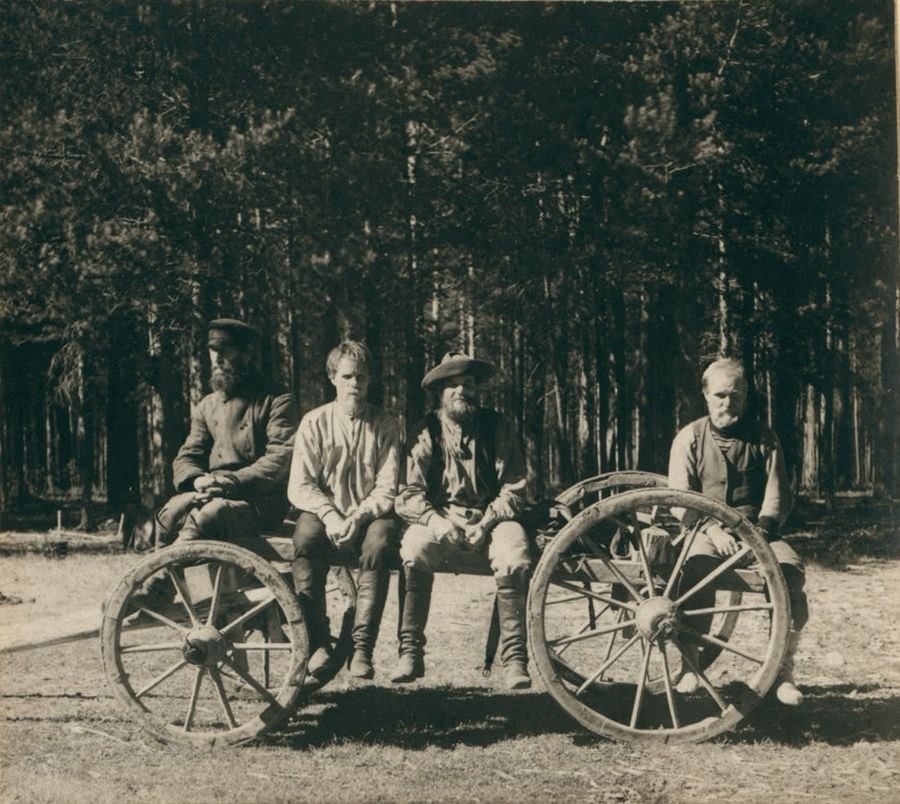
— So we came to a certain conclusion that Karelia suffered precisely because of the border, because of the difficult relations of the USSR, and after Russia, with its neighbors. The process of assimilation continued for many years. The state is trying to make the population more homogeneous, identical, because it is easier to manage, and it does not need a beautiful, flourishing multiculturalism.
- Of course, you don’t know what laws to govern this by. There are commands in Russian: shut up, get in line and go. And this also needs to be translated into Karelian. How to say “shut up” or “eat in silence” in Karelian? Yes, what a difficulty it is to manage!
In the continuation of the interview, we will talk about how to force women to give birth, why we need feminism, by what chance one can become an LGBTQ+ activist, and how to start getting high after fifty.
* Editor's note: The text uses the outdated name “gypsies”. We have preserved the heroine’s vocabulary, but we remind you that the correct self-name of the people is “Roma” (Roma). The use of the term "Gypsy" is often perceived as discriminatory due to historical negative stereotypes.

Interviewed by Elena Solovyova