
Translated material
Natalya Ermolina: “The Finno-Ugric peoples of Russia would be happy if everyone left them behind”
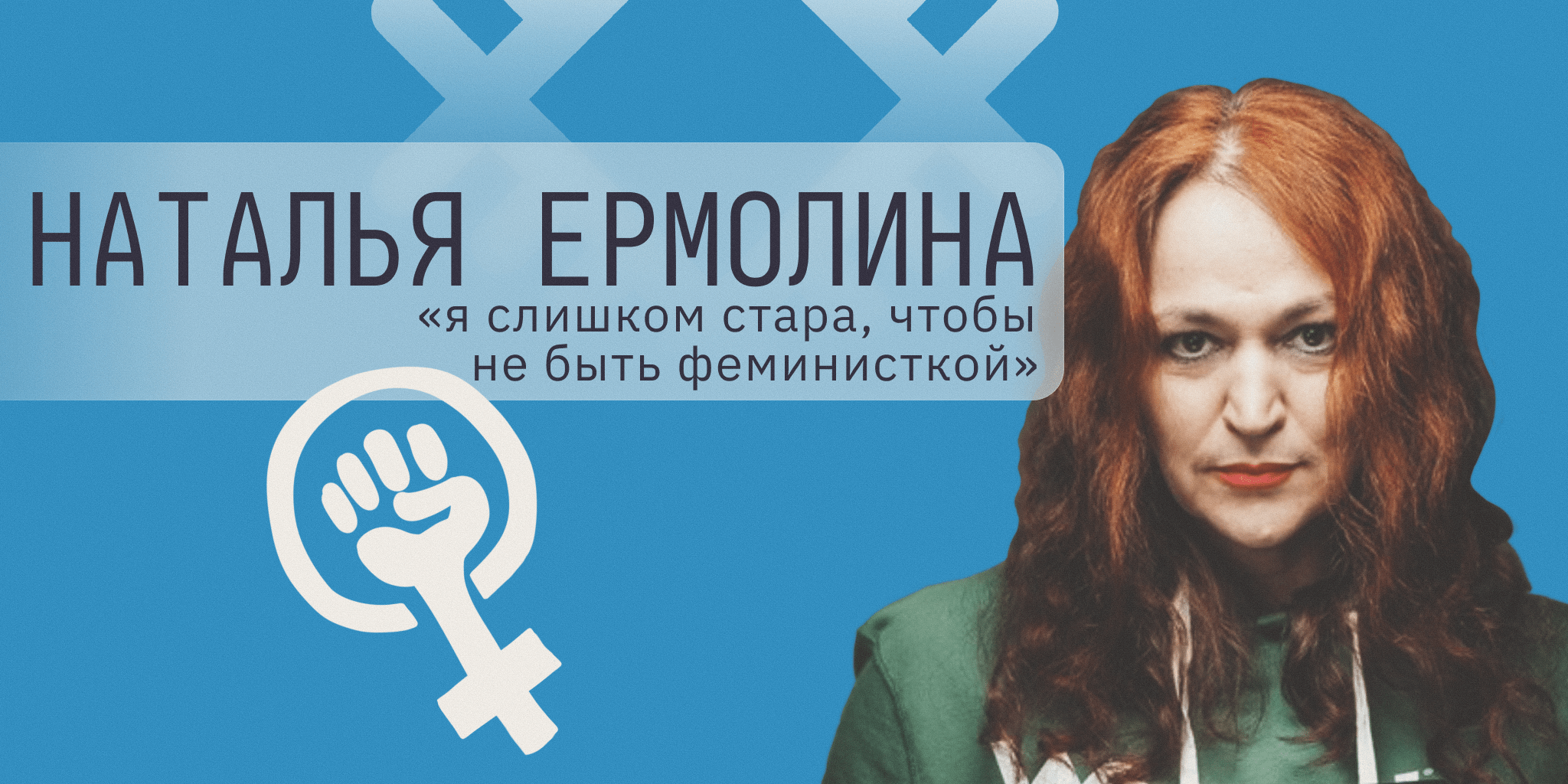
We didn't agree! Therefore, we continue the conversation with journalist, activist and art manager Natalya Ermolina about why women stopped giving birth, why we need feminism, by what chance can one become an LGBTQ+ activist, is there life after fifty and why small nations are stronger than large ones.
This is the second part of the interview with Natalia. You can read the first one by following the link .
Attention! There are swear words and expressions in the text. If this is unacceptable to you, do not read this text.
— Last time we talked more about multiculturalism, but you also have another identity - an activist and a feminist. When did you realize that you were a feminist, at what point in your life?
“I became a feminist very late, but it’s better than when you’re approaching seventy, when you’re already tired of speaking out.” Although I may be slandering seventy-year-olds, I also know those who know how to speak out.
I probably started thinking about this when the femme movement began to spread on social networks, and femme publics appeared. Oddly enough, I was taught feminism by young feminists, this generation of 20-30 year olds. It denies culture and the dictates of brands, the dictates of money, it grew up free and raised this freedom to a shield. They say: “No, guys, you have to be human, you don’t have to give in to money.” They express everything that comes to their mind, which is also because the girls of this generation grew up free. They say this: “What do you mean, cook, get married, have children?” Or as our feminists joke: “Give birth to borscht, cook children!” This is not their story at all, they began to wonder who these “grown women” are and why they do what they do: “Why do you cook? Doesn’t he [husband or partner] know how to cook? You both work. Why is it only women who cook? There is something we don’t understand.”
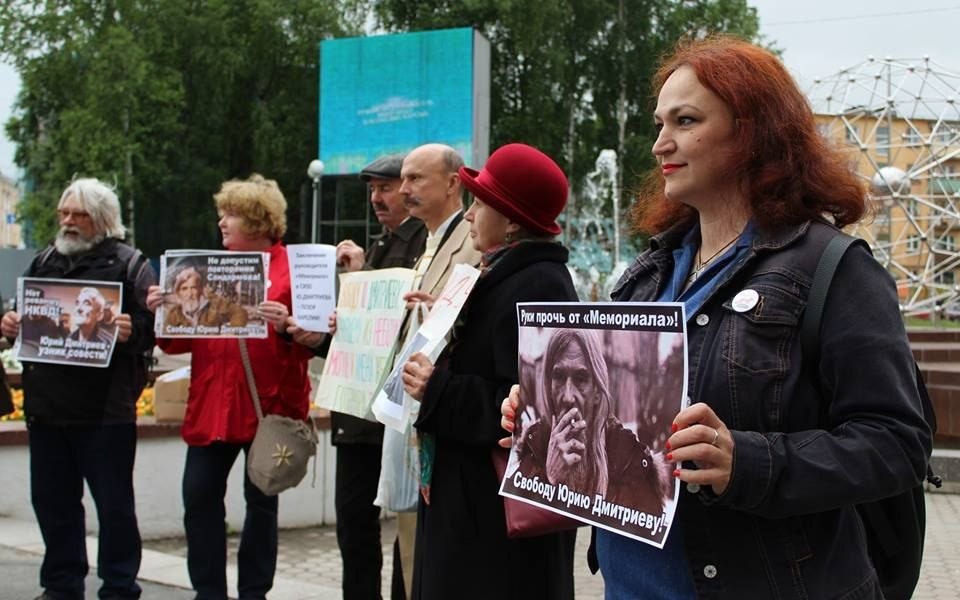
Previously, traditionally, a woman cooked; her job was to sit at home and cook. What to do now, when a woman has another job where she earns money? Feminists began to ask a lot of questions like this. And I, having already rattled off 10 years of marriage, began to understand in hindsight: this is what I could have avoided, and there was no need to suffer all these years. Although I had a fun marriage, until my husband started drinking too much. But, in general, a woman still has the same job, the same salary, and sometimes more. I earned more than my husband [ Leo Sevets ], although he was a famous musician. But he spent all his fees on himself, on some new guitar case. And I spent it on children, on food. I thought why I was doing all this, I just began to recalculate in my head the amount of labor that I put in, the amount of payment for this work, if it were paid. But, as a rule, no one pays for housework.
When I was young and strong, I still had enough strength for this. And now, when I’m getting old, when I have less energy, personal characteristics, hormonal levels, also ADHD, plus emigration, in which everything is manifested three times more strongly, I, just counting it all, thought: no, I have this much energy left, and I can only spend it on myself, only on some things without which I will now die. It's like doing an internal audit, calculating how much strength you have, drawing up a balance and deciding what's enough.
Feminism gives you the opportunity to choose: if you want to cook borscht, cook it. If you have a lot of strength, if you have support, if there is a man or woman with whom you are in a partnership, who supports you, if everything is divided in half for you, and you are not the only one who is screwing, then why not.
But I just don’t have the strength; living as a non-feminist nowadays is very labor-intensive.
Feminists are those who protect women, so I, as a feminist, began to protect myself first and foremost and realized that I was too old not to be a feminist, feminism is needed to save myself and my strength. Somehow little by little I came to this, I read a lot.
— The Russian authorities have a completely different trend, they believe that no one gives birth to children because women have become feminists.
- They are right, feminists have brainwashed all women, women do not want to give birth. You see, women don’t give birth because they think they don’t have enough resources to do so. Now no one has the resource to give birth, no one has the resource to live a traditional life. Give money, then everyone will go to give birth and sign up in line. So they want it to be free.
— Demographer Alexey Raksha says the same thing : if you want children, give money not for the war, but for the children.
- Yes, then everyone will go to give birth, it’s not difficult to give birth. Then everyone will be engaged in growing children and tomatoes, this is not difficult with money. And without money, few people will do this.
— How did you come to the conclusion that, in addition to women, LGBTQ+ people need to be protected? Just because you wanted to protect them too?
“I had no intention of becoming an LGBTQ+ activist at all.” My entry into this type of activism began when I organized a lecture on homosexuality in my art space Agriculture club. It was a place where we gave lectures, knitted, learned languages, met, danced, did all sorts of seminars and so on.
And there we had such a lecture with psychiatrist Viktor Lebedev. For example, he tried to remove the stigma from various mental disorders, engaged in education and once a month gave a lecture on some topic. Then practice showed that the “cuckoo bird” flew away for all of us. It’s just that our psychiatrist understood this before others, so he began to educate us on this issue.
And one day he gave a lecture on how science explains homosexuality. We made an announcement, posted a photo and wrote what issues would be discussed during the meeting. But homophobes only read that we, so to speak, “defend gays.” That is, they did not familiarize themselves with the theses, but immediately perceived everything as gay propaganda.
And so I come to the lecture, all so beautiful, made up, with my hair washed, and in front of my building NOD members ( members of the far-right National Liberation Movement - editor's note ) are standing with flags and homophobic posters like “Down with homos”, “Get out the gays”*. This was in 2016, long before the law on “LGBT propaganda” ( it was adopted in Russia back in 2013 and tightened in December 2022 - editor’s note ). In general, they lined up and stood there, waiting for me. And I say: “Guys, what’s the matter, who and what do you want?” And then from somewhere on the side, as they say, “suddenly some homophobe runs out of my mother’s bedroom, bow-legged and lame,” and throws a cake right in my face, like, here’s to you for everything, for supporting gays! But I somehow dodged it, because with my peripheral vision I saw something flying at me, and it hit somewhere in my ear. And I was so beautiful.
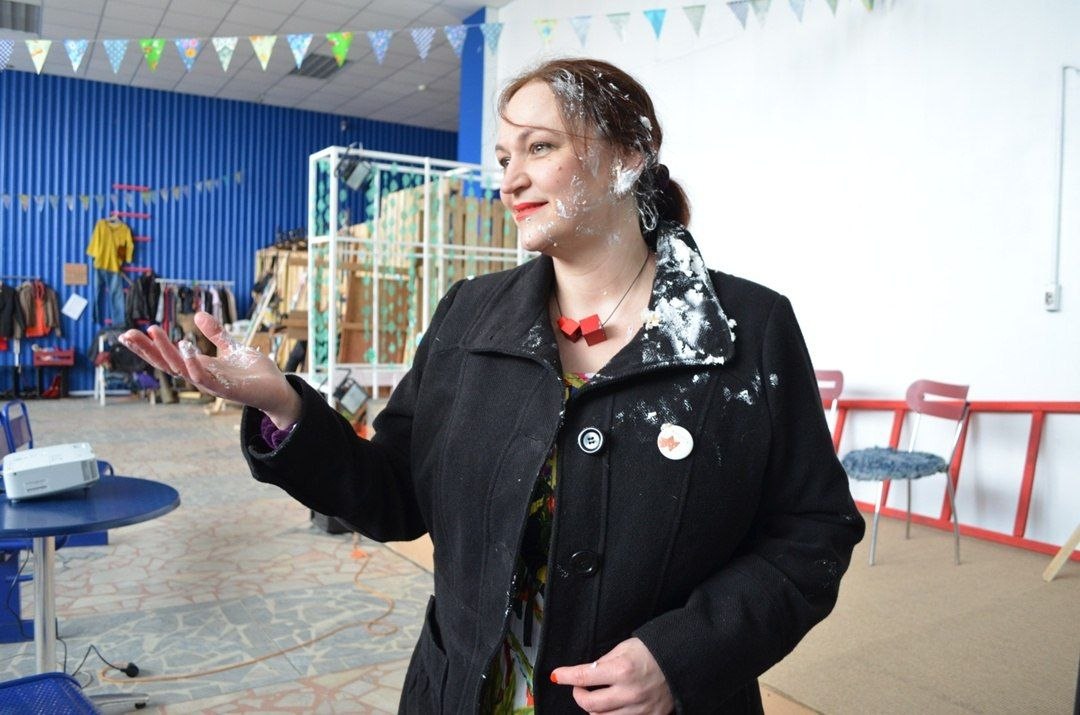
And, of course, this news quickly spread around everyone. We held the lecture because it was a private event, we rented space in a private cinema, and the security guard simply did not let all these idiots in there. When I entered the building, they took a photo of me. And while we were having a lecture, I reached the top of Yandex news.
Everyone wrote about us, and after that about two or three hundred people from all over the country subscribed to me. This news brought the gay community around me; gays, lesbians and trans people supported me. Everyone wrote: “Natalya, thank you, you are a heroine.” And I, it seems, had no intention of becoming one.
This cake made me sweet to the whole community. Everyone called that day, and the main joke was: is there any cream left that can be licked off my face ?
Basically, the journalists promised to lick near the ear, and the photo spread across all social networks. I consider this day the birthday of my LGBTQ+ activism. Then one gay guy wrote to me that he wanted to be my assistant, secretary, that he would volunteer. He started a calendar for me, began to manage my affairs, and plan meetings. Then more volunteers began to come, many lesbians and girls came and held their own meetings. And so a queer community was organized around me, which seemed to attract itself, I didn’t do anything for it, I just caught the cake with my face, and then everything was in a fog, from there it went ( laughs ). If only the NOD people knew what this would lead to and what kind of reputation they would give me, how they would correct my biography! Without this, life would be insipid, but queer activism added a little sweetness to me.
Although, unfortunately, they are wrong, and LGBT propaganda does not work: there are many lesbians around me, but no one has converted me into a lesbian. Although they tell me that I just haven’t met a good woman yet. What is this!
- Well, for marriage with a woman, you don’t have to change your orientation, but there is a Boston marriage , when you, say, are friends and just live together and run the household.
- Well, maybe this is my future. I was in a toxic marriage and it's been 15 years since my divorce and now I'm like, "no, no, no, I'm the only one happy." Although, maybe I’ll get married at 70. At this age I have such a notch in my head. Maybe I’ll marry someone or some trans person. Or by that time genders will be abolished altogether, and people will have a universal gender, and it will be possible to simply change the regime, change your gender. Who knows how we will live in 15 years.
— How is your life in exile? Is there any community around you now?
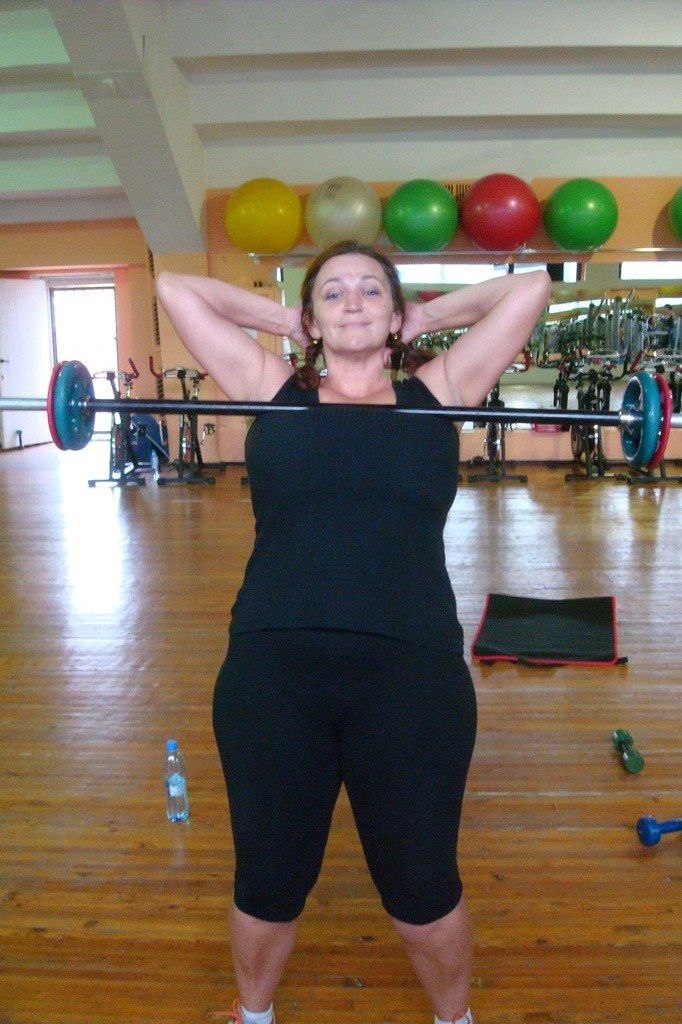
- Yes, listen, it’s very cool here. Firstly, why Montenegro? About seven years ago I came here to the “ Age of Happiness ” festival. I was invited as a dance coach. Despite all my activism, I still have my personal group “One Hundred Kilograms of Beauty.” I’m lazy, fat, clumsy, so I realized that the only way to force myself to go to the gym is to become a trainer myself.
Back in Petrozavodsk, I received a diploma as a fitness trainer, I have two diplomas - in Pilates and in functional training. And there I had a group, I trained similar fat women. Although there were also many thin people who liked my cheerful atmosphere and informal approach.
We were not a group for losing weight, we were a group for experiencing sports together. That is, we walked together and shook our ass.
Then I saw on the Internet that there is a festival “The Age of Happiness” by Vladimir Yakovlev , a famous journalist, former owner of the Kommersant publication. When he turned 50, he decided to go on an expedition around the country and the world to look for people who get high after 50. He wanted to see that there is life after 50, and he came up with this festival, “The Age of Happiness,” and held it in different cities.
And in 2018, they announced an open competition, looking for dance coaches and various sports. I sent them my video there. Literally 10-15 minutes pass, they answer: “Natalia, we watched the video, we are laughing so hard, you suit us, you are so funny, we need such coaches.” And so I flew to Montenegro, fell in love with Budva, saw how beautiful it was, and danced. As they say, “I opened my creative dance.”
The festival and I became friends, and they then invited me to participate in their other projects. During Covid, I danced online for them, and did charity dances over Zoom. And after I saw Budva and Montenegro, the idea of a small corner where I could run away, where I could hide, seemed to settle in my head. And when the war began, I didn’t think twice, I realized that I already had a place.
When I arrived, my friends Shmelevs were already here, they created the Pristanište foundation ( translated from Montenegrin as “Pier” - editor’s note ), when the war began, they helped Ukrainian refugees. This is a shelter, a place where you can live for free for two weeks while you adapt and receive documents. They support you, they buy you a SIM card, medicines, and they register you at your own expense. And during this time you can understand where to run next. They accepted more than a thousand Ukrainians.
These friends and I studied together in Moscow, and before leaving Russia I wrote: “Guys, I’m being persecuted here, it’s time to run, I’m coming to you.” They replied: “Of course, come.” And here they met me, helped me, supported me. Before this, my son was sheltered for two weeks at Pristanishche, then he found an apartment, and I came to him.
It turned out to be a very cool community here. This is, for example, Volodya Shmelev, founder of the Adriatic College school network. He also founded the “Audience” - a cultural center and coffee shop around which the entire Russian-speaking community also gathers. Lectures are held here, foreign agents come and perform. And there is FLAS , this is the Liberal Arts Academy, where almost all the teachers of “ Shaninka ” ( Moscow Higher School of Social and Economic Sciences - editor's note ) emigrated and give lectures, because in Moscow this is now impossible for them, they are also all foreigners.
Walking around Budva, you can meet [poet Vera] Polozkova, [political scientist Ekaterina] Shulman, [historian and teacher Tamara] Edelman, [journalist Yuri] Dudya, who also got into the habit of filming his issues with us. Foreign agent on foreign agent! If she is like this, you can meet here any person banned in the Russian Federation. Although the city itself has a population of several tens of thousands. Of these, 10% are Russians or Russian-speaking, because there are also a lot of Ukrainians and Belarusians here.
— How are you received and what is your relationship with Ukrainians and locals?
— Montenegrins love and support Russians very much. For them, Russia is a country that has never fought with them. But they don’t like Americans because NATO bombed Yugoslavia, and they keep it all in the back of their minds. And the Russian Tsar always helped Montenegro, so they don’t think about whether Putin is good or bad, but they say “Russians, brothers.” Russians here are such boosters of everything: the economy, some digital applications, and business. There are a lot of companies registered here. Although legalization here is complicated, I don’t want to talk about bad things. I think everything will level out.
And Russians and Ukrainians live here peacefully, because Ukrainians, for the most part, understand what kind of Russians they were who came here after the start of the war, that these are not random Russians, these are those who moved because they are against the war. And because among these Russians there are many young guys who ran away from mobilization because they do not want to go to war with their Slavic brothers. Ukrainians read and understand this. And among them, many speak Russian, so we are not fighting among ourselves here.
They say that in the first months of the war there were some conflicts here - if the Ukrainians saw cars with Russian license plates, they did not take it very easily, they could be understood. And in general, it is now very well received.
— We are all about the Russians, but we started with the Finno-Ugric peoples. Tell me, what is the strength of the Finno-Ugrians?
— Finno-Ugric peoples are small. And there is a model of European happiness, because, in essence, Europe lives in peace and friendship, it is a community of small nationalities under the roof of the European Union. They show how you can live peacefully. And three small peoples - Karelians, Vepsians and Russians - who always lived peacefully, amicably and did not quarrel in Karelia, also show that this is possible. If you share one territory, if you understand what the specialty of this land is, if you respect this land, respect the culture, then what difference does it make?
My grandmother spoke such a Surzhik, a wonderful language where Russian, Vepsian and Karelian were simply intertwined, and it was, you know, like in Odessa, where they also speak a combination of languages. And this is wonderful, because language absorbs people’s desire to speak and communicate. And it seems to me that Karelia could be happy, the Finno-Ugric peoples could be happy, if everyone fucked off from them.
But, unfortunately, there are people who always prey on those who have a lot of berries in the forests, trout in the lakes, and under whose soil lies shungite, as in Karelia. And in Komi you also have oil, coal, gas, timber. Everything is there. And this haunts those who have already screwed everything up. Therefore, they look at who lives there on these lands. Do the Sami live? “Go to hell, Sami!” Are Karelians alive? “Go to hell, Karelians!” Who are Karelians? Nobody. They get the idea that we are all the great Russian people. That is why the Karelians’ claims to forests, fish and mineral resources were taken away. And to the island of Valaam. The “ Law on Subsoil ” ( meaning the law on the right of indigenous peoples to dispose of their land - editor’s note ) does not work here. The right to their subsoil for small indigenous peoples is an established norm. Where does she work? Nowhere. There you have to go through so many bureaucratic procedures to claim your own land. Well, what kind of simple village man can go through all this? And no one will help him. And if he didn’t do it, it means he fucked everything up. This means that Putin came and took away the whole of Valaam and settled priests there.
But it seems to me that the Finno-Ugric peoples should not forget their ancestors, because, if necessary, they will come down and beat all their enemies. I believe that even small gods help their people. You know, due to the fact that “the Russian people are great,” they have now turned not into a people, but into some kind of political formation.
And a political formation has no ancestors. There are only those who want to seize more power. But small nations have their own looking down from above - our great ancestors. Так что всем народам – peace , мир! И пусть прислушиваются к тому, что бабушка во сне пришла и рассказала.
* И героиня интервью, и редакция Komi Daily осуждают гомофобные высказывания. Они приведены в тексте только для того, чтобы передать дух времени и атмосферу в стране.

Беседовала Елена Соловьёва