
Translated material
Pain according to registration
How can a person without permanent registration in Moscow get a place in a hospice?
Hundreds of thousands of people live in Moscow without permanent registration. They rent apartments, work, pay taxes, go to district clinics for years, call an ambulance, and are treated in city hospitals. Many people have long considered Moscow their home, although the stamp in their passport says a completely different city.
A serious illness at the most difficult moment can remind you: you don’t fully belong here. When a person needs palliative care and a place in a hospice, it turns out that the entire final care system is designed for people with permanent registration. The reason is simple - according to the law, palliative care is financed from the budgets of the constituent entities of the Russian Federation, and the regions can spend this money “on their own.” Difficulties in obtaining palliative care due to registration can be encountered in any region. But it is in Moscow, where people from all over the country move to live and work, that this is a really common problem. Nonresident patients can receive free palliative care in Moscow at St. Alexis Hospital and at the University Clinical Hospital No. 3 of Sechenov University.
“Such cases” visited the palliative department of the University Clinical Hospital No. 3 of Sechenov University - the only state budgetary medical organization in Moscow, where they help terminally ill people from all over the country who find themselves in the capital during the most difficult period of their lives. We tell you how this kind of help works and what you and I can do to support those who are suffering.
Last address
Fifty-year-old Sergei came to Moscow to work four years ago from the city of Ukhta in the Komi Republic. I settled in a hostel in the north of the capital. I fell into the usual rhythm of the capital: work late, home, rare get-togethers with colleagues. Last summer, while changing clothes in a hurry, he damaged a birthmark on his chest. I treated the blood that came out with an antiseptic and immediately forgot about it.
After a few months, the mole began to itch, grow and cause noticeable concern. At first he tried not to pay attention to her. Well, what nonsense is a mole! It’s strange to run to the doctor with this, and even more so to bother with the registration of a Moscow compulsory medical insurance policy.
It didn't go away on its own. When Sergei finally got to the doctor, he was diagnosed with skin melanoma. And instructions to urgently undergo additional examinations. Due to the lack of registration and an unissued compulsory medical insurance policy, expensive CT scans and MRI scans were available to Sergei only for a fee. There wasn't enough money. It became more and more difficult to work. He began to rapidly lose strength. And one day I simply couldn’t get up and go to work. I lay alone in a small rented room and swallowed painkillers that had stopped working.
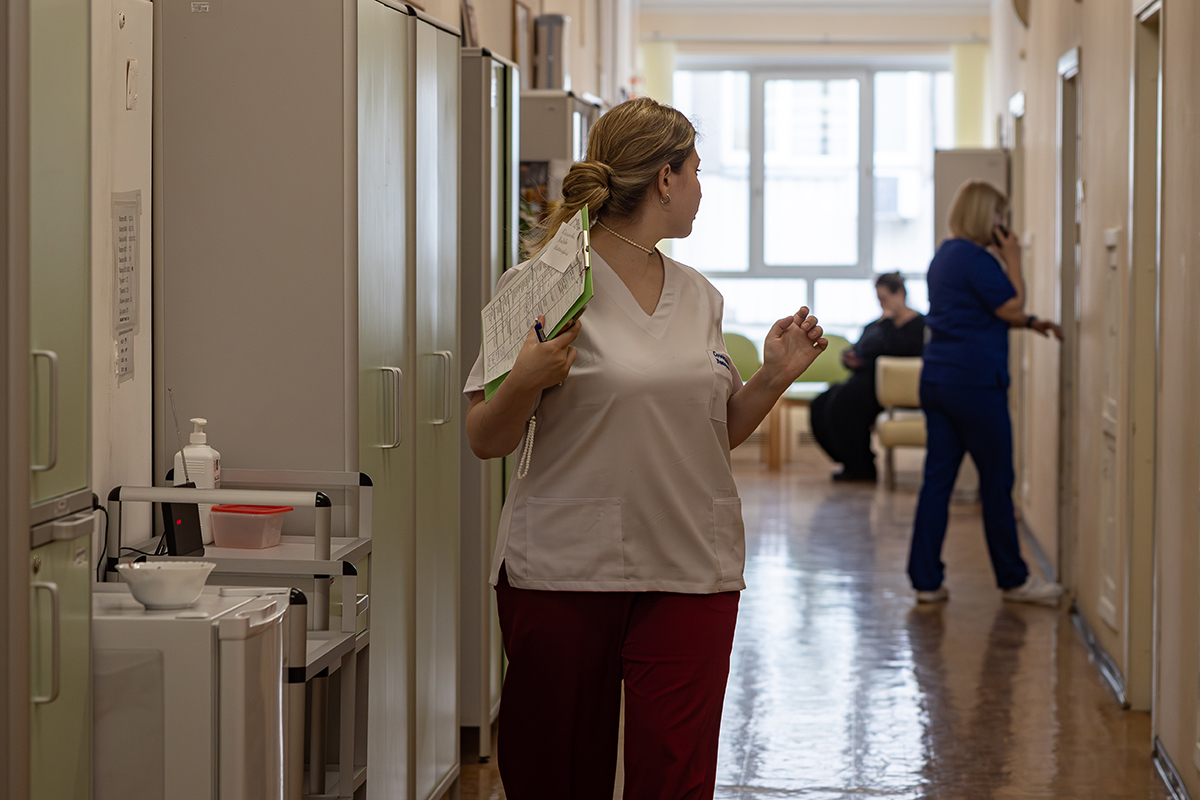 Head of the palliative department Polina Vasilyevna Oshchepkova in the corridor Photo: Yulia Morozova for TD
Sergei’s boss sounded the alarm and sent the driver to check on Sergei, who had been complaining of feeling unwell for several days. The driver was so frightened by the sight of his pale, emaciated colleague that he immediately called an ambulance. Sergei was given an anesthetic injection, the process of tumor disintegration that had begun was recorded, and he was recommended to apply with documents to the nearest clinic - to which he was never assigned.
Sergei was lucky that his colleagues did not abandon him in trouble. We ourselves, with his documents, went to the head doctor of the clinic, got a therapist to visit his home, and found ways to support the “Live Together” foundation, which helps elderly and seriously ill people. Having overcome the resistance of Sergei, who did not want to burden anyone with his problems, they found his relatives through social networks. The brothers arrived the next day with the intention of taking Sergei to his mother in Chuvashia. They did not yet understand how serious his condition was. He could no longer go anywhere even with outside help.
The most difficult thing was to get the conclusion of the medical commission that Sergei needed palliative care. The clinic hesitated because it did not understand who would provide assistance to a nonresident patient in Moscow. Only four days later, Sergei was given a conclusion about the need for urgent hospitalization in a hospice / palliative care department and the impossibility of transportation to his homeland.
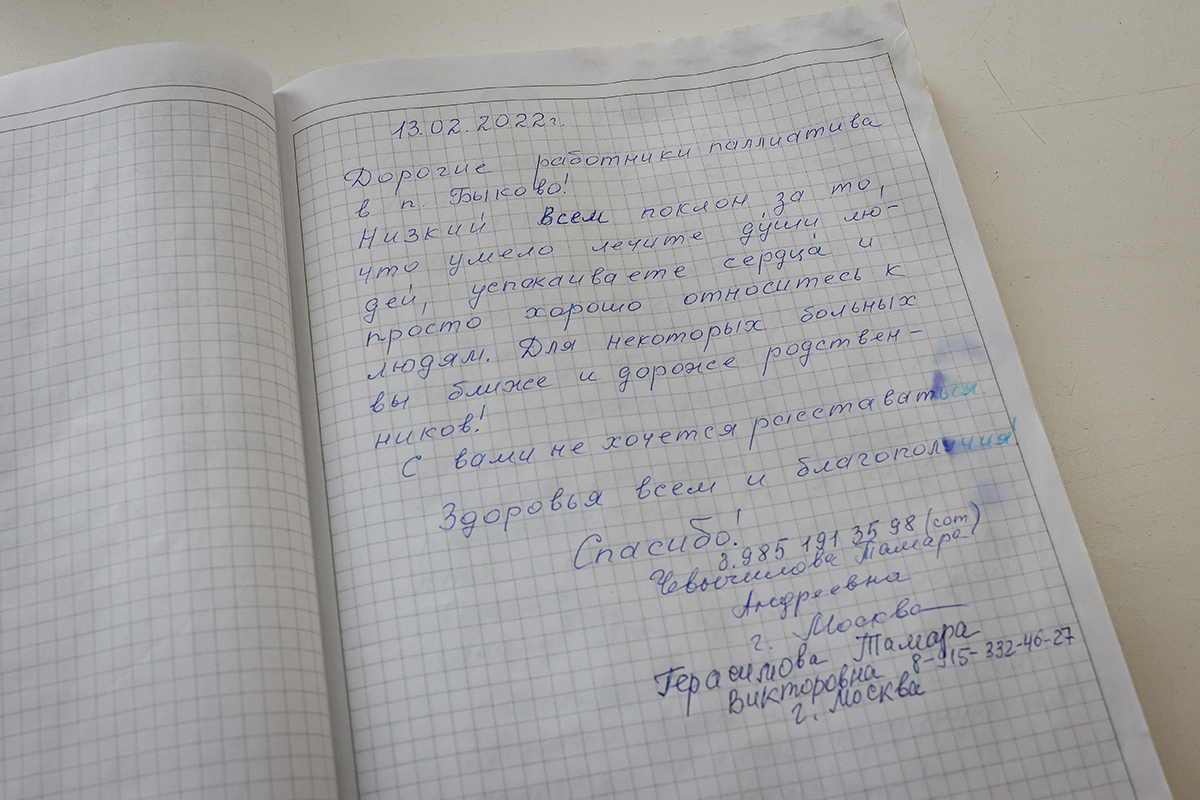 Guest book of the palliative department Photo: Yulia Morozova for TD
 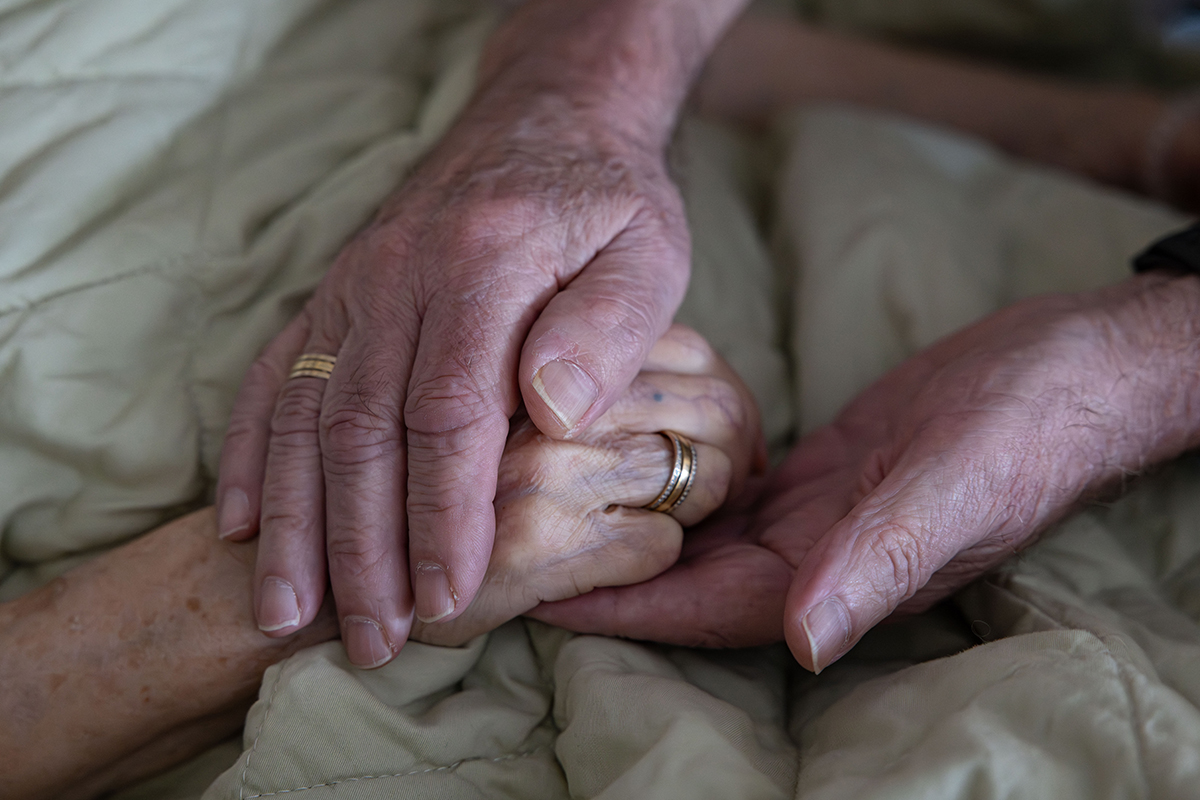 Palliative care patients need support no less than pain relief. Photo: Yulia Morozova for TD
 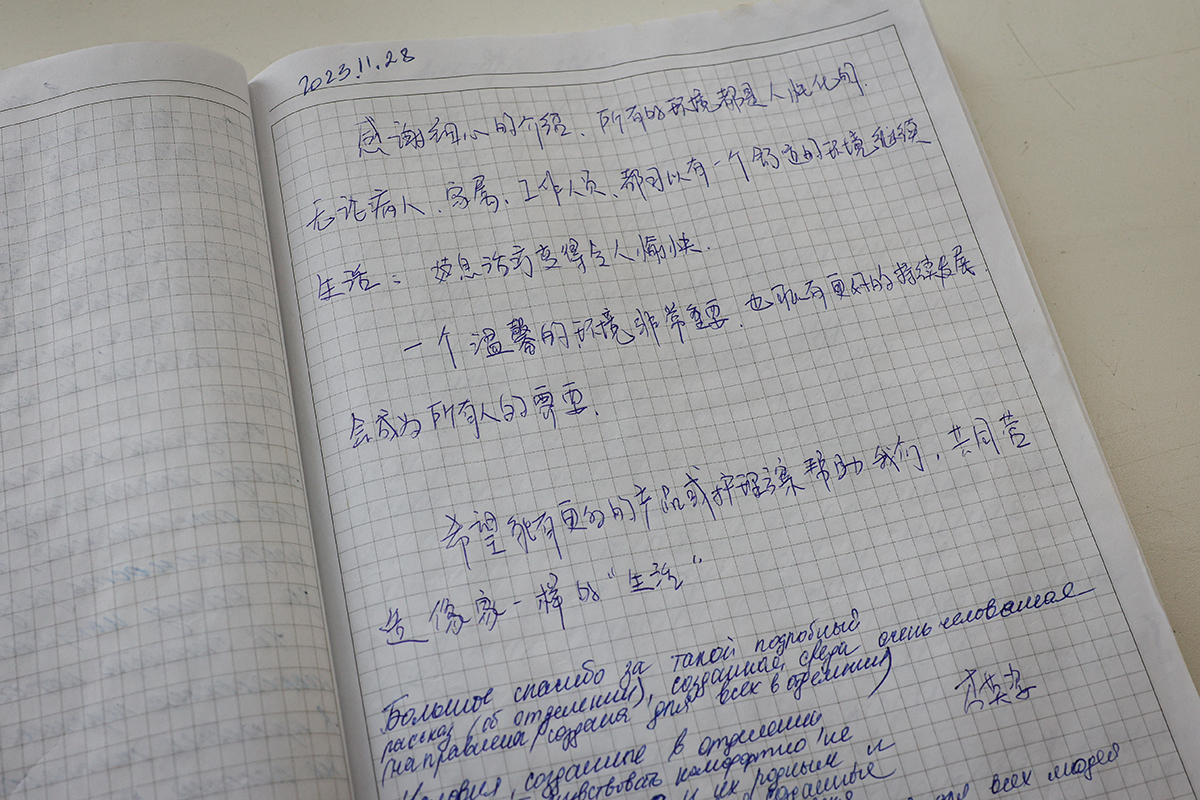 Guest book of the palliative department Photo: Yulia Morozova for TD
Sergei died in the palliative care department of Sechenov University 11 days after hospitalization. Close to loved ones. Painful and calm.
Modern hospices look very beautiful for Muscovites - both philanthropists and authorities have invested a lot of effort into making sure that this is the case. The idea that a person should leave in a calm and pleasant environment is not new, but it has been implemented in Russia not so long ago. It took a lot of effort to explain that a hospice or palliative care unit is not an ordinary hospital, and why this is really important .
Now the palliative department of Sechenov University occupies part of the regular hospital floor of the university clinic. It is not yet possible to create special living conditions for those without registration. There is not enough money for this.
In a circle
“I really wish we had more space. It was more comfortable. And most importantly, there would definitely be places of rest for relatives who want to stay close to their loved ones until the very end. But for now, we can’t provide them with anything other than a chair in the ward,” the head of the department, Polina Vasilyevna Oshchepkova, is upset.
Polina Vasilievna is not even thirty. Just a year ago I graduated from residency as an oncologist. She came to work in the palliative department in January 2026, and in April she was appointed head. Now Oshchepkova is learning on the go to balance between patients, their relatives and the administrative and bureaucratic tasks that have befallen her.
The department has only 12 budget beds and is quite cramped. Polina worries that they do not have the opportunity to place patients in single rooms, even if they are extremely uncomfortable being in shared rooms. For now, they are getting out of the situation with screens and zoning.
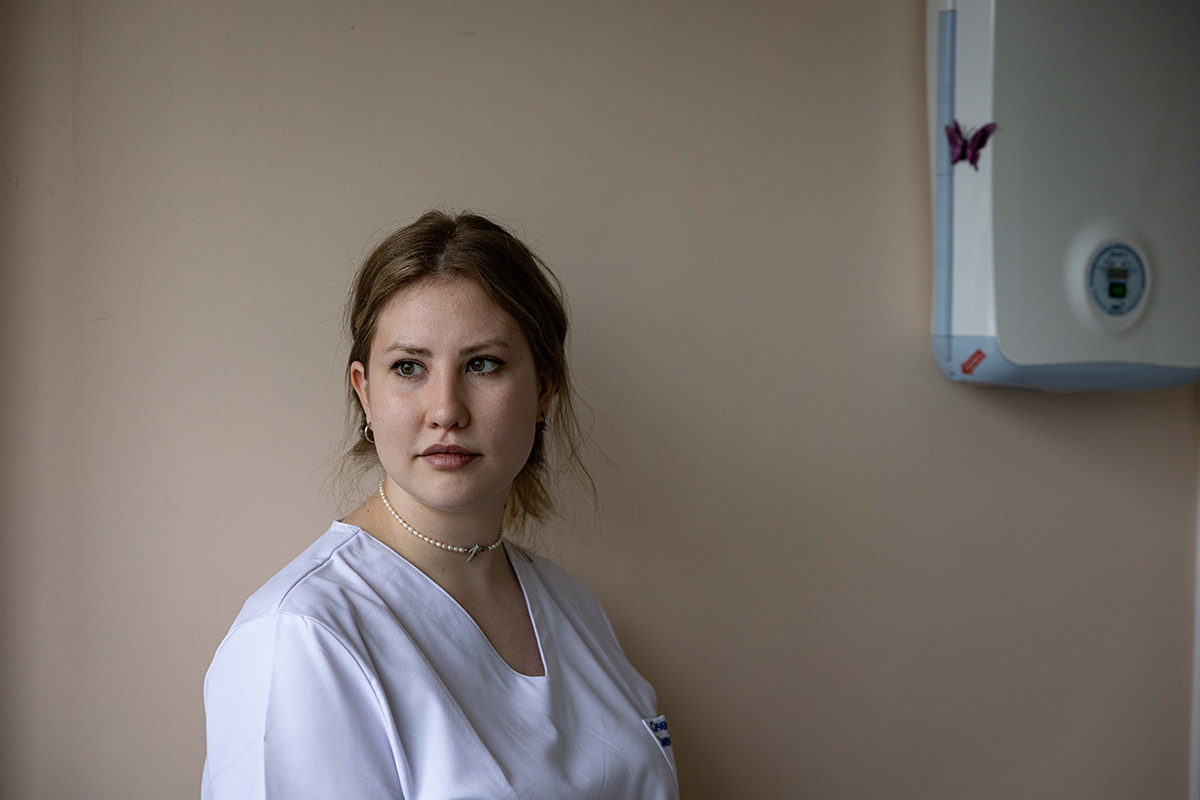 Head of the palliative department Polina Vasilievna Oshchepkova Photo: Yulia Morozova for TD
Polina says that she is especially touched by the stories of very young people. She had already lost such patients as a doctor in residency. And every such patient in the department is like a personal trauma for her. Now this is 23-year-old Stas. He is only three years younger than Polina herself.
In 2013, Yana accidentally discovered a tumor in 10-year-old Stas’s mouth. Once again I looked at my son’s teeth, thinking that it was time to get braces. The palate bulged strangely on the right, and the gums seemed loose. Stas himself decided that he was cutting new teeth. But Yana decisively took her son to the emergency dentistry. The doctors there suggested that it was a common flux. They cut the gum and palate with a scalpel and installed a drainage. But there was no pus in the swelling.
The flux turned out to be fibrosarcoma. And rough, inappropriate intervention provoked tumor growth and severe pain. Thus began the long-term story of the struggle for Stas’s life. The tumor changed its pathomorphosis several times and eventually degenerated into a rare and aggressive undifferentiated round cell sarcoma. Then the family lived in Zaporozhye, and Stas was treated in Kyiv for two years. When Yana and her husband realized that the possibilities of Ukrainian medicine had been exhausted, they decided to move and treat their son in Moscow.
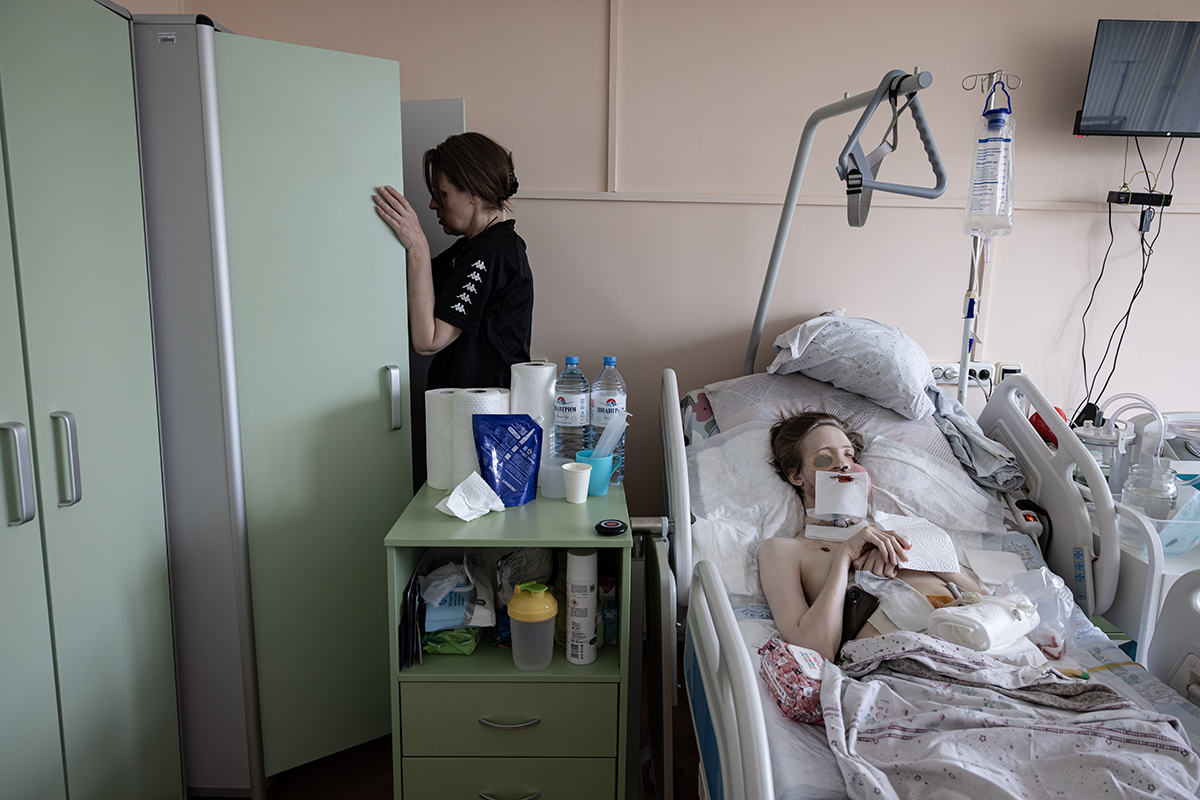 Yana and her son Stas in the palliative ward Photo: Yulia Morozova for TD
In Moscow they had neither housing nor registration. First they received refugee status, citizenship came much later. But federal clinics accepted a boy with a rare diagnosis. He was treated and operated on first at the Blokhin Cancer Center, then at the Dmitry Rogachev Center. The tumor grew in the jaw, and Stas was first removed from the upper jaw, and later from the lower one. The treatment was successful.
In 2019, Stas went into stable remission. Due to his facial deformation, he had problems with speech. But this did not interfere with my studies. He successfully graduated from school. He entered the Moscow Aviation Institute to study “applied mathematics and information technology.” The oncologists who observed him all these years gave permission for an operation to reconstruct the jaws and facial tissues. It seemed that the worst was behind us. But a year ago the disease returned. This time the doctors were powerless.
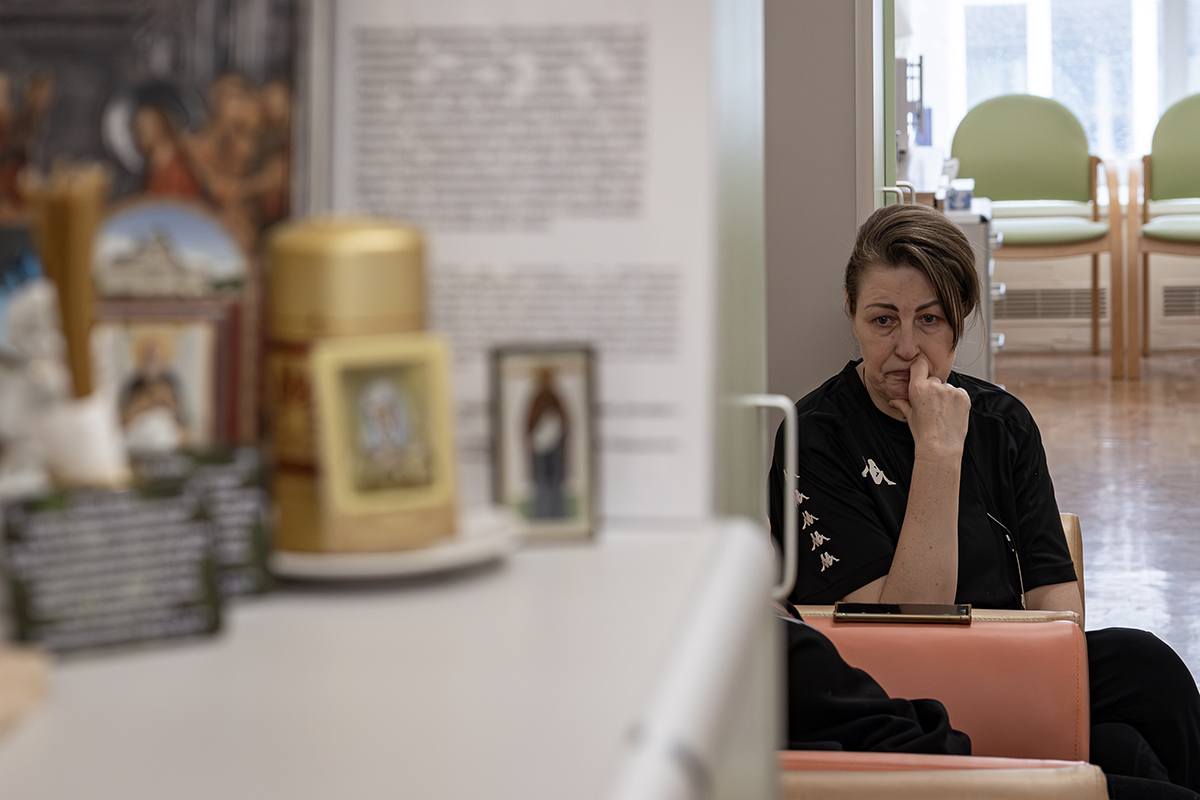 Yana Andrusik in the corridor of the palliative department Photo: Yulia Morozova for TD
We are talking with Yana in the lobby of the department. She and her son have only been here for a few days. In the ward she holds on and tries to smile. But in the corridor it is clear that tears are literally strangling her from the inside. Stas is in serious condition. The tumor disintegrates, causing bleeding. Stas hasn’t spoken for a long time and writes messages to his mother on his phone that he’s tired and can’t take it anymore.
A day later, 13 years of desperate fight against Stas’s disease ended. No pain. Next to mom until the very end.
Relief from acute pain is often exactly what people come to the palliative care department for. They can do it there like nowhere else. In Moscow, even without permanent registration, people with acute and chronic pain, including cancer, can receive help in specialized pain treatment rooms. But if a person, due to his condition, cannot come to the appointment himself, then getting the coveted prescription for strong painkillers becomes almost impossible. Pain clinics do not have on-site service. The mobile service of the capital's palliative care centers works with patients with permanent registration.
The circle closes.
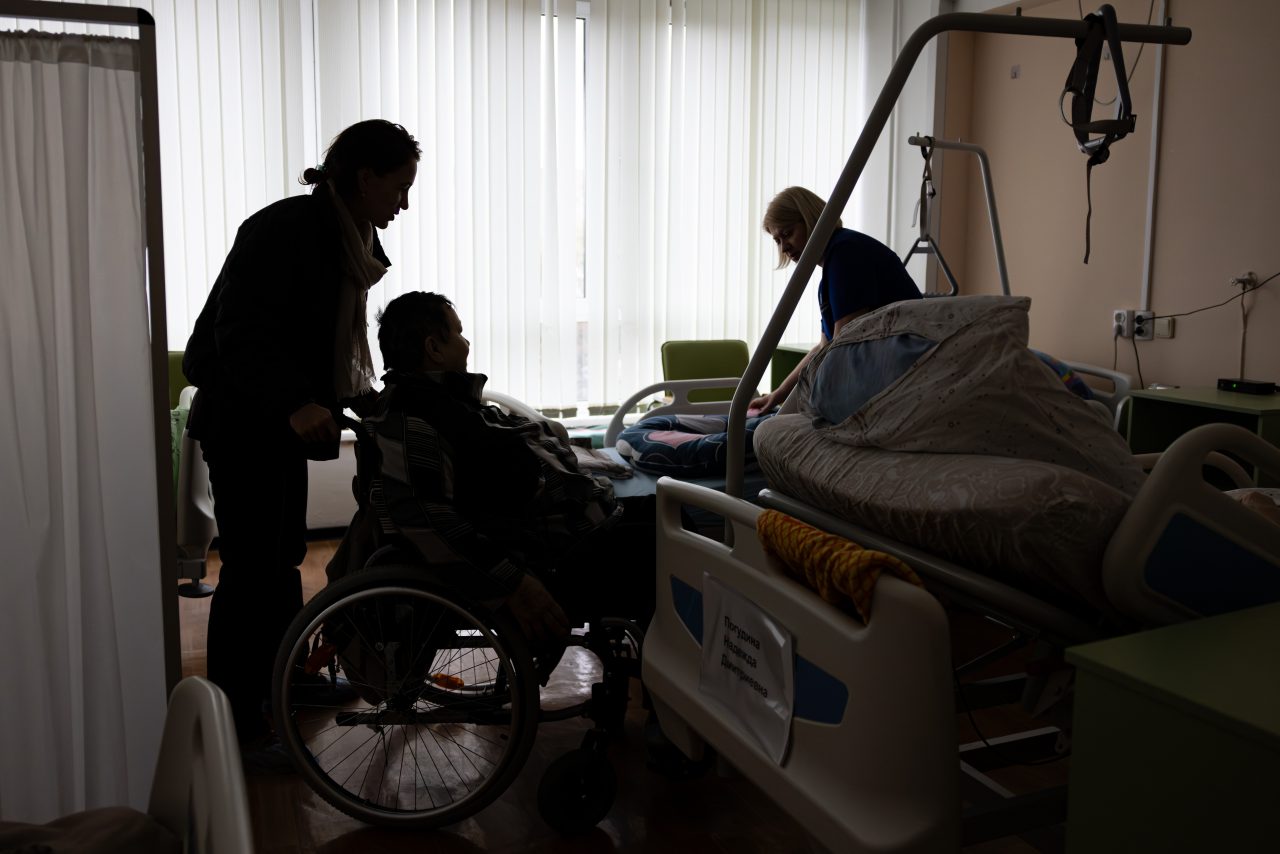 A new patient is admitted to the palliative care department. Photo: Yulia Morozova for TD
“They won’t hospitalize you without registration”
Irina walks along the long hospital corridor quite confidently. The nurse only slightly supports her elbow. The daily weigh-in today showed an optimistic 42.3 kilograms. “Before my illness, I weighed more than 70 kilograms and was never skinny,” Irina says barely audibly and smiles shyly. Five years ago she was diagnosed with stomach cancer.
This may sound paradoxical, but she was transferred to the palliative department from an oncology hospital to help her recover and gain at least a little weight. They interrupted the course of grueling chemotherapy, which the patient simply could not survive. Burnt mucous membranes, complete impotence. She had difficulty walking along the wall to the toilet. I couldn’t eat at all, and at the peak of treatment my weight dropped to 35 kilograms.
Now Irina feels tolerable. And after such a respite, she intends to continue the fight. She has two more courses of chemotherapy ahead of her. Irina is registered and lives in Odintsovo, near Moscow. The treatment is taking place in Moscow, she was sent there under compulsory medical insurance, but the capital’s palliative care is also not available to her, and some problems can only be solved here.
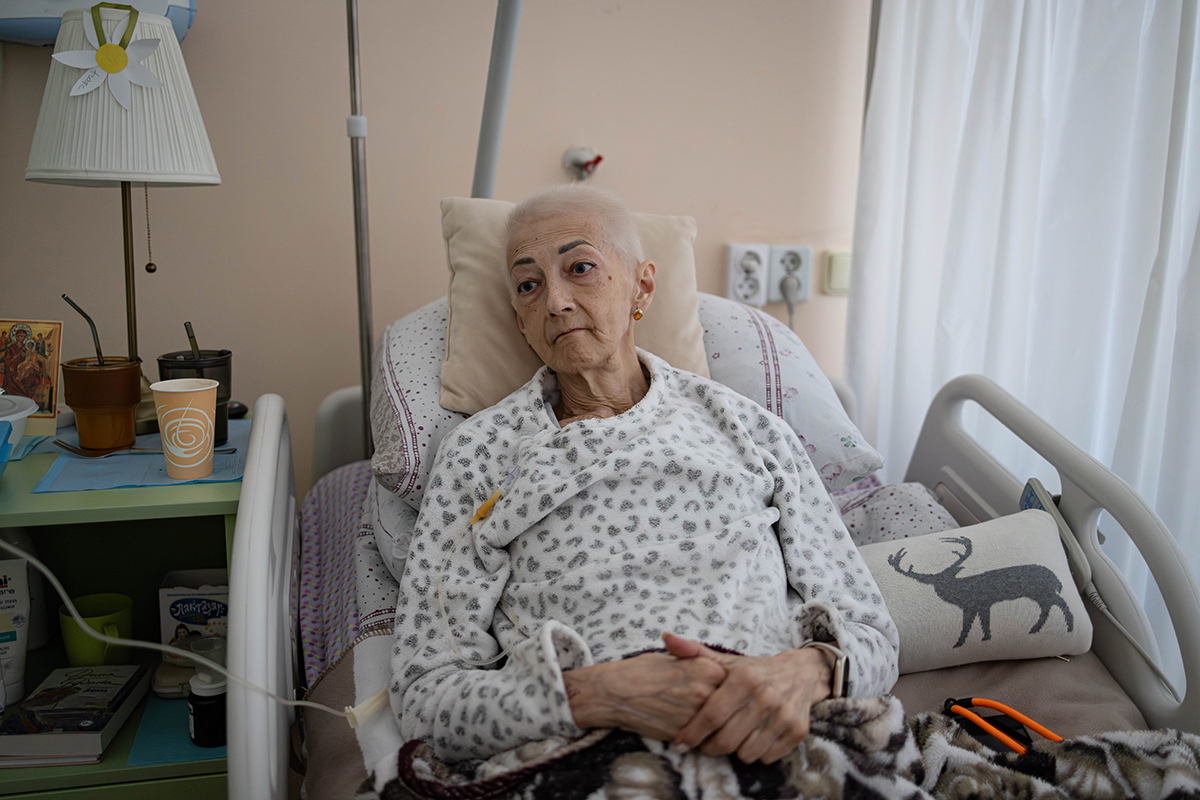 Irina Gorpinchenko in the ward of the palliative department Photo: Yulia Morozova for TD
A new patient is brought into the ward. Irina watches the nurses fussing around the new girl. The manager comes to meet.
“Amazing people work here. In two and a half weeks, my roommate was visited only once by someone. But she is constantly surrounded by attention. Sometimes this is more important than medication. I know from myself that you feel better when you feel human touch and care. It happens differently in hospitals. The work is hard. People are getting tired. They break down. Here I have never seen anything but kind attitude and smiles,” Irina smiles and straightens her hair. I notice how beautiful her manicure is with bright polish.
“As soon as I get discharged, I’ll go straight to a manicure and a hairdresser. My daughter tells me: “Mom, forget it.” But I want it to be pleasant to look at myself. And so I lost all my teeth due to chemotherapy,” she says, embarrassed.
Irina was discharged from the palliative department three weeks later and continues treatment.
Steep route
The palliative department of the Sechenovskaya Hospital for nonresidents can be accessed through a hotline, which the patient himself or his relatives can call. But more often, doctors from Moscow hospitals call the department when a person without permanent Moscow registration comes to them in acute condition and needs further palliative treatment. The hospital provides such a patient with all the necessary treatment, stabilizes his condition, but cannot transfer him to the capital’s hospices.
In this situation, the attending physician or the head of the department where such a patient is located writes an appeal to the Ministry of Health of the region where he is permanently registered, so that the person is taken for further treatment at home.
But all these approvals, and the transportation itself, require a lot of time. And a seriously ill person in need of care must be somewhere all this time. And in some cases, the patient’s condition no longer allows him to be transported, as was the case with Sergei.
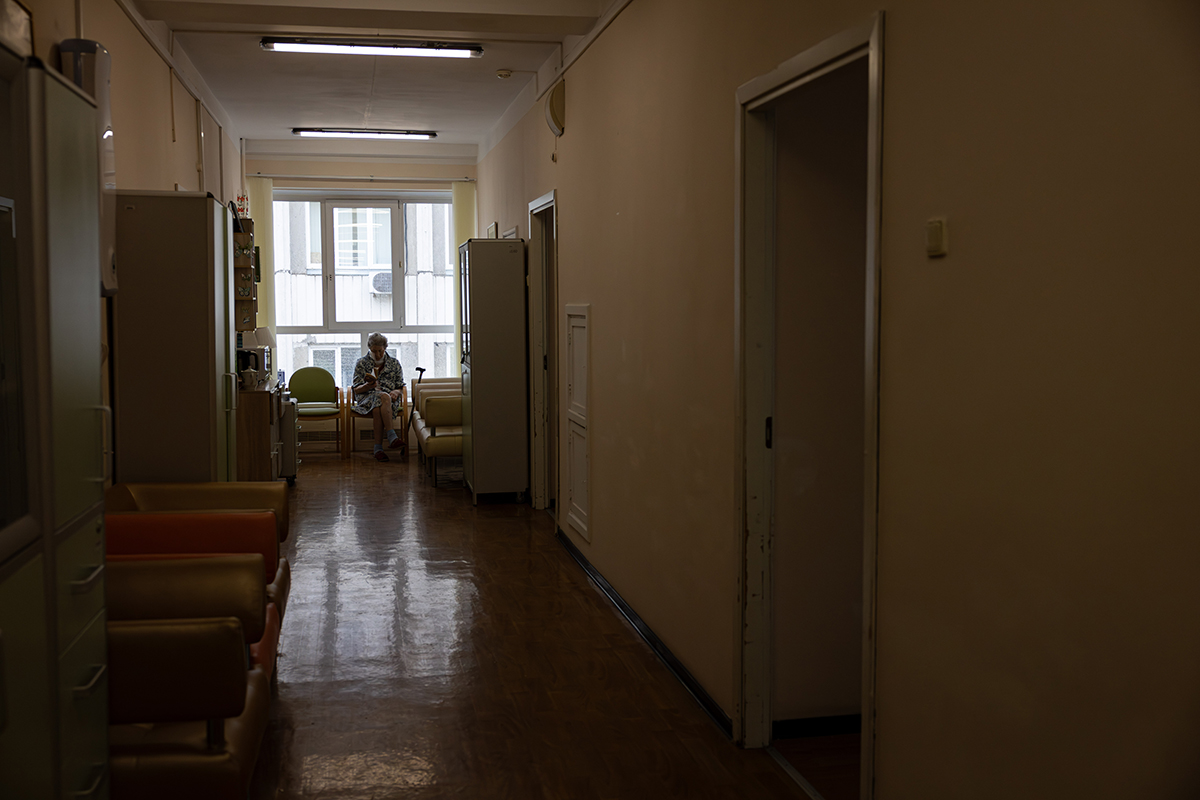 A woman reads a book by the window in the corridor of the palliative care department. Photo: Yulia Morozova for TD
It’s not just cancer patients in the department. Polina Vasilievna recalls that a man once called the hotline and asked to hospitalize his mother with dementia in the department for two weeks. For many years his sister looked after his mother. But then she herself got cancer and died. He took his mother to Moscow, to his large family. He has five children. They managed for a year without outside help. But when he needed to go on a business trip, he and his wife realized that she alone could not look after the children and the helpless relative.
“In essence, it was a social respite for the family,” says Polina Vasilievna. Two weeks later the grandmother returned home. But sometimes it happens that relatives, for various reasons, are not able to pick up the patient.
The situation is especially difficult for patients after strokes. A stroke happens suddenly. Until recently, a person walked, was active, lived a normal life - but now he lies down and needs constant care. Relatives may find it difficult to accept these changes. They see that the department knows how to care for seriously ill patients and treat bedsores. They hope that the person will start walking again. And they are not ready to accept the fact that they cannot cure their loved one in the palliative department.
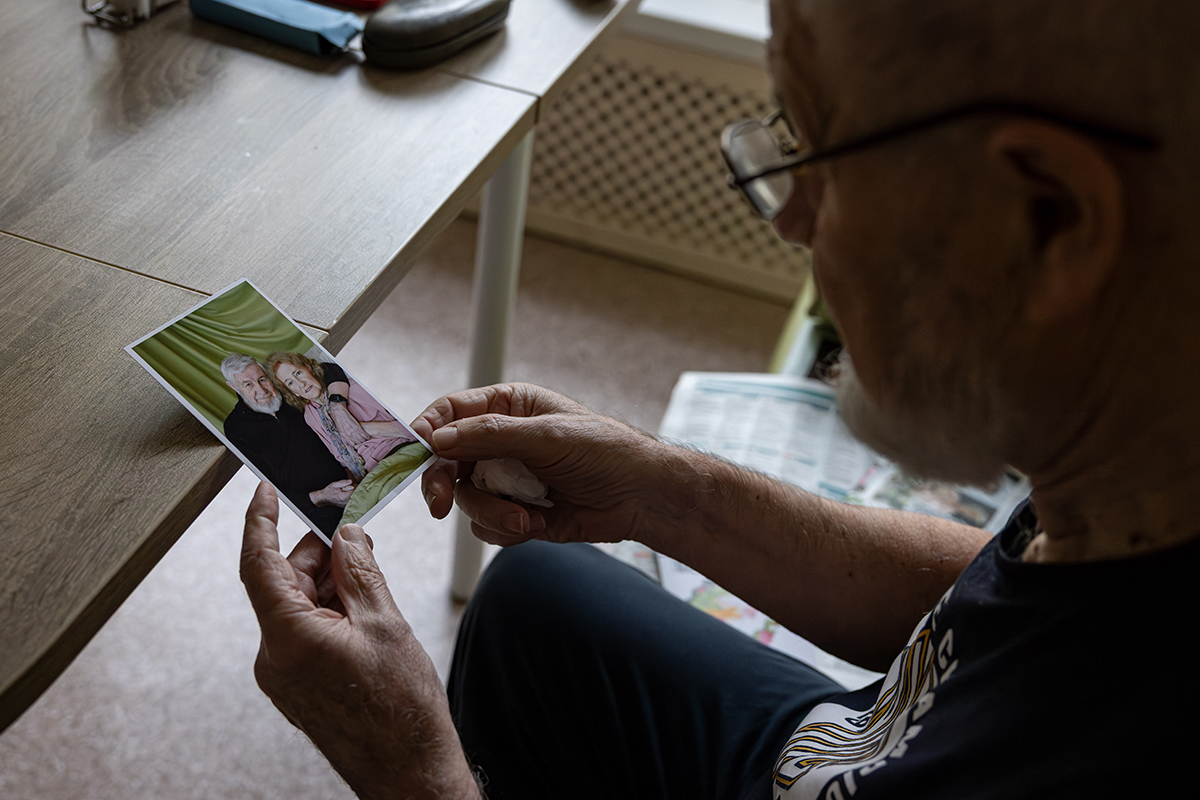 Gennady Finogenov looks at a photo of himself with his wife Elena, received after a photo shoot, which was carried out in the palliative care department for patients and their loved ones. Photo: Yulia Morozova for TD
In this case, an appeal is sent to the region of permanent registration of the patient with a request to accept its resident. But regions are often in no hurry to do this. There is a living person who needs care, but everyone refuses him. A very sad situation arises, which medical institutions have to solve individually each time. Contact different authorities and look for compromises.
In 2026, the palliative department of Clinical Hospital No. 3 of Sechenov University began working with the ANO “Palliative Without Borders” . The department already has a volunteer coordinator, Tatyana.
Tatyana’s task is to create comfort in the department, support relatives, hold various events and holidays for patients and employees, and attract volunteers.
The non-profit organization does not yet have money to pay a coordinator. But Tatyana herself says that it is more important to make repairs in the palliative department so that people’s last minutes are spent in comfort, and not in a hospital environment.
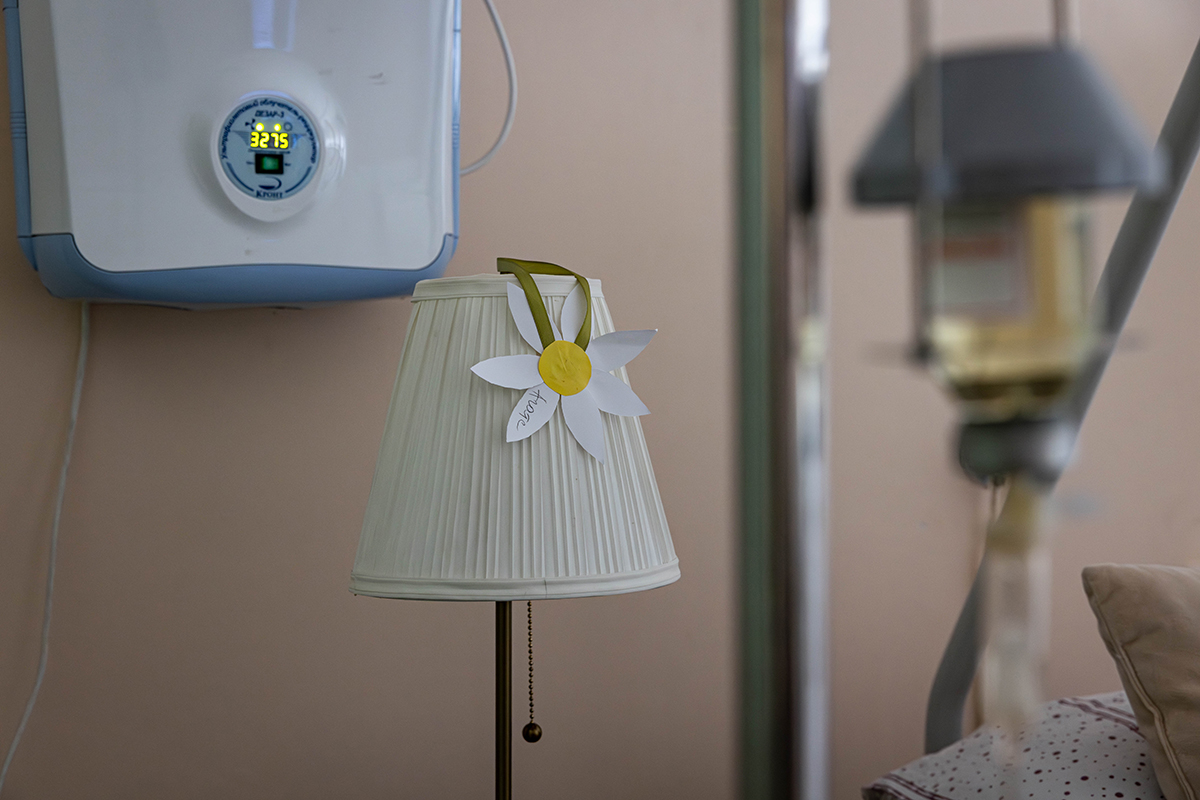 In the ward of the palliative department Photo: Yulia Morozova for TD
The management of Sechenov University has planned a renovation of the palliative department, but its timing and scope are still unknown. But patients with serious diagnoses live here and now, and creating a safe environment for them cannot wait. In the summer of 2026, the autonomous non-profit organization Palliative Without Borders begins renovations to the palliative care department. It is important not only for creating non-hospital aesthetics and comfort. The primary task of the renovation is to make comfortable sanitary rooms, equip them with modern facilities for the convenience of patients and staff, and also widen the doorways to make it possible to roll patients out of the wards directly onto their beds into the common hall where events are held, or to breathe air outside. As this happens in all modern palliative care institutions.
Funds are badly needed for repairs. Let's support this necessary cause together.
So that in a huge city a person can feel like a human until the very end. With any registration.