Date
Author
Александр Шуршев; Команда «Хроники
Source

Preserved copy
Translated material
Lost Trust Zone
While the St. Petersburg prosecutor’s office is seeking to have the former deputy head of Gosstroynadzor Vyacheslav Zakharov considered dismissed “due to loss of trust,” the former official has found a new area of application - occupied Mariupol and the Azov region. At first, the St. Petersburg authorities began to present him as the head of their representative office in the destroyed city. And after leaving this position, Zakharov moved into business related to construction, promising real estate and former Ukrainian assets. His partners were the son of the first occupation head of Mariupol and a St. Petersburg billionaire. "Chronicles.Media" tells how an inconspicuous but influential official from the St. Petersburg construction system ended up taking part in the occupation economy and began making money from the war.
Overseer of family assets
A year ago, Chronicles.Media already talked about Vyacheslav Zakharov, who worked for more than 20 years in the St. Petersburg State Construction Supervision Authority, even managing to manage this institution. Gosstroynadzor carries out an examination of project documentation, issues permits for construction and commissioning of facilities, and also monitors compliance with the necessary requirements during construction.
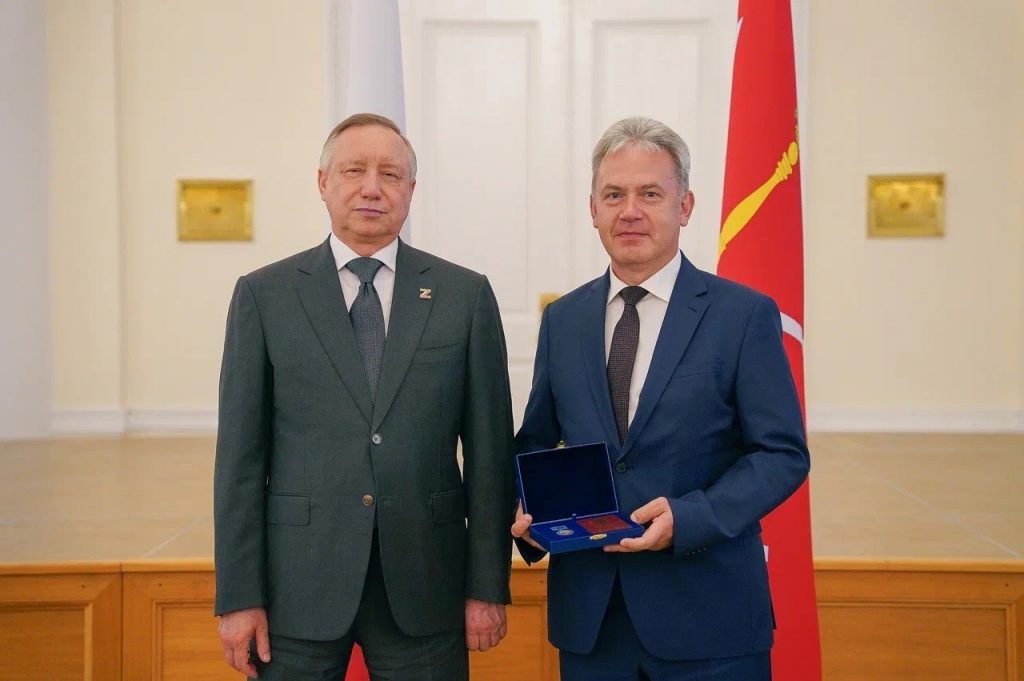
In February 2024, Zakharov unexpectedly resigned from his post as deputy head of the St. Petersburg State Construction Supervision Authority.
Over the years of work in the supervisory authority, Vyacheslav Zakharov built a chain that included his former colleagues at Gosstroynadzor, convicted of corruption, his wife, children and their business partners. One of the most telling stories is the long-term and scandalous construction of a 17-story “physical education and health center” at 23 Bestuzhevskaya Street in St. Petersburg. The construction was carried out by the St. Petersburg company Mega-Stroy. Residents, who were promised that only a sports center would appear in their yard, protested against the construction of a high-rise residential building: they held pickets, wrote letters to deputies and to the State Construction Supervision Authority. The latter carried out inspections and issued orders, which were ignored. In 2023, Vyacheslav Zakharov signed permission to put the facility into operation. But even three years later, the 17-story complex is empty.
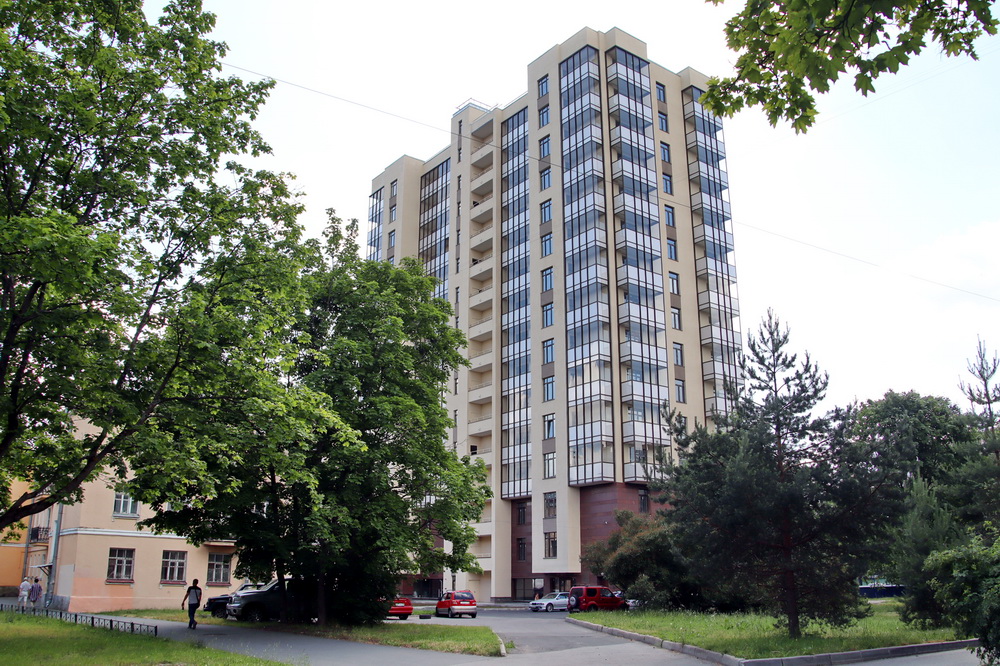
Source: Dmitry Ratnikov, “ Canoner ”, license CC BY 4.0
“Chronicles.Media” found out that the Mega-Stroy development company is half owned by Zakharov’s daughter Ekaterina Petrova. That is, when in 2019 Zakharov headed Gosstroynadzor, which reported on the absence of violations during construction on Bestuzhevskaya Street, in fact the official said that his daughter was not violating anything.
The story with a high-rise building instead of a sports center demonstrates not only a conflict of interests in a single case. It is generally characteristic of Zakharov the official. And if in St. Petersburg this was manifested through corruption ties around Gosstroynadzor and family companies, then in the occupied Azov region - through construction at the expense of the budget, real estate and former Ukrainian assets.
Fleeing corruption charges
In the fall of 2024, Zakharov began to be mentioned as the head of the St. Petersburg representative office in Mariupol. There are no official documents about his appointment or the legal existence of such a representative office in the public domain, although the St. Petersburg authorities regularly publish information about its activities.
In parallel with this, in September 2024, the St. Petersburg prosecutor's office filed a lawsuit in the Kuibyshevsky city court against the State Construction Supervision and Expertise Service of St. Petersburg (Gosstroynadzor) and Zakharov himself, demanding to change the grounds for his dismissal. As it turned out, shortly before his dismissal, a check began on the accuracy and completeness of information about income, property and property-related obligations in relation to Vyacheslav Zakharov. Violations were discovered, but shortly before the completion of the inspection, Zakharov resigned of his own free will, which allowed him to avoid liability established by anti-corruption legislation. The prosecutor's office did not agree with this and demanded through the court to change the grounds for dismissal to “due to loss of trust.”
The court partially satisfied the demands of the prosecutor's office in December 2025.
As follows from the court decision of the first instance, the prosecutor’s office accused Zakharov of “unconscionable behavior,” which was expressed in a fictitious divorce, “actually preserving the family,” as well as in the construction and alienation of buildings in favor of adult children in “sham transactions.” All this was done “with the aim of avoiding legal liability and the onset of negative consequences associated with the inability to explain the sources of income through which the property subject to declaration was acquired.”
The court did not accept these arguments, since anti-corruption legislation does not require verification of the income and property of former spouses and adult children. But the claim was granted, since Zakharov did not fully indicate income and property in his declarations.
Both Vyacheslav Zakharov and Gosstroynadzor appealed this decision, but it has not yet been considered.
Although the court did not agree with all the arguments of the prosecutor's office, even the part of the claim rejected by the court is important as a description of the state's claims against Zakharov: family property, the value of which exceeds income, a fictitious divorce and fictitious transactions with adult children. After the St. Petersburg State Construction Supervision Service, Zakharov ended up in another jurisdiction - in the occupied Donetsk region, where he headed the St. Petersburg representative office in Mariupol. Where the transparency of property and government decisions is even lower than in St. Petersburg.
Business during occupation and war
Formally, the representative office of St. Petersburg in Mariupol coordinates the city’s restoration program. In fact, such a position gave access to people, objects, contractors and information about where money and assets might appear in the occupation economy.
The St. Petersburg authorities do not talk about how much money is allocated for the restoration of war-torn Mariupol, but they regularly report that there are enough funds, and the representative office itself talks about new restored objects. Journalists reported on billions of rubles, which are allocated both from the city budget and from extra-budgetary sources. The construction business of St. Petersburg is also actively involved: little-known or newly created companies are quickly becoming construction giants with billions in revenue. And all this is coordinated by the St. Petersburg representative office.
All this baggage was useful to Vyacheslav Zakharov in his future career. He was replaced as head of the St. Petersburg representative office in Mariupol by Oleg Morgun, who previously served as mayor of the occupied city.
Zakharov began to build his own business in Mariupol.
In August 2025, he became a co-owner of the Donbasspromtekh construction company. His business partner turned out to be Vladimir Ivashchenko, the son of Morgun’s predecessor at the head of Mariupol, Konstantin Ivashchenko. He also became the general director of the company.
IVASCHENKO FAMILYKonstantin Ivashchenko is a former Ukrainian politician who was twice a deputy of the Mariupol City Council. He was a member of the Party of Regions of former Ukrainian President Viktor Yanukovych, and then of the pro-Russian Opposition Platform - For Life. With the beginning of the occupation of the city, the head of the self-proclaimed DPR appointed him mayor of the city.
His son Vladimir Ivashchenko in 2020 was also elected as a deputy of the Mariupol district council from the pro-Russian party “Opposition Platform - For Life”.
There is no information in open sources about state contracts of Donbasspromtekh, but for 4 months of 2025, the company’s revenue amounted to 4.4 million rubles, and its net profit was 2.1 million.
The partnership with Vladimir Ivashchenko makes Zakharov’s business not just a construction one, but also integrates it into the peculiar environment of Mariupol occupation politics, which was very scandalous even before the invasion.
In September 2025, Vyacheslav Zakharov became a co-owner of another company - Priazovskaya Riviera. This time, his business partner was the St. Petersburg billionaire, founder of the Baltic Coast company, Mikhail Bobrov.
According to the publication “Chronicles.Media”, from October 2025 to March 2026, the company registered more than 70 real estate properties with a total area of almost 9 thousand square meters in the village of Yuryevka in the occupied Donetsk region of Ukraine. This is the former Mashinostroitel recreation center, which previously belonged to the Azovmash group. At the end of 2025, the property of the Azov Riviera was valued at no less than 100 million rubles, although even before the full-scale invasion, the Mashinostroitel base was in obvious decline and desolation.
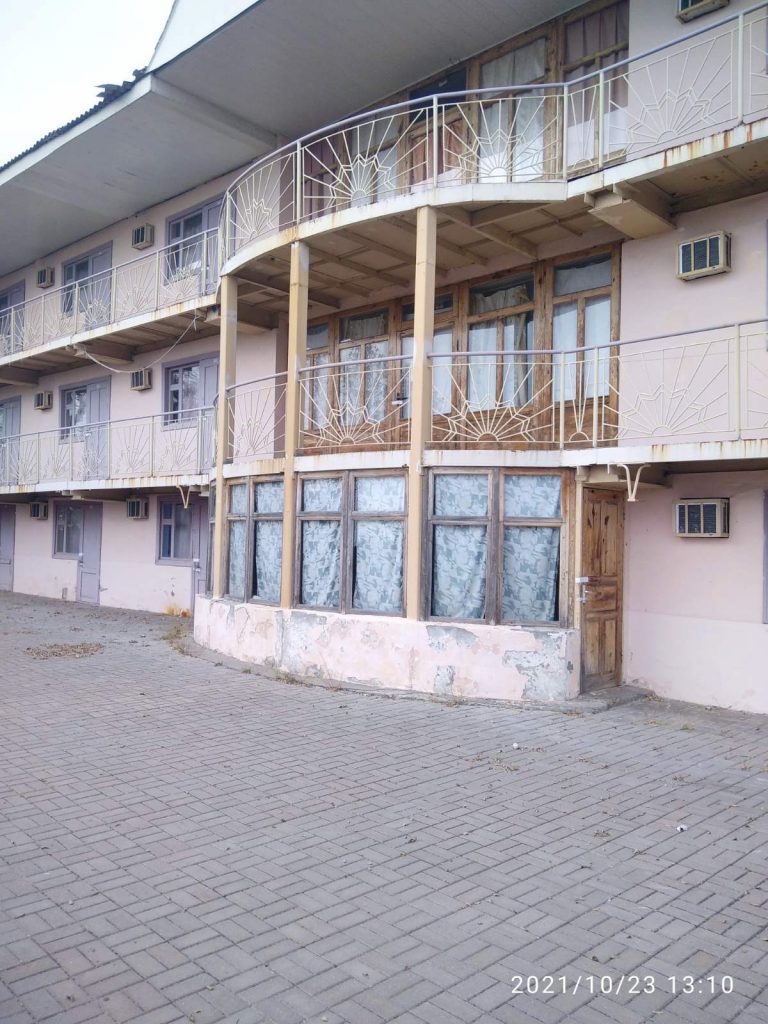
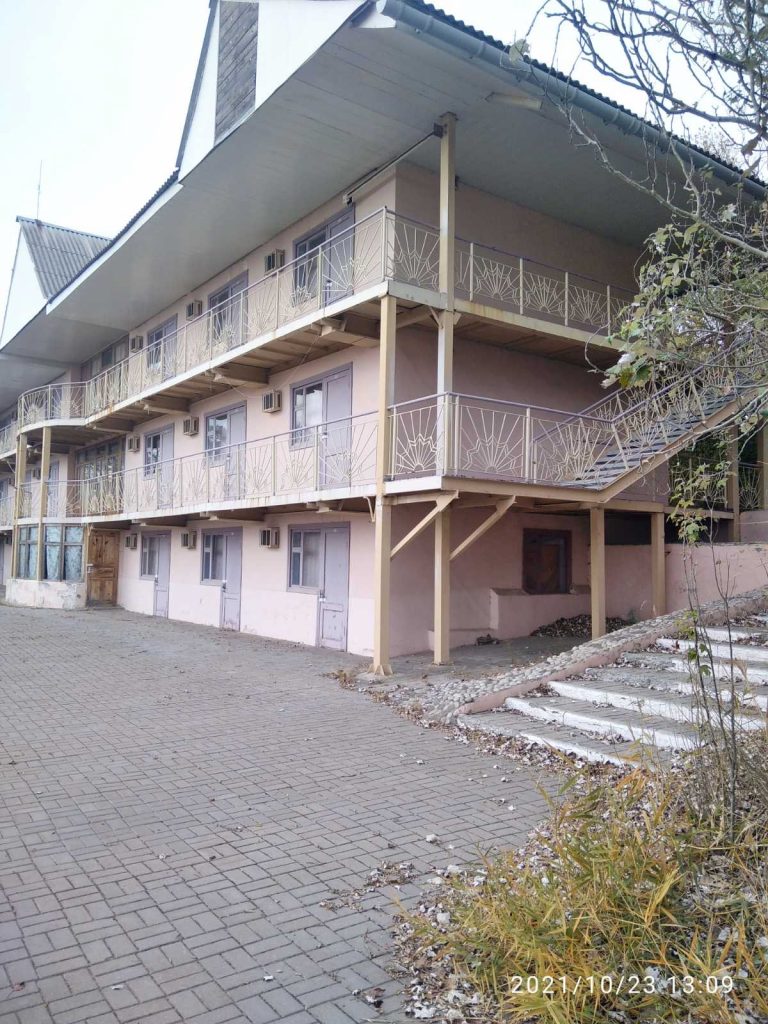
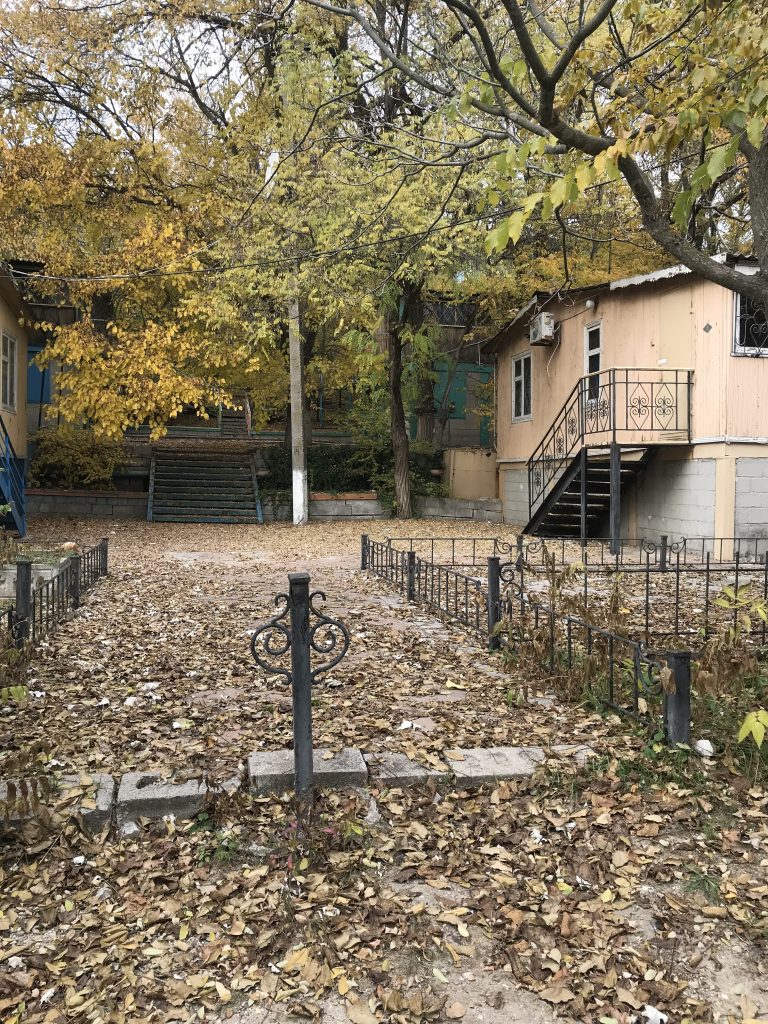
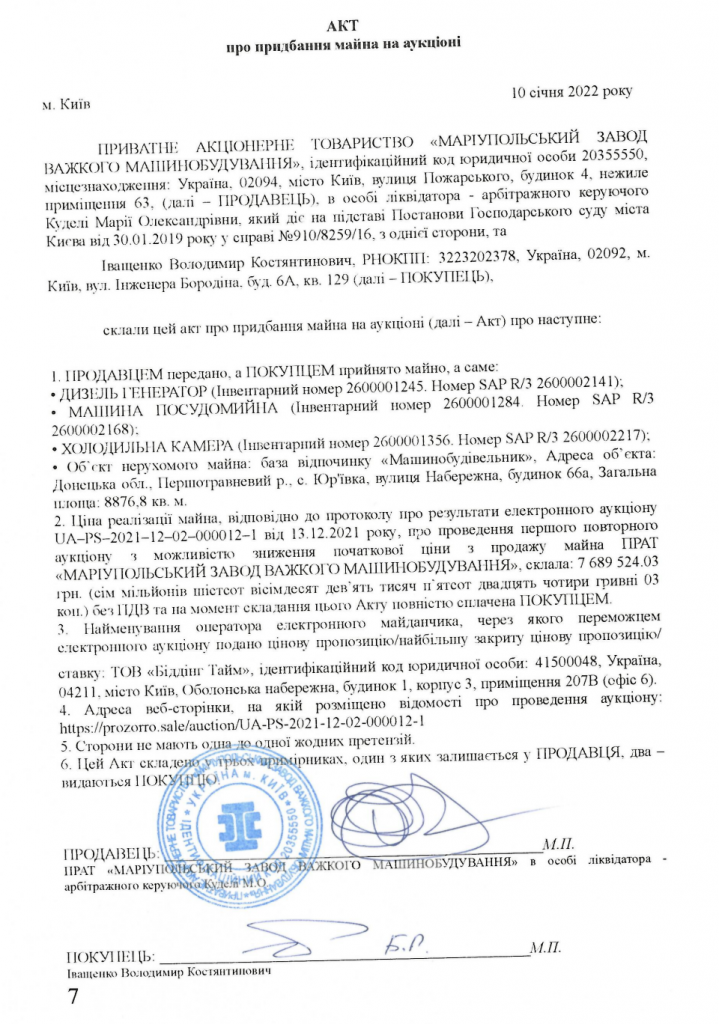
The Mashinostroitel recreation center was sold after the bankruptcy of the Azovmash holding a month and a half before Russia’s full-scale invasion of Ukraine. The starting price was 3,952,403.41 hryvnia (146.3 thousand dollars at the date of the auction), but the deal was finalized for 7,689,524.03 hryvnia (284.5 thousand dollars). The new owner was the aforementioned Vladimir Ivashchenko, Zakharov’s business partner in Donbasspromtekh.
Finally, on September 16, 2025, Vyacheslav Zakharov became the sole owner of two more companies that had been operating in Mariupol before the occupation - Feona and Promremorstroy. Both are located at the same address in Mariupol, were initially engaged in the production of concrete and belonged to Ukrainian citizens Vladimir Talakh and Alexander Egorov.
For Feona, the Russian extract from the Unified State Register of Legal Entities indicates that the company was registered on December 28, 2001 by the executive committee of the Mariupol City Council of the Donetsk region, and even its Ukrainian identification code on the day of “admission to the Russian Federation” is indicated. In June 2024, the Russian tax authorities, based on an application, entered information about “Feon” into the Unified State Register of Legal Entities as a legal entity registered before “admission to the Russian Federation.”
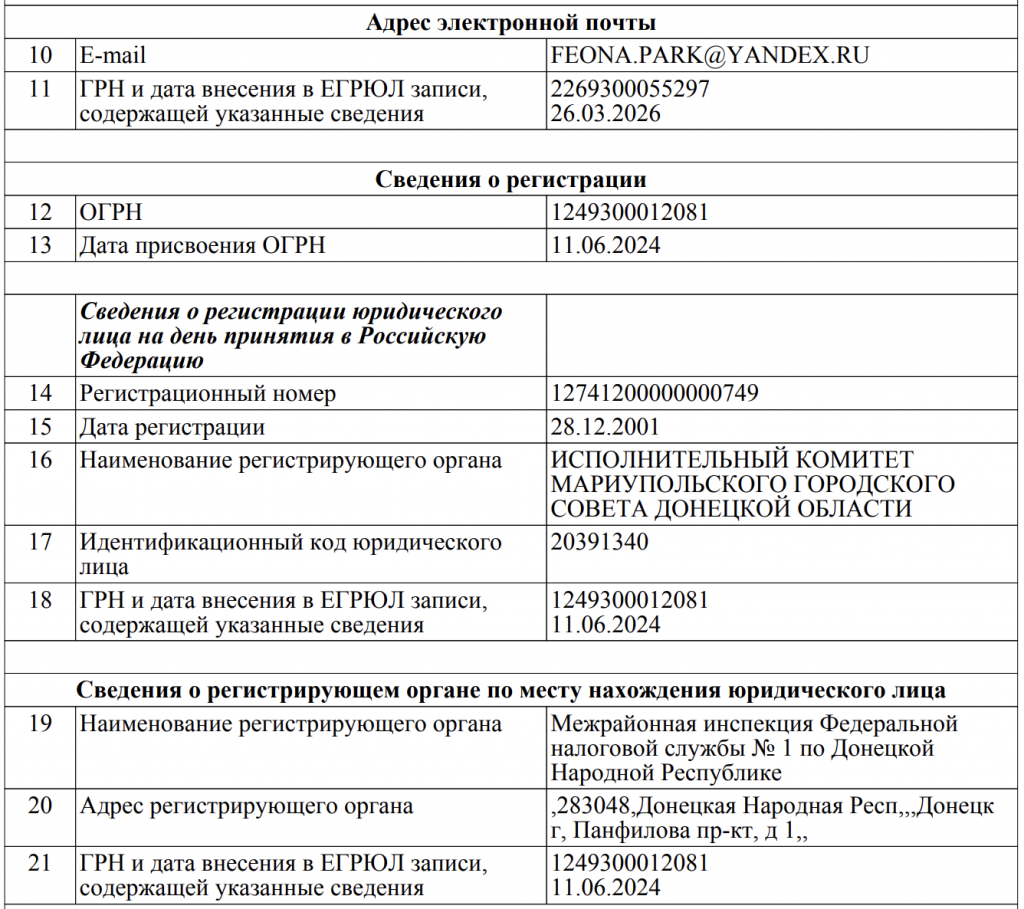
Today, the main activity of Feona is real estate transactions. According to the publication "Chronicles.Media", "Feona" will become the operator of the technology park. A few months ago, the authorities of the occupied region said that the registration of the Feona technology park was one of the priorities for this year. In addition, in March 2026, the company received an email address in the Unified State Register of Legal Entities feona.park@yandex.ru , which also confirms the connection with the future technology park and the administrative resource that is being built around it.
After Zakharov became the owner of Feona, Tamila Shevtsova, a 29-year-old journalist from the Leningrad region, became its general director. Shevtsova refused to answer questions from Chronicle.Media about how she became the director of Feona, whether the company is connected with the technology park of the same name, and when she met Zakharov, citing a non-disclosure clause in the contract. In her telegram channel, she advertises Zakharov’s other company, Promremorstroy.

“Promremorstroy” is still officially engaged in the production of concrete.
On Yandex.Maps, not far from the current address of these companies, you can find a photo from 2012 with an advertising banner mentioning both companies, which were already selling concrete and related building mixtures.
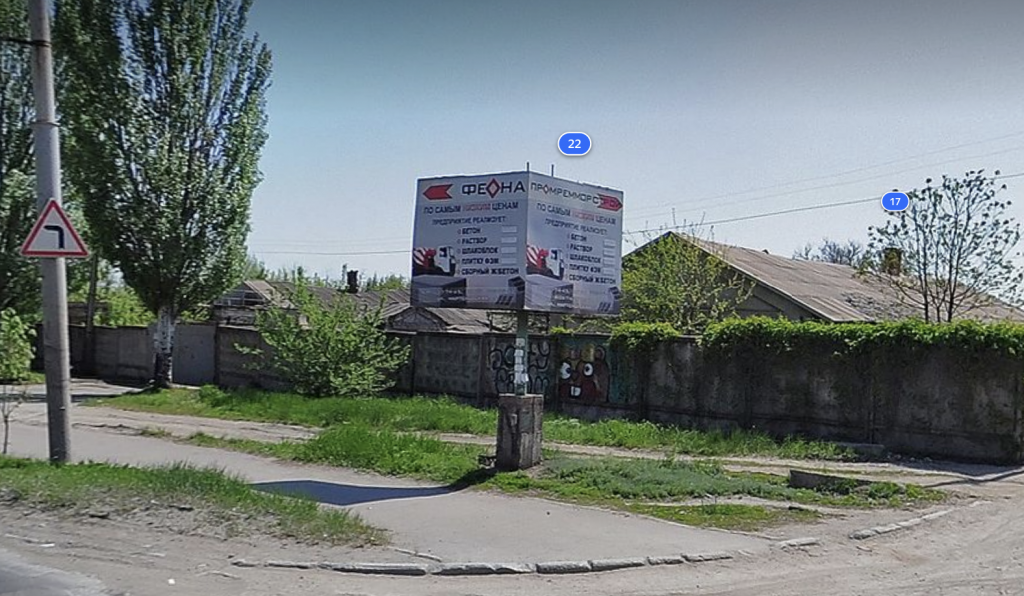
“Feona” and “Promremorstroy” completed the picture of Vyacheslav Zakharov’s business interests in Mariupol. The first is related to the technology park, which is a priority project for the so-called authorities. DPR. The second deals with concrete - the main material for any urban construction, into which billions of budget rubles are now being invested in Mariupol. Together with Donbasspromtekh and the Azov Riviera, this is a highly profitable chain for ensuring a carefree old age: construction contracts, building materials, investment real estate in the form of a resort asset and access to administrative resources in the form of a technology park and a free economic zone regime.
***
The career of Vyacheslav Zakharov clearly demonstrates how the new economy of the occupied Azov region works. The devastated Mariupol has become not only the target of the “reconstruction” that Russian authorities are reporting on, but also a “wild” market in the style of the 90s for people familiar with the construction sector, budget flows and opaque assets.
In St. Petersburg, Zakharov was an official whose decisions regulated the construction business, enriching his family. In Mariupol, he found himself faced with an even greater resource—the reconstruction of a destroyed city, looted Ukrainian assets, and the absence of a predictable legal system. While in St. Petersburg the court is still deciding whether he can be considered dismissed “due to loss of trust,” in the occupied Donetsk region this “trust” has already been converted into a multimillion-dollar business.
Alexander Shurshev