
Translated material
Iska cheri: a culinary story with a twist

On June 28, the annual gastronomic festival “Cherinyan Gazh” (“Fish Pie Festival”) will be held in the village of Byzovaya, Pechora district. On this occasion, we decided to recall another traditional Komi dish, Pechora salted fish. And at the same time they tried to understand why it is not so easy for fish with a scent to find a place and admirers in modern society. Open doors, windows, vents - and enjoy.
In search of the lost scent
A vivid memory from childhood, almost like in a Marcel Proust novel. My brother and I are visiting our grandmother. The uncle brings the can, and in an instant a pungent smell spreads throughout the house. So sharp that we go outside to catch our breath.
I don’t remember the smell itself, but it left a deep imprint on my memory. This was my first acquaintance with “iska cheri”. This is how the Izhma people call pickled fish, known in other areas as “duka cheri”, or “smelly fish”. Another Russian name is “Pechora salted fish.” Grandma’s house, by the way, stood on a hill next to the bank of the Pechora River.

The question of trying iska cherry was closed for me. I was already not a big fan of fish dishes, and after the first – olfactory – acquaintance, the taste of fish with its aroma for me firmly settled somewhere in the area of transgressive experience, radical overcoming of boundaries and taboos.
Already in my student years, one of my acquaintances, a lover of obviously racist jokes, once depicted a Komi busily burying fish in the ground. Such a staging placed us on a par with the “bulbash”, “pasta”, “paddling pool” and other bearers of bizarre gastronomic habits. This joke seemed outrageous to me not only because of its mocking nature: the “komjaki” performed by my friend were inevitably stupid and exotic. On top of that, she attributed to me a practice with which I could not identify in any way.
Phenomenology of darling
My friend was right about one thing: once upon a time, fish were actually fermented in pits lined with grass. Today, iska cheri is prepared differently.
Fish traditionally occupies an important place in the diet of the Komi, especially those who live along large rivers such as the Mezen and Pechora. As ethnographer Tatyana Chudova writes ,
“In villages where almost the entire population was engaged in fishing, fish was served at every meal (with the exception of days of strict fasting). So, the Izhma people drank tea with salted fish in the morning, put kulebyaka (fish soup) on the dinner table, and in the evening they served fish and potatoes.”
This quote alone shows that fermentation was one of many ways to prepare fish. Moreover, it was widespread mainly among the Izhemsky and Udora Komi. And the researcher describes the process of cooking and consumption as follows:
“Fresh fish was salted in the usual way, but the barrels were left in the sun in warm weather, and brought into the hut in cold weather. The readiness of such fish was determined by its specific smell. Such fish is well absorbed by the human body and is considered a good remedy against scurvy, but, unfortunately, has a heavy odor. Salted and sour fish can be considered a separate dish. Externally, the finished fish of the so-called Pechora salting resembles a gelatinous mass, which was eaten raw, dipping bread into a dish with fish, or scooping it with spoons, biting it with bread. Less fermented fish, still retaining its shape, was used for fishmongers, which were usually served as a snack for tea.”
Fermented fish is a source of easily digestible protein. In conditions of limited access to salt, sourdough is a way to preserve the product and its beneficial qualities. In addition, as Tatyana Chudova writes, it increases the vitamin C content in fish several times. It is not surprising that pickled fish is found among many peoples. On the territory of Russia, it was eaten by Karelians, Sami, Khanty and Mansi, Nenets and, in fact, Russians.

Perhaps the most famous fermented fish dish is garum sauce, which spread throughout the Roman Empire. The Romans generally favored fragrant cuisine and often added garlic and onions to their food. Garum, despite its smell, was popular among all segments of the population. Under this name was hidden a whole family of fish sauces of varying quality and price. Some served as an everyday condiment available to most inhabitants of the empire, while others were considered a prestigious delicacy.
How did the Romans learn to ignore the smell of garum? I asked myself a similar question while watching my loved ones eat iska cherry.
Olfactory revolution
Intolerance to strong odors is a norm in Western culture. But it wasn't always like this. In the Middle Ages, the streets of European cities were littered with food scraps, animal and human excrement, dead cats and dogs, and the entrails and blood of slaughtered animals. All this created a unique bouquet of aromas, to which medieval Europeans were quite accustomed. As the urban population grew, the situation worsened.
In the 19th century, epidemics of cholera and typhus swept across Europe. Their spread was associated with the smell of garbage in which cities were drowned. Movements for health reform intensified. As a result, governments began installing flush toilets and creating sewer networks. At the same time, ideas about personal hygiene were changing. Bathing, previously considered harmful to health, was encouraged. As the upper and middle classes became accustomed to cleaning their bodies, homes, and streets from dirt, they became increasingly sensitive to the smell of the lower classes. For those, such self-care remained an unaffordable luxury.
Researchers Constance Klassen, David House and Anthony Sinnott call this process the “olfactory revolution.” It was by no means limited to public and personal hygiene. Philosophers of the Enlightenment era were also involved in it, believing that vision was the highest human sense. European intellectuals, on the contrary, demoted the perception of smell and lowered it to the lowest level of the social hierarchy. Subsequently, Charles Darwin began to argue that people lost their sense of smell, acquiring upright walking.
As Klassen, House, and Sinnott write in their book Aroma (1994), the smell likely posed a threat to the emerging social order:
“…olfaction was marginalized because it threatened the abstract and impersonal regime of modernity due to its radical internal nature, its tendency to violate boundaries and its powerful emotional impact. Modern society requires that we distance ourselves from emotions, that social structures and differences are perceived as objective or rational rather than emotional, and that personal boundaries are respected. Therefore, although olfactory codes may still serve to reinforce social hierarchies on a semi-conscious or unconscious level, it is vision - as the most distant sense (by Western standards) - that serves as a model for modern bureaucratic society.
As a result of the olfactory revolution, scent increasingly began to emphasize class, gender and ethnic boundaries. At the center of the new sensitivity regime are white cisgender men - businessmen and politicians, for whom the absence of smell has become the norm. Its presence marked those who were considered evolutionarily closer to animals: proletarians, women and “savages”.
By the end of the 20th century, consumer capitalism moved these attitudes from the center to the periphery. My attitude towards my own body was largely determined by advertisements for deodorants and chewing gum, in which the smell of armpit sweat or garlic from the mouth threatened anyone who violated the olfactory regime with a fall in the social hierarchy. Eating fragrant fish in such a system of ideas was something unthinkable.
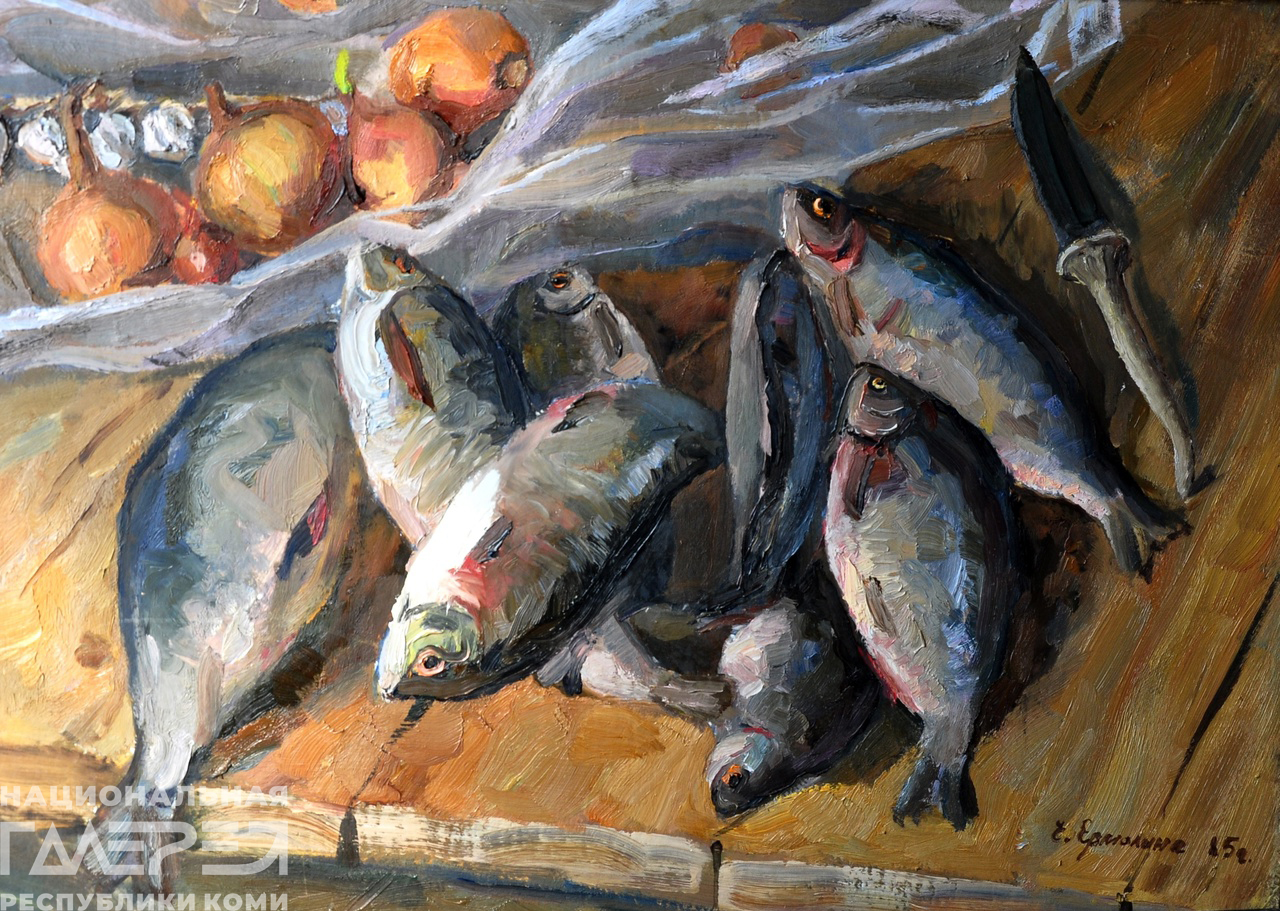
“You live by the river, but don’t eat fish,” my uncle often reproached me. These reproaches always amused me. Life near Pechora, I believed, should not determine my gastronomic preferences, and my love or dislike for fish should not determine my Komi identity. Now it seems to me that my uncle noticed an important social and cultural gap in my eating habits.
Noble stench
Anyone who in the past decided to bring “import-substituted” cheese from Europe is familiar with this situation. At some point on the plane, the backpack began to exude the most delicate aromas of unwashed feet and rotten eggs. This was also confusing because correctly identifying the source of the smell is a non-trivial task. What if people mistake your body for it? You can’t explain to every neighbor that you’re bringing cheese with you. And if you explain, will the stench become more pleasant?
In fact, cheese is a wonderful example of how Western society is willing to tolerate and tame unpleasant smells. It is believed that the aromas of cheeses take some getting used to. The absence of such a habit is an indicator of “underdeveloped” taste, which, as sociologist Pierre Bourdieu showed, clearly marks social hierarchies in a class society. In this sense, appreciating the pungent smell of, say, Munster is tantamount to enjoying the dissonances of avant-garde music. This is a sign of a high position in society.
The cheese may not smell as strong as isca cherry. However, these are phenomena of the same order. By simplifying, we can reduce the preparation of cheeses and the fermentation of fish to the controlled decomposition of organic matter. And if so, can smelly fish, often identified with “backwardness,” become a delicacy?

The answer to this question is provided by the history of surströmming, Swedish pickled herring. Born out of need (in particular, from a lack of salt), this dish is today perceived as a specific Scandinavian delicacy. Surströmming, perhaps the most famous modern relative of the iska cherry, is definitely more prestigious than the fermented Komi fish. This prestige, on the one hand, is explained by the position of the Scandinavian countries in the modern world. On the other hand, surströmming is done on an industrial scale. Salak is sold in cans. And its consumption is codified and overgrown with various rituals. The jar is opened in a bucket of water so that the brine does not splash the gourmets. The meat is separated from the skin and eaten in the open air, on black bread or with potatoes.
Perhaps these production and consumption practices will provide clues on how to make iska cherry great again .
