
Translated material
In the Reserve Unified State Examination in English there were questions about Borodino. Removing points for errors in facts is contrary to the principles of language exams
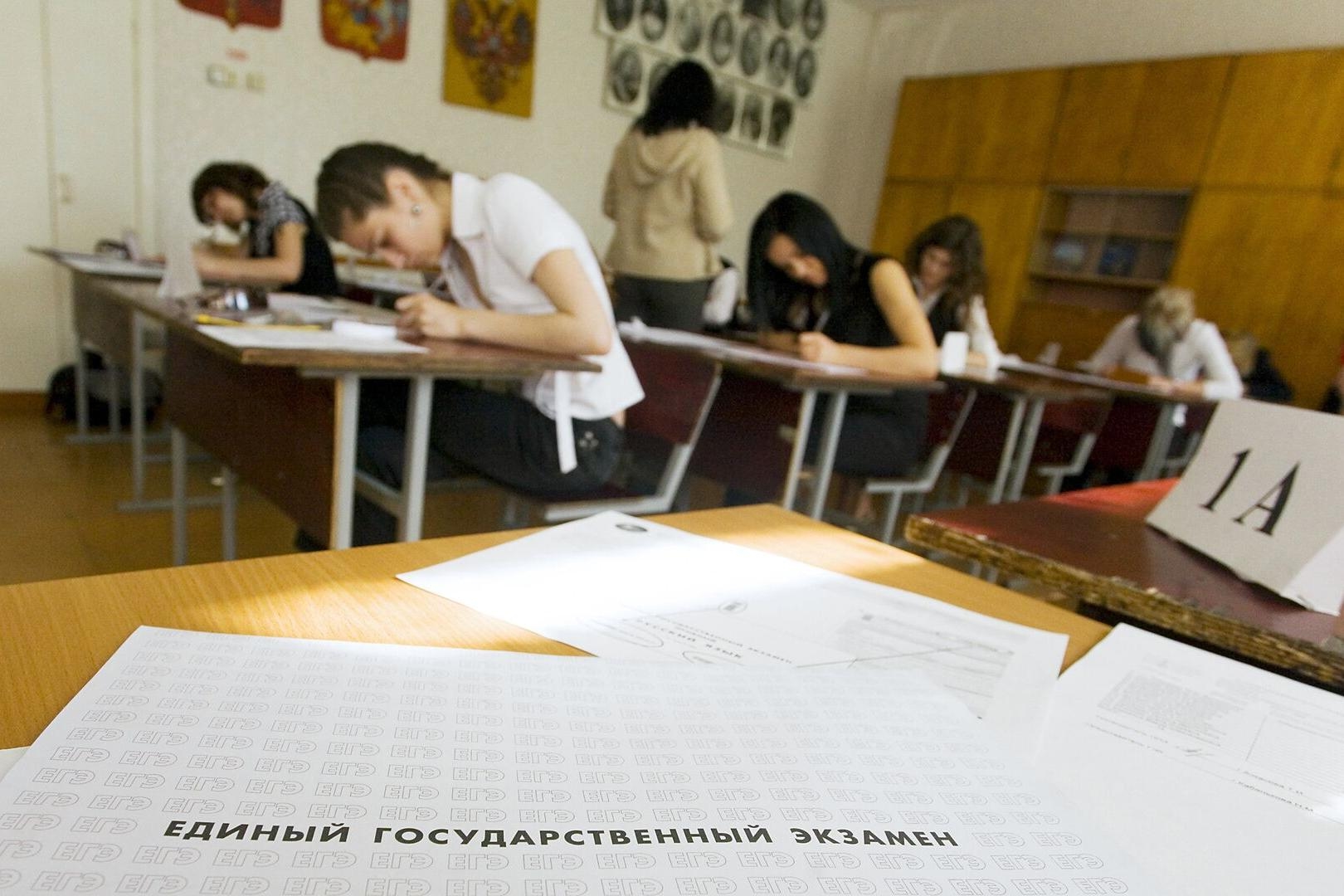
Photo: RIA Novosti
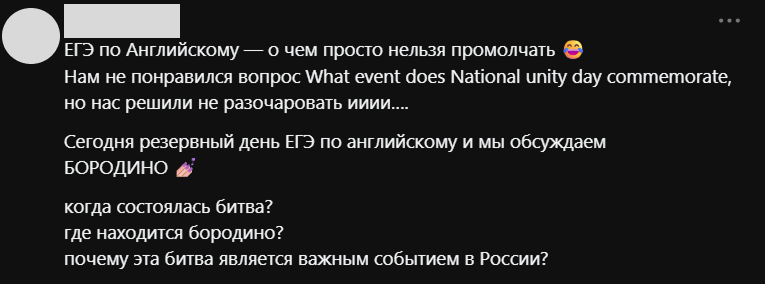
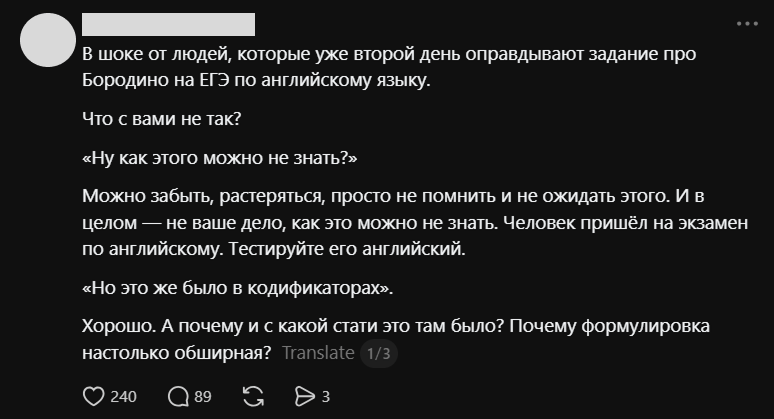
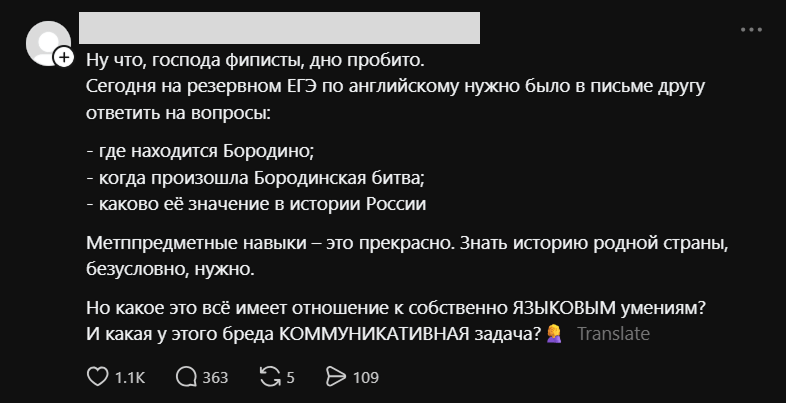
On the reserve day of the Unified State Exam in English this week, graduates were asked questions about the Battle of Borodino and its significance for Russian history. Dozens of similar messages from language teachers appeared on social networks, The Insider noted. Some teachers write that students may lose points for factual errors when answering such questions. The tutors interviewed by the editors agree that this contradicts the principles of language exams - they should not test knowledge of other subjects.
What part of Russia is Borodino located in?
The task about the Battle of Borodino appeared in the Unified State Exam tests for those who took English on the reserve day. One of the writing assignments required graduates to compose an email and answer questions. In particular, the teachers’ posts include the following:
- When did it take place? (When did the Battle of Borodino take place?)
- What part of Russia is Borodino located in? (Where did it take place?)
- Why was it important? (Why is it important?)
At the same time, some tutors draw attention to the fact that topics on Russian history were mentioned in the Unified State Exam codifiers - a list of topics and requirements for the exam, which is compiled every year by the Federal Institute of Pedagogical Measurements (FIPI). The 2026 codifier actually includes a fairly broad topic, “Pages of History,” and says that a graduate must be able to speak and write in English about “the realities of the native country and the country/countries of the language being studied”: from the government structure and popular holidays to the “pages of history” itself.
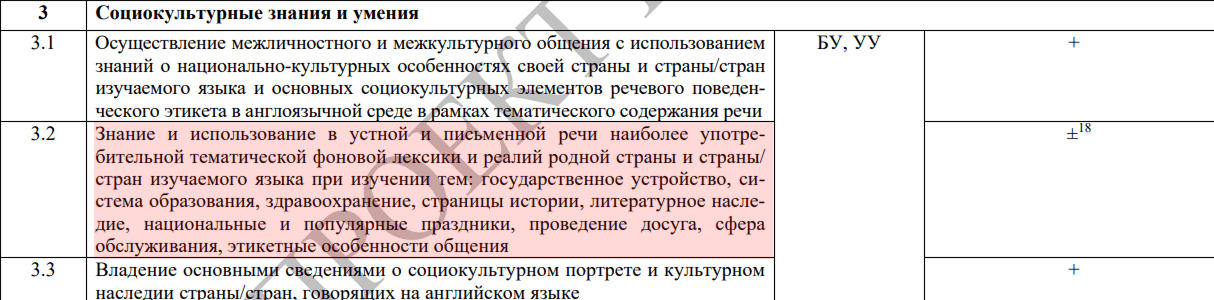
Fragment of the Unified State Examination codifier in English 2026
However, the same requirements were contained in the codifiers for the Unified State Exam for last year, but questions about Russian public holidays or historical events were not reported on the exams.
Teachers also write that for factual errors in such tasks, graduates risk losing points:
“Are we testing communication skills or what? What nonsense God. If the wrong year is written in response to a question, with some as I remember, this needs to be taken into account. If it says I'm not sure but... Borodino dibilnoye is located there. This needs to be taken into account. They have lost their heads with their pseudo-patriotism,” writes one of the teachers < post spelling and punctuation preserved - The Insider >.
Can language exams test knowledge in other subjects?
As teachers interviewed by The Insider point out, language exams and their tasks are structured precisely so that those taking the test answer without additional knowledge of other subjects. This principle applies to both the school Unified State Exam and international exams such as IELTS or TOEFL.
“The first thing that needs to be said about this is that language exams are a test of two parameters: the actual knowledge of the language and the communication skills of the test taker. Yes, in the speaking part of the same IELTS you may come across a question like “Tell me about a holiday that is significant for your country,” but first of all it will be your knowledge that will be assessed: how coherent and logical your speech, vocabulary, grammar and pronunciation are.
If you don't know a date or other factual information, you can honestly say, “I don't know,” and you won't get a mark for that, because admitting you don't know something is part of communication. In the Unified State Exam 2026, as I understand it, ignorance of factual information that is not related to language proficiency can result in a score reduction, and this distorts the very concept of the exam as a test of language skills,” says Natalya, a teacher specializing in preparation for IELTS.
In the case of the written part, Natalya explains using the example of IELTS, there is a Task Achievement criterion - in the language of Russian exams, “Is the topic covered?” In it, teachers categorically do not recommend inventing statistics and facts; it is best to do without them altogether. For fictitious information, you can lose points, but - again - the written part of the exam does not aim to “test knowledge of any facts that are not related to a foreign language,” the editor’s interlocutor emphasizes.
Historical topics can also be included in IELTS, says another teacher, Maria (name changed). Moreover, they will be formulated in such a way that knowledge of the language, and not history, is tested: without specific numbers, events and their dates.
“Well, they [the children] are going to take English, not history. [In the case of the Unified State Exam], a question about the Battle of Borodino would be cool if in the same ticket in the “Reading” section there was a text about the Battle of Borodino, including with dates. And then in the writing task they would ask: tell us about Borodino in your own words. This would be very justified and even cool: that is, you need to write a letter, having factual material, figure out that you need to return to the previous task, take the facts from it and write it yourself,” says Maria.
Another teacher, who wished to remain anonymous, agrees that such questions are possible:
“Of course, in the reading part there may be a text about some historical moment, but rather a tradition in some society. At the same time, as a rule, texts are given in such a way that you answer exactly according to its meaning, without additional knowledge of other subjects: be it a text about space, some kind of building, or about the history of a local dish.”
On the main days for taking the exam, graduates previously faced questions about Russian holidays: Victory Day, National Unity Day, Russia Day and Defender of the Fatherland Day. Teachers then also wrote that they expected some topics “with an emphasis on patriotism,” but were surprised by the proposed questions about public holidays.
Articles on the topic
We really need your help
Sign up for regular donations
Subscribe to our Email Newsletter
Subscribe to our Email newsletter Morning Brief Weekly DigestBy subscribing, you agree to The Insider's user agreement and privacy policy , as well as Google's reCAPTCHA ( Privacy Policy , Terms of Service ).