
Translated material
Any falls are not accidental. Death, miracle and salvation in Reflections No. 3 by Christian Petzold
Ksenia Kurbatova
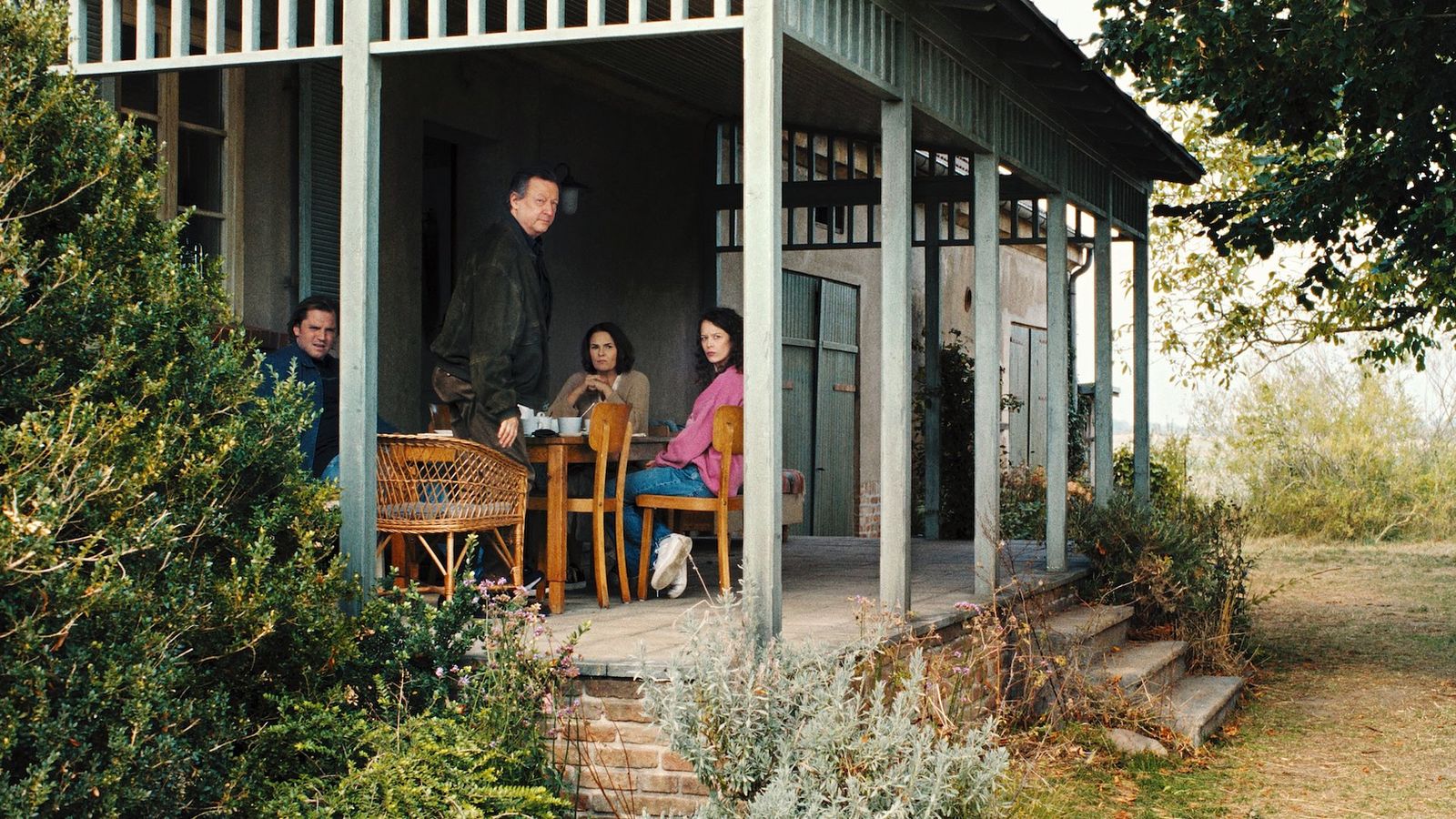
What can bring you back to life after a meeting with death? The new film “Reflections No. 3” by Berlin School leader Christian Petzold has all the hallmarks of a psychological thriller: the heroine gets into an accident, after which she finds herself in someone else’s house, the residents of which keep a family secret. Her uncanny resemblance to the dead girl creates even more tension. But the director turns this story in the other direction - to an accident that does not heal the trauma, but returns the person the opportunity to live after the tragedy.
Ksenia Kurbatova's review shows how in Petzold's latest film, a story about duality turns into a bright pastoral about chance, and a car accident unexpectedly leads the heroine to search for existential salvation.
A white curtain, summer light, plum pie, an old dishwasher, the sound of a piano behind the wall - in Petzold all these details at first seem almost random. But in “Reflections No. 3” it is from them that the story of death and return to life is assembled. After a car accident, Laura finds herself in the country house of an unfamiliar family - in a space where someone else's loss gradually overlaps with her own crisis, and simple everyday gestures begin to work stronger than any explanations.
The film's title refers to Maurice Ravel's impressionist composition Miroirs III . It conveys both the ripples of the water surface and the dark depths hidden beneath it. At the level of melody, this is embodied this way: the weightlessness of high sounds is compacted by the heavy tread of low accompaniment; The performer performs a split-second movement of hands between registers, which ends with a light touch of the keys. In the finale of “Reflections No. 3”, the main character, due to her profession, also has to make a similar inspired flight. But before that, she will take a long pause to experience first-hand the breadth of existential drama, according to the laws of which the thickness of dirty sewage flowing under the roar of highways attracts no less than the mischievous shine of the sun's rays breaking through the curtains that breathe in the morning.
In modern German cinema, Christian Petzold is ranked among the “Berlin School” of the 2000s, whose directors, according to critics, turned to contemplating the ordinary life of average city dwellers and captured the image of a new era - having mastered all the benefits of progress, but immersed in inexplicable frustration. In A Beautiful Day (2001) by Tomas Arslan, the first noted example of this trend, the viewer watches as an aspiring actress - Turkish by blood and German by passport - drives around Berlin with a proud, straight posture and a sad look in her big eyes, trying to do everything in the day allotted to her: work, pass an audition, meet with an old friend, talk with her mother about family relationships, break up with a guy, meet a cute neighbor on the carriage and in the rays of the setting sun cast a meaningful glance at another one. She is fully aware of the confusion in her own desires: a slight itch from the thirst for change, a vague presentiment of the new, fatigue from the usual order - all this is built into everyday running around the same streets, courtyards and stations, becoming part of a routine in which the feeling of anxiety is smeared in a thin, barely noticeable layer, but across all layers of reality.
Christian Petzold's heroes (more often heroines) also bear all the characteristics of typical representatives of the middle urban class - with a clearly established way of life, a comfortable life and experiences drowning in everyday life. But due to the same fixation and blockage of life, they seem to accumulate energy for the final decisive gesture, an existential leap, a moment of pure joy or absolute horror. In his early Wolfsburg (2003), the destinies of a man and a woman are intertwined so tightly and persistently that they degenerate into a pathetic finale with fatal retribution on the threshold of a new day; in Barbara (2012), the outcome of the story of a possible escape is both selfless and selfish refusal; in the later “Ondine” (2020), the tightening of the plot of a summer romance into a tight knot elevates the melodramatic narrative to the rank of the mystical. Peering into the pattern of everyday life that repeats itself day after day allows us to see behind an ordinary story a fairy tale in which private questions about love and death, good and evil, chaos and order take on the character of comprehensive and eternal.
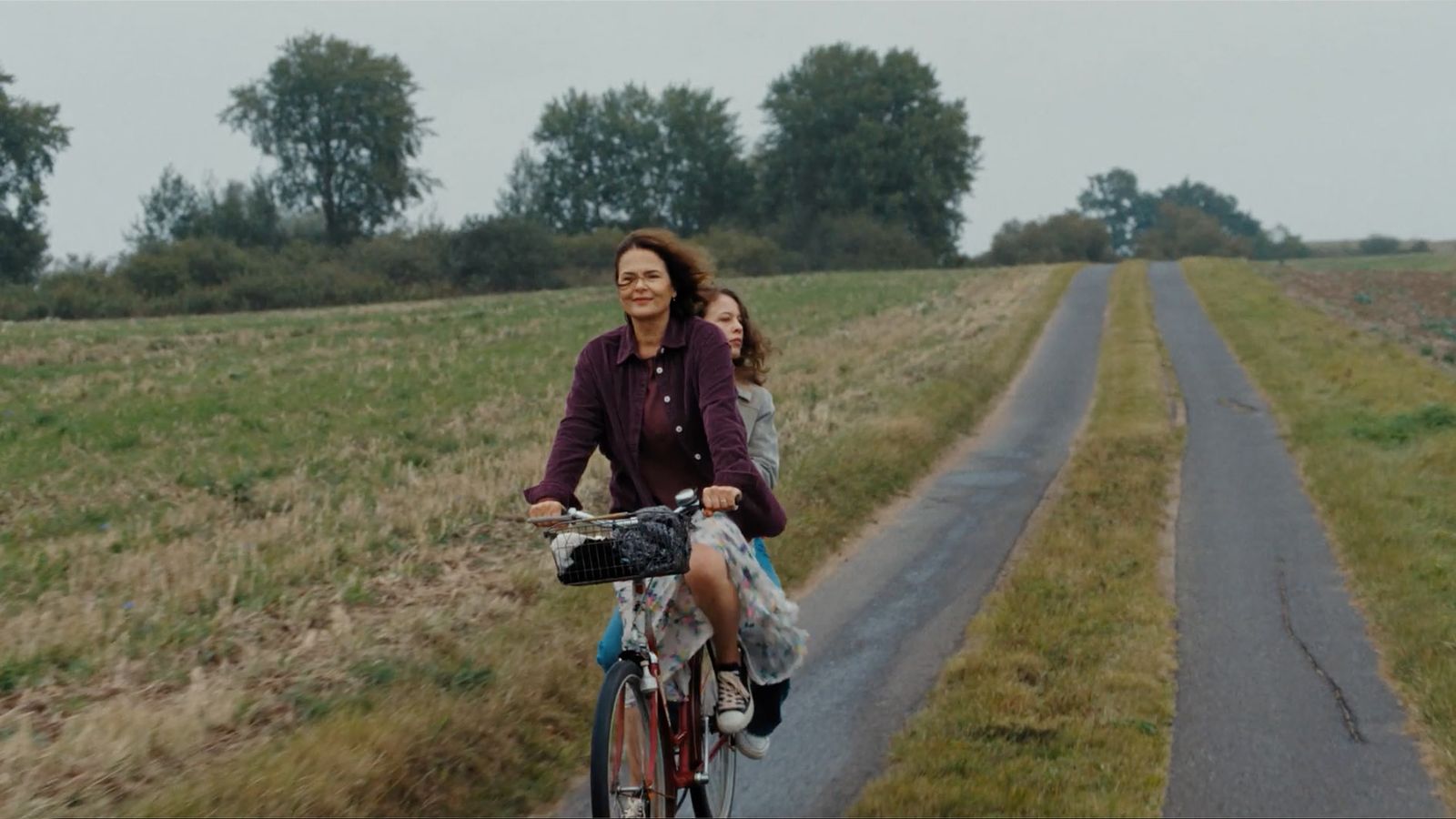
In the new work, Petzold is even more stingy with events than before, and moves the action just beyond the noisy Berlin, offering an almost pastoral chronotope with a very simple routine. From the very beginning, the suddenness of a car accident puts the action into a state of numbness, and the heroine’s experience of death (after she failed to commit suicide herself) “resets the settings,” allowing you to play without a second thought and to your heart’s content in the life of an ordinary girl who lives in a cozy country house with her parents and brother. But for them, Death has already become an event of the past, and Laura unwittingly turns out to be a double of the previous inhabitant of the house, returning to the empty rooms the forgotten staging of family gatherings, and to the invisible spirit of the suicide - physicality and activity.
Stuck in the gap between two irreparable vicissitudes left outside the frame and plot, the action is assembled from minor episodes of country life, such as painting a fence or eating a nasturtium flower, walking on a bicycle or digging beds. This is tempting to sneer at the topic of “ecotherapy” and “detox” from modern “hustle culture,” but leisurely scenes are accompanied by moods of sadness, fun, and peace that float with the wind, allowing the prose of life to blossom and become self-sufficient precisely in its unclouded simplicity.
In the circle of a new, almost adopted family, Laura, played by Paula Behr, one of the main actresses of the late Petzold, focuses on ordinary worries and joys. Her haggard features with a tense crease on her forehead and an unblinking, heavy gaze are brightened by the regularity of her life, which, as it seemed to her, was devoid of a double bottom. Let the plum pie become the quintessence of a summer day and a worthy object of heated debate, and let the garden serve as the only place where you can devote your strength and care; the long-silent piano will turn out to be the main disinhibitor of feelings among those who sympathize in absentia, and the picturesque path will reunite hearts that love each other.
Instead of throwing herself into the muddy water from a deserted shore, Laura flies to the side of the road, coming face to face with those who are already experiencing her death and feel every moment of life as potential for action and feeling - even the most elementary ones.
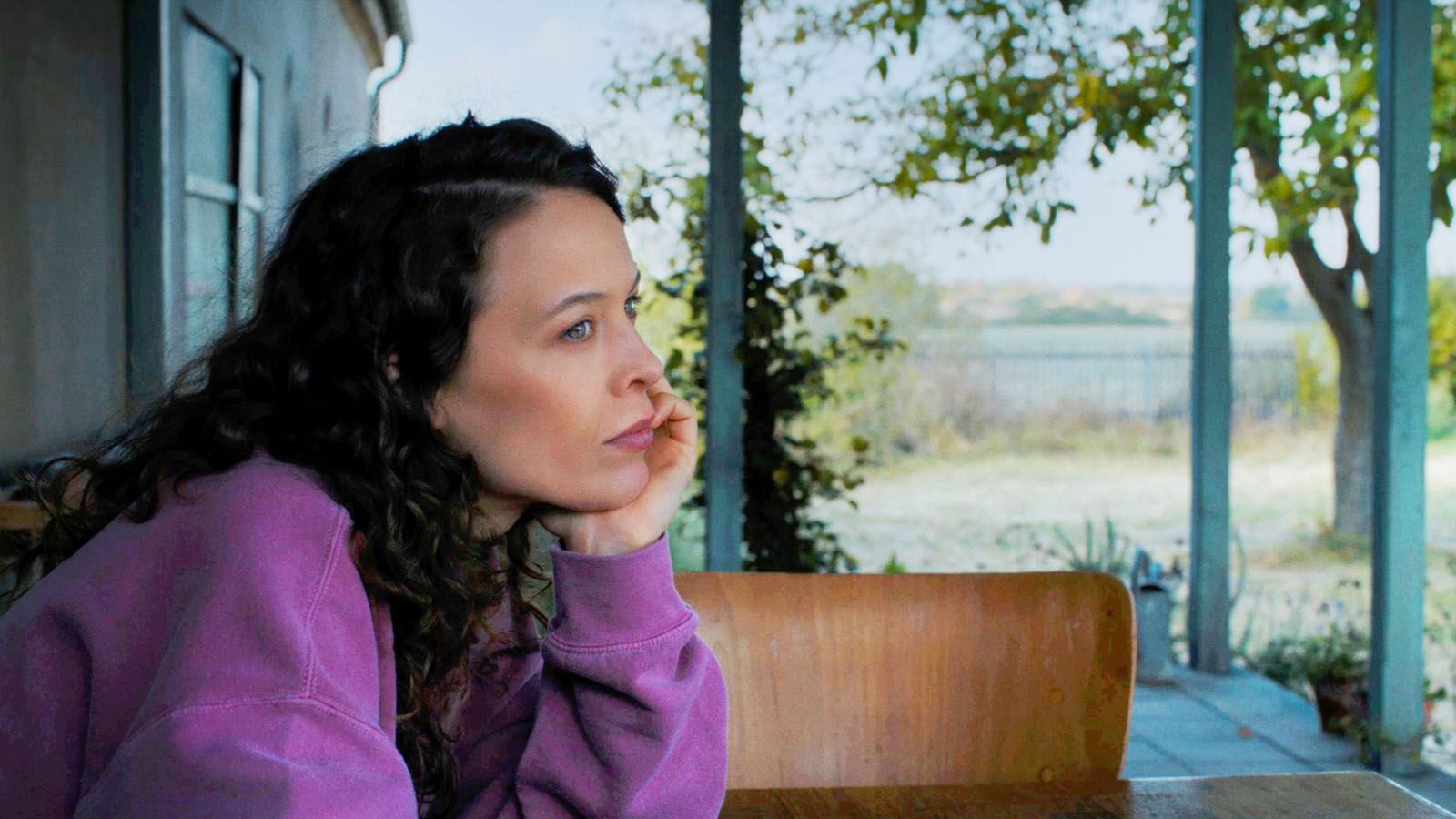
Just as in Ravel’s composition light sounds of a high register coexist with dense low ones, in “Reflections No. 3” two complementary stories about suicide coexist. While Laura regains her peace of mind, another, carefully hidden loss gradually appears in the house. This mystery thickens the anxiety and seems to prepare the film for a conclusion in the spirit of a psychological thriller.
By the end, this denouement should once again separate the heroes on opposite sides of the frame and make them forget the way to each other. But the culmination of the conflict is not a tragedy, but a deafening explosion of an old dishwasher - the same one whose repair previously marked the return of life to its usual course.
Following the principle of the famous “Occam’s razor,” Petzold leads the viewer to the conclusion that the simplest development of events here turns out to be the most correct: intense, intrusive sounds behind the scenes only refer to the piano tuner, and GPS jamming is necessary because someone does not like this system. Once life has begun, it continues to take its course: breakfast gives way to dinner, a good song dispels sadness, the roads wind and traces of past events are replaced by new ones.
Both stories about suicide, each of which works either as a predecessor or a successor to the other, are neutralized in the beginning, but are exhausted completely and without direct presentation on the screen. They lead to the point of an impressionistically weightless, barely perceptible moment, blessed by the notes of beautiful music and the light of a fine day - which in themselves do not require any reason or evaluation.
By the will of fate or by pure chance, this moment of the present is shared together by creatures who were once completely unfamiliar to each other, and in this alone lies the miracle of life, woven from a series of countless absurd coincidences.
Instead of the film's favorite triad, which in the German version sounds like Tod, Lust, Macht , Christian Petzold offers a quiet, almost Buddhist acceptance of life as an invisible movement that continues without apparent reason or purpose. In the finale, the white curtain oozing with light, like a movie screen, is no longer an obstacle to the alluring gap of the window, but a canvas for a new story.
Read also about auteur cinema- "Dangerous Awakening": a masterpiece that might never have been seen. The history of the best Australian film Almost forty years after its creation, it was shown in Cannes, it collected hundreds of praise from critics and gained worldwide fame among film fans. However, the film "Dangerous Awakening" could have...
- The horrors of American myth: about Robert Eggers' best film - "The Witch" Modern horror is not just a set of notorious jump scares, fantastic monsters and terrifying evil spirits. This is a viscous atmosphere, complex character dynamics and immersion in dark...
- Poet of silence and artist of emptiness. A great guide to the films of Italian director Michelangelo Antonioni, Roland Barthes saw him as an ideal artist, and his directorial work was analyzed by Umberto Eco. His films starred Alain Delon, Jack Nicholson, Jeanne Moreau, Jane Birkin and Marcello Mastroianni, and...