
Translated material
Fake TASS: Swiss intelligence recognized the superiority of Russian troops over Ukrainian
TASS, in a report entitled “Swiss intelligence recognized the superiority of the Russian Federation and the loss of territories by Ukraine” writes:
“Swiss intelligence believes that Russia, in the context of the Northern Military District, is superior to Ukraine both materially and personnel-wise. This assessment is contained in the annual report of the Federal Intelligence Service of the Confederation.
“Russia is superior to Ukraine in the war, both in material and personnel terms,” the document says. “Ukraine’s lack of personnel leads to the emergence of weak points in defense, and this, in turn, leads to the loss of territories.”
Swiss intelligence experts agree that “Russian troops continue to advance” in the Northern Military District zone. “It is highly likely that the Russian military will maintain the initiative until the end of 2026,” the report says.”
In fact, the phrase about Russia's superiority over Ukraine in certain components is taken out of context; The report assesses the course of military operations as a war of attrition, which can continue for a long time, and in order to occupy the entire Donbass, Russia will, at best, need years.
Here are fragments of the report concerning the war:
“For Switzerland, the threat from Russia is of paramount importance. Russia continues its aggressive war against Ukraine.
Its hybrid conflict strategy towards Europe is becoming increasingly aggressive, and Switzerland is directly suffering from this. Added to this: rivalry and tension in power relations,
uncertainty regarding the US commitment to European security, new crises and conflicts on the European periphery from which terrorist and violent extremist threats are emerging.
Swiss security policy must take this situation into account in all its aspects in order to protect society and the state.
Despite growing economic difficulties, Putin's system continues to demonstrate stability. Russia continues its war of aggression against Ukraine for the fifth year in a row. Neither a stable ceasefire nor a lasting peace treaty has yet been reached. Since Russia's attack on Ukraine in 2022, it has also threatened to use nuclear weapons. In Europe, it has significantly stepped up its hybrid conflict tactics, especially through sabotage and influence activities. Its goal is to test Article 5 of the North Atlantic Treaty and weaken Western democracies and transatlantic unity. <…>
President Trump will continue to try to end the war against Ukraine. The possibility of this happening in the coming months depends on several dynamic factors. For both sides of the conflict, a ceasefire should seem more beneficial than continuing the war, which depends, among other things, on Western support for Ukraine, the military situation at the front and the development of the Russian economy. A stable ceasefire or lasting peace agreement remains highly unlikely before the end of 2026. <…>
Despite growing economic difficulties, Putin's system continues to demonstrate stability. Key figures remain loyal to him; many of them are over 70. President Putin is committed to stability and does not want to replace these people, especially in the context of an ongoing war. However, the leadership has been shaping a new generation for several years. It consists partly of the children of the president's close associates, as well as technocrats who have demonstrated their unwavering loyalty to him. The opposition in Russia is subject to increasingly harsh repression. This is accompanied by more aggressive propaganda in the media and education system, as well as increased surveillance, repression and militarization of society.
Economic problems have worsened. GDP in 2025 grew by only about 1%. The civilian sector in particular suffers from high inflation, high interest rates and labor shortages. Government spending, on the other hand, continues to rise. At the same time, low oil prices and new sanctions have led to relatively low income in the energy sector. This contributed to the 2025 federal budget ending with a deficit of at least 50 billion Swiss francs, and possibly more.
However, funding for military expenses was secured. Oil and gas prices, which have risen around the world as a result of the war with Iran, are bringing additional revenue to the Russian treasury. For Russia to be able to finance its budget deficit by increasing revenues from the energy sector, the price of oil must remain above $100 per barrel for more than a year. <…>
Russia surpasses Ukraine in the war both in terms of material resources and the number of personnel. Ukraine's lack of personnel leads to the weakness of its defense, which, in turn, leads to territorial losses. Although the situation of the Ukrainian armed forces has improved somewhat since the beginning of 2026, the Russian armed forces are moving forward, albeit very slowly. Ukraine has demonstrated high innovation in the production and use of drones. Now it independently produces most of the drones it uses and successfully uses them in air defense, on the front line and against important targets in Russia. Ukraine shares this experience not only with NATO, but also with the Gulf states. However, Ukraine remains dependent on foreign support, especially for funding, air defense, artillery and long-range weapons, and intelligence. Recently, this support has been declining. Russia is recruiting enough new soldiers to compensate for losses and strengthen new units. Russia seeks to weaken Western democracies and transatlantic unity. Its hybrid conflict strategy also targets or threatens Switzerland. <…>
The Russian population is increasingly feeling the consequences of the war, which is leading to growing discontent.
However, the Russian state manages to control this discontent and suppress resistance at an early stage through surveillance and repression.2026 will remain an economically difficult year for Russia. The population will increasingly feel the consequences of economic problems. However, the Kremlin will prioritize financing the war, so defense and security spending will remain high. The share of state budget revenues from the oil and gas sector has decreased in recent years. Instead, the Kremlin increased the value added tax from January 2026 and focused on regulating the economic “gray zone”. Despite the more difficult economic situation, there is currently no indication that this will affect Russia's ability to support a war against Ukraine.
Russia is likely to intensify its hybrid warfare in Europe. <…>
Russia can continue to publicly insist on its maximalist demands, deliberately delay negotiations and play the military card until it achieves concrete concessions or advantages. The long-term intention of the Russian leadership to establish control over Ukraine remains unchanged - even if the Kremlin agrees to a ceasefire or a favorable “deal” for tactical reasons. The Russian leadership remains confident that the domestic political, military, and diplomatic situation in Ukraine will continue to deteriorate and that Western support for Ukraine will not last long. <…>Fundamentally different ideas of Russia and Ukraine about the world, and in particular Russia’s commitment to its maximalist demands, will hinder the resolution of the conflict in 2026. This will be true, at least until the overall military situation deteriorates significantly for one of the parties."
Thus, the report notes that, despite Russia's superiority in material resources and personnel, it has no chance of achieving its goals by military means any time soon. The report includes an illustration showing how the pace of the seizure of Ukrainian territories has changed:
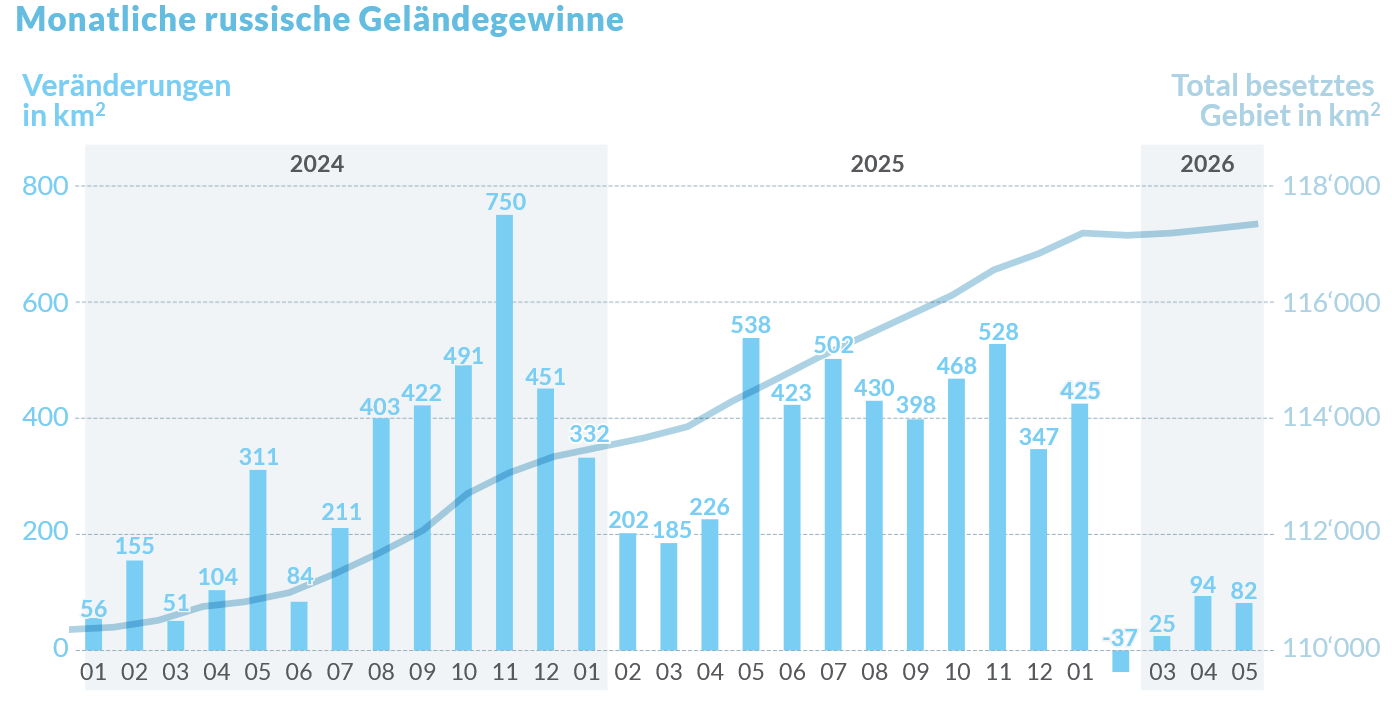
In addition, it was concluded that the situation of the Armed Forces of Ukraine has somewhat improved in recent months.
We really need your help
Sign up for regular donations
Subscribe to our Email Newsletter
Subscribe to our Email newsletter Morning Brief Weekly DigestBy subscribing, you agree to The Insider's user agreement and privacy policy , as well as Google's reCAPTCHA ( Privacy Policy , Terms of Service ).