
Translated material
The end of the dislike
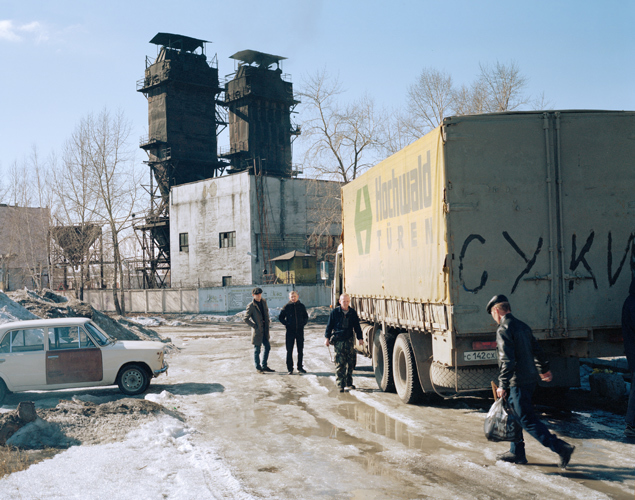
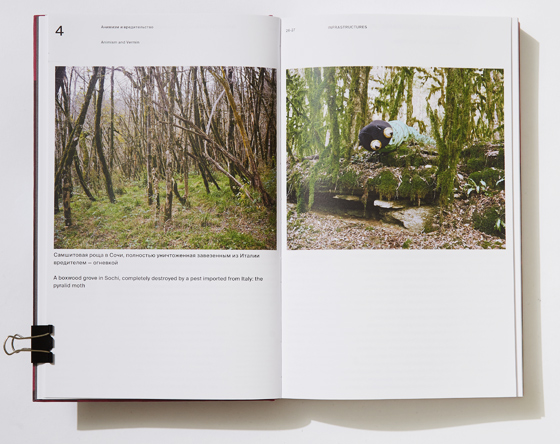
“Infrastructures” by Sergey Novikov and Maxim Shera is the long -awaited and most unexpected photo book of 2019. Released closer to his end in his own microdegunity of RE Current Books artists and supported by the Henry Bealle Foundation, she was written and starred for about three years. Both authors, who previously are known mainly by photographic series and books, as well as exhibition projects with an emphasis on visual, suddenly released the publication where there are more texts than photographs. The result was a strange genre, which some consider it a serious scientific work, while others refuse it both in the status of science and (especially!) In the status of art. Nevertheless, the resulting thick 350-page folio-bold, subtle and uncompromising, but precisely the artistic study of the relations of power in Russia. It not only went in the preparation of the surrounding reality and creating its explanatory model further than the work of many scientists, but also created a new synthesis on the wreckage of empires and theories.
Why a photo book text?
The dispute "Science or Art" seems hopelessly outdated. In fact, in our time, he calls his projects significantly more artists than “pure art” creates significantly more artists. So about Novikov and Sheru, they often say that their previous projects are “also analytical”. The nuance, however, is in the number of words, as well as footnotes and quotes. In addition, the publication is double -speaking, that is, the volume of the text is also doubled. The form itself therefore seems very similar to a scientific folio. However, reading and peering, you notice the difference.
First in words. Firstly, approximately the same circle of work is quoted. He is large - from Mikhail of Vysolensky and Richard Pipe to Alexander Etkind and Galina Orlova, but the scientist would most likely try to make him more diverse and would do without articles from Wikipedia. Secondly, the very style of the texts is too bright and emotional-evaluable. “Lenin allowed foreign concessions, Stalin and Beria had enough mind only on the Gulag Sharashki”, “But these thousands of bodies for total power are dust”, “Although real realism is valuable with its critical potential, Aivazovsky did not have it, no, we are not a scientific collection.
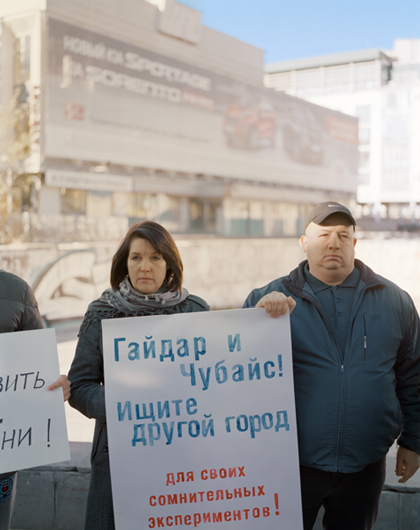 © Sergey Novikov, Maxim Sher Malaya Privatization, Public Space and Fear of involvement
Then - in the photographs themselves. If landscapes seem to be made in a documentary manner, then a vague doubt begins to creep on personnel with people. Faces, clothes, the visual manner of shooting itself seem too modern. It seems that in the era of privatization they dressed in a completely different way? It seems to be the slogan “Gaidar and Chubais! Look for another city! " written in a different font, “not in the” colors and in the manner, rather, modern imitators of rallies involving housing and communal services workers? Finally, you come across a reproduction of photos from the Soviet psychiatry textbook “The proud pose of a patient with schizophrenia with delusional ideas of greatness”: personally acquaintances will recognize in this Camo of Maxim Shera himself. There are no more doubts. Before us is a clear production. But one from which threads and seams of reality stick out. It seems that no one was going to wear the heroes of perestroika and the nineties in costumes of the era. This is something like a scheme that a hint of what happened then, and not at all accurate reproduction. However, both the Soviet textbook and the pictures of protests really existed, although somewhere the authors try, rather, to simulate the situation than to repeat the famous card. Without reproducing the shell of history, in their photographs, Cher and Novikov paradoxically try to convey its essence, but seen by the eyes of our time, from the distance of our knowledge about what happened next.
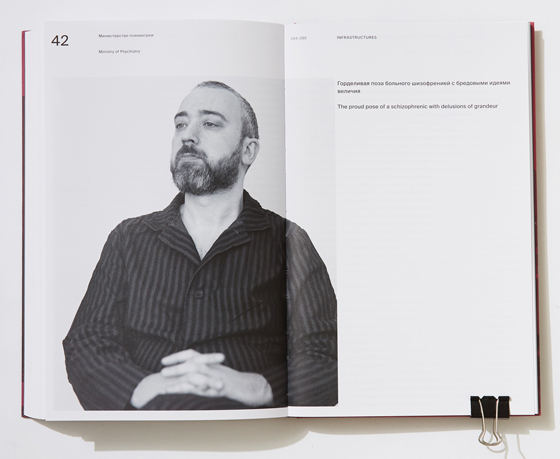 © Sergey Novikov, Maxim Cher Ministry of Psychiatry
The authors themselves do not particularly hide the fact of the production, but directly write about it in the introduction. And in this, by the way, the difference from the Sheer project “Map and the territory”, where pseudo -documents were mixed with real artifacts of the era. But in the "Infrastructures" to guess where the document is, and where its imitation, the audience himself falls, they do not give signatures. With this intense attention, the project draws into itself-either this is such a performance of a performance, or something like an immersive theater. At the same time, however, this is not a pre -scarter. Before us is not an attempt to catch the reader with a pseudo -scientific form, to deceive, tightening into trust, then to expose modern knowledge structures (as, say, at Joan Fontcerta). The authors are extremely serious in the main goal of their artistic analysis, although sometimes they clearly have fun. More precisely, their text is both serious and not serious at the same time, but this is not destroying the irony, not a game for the sake of the game, not the pasture of postmodern, not mocking. This is something completely different. But what exactly?
Genre without a name
Novikov and the Sherver are in no hurry to answer this question and disperse the doubts of the public. They claim that they cannot indicate the genre of the resulting work. Of course, for themselves, this is, first of all, the photo and artistic project- “On hidden, little-known and implicit institutions, practices and processes that are largely determining for the functioning of power, property and territories in the post-Soviet space”. In it, they “visualize and conceptualize ideas, techniques, tactics and discourses” [1] . Such a number of texts was not originally planned - "they thought to limit ourselves to a slightly more deployed capshens." But in the process of work, they came to the conclusion that "it would not turn out too deep, but we wanted to dig deep." In general, "independently photography does not fully describe the phenomenon."
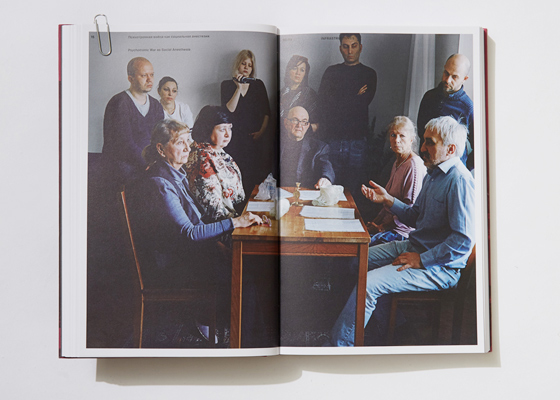 © Sergey Novikov, Maxim Cher Psychotron War as Social Anesthesia
This genre itself is not that new. Cher mentions several photo projects in a conversation with me, in which a large amount of text interacts in a complex way with the image. He suggests that they should evaluate their joint work with Novikov in this series - “ FISH Story » Alan Sokuly, " Fig . " Adam Brumberg and Oliver Chanarin, “ The Heavens . Annual Report ” Paolo Woods and Gabriel Galimberti and “ An American Index of the Hidden and Unfamiliar ” Tarin Simon. We can add many other things to this list - from the recent series of Rob Honstra to the book “ Let us now Praise Famous Men” by Walker Evans and James Adji. In general, the relationship of the picture and text is a long -standing topic in the theory and practice of photography. And those who consider (read?) Now the book has many background knowledge - from the works of Roland Bart about the role of the signature in the stop of “fluttering” “floating chains of the signified” in the photograph to more recent disputes about her death, because the image itself allegedly ceased to work in it, and the authors turned into “project writers”.
You can go beyond the photographs and recall the thoughts of the “innocence” of domestic culture (the authors themselves write about the “literary-centric country” in the 39th chapter) and the Soviet “inattentive viewer” (words of Mikhail Allenov). Maxim Cher also gives references to the curatorial experiments of Anselm Franca, whom Artreview calls the “master of exhibitions-explications” and “saturated, growing topographs of visual images, research and speculation”, and to Nikolai Smirnov’s thoughts on the artist as “new type of expert”, which endures “some kind of pseudo-vertic or partially Authoritative judgment based on situational and obviously incomplete amount of information about the subject. ” In any case, whether we are considering “ Infrastructures ” in the context of the history of photography, domestic culture or Contemporary ART , the fact of the inclusion of a large amount of text in the book does not automatically lead it out of art or a “photographic project”. But the genre uncertainty of “ Infrastructures ” with allusions to a variety of eras, and the very refusal of the authors to nail and stop fluctuations in meaning, of course, describe some new situation. Part of it is associated with global trends, and part - with what is happening right now in Russia.
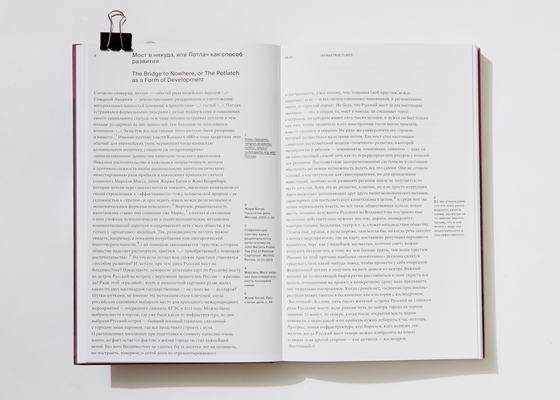 © Sergey Novikov, Maxim Cher Bridge to nowhere, or Potlach as a way to develop
The fact that the photograph of the 2010s does not make an attempt on a categorical choice, but creates flexible designs in which one or the other can come to the fore, now only the lazy does not write. The main slogan of our fluid era is diversity: if you want-do documentary classics, and you want something experimental. The dispute is only about whether we are completely out of Modernity in general, leaving somewhere already beyond the limits of the Renaissance. Totality is no longer in fashion - that the belief of modernism is the possibility of knowledge, that the deconstruction of postmodern.
Researcher Erin McNyol speaks of constant “playful vibrations” of photographs of the 2010s between previous eras. Instead of the postmodern denial of previous experience as a “reactionary” and the occurrence of a definitely ironic pastry in its place, the layers of the past are now connected more multi -layered: artists simply “pull out the threads of session from a larger fabric” and use them to begin a new dialogue [2] . In the manifestos of the new era, they recently searched for how “-an” to call it (“digicimodernism”, “postpostmodrn”, “altermodern”?), But in the last couple of years they admit: perhaps the very lack of a common word and is the main line of time of change. Personally, I like the term “metamodern” - simply because it refers to the Platonic Metaxis, that is, to the fluctuation between the poles, the possibility of removing their opposition and the constant dialogue.
In general, the fact that the genre of “ Infrastructures ” is difficult to predict and intersects the restrictions of the media is the line of our time. The borders sailed in the world - in a variety of meanings. Another thing is more interesting here. Namely, how specific authors work with this and what consequences it has for domestic photography.
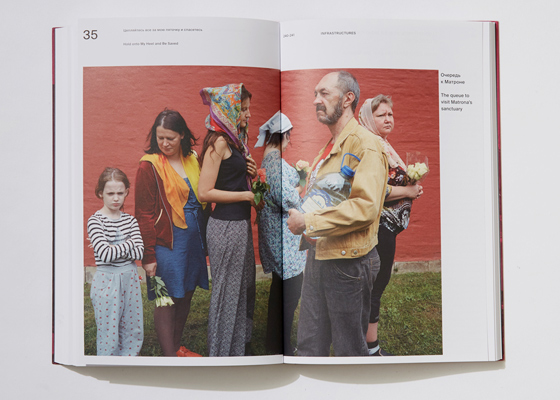 © Sergey Novikov, Maxim Cher cling all to my heel - and you will be saved
Analytical photography - research or alienation?
For a long time, theorists wrote that photography is an independent form of study of social and political relations, a quick cut of the surrounding reality. Actually, the ideas about the “optically unconscious” and the visualization of the invisible are stitched not only in the first works on the theory of photography (for example, Walter Benyamin), but also in early photographic practices. One of the most acute -critical photographs of Jacob Riis’s projects in the entire history of American photographs was called “how the second half lives”. Other phenomena of that era, like a political economy of Marxism or psychoanalysis (their “Infrastructures” , by the way, actively uses as instruments), were moved by the same pathos - to facilitate the life of the suffering people to reveal the invisible (unconscious, class relations) and transfer it to the area of the noticed. The difference is in visual: in the photograph it then became a separate tool for reflection, which exposed the carefully hidden and involved the viewer emotionally. The “Housing Year in the Nizhny Novgorod province” of Maxim Dmitriev Bel, on all the feelings of a prosperous person who, perhaps, was generally at all, he saw folk disasters.
It is clear that in the book of Novikov and Shera, the photograph does nothing like that. She looks consciously non -war -quality and seems to be still in line with the captured Russia and so far and not meaningful fashion on Deadpan . What did we see recently? In the late 2000s and early 2010s, dozens of two generations authors (now 30- and 40-year-olds) and several art groups decided that themselves and the country should be explored precisely with this type of modern shooting. Such a photograph was originally identified by the artistic environment as “progressive”, “young” and clearly focusing on the international context. It included a certain set of types and genres of shooting-for example, a landscape/landscape with a large number of “boring” objects or a special kind of neutrally trained portrait. There are still many projects about the remote territories and indigenous peoples, which, however, did not remove the problems of postimpery and orientalism in their own gaze.
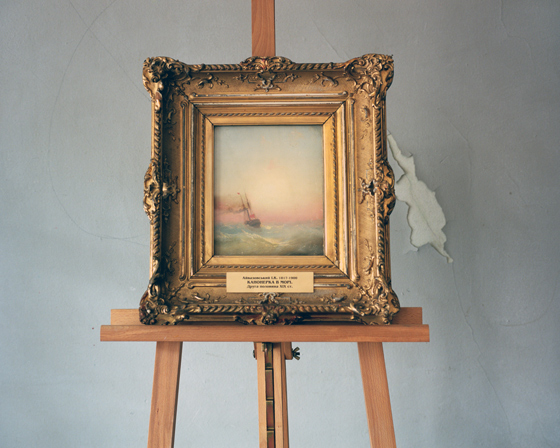 © Sergey Novikov, Maxim Cher Diplomacy of canheries and art prices
Deadpan in the West arose in the postmodern era, became a total style in the 1980s-1990s and was associated with the search for new ways to comprehend hidden structures both in a post-industrial society and the photograph itself. The Feadpan aesthetics are considered to be the Feadpan aesthetics, and the word is translated into Russian as “inexpressive”, “impassive” or “unemotional”. Such a photograph also works with the visualization of everyday and unnoticed cartography, but otherwise than before. Deadpan is a type of deconstruction, aesthetics O (T) of wandering and leaving from sentimental discussions about the emotional connections of the picture and reality, from the annoying “decisive moment”. And for Russian followers - also a rupture with Soviet and post -Soviet manipulating feelings. However, in Russia, he became, as they say, “style” only closer to 2010.
Is it possible, however, to shoot in the 2010s as in the 1990s or in general in the 1960s, pretending that the world has not changed? Contrasting himself with bravura optimism and “ray of light on the texture of the wall”, most authors of research photography carefully pushed all uncomfortable topics somewhere. So, in the West, Deadpan has long and actively criticized as class arrogance or boredom of “privileged men or women, cut off by a successful combination of good circumstances from the rest of the mass of mankind” [3] . “The extinction of affect” (Fredrick Jamison) also belongs to the already departed era: we live after a “affective turn”, during that actively establishes relationships, conducts a dialogue, works with communities and the use of the audience. Yes, now everyone can shoot in their favorite style, but still where is such a total?
Looking at these personnel, it was difficult to refrain from questions about the connections of pseudonymal tones with the collapse of Soviet documentary in the era of “socialist realism”; But, unlike the West, the connection between the instantaneous capture of the emotions of the photographer and reality was destroyed by us not in the era of deconstruction, but even in the twentieth-thirty. Or about the silence and gaping of injuries in a country that does not like to look at himself - is afraid or cannot, because it is very painful. On the role of boredom in the everyday life of the USSR and its study in the Soviet underground and photo clubs - say, the Kharkiv citizens Boris Mikhailov and Evgeny Pavlov. About the conceptual post -Soviet photograph of the nineties (not only in Russia, but also, for example, in Lithuania), which worked with the same topic of departure from feelings and alienation. And about the connections with the depressive "stability" of the 2000s. Is our frostbite is only “photography as a study”, Bekheres and Shor and Deikstroy, and not longing for pictures from the CPSU congresses with their “support-approval” or, say, “dislike” Zvyagintsev?
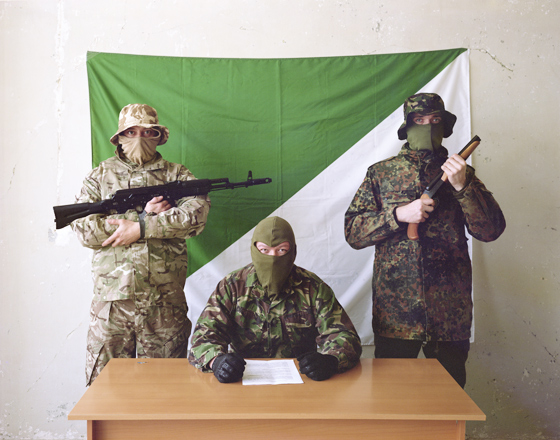 © Sergey Novikov, Maxim Cher Trading Threats as a way to extract rent
Goodbye, dislike
But it was precisely the detachment, as it seems, that it was not enough now to study the new reality. What is it? As it seems, the fact that many photographers working at the junction of documentary and concept, as if suddenly woke up and tried to go beyond the already close, constraining shell of a “neutral gaze”.
What does the text do in the book of Novikov and Shera generally? He literally blows up the photograph - contradicts it, argues, is indignant. And most importantly - in every possible way “emotions”. He gives assessments and formulates what you vaguely felt, but were afraid to understand. He actively empathizes with those whom it is customary to despise, considering himself “not like that” - more educated or having a taste. A paradox, but the word seemed to have changed with a photo imbalance. It is the text, and not the picture brings you a completely non -flattering mirror, surprises with sudden interpretations and compliance of facts, builds a vivid concept about the “political culture of conservatism” and the role of total uncertainty in the management of the country. He broadcasts a view of the history of Russia constantly involving a dispute - starting from the time of Ivan the Terrible, or even earlier. You can categorically disagree with him, accusing the authors of charlatanism or one -sidedness, but he will definitely not leave indifferent - you will have to determine your attitude. The text knocks you out of the comfortable chopperity of a freezing girl with matches. And, like a skull with burning eyes from another famous fairy tale, pulls a photograph behind him, literally makes him look around, not limiting himself to the usual topics.
 © Sergey Novikov, Maxim Cher Animism and Plutry
As a reader and spectator of the book, you always come across interesting, strange or completely unknown facts that transfer you to different eras and points of the country. Did you know, for example, that the “Dulles plan to destroy the USSR” is pages from the book of the Soviet writer and party functionary Anatoly Ivanov “Eternal Call”? Perhaps they knew? And that the wrecking became a separate article in the Criminal Code not under Stalin, but under Khrushchev - and this article existed in it until 1997, “and was placed in the“ State Crime ”section in a row with espionage and terrorism”? А готовы связать современных российских политиков с «альтернативными интеллектуалами» брежневской эпохи? Что вы слышали об истории советизации Тувы и о ее бессменном первом секретаре еще с досоветского времени по 1973 год? А помните, что только в одном 1988 году при официальной ликвидации советской карательной психиатрии реабилитировали 800 тысяч недавних пациентов? Согласны ли вы с тем, что конструктивистские города для рабочих, куда селили преимущественно начальство, — прообраз современных девелоперских «закрытых поселков с псевдоиностранными названиями»? А можете представить, что независимому фотографу практически невозможно сфотографировать «неприступного» Айвазовского, потому что не удается уговорить ни музеи, ни торговцев антиквариатом (авторы в конце концов пересняли картину в одном из региональных музеев Украины)?
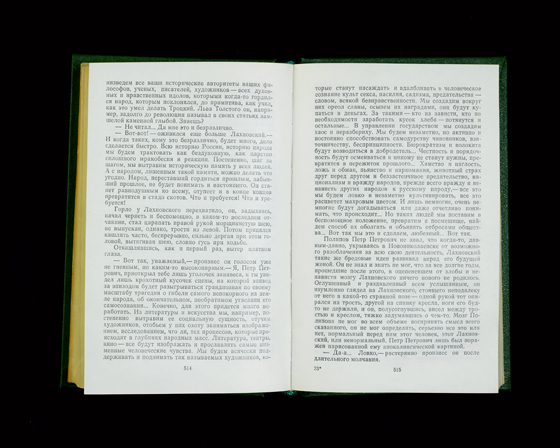 © Сергей Новиков, Максим Шер Вечный зов и разделение властей
Все эти археологические раскопки и наблюдения над современностью Новиков и Шер производят с тем особенным, пристальным, иногда обостренным вниманием, которое свойственно любящему взгляду. Если, конечно, под любовью понимать не некритическую лакировку и идеализацию, а заинтересованность и желание менять мир к лучшему. Их действительно увлекает вообще все происходящее в стране, и этот интерес затягивает. Многие читатели-зрители книги признаются, что не смогли отложить ее, пока не досмотрели до конца.
Но главное, пожалуй, в том, что, описывая модель поведения интеллигенции в России, в которой она, «сама считающая себя послом рок-н-ролла в неритмичной стране, но при этом зависящая от власти и фактически являющаяся ее частью», воспринимает народ как «непросвещенную, покорную массу», авторы из этой модели вырываются. Они ищут контакт между сословиями и эпохами, совершают ошибки и в чем-то демонстрируют то же самое, что только что критиковали, — и вдруг выходят за рамки привычного. На наших глазах они высвечивают, деконструируют и перемалывают высокомерие, имперскость и ориентализм — прежде всего в самих себе. Используя инструментарий мировой фотографии, они пересобирают взгляд на историю и современность заново, делая проект, одновременно очень местный и очень включенный в глобальные тенденции. Выходя же за границы фотографии, они преодолевают ее местную травму, полученную в предыдущие эпохи.
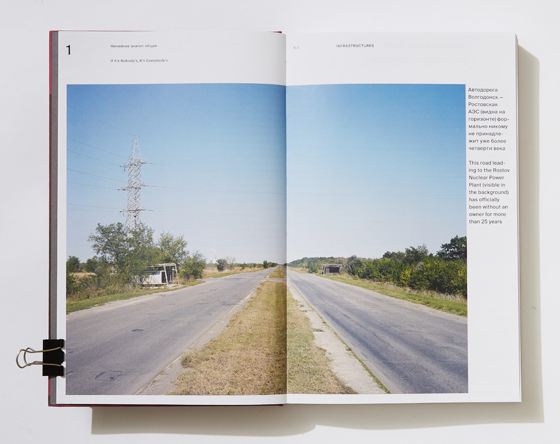 © Сергей Новиков, Максим Шер Ничейное значит общее
Такого рода работой, как кажется, в последнее время занято сразу несколько очень разных авторов. Павел Отдельнов, в эпичном по размаху, но очень камерном по чувствам проекте «Промзона» переводивший фотографию на язык живописи, перерабатывавший ее в рамках «аффективного музея» и искавший в обращении к переосмысленному deadpan не позиции «эксперта», но бережного контакта с прошлым собственной семьи — и многих других семей. Наталья Резник, в нескольких сериях (особенно в последней — о материнстве) исследующая при помощи фотографии связь между предельно личным и обобществленным, аффектом, телом и социальными конструктами — и тоже говорящая в итоге о любви. Раиса Зорина и Артем Беркович, делающие в екатеринбургском центре фотографии «Март» потрясающие кураторские истории, ставящие своей целью вывести фотографию за пределы «своеобразного гетто» и видящие в ней «одно из средств диалога автора со зрителем» . Евгений Молодцов, создающий сложные инсталляции в своих проектах о влиянии советского опыта на современность. Анастасия Цайдер и Петр Антонов, взявшие на себя в выставке «Новый пейзаж» работу кураторов и исследователей и сделавшие попытку одновременно осмысления и выхода за рамки «сурового» стиля. И даже, пожалуй, пионер deadpan в России Александр Гронский, чья « Schema » — уже ирония над тотальной деконструкцией руин советского, куда пробился солнечный свет, и Данила Ткаченко, который в вызывающих множество этических вопросов «Родине» и «Героях» пытается через выплески аффекта преодолеть опыт «абсолютного отстранения от себя, от своей личности» . Кстати, у критиков шел спор и по поводу того, являются ли его работы «завершающим этапом модернизма» (см. мнения Ларисы Гринберг, Ирины Кулик и Ирины Горловой) [4] .
Похоже, множество авторов сейчас вовсю преодолевает замкнутость внутри надломленного в XX веке советского фотографического взгляда, молчание коллективной травмы и мучительное ощущение тотального отчуждения от самих себя. «Infrastructures» , как и ряд проектов с использованием фотографии последних двух-трех лет, говорит нам о том, что чужое искусство перестало быть карго-культом, а свои история и современность стали по-настоящему интересными. Это одновременно подведение итогов XX века, уход от российского «реакционного постмодерна», переход к разнообразию и пластичности современной эпохи и укрупнение целей для будущего. Они преломляют фонтанирование аффектом российской политики после 2014 года, но уводят политическое в совсем ином, более человеческом и повседневном, направлении — оживления, оживания и новой жизни.
[1] Сергей Новиков, Максим Шер. Власть, собственность и территория на постсоветском пространстве. — М.: re current Books, 2019.
[2] E. McNeil. The Trajectory of Reflexivity (2013). In: R. Miller, J. Carson and T. Wilkie (ed.). The Reflexive Photographer . — Edinburgh, Boston: Museumsetc. Pp. 20–49 ( p. 35).
[3] PM Spacks. Boredom: The Literary History of a State of Mind. — Chicago : University of Chicago Press , 1996.
[4] «“Родина” в огне» ; «“Власть молчит и поджигает дома людей. Художник молчит и поджигает дома без людей”. Чем всех так задевает проект Данилы Ткаченко “Родина”» .