
Translated material
Mathematical experiment

We continue to talk with Dr. Fiz.-mat. sciences, dean of the Faculty of Mathematics of NIU-SHE, professor of independent Moscow University Sergey Lando (see Part 1 and Part 2 ) . Our first conversation took place three years ago, when the new faculty was only created, and now the time has come to summarize some results. Also, several of its teachers answered questions about the new faculty: Catherine America, Viktor Vasiliev , Mikhail Verbitsky , Sergey Loktev, Leonid Positselsky , Leonid Rybnikov, Vladlen Timorin and Evgeny Feigin . Talked by Natalia Demina .
You and I talked three years ago, when the work of the Faculty of Mathematics of the Higher School was just beginning. What do you consider the main successes of the faculty over the past time? What happened? What has not happened yet? How many students are teaching the faculty now?
Oddly enough, our plans are mainly implemented. Two main components of a good faculty have been formed - there was a high -class team of teachers, and good students come to us. The working conditions in the Higher School of Economics allow teachers working at full rate, not to spend considerable efforts on making money on the side, as a result of which they have time to research and communicate with students. Scientific life - seminars, special courses, conferences, trips - seething.
For the first three years, we gained an average of about 35 students, this year they came 48. Things are worse with a magistracy and graduate student. They were opened last year in the calculation of the involvement of graduates of other universities, and so far they have not yet unfolded in full force. With the growth of the faculty, there is more and more tightness-in one office there are 4-5 teachers, there are not always enough rooms for seminars.
Of course, I would like the faculty to be located in a convenient green campus, among other faculties of the university, so that each professor has their own office, and students have an independent classroom, so that students can sit in the grass during the break, having previously had a snack in one of the nearest student cafes, and professors could discuss scientific problems over coffee coffee in a professor club. This is not and in the next 2-3 years is not expected. However, now students have a wide selection of various special courses, special seminars and scientific leaders.
Many professional mathematicians came to the faculty. What in your opinion distinguishes teaching methods at the HSE mathematical faculty from the existing structures of mathematical education in Russia? More precisely, are there any differences and what are they?
The teaching staff of the faculty is one of our main achievements. That group of teachers who created the faculty set a very high bar of professionalism. So, out of 9 employees of the “first call” two - Viktor Anatolyevich Vasiliev and Boris Lvovich Feigin - made plenary reports at the International Mathematical Congress. This is perhaps the highest form of recognition by a professional international community. I have the feeling that the plank set then did not drop.
Say, three employees received a PhD degree in Harvard - to the employee from the moment of the foundation of the faculty of M.V. Finkelberg joined M.S. Verbitsky and L.E. PSITSELSKY. Their level can be judged, for example, by the fact that one of the recent reports at the Burbaka seminar (in the traditions of this famous Parisian seminar with a 60 -year history, which is going to the session twice a year, was dedicated to the fact that the work of Mikhail Verbitsky was devoted to the work of the most interesting recent results). At the same time, I note that we are conducting a competitive selection of new employees on scientific and pedagogical qualities, not paying special attention to what educational institution they graduated or where we defended the dissertation.
What is fundamentally important, among the new employees there are many youth - the age of 11 out of 23 associate professors does not exceed 35 years. This means that the personnel future of the faculty is also ensured.
A significant role in the replenishment of our teaching staff is played by close interaction with the leading Russian research center - the mathematical institute named after V.A. Steklova RAS. The institute agreed to education at the faculty of its basic department, which significantly expands the circle of research areas carried out by employees.
Educational activities are not closed to the staff of the faculty. In the past academic year alone, individual lectures were given to students such outstanding mathematicians as a professor at the University of Michigan in Ann Arbore Sergey Fomin, laureates of medals Fields Stanislav Smirnov and Vladimir Voevodsky, Andrei Agrachev. The great success, and not only our students, used mini-courses of the dean of the Faculty of Mathematics of Columbia University (New York) I.M. Krichever and Professor California University (University of California At Irvine) Vladimir Baranovsky.
In 2010, HSE took part in the competition of the Ministry of Education and Science to invite leading professors to universities. As a result of the victory in this competition at the faculty, the Laboratory of Algebraic Geometry and its Appendixes under the leadership of the professor of the Mathematical Institute of the Churant of New York University F.A. was created Bogomolov . This laboratory has a significant impact on the life of the faculty. Her Friday seminars collect algebraic geometers from all over Moscow, with the active participation of our students and graduate students. In the summer, the laboratory spent two weeks of schools, at which guys from other regions of Russia joined our students. Only in September, two international conferences were held together with Mian. With a dozen of our students and graduate students - laboratory staff, their research activities receive material support. And all this has been done less than a year.
In the preparation of curriculums, we focused, first of all, on the current state of mathematical science and on the experience acquired in independent Moscow University.
Each teacher is a prevailing researcher who knows which areas of mathematics and what approaches are used at the front line of research. This knowledge forms the principles of selection of the teached material and methods of its teaching.The small size of the faculty makes it possible to individually work with each student. This approach not only ensures the inclusion of strong students in research, but also allows you to timely identify the difficulties that arise and help in overcoming them. We are trying to carry out the course work in the first year. In 1-2 courses, these works are essential, 3-4 of them include the results of their own research.
How does the cooperation of the NMU and the Faculty of Higher School of Higher Professional Education develop? Three years ago, you talked about the fact that the creation of the faculty would not make NMU weaker, did it get conceived? Did you manage to make a single whole out of the old and new structure?
We did not plan to turn an independent university and Matfac HSE into a single whole. These are closely related, but completely independent organizations. After the creation of the faculty, the leadership of the Higher School of Economics supported a number of projects begun by an independent university, and these projects became joint. Among them is the Math in Moscow program , in which students from leading universities in North America come to Moscow for a semester to study mathematics. The courses that are read in English can also be attended and submitted by Mattaka students. This is the Moscow mathematical magazine - the most cited from Russian periodic mathematical magazines. It is published in English.
At an independent university, the appearance of the matfaces affected the most positive way. For this, for another reason, for the second year, the first lectures in the independent have been experiencing an unprecedented influx to the people. The only large hall at the university, where lectures are given to freshmen, cannot accommodate all 250 people who wish, and the administration had to organize a television broadcast in the dining room.
Of course, as before, few can stand the double load for a long time, but in itself, the desire for so many youths to fill in the lack of mathematical knowledge cannot but rejoice.
In addition, the transfer of part of the efforts of the veterans of an independent to the new faculty led to a noticeable update of both the administration and the teaching building. As a result, youth positions strengthened. So, my place of the vice -rector was taken by a graduate of independent Vladlen Timorin. Another graduate - Sasha Kuznetsov - entered the board and is one of the leading professors. In general, many graduates of the independent feel responsibility for his fate and participate in his work.
There was information on the network that there may be a shortage in the graduate school of the Faculty of Higher Professional Education this year. My other colleague said that there would be a lack of bias in graduate school in the MIK of Moscow State University. In your opinion, this is due to demographic problems or with a “brain leak” abroad and other spheres of life or with anything else?
The reasons you named do not, in my opinion, affect our graduate school: a dozen cool graduate students can be recruited in any demographic situation, and we are ready to compete with foreign graduate students in the composition of the scientific leaders. It is more likely that we consciously run ahead a little - there are no graduates at the faculty yet, so we accept graduates of other universities to graduate school. And it is not customary for us to change the university in the learning process.
It seems to me that graduates of Russian universities should be able to continue their education where they will receive the best training. At the same time, the fears of the professors of non -metallic universities are quite justified - the chances of the return of graduate students who have left are extremely small. The only thing that can rectify the situation is the creation of attractive working conditions in a large number of universities, so that the graduates who have left are returned there, but also graduates of other universities.
We hope that from next year the faculty of mathematics will be included in the HSE program of academic graduate school. Within the framework of this program, a graduate student receives a scholarship of 25 thousand rubles a month and takes on the obligation not to earn money on the side, concentrating on research.It seems that such conditions are able to attract children who are now forced to work simply to provide themselves with a piece of bread, and they have no time left for science.
What are the plans of the faculty for 2011-2012?
In this academic year, we plan to experiment with master's programs. We want to expand the current program, make English -speaking and try to attract graduates of not only Russian, but also European universities to participate in it. Now young Europeans come to us without a degree from case to case, for example, for internships. For a longer period, already defending French researchers come to the Russian-French laboratory of Ponzel. I would like to bring a strong base at the training stage for this cooperation.
In addition to the current, we plan to open a new master's program in mathematical physics. The scientific leadership of the program was agreed by the famous scientist Igor Moiseevich Krichever, who is now working at Columbia University in New York. Mathematical physics has been well represented at the faculty since its creation, now, with the advent of A.V. Rubrodin and A.V. Marshakova We are ready to arrange it in a separate direction. Otherwise, we plan to develop and strengthen already begun projects.
I also hope that the exchange agreement that we reached with the Parisian Ecole Polytechnique will work - both we and our French partners were ready to accept students of the magistracy this year, but there were no people who wanted to.
How does cooperation with other faculties of the tower develop? Are you participating in the work of the joint bachelor's bachelor's Bachelor of the Higher School of Sciences?
With other HSE faculties, we are in good neighborly relations. In those rare cases when we have to part with any of our students, we try to agree on the transfer to another faculty of tower (perhaps with the loss of the year due to the difference in the curriculum). A number of subjects are read by employees of other faculties. In addition to the subjects of the socio-humanitarian cycle and a foreign language, the theory of probability and programming are included here.
The joint bachelor's bachelors of the HSE-Rash-an interesting undertaking, by the way-costs its considerable mathematical forces. And this is right, mathematical training at such a faculty should be specialized, although not narrowly focused. Another thing is that among those who entered this program, apparently, there are potentially our applicants. But we have nothing against such competition.
Are you satisfied with the level of applicants who come to the tower? Are there any problems with the set? Is the exam a convenient tool for choosing the best?
In general, we are satisfied with the applicants we are recruited. A significant part of them are children with good preparation, configured for mathematics. Most of the rest are also ready to make considerable efforts, and sometimes progress is very noticeable. As a result, we have a small screening. Yes, and he is compensated by the fact that strong students from other universities are transferred to the faculty, who learned from their comrades about the atmosphere that have developed, who want to get into it in order to feel modern mathematics.
In previous years, the selection at the faculty took place according to the results of the Olympiads and, in addition to the exam, we conducted our entrance exam. This exam served as a kind of barrier that allows applicants to navigate and understand whether their aspirations coincide with what awaits them at the faculty. His tasks - although simple, but unusual, demanded for their solution to a real understanding of school mathematics.
This year we did not have our entrance exam, but the Russian Council of Olympiads of schoolchildren increased the level of the mathematical Olympiad we conducted from the 3rd to the 2nd. This largely unleashed our hands, allowing only the results of really high -quality Olympiads. As a result, for the first year this year, 33 winners and winners of various Olympiads were adopted, of which 8 are winners and winners of the All -Russian Olympiad in mathematics. We have no doubt that a strong core of impressive sizes is formed on the course, around which mathematical life will spin.
As for the exam, your formulation of the issue of choosing the best implies the situation of 40 years ago: many strong schoolchildren knock on the doors of the selection commissions of a large number of leading mathematical and natural scientific faculties of the country, waiting with a signs of heart, waiting for whether they will pass, and the commissions only remain to come up with a way to seize the strongest and this way to use it. Now the situation is different - applicants are striving for faculties of economics, public administration and hotel facilities. So to 380 statements filed at our 50 budget places, we reacted calmly - it was initially clear that a significant part of these guys entered their statements to the selection committee only because it turned out to be along the road.
For us, an important factor is the desire of applicants to learn from us, and the exam is only a confirmation of the fact that they can study. All received the exam in mathematics more than 80, and the minimum amount of assessments for three exams (mathematics, Russian language and physics) is 243. At the same time, we are not threatened with an influx of applicants with unrighteously passed exams - it is difficult for me to imagine that a person who bought the result of the exam in mathematics, then voluntarily condemned himself to study mathematics for another 4 years.
Of course, a month or two studies will adjust our ideas about freshmen, but so far we have high hopes for them. Decisions on the format for the next year are largely determined by comparing the academic successes of this and previous sets.
In general, the “qualifying” function of the exam worries me little. The influence of a single exam on school education is much more important, but it will be possible to judge the consequences of this influence only after a few years and only with the help of other forms of independent control.To our obvious shortcomings, I would attribute a small number of nonsense among our students. So, this year, no more than a third of applicants were received from the Moscow Region. Apparently, this means that we have not yet found the channels of sufficiently effective dissemination of information about the faculty at the all -Russian level. But birth talents are not at all concentrated within the Garden Ring or even the Central Administrative District.
If you look back three years ago, can you say something about a change in the situation in mathematical education in Russia? Are there any progress for the better? Or does the situation are gradually changing to the worst? Or did you still have the same?
It is difficult for me to judge school mathematical education as a whole - applicants who come to us and 40 years ago would satisfy the most demanding taste, but this is only a very small and far from random sample. But in higher education over the past year, significant shifts have been outlined that I would associate with ministerial grants. Three such mathematics grants (Smirnov’s laboratory at the St. Petersburg University Matmeh, Dubrovin’s laboratory at the MECHMAT MSU and the Laboratory of Bogomolov with us) have already significantly changed the educational landscape (I know less about Treshchev’s labeling in Izhevsk; perhaps, given the scale of the city, its influence is even more noticeable).
The student schools spent by these laboratories are already counted from half a dozen. In addition, their employees are not limited to participating in their schools, but give lectures and conduct classes in traditional summer schools organized by the Yaroslavl University, the Yekaterinburg University and the Institute of Mathematics of the Russian Academy of Sciences, and the University of Mining and Altai. If the financing of the current laboratories is continued outside the grants allocated to them until 2012, if other laboratories are formed in the same format, they will be able to give an impetus of mathematical education not only in their basic, but also in other universities.
At the same time, I do not see significant changes in the remuneration of teachers working in classical and technical universities, including federal and national research. If the conditions for those who receive and publish scientific results of a high level are not created in these universities, then there can be no question of any breakthrough, and without a breakthrough we are doomed to further lag.* * *
Comments of faculty teachers:
 Victor Vasiliev. Photo: NIU-VSHE
Viktor Vasiliev , Academician of the Russian Academy of Sciences, President of the Moscow Mathematical Society, chief researcher Mian, professor, head. Department of Geometry and Topology of the NIU-VSHE:
Which, in your opinion, is distinguished by teaching methods on a mat. HSE Faculty from existing structures of mathematical education in Russia? More precisely, are there any differences and what are they?
In the narrow sense of teaching methods, the main difference is the method of “leaflets” once introduced by N.N. Konstantinov in matches and guarantees individual work with each student: the teacher is talking about each task with him, explains his mistakes, fills out the gaps, at the same time tells something interesting on the topic of the issue. But, strictly speaking, this does not distinguish us from all “existing structures”: this system is also adopted in an independent university.
What is really important - that Sergey [Lando] managed to gather teachers who are ready to engage in this and generally non -standard work with students.For example, with a leaflet system, the actual load on the teacher increases greatly: instead of one person, 3-5 people work at the same time in the audience; At the same time, this is formally counted in the load only one.
It is probably still important that most of our teachers managed to work in the West, more than a third defended the dissertations there, and two were born and learned there (as usual in this context, I classify Japan to the west).
* * *
 Mikhail Verbitsky. Photo: NIU-VSHE
Mikhail Verbitsky , pH. D. University Garvad (USA), head. Laboratory of algebraic geometry and its applications, associate professor of the Faculty of Mathematics NIU-SHE:
Which, in your opinion, is distinguished by teaching methods on a mat. HSE Faculty from existing structures of mathematical education in Russia? Are there any more differences and what are they?
Regarding the methods of education at some (not all) courses of the Mattaka, they are closer to the Konstantinov System, which is practiced in matches: students are issued a leaf with tasks at home, and they pass them, verbally communicating with the teacher. Of course, there are more teachers (about 1-2 by 10 students), but this is a good way to take graduate students who also learn a lot from communication with students and analyzing decisions.
Ideally, a student will be able to study the material of the course without lectures at all, exclusively solving the problems.
In general, the culture of informal communication that develops on the matfaces, it seems to me, is very useful for scientific classes. For example, many students call many teachers named and on "you", and this is encouraged.In this regard, the matfaces are approaching American universities, where communication without ranks is also practiced (this is generally an important part of American culture, and, in my opinion, very positive).
* * *
 Leonid Positselsky. Photo: Ippi RAS
Leonid Positselsky , Ph.D. Harwad University (USA), researcher at the Laboratory of Algebraic Geometry and its Appendices, Associate Professor of the Faculty of Mathematics of the NIU-SWE:
Which, in your opinion, is distinguished by teaching methods on a mat. HSE Faculty from existing structures of mathematical education in Russia? More precisely, are there any differences and what are they?
The difference is, first of all, for the purpose of such teaching.
Teaching at the HSE matfaces is oriented, first of all, to be useful to students who are preparing to become professional scientists in the field of pure mathematics.This does not mean that we expect that almost all of our students will become such pure mathematicians. Most of them, of course, will be engaged in something else in life, and the knowledge and skills acquired from us should be and, I am sure, they will be useful for this.
Но прежде всего наша цель, или если, может быть, мне лучше говорить от своего имени, то я вижу свою цель как преподавателя матфака в том, чтобы те из наших студентов, которые станут чистыми математиками, становились ими, так сказать, не вопреки тому, через что они проходят, обучаясь у нас, не преодолевая препятствия, которые факультет и его учебный процесс перед ними ставят. А наоборот, чтобы им были созданы у нас условия, предоставлены возможности и стимулы к получению такого образования, которое позволит им впоследствии вести исследования в области чистой математики на по-настоящему высоком научном уровне.
Тут надо сказать, что в России существуют как бы две традиции математического образования. Одна из них – это традиция, строго говоря, не математических даже, а, как они обычно называются, механико-математических или математико-механических факультетов университетов. Для этой традиции характерна большая обязательная программа, в рамках которой студентам предоставляется очень мало выбора, какие курсы они хотели бы слушать, т.е. всем студентам данного курса читают примерно одно и то же. Содержание же этой обязательной программы мало изменилось за последние полвека и отражает, я бы сказал, взгляды и вкусы российской математической школы по состоянию восьмидесяти или девяностолетней давности.
Причем надо сказать, что в те времена, в конце девятнадцатого и начале двадцатого века, российская, а потом советская математическая школа была достаточно провинциальной. Здесь были интересные, подчас даже самобытные, научные направления, но самое важное в мировой математике того времени в России почти не было представлено. И вот эти достаточно провинциальные взгляды на математику восьмидесятилетней давности отлились здесь в программу ее преподавания, которая стала обязательной для всех студентов, а потом окостенела и почти не менялась в последующие пятьдесят или восемьдесят лет.
Конечно, так нельзя готовить научных исследователей в области математики, и механико-математические факультеты не готовят научных исследователей в области математики. Они готовят преподавателей математики для технических инженерных вузов, а также для педагогических вузов. Надо сказать, что программы преподавания математики в российских технических вузах традиционно достаточно близки к программам ее преподавания на механико-математических факультетах университетов, а разница между ними состоит в основном не в списке изучаемых тем, а в количестве часов, которое отводится на их изучение. То есть в технических вузах проходят почти весь тот же самый материал, но в несколько раз быстрее, а на мехматах университетов его разбирают подробнее. Это, конечно, в известной мере приспособлено к тому, чтобы выпускники мехматов преподавали в инженерных вузах, или, может быть, работали вместе с инженерами на каких-то промышленных производствах, и так далее.
Чтобы развеять миф о том, что на мехматах готовят математиков, достаточно отметить, что, пожалуй, самый важный раздел современной чистой математики – это алгебраическая геометрия, а другие важнейшие разделы тесно с ней связаны. Но на мехматах, с их кафедральной структурой, нет кафедр алгебраической геометрии, да и на кафедрах алгебры специалистов по алгебраической геометрии нет или почти нет. Студент может окончить полную программу своего мехмата, получить свои пятерки и даже не узнать о самом факте существования алгебраической геометрии. Или, например, такого важнейшего понятия современной математики, как когомологии, различные теории гомологий и когомологий, и так далее.
Если цель состоит в том, чтобы готовить чистых математиков, вернее сказать, помогать стать чистыми математиками тем студентам, которые к этому стремятся, то важнейшим учебным предметом должен быть такой раздел математики, как алгебраическая и гомотопическая топология. Это осуществлено на матфаке ВШЭ, где читается серия курсов алгебраической топологии разного уровня, начиная со второго и немного даже с первого курса и дальше для старшекурсников. Всемирно известный математик, академик РАН Виктор Анатольевич Васильев читает на матфаке ВШЭ эти курсы алгебраической топологии, которые он много лет уже читает в Москве. Когда-то он делал это в неформальном порядке, во второй половине 80-х годов я школьником ходил к нему на занятия по алгебраической топологии. Потом он читал эти курсы в Независимом Московском Университете, а сейчас это происходит на матфаке ВШЭ.
Тут мы возвращаемся к ранее высказанному тезису о двух традициях математического образования в России, и, конечно, вторая традиция – это традиция специализированных математических школ. Она более поздняя по периоду своего зарождения, где-то с 70-х годов, и существует в гораздо меньшем масштабе, конечно, но это традиция, в рамках которой стремились заботиться о математически одаренных школьниках и помогать им получить такое образование, которое позволит им, если они того захотят, вести научные исследования в области чистой математики на хорошем уровне. Этой традиции в Москве в постсоветское время наследует Независимым Московский Университет, а теперь и матфак ВШЭ.
Чего вы ждете от работы на этом факультете и почему выбрали именно его, а не какой-то другой?
Жду возможности позаниматься осмысленным, полезным делом в области преподавания математики; помочь научиться математике тем студентам, которые сами в этом заинтересованы.
Почему выбрал именно этот факультет, подробно объяснено в моем ответе на предыдущий вопрос; меня привлекает та особенность этого факультета, и не привлекают те особенности других факультетов, которые там подчеркиваются.
* * *
 Екатерина Америк. Фото: НИУ-ВШЭ
Екатерина Америк , доктор Лейденского университета (1997), хабилитация университета Париж-11 (2007). Является научным сотрудником и преподавателем этого университета с 1999 г. (на этот учебный год взяла отпуск за свой счет). В 2009-2010 учебном году была приглашенным членом Institute for Advanced Study в Принстоне:
Что на ваш взгляд отличает методы преподавания на матем. факультете ВШЭ от существующих структур математического образования в России? Точнее есть ли какие-то отличия и в чем они заключаются?
Когда мы сами учились на мехмате в конце 80х - начале 90х годов, большой проблемой была крайняя архаичность заметной части учебной программы. Насколько я понимаю, отчасти из сопротивления этому появился Независимый Университет, где одной из основных задач было достаточно быстро ввести студентов в курс современной математики. Преподаватели матфака Вышки - это в основном преподаватели Независимого Университета, так что
есть все основания надеяться, что это есть и будет столь же прогрессивное учебное заведение – с поправкой на то, что работать здесь нужно с более разнородной публикой.Чего вы ждете от работы на этом факультете и почему выбрали именно его, а не какой-то другой?
Другого просто нет! Даже если бы я хотела преподавать на мехмате, вряд ли я смогла бы туда попасть - даже объявлений о конкурсе на какую-нибудь преподавательскую должность в МГУ я пока не видела. Почти все мои московские приятели-математики работают в Вышке. Насчет ожиданий - пока трудно сказать: семейные обстоятельства сложились так, что этот год лучше всего провести в Москве, вот пытаюсь разобраться, что делать дальше.
* * *
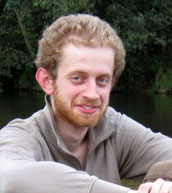 Евгений Фейгин. Фото: НИУ-ВШЭ
Евгений Фейгин , канд.физ.-мат.наук (МГУ), работал в Кельне (Германия):
Что на ваш взгляд отличает методы преподавания на матем. факультете ВШЭ от существующих структур математического образования в России? Точнее есть ли какие-то отличия и в чем они заключаются?
Если коротко, то основное отличие заключается в индивидуальном подходе к студентам. Каждый студент имеет возможность задать интересующие его вопросы лично преподавателю. При этом вопросы могут касаться как текущих занятий, так и затрагивать интересующие студента дополнительные темы.
Чего вы ждете от работы на этом факультете и почему выбрали именно его, а не какой-то другой?
Для меня ключевое достоинство Высшей Школы Экономики это уважительное отношение как к студентам, так и к сотрудникам. При этом обязанности сотрудников заключаются не только в преподавании, но и в научной работе.
В частности, серьёзные научные результаты ценятся и поощряются не меньше, чем педагогические успехи. Такой подход, а также открытость к сотрудничеству с другими российскими и зарубежными институтами и университетами, позволили собрать очень сильный состав учёных-преподавателей на факультете математики.* * *
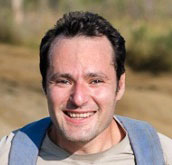 Сергей Локтев. Фото: НИУ-ВШЭ
Сергей Локтев , канд.физ.-мат. наук (МГУ), стажировался в университете Чикаго, был постдоком в MSRI (Бёркли, США) и университете Киото (Япония), признан лучшим преподавателем 2011 г. на факультете математики в номинации «Лектор» :
Что на ваш взгляд отличает методы преподавания на матем. факультете ВШЭ от существующих структур математического образования в России? Точнее есть ли какие-то отличия и в чем они заключаются?
Стиль преподавания на нашем факультете – синтез трёх следующих подходов:
1) мех-мат 60-х (класические семинары и спецсеминары);
2) система листков Н.Н.Константинова (изначально придуманная для математических школ, а затем распространённая в НМУ на младшие курсы);
3) университеты Европы и США (письменные экзамены, учёт активности в семестре в итоговой оценке).
Чего вы ждете от работы на этом факультете и почему выбрали именно его, а не какой-то другой?
Просто включился год назад в интересный проект, над которым работает яркая команда талантливых математиков (а теперь и математических физиков), со многими из которых я хорошо знаком по другим проектам (НМУ, лаборатория математической физики ИТЭФ).
Думаю, что наличие двух полноценных факультетов чистой математики оздоровит в ближайшее время ситуацию с высшим математическим образованием в Москве.* * *
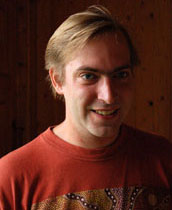 Леонид Рыбников. Фото: НИУ-ВШЭ
Леонид Рыбников , канд. physical. наук (МГУ), доцент факультета математики НИУ-ВШЭ , признан лучшим преподавателем 2011 г. на факультете математики в номинациях «Лектор» и «Руководитель семинарских/практических занятий» :
Что на ваш взгляд отличает методы преподавания на матем. факультете ВШЭ от существующих структур математического образования в России? Точнее есть ли какие-то отличия и в чем они заключаются?
Преподавание на матфаке ВШЭ во многом похоже на то, как это устроено в константиновских матшколах (57, 179) и НМУ. Система листочков с задачами, которые выдаются студентам для самостоятельного решения с последующим обсуждением один на один с преподавателем. Основная разница в том, что здесь (в отличие от НМУ и даже матшкол) учить приходится, в том числе, и не очень мотивированных студентов, которые по собственной инициативе задач не решают. И вообще, не иметь в виду, что все имеющиеся студенты хотят в жизни заниматься в основном математикой (преподавая в матклассе, можно позволить себе притворяться, что это так). Вообще, отличие от НМУ в существовании каких-то обязательств – сделать так, чтобы каждый слушатель из моего курса извлек для себя что-нибудь; сделать так, чтобы почти все слушатели рано или поздно сдали экзамен, и т.д. – все это накладывает отпечаток и на стиль преподавания.
Чего вы ждете от работы на этом факультете и почему выбрали именно его, а не какой-то другой?
Здесь как минимум 2 разных вопроса -- почему я стал вообще где-то преподавать, и почему если преподавать, то именно здесь. Первый вопрос философский, на второй можно ответить. Думаю, что мне не из чего было выбирать – альтернативой была работа за границей, чего мне по многим причинам не хотелось.
То, что как раз в нужный момент образовался этот факультет, было для меня совершенно сказочным везением. Здесь я в привычных условиях, мне близок этот стиль преподавания, еще со школы. Здесь люди, с которыми мне приятно вместе работать. Здесь платят зарплату, которой хватает на то, чтобы жить с семьей в Москве.При этом, у меня остается время на науку – даже на то, чтобы практически в любое время года куда-нибудь на конференцию поехать. Здесь замечательные студенты – мне это не было очевидно до того, как я начал здесь работать, но сейчас это совершенно ясно. Надеюсь, мне еще удастся у них поучиться…
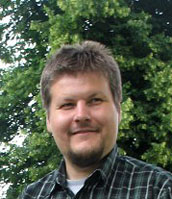 Владлен Тиморин. Фото: Университет Торонто
Владлен Тиморин , PhD ( University of Toronto, 2004), канд.физ.-мат. наук (МИАН), научный сотрудник Лаборатории алгебраической геометрии и ее приложений, признан лучшим преподавателем 2011 г. на факультете математики в номинациях «Лектор» и «Руководитель семинарских/практических занятий»:
Что на ваш взгляд отличает методы преподавания на матем. факультете ВШЭ от существующих структур математического образования в России? Точнее есть ли какие-то отличия и в чем они заключаются?
Есть технические отличия в том, как устроен учебный процесс, но это не так важно. Важным мне кажется то, что мы уделяем очень много времени неформальному, внеаудиторному общению со студентами о математике. У нас на каждого преподавателя приходится по 3-4 студента, у всех нас есть прописанные присутственные часы, но ими общение не ограничивается. У каждого студента (начиная с первого курса) есть индивидуальный проект.
Я обсуждаю проекты со студентами до 8 часов в неделю лично, и еще по электронной почте. Формальное преподавание (лекции и семинары) занимает меньше времени.
Чего вы ждете от работы на этом факультете и почему выбрали именно его, а не какой-то другой?
Я надеюсь, что факультет станет международным лидером в области математики. То, что на факультете интересно работать, связано с тем, что он очень активно развивается, и все время появляются новые достижения – по крайней мере, пока.В 2000 году я уехал в аспирантуру в университет Торонто, там защитился, потом работал до 2009 в университетах США и Германии. При этом я никогда не думал, что уехал навсегда. И вот после 9 лет пребывания за границей я сообразил, что если вообще собираюсь вернуться, то нужно сейчас.
Выбор же факультета был для меня очевиден: матфак Вышки был единственным математическим факультетом России, который рекламировал свои вакансии и приглашал на интервью математиков, работавших за границей. Конечно, немаловажным было и то, что мне предложили достойную зарплату.
Сокращенная версия интервью с Сергеем Ландо опубликована в газете "Троицкий вариант - Наука", №88 от 27 сентября 2011 г.
Смотрите также: Сергей Ландо Арифметика публикаций Наталия Демина Новая ветвь математической школыНаталия Демина Математическое образование и маркетинг репутаций Сергей Ландо: мои ожидания связаны с новым факультетом математики ГУ-ВШЭ