
Translated material
Brains for departure
As pressed against professor Sergei Guriev and why he preferred emigration
Political emigration - a phenomenon for modern Russia is not new. But if earlier the disgraced oligarchs left for the west, the opposition hiding from the prison or simply random victims of the repressive machine, today the situation has changed: the intellectual elite was reached out abroad, loyal to the Kremlin until the last minute. This is what the flight to France Sergei Guriev primarily speaks of. It is interesting that the authorities themselves are not at all upset at all: “He wants to leave-he leaves, wants to leave-he leaves, wants to return-he returns,” commented the departure of the world-famous economist, the presidential spokesman Dmitry Peskov. Why did Guriev leave and why would the pretense of calmness of those who now steer Russia are about this in the main topic of the number.
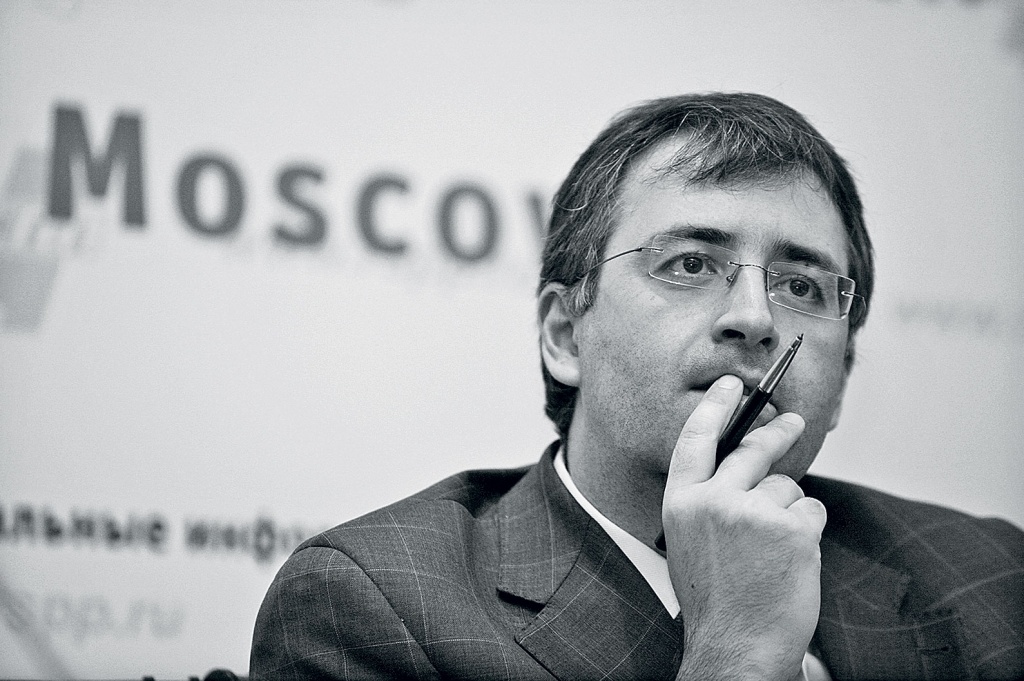
Sergey Guriev before a speech at the conference, 2012
Choice
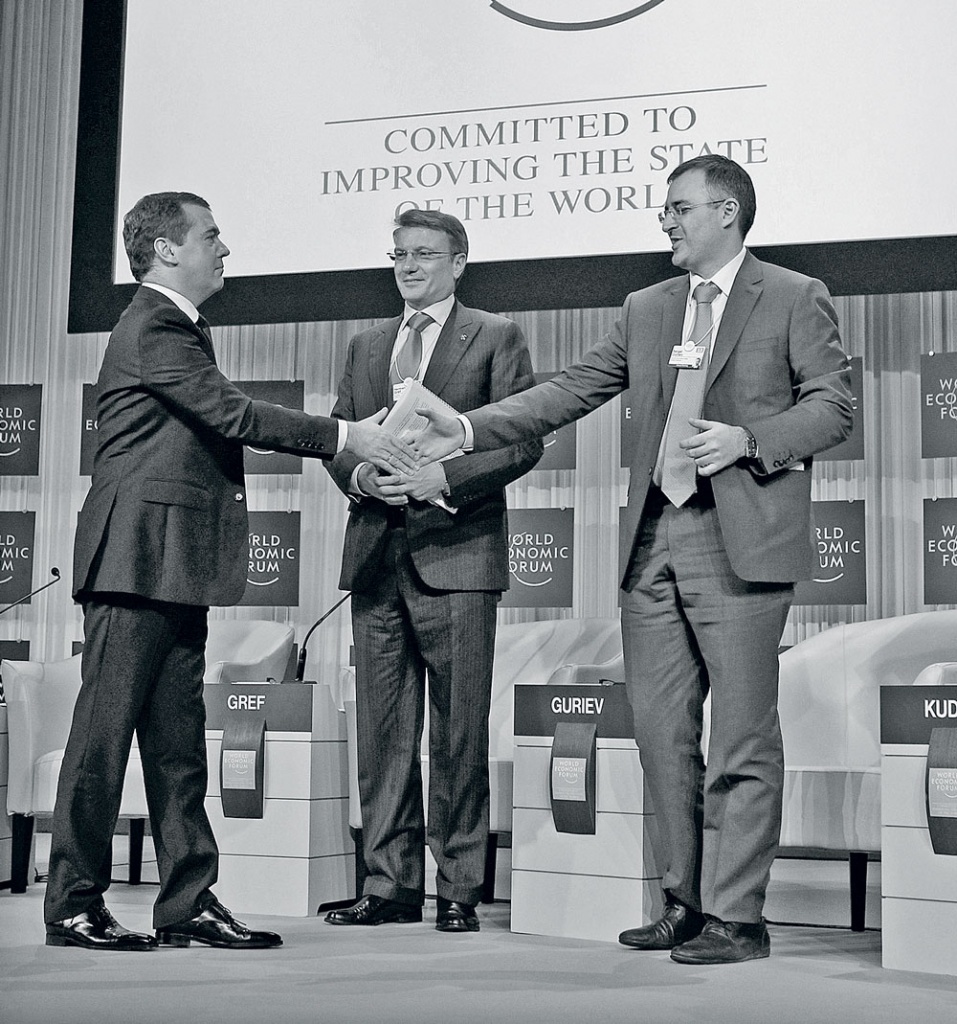 |
| January 23, 2013 Prime Minister Dmitry Medvedev, Chairman of the Board of Sberbank of Russia German Gref and rector of the Russian Economic School Sergey Guriev (from left to right) at the plenary session of the World Economic Forum "Scenarios for the Development of the Russian Federation" |
He booked a one -way ticket on April 29 at 9.50 pm: Air France, Moscow - Paris. The next day, he threw into the backpack the electronics - laptop, backups, discs, flash drives (not to take clothes, did not take anything else in the house), drove to the Belarusian, sat on Aeroexpress to Sheremetyev. He sent Kate Sesamsk to his wife: "When you arrive, most likely I will not be at home." - "Where will you be?" - not understanding his conspiracy, she asked. He did not write that in Paris, he did not - the phone was already tracked for a long time, and passport control at the border and all the pleasures associated with “operational support” (so the investigator of the fogs expressed in the last conversation), he had only had to go through. Therefore, he answered vaguely-something like "well, where you would like to see me."
Katin plane landed in Sheremetyevo at 15.30. At the passport control, a hitch suddenly came out: a passport of a professor at the Russian Economic School and the Parisian School of Economics and one of the most cited Russian scientists, Catherine of the Zhuravskaya border guards, copied for a long time-from the first page to the last, then they carried somewhere, they called somewhere, consulted with someone. Katya thought: “It will be funny if they don’t let me go home.” She flew to Moscow for a long time, all the May holidays were already painted: who to meet with, who was invited to their home to dinner, to whom they and Sergey are coming; On May 6, they were going to be on Bolotnaya. She still did not know that the plans had changed, and changed dramatically: so that the whole former life would go somersault. “Come on,” the border lady told her. And she breathed a sigh of relief.
Sergei-then the rector of the Russian Economic School, a member of the Golden Hundred-the Kremlin’s personnel reserve and the young leader of the future, according to the world economic forum in Davos,-the investmentist professor Sergei Guriev was waiting for his wife in the bar next to the Aeroexpress platform. There, in the bar, he told Katya about the events of the last days: about the fact that the seizure of email from his working computer was made for three days - on Thursday, Friday and Saturday (April 25-27), that the investigator of the fogs at the last interrogation in the same place, in the office of Rash, April 25, asked if Guriev was collected for medical investigations, which was familiar, including familiar, including with different significant significant significant significant significant ones Guriev refused to call them the surname (to call them the New Times) and the insider, the day before they told him: “Perhaps you better leave now.” What would happen next - no one could predict. Search at home? Subscription about the non -departure - oh, it would be, despite the fact that the wife and children most of the time - abroad, quite Jesuit decision. Arrest? In short, he made a decision. At 19.45 on April 30, Sergei Guriev was already sitting on an airplane: he flew to a country where he had neither a long -term visa nor work; In a country whose language he did not know and where he was not too knew (the assessment of Guriev himself) and certainly would not be invited to the supervisory board of the largest National Bank with compensation of $ 120 thousand per year. In Moscow, he left everything: the business - he was the rector of RASh for almost ten years, and it was thanks to him, according to experts, it became a world brand, entered the 100 best economic schools in the world; status; A very decent income by world standards. In Paris? Katya, children and freedom, with a guarantee that no one will come and take her away tomorrow. But the word "emigration" was still poorly fit in his head.
System liberal
| *The founder and first president of the Institute of Open Economics until 2005 was Konstantin Kagalovsky, a member of the board of directors and a large shareholder of Yukos ** see, for example, a businessman dated 02.04.2012 *** "Expert" No. 19 of 14–20.05. 2012 **** Internet publication Slon.ru, 05/15/2012 |
This story has several starting point: the return to the Kremlin of Vladimir Putin. Less than a month after the triumphant victory in the elections and the tears of the guarantor’s happiness at a rally of supporters in the center of Moscow on Manezhnaya Square, on April 2, 2012, Lifenews.ru has appeared on the Internet-Boarding Material: Experts who did an examination on the second “Yukos case” by order of the Civil Society Development and Hospherication Council (HPC) under the President of the Russian Federation (it was in 2011, in 2011, it was in 2011, in 2011. When Dmitry Medvedev still served the president), they received money from the Khodorkovsky Foundation, which means that the examination was paid (more details - “Experts - Dube two” ). Among the others, there was a RASH - as a recipient of 1.5 million rubles from the Institute of Open Economics* - and its rector Sergei Guriev, who in his analysis gave a sharply negative assessment of both the evidence system and the court decision in the second case of Khodorkovsky and Lebedev. True, the fact that sponsorship was in 2003, when Guriev was not yet a rector, but was in Princeton, where he lectured without me and was spent without me, ”he told The New Times), and the examination was ordered to him eight years later (SIC!), In March 2011, the exposures did not report.
On the same day, the newspaper ** also stated the statement of the press secretary of the Investigative Committee Vladimir Markin: "The human rights organizations headed by members of the Presidential Council were financed by Mikhail Khodorkovsky." The surname Guriev was not mentioned. But she appeared in mid -May in the editorial article and the note "Gaponchiki" in the magazine "Expert" *** close to the power of the Kremlin. There, enemies of the people were already designated quite specifically and unequivocally: “A triangle from radical oppositionists who support them of the media and sympathizers“ experts ”. Under the “radical opposition”, first of all, Alexei Navalny was meant, and Guriev, adviser to Prime Minister Medvedev and a member of the open government was called the main “sympathetic expert”. For days earlier, Guriev publicly said that he had transferred 10 thousand rubles. The Fund for Combating Corruption, since “the Fund implements key civilian initiatives in the fight against corruption; its activity is based on the correct principles of openness and accountability ”; “The fact that the authorities rather does not like than loves Alexei Navalny means that the fund will not have people who will look for easy ways and cheap glory” ****. He is not afraid of all questions, that he himself and the Rash he headed will begin to have problems, Guriev then answered with a laugh: “No, of course” (see excerpts from his interview with The New Times, given to them exactly a year ago, at the end of May 2012, lower). And he repeated: “I am a free person. Until I violate the law, no one can forbid me to say something and do something. ” It was still a vegetarian time: the “mass riots” on Bolotnaya on May 6 had already happened, but the exes of the performers seemed to be a “furious printer” on the Okhotny row still did not begin to print repressive laws, many young and new persons entered the Medvedev government, and Guriev himself was called the Potential Minister of Economics, then the future Minister of Education. He never received an office in the White House, but he was quite located to cooperate with the authorities, actively participated in the activities of an open government, persuaded Alexei Navalny to enter it - which he publicly told everyone (Navalny refused, but his fund employees participated in a meeting on corruption, at which Guriev chaired by Prime Minister Medvedev), his colleague was deputy minister Resh Igor Fedyukin, who headed the struggle with linden dissertations and fired from the ministry (as they say, with a “wolf ticket”) is exactly last week. (Igor Fedyukin refused in the commentary of The New Times.) From the side it seemed that, at the beginning of the summer of 2012, Guriev was in euphoria, and perceived threats from the SK and, especially from the “expert” as small bites from which he was completely protected. And in vain.
Conspiracy theory
After the first mass rallies in Bolotnaya and Sakharov in a circle close to the security forces of journalists and political scientists, the theory was first voiced by journalist Mikhail Leontyev on discussion in the journal in early February 2012): de, these protests were initiated, if not by Medvedev himself (which by that time had long been abandoned by the election to the second The presidential term, but was declared the future prime minister and was very active in the public space), then his closest environment, which sees in the middle class that has been released on the streets-the base of his future support. Putin’s positions, despite the more than 60% in the elections, seemed weak, and the fact that GDP would have to dissolve an illegitimate Duma-this is at least in order to prevent the dispersal of protest in large cities, then they said quite openly. Guriev including. The lines of the connections of the “conspirators” were built as follows: Medvedev and “Party of the Second term” (that is, those who persuaded the Duumvir to be elected against Putin for a second term), a large business, invested in all kinds of modernization projects like “Skolkovo”, and Guriev as an intermediary - with business, and Western investors, and with Navalny. The events of recent months suggest that the theory of the conspiracy deeply sunk into the souls of Putin’s closest encirclement - and the punishing sword of the regime guards went to cut off their heads. Criminal cases against the Skolkovo Foundation, accompanied by statements that through payments to one of the leaders of the Left Front and State Duma deputy Ilya Ponomarev, the opposition was financed, exactly the same explanations-secretly supported the “swamp”-sensational dismissal from the government Vladislav Surkov, criminal cases against the close deputy prime minister Arkadia Dvorkadia businessmen like businessmen. The recent head of the Corporation of the “resorts of the North Caucasus” and the vice-president of the Olympic Committee Akhmed Bilalov, the challenge for interrogation in the IC of the chief organizer of the Russian “Silicon Valley” Viktor Vekselberg, who in his efforts was in every possible way Medvedev (never, Putin (surrounded by a businessman, quite frankly complained that Premier Putin Putin Putin Putin Patin Skolkovo is defiantly not interested in the Skolkovo project), finally, squeezing out of the country of Sergei Guriev - all these are links of one chain.
However, a source close to the head of the government prefers softer grades: “People who were offended by Medvedev (when he was the president) cannot be touched, and therefore they beat people from his encirclement,” he said.
Under the cap
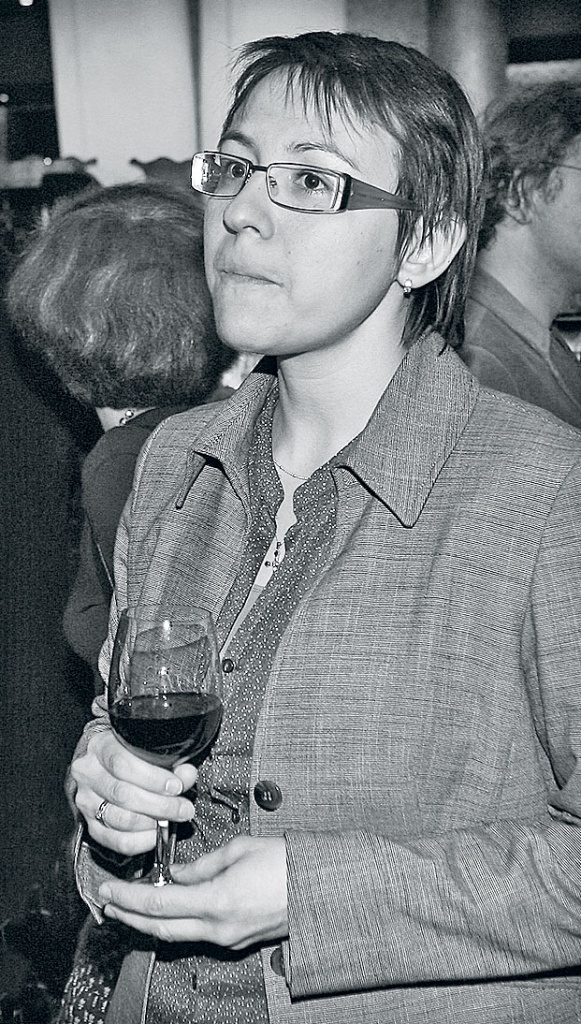 |
| The wife of Sergey Guriev is a professor at the Paris Economic School and Resh Ekaterina Zhuravskaya, one of the most cited Russian scientists |
The first serious call for Sergey Guriev was rang in December 2012. Resh celebrated its 20th anniversary, Arkady Dvorkovich came to the celebration, conveyed congratulations and letters from Prime Minister Medvedev. Many professors Rash received letters - Guriev did not. “It was a signal that there was no more support for the prime minister: Medvedev, fearing Putin’s wrath, was afraid to even sign him a letter,” comments Guriev’s colleague.
At this time, the “Expert case” was already given a full move. And Tamara Morshchakova, who headed the group of independent experts in the second “Yukos case”, warned Guriev that he could be summoned for interrogation to the Investigative Committee. The agenda came in early February, an interrogation in the UK (this was the only of three interrogations that passed directly in the building of the UK) took place on the 12th and lasted about three hours. What questions the investigator asked, Major General Tumanov, that the rector of Rash answered them-both Guriev himself and his lawyer Ruslan Kozhuk categorically refuse to tell: they both gave a signal of non-disclosure.
Speaker SK Vladimir Markin in a telephone conversation with The New Times commented on the story: “I have nothing to say about Guriev. About a month ago he was called. I just asked the investigator: was he called for interrogation? He confirmed: called. In my opinion, according to Yukos, but I honestly don’t remember. ” A month ago, that is, April 25, the investigator came to the RASH himself: Guriev said that the next interrogation would be carried out, but the investigator got not only a decision on the search for the search - it was indicated precisely on April 25, but also a “resolution on the production of the excavation of documents containing the secret of correspondence”, dated April 9, 2013: the judge of the Basmanny District Court was given by the judge of the Basmanny District Court Moscow Skuridina I.A., and the prosecutor’s office at this secret meeting was represented by the senior prosecutor of the Prosecutor General’s Office Lakhtin V.A. -Yes, the same Lakhtin, who played the role of the public prosecutor in the second process in the case of Khodorkovsky and Lebedev.
Both of the above -mentioned decisions through third hands were at the disposal of The New Times, and they give an idea that the UK was trying to present to Guriev - while he is in the case as a witness.
The texts of both decisions are one, dated April 25, signed by the investigator M.V. Tumanov, the other, dated April 9 - judge I.A. Skuridina - with the exception of the first paragraph and the final, the decisive part are identical: this is the same text, even the errors did not consider it necessary to correct. For example, the judge of retired Constitutional Court Tamara Morshchakova on the second page, the second paragraph of the protocol signed by the investigator, and on the second page, the fifth paragraph of the protocol signed by the judge (in this document the cap of the document is longer, which is why the paragraphs on the next page were shifted) were named as “Morshchakova E.G.”. (see photocopy from the document below), after two paragraphs and in the other protocol is already correct - "Morshchakova T.G." In other words, permission to violate one of the most important constitutional rights - the rights to the secret of correspondence - the judge of the Basmanny court waved without looking.
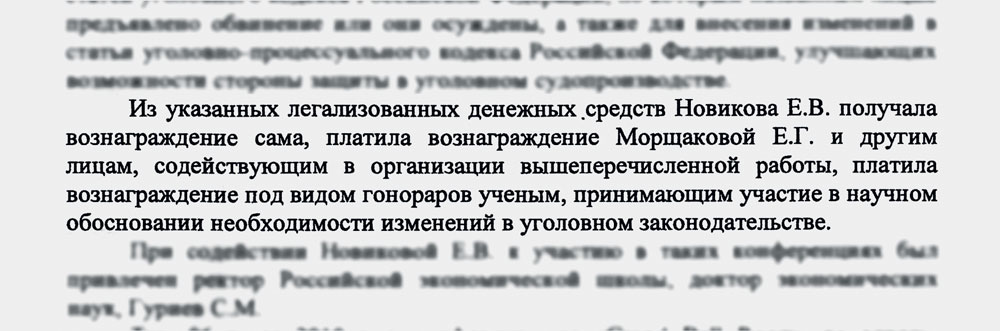
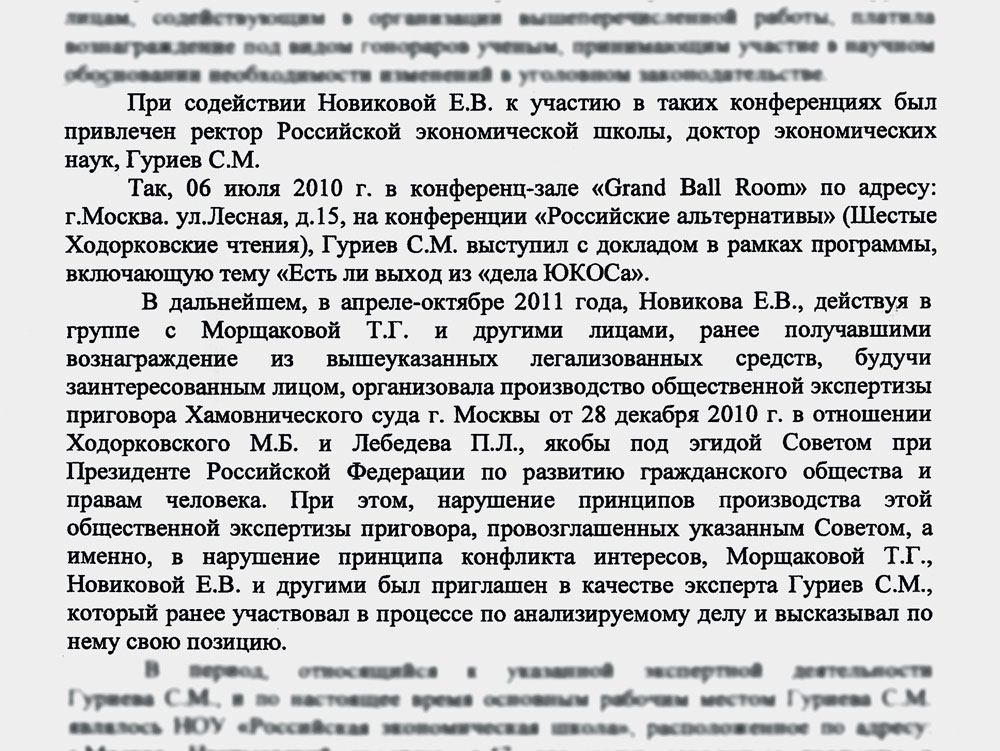
Excerpts from protocols of April 9 and April 25, 2013


The plot of the prosecution is as follows. The basis of everything is a criminal case No. 18/41–03, this is the first “Yukos case”. “The leaders of the organized group Khodorkovsky M.B. and Lebedev P.L. ”, having stolen 200 million tons of oil worth more than 824 billion rubles, through their minions abroad of their homeland, they began to wash this money, for which they created in Amsterdam, the STICHTING ADMINISTRATIEKANTOOR YUKOKOKS INTERNATIONAL UK BV and part of the money The experts were transported - “to receive the conclusions of specialists in a criminal case beneficial for these persons” - that is, for Khodorkovsky and Lebedev, as well as for all other activities in their support - for example, conferences.
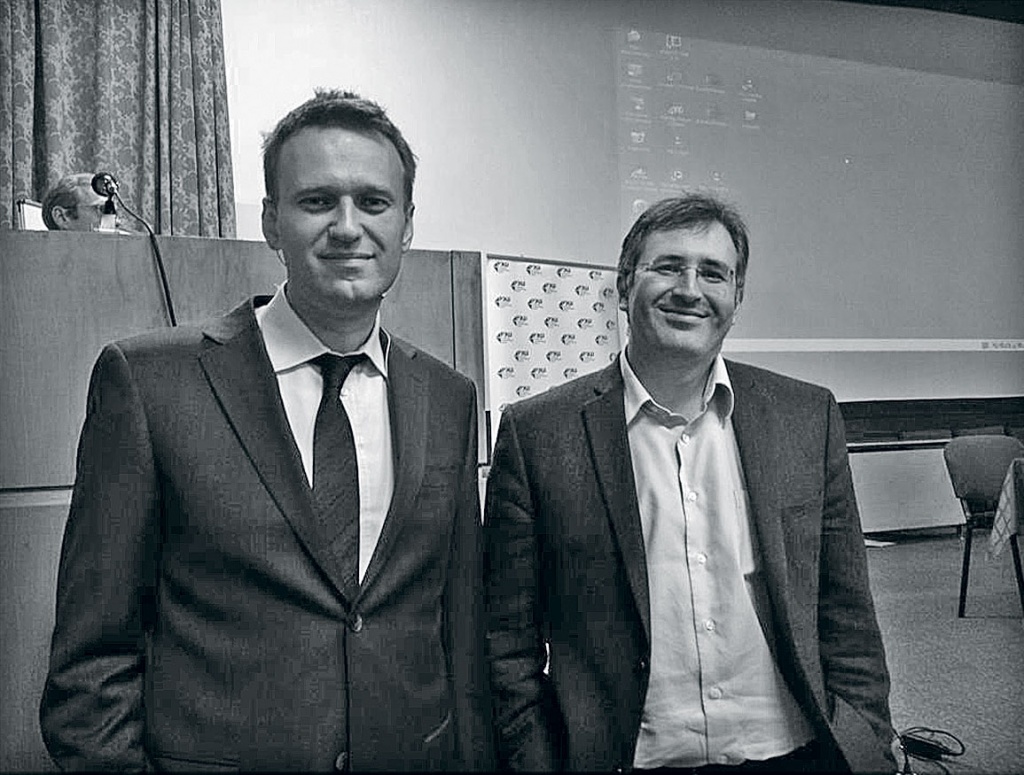 |
| Alexei Navalny Rector Rash Guriev in 2012 invited students to meet with students |
Here, finally, the surname Guriev appears: firstly, on July 6, 2010, he participated in Khodorkovsky readings in Moscow with a report “Is there a way out of the Yukos case. (Guriev confirms participation in the conference, but he spoke at sessions on the prospects of the Russian economy, and not on the Yukos case.) Was secondly invited as an expert by the Presidential Civil Society Development Council for the “production of public examination of the sentence of the Khamovniki Court of Moscow dated December 28, 2010”. All. The investigator prudently does not mention the 2003 grant in 2003, but a completely fantastic phrase appears: “He was invited as an expert Guriev S.M., who previously participated in the process in the analyzed case and expressed his position on it.”
The head of the Khodorkovsky lawyers group Vadim Kluvgant told The New Times that in the first or the second “Yukos case”, Guriev did not act as a witness, or as an expert and in any of their processes - pre -trial or judicial - did not participate. What was based on the investigator of Tumanov, incriminating Guriev “Participation in the process” and the conflict of interests arising from this was not able to find out: Major General does not give comments.
Guriev’s lawyer Ruslan Kozhuka, connected by non -disclosure, did not comment on the protocols either, only noticed that “he does not understand how the sponsorship of Rash in 2003 and the examination made by Guriev in 2011 can be interconnected: no actions that were charged with my indictine, he did not perform.”
The absurdity of the accusations of the investigation was obvious to many, including those who have access to the first person of the state. По сведениям The New Times из весьма проверенных источников, с президентом Путиным 14 февраля (то есть через два дня после первого допроса Гуриева) говорил вице-премьер Игорь Шувалов. Президент вроде бы сказал, что опасаться Гуриеву нечего, и даже позвонил главе Следственного комитета Александру Бастрыкину — де, не надо никого запугивать и действовать следует аккуратно. Правда, как рассказывают, при этом Путин якобы произнес фразу «Гуриеву надо поменьше п****ть». (Представитель Игоря Шувалова от комментариев отказался.)
И действительно, некоторые члены совета директоров РЭШ настоятельно рекомендовали ректору не говорить о Навальном, не давать интервью и не писать политические статьи. Гуриев сей факт подтверждать не стал, но анализ показал: он и вправду перестал появляться в передачах «Эха Москвы» и давать интервью печатным и интернет-СМИ.
Как понял главу государства генерал юстиции Бастрыкин и что на самом деле ему сказал президент — остается только гадать. Но спустя четыре дня, 18 февраля, следователи пришли в РЭШ — сделали выемку документов и провели второй допрос. Следующая повестка пришла 14 марта — допрос предполагался 21-го, но в это время Гуриев находился по делам за границей. Тогда же, в марте, Гуриева стали особо тщательно проверять на пограничном контроле: «Я однажды спросил пограничника, — рассказывает Гуриев, — против моей фамилии стоит специальный «флажок»?» — «Мы не можем об этом говорить»,— ответил пограничник, но по его лицу было видно: да, я помечен». «Флажки» — то есть распоряжение отслеживать передвижения имярека — пограничникам дает ФСБ. Тот же вопрос Гуриев позже задал и следователю Туманову, тот ответил: «Ну есть такая вещь, как оперативное сопровождение». Гуриев заметил, что он находится в статусе свидетеля, а не обвиняемого, и хотел бы, чтобы его перестали оперативно сопровождать. Аргумент его не был услышан.
25 апреля, как мы уже писали, следователь Туманов вновь пришел в кабинет ректора РЭШ. Гуриева предупредили, что будет допрос, но следователь вынул из кармана то самое постановление судьи Басманного суда, которое позволяло изъять его электронную почту с трех разных электронных адресов. «И я подумал: что он вынет из кармана в следующий раз? Постановление о подписке о невыезде? Arrest? И это меня очень напугало», — рассказал он The New Times. Кстати, на вопрос, а не готовят ли ему обыск и дома, следователь ответил Гуриеву: «Ничего нельзя исключить».
Ну а кроме того, уже за рамками допроса, между кандидатом физико-математических наук и доктором экономических наук Гуриевым и генерал-майором юстиции следователем Тумановым состоялся примечательный разговор.
«Я пожаловался следователю, что считаю изъятие у меня почты незаконным, — рассказывает Гуриев.— На что тот ответил: «С академиком Сахаровым похуже поступили». И спросил меня, не собираюсь ли я куда-то перебраться на постоянное место жительства? Я сказал, что если со мной будут поступать так, как с академиком Сахаровым, а поступили с ним, сказал я, плохо, то я, конечно, уеду».
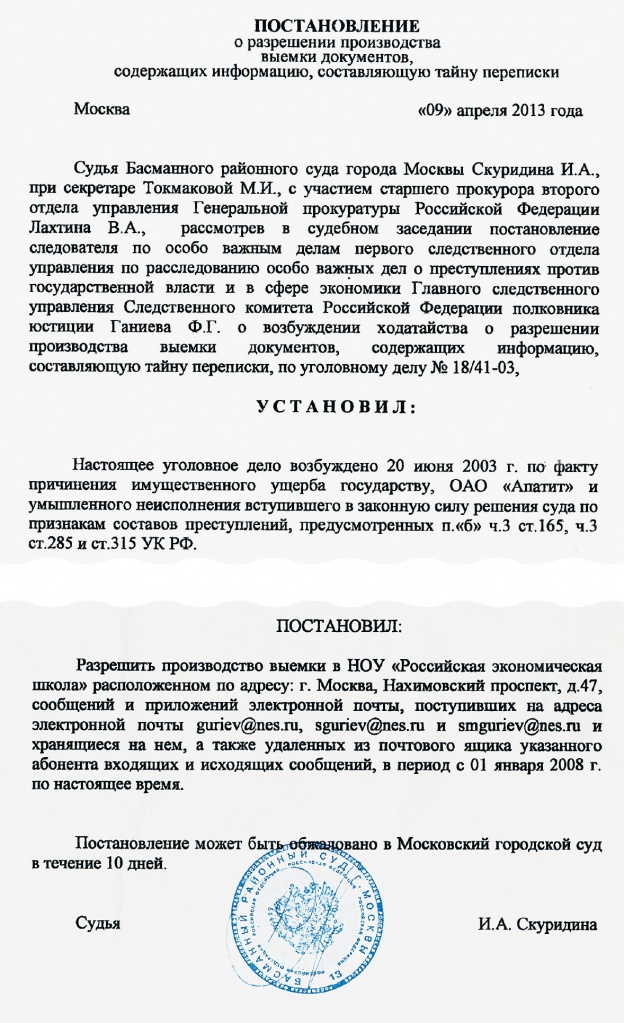 | 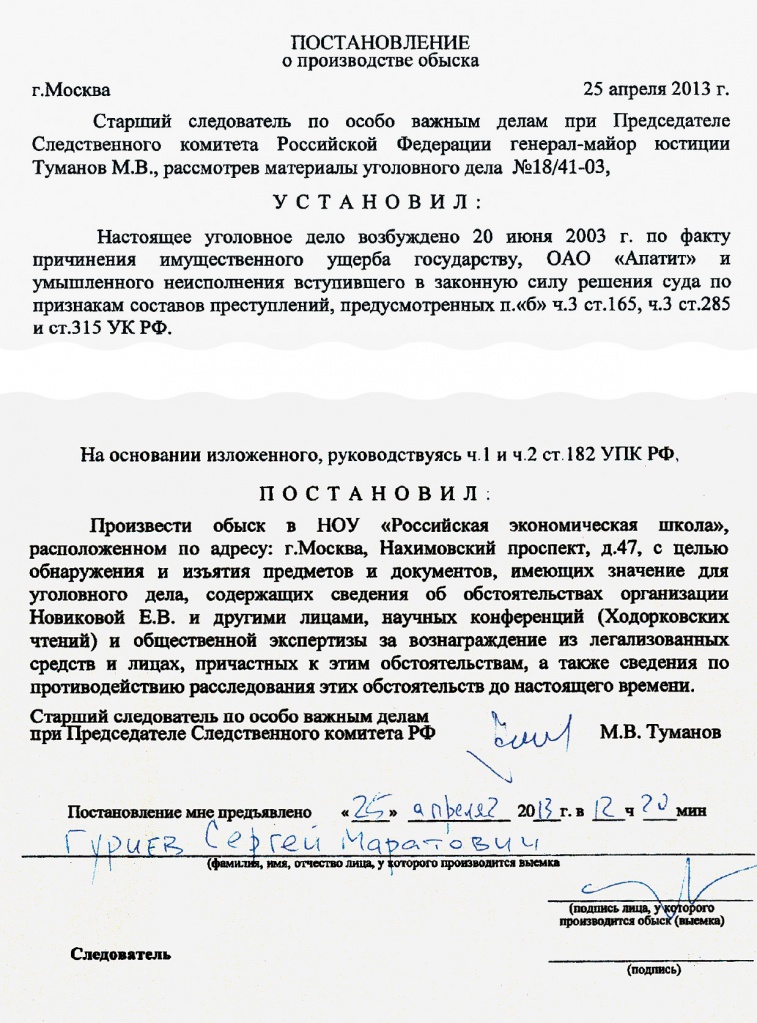 |


Единственное, чем отличается протокол, подписанный судьей Басманного районного суда Скуридиной (вверху), и протокол, подписанный следователем Тумановым (справа) — это их названия и постановляющая часть в конце. В остальном они совершенно идентичны
Alternative
О том, что Гуриев покинул страну, в Москве знало считанное количество людей — он не хотел окончательно захлопывать за собой дверь. 11 мая из Москвы пришел слух: Гуриев попал под раздачу, потому что проводится спецоперация против всех друзей Навального. 14 мая он начал поиски работы. Нашел довольно быстро: место приглашенного профессора в парижском университете социальных наук Science Po — контракт на год, читать два курса: микроэкономику и политэкономику. И продолжал ждать — ждать из Москвы гарантий, что преследования его по совершенно незаконным, как считают он и целый ряд опрошенных The New Times юристов, основаниям будет прекращено. И к главе государства вновь потянулись ходоки: по информации The New Times, в третью неделю мая c Путиным разговаривали глава Сбербанка Герман Греф и вице-премьер Аркадий Дворкович (пресс-секретарь вице-премьера и пресс-служба Сбербанка от комментариев отказались), еще раньше — бывший министр финансов Алексей Кудрин. «В конце концов подключился и Дмитрий Медведев», — сказал The New Times вовлеченный в ситуацию источник. Путин вроде бы повторил, что Гуриеву ничего не угрожает, он может спокойно вернуться, но вмешиваться в дела Следственного комитета глава государства не будет.
Реакция собеседников на эту информацию была диаметрально противоположной. Одни говорили: «Отбили», Гуриев спокойно может вернуться. Risks? «Ну да, будут тягать на допросы — ничего, походит». Другие добавляли: «Знал где живет, должен был понимать, что коли защищаешь Навального, то должен адекватно оценивать последствия». Третьи шли еще дальше: «В конце концов, если бы появилась подписка о невыезде или даже угроза ареста, то тогда мог бы уехать через Белоруссию или Украину». Четвертые считали, что Гуриев прав и никаким словам Путина верить нельзя. Мудрые и много повидавшие адвокаты объясняли: «Все эти разговоры даже с президентом следственную машину остановить не могут. Машина имеет огромную инерцию, и, запустившись, она уже остановиться не может. Остановить дело можно, только пока не попал в жернова». Сам Сергей Гуриев на все это отвечает просто: «Я ни в чем не виноват, я никакого закона не нарушил. И тратить жизнь на допросы и выемки не хочу, думать, что я могу сказать, а что опасно — не хочу. Я выбрал свободу».
28 мая факт эмиграции Сергея Гуриева стал общеизвестным.
30 мая совет директоров РЭШ удовлетворил его прошение об отставке с поста ректора Российской экономической школы — им стал пожизненный профессор РЭШ, профессор-экономист Станислав Анатольев. Член совета директоров и один из главных спонсоров РЭШ Петр Авен сказал The New Times, что надеется, что «РЭШ как уникальное образовательное учреждение, несмотря на всю эту историю, выживет».
31 мая состоялись годовое собрание акционеров Сбербанка России и выборы в его наблюдательный совет: несмотря на то что Гуриев официально отказался баллотироваться на пост независимого директора банка, за него было подано 22 млрд 734 млн голосов — больше, чем за всех остальных — и на два с лишним миллиарда больше, чем за главу Сбербанка Германа Грефа, который по итогам голосования занял второе место.
«Я хочу не только любить своего мужа, но и уважать его: Сергея пытались поставить на колени, он принял решение уехать — я это решение считаю правильным»,— сказала автору жена, Екатерина Журавская.
The New Times спросил Сергея Гуриева: «Ровно год назад в интервью журналу на вопрос, можно ли, морально ли взаимодействовать с властью, вы ответили: да, можно, потому что это работа на благо страны, а не на конкретных людей. Как бы вы ответили сейчас, после всего того, что с вами произошло?» — «Ну что вам сказать: Игорь Федюкин попытался, боролся с плагиаторами, делал свою работу, и его выгнали». Одна из самых известных академических работ соавторов Сергея Гуриева, Георгия Егорова и Константина Сонина, посвящена дилемме, которая встает перед авторитарным правителем: выбирать умных и компетентных чиновников и советников или необязательно умных, но лояльных. Ответ был: суверен предпочитает лояльных. Жизнь это в очередной раз подтвердила — теперь на судьбе уже бывшего ректора РЭШ.
Из интервью Сергея Гуриева The New Times, № 17, 21 мая 2012 г.
Вам предлагали войти в правительство?
No. Хотя до меня доходило немало слухов: как кандидата в министры образования и науки и министра экономики. И даже министра финансов. Я это не воспринимал всерьез.
А если бы вам предложили войти в правительство, согласились бы?
Думаю, что это такой очень гипотетический вопрос, и он зависит от мандата /.../
А моральной дилеммы здесь не существует? Вы ходили на Болотную и на Сахарова?
Нет, но я был на «Белом кольце» и на Чистых прудах. На Поклонную (где собирались сторонники Владимира Путина. — The New Times) я не ходил, если вы об этом. Задержан полицией тоже не был.
Вопрос в другом: много людей, в том числе, думаю, из вашего окружения, полагают, что иметь дело с нынешней властью нельзя — в силу ее аморальности и нелегитимности. Для вас это не аргумент?
Отвечу на ваш очень правильный вопрос вопросом. Когда вы платите налоги, вам не кажется, что вы содержите власть, которая вам представляется нелегитимной? /.../ Я думаю, что я просто ставлю перед собой другую планку ответственности. Я, как человек, получивший хорошее образование, обязан обществу гораздо большим, чем деньгами, — своими знаниями и временем. Если бы я был министром, я не считал бы, что работаю на власть — я бы работал на граждан Российской Федерации. Будучи членом Открытого правительства, я не считаю, что работаю на конкретного политика, — я хочу помочь своей стране.
И вы не считаете неприличным работать с нелегитимной властью?
Я свободный человек, я не чувствую себя подчиненным кому-либо. Если бы я был министром, думаю, что должен был бы принять какие-то правила. И думаю, что от того, как эти правила устроены, зависело бы, хотел бы я стать министром или нет /.../
Вы публично объявили в СМИ, что перевели 10 тыс. рублей в «Фонд по борьбе с коррупцией» Алексея Навального.
Я написал в блоге на Слон.ру, что для меня самоценен сам принцип открытого и прозрачного фандрейзинга — вне зависимости от того, как я отношусь к Навальному как к политику /.../ Я считаю важным, чтобы в России у граждан сформировалась привычка своими личными деньгами поддерживать независимых политиков. Если у меня попросят деньги оппоненты или конкуренты Навального, я готов открыто дать денег и им.
Вы не боитесь, что, как в старые недобрые советские времена, у вас возникнут проблемы или у Российской экономической школы, ректором которой вы являетесь?
(Смеется.) Нет, конечно… Я думаю, что, во-первых, проблем не будет. А во-вторых, если у меня будут какие-то последствия, то, конечно, те или тот, кто будет организовывать эти репрессии, используя известное английское выражение, — «выстрелит себе же в ногу». Я думаю, что для многих людей возможность говорить то, что они думают, в любом месте, в любой аудитории — это очень важная часть того, чем Советский Союз отличается от современной России. И в РЭШ возможность независимо мыслить и говорить то, что ты думаешь, — это важнейший принцип образования.
The New Times публиковал интервью Сергея Гуриева в №17 от 21 мая 2012 года, дискуссии Сергея Гуриева с Олегом Сысуевым в №28 от 5 сентября 2011 года и с Дмитрием Орешкиным в №7 от 27 февраля 2012 года , мнение Сергея Гуриева о Законе об образовании в №41 от 10 декабря 2012 года , а также экспертизу Сергея Гуриева по «делу ЮКОСа» в №5 от 13 февраля 2012 года
фотографии: РИА Новости, Анна Ведута, Андрей Махонин/Ведомости, PhotoXPress