
Translated material
VIII guide Kryakk
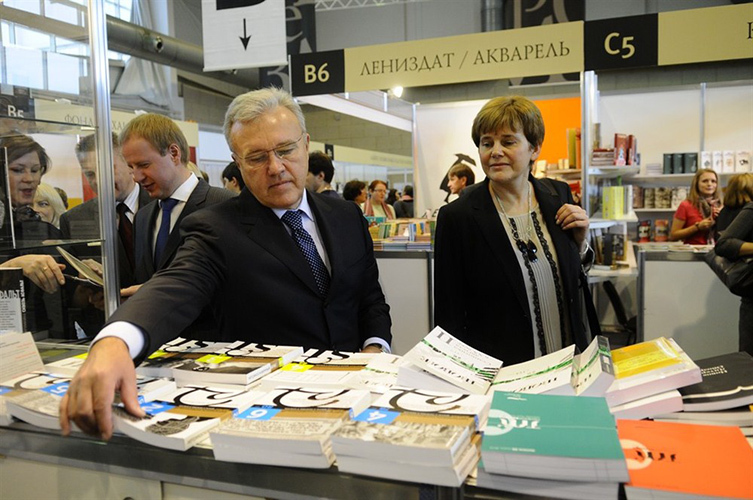
In 2014, the Krasnoyarsk Fair of Book Culture, arranged by the Mikhail Prokhorov Foundation, takes place for the eighth time. Her theme this time is “a city in which you can.” The official press release refers to the slogan of the situations “we will go out to the streets, return the city for ourselves” and claims that in the case of the Krasnoyarsk fair, we should rather talk about understanding, mastering the city (for example, during the fair one of the Krasnoyarsk bus routes-the 90th, including 50 stops, they will make excursion ). It is interesting whether the confrontation between the “local” and “Moscow/foreign” contexts will appear for such events - how much it can be dramatic, Perm shows an example. Perhaps the most noticeable in the KRIAKK of this year will be a foreign presence: guests from Finland, Norway, Denmark, Sweden, Great Britain and Switzerland arrived in Krasnoyarsk.
Visitors are waiting for a lecture on urbanism, performances and several large musical performances (from Naadi, Okudzhava, Siberian rockers and Anton Maskeliade - to the Russian National Orchestra under the direction of Mikhail Pletnev), but the main one on Kryakk, of course, will be an extensive literary program. We will talk about its most noticeable events.
Round table "Description of the city"
October 31, 14:30
Club Kryakk
The name, selected for the theme of the fair, sounds extremely common - at the same time it is the name of the recent novel of one of the participants in the round table, Dmitry Danilov , who set himself the goal of spending several days in one particular city every month and methodically, without passes, to write down everything that he sees; The method tested in the “horizontal position”, but here is brought to even greater formal severity. The city in Danilov’s novel has never been named, although for those who know the writer this is no secret, and unknown, of course, can guess in detail. The experiment is characterized by the fact that it can be carried out in any city, even in Krasnoyarsk. On November 1, at 17:00, Danilov will take a solo performance at Kryakk.
Another participant in the round table is Viktor Sonkin , whose wonderful book “Rome was here” demonstrates a completely different way of describing the city: Sonkin, conducting the reader in modern Rome, removes all the layers from him and shows what remains of Rome of Antique; Other illustrious monuments are preserved in the form of inconspicuous stones or premises closed by later facades. This book, for which the author received the Enlightener Award, in addition, is also an excellent textbook of the history of Rome. November 2 at 15:30 Sonkin will give a separate lecture on Rome.
In addition, sociologist Viktor Vakhstein, exploring the modern city space, and folklorist, literary critic, anthropologist Konstantin Bogdanov, take part in the conversation; Read and listening to him invariably interesting.
"Book Design": Innocent Kelenikov
October 31, 15:00
Atrium
The author of the labor “Book Design” Innocent Kelenikov commented on the work exhibited on the KRIAKK from the short list of the “Firebreaker” contest. This competition dedicated to book design was held in 2014 for the first time; The Grand Prix received the minimalist design of the Admarginemic series "Names" . The conversation about book design outside the professional community does not come in as often as we would like; Most Russian covers, in our opinion, leaves much to be desired (and a lot of other problems are hidden behind the covers - from layout and signs to forgotten “excesses” like Liesse ). A couple of years ago, the "Poster" asked the art director of the Penguin publishing house to evaluate Russian covers; I want to re -read the wording of the Buckley floor from time to time.
At 17:00, in the atrium of Kelenikov, he will give a lecture “Model of the Modern Book”, and on November 2 at 15:00 the discussion “Book Design: between Modern Art and the Mass Market” will be held there.
Presentation of Roman Alexis Kiwi "Seven Brothers"
October 31, 15:30
Scene 1
With Finnish literature, the Russian reader is tight; Of course, they know Tuva Jansson (the centenary of which will be celebrated on Kryakk) and even a beloved in the USSR Marti Larney (the Finns familiar to me were surprised to learn that someone else remembers the last). It cannot be said that the books of Finnish writers do not at all come out in Russia: “Text”, who did not tire of promoting modern European prose, in recent years has issued two Mikko Rimminen novels, have published novels by Johanna Sinisalo and Arto Paasilinna; In one of the volumes of the series “Nobel Prize Laureates”, Sillanpya’s deceased in his youth was printed. Just the other day, a selection of classics of Finnish poetry in the translations of Gennady Mikhlin was published in the New Bank. Translations, unfortunately, are not good, but among the authors there is also Alexis Kiwi.
His main work is the novel “Seven Brothers” (1870) was published in the USSR twice, the last time in 1961; The new edition is dedicated to the 180th anniversary of the writer and prepared by the Institute of Finland in St. Petersburg.
On November 1, at 10:30, a round table will also be held in the lobby dedicated to modern Norwegian literature (with which, by the way, the Russian reader is not a sign better: Kristensen, Erland Lu, even at least Yu Nesbyo); The translator Olga Drobot and the representative of the Norla Foundation Dina Roll Hansen participate.
Open debates of the Literary Prize "Nose"
October 31, 16:00
Club Kryakk
“Nose” is one of the four large prosaic awards in Russia (the remaining three, just in case, is “Big Book”, “Russian Bouquer” and “National Bestseller”). The “nose” puts “new literature” at the forefront and holds its meetings openly. Thanks to the audience, each time they observe a rather acute polemic-mainly about whether it is possible to consider the “new literature” presented to the award at least to some extent. One of the main shooters of the discussion is usually the poet, culturer and publisher Dmitry Kuzmin , for whom novelty is a defining criterion of literary quality; This year, Kuzmin became the chairman of the jury. October 31 will be formed by a short list of the bonus; In Long List , as usual, works, different in form and message, from the frankly “mainstream” “poison and honey” Yuri Buida (a semi-detective novel about a large-and, of course, related to the family-family) to the sophisticated prose of Vladimir Rafenko, a dual-complicated “steamer to Argentina” by Alexei Makushinsky, microse inputs of Linor Goralik and Teleluria ” Vladimir Sorokin; The latter, probably, can now be called one of the favorites.
Swiss Made
November 1-4
The special guest of Kryakk this year is Switzerland, and several important books will be presented at the fair and several important conversations will be held. Colta.ru all year led the Swiss Made project; In Krasnoyarsk, you can see the authors already familiar to the reader; The full program of Switzerland is available here . I would like to note the presentations of new Swiss novels: “Trees remain” Verena Steussinger (November 1, 13:30), “The Underground Alien” Irene Brezhny (November 3, 11:00), “Spring of the Varvas” Yonas Lusher (November 4, 11:00). Perhaps the main presentation here is the “Walk” of the Swiss classic Robert Valser, translated by Mikhail Shishkin (November 1, 15:30). He wrote to the book of the preface, an end. And on November 2 at 15:30 in the Great Hall of negotiations, Vera Mikhalski will present the project “The House of Writers and Literature”: a town near Geneva, a center of literary communication, where writers are offered residences.
Private persons
November 1-3
Scene 1
“Private Persons” - the name of the book project Linor Gorallik : the biographies of poets told by themselves. This is a collection of interviews and autobiographical monologues of such poets as Sergey Gandlevsky, Alexey Tsvetkov, Natalya Gorbanevskaya, Fedor Svarovsky, Sergey Kruglov, and many others. The first volume was published in the New Publishing House last year; Separate chapters were published on colta.ru. In Krasnoyarsk, Goralik will present both the authors of the first volume and those whose autobiography we will probably read in subsequent issues. Ivan Akhmetyev and Dmitry Kuzmin (November 1, 12:00), Nikolai Zvyagintsev and Demyan Kudryavtsev read their poems (November 2, 14:00), Lev Rubinstein and Polina Barskova (November 3, 12:00), Dmitry Vodennikov and Eugene Lavut (November 3, 14:30). The performances of Kudryavtsev, lavat and infrequently in Russia rarely happen, so we do not advise to miss them - as, in fact, all other readings of “private individuals”.
When the books are killed. "Protocols of the Zion sages"
November 1, 11:30
Hall
The first lecture in the “Humanitarian Lecture” by Kryakk: historian Marina Eberhardt will tell about “Protocols of the Zion sages” - a famous fake that played a role in the monstrous events of the 20th century, from Jewish pogroms in Russia to the Holocaust. The history of its creation and distribution itself is interesting as a detective novel - what Umberto Eco did not fail to use, which presented his version of the manufacture of “protocols” in the novel “Prague Cemetery”.
“Paris in 1814-1848. Everyday life "
November 1, 12:00
Club Kryakk
Krasnoyarsk presentation of Vera Milchina’s book is another comprehensive “description of the city”. Milchina tells about all social layers, phenomena and pastime of Paris in the first half of the 19th century - the reader learns about changes in palace etiquette and pirushki in suburban taverns, about the work of markets, hospitals and sewers, about a gigantic monument to the elephant on the square of the Bastille and the Living Giraffe, which was the main theme 1827. Milchina's book became the bestseller of the “New Literary Review” and got into the short list of the 2013 Enlightener Award.
Poet and citizen: artistic language in non -artistic reality
November 1, 13:30
Club Kryakk
The theme is the sharpest, and the declared participants - Lev Rubinstein, Alexander Borisenko, Elena Gremin and Irina Levontina - probably there is something to say. In recent years, the conversation about the “civil lyrics” and its various understandings has not stopped; In the cultural space, they coexist (and practically do not intersect), for example, the strategies of Dmitry Bykov or the authors of the “Translita” circle, such as Roman Osminkin. But, probably, we will talk about more general things - generally about the possibilities of art in a complex or tragic political situation. As applied to the topic of the whole fair, this conversation can be transformed into a discussion of the city as a place of collision of political art-telling: polar examples-Peter Pavlensky and activists of the Network movement, which covered more than one Moscow wall with patriotic graffiti. For all the self -evident difference in pathos and the quality of these statements, they use urban space as material.
Conference of the British Council
November 2-4
Club Kryakk
The British Council will present discussions in Krasnoyarsk with the participation of scientists and writers - Paul de Quinsey, Helen Danmore, Imtiaz Dhaker and Niedla Farnale. The poet and prose writer Helen Danmore will talk about the truth and fiction in historical literature (November 2, 10:30). Imtiaz Dhaker will perform as part of the discussion “Poetry of War: Is a good soldier a good poet?” (November 3, 10:00); The topic looks somewhat strange, but, apparently, is explained by the fact that this year the 100th anniversary of the beginning of the First World War was widely celebrated in the UK. One of the largest British poets Carol Ann Duffy released an anthology , which included the verses of Dhaker. Finally, November 4 at 10:30 British will discuss the problem of conflict in literature.
Creative meeting with Mikhail Shishkin
November 2, 12:30
Club Kryakk
Mikhail Shishkin does not need the presentation. It can be expected that in a conversation with Irina Prokhorova and readers, the author of “Ishmael’s capture”, “Hair Venus” and “Writer” will discuss not only his own prose, but also his relationship with Swiss culture (Shishkin wrote a large guide to literary Switzerland). Maybe we will talk about politics; Last year, Shishkin’s refusal made a noise to represent Russia on Bookexpo America .
Round table "Literary festival as a city event"
November 2, 11:00
Scene 1
There are many regional literary festivals in Russia. Some, alas, ceased to exist, leaving themselves a good memory (like Perm Slovonova ). Others still fulfill their functions, which over time can change (“review” of current trends on the Nizhny Novgorod Strelka, cozy gatherings at the Vologda “M8”, numerous experiments at St. Petersburg festivals). A conversation on how to turn the festival into an event important for the cultural life of the city, about what it gives to the city and how it helps to represent its cultural resources, Irina Prokhorova lead (whose efforts are largely organized by Kryakk), Boris Kupriyanov (the founder of the “phalanos”, who worked in different years on the arrangement of Mokmokf and non/ fiction , now one of the destinants Libraries) and representatives of the Swedish festival in Umo. In 2014, the city of Umo was declared the cultural capital of Europe, and from March 13 to 15, Littfest was held there, which gathered the leading writers of Scandinavia and Finland.
Lecture by Alexandra Borisenko "Oxford in life and in literature: fairy tale, novel, detective"
November 2, 16:30
Scene 1
Alexandra Borisenko is a translator, one of the compilers of the well -known anthologies of the English detective story “Not only Holmes” and “Just not the butler” . Oxford was chosen by the topic of the lecture by chance: it was there that many authors of English detectives lived and taught, and in their work Borisenko and Viktor Sonkin were repeatedly consulted with Oxford specialists and were checked with books from the libraries there.
“Almost all outstanding authors of the Golden Age detectives studied at Oxford or Cambridge, as a result of which a new type of genre arose - a university detective,” writes Borisenko. -When the writer Michael Innes entered the detective club, Dorothy Seyers asked him in a formidable voice: “Is there anything in the world that you are taking seriously?” And he answered without hesitation: “The rector of Bailiol”. Miss Seyers quite satisfied such an answer, especially since its detective, Lord Peter Uimzi, also graduated from this Oxford College. ” The centuries -old competition between Oxford and Cambridge is one of the nerves of British culture, and the regatta in which teams of both universities compete are a traditionally important date of the English calendar. The list of books , one way or another related to Oxford, is great and, of course, not inolo; Among them are the works of John Betcheman, Philip Larkin and Iris Murdok. You can hope that visitors to the lecture of Alexandra Borisenko will hear about all this.
All -Russian poetic slam
November 2, 18:00
Club "Era" (Dubrovinsky St., 1a)
Andrei Rodionov and Ekaterina Troepolskaya present the program The Best : Speech by Russian Slaam champions who fought and in international competitions. Slam, we recall, is a competition in which poets read their poems in the allotted time, trying to remember the manner of performance, and the audience puts them out points. Slam appeared in America in the 1980s, and Vyacheslav Kuritsyn introduced him into Russian soil in the early 2000s. Of course, there is always a danger that the competition will go on the principle of “who will shout to whom”, but the winners of Slama often become really interesting and significant poets. So, German Lukonikov, Alexander Delphin, Anna Russ and other authors will perform in Krasnoyarsk - some of them participated in the poetic performance “Twelve”, which staged the “Politer”.
In addition, on November 1 at 23:50 in the Krasnoyarsk Museum Center Rodionov and Troepolskaya will present the final of the video poetry contest : Siberian, Ural and Voronezh directors participate.
Meeting Leonid Parfenov with readers
November 3, 12:00
Club Kryakk
Leonid Parfenov will present a new volume of the book project “The Pacema” , dedicated to 1946-1953. Unlike most of the books of the series, this volume is not funded by the famous Parthenov television programs, the text was written again and must maintain the recognizable style that no one after Parfenov was able to simulate. The decision on the magazines "Zvezda" and "Leningrad", the fight against genetics, the dimensions of the coat, high -rise, the death of Stalin, the thaw, the Moscow festival, the launch of the first satellite is that without which it is impossible to imagine ... well, you know.
Presentation of the novel by Marina Stepnova "Bright Lane"
November 3, 13:30
Scene 1
Marina Stepnova began to talk a lot after the novel “Women of Lazarus” , which in 2012 won the third prize of “Big Book”. The new novel "Bright Lane" has already received many reviews, and good , and not very . The novel tells about the life of a doctor oppressed by modern everyday life and the search for some other, complete and free life-as much as you can judge, he eventually acquires this life.
Master class on reporting journalism and presentation of books by Elena Kostyuchenko and Olesya Gerasimenko
November 3, 16:00
Scene 1
These are two very important books. They tell about people who feel completely unnecessary to either the state or society. Both are about problems and phenomena that are systematically silent. Elena Kostyuchenko writes about those who are considered to be a social bottom ; Kostyuchenko is the person who is not afraid and does not disdain to take a closer look at this world, and then bear the evidence that people are at the bottom. Almost any newspaper texts against the background of these seem to be hypocrisy. Олеся Герасименко — журналист «Коммерсанта», исследовавшая проблемы современного российского федерализма и сепаратизма; книга ее вышла до всех событий 2014 года — сейчас она обретает еще большую остроту и, конечно, также вторгается на территорию властного лицемерия.
Презентация книг издательского дома ВШЭ
4 ноября, 12:30
Hall
Высшая школа экономики издает несколько замечательных гуманитарных серий — «Политическую теорию» , «Социальную теорию» , «Экономическую теорию» , «Исследования культуры» и другие; в частности, недавно вышли «Политика у шимпанзе» Франса де Валя и «Власть в XXI веке» (беседы выдающихся социологов Майкла Манна и Джона Холла). Отдельно будет представлена новая книга Александра Бикбова «Грамматика порядка».
Children's program
31 октября — 4 ноября
КРЯКК подготовила очень большую детскую программу, которая заслуживает отдельного материала. Здесь будут детские писатели Скандинавии (рекомендуем не пропустить презентацию красивейшей книги «Полеш открывает музей» Осхиль Канстад Юнесен о деревянном человечке, который составляет бесконечные коллекции всего на свете, — 1 и 2 ноября); здесь же — представление многочисленных книг Аси Петровой, писателя и переводчика («Как воспитывать домашнего мамонта?», «Чувства, у которых болят зубы», «Кто не умер, танцуйте диско», «Нетерпеливые истории» Бернара Фрио).
Вообще же на КРЯКК можно найти книги лучших детских издательств — «Розового жирафа», «Поляндрии», «Компас-Гида», «Насти и Никиты», «Самоката». Из событий стоит обратить внимание на уже упомянутое празднование 100-летия Туве Янссон (2 ноября, 13:00, ТЦ «Изумрудный город»), дискуссию о языке антиутопий на основе подросткового романа Лоис Лоури «Дающий» (1 ноября, 17:40) и круглый стол «Что значит написать хорошее эссе о прочитанной книге» (3 ноября, 13:50). Круглый стол ведет Марина Аромштам — известный детский писатель, педагог и главный редактор сайта «Папмамбук».