
Translated material
18 thousand rubles per person
How labor slavery is arranged in Russia. Report "Medusa"

In Russia, there is an extensive system of exploitation of people in complex life situations- drug and alcohol-dependent, homeless, visitors, seeking work in a foreign city: private rehabilitation centers, which, under the guise of free assistance, create workers in garbage collection or cargo transportation; Recruiters who sell their victims to the owners of large and small industries. Especially for Medusa, journalist Ilnur Sharafiev figured out how this system works.
The driver of the “night bus” of the St. Petersburg project “Overnight” Igor Antonov five times a week, along with volunteers, comes to the places of distribution of food for those in need of parking in different parts of the city. Almost always, he notices the cars standing nearby - usually minibuses, tinted Mercedes or BMW. People from these machines begin to work with their clientele before Antonov’s arrival: they offer the homeless paid work with accommodation and food, new clothes, free rehabilitation from addiction, restoration of documents. An employee of the Overnight says that all recruiters are similar to each other: "Sports trousers, [their own] manner of walking, handbags under the arm, a completely different look." According to Antonov, they have the same methods of working as social services, recruiters monitor new people and calculate those who could suit them.
When the Overnight bus arrives at the power point, cars leave, they usually take two or three people with them. Where exactly - Antonov does not know, but suggests that the homeless people fall into private free rehabilitation centers (sometimes they are called "labor houses" or "houses of industriousness"), or for large or small production.
Dagestan bricks
Not only homeless recruiters are interesting - they are looking for anyone who is able to perform physical work for free or in exchange for basic living conditions. Usually these are people in a difficult life situation, with alcohol or drug addiction - they need help, so it is easy to make contact with them. “A typical scheme of labor slavery: recruitment, transportation, sale, operation,” says Dmitry Poletaev, director of the Migration Research Center, who studies migration in post -Soviet countries and regions of Russia. - Recruiters promise and help a lot. They can take free to the employer, and he declares - the road needs to be worked out. For accommodation, food, cigarettes, money is deducted, for allegedly broken or stolen equipment - fines. So the movement to the debt bondage begins. ”
According to the International Labor Organization, about 20 million people consist of labor slavery around the world. The income from such a business is comparable to the drug trafficking or the sale of weapons. “Drugs end, the weapon wears out, and a person can be resold until he dies,” says Dmitry Poletaev. In his opinion, criminal cases under Article 127.2 of the Criminal Code (“use of slave labor”) are now very small. “A very difficult process of collecting the evidence base, there are not enough investigators who are able to investigate these specific cases, the program for protecting witnesses actually does not work - those who decide to oppose the slave traders in court can be killed by their accomplices,” the expert explains.
“Apparently, a system has developed in which human trafficking and labor slavery is the norm,” continues Poletaev. - There is an international gradation of countries that are fighting with people's trafficking - Russia fell into the third category where the legislation exists, but the struggle against the problem is insufficient and a little information work is carried out. I am not a supporter of hanging all dogs on the police, the problem is much deeper. If the work in this direction is strengthened, then due to extreme complexity and large temporary and resource costs when conducting cases of human trafficking, total revealing indicators may decrease, and the salary of bodies of bodies now depends on this. ”
As judicial statistics show , in 2015, four people were convicted under the relevant article. “Such cases are difficult to prove: the authorities say that there is no slavery and cannot be in principle, so the initiation of the case under these articles is almost impossible,” says Irina Biryukova, lawyer of the Public Verdict Foundation. - There are many cases when people themselves do not apply to law enforcement agencies. In the same Golyanovo ( the sensational story with the employees of the local store, who were forcibly held by the owners - approx. Medusa ) one girl fled and turned to the police. The police, who “fed” from this store, returned it to the owner, where she was beaten with other employees. After this, the rest, of course, will not have any desire to contact law enforcement agencies. ”
Anton Pogorelova from the Nizhny Novgorod region was sold at a brick factory in Dagestan for 18 thousand rubles. In 2015, he came to Moscow to find a job. In the train, he ran out of cigarettes; On the square of three stations, he approached an accidental person and asked to smoke. He treated Anton, introduced himself to Zakhar, they talked. Zakhar offered the man “good work by the sea”, he was not opposed. They got to Derbent by bus, Anton did not have documents with them, but they simply drove federal posts: they hid him in the luggage compartment, which the police had never checked for the entire path.
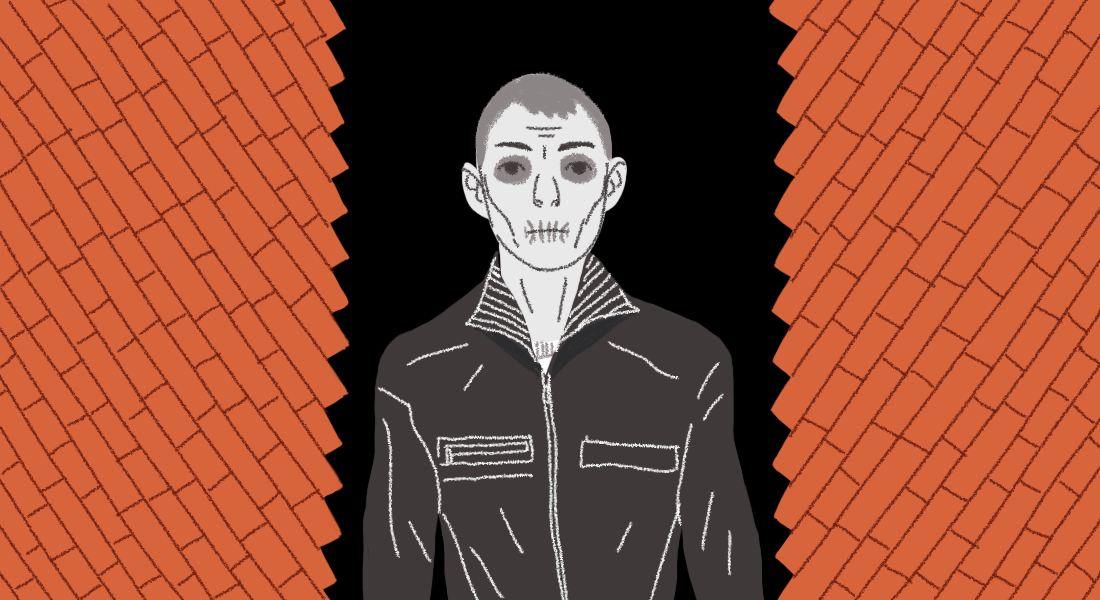
In Derbent, Zakhar handed Anton to the owner of a brick factory in the village of Novo-Gaptsi. He stated that he was ready to pay him only ten thousand a month, and the money that he paid for Anton to the recruiter must be worked out. They reached the destination in the evening, and the very next day Anton went to work.
The plant was an open room with piles of clay, where every day from six in the morning to nine in the evening with a break for lunch it was necessary to cut a brick, put it on the arch and burn it on fire. They fed meagerly: for breakfast - a glass of tea and bread with butter, for lunch - soup, usually pea, sometimes with meat, the second for dinner. Three months later, Anton asked to send him home, he did not have money for the road, and he could not contact his relatives. But he was refused: he had not yet worked out the money, and all this time from his salary every day was deducted the amount for sigars and alcohols. (Alcohol at most brick factories give every evening - so workers are easier to control, they fall asleep faster and do not think about the escape.)
Anton spoke about his history after the liberation: after a few months, Pogorelov accidentally met Zakir Ismailov, the head of the Dagestan branch of the Alternative movement, which is engaged in the struggle against labor slavery. He and his brother returned by car to Makhachkala and, passing by the village of Novo-Gaptsi, saw how three men were beaten on the road. Ismailov and his brother intervened; It turned out that they beat the plant workers for the fact that they left the territory without permission. Ismailov proposed to send them home, but only Anton agreed.
“This is not surprising, they are afraid - there are always supervision of people at the factory, they have neither documents nor money, they do not know where to run. If they give a phone, then with a negative balance, so that it is impossible to call relatives or friends. Sometimes [workers] run away, but where to go? Moreover, they do not trust anyone, even us, ”explains Ismailov.
He began to deal with the problem of labor slavery in Russia by chance: in May 2013 he saw a post on Facebook - in it it was a citizen of Uzbekistan Lutfille Ishankulov, who in serious condition ended up in the Makhachkala hospital. After talking with him, Zakir found out that Lutfilla was brought to Makhachkala two years ago from the area of three stations, where recruiters approached him and offered work in the southern regions. When he fell ill, the employers locked him in the basement, hoping that he would die. Ten days later, Ishankulov was already at death - then he was brought to the outskirts of the city and thrown out of the car. The man was picked up by people who drove past, and took to the hospital, where he died a few days later (Zakir talked with him while he was still alive); The police officers could not find the "owners".
Since then, Ismailov began to look for enterprises that use slave labor, and joined the Alternative. Oleg Melnikov, an activist, who once former one of the initiators of Antiseliger and the movement in defense of the Khimkinsky forest, later, created the movement in Russian politics in Russian politics (in 2014 Melnikov was first detained in the “swamp business”, and then he went to Donbass to fight for the militias). “We are all strong guys, and if the law does not act in relation to one people, then it does not work in relation to others,” says Melnikov, hinting that sometimes activists have to use force. “Of course, we don’t kill anyone, but if a person is held and not released with us, we try to show in every possible way that the owner will not have to live easily.”
In the first three years, the “alternative”, according to activists, freed about five hundred people, after which they stopped leading the statistics. Most people have to get out of slavery themselves - often without money and documents.
In many ways, therefore, Alexei Donetsk was in slavery four times. For the first time, he decided to run when the owners in the city of Novoaleksandrovsk, Stavropol Territory, beat him several times several times by plastic plumbing pipes for refusing to work - collecting onions, digging gardens, and garbage harvesting. One night they forgot to lock the gate; Alexei managed to leave, for four days he spent the night at the pond near Novoaleksandrovsk almost without food. Donetsk had to earn a return ticket to St. Petersburg, from where he arrived in the Stavropol Territory, and, not finding his work in the local church, he turned to a policeman who offered him to trade stolen phones or help with repair in the room. Alexei refused.
Then, Donetsk recalls, the policeman introduced him to Vitaly, Korean, who had work - to water fields with plants; He paid the police a thousand rubles for an employee. A month later, Alexey transferred a stroke, and Vitaly took him to the hospital in Astrakhan, without paying anything. After discharge, Donetsk went to the station to try to go home without money, a woman approached him there and offered a job at a brick factory in Makhachkala. When a week later, Donetsk again could not work due to poor health, the owner sent him to the local church, where, as he said, there is an overnight stay and work. Alexei could no longer go there, he, who was unconscious, picked up his guard and handed over to the doctor who made him his household assistant. “Feeded to feed, but did not give money,” recalls Alex. Two weeks later, the doctor himself turned to the activists from the Alternative.
“People have their own prices,” explains Ismailov, who works mainly in the south of Russia. - If thin, the price is 15 thousand rubles. If there is a specialty - a mechanic, a tractor driver, a driver - around 20-30 thousand. ” Employers and recruiters agree on the price - according to activists, they lure twenty percent of people with fraudulent promises, the rest mixes sleeping pills (usually in alcohol).

As the traffic police federal posts on the way to Dagestan, Ismailov cannot explain to the recruiter buses, it is almost impossible to leave from there from his experience without inspection. According to alternatives, only seven to eight minibuses per day come to Dagestan, inside each-two or three future labor slaves. “For the most part, they are without documents, I came across people in the regional, federal or international wanted list,” says Ismailov. According to the project, in Dagestan there are about five hundred brick factories, and they constantly need labor - in the region now, despite the crisis, a large construction.
“A significant share of that part of the Dagestan population who has free money, as the most correct investment considers real estate - apartments or, as they call it, sections and individual houses,” explains Konstantin Kazenin, senior researcher at the Russian Academy of National Economy and Government. -In Dagestan, there are still high risks for doing business and investment, and construction is one of the safest ways of investing. There is a cultural moment - a person who has a family must build his house. ” The expert admits that building materials are coming to other regions, but, in his opinion, most of them remain in the republic.
However, activists are sure, the problem of labor slavery is common throughout Russia - they receive signals from Ingushetia, Chechnya, Moscow, Volgograd region and other regions.
On average, people spend one working season in brick factories-six to seven months, it is difficult to work with clay in winter and it is not profitable for the owners to keep people. If they draw up a contract with the workers, then by hand - according to Ismailov, it is usually prescribed that a person voluntarily arrived for the season, gave the documents, agrees to pay at the end of the season. Some, however, remain at the factories for much longer - for example, Sergei Khlinivny from Murmansk spent eighteen years in slavery, having visited eight different owners; In February, Petra Nikulin brought activists to his native Voronezh sixteen years later - he did not sell a train ticket, he had to go by bus, because he only had a Soviet -style passport.
According to Ismailov, the owners of brick factories are now feeling impunity. “There are no cases when the director [such a business] was put for the use of slave labor. Many people ask me where fences are in these factories, how do people hold? Yes, there is nothing, people are afraid physically and do not know where to run, especially without money and documents. In addition, the owners do not know the law and generally do not understand that a person is not their property, ”continues the activist. “They can resell it, beat him, kill him - there will be nothing for them for it.”
With a shovel
People “in difficult life situations” can get not only for production, but also in private rehabilitation centers, where they do not take money for rehabilitation. Nikolai Saklyugin, a psychiatrist-narcologist and chairman of the Public Organization of Mother Against Drugs in the Krasnodar Territory, says that such centers began to appear in the mid-90s-when non-Po-Pedections of religious structures came to Russia. “The pioneer was the“ new life ”of Sergei Matvosyan, they gathered homeless from St. Petersburg basements, taken to their house, creating a huge community there.”
In 2007, Alexander fell into the “New Life” ( the name changed - approx. “Medusa” ). This was not his first attempt to abandon heroin - he went through all the stages that a drug addict usually passes at the initial stage: “To talk, go to the village, tolerate,” he says, bending his fingers.
What is a “new life”, Alexander did not recognize in advance, he didn’t care, then he consumed about ten grams of heroin a day, was in “close to death” and wanted to quit drugs. In St. Petersburg, he, together with his father, was supposed to meet with the head of the center in the former building of the cinema in the area of the current Okhta Center. “We arrived earlier and sat down to wait in the park next to the entrance. I felt bad-I didn’t see anything around, and my father says: "Some people are strange to this cinema, enthusiastic, smile."
After some time, they decided to go inside and saw a full hall; Those who did not have enough space stood in the aisle. “On the stage, the song“ The Lord saved us all ”,“ We will all be happy ”sang under the guitar, half of the people raised their hands on the chorims, shouted“ Allelujah ”and smiled,” Alexander recalls. “I was twisted, my father offered to go home - notice, a man whose daily I stole the money at him and terrorized it.”
Alexander decided to stay - he wanted to at least reduce his daily dose. The rehabilitation center was located on an abandoned military base near St. Petersburg, in the village of Caulines - 50 hectares with barracks, dining room, bath, barn, garden, surrounded by a fence, about two hundred people lived there. The conditions were modest: Alexander lived in a four -story barracks, slept in a bunk bed and worked most of his time.
He was “put on a paving stones” - he was supposed to stir cement and dye, throw a mixture with a shovel into a vibration, pour into a mold and spread the finished paving stones. “With me was the“ senior ” - a former drug addict, who has been in the center for several months. On the first day, I told him that I had diarrhea due to drugs, and he replied: “Here is the BSL-a big shovel, it will cure you from everything”. ” The paving stones, as Alexander believes, then went to sale - "they had to pay for electricity and gas, land tax."
For lunch, the rehabilitants were given a bar, sometimes with a leaf of salad, which was grown here, or a quick -made noodles. “Before eating, everyone said Hallelujah and the head of the house asked to pray for us to have bread,” Alexander recalls his first day. “It surprised me because there was a bakery under the room in which I lived, and from there it constantly smelled of bread.”

Alexander says that he could not survive the breakdown at home - he would have fallen asleep for the first time only a month later, and after a hard day he had no problems with sleep. «Большая Совковая Лопата действительно вылечила меня», — смеется он. Правда, через десять дней он решил из «Новой жизни» уехать. По правилам дома в тот же день покидать «трудовой дом» было нельзя — на раздумья давали трое суток. Александр подумал и все же уехал — «благополучно колоться дальше».
Вскоре он попал в «мотивационный дом» в Казани, теперь наркотики не употребляет и руководит платным реабилитационным центром для наркозависимых. «Когда ко мне обращаются родители наркомана и говорят „у нас нет денег“, я им рассказываю про бесплатную реабилитацию и говорю: идите, но используйте эту отсрочку, пока он не колется, чтобы найти деньги [на нормальное лечение]». Правда, отмечает Александр, «трудовые дома» за последние годы сильно изменились и стали более коммерческими.
Экономика эксплуатации
Кирилл ( имя изменено — прим. «Медузы» ) увидел объявление на дорожном столбе о «помощи в трудной жизненной ситуации» в Киеве в 2009 году, когда страдал алкоголизмом. Он пришел по обозначенному адресу в местный филиал организации «Преображение» — трехэтажный дом, где жили восемнадцать реабилитантов, в основном бездомные, среди которых были алко- и наркозависимые. Один из руководителей дома (всего их было четверо, их также называли «лидерами») попросил отдать ему паспорт и телефон и запер их в сейфе. Он также объяснил Кириллу правила: нельзя звонить по телефону, курить, пить больше раза в месяц, иметь личные деньги или ценные вещи при себе. Отношения с девушками тоже были под запретом, а за работу денег никто не обещал.
День в «трудовом доме» начинался в шесть утра, когда все шли на работу, делясь на группы, — обычно перевозить офисы и квартиры или копать могилы (в рекламе группы называли себя «трезвыми грузчиками»). С ними отправляли одного из «лидеров» — Кирилл описывает его как «физически крепкого особо верующего брата, который следил за каждым нашим шагом». Когда работы не было, руководитель говорил, что не будет и еды — так как денег на нее они не заработали. «Это могло продолжаться целую неделю, — рассказывает Кирилл. — Хотя и в обычные дни с этим были проблемы: на завтрак — две ложки непонятной каши, два кусочка хлеба, которые просвечивают, если навести на свет. В обед супом называлась баланда — тарелка воды с двумя картофелинами, вечером — каша без ничего».
Вениамин Деменко, бывший пресс-секретарь «Преображения России», который сам руководил филиалом организации в городе Осинники в Кемеровской области, объясняет это типичной экономикой «трудового дома»: «30–40% прибыли уходило на аренду жилья, питание и проезды к месту работы и обратно, 10% отчислялось руководству в Кемерово, еще по 10% — на развитие проекта в регионе и рекламу», в том числе объявления о «помощи в трудной жизненной ситуации», которые расклеивали сами реабилитанты — как говорит Деменко, «условно бесплатная рабочая сила».
Остальные 30–40% прибыли доставались самому филиалу. «Ясно, что еще вчерашний наркозависимый сегодня, получив безграничную власть, вряд ли сможет бороться против соблазнов, — рассуждает Деменко. — Руководитель понимал, что лишить людей финансовых средств — тоже действенная мера, чтобы удержать человека в коллективе».
Кроме работы в доме, где находился Кирилл, практиковались ежедневные молитвы, утром и вечером, а также чтение Библии. «Это делалось скорее для прикрытия, ничего духовного я там не получил, — говорит Кирилл. — Не знаю, верили ли сами руководители — например, один раз на свадьбе руководителя все они дружно напились, переругались и передрались». Кирилл рассказывает, что его в «трудовом доме» не били, но физические наказания к другим руководители применяли. «Зачастую, когда человек понимал, куда попал, говорил, что уходит, начинал требовать свои вещи, — вспоминает он. — Разумеется, их не отдавали, начинали унижать или бить».
Он ушел из реабилитационного центра, после того как однажды им пришлось работать три дня практически без перерывов и еды. «Я не выдерживал физически — у меня было немного денег с собой, я выпил водки для храбрости, пришел к руководителю и сказал, что ухожу, попросил документы и телефон обратно. Мне не отдали — ушел так. Обратился в полицию, там на меня посмотрели как на полоумного, участковый даже не пошевелился, чтобы пойти и проверить тот дом».
Преображение «Преображения»
Общероссийский статус благотворительная общественная организация «Преображение России» получила в 2008 году — она была крупнейшей в России сетью, которая занималась помощью «в трудной жизненной ситуации». На пике своего развития «Преображение» включало в себя около 300 учреждений в 180 городах страны и еще около десятка за рубежом.
При этом организация регулярно попадала в криминальную хронику. Например, в мае 2009 года сотрудник «Преображения» Евгений Гизя избил одного из клиентов центра в Ленинградской области, который расклеивал объявления организации в городе, вернулся в центр нетрезвым и под наркотиками. Удар в печень, нанесенный в боксерских перчатках, оказался смертельным. Гизю посадили на шесть лет.
По словам правозащитника Каклюгина, череда закрытий филиалов «Преображения России» началась в 2010 году с Ленинградской области, когда один из филиалов проекта оказался по соседству с домом заместителя прокурора по региону и один из клиентов центра съел его собаку. «У некоторых заключенных или вышедших из тюрем, больных туберкулезом, сохраняется такой обычай — в случае ухудшения здоровья потреблять в пищу собачатину. Считается, что у них от этого повышается сопротивляемость организма, — объясняет эксперт. — Зампрокурора вышел на губернатора Петербурга Валентину Матвиенко. В сентябре 2010 года депутаты Законодательного собрания Санкт-Петербурга потребовали от нее проведения проверки „Преображения России“ и изъятия их рекламных плакатов, которыми уже был увешан город. Силовики активизировались, объединившись со специалистами Федеральной службы безопасности, и тогда уже началась серьезная работа, направленная на выяснение всех подробностей функционирования этой организации».
15 ноября 2010 года Минюст вынес распоряжение о приостановлении деятельности «Преображения России» после проверки, выявившей факты ведения незаконной предпринимательской деятельности — как заключило ведомство, организация фактически не занималась реабилитацией, а использовала людей в качестве бесплатной рабочей силы. Обнаружили у «Преображения» и нарушения финансового и бюрократического толка — например, они незаконно использовали в своей символике гербы Москвы и других регионов. После того как предписания ведомства организация проигнорировала, в июне 2011 года Верховный суд РФ принял решение о ликвидации «Преображения».
Лидера организации Андрея Чарушникова через несколько лет после этого и вовсе посадили за убийство одного из клиентов организации в Кемерово. В феврале 2004 года он заподозрил его в краже свиней из свинарника и избил черенком от лопаты до смерти. Своим подчиненным он приказал закопать тело на одном из кладбищ села Андреевка Кемеровского района.
После запрета «Преображение» раскололось на несколько более мелких организаций, рассказывает Каклюгин: «Инициатива», «Возрождение», «Благодать», «Твой путь», «Путь преодоления», «Ника», «Берег надежды» и другие. Многие из них до сих пор действуют по всей России, в некоторых случаях ими руководят приближенные к Чарушникову люди — о связях между этими организациями и «Преображением» говорили , например, на рабочем заседании в Государственной думе РФ, посвященном критериям оценки деятельности реабилитационных центров. По словам Каклюгина, почти все они до сих пор ежемесячно перечисляют 10% прибыли в Кемерово — бывшим руководителям «Преображения России» и лично жене Чарушникова. За регистрацией «трудовых домов» государство по-прежнему не следит, хотя, по мнению эксперта, они должны быть официально зарегистрированы как «общественные некоммерческие организации, осуществляющие социальную реабилитацию лиц в трудной жизненной ситуации».
Варвара Толстова, волонтер благотворительного фонда «Твой дом», отрицает любую связь с «Преображением России». По ее словам, в их организации люди сами могут отдавать столько денег за аренду дома, сколько посчитают нужным, у реабилитантов не отбирают документы, а насильно их в доме никто не держит. Правда, у «Твоего дома» около ста филиалов по всей России, и Толстова согласна, что многое зависит от конкретного руководителя. «В Петербурге у нас были стычки, когда человек начинал зарабатывать на этом бабки, — но это доходит до президента фонда, и руководителя снимают, — говорит волонтер. — Конечно, быстро мы об этом не узнаем; как там люди живут, по телефону не определить — только когда они приходят к нам и жалуются, что там кормят одной тушенкой или избивают».
Как правило, «трудовые дома», которые возникли после «Преображения», занимаются обслуживанием: грузоперевозками, вскапыванием огородов, уборкой территории, вывозом мусора. «Иногда возможно заключение долгосрочных контрактов с супер- и гипермаркетами на обслуживание их территории: вывоз тележек с автостоянок, уборка прилегающей территории, — рассказывает Каклюгин. — Если улыбнется удача и есть связи с крупными строительными компаниями, можно своих „рабов“ направлять на ежедневную низкоквалифицированную работу на стройку — подавать кирпичи, вывозить строительный мусор».
По словам эксперта, большинство таких организаций замкнуты на себе и закрыты от внешнего мира. После массовых проверок они стараются не использовать термин «реабилитация» и привлекают клиентов лозунгами вроде «Помощь алко- и наркозависимым», «Бесплатно. Unlimited. Anonymously"; обещают работникам 20% от прибыли, иногда не запрещают курить и разрешают выпивать по выходным.
«Ни о какой ресоциализации здесь речи не идет, чтобы реабилитант оставался трезвым — его отправляют в другой регион, участвовать в создании или работе такой же организации, в результате чего и возник лавинообразный рост „Преображения России“, — говорит Каклюгин. — Человек изолирован от внешнего мира, находится под постоянным контролем старших, все время в постоянной круговерти „завтрак — работа — обед — работа — ужин — сон“. Раньше была наркоманская „движуха“, а теперь суета по поиску работы, новых заказов, развозу работников по местам, снятия оплаты заказов. Отсюда и трезвость, просто замена суеты. Как только он выпадает из этой суеты хоть ненадолго — срыв гарантирован. Получается, пока ты там — ты живой и вроде как трезвый, а если отдельно от организации, снова в наркотиках или алкоголе — и в итоге в тюрьме или могиле».
A vicious circle
«Альтернатива» продолжает освобождать людей из трудового рабства на производствах — в их «живой очереди» сейчас около двадцати человек. Мельников приводит пример того, как это устроено: «Сейчас одного человека нужно освободить в Абхазии, туда нужно направить минимум одного нашего сотрудника. Это 12 тысяч на билет туда-обратно, прожить там нужно минимум четыре дня — около шести-восьми тысяч — плюс передвижения там, и возвращение назад осложняется тем, что у человека нет документов, — нужно оплачивать штрафы примерно на 30 тысяч». Деньги на все это «Альтернатива» собирает через краудфандинг ; кроме того, активисты вкладывают и собственные средства.
В то же время активисты жалеют, что проблема решается точечно. «Мы знаем практически всю цепочку на вокзалах, перекупщиков, работодателей, но это никому не интересно, потому что проблема не затрагивает политику и 99% населения с ней никогда не столкнутся, — сокрушается Мельников. — Как показала практика — хоть убей этого раба, если тебя не поймали на месте преступления — ничего не доказать. Чтобы решить проблему, нужны изменения: по законодательству за использование рабского труда судят тридцать человек в год. В России нет отдела [в одном из силовых ведомств], который занимается торговлей людьми. При этом считается, что если нет забора — значит, человека никто не держит».
«[Бесплатные реабилитационные] центры — не черно-белая палитра, а градация цветов и полутона. „Преображение России“ тоже не вселенское зло и даже не организация, которая была создана для отжимания денег. Это закономерность, — считает бывший сотрудник „Преображения“ Деменко. — Государство закрыло „Преображение“ и добилось того, что теперь существуют 1200 центров вместо 400».
Активист «Ночлежки» Игорь Антонов рассказывает, что с «трудовыми домами» многие бездомные сталкиваются не по одному разу — они называют их «рабцентрами», но порой возвращаются туда осознанно. «Нет других вариантов: с одной стороны — смерть на улице, с другой — попытка отоспаться, отогреться и отъесться; потом, может быть, обмануть руководителя и сбежать, — объясняет Антонов. — Ближе к зиме люди идут [в „трудовые дома“] чаще, понимая, что будут работать за тарелку супа или пачку „Доширака“, но зато не околеют от холода и подростки их не забьют битами».
По оценкам «Ночлежки», в Петербурге сейчас 50–60 тысяч бездомных, а мест для них в городе, где можно переночевать и поесть, если сложить все благотворительные организации, дома ночного пребывания и городские койки, — менее трехсот. При этом на городские койки устроиться непросто — нужно прийти с документами и доказать, что ты бездомный: принести паспорт, документ, который подтверждает факт места последней регистрации, адресный листок убытия, справку об отсутствии регистрации; люди, вышедшие из тюрьмы или колонии, должны представить справку об освобождении.

«Бездомность в России — это очень большая смертность, но конвейер, который поставляет людей на улицы, тоже не останавливается: люди выходят из тюрем, детских домов и интернатов, дети выгоняют стариков, родители отказываются от детей, жены — от мужей и наоборот, — подытоживает Антонов. — Любая сделка с недвижимостью потенциально опасна, потому что есть черные риелторы. Есть люди, потерявшие память или имеющие психологические проблемы, бывшие жители теперь уже „вымерших“ деревень и поселков, приехавшие на заработки и потерявшие документы. Любая из этих ситуаций может стать нерешаемой, а механизмов поддержки у общества, государства и конкретного человека явно недостаточно».
Ильнур Шарафиев
Kazan