
Translated material
The worst month in the history of Roskomnadzor: your Internet is falling apart
Judging by the news of the late May and June, Roskomnadzor is the most problematic (and probably unhappy) Russian Federal Department. Its employees and managers are pursuing troubles: a “hole” was discovered in the register of prohibited sites, Google is blocked in Russia by mistake, and Pavel Durov accuses Roskomnadzor of “sabotage of state interests”. The reaction of Roskomnadzor to these sad events turned out to be untimely and strange. "Medusa" lists what happened to the department over the past month.
Roskomnadzor against HIV-prevention
On May 18, an examination appeared on the website of Roskomnadzor about the series of seminars “Basic knowledge of HIV infection prevention”-they are conducted in Chelyabinsk, the Municipal Center “Compass”. Experts from the Russian Parental Resistance organization came to the conclusion that the seminar was aimed at “the destruction of childhood”: “The legitimization of erratic sexual relations, broadcast in ... a program, is aimed at destroying family values.” According to experts, “there is no speech about love in the seminar at all, that is, in fact, the lecturer allows an illegitimate relationship, if only they were“ protected ”.”
According to the law , within 15 days after receiving the examination, Roskomnadzor was to make an order to eliminate violations. The press secretary of Roskomnadzor Vadim Ampelonsky told Medusa that he did not understand the topic, and refused to comment on it. The conclusion of experts in the end did not affect the work of the "compass". “Roskomnadzor has no authority to influence our activities [for seminars],” the director of the center Maria Artemyeva told Medusa. - They did an examination on the appeal of a private person. Apparently, they just don’t read them and immediately hang them on the site. ”
Ural- a region with high affection of HIV infection; Russia - according to the UN, the epicenter of the world epidemic of HIV.
Roskomnadzor against the Internet
On June 4, some Russian Internet users have found that they do not open many popular sites, including Wikipedia, IVIRNAL Internet cinema, TJURNAL, Medusa and others. The problem arose due to the "hole" in the system of locks of Roskomnadzor. The owner of any resource in the “black list” could actually block for a significant number of users absolutely any site. The department did not comment on this situation, while the so -called “white list” sent the providers - a list of sites, access to which is “recommended not to limit”. In particular, it included government resources, popular social networks and several media sites (for example, Russian Newspaper and Lenta.ru). In a few days, some operators sent a letter about the abolition of “white lists”.
Roskomnadzor against Russian banks
On June 9, payment terminals stopped working at Sberbank for a short time; Payments with payment also appeared among owners of cards of other credit institutions. Then the difficulties began with payment on cards on the Internet. What exactly turned out to be the reason for the failure in the terminals is unknown-however, it was not possible to pay on the Internet due to the fact that the attackers took advantage of the very “hole” in the register of Roskomnadzor. The department denied information about the attacks - and promised together with the Ministry of Internal Affairs to find those who distributed the relevant information. On June 10, it became known that the agency unofficially required providers to block only the IP address for several days. These measures helped to eliminate the “hole”, but allowed sites from the “black list” the opportunity to move away from blocking. As a result, in Russia, until June 16, it was available, for example, a torrent tracker Rutracker.org.
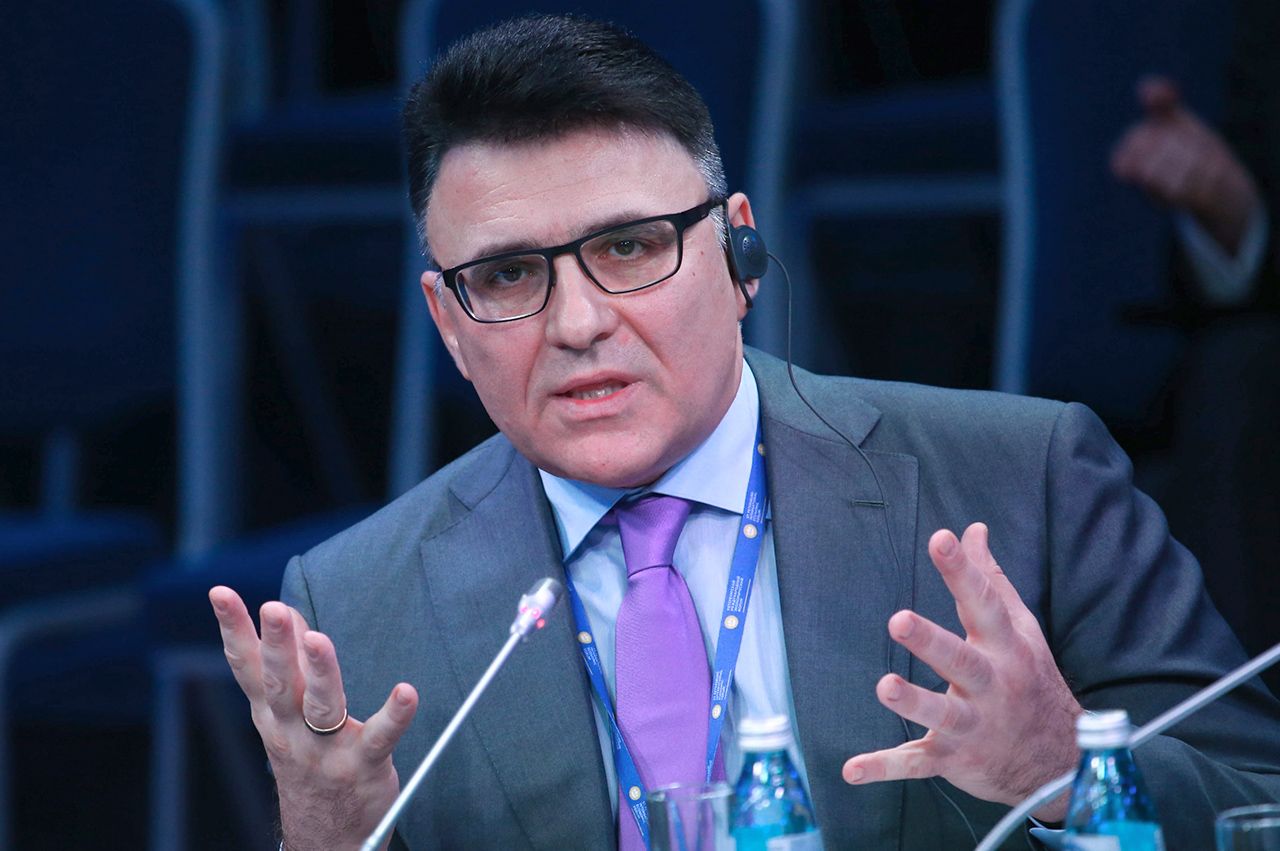
On June 15, the head of the department, Alexander Zharov, finally commented on the problem with the “hole” in the infrastructure. He stated that she was "greatly exaggerated."
Roskomnadzor against employees of the FBK
Simultaneously with the recognition of the “strongly exaggerated” problem, Roskomnadzor said that the “holes” in the register were used by activists of the Corruption Fund Alexander Litreev and Vladislav Zdolnikov. They replied that they did not have relations with erroneous blocking, and moreover, they themselves have repeatedly indicated the existence of vulnerability in their telegram channels. On the same day, Zdolnikov left for Kyiv. “So far we want to wait a while to see how the situation around the complaint of Roskomnadzor in the Ministry of Internal Affairs will develop,” he explained .
On June 21, Zdolnikov, Litreev and another FBK activist Alexander Brusentsev filed a complaint with the Investigative Committee against officials of the Ministry of Communications and Roskomnadzor, accusing them of negligence. According to IT specialists, in Roskomnadzor they knew about the “hole” for more than two months, but did not take any measures.
The department accused only two people of using the “hole”; In fact, anyone can use vulnerability - empty domains from the “black list” are sold for several cents. The reports that the “hole” is closed from Roskomnadzor has not yet been received.
Roskomnadzor against Google
On June 22, some providers in Russia blocked the Google.ru website for three hours. In the “unloading” of Roskomnadzor (“black list”, which is sent to providers), the service link of the Google Adwords advertising service. Depending on the location of the user, it leads either to the website of the bookmaker, or to the site for the sale of the "Mirror-Vido-Registrar". The Federal Tax Service fights the Internet. Presumably, the Federal Tax Service of the Federal Tax Service accidentally sent an official link to Roskomnadzor instead of a straight line - however, this happened back in 2016; As Google.ru appeared in the “unloading” in June 2017, Roskomnadzor did not explain. Why did the link, which still leads to the website of the bookmakers, ultimately removed from the registry, he also did not report (but received a whole wave of jokes and memes from users).
Roskomnadzor against Pavel Durov
On June 23, the head of the state regulator Zharov turned to the creator of the VKontakte social network and the Telegram messenger Pavel Durov with an open letter. He complained that “all the possibilities of official communication with the team of the Telegram messenger were exhausted” and called on the developers to “fulfill Russian legislation”, that is, to register as a distributor of information; This will oblige the messenger to store user correspondence and transfer the keys to the authorities to decipher messages. If Telegram does not fulfill the requirements, the messenger will be blocked, as it has already happened with Zello , Blackberry and others (although Votsapa and Vaiber, for example, have not yet affected). “The time allotted by Roskomnadzor is expired. The choice is yours, ”the end of the letter says.

Durov answered the appeal, calling a possible blocking “sabotage of state interests”. “As soon as Telegram is blocked, the correspondence of Russian officials, their communication with friends and relatives and other sensitive data through WhatsApp/Viber will go to the Apple ICloud/Google Drive clouds controlled by America,” he wrote . Previously, Durov repeatedly noted that he would not cooperate with the special services.
In response to Durov’s statement, Zharov noted that his department did not receive an answer from Telegram regarding the registration of the service in Russia, and also stated that the creator of the messenger “absolutely ignores the safety of ordinary Telegram users”.
Evgeny Berg