
Translated material
Results 2017: Social IT startups that have supported the greenhouse of social technologies
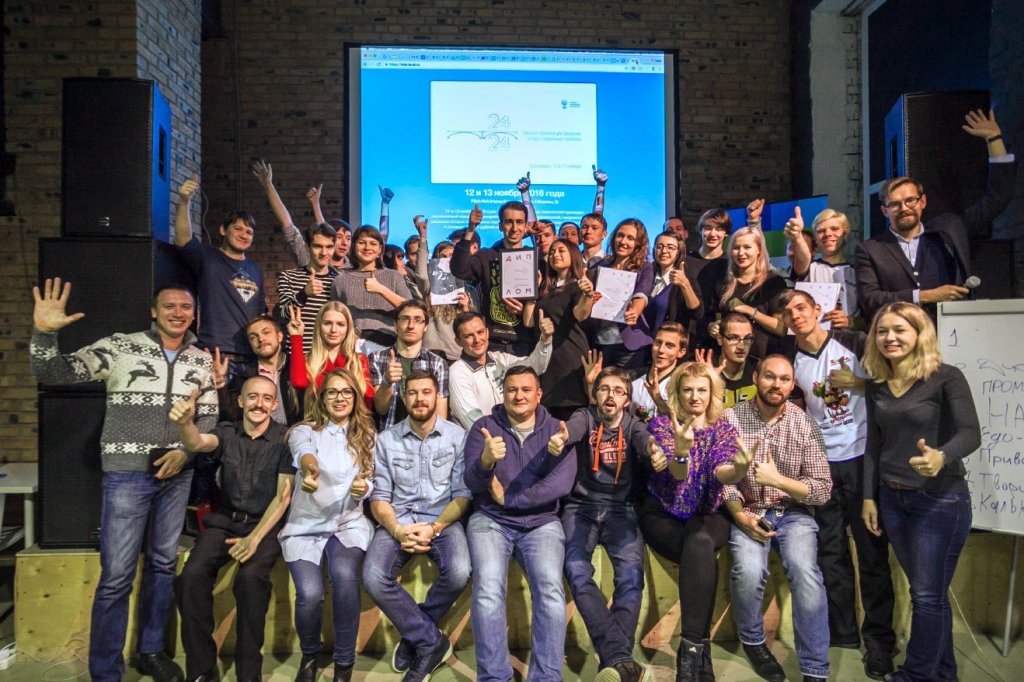
Over 5 years, the greenhouse of social technologies took part in the development of more than 100 projects that have both a social and a technological component. We have made a selection of successful social IT startups of greenhouses and projects launched in 2017.
Successful social IT startups greenhouses
"Donorsearch"
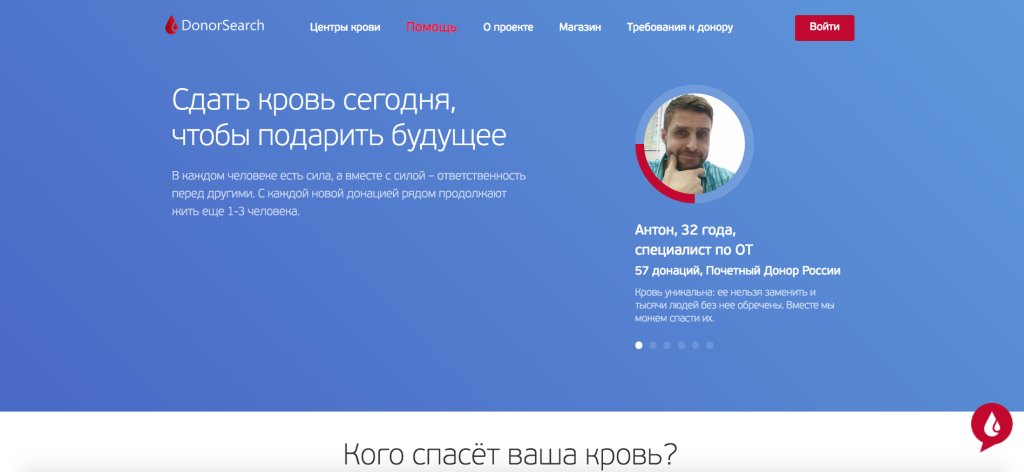
“Donorsearch” is a social network of blood donors. The project is aimed at developing blood donation among young people both by attracting new donors and involving regular donors who had previously surrendered to the process.
The Donorsearch application has become the winner of the Hakaton of the Greenhouse of Social Technologies Test Camp Volzhier (2012). The project helped over 6100 people in search of donors.
The number of donors in 2017 is 110,000 people. In 2017, “Donorsearch” became the winner of the presidential grant competition .
“Project participants noted more than 80,000 donations (blood cottage). These are only those who wanted to report their successes. The real number of donations committed by donors is more, ”says the project manager Ruslan Shekurov.
"Work-I"
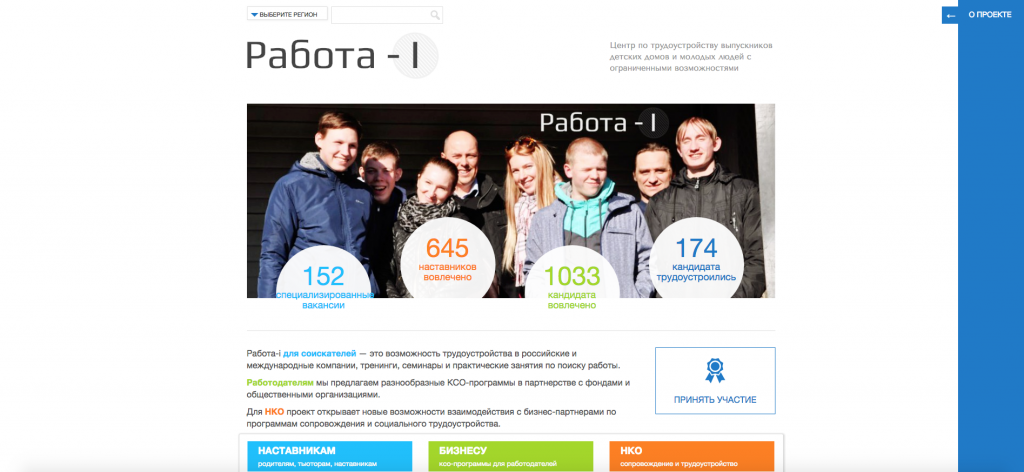
“Work-I” is a project of the Raul charitable foundation. This is the Center for the employment of graduates of orphanages and young people with disabilities.
The Work-I project, whose website was developed with the support of a greenhouse of social technologies, became the winner of the Child10 Stockholm 2014 Award .
Since 2012, the Raul Foundation and the Work-I Center (joined the project in 2014.- Approx. Ed. ) Understood 1206 young people and helped to successfully work out 195 candidates from among graduates of orphanages, correctional schools and young people with disabilities up to 29 years old.
"Mom works"
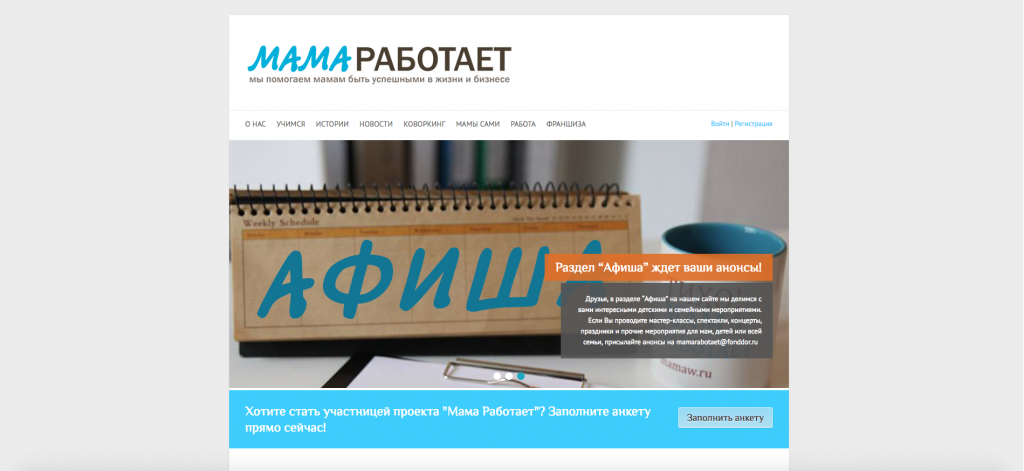
“Mom works” - the project of the Road to Life charity fund, which not only helps mothers find work, but also supports their personal undertakings. Conducts educational seminars, webinars and consultations.
The “Mom works” project became the winner of the Hakaton for NPOs of the Social Technology greenhouse in 2014.
From the moment the project is launched, more than 3,000 mothers were educated, more than 1,500 have found work. 640 mothers began their business and did not close it in the first year of activity.
The project has a social franchise to replicate experience in the regions. In 2017, the Mom works project became the winner of the competition of presidential grants .
"Mentoring"
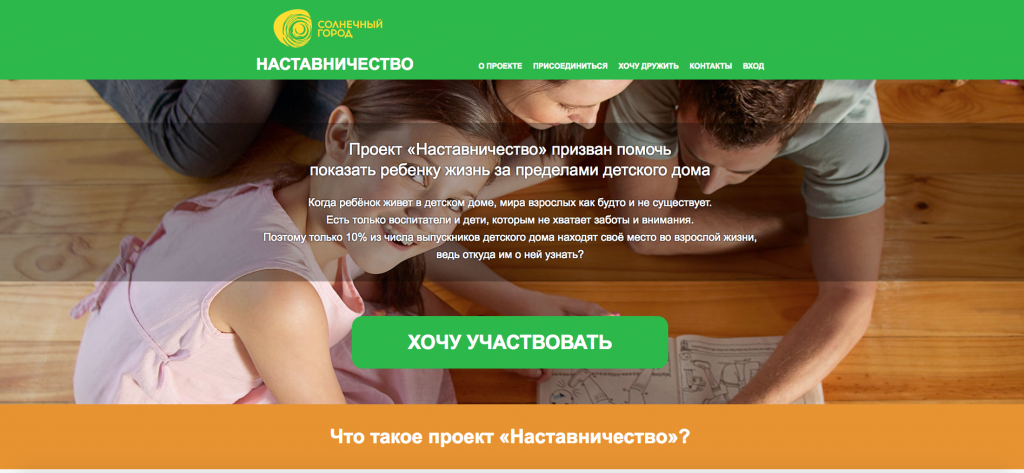
“Mentoring” is a project of the Sunny City charity fund from Novosibirsk. Aimed at individual support of the pupils of orphanages by volunteers of the fund.
The project "Mentoring" became the winner of the Hakaton "Make the NSC | NSK in Novosibirsk" of the greenhouse of social technologies.
In 2016, 570 profiles were received on the site (one third more than in 2015). All incoming contacts pass through the site, which is the main working tool. The site has functions of making meetings and writing reports.
"Red Balloons"
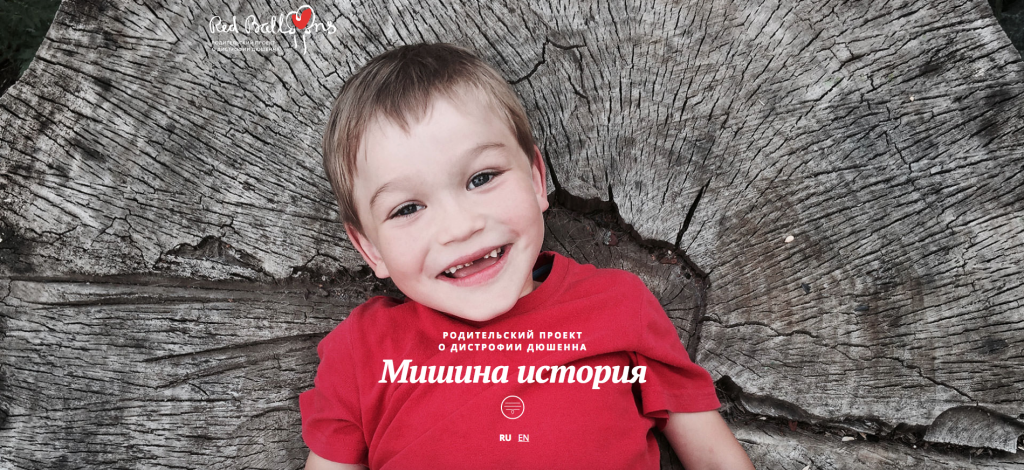
“Red Balloons” is a media project created on the basis of the personal history of the parents of Anatoly and Natalia Kislyuk, raising a boy with Dyushenna's muscle dystrophy.
The purpose of the project is to talk about the importance of early diagnosis of a rare incurable disease and maintenance therapy, the use of which will help improve the quality and life expectancy of children.
Red Balloons became the winner of Hakaton for Rarecamp's rare diseases of the greenhouse of social technologies in 2016.
For 6 months of 2016, the site visited more than 6,000 unique users. Other non -profit organizations became interested in the project. For example, the My Mio Foundation, professionally engaged in a rare disease, began to use the patient’s passport in his activities.
"PAULINE."
"PAULINE." -The web service of the Crisis Center for Women from St. Petersburg. With its help, women who suffered from violence can receive legal recommendations and draw up applications to law enforcement agencies and courts for independent submission.
Project "P.O.L.I.N.A." He became the winner of the Hakaton Crowdourcing applications “Crowdlab” of the social technology greenhouse in 2016 and was launched in November 2016.
More than 11,000 users have used the service since the launch of the service.
Projects launched in 2017
"Dysgraph"
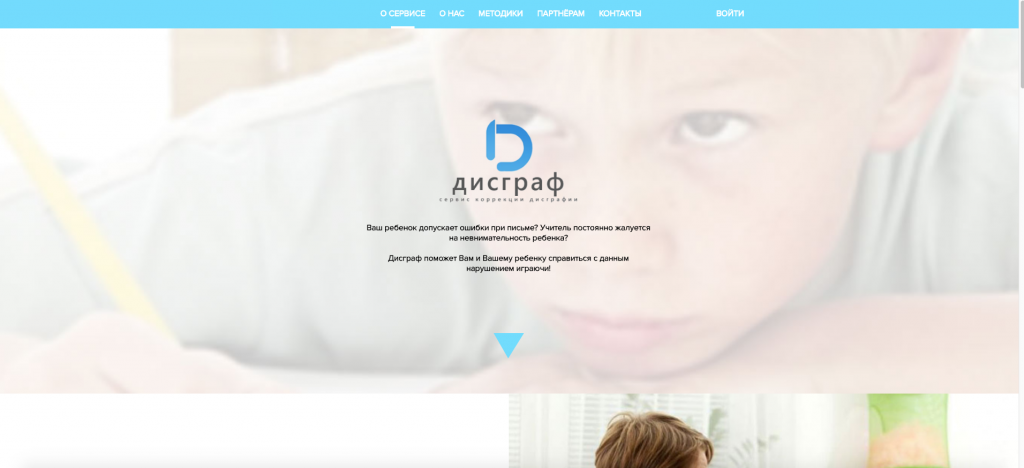
Dysgraph is a project of a Krasnoyarsk student Sevil Aliyeva. Dysgraphia correction service. Using a series of online tests and exercises, determines the presence of a written violation in children. The service is a site with test tasks for children from 6 to 14 years old.
The Dysgraph project became the winner of the Khakaton “24/24 in Krasnoyarsk” of the greenhouse of social technologies and was launched in June 2017.
“From the moment the project is launched, more than 3,000 people have passed testing. Of these, more than 2000 want and are waiting for a site with exercises. The Disgraph service won the “Innovation Competition in Education” in 2017 and received a grant from the fishermen of the fund for further development, ”says Sevil Aliyeva.
"Open Recycle Bot"
“Open Recycle Bot” -Telegram-boot created by developers from St. Petersburg Vitaly Esipov, Andrei Demakov and Vadim Elvard. The bot facilitates separate garbage collection for those who are not familiar with the details of the process.
In response to the photograph, the name or audio community, the bot advises about the possibilities of processing and finds the nearest point of reception of recyclables.
The Open Recycle Bot project became the winner of the Hakaton Open & Big Data Hackathon 2017 and was launched in June 2017.
Open Recycle Bot is the first chat boot in Russia using Tensor Flow machine learning technology, which improves recognition algorithms.
"Work for people with disabilities in the Voronezh region"
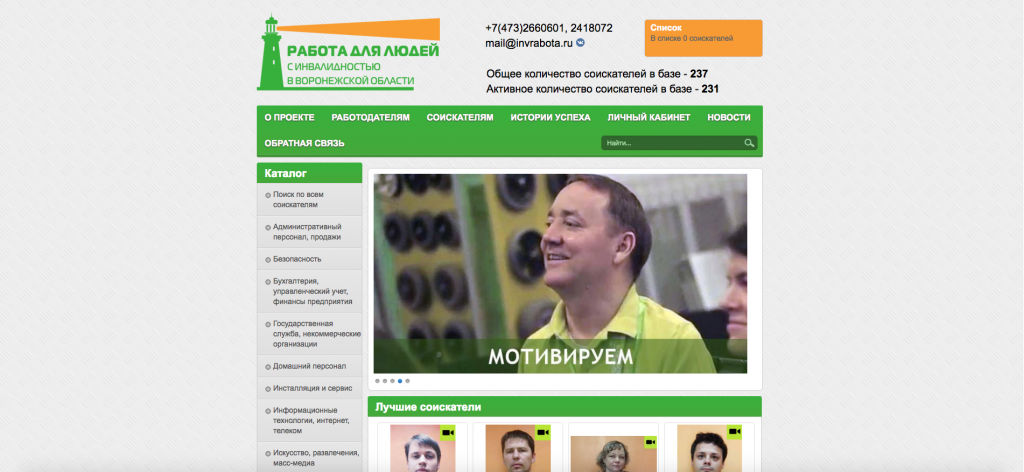
“Work for people with disabilities in the Voronezh region” -Internet resource Alexander Popov, head of the Voronezh regional educational and resource center “Available Environment” . The service helps employers find and hire people with disabilities.
The project “Work for people with disabilities in the Voronezh region” became the winner of the hacaton “SSH: Voronezh-Hakaton of Social IT projects” of the greenhouse of social technologies and was launched in September 2017.
At the time of writing, the number of applicants in the resource base was more than 200 people.
“For the first two months of the project, 20 employers turned through the site and 7 people were employed. The site has become a large motivating factor for the people with disabilities themselves. Many saw people like them, with similar health problems, but at the same time not lowering their hands and seeking a job, ”says Alexander Popov.