
Translated material
"The current crisis occurs imperceptibly." How Novosibirsk is built, part 4
We are on the threshold of the complete collapse of the construction market and the most massive protests of the “deceived equity holders”. How did the situation be the situation where we quietly crossed the line, and whether there are at least some exits from the situation-in the analysis of the General Director of the Republic of Real Estate "Republic" Dmitry Kholyavchenko.
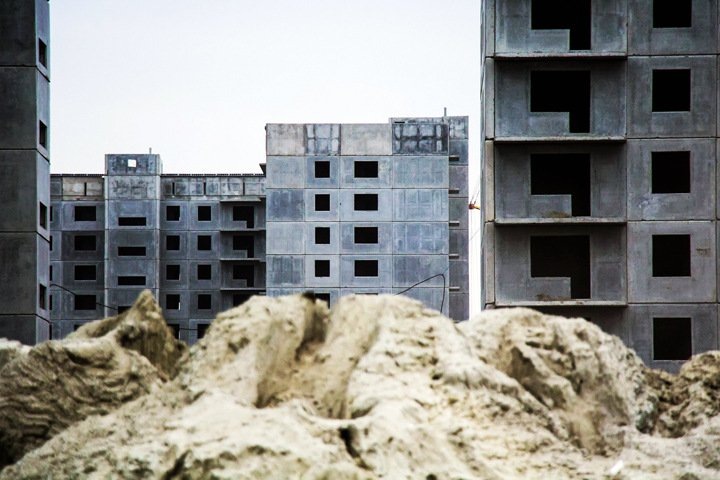
In the three previous parts, we examined what modern construction companies are, how they fit into the legal system of Russia and the situation in the city, how they correlate with banks, which are their business processes and how they attract investors. In the fourth - final part - we will talk directly about the technology of bankruptcy of developers and about the protests of deceived equity holders.
Bankruptcy technology of a construction company
The current crisis occurs imperceptibly. Consumption is slowly falling every month, people (sometimes even imperceptibly for themselves) reduce the number of trips to the store, switch to cheaper stamps, and are more used by promotions and discounts in stores. The problem is that a person’s memory is not perfect, and a similar inflation format is not too noticeable. A significant part of the population will not be able to recall the prices of three or four years ago and properly assess how much worse they began to live. This is the face of the current crisis of consumption.
The acquisition of property rights of the requirement under a shared participation agreement in construction or in the form of a solder in a cooperative (which is mistakenly called a “apartment in a new building” in the expansion) this is an example of the most expensive investment consumption for a private person. Therefore, it is clear that in this area there is no special smoothness, and even more inconspicuousness, there is no question of joining the crisis.
However, many years of constant sales growth, the inconspicuousness of the general crisis for many people and the misunderstanding that the current lack of economic policy of the state, as well as the seasonality of the market, which hides long -term trends for the observer - all this leads to the fact that for many developers the crisis suddenly occurred!
Moreover, I will express a seditious thought: since the construction industry is a rather primitive business that has never been engaged in either a serious analysis of its market, nor the connection of its success with the country's economy, for developers building housing, their own disaster becomes a surprise that contradicts the incredible success of the state. Knowing personally some owners and leaders of construction companies, I can say that they are patriots in the primitive sense in which this is broadcast by the federal government. They rejoice at the foreign policy “successes” of our country to such an extent that they include such words as “Crimea” or “Olympic glory” in the names of their complexes, not even realizing that those bricks of an economic disaster are perpetuating that they will cover them with one of the first.
The peculiarity of the thinking of the “Soviet man”, manifested in doubles, is an integral part of the thinking of the developer. In this situation, this is manifested in the simultaneous denial of the systemic crisis of the Russian economy in general and in the fight against the consequences of the crisis in its own industry, accompanied by lobbying subsidies, low mortgages on new buildings, and forgiveness of debts for renting land plots.
However, when the fall of sales even in sincerely deprived of fraudulent intentions of the builder reaches such a level that bankruptcy seems inevitable, the model of his behavior becomes a similar model of behavior of the Russian banker. He begins to attract money according to gray schemes and “withdraw” funds in favor of the founders. That is, he completely forgets about the equity holders, about the construction object, but thinks first of all about the preservation of capital. As the most striking examples of such actions, one can call the most loud scandals of recent years: Summer, “Negro”, Skims or the recent PTK-30.
The mechanisms for withdrawing funds, in fact, are quite simple. Firstly, this is the beginning of the reception of investors under a loan agreement or a preliminary contract. In some cases, this turns into black nal, which is simply withdrawn by interested faces. Secondly, the termination of active construction, non-payment of salaries or non-payments for renting a land plot. And in some wild cases, the situation comes to the point that simple hard workers arrange a strike due to non-payment of salaries, climbing a construction crane. Or the city hall “loses” the documents and “forgives” hundreds of millions of debts for the rental of land - if only there were tens of thousands of deceived equity holders. Thirdly, the withdrawal of even “white” money through the overestimation of the cost of building materials, rental of equipment or contract work. I think that the scale of this phenomenon at the final stage of construction will only be opened by the investigating authorities. Fourth, these are bribes to officials from that very black nala, which in this situation allow us to do only one thing-to extend the agony in time for the full withdrawal of funds.
Absolutely all these actions are, in my opinion, direct fraud. However, I must still emphasize that the developers do not because they initially planned to collect money and deceive investors, but because the construction industry, the existence of which in this form was criminally admitted by the state, was very poorly organized. She has a slurred business model and ranged the crisis. Well, unfortunately, like any business in Russia, I could not demand from the state to conduct an adequate policy that does not damage the country's population and economy.
The myth of the benefit of investing in a new building
However, it should be recognized that some developers are not enough to create a pyramid. You need people who will take them money. The level of reliability of investments in the new building does not exceed the game on the exchange. And in many cases, the game in the casino. Nevertheless, it was the construction market that formed such a perverted and painful phenomenon as a mass unskilled investor . What is the reason for this?
Firstly, this is the thesis stated in previous articles that this state provoked the growth of the pyramids by accepting No. 214-ФЗ on shared participation in construction, which gave legal guarantees of investment in the complete absence of economic guarantees, creating a false sense of security for a mass investor who does not have qualifications and even a minimum economic culture.
Secondly, it is a psychological stamp “I want to live in the new”, which was manipulatively introduced into mass consciousness with advertising.
However, the most important, of course, must be recognized by the third factor: the formation of the myth of the benefits of investments in the new building. Any myth should be based, even on a small, but truth. This myth is based on two at once. One is a really noticeable difference between the value of property rights at the stage of their acquisition and an apartment in a new building after delivery of the house. The second is numerous examples of investment profit by private investors (especially until 2008 and in 2010-2013), which were an occasion for envy. The situation with the formation of the myth was complicated by the fact that neither the Federal Law "On Advertising" or other legislation was prohibited from calling the property rights sold by the developer an apartment in a new building, which created false confidence among the consumer. Another manipulative risk factor was that, unlike shares on the exchange, the “apartment in a new building” has, in addition to a direct investment, consumer value, which is also extremely understandable to an ordinary person, is housing.
The idea that you can sell a two -room apartment and buy one -room, and on the resulting difference, starting a business does not even occur to people
From this, an important fourth factor in the formation of the myth is clear: in the mass consciousness of the vast majority of Russians there is no perception of the property owned by them as capital. This is the main reason that even the presence of most of our fellow citizens of private property in the form of privatized and purchased apartments does not form the thinking of the owner who realizes his economic and political rights and requiring the state of protection from the state.
Let's see what this manifests itself. Moreover, I, as a realtor, have been lucky for all these years to see all the facets of the psychology of a person buying and selling residential real estate. Realtor services - it is agent, and not legal or credit brokerage support of the transaction - these are the most difficult services aimed at servicing individuals on problems not related to entrepreneurial activities. For almost all Russians, the apartment is the only expensive property that is an operation with which this is a whole event in life. Therefore, there are so many nerves in real estate transactions.
The vast majority of Russians have only one apartment and use it directly for living. And the main characteristics associated with the possession of this apartment, this is its area, convenience of layout, proximity to work, a medium around the house comfortable for their lifestyle. Issues related to property capitalization, its current value in the market, the ratio in value with objects of other classes or located in other areas, people with income above the average are usually set. The decision on the exchange of an apartment (and the vast majority of transactions in Novosibirsk exchange) are also most often accepted on the basis of consumer desires, and not based on the price situation in the market.
And even more so, extremely rarely the apartment is considered as capital in matters not related to real estate. So at least 40% of Russians who declare their intention to engage in business, the most important obstacle to themselves see the lack of starting capital. However, the idea that you can sell a two -room apartment and buy a one -room apartment or buy an apartment closer to the outskirts in return, and it does not even come to the head of the business difference.
The minimum repairs for the apartment, which is rented out for dedication, will be at least 20% of its cost
Such a lack of perception of residential real estate as capital is of great importance in the formation of a myth. So, when contacting the market of new buildings, as an investment space, the consumer aspects of ownership of the apartment (repair and its justification, rent and directly related depreciation, taxes and utility bills) are separated from simple price issues.
Let's take a look at the factors usually unknown when calculating investment benefits by an unqualified investor. But, for starters, I have to remind you of another thesis previously set out in this cycle: the new buildings market does not exist in separation from the secondary housing market and each developer, selling property rights of the requirements, competes primarily not with other developers, but with a much larger and more civilized secondary market.
So, the first factor is repairs. Experience shows that the minimum repair for an apartment, which is rented under self -separation, will be at least 20% of its cost. Also, all the calculations of recent years will show that investments in the repair of any apartment are not justified even half. The exception is windows, doors, pipe replacement, plumbing, glazing of the balcony. Everything else is more than half in vain spent funds in terms of the rise in the cost of the apartment. In addition, with the onset of the crisis in Novosibirsk, the same universal scenario works - the difference in the price between the same -type apartments with different number of rooms is reduced, the fact of owning the real estate object, not its parameters, is important, and the repair begins to play even less importance. When calculating the benefits of speculation by a new building, many people forget to include future repairs in its cost and subtract most of the cost of this repair from the probable rise in price of the apartment. I will say the sensational for many news - even before the crisis, only one repair factor with all derivatives made the purchase of a future apartment in a new building less profitable than buying an apartment in the secondary market. However, the distorted information space, ordinary human stupidity and greed, and the memory of the investment foam of the 2000s closed their eyes to the mass unqualified investor playing in the “investment in new buildings”.
Buy an apartment on the secondary and rent it out is more profitable
But that's not all. Residential real estate is very flexible and effective in use of capital. One of the main ways to use the apartment is its rental. If a person buys a single housing for himself, he has a competition between the purchase of a new building (and the need for the construction and repair period for rent an apartment) or buying a secondary (and the ability to not rent an apartment). In the first case, an investment benefit from a new building and rental costs are required. If a person acquires real estate in order to make a profit, then if he buys property rights in a new building, he will receive investment income, and if he buys a secondary, he will be able to rent it out at once. So, many years of experience shows that since the greatest increase in the cost of the “apartment in the new building” can only be counted when buying at the pits of the pit - and this is 1-1.5 years of construction and several months for repairs, then buy an apartment on the secondary and rent it out, more profitable. With the help of rent, you can confidently obtain, taking into account depreciation, taxes and utility bills, about 10% of its market value per year. In the conditions of the modern market, this, with rare exceptions, exceeds the benefit of buying a new building. And another factor - it is much more profitable to rent an apartment in the Old District than in the new housing estate on the outskirts, where the same ones like you will be above the roof. And from the subsequent rental of new buildings, in most cases, you will receive a maximum of 5% of its market value per year.
The myth of the benefit of investing in the new building is very tenacious, and in many cases, as the only standard objection from a potential investor for any calculations with a calculator in your hands, you will hear something like: “But my friend bought a pit and half a million at the stage”. It is clear that such psychology is an excellent fertilized soil for the growth of construction pyramids. And if a mortgage is also applied to this?
The depth of the crisis: a mortgage for new buildings or the last bunch in the lid of common sense of common sense
Mortgage is a complex, but highly efficient financial instrument. Mortgage rates are always lower than for any other credit product, because the mortgage loan a) is long, b) as ensuring, nothing better than the collateral of real estate in the world has not yet come up with. The guarantee itself works as a full -fledged security in only one case - if the initial contribution is so large that even in the case of a decrease in real estate prices, the liquidation value of the mortgaged object exceeds the balance of loan debt on the loan.
However, the assessment in Russia is carried out on the basis of a comparative approach. And in the modern market, the number of objects overpriced prices is extremely large. And I can say with full confidence that according to very many mortgage transactions, the assessment of the subject of the pledge has been overstated. Given the trend for a further drop in prices for a single loan with an initial contribution of 10% -15% and even 20% of the bank, in case of non-payer of the borrower, will not receive their money back in full. In the case of the implementation of the subject of the pledge, they will receive 70–90% of what was originally issued.
I can say with complete confidence that according to very many mortgage transactions, the assessment of the subject of the pledge has been overstated
There are almost no risk of overstating with new buildings. However, in the case of bankruptcy of the developer and refusal to pay on a loan, the bank will not receive anything at all. Because it is almost impossible to exercise property right to demand, and there is no chance in a house that is no longer built.
However, the main problem is not only this. The problem of mortgages for new buildings is that the subject of the pledge itself does not comply, in my opinion, the minimum safety requirements. It is clear that the peculiarity of the Russian mortgage is that our personality and income of the borrower are no less important than the subject of the pledge, however, in the previous article of the cycle, we have already evaluated what the quality of the loan portfolio of Russian banks. A very important factor is that for modern Russian banks, there is not a single economically significant factor that would contribute to the formation of the bank’s interest in the well -being of its borrower or even in the quality of the loan portfolio. Therefore, market tools, thanks to the Russian state, do not work here at all.
Говоря проще, ипотека на новостройки в российских условиях совершенно недопустимый тип ипотечного кредитного продукта. В ипотеке на новостройки банки полностью теряют обеспечение в случае банкротства застройщика. Ипотека на новостройки крайне невыгодный и невероятно рискованный кредит для заемщика, а при банкротстве застройщика для заемщика вообще исчезает какой бы то ни было смысл платить по кредиту, кроме сохранения кредитной истории. Ипотека на новостройки способствует перетеканию средств из надежных сегментов рынка недвижимости в высокорискованные строительные пирамиды, развращает с точки зрения ответственности рядового потребителя, существенно ухудшает качество кредитного портфеля банков и подставляет массового неквалифицированного под потерю денег, вечные кредитные обязательства перед банком и банкротство.
Ипотека на новостройки - крайне рискованный кредит для заемщика
В данной ситуации ничего хуже для увеличения количества обманутых дольщиков, чем дотирование ипотечных ставок на новостройки, придумать невозможно. Это не просто кредитный инструмент с невероятным уровнем риска — это один из главных факторов социальной катастрофы.
Кто такие обманувшиеся инвесторы
Как я уже говорил, термин «обманутый дольщик» неверен, потому что лишь часть инвесторов пострадала, отдав строительному рынку свои кровные по договору долевого участия в строительстве. Но также он неверен и по психологическим причинам: для возникновения строительной пирамиды недостаточно застройщика, который на раннем этапе привлечения средств инвестора и не думал, что потом будет цинично воровать деньги. Для возникновения строительной пирамиды нужен и инвестор, который, находясь в описанном выше мифологическом пространстве, находясь под воздействием рекламы и стадного инстинкта, опираясь на собственные глупость, жадность и безответственность, готов будет отдать свои деньги за воздух, думая, что покупает квартиру.
Итак, что же собой представляет обманувшийся инвестор?
Во-первых, это человек, который минимум лишился доступа, а максимум окончательно потерял огромную, по его меркам сумму денег. И требовать от него полностью рационального взгляда на ситуацию не стоит.
Во-вторых, это непрофессиональный инвестор, который для того, чтобы сохранить — а чаще приумножить — свои деньги, вряд ли рассматривал иные варианты. Он шел либо по накатанной колее собственного удачного опыта, либо по примеру знакомого ему человека. Причем в ситуации, которая казалась ему сходной с предыдущей. Либо он о подобном анализе вообще не задумывался.
человек свято верит, что если застройщику «позволило» строить государство, то он обязательно сдаст дом в эксплуатацию
В-третьих, в большинстве случаев это человек, который всерьёз считал, что он покупает квартиру, даже не представляя экономических рисков приобретения имущественных прав и не зная такого слова.
В-четвертых, вопреки коллективному опыту всех предыдущих поколений россиян, всю свою историю подвергавшихся обману со стороны государства, это человек, который свято верил, что если застройщику «позволило» строить государство, то он обязательно сдаст дом в эксплуатацию.
В-пятых, более чем в половине ситуаций это человек, который при выборе объекта инвестирования исходил в лучшем случае из принципа «самое большое, что я могу позволить за свои деньги», а в худшем придерживался позиции «надо купить квартиру мечты, а если не хватает денег, то зачем нужна ипотека?».
В-шестых, это человек, который не понимает, что нет «государственных» денег, а есть деньги налогоплательщиков. И в качестве варианта решения, опираясь в том числе и предыдущий пункт, «обманутый дольщик» будет требовать наиболее простого решения в виде раздаче денег от государства.
В-седьмых, это человек, который менее всего склонен в произошедшей ситуации видеть свою вину. Подобное упорство тем больше, чем больше у него товарищей по несчастью — большинство же не может ошибаться.
Понятно, что опираясь на подобные модели самооправдания, категорически отрицая явственные собственные глупость и жадность, не понимая и не желая понимать, ни то, как устроен рынок строительства жилья, ни то, что собой представляет бюджет, ни что собой представляют функциональные обязанности государства, обманувшийся массовый неквалифицированный инвестор выходит на площадь.
Анатомия протеста «обманутых дольщиков»
Протесты обманутых дольщиков очень опасны.
Дело в том, что если мы посмотрим на большинство крупных митингов в Новосибирске в прошлом году — а это протесты против повышения тарифов ЖКХ, грабительской мусорной концессии и аферы четвертого моста, акции Штаба Алексея Навального, протесты новосибирского «Яблоко» против ограничения собраний и т. д. — то они были организованы людьми, которые не только понимают кто должен быть адресатом митинга, но и читали закон о митингах. Более того — и со временем это становится более важным — при проведении митингов учитывается, что процесс может быть долгим, что какие-то требования невыполнимы и что протест это не всегда обвинения.
главная вина возникновения обманутых дольщиков лежит на федеральной власти и федеральном законодательстве
С обманутыми дольщиками ситуация другая. Люди сразу выбирают радикальную форму, включая голодовку и блокирование всего, вплоть до дорог, не понимают, что их требования часто противоречат закону, не признают, что их протест по факту политический, и сразу обращаются к Путину, тем самым даже лишая себя квалифицированной поддержки и объединения с другими силами. Хотя бы потому, что главная вина возникновения обманутых дольщиков лежит на федеральной власти и федеральном законодательстве.
Надо отдать должное региональной власти в том, что она сразу реагирует на любые экономические протесты и особенно на протесты обманутых дольщиков. В качестве задачи, конечно же, ставится ликвидация протеста, что не всегда равно решению проблемы. И уж тем более не равно справедливому решению проблемы. Так, следует отметить, что в последнее время серьезнейшей критике подвергаются механизмы решения проблем обманутых дольщиков — выделение дополнительных участков, прощение долгов. Лично я уже готов протестовать против любой помощи обманутым дольщикам за счет бюджетных средств и бюджетных ресурсов. Так же крайне опасным являются те формы превентивной ликвидации протеста, которые предполагают обеспечение финансовых потоков еще неразорившимся строительным компаниям. Это просто затягивает агонию, поддерживает неэффективный бизнес, ведет к риску получить еще больший по масштабам протест в будущем.
Пока серьезные последствия протестов удается купировать, но при практически гарантированном увеличении количества обманутых дольщиков, существующие меры и подходы будут не просто недостаточны, но и смешны.
И чтобы вы поняли масштабы проблемы, то если бы сейчас у меня в стиле советских учебников истории спросили о том, кто может быть социальной базой будущей российской революции, то я бы рискнул предположить, что это неплательщики по кредитам в банках и, особенно пользователи микрофинансовыми займами, должники по коммунальным платежам, жители моногородов и обманутые дольщики. Проблему надо решать. Лично мне революция не нужна.
Есть ли способы решения?
Общеизвестно, что я являюсь безусловным сторонником приоритета договорных отношений перед государственным регулированием. Сторонник того, что человек, принявший любое — даже самое глупое — решение должен нести за него полную ответственность. Причем запрещать принимать ему глупое решение как-то не стоит. Однако в случае со строительством жилья ситуация зашла настолько глубоко, что применение к реальности простых либеральных ценностей невозможно без крайне неприятных последствий. Отрасль нуждается не в мерах по временному затыканию дыр или перманентном переносе сроков катастрофы на будущее, а в серьезном пересмотре подходов. Во всяком случае до того момента, когда строительные компании не станут нормальным бизнесом. Вот в чем это должно заключаться:
Необходимо на уровне федерального законодательства запретить любое инвестирование физическими лицами в строительство жилья. Строительная компания не должна иметь право принимать об обычного человека деньги в какой бы то ни было привязке к будущему объекту недвижимости или к текущему строительству. Закон о долевом участии в строительстве, конечно же, должен быть отменен, как способствующий формированию финансовых пирамид и создающий социальное напряжение. Ни один человек, опираясь на законы, не должен питать иллюзии о ложной защите своих инвестиций.
Необходимо на уровне федерального законодательства запретить любое инвестирование физическими лицами в строительство жилья
Надо законодательно запретить ипотеку на права требования и выдачу кредитов под залог приобретаемых имущественных прав, связанных со строящейся жилой недвижимостью. Залог имущественных прав должен быть сохранен, но только как обеспечение обязательств юридических лиц. Также должна быть сохранено право получения кредита под залог имеющейся недвижимости, взятого для передачи денег застройщику, но только в том случае, если эти деньги не будут передаваться в привязке к будущему объекту недвижимости или к текущему строительству.
Необходимо усовершенствовать антимонопольное законодательство, введя в него понятие «рынка недвижимости», в рамках которого осуществляется конкуренция не только между крупными игроками в одном из сегментов, но между всеми продавцами всех объектов недвижимости. Необходимо приравнять любые дотации, льготы и субсидии (включая субсидирование процентной ставки по ипотеке) со стороны бюджетов всех уровней и иных государственных кошельков, выделяемые в зависимости от типа продавца или покупателя, к недобросовестной конкуренции и ввести за это серьезную ответственность. Государство в широком понимании этого слова не должно искажать рынок и поддерживать увеличение или сохранение продаж для отдельной категории продавцов — застройщиков, подрядчиков, производителей и поставщиков строительных материалов, банков. Защита частной собственности — недвижимости простых людей — и ее капитализации и ликвидности должно осуществляться и с учетом антимонопольной защиты.
Должно быть на федеральном уровне запрещено выделение земельных участков под строительство жилья без уже подведенных коммуникаций и гарантированной возможности развернуть все транспортные коммуникации, включая общественный транспорт с соответствующей пропускной способностью, в момент сдачи дома. Выделение земельных участков на окраинах должно быть возможным только при условии модернизации всей транспортной инфраструктуры и улично-дорожной сети между новым массивом и центром города, хотя бы по критерию гарантированного вывоза людей общественным транспортом. Также выделение земельных участков под застройку жильем должно происходить только в случае гарантий одновременного с жильем строительства базовых объектов социальной инфраструктуры -детских садов, школ, поликлиник — с масштабами пропорциональными численности населения. Детские сады, должны сдаваться одновременно с жильем. Школы максимум через год. Поликлиника максимум через два года.
Необходимо запретить любую помощь строительным компаниям и обманутым дольщикам за счет бюджетных средств и путем льготного выделения дополнительных земельных участков для привлечения на кризисный объект нового застройщика. Необходимо организовать на постоянной основе штаб из представителей федеральной, региональной и муниципальной власти, а также правоохранительных и контрольных структур, депутатов парламентов всех уровней и представителей общественности для организации помощи обманутым дольщикам в защите их прав и экономических интересов в рамках процесса банкротства застройщика, в организации жилищно-строительного кооператива и достижении договоренности об увеличении пая для завершения строительства, в работе по изменению проекта дома для дополнительного строительства помещений коммерческого назначения для привлечения части недостающих средств.
Необходимо ликвидировать все элементы круговой поруки застройщиков в виде обязательных саморегулирующих организаций, обязательное страхование, компенсационные фонды и тому подобное. Однако необходимо предусмотреть в отдельных случаях (когда застройщик не в состоянии застраховать свою ответственность в нормальной страховой компании, получить полноценные банковские гарантии или обеспечить соответствующий по размерам залог нормальными ценными бумагами и недвижимостью) солидарную ответственность собственников и руководства строительной компании своим имуществом по обязательствам компании-девелопера.
Необходимо кардинально изменить налоговое законодательство, отменив все налоги, усложняющие создание рабочих мест, акцизы на бензин, любые налоги облагающие оборот компаний производящих стройматериалы и строительных компаний. Хотя последнее касается и ведения любого бизнеса вообще.
Для подобного комплекса реформ необходима не только политическая воля, но и готовность местных властей адекватно воспринимать реальность, временами игнорировать вертикаль власти, регулярно подвергать сомнению федеральное законодательство и усиленно лоббировать интересы региона перед федеральным центром, а не заниматься затыканием дыр, умалчиванием проблем и проведением линии федеральной власти в регионе. Will it be? - Don't know. Хочу ли этого? - Yes. Всё-таки мы живем не в какой-то абстрактной России, а в Сибири с очень конкретными климатическими условиями, сравнительно свободным населением и, к сожалению, временами, непониманием того, ради чего мы все здесь живем и зачем нам, собственно, нужна такая федеральная власть, создающая такие проблемы.
Dmitry Kholyavchenko, especially for Taiga.info