
Translated material
Startups for the "List of Belousov", Uber for plumbers and the new hero "Russian norms!"
Large business was offered to throw out 30 billion for startups
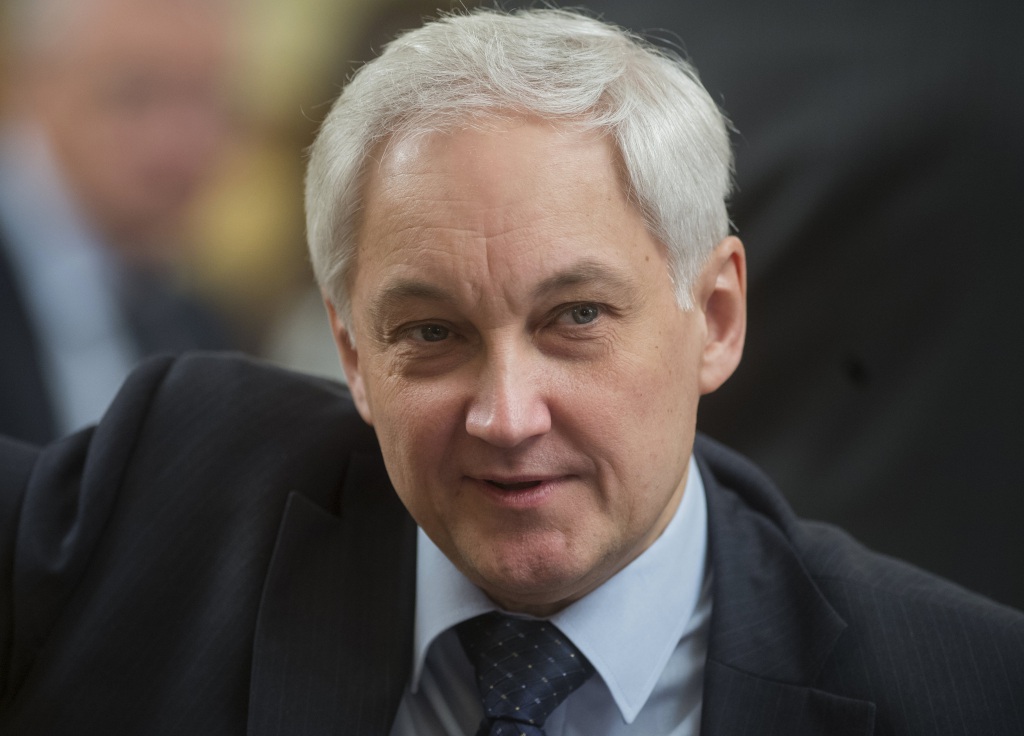
Presidential Assistant Andrei Belousov. Photo: kremlin.ru
State plans for the development of an innovative economy in Russia could not do without participants in the “List of Belousov” -now the Fund for the Development of Internet Initiatives (Freei) appeared among the applicants for their money. He will offer companies from the list to invest in startups at least 30 billion rubles. However, one startup in the list of projects proposed by participants in the list was already - in September they were offered to invest in the project “Belt from 1000 Technological Companies” of the Innopractics Foundation, the alleged daughter of Vladimir Putin Katerina Tikhonova.
- Frows will offer its project on Friday at a meeting of the working group under the leadership of the First Deputy Prime Minister Anton Siluanov and the President of the RSPP Alexander Shokhin, Writes Vedomosti. He suggests that companies will be invested in a special fund, which will then send investments in technological startups.
- In the early stages of the discussion, it was said that the FRIA hopes in this way to collect investments up to 100 billion rubles. But while the fund selected projects for 30 billion rubles to submit a commission, a familiar top manager of the Friy told the newspaper.
- The idea with the List of Belousov was by the way - the Friy has been wanting to attract money to a new fund for a year, which will be invested in the company of the best graduates of the Accelerator of the Frius, the source of the publication in one of the Russian venture funds said.
- In July, Vladimir Putin’s assistant Andrei Belousov (more about him - here ) proposed to seize from the 14 largest metallurgical and chemical companies “over -income” for 500 billion rubles for the implementation of Putin May Decree . The RSPP and the governmentopposed the idea. As a result, Belousov agreed with the defendants in the list on the participation of companies in investments in socially important projects. Now their list is being discussed, in the preliminary long-list-projects for 11.9 trillion rubles.
- As The Bell found out , one of these projects may be the new project of the Innopractics Foundation Tikhonova “Innovative Engineering Center”. It should create by 2026 "A belt of 1000 technological companies around the leading technical universities in Russia by 2026 with total revenue up to 100 billion rubles." The cost of a pilot project in the Krasnoyarsk Territory is 1.05 billion rubles. At least 15 largest companies with state participation and private investors will be invited to participate in the project.
What am I to me?
Forced investments of large companies in startups selected by the State Fund - sounds like a working anti -utopian model of the future Russian technological business.
"Russian norms!"
New hero - Mikhail Kokorich
Entrepreneur Mikhail Kokorich became a millionaire of twenty years old, was engaged in explosives in mines, founded and sold the retail network of Uyutherra, worked as the general director of the largest forestry company Im PALP, and then became the founder of a private space company. Why, after the entrepreneur hit forty, he decided to go to the accelerator for startupers? See in the new issue of the project "Russian norms!" With Elizabeth Ossetian.
MONEY
Sberbank interest price
The Yandex shares on NASDAQ finished the day with a record fall - 17.81%. The news that Sberbank is negotiating a large package of shares of the company cost it almost $ 2 billion capitalization. 30% of Yandex shares, which, according to The Bell, are claimed by Sberbank, they fell by $ 500 million per day. However, Yandex began to grow slightly at 0.37% off -offs.
Stations not for trade
Stations remain a damned place for network Russian retailers. The X5 Retail Group, which in the summer of 2017 announced a special project of chain of stores at railway and bus stations, as well as at airports, has not opened a single point for a year and a half, RBC found out . The rates were excessively high, and there are almost no suitable rooms for network grocery retail at Russian stations, experts say.
PRACTICE
Uber - not only transport
Yesterday we said that Uber will personalize their application to help users navigate their own system - the company has more and more different services. To them, as the Financial Times found out , another one will be added: Uber Works, a service for searching and hiring workers on request (on-demand)-for example, a security guard or a waiter for a specific event. This is a diversification of a business before the upcoming IPO , the newspaper writes: Uber wants to convince investors that has gone beyond a simple transport company. Moreover, such services may even be more successful than the main Uber business - in the company, for example, they expect that the Ubereats food delivery service will come to profit faster than the maternal uber.
Service for lazy owners
Vacasa appeared as an analogue of Airbnb: the company rents resort premises - like cottages on the beaches. Over time, the service began to offer other landlords working with various platforms, services for servicing their residential places - in particular, full -fledged management of premises (clining, promotion, repair, design, etc.). VACASA has $ 207 million of attracted investments and more than 10 thousand premises, in numbers the company is the same Airbnb. However, the VACASA model has two main advantages that allow its creators to doubt the success of the business: tenants are reliable long -term customers, and thanks to the large number of platforms for housing, VACASA does not have problems with business expanding. Techcrunch tells in detail about the service.
Peter Mironenko