
Translated material
With the new, comfortable for Putin, the head of the HRC "Moscow business" again became "unrest", and the Council itself is less opposition
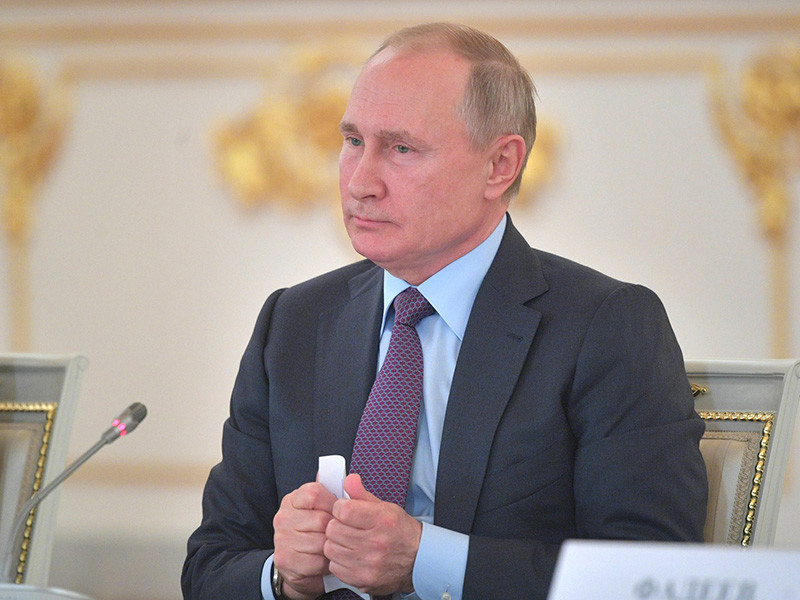
At the traditional December meeting of the Presidential Council for Human Rights (HRC), who changed the head, with the President of the Russian Federation Vladimir Putin, the most pressing issues were removed from the agenda or mentioned only casually, like the topic of summer protests. According to experts, instead of the opposition body under the president of the HRC, he became "more comfortable" for Putin, the Vedomosti write.
The meeting was prepared by the former head of the HRC, Mikhail Fedotov, who, according to colleagues, paid for his position for the performance of members of the Council in defense of the participants in the summer protests in Moscow.
One of the participants in the meeting said that the procedure for its preparation has radically changed: under Fedotov, the list of reports was discussed and approved by the Presidium of the HRC, and the new head of the council Valery Fadeev simply collected proposals. Therefore, the list of the speakers remained unknown to members of the HRC before the meeting. Another interlocutor of the publication did not notice any radical changes, the only request was not to raise one topic several times.
Fadeev reported to the president that only 16% of protests were political in nature, citizens are also concerned about the growth of housing and communal services tariffs, environmental problems and garbage reform. He added that in the field of the volunteer movement there was a "real boom", the institution of public observation was expanded to other types of campaigns, and 4,400 socially oriented NPOs provided 22 million services last year
Having affected the topic of the action on July 27, Fadeev said that the inconsistent procession on July 27 led to the "riots", but court decisions should be proportionate to the deed: "A empty paper cup thrown towards the police should not lead to a prison term." Fadeev specified that he sees an example of such proportionality in the results of meetings in several cases that took place on December 6. “Although I must say that the members of the council have other opinions,” he concluded.
Lawyer Henry Reznik said that people whose innocence of which was clear to the whole country was condemned in Moscow case, giving an example the case of Pavel Ustinov and Yegor Zhukov . “It turns out that the whole country can be seen that our justice in such politically motivated matters is actually losing the remnants of independence,” he said. In response to this, the president stated that guilt is proved in the trial, and the public opinion is affected by the media that work "based on different motives." The President also said that it is more impossible to influence the court decisions, intimidating representatives of law enforcement agencies and courts.
Journalist Nikolai Svanidze dwelled on problems when agreeing on mass events, proposing to cancel an article under which Konstantin Kotov was convicted of repeated participation in rallies and support the initiative of the former Ombudsman Vladimir Lukin to identify the police and employees of the Russian Guard. The president listened and promised to study the issue, emphasizing at the same time the inadmissibility of attacks on a representative of the authorities: “He threw a plastic glass into a representative of the authorities - nothing. Then nothing. Again, nothing. Then he will throw a glass bottle, stone, then start to shoot and grind the shops. We should not allow this!”
At the same time, Putin agreed with the idea of returning the jury against pedophiles and officials to the jurisdiction of the courts of jurisdiction, and also asked for lists of residents of Crimea, including civil servants and referendum participants to reunite with Russia, who are persecuted by the Ukrainian authorities. According to the new member of the HRC, the former leader of RIA Novosti Ukraine "> Kirill Vyshinsky, 6 thousand people risk arrest when crossing the border.
Political scientist Alexei Makarkin notes that, unlike Fadeev, the court had not yet managed to recognize protest performances in Moscow with mass riots. According to him, traditionally, the HRC was a representation of the opposition in power, but now the authorities consider it necessary to protect first of all their people and loyalists, and the opposition’s defenders will listen until the situation remains calm. The co -chair of the Voice Grigory Melkonian states that the annual meeting with human rights activists has become comfortable for the president: acute issues, such as the topic of the election, either disappeared from the agenda, or, like the topic of summer mass shares, were affected only by casually.
The members of the HRC themselves also told Open Media that they did not have enough time to submit an amnesty project to the president, which involves the liberation of the arrested participants in summer protests. The question of the prevention of independent candidates to the Moscow City Duma elections was also not heard. Earlier, the interlocutors in the HRC reported to the publication that back in October at a meeting of the Presidium of the Council it was decided that these topics, as well as repressions against participants in Moscow unrest, should become key at the December traditional meeting of Putin. However, the main speakers Ilya Shablinsky and Ekaterina Shulman were soon withdrawn from the council, the developer of the amnesty Tamara Morshchakova left of her own free will after the resignations of colleagues, and as a result, the report on this subject was considered "undesirable".
According to the author of the report on the amnesty Andrei Babushkin, to discuss with the president and this issue was not possible because of the lack of time: “I was the third from the end, and before that we were told five times that the president was late for the next meeting and asked to fit in one minute. I managed to mention the amnesty as one of the seven points that I prepared, but, unfortunately, the president’s reactions could not be heard.”
Open Media interlocutors in the HRC previously reported that, despite the decision adopted in October at the Presidium of the Council, the decision to include a large amnesty to the 75th anniversary of the victory of those compositions of the Criminal Code, on which the participants of the summer shares were punished, the approach of the updated council to this issue can be revised. One of the interlocutors mentioned the dissatisfaction of representatives of law enforcement agencies with the inclusion of convicted protests in the amnesty. What is the final option, transferred to the president, do not report to the HRC.