
Translated material
Farewell, 2010s: The Bell special project about the results of a decade
2020 completes a strange decade, which for Russia began with hopes for rapid growth, and ends with a deep stagnation. In the project “Farewell, 2010s” The Bell sums up its results in the economy, finance, business, politics and other areas.
How citizens of Russia were deprived of participation in political life
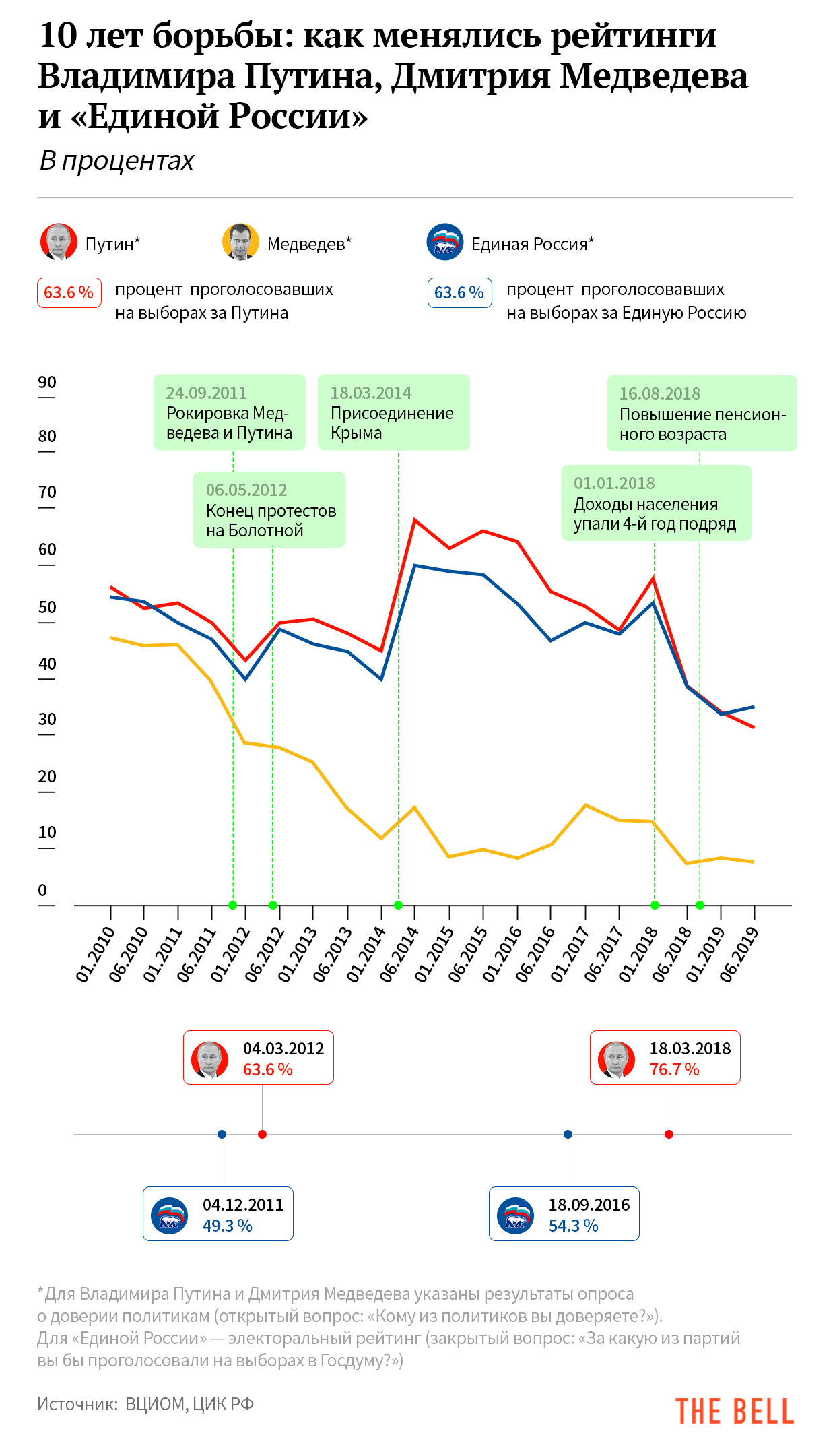
The Russian government met with optimism: the economic crisis is overcome, nothing threatens the stability of the system, the 45-year-old president travels with visits to California. But since the beginning of 2011, the schedule of the popularity of Vladimir Putin, Dmitry Medvedev and the United Russia entrusted to him begins to reflect a difficult struggle for ratings. For Russians over these ten years, she turned into an almost complete ban on participating in the country's political life inconsistent with the authorities.
Read also economist Alexander Suslin - about pension reform and national projects
How Russia has exchanged economic growth for stability
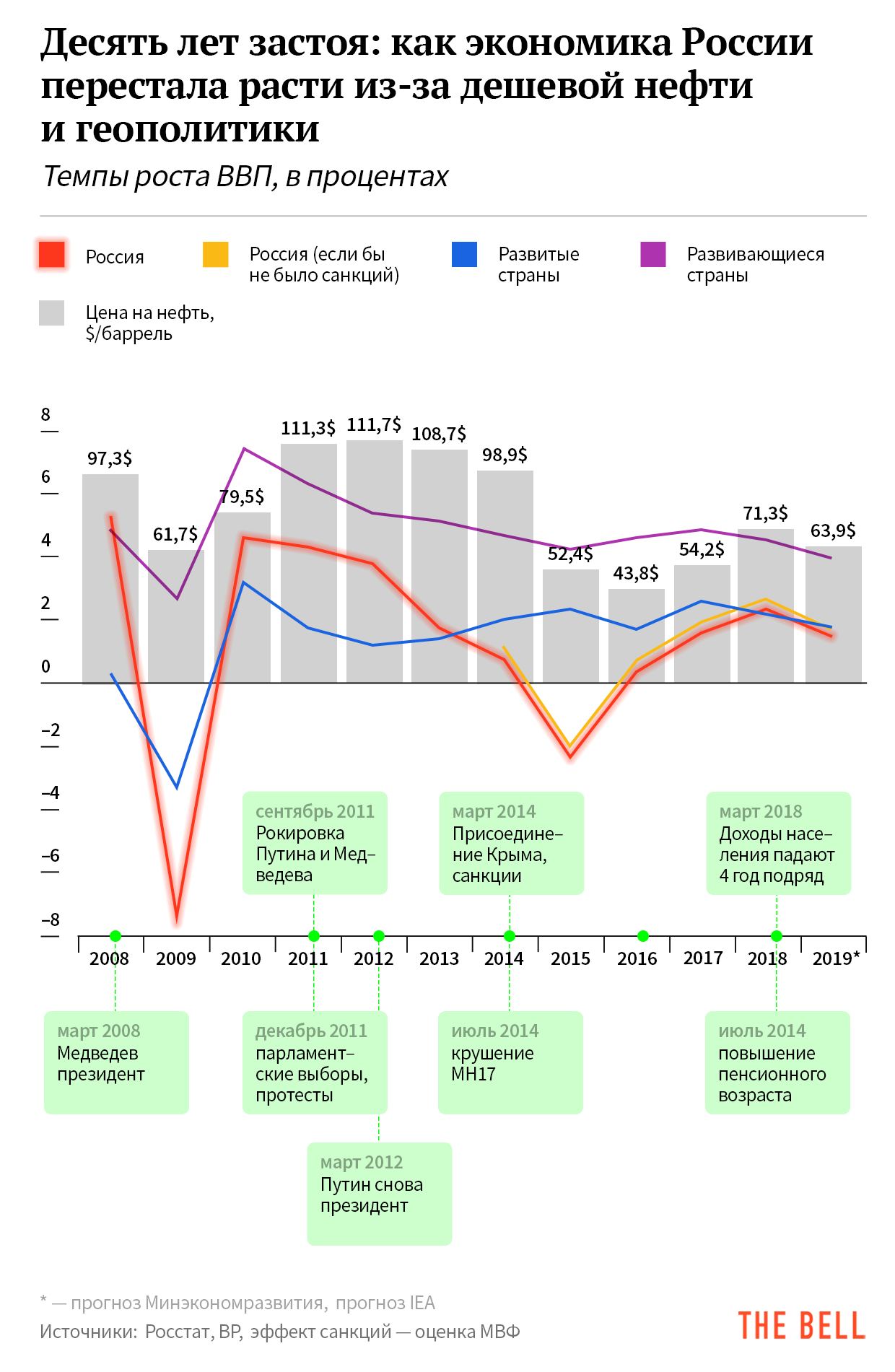
Economists call the 2010s lost by a decade, when the average growth rate of the Russian economy did not exceed 1.8% of GDP per year. In the absence of growth, the authorities are proud of stability, but they cannot but understand that the protracted stagnation only increases social tension.
Read also economist Natalia Orlova - about the fall of the ruble from 30 to 65 per dollar
How pirate Runet turned into a sovereign
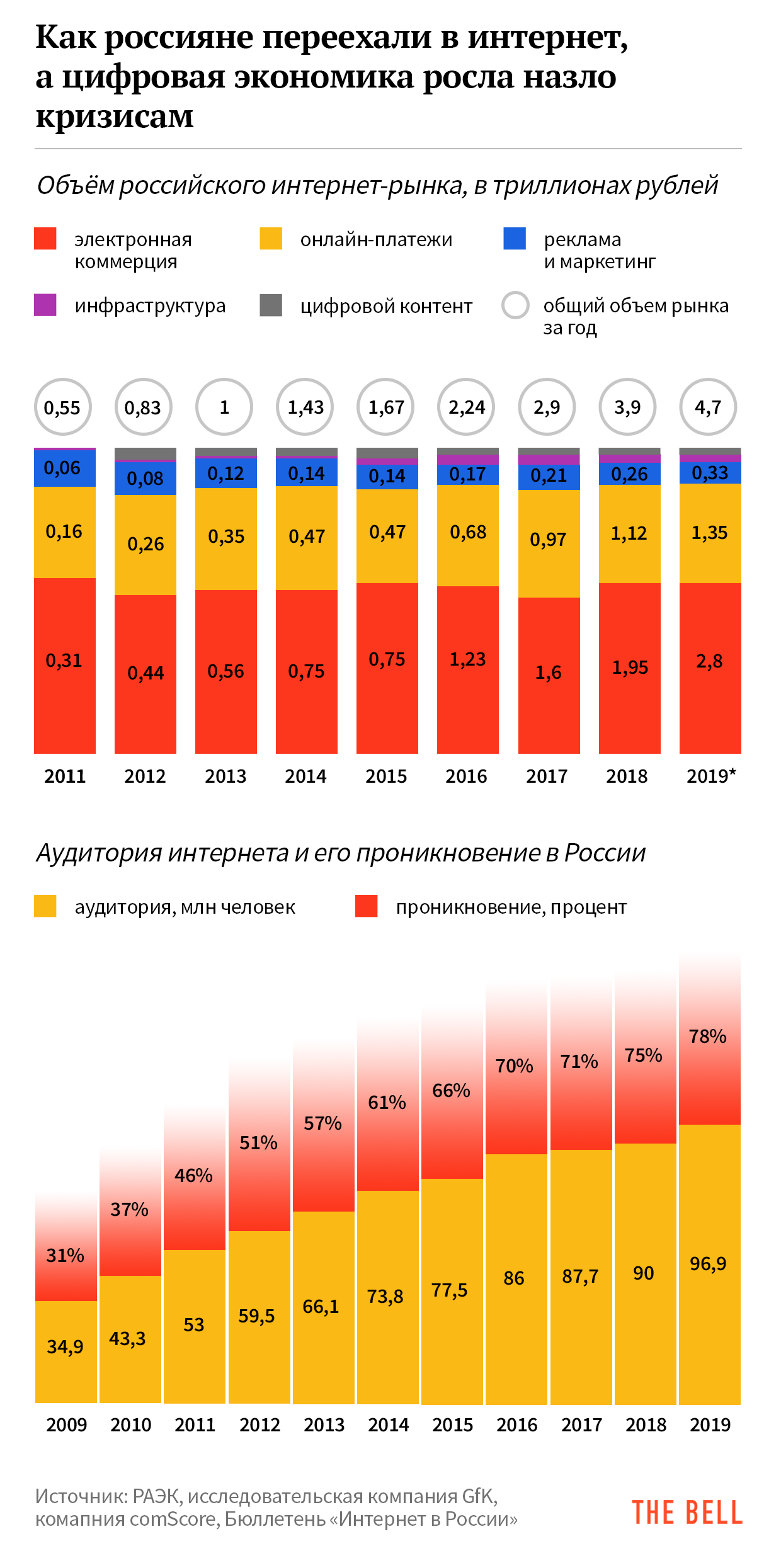
Over 10 years, the Russians moved on the Internet, their national champions appeared in the country, and the digital economy has grown spite all the crises by almost an order of magnitude. But at the end of the decade, the state took up the Internet and is no longer going to leave it.
As a crisis and a quarrel with the West, a venture market was changed
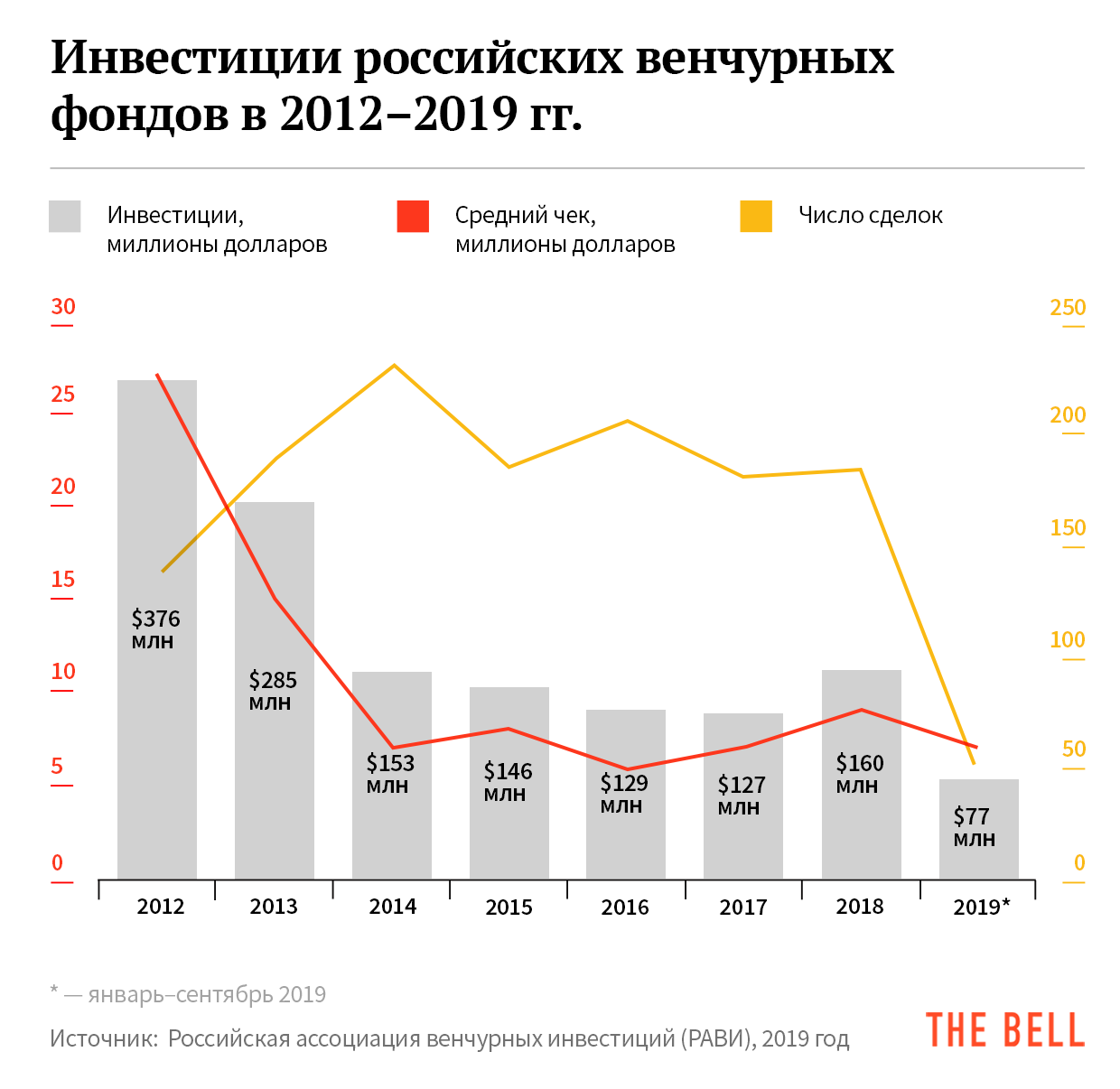
The line of the 2000s and 2010s is the time of the formation of the Russian venture market. The decade began brilliantly. In 2012, only private venture funds invested $ 376 million in startups. The total transactions exceeded $ 1.2 billion. In Europe, startups attracted more money only in the UK. But the time of great hopes ended in 2014 - with the accession of Crimea, a drop in oil prices and a new crisis in the economy. The venture market has not yet been able to recover.
How Russia and the West finally ceased to trust each other
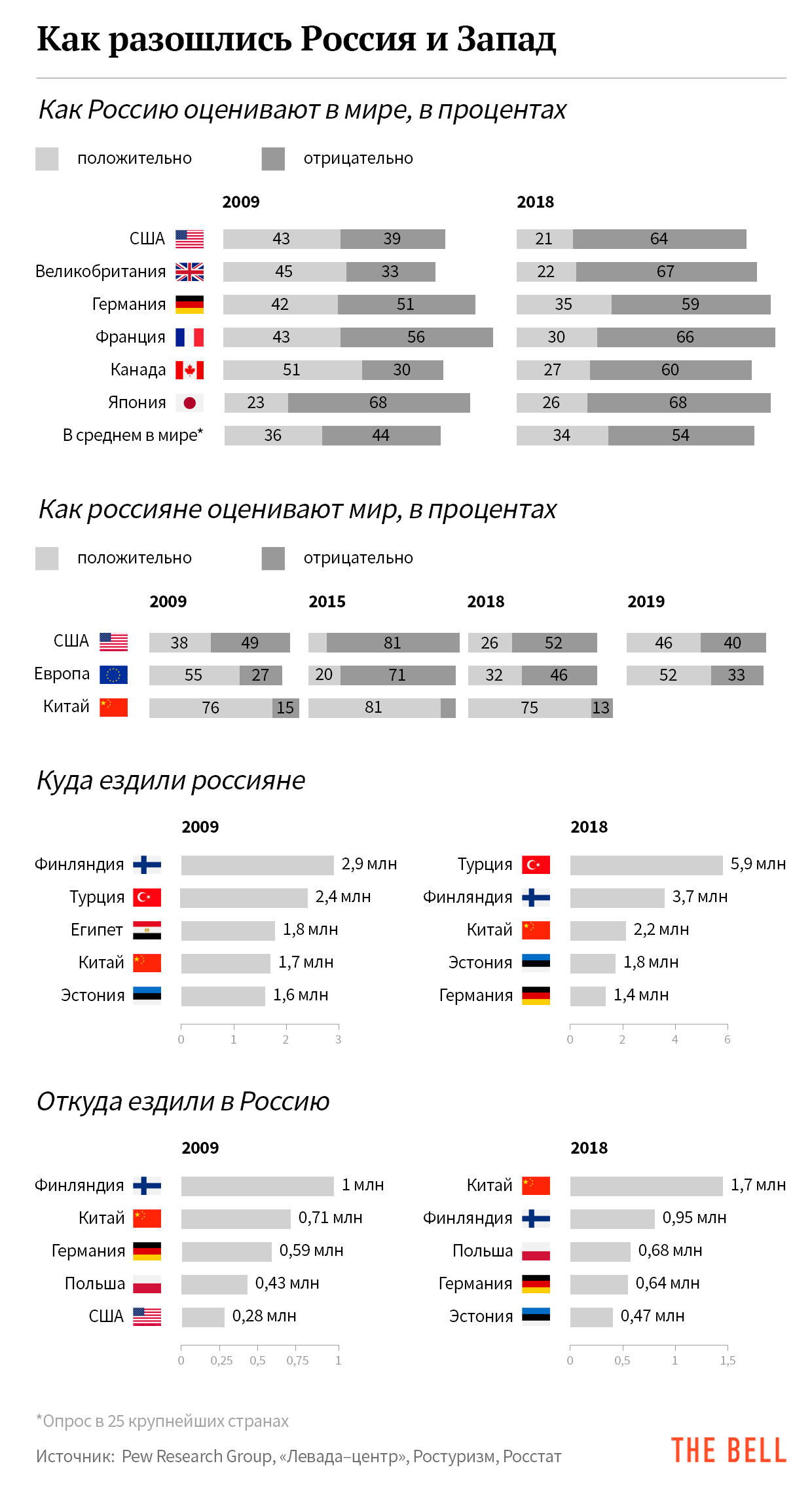
At the turn of the 2010s, the newly elected US President Barack Obama announced the restart of relations with Russia, Hillary Clinton and Sergey Lavrov pressed the famous Red button, and Dmitry Medvedev had lunch in Silicon Valley with Arnold Schwarzenegger, then with Steve Jobs. Now we are under international sanctions, up to 4 million citizens are not traveling, and the image of Russia in the world is bad than ever.
How Russian business has changed in 10 years
The main achievement that officials love to boast of economic forums was the take -off of Russia in the Doing Business rating. But it does not fully reflect reality. Behind the brackets - the pressure of the security forces, the quality of the work of ships and the weak protection of investments. In the 2010s, state-owned companies and state banks even more strengthened their position in the economy. The main characters of private business were Russian Internet companies and agriculture.

How the middle class has been impoverished in 10 years
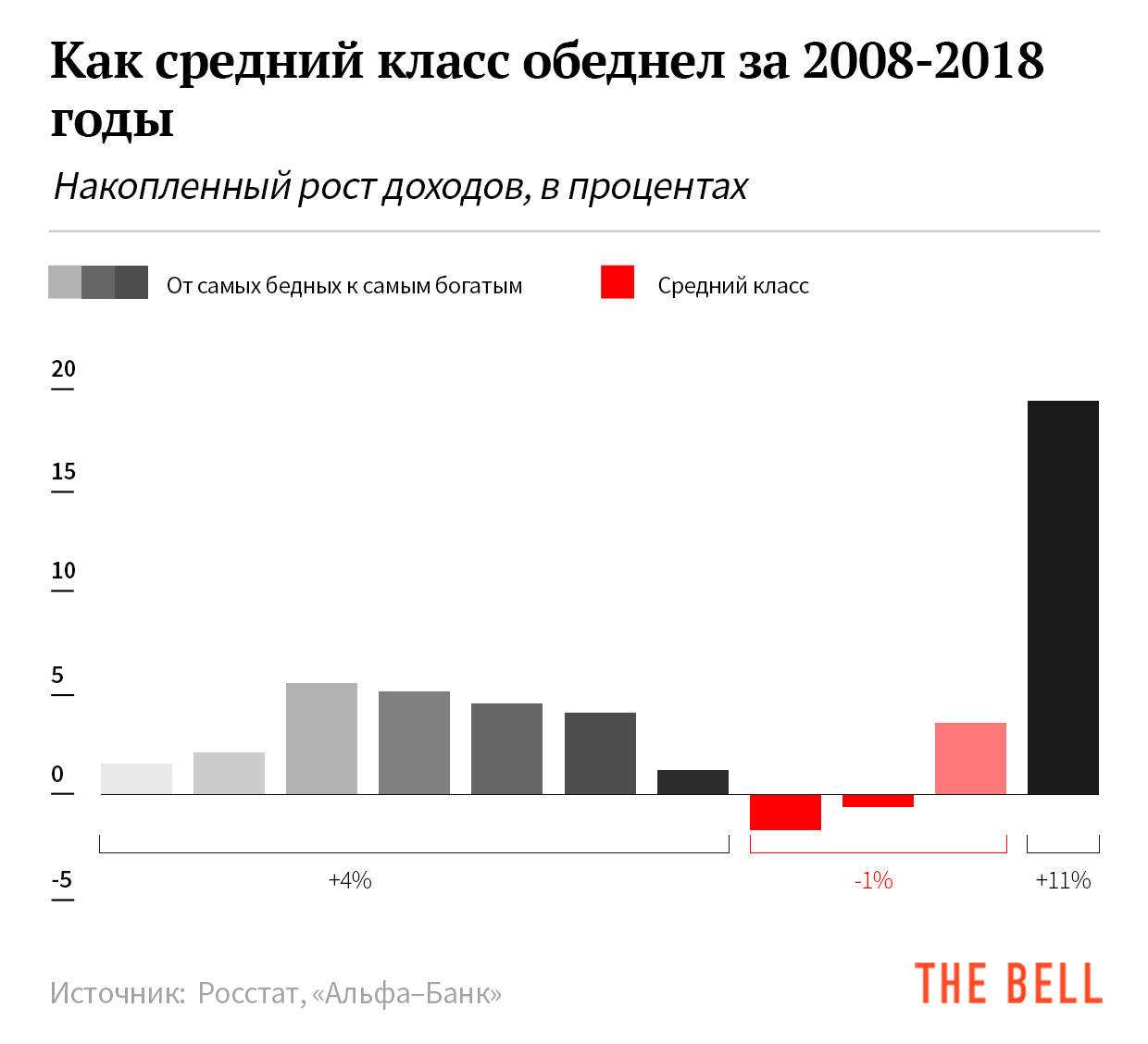
Everyone suffered from slowing the economy and falling ruble, but the main victim of the 2010s was the Russian middle class. Most of all I had to squeeze the most wealthy layer: people who can afford prolonged consumption products like cars. They had to reduce the costs of rest and entertainment more than others, as well as health and education. But the costs of food - grew.
All materials of the “Farewell, 2010s” cycle:
- How citizens of Russia were deprived of participation in political life
- How Russia has exchanged economic growth for stability
- “From China, we sharply slipped to Germany”-economist Marcel Salikhov about the results of the 2010s
- How pirate Runet turned into a sovereign
- As a crisis and a quarrel with the West, a venture market was changed
- Economist Natalia Orlova - About the fall of the ruble from 30 to 65 per dollar
- How Russia and the West finally ceased to trust each other
- Economist Alexander Suslin - about pension reform and national projects
- How Russian business has changed in 10 years
- How the middle class has been impoverished in 10 years