
Translated material
Nothing is prohibited. We summarize the results of a strange seven -day vote
How the Kremlin managed to force the Russians to vote for a new constitution and "zeroing" Putin's deadlines
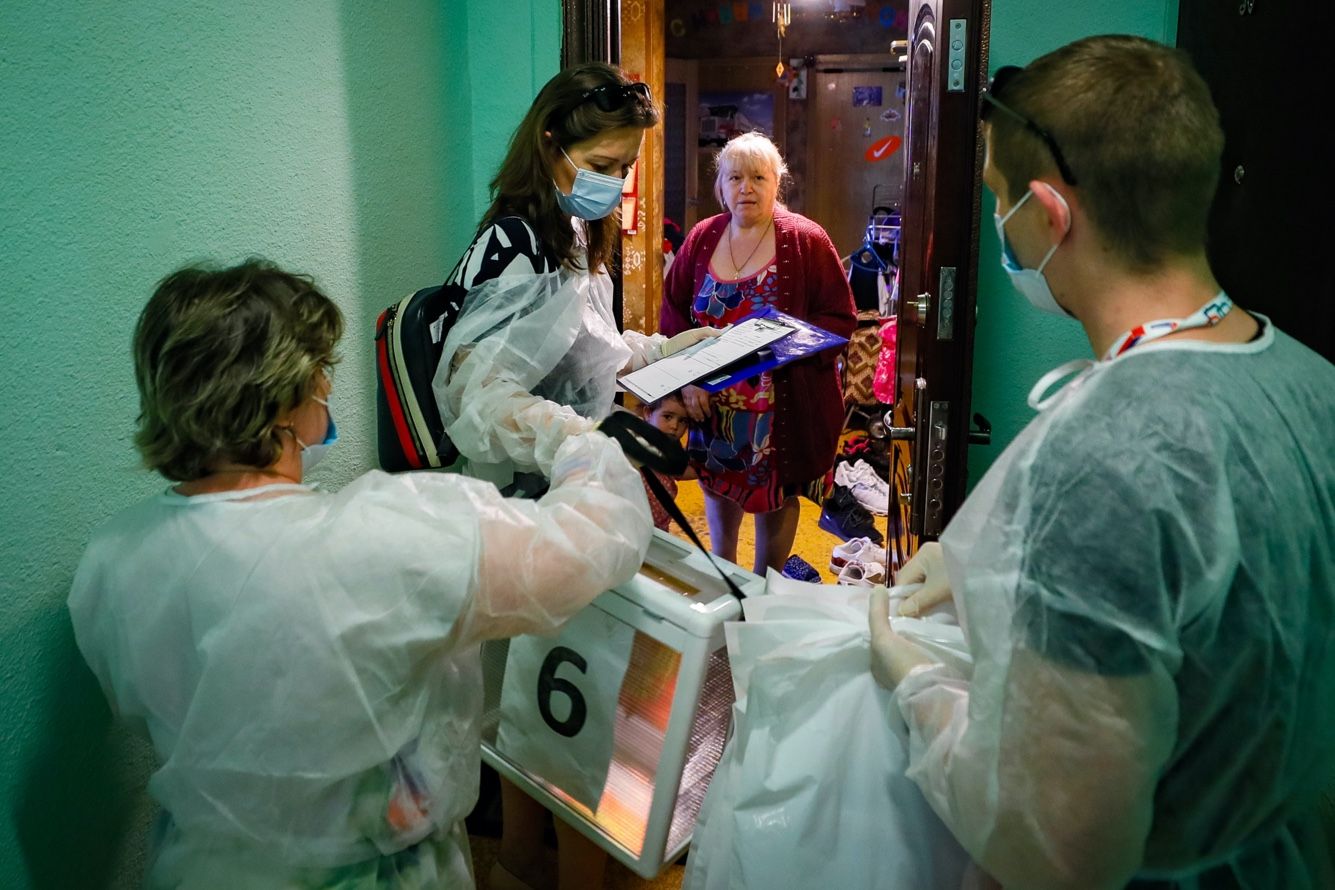
In Russia, a seven -day vote has ended regarding amendments to the constitution and “zeroing” of the presidential terms of Vladimir Putin. Only a few hours passed after the closing of the plots, and it is already clear that the numbers presented by the Central Election Commission completely arrange the Kremlin (and absolutely do not convince those who voted “against”, or boycotted the vote). The Medusa specialists Andrei Pentsev and Farid Rustamov tell how these seven days have passed - and what the presidential administration had to do to force the Russians to support the new Constitution and Putin's “Khuptation”.
The amendments voting are the most strange plebiscite in the latest history of Russia
Voting on amendments to the Constitution and “reversing” has become the most unusual election procedure in the latest history of the country. It was regulated not by federal electoral legislation, but by the special law "On the Constitution", which was adopted in March 2020. Under this law, the voting procedure was completely determined by the Central Election Commission.
As a result, the CEC decided that the vote should take as many as seven days, from June 25 to July 1; All this time, citizens could come to the district election commission and give their vote without any additional statements and messages. In addition, the CEC simplified the voting outside the sites : to invite members of the district election commission to his home, to the courtyard or to the enterprise, a good reason was not required. Members of the election committee organized a vote outside of premises at the request of elders home and managers of enterprises. In the afternoon, the plebiscite was considered July 1, and the period from June 25 to 30 was called "voting until the day of voting."
The formal cause of the vote in this original form was coronavirus. When Putin only made the initiative to amend the Constitution, the vote was scheduled for April 22 - but Prime Minister Mikhail Mishustin and Moscow Mayor Sergei Sobyanin were able to convince Vladimir Putin to transfer the plebiscite to a later date. At the end of April, a peak of incidence was expected; On March 25, the president turned to the nation and postponed the voting date.
However, Putin did not wait for the complete end of the epidemic - and on June 1, he issued a decree with which he appointed a vote for July 1. On the same day, the head of the CEC Ella Pamfilova said that “it would be even safer to vote than to take part in other, already permitted events” - and even safer, “than to go to the store”.
“We have significantly changed the voting procedure. The basic principle is the maximum dispersal of potential voting participants, both in time and in space to minimize physical contacts. The principle of contactlessness, ”she explained.
On the “principle of contactlessness”, no elections in Russia have yet passed; On the contrary, the Kremlin welcomed mass and a good turnout. Concerts, fairs and sales were arranged in the areas to provide it. So the vote on the constitution was supposed to go through, but mass and coronavirus turned out to be poorly compatible things.
“To organize an acceptable turnout during the pandemic seemed a very difficult task. The head of the presidential administration (AP) Anton Vaino and his first deputy Sergei Kiriyenko even offered the president to cancel the vote - [people] would have taken this with understanding how the concern for their lives. But for Putin, voting was already a matter of principle, ”a source close to the presidential administration told Meduza then. In early June, the Kremlin was tuned to give “plausible” indicators of turnout-55%, although 60-70%of the electorate planned to be brought to the sites (by the time of publication of this material the turnout, according to the CEC, amounted to 65%).
The interlocutor in United Russia doubted that the indicator of 55% would be achieved. “To use the same loyal authorities of opinion leaders who just called on people to keep their lives and stay at home. And then they call people to the sites, ”he thought at that time. However, even then, the party officer explained that the necessary indicators of turnout will be achieved just with the help of voting outside the sites, especially at enterprises and in the yards. During a single voting day of 2019, it was the deposit vote that helped the governors get the results comparable to Putin’s results in the presidential election in March 2018.
Work on the turnout: corporate mobilization and urns on benches
Photos with members of the election commission, located on benches and carousels, as well as those who installed urns in the trunk of cars quickly got into social networks and caused criticism and ridicule. At first, the head of the CEC Ella Pamfilova denied such forms of will: "There is no voting on benches and trunks and will not be."
However, soon the Central Election Commission changed their position. “Voting in the house territories for Russia is new, but in many states, voting in the fresh air is a well -known practice that does not cause complaints. And for some reason, it became a reason for the deliberate discredit of voting procedures, ”the member of the Central Election Commission Maya Grishina was indignant. Presidential spokesman Dmitry Peskov also did not find nothing unusual in the urns located in the yards. According to him, it was "about the possibility of realizing the right to will, to use your voice." “This is not a question of surroundings,” he said , answering a question about voting on benches.
The presidential administration was able to use the stretch of voting in time and space for its own purposes. As Medusa told several sources close to the presidential administration, voters dependent on the authorities (for example, state employees, employees of state enterprises, large corporation workers, and so on) were to vote in the majority of voting. This was required that the election administrators could analyze the turnout, and officials in the ground and managers of enterprises had the opportunity to influence citizens who had not applied to the urns.
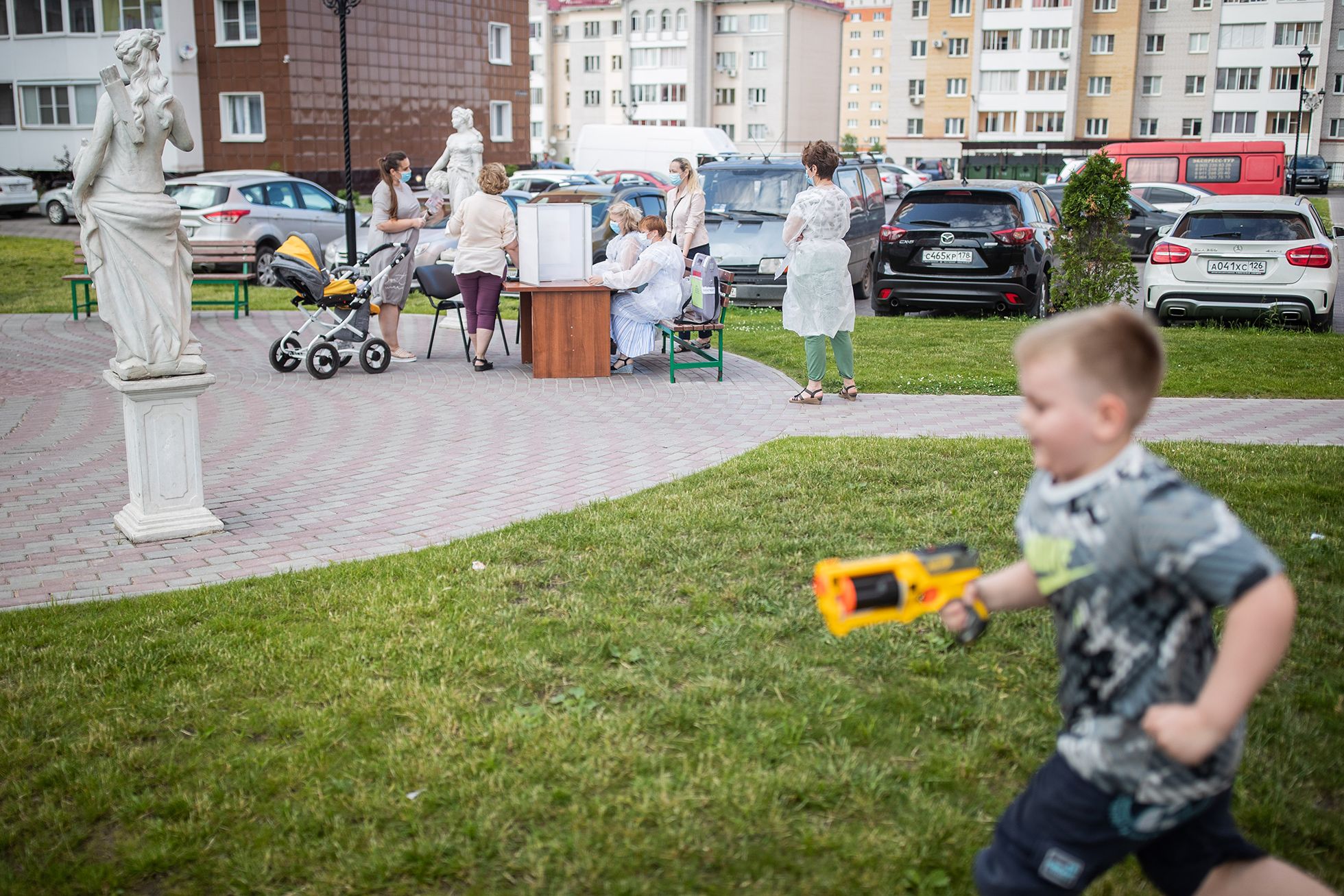
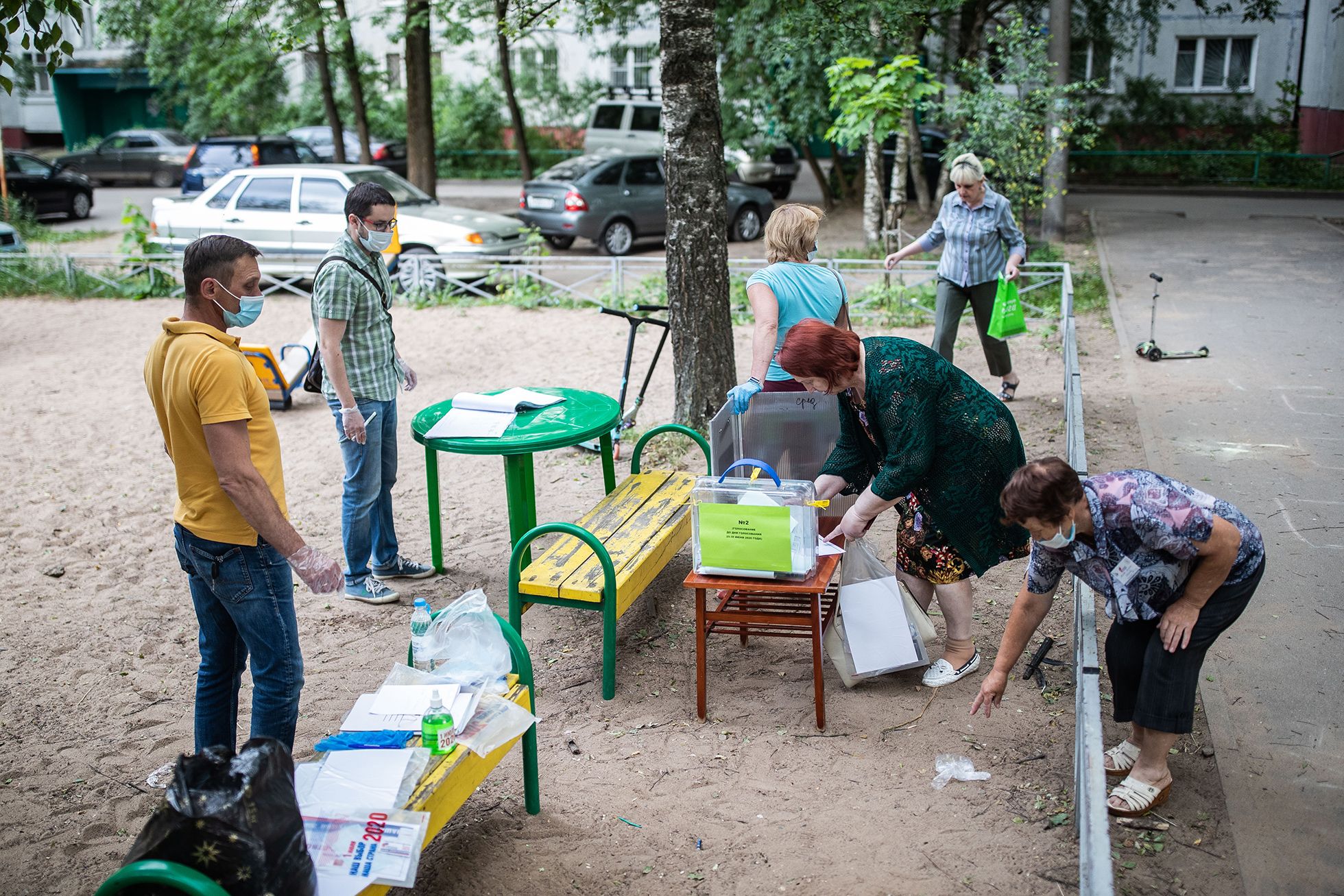
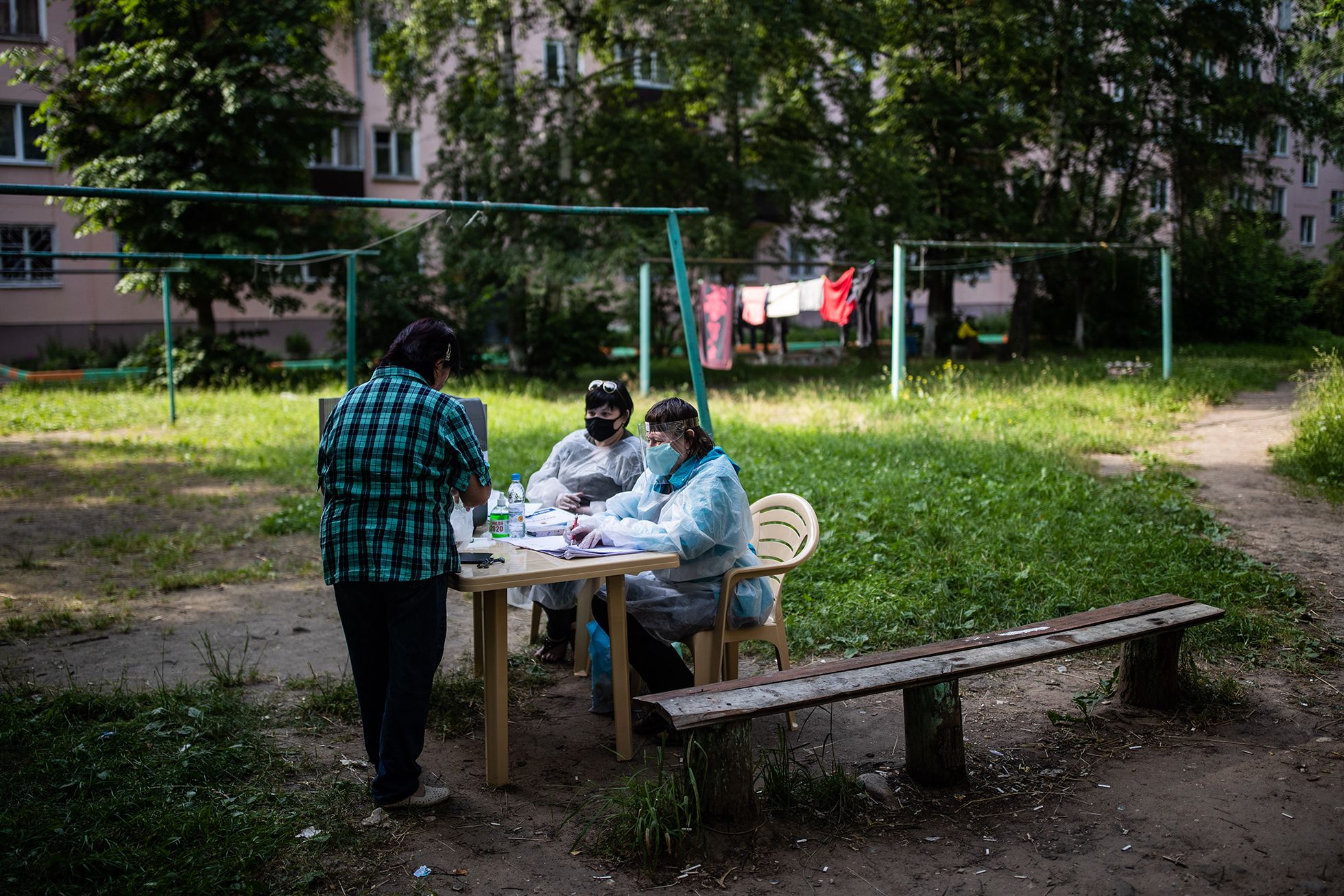
Corporate mobilization was one of the main supports and hopes of the Kremlin on plebiscite. AP began to use this technology after its political bloc was headed by the former head of Rosatom Sergey Kiriyenko. At the enterprises of this state corporation, the mobilization of employees in the elections was used, and political technologists Alexander Kharichev (now the head of the department for support for the state council) and Andrey Polosin worked in Rosatom. In the presidential election, this experience was expanded to the scale of the whole country. The political strategist Grigory Kazankov overseas and oversees corporate mobilization.
In the presidential election, the scheme was arranged as follows: behind a large company (state or private), a political strategist was assigned, who interacted with its leadership. Several technologists worked with a large corporation with branches in many regions of Russia. In addition, curators from the presidential administration were also mobilized in the regions - they collaborated with the regional authorities, focusing, as a rule, on state employees. “The company housed the campaign’s campaign, the management should have followed this, telling how important it is to vote. There was a newsletter SMS on the voting day. Responsible in the units of the company on the voting day called and reminded employees that today is the day of elections, ”recalls in an interview with Medusa a political strategist, assigned to a large company working in the telecom field.
According to him, a vote on absenteeism in the areas not at the place of registration could be applied to control the appearance. This method is especially characteristic of state and municipal enterprises. “But you can control such a vote if employees come to the site in an organized manner. This raises questions from observers, ”he explains.
Corporate mobilization on the sample of the presidential election was also applied on a vote on amendments and “reversing”. Smorators-Politects were fixed for large companies, in some regions the headquarters of political strategists from the Kremlin appeared. The stretch of voting in time and space seriously expanded the possibilities of such mobilization: workers did not have to move anywhere; The risk was leveled that the observers will be found mass voting; The urn itself came to the enterprise. In Moscow, electronic voting was widely used for corporate mobilization.
In addition, as Medusa found out , the turnout of state employees and employees of enterprises in many regions was controlled using a special electronic system. However, according to the official in the administration of one of the regions of the North-Western District, not only it was used to control: “depending on the subject [federation]”. And a source close to the administration of a large region in the Central District told Medusa that these systems themselves worked poorly: “[Systems] went on ***** [Speed] - too many introductory ones are superimposed, several days [voting], and away urns.”
“A multi -day vote has led to a significant decrease in the protection of citizens' rights to free will,” a member of the Voice Council Stanislav Andreichuk is indignant in a conversation with Medusa. -Firstly, it is very poorly controlled. Six months ago, the Chairman of the CEC of Pamfilova publicly stated that the deposit and early voting create a lot of opportunities for coercion and falsifications, and now the CEC itself has opened the doors for this. ”
According to him, the most strong concern is precisely the vote at the enterprises: “It gives all the opportunity to employers to control the participation of employees in the vote. People from various sectors of the economy have encountered such pressure. ”
Voting was accompanied by scandals. People voted for their relatives - or several times
On the morning of July 1, the Chairman of the CEC Ella Pamfilova said that the commission did not find any serious violations for the entire vote. Despite these statements, several resonant stories occurred during the week.
So, a video of the incident that happened to her parents was published by a resident of Moscow Marta Minasyan. On Monday, June 29, the married couple came to vote on the plot No. 1403 in the Lefortovo area - but found that the voters list contains information that they, as well as their two children, had already voted. The voters book indicated their passport data and there were signatures for the received ballots. Muscovites themselves said they did not vote. One of the members of the commission on the video calls this a mistake and apologizes, but the chairman of the commission takes the book, slamms it and after that requires spouses who declare that this is a criminal offense and need to call the police, prove that there are such records in the book. “The investigator asked to delete the recording [video], my mother categorically refused! I would like to swear obscenities and scream from hopelessness, ”Minasyan wrote.
Deputy Chairman of the Moscow City Warrix Dmitry Reut called the incident “error”, five submarine ballots on this site were declared invalid.
There are many similar stories. A resident of Ufa Yuri Belov and his girlfriend, having come to vote, also found that someone had already done it for them. The same thing happened with a resident of St. Petersburg Anastasia Velikanova. In the city of Iskitim, the Novosibirsk Region, a resident voted for himself and four relatives, in Samara a man voted for his wife and daughter.
In the Moscow district, Ramenki discovered a significant excess of the participants in the house voting. This was told on Facebook by a member of the territorial election commission (TIK) Ramenok Kirill Trofimov. According to him, by the evening of June 26-that is, by the end of the second day of voting-at some precinct election commissions (PEC), 400-500 people voted outside the voting room, that is, almost every fourth voter. As Trofimov said “open media”, in one of the commissions he found that out of the allegedly 400 only 10 people, only 10 people signed for this in the voters' book, and on the contrary the other surnames were marks with a pencil. In addition, Trofimov discovered that in some areas, data on the number of participants in the house voting in the documents of the PEC differ from information in the summons of the TIC. So, on the site No. 2771, 393 people voted according to the TIC documents at home, and only 34 ballots were given out of the PEC for the HEC for the subdominal vote - almost 10 times less.
The deputy chairman of the Mozgorisbirkom Reut said in response that he did not see an evil intent in what happened: "I think this is a mistake from fatigue." The Mosgorizbirk eventually recognized as invalid 228 and 203 ballots from plots No. 2771 and No. 2773 in Ramenki.
A whole series of scandals was accompanied by electronic voting in Moscow and the Nizhny Novgorod region. Only Medusa received dozens of certificates of coercion of state employees for registration on electronic voting in both regions.
The electoral statistics expert Sergei Shpilkin calculated that every seventh voter (only about one million people), on average, about 300 people per site, in Moscow, in Moscow. In the Trinity Administrative District, Spilkin discovered an anomaly: there, 39% of voters submitted an electronic vote - 36,895 people. At the same time, in the four PECs in the district, the number of people who have recorded on an online voting exceeds the marginal normative number of voters on a site of three thousand people. Depending on the site, from 3565 to 7296 people decided to vote on the Internet, and 4027 people decided to vote online - 217% of the number of voters in 2019. According to Spilkin, a similar situation occurred in the Novomoskovsk district. “The situation with electronic voting records is similar to a scam that requires an urgent investigation. Electronic voting in the Trinity District seems to be canceled, ”said Spilkin (as a result, nothing was canceled in these districts).
On the first day of online voting, the imperfection of this system was experienced by the journalist of the Rain television channel Pavel Lobkov: he was able to vote twice, on the site and on the website of Mos.ru (the paper ballot was later canceled). Citizens of Russia abroad were able to vote several times. A resident of Israel, Yael Ilyinski, was able to participate three times in the vote on the “reversing”: at first she did it online, and then voted at the Russian Embassy in Tel Aviv and at the consulate in Haifa. On June 28, the Voice movement reported that the Muscovite, living in London, voted twice on amendments to the constitution. The man sent a photo with the ballot and recorded the video how he votes online, he also voted at the embassy.
Voting on amendments differed from other and incredibly active organization of fairs, lotteries, competitions and other events to attract voters. In Moscow, right in the courtyards of the authorities organized a 10-million-billion program “A million Prizes” (“Medusa” wrote in detail about it here ). In fact, people were financially encouraged for participating in plebiscite at the expense of the city budget.
Many regions went even further. In Omsk, a member of the election commission won an apartment in a lottery organized in the polling station. In the Krasnoyarsk Territory, the Irkutsk Region and other regions in lotteries, apartments, cars, smartphones were also played out , in the Sverdlovsk region they gave letters, in the Bryansk - kitchen harvesters. The BBC Russian Service found that in Lytkarino near Moscow, people were simply paid money in the college building, where the polling station was located-under the guise of some payments to the “children of the war”.
The results of the will itself were originally going to calculate the CEC several days after the end of the vote - and publish them for another three days. However, on the last day of the vote, July 1, the Central Election Commission began to immediately declare preliminary results in all regions - even before the plebiscite ended. Ella Pamfilova explained the change in technology by the fact that “nothing is prohibited”, and the desire to give official data as soon as possible.
The result surpassed expectations - even those in the Kremlin
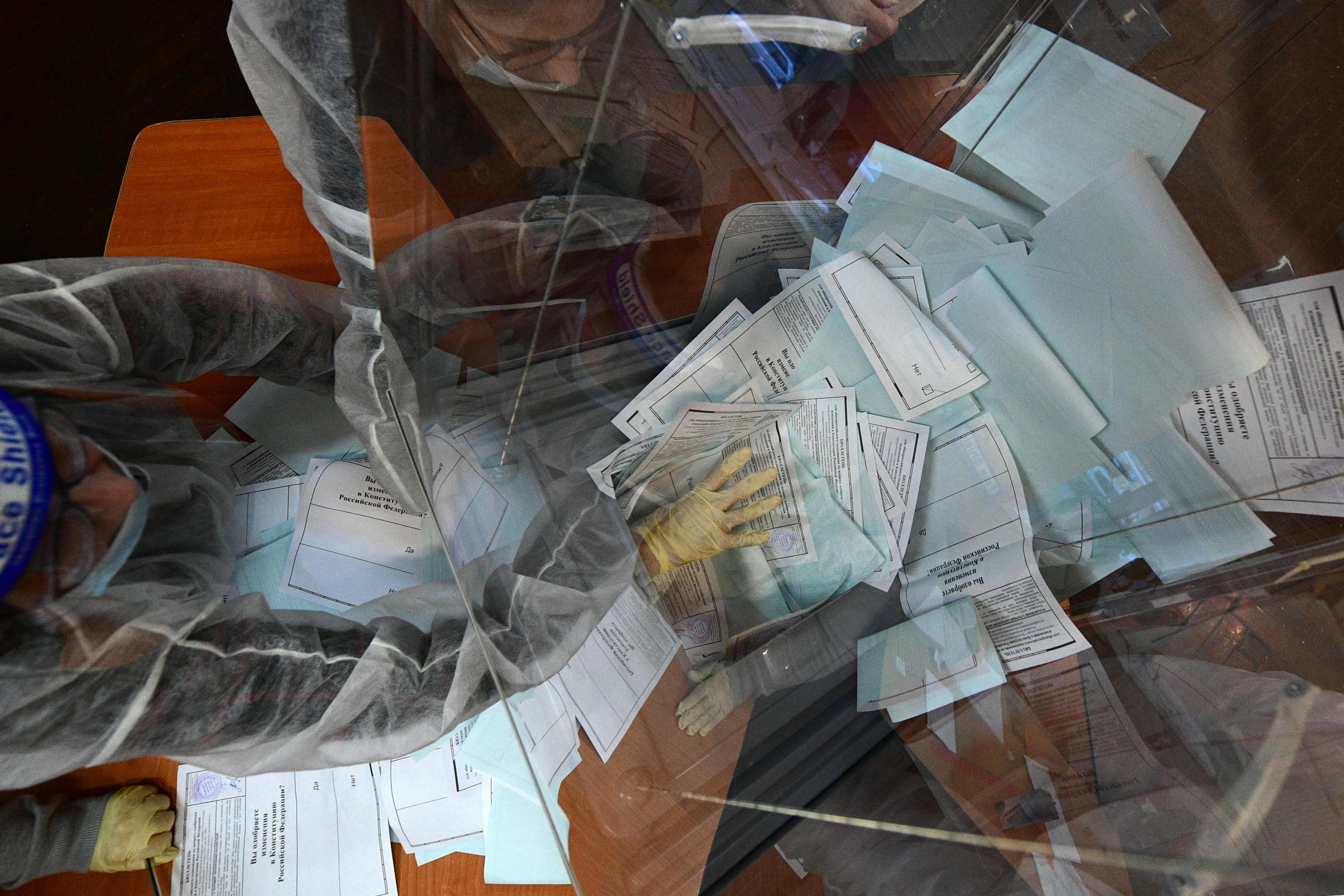
At the time of publication of this material, Ella Pamfilova managed to make preliminary voting data: the turnout was 65%, 74.12%voted for amendments, 24.94%against amendments.
Таким образом, новые формы голосования, а также его растянутость во времени действительно позволили администрации президента нарастить явку даже выше планируемых показателей в 55% — хотя еще 26 июня ВЦИОМ давал прогноз по явке в 52,6%. В распоряжении «Медузы» есть данные с плановыми показателями администрации президента по явке в регионах России. Например, в Кемеровской области они составляют 70%, при этом на 15:00 по местному времени там уже проголосовали 84,4% избирателей. В Нижегородской области на участках хотели увидеть 61% избирателей, а к 15:00 там проголосовали уже 67%. Однако некоторые регионы так до нужных процентов и не добрались: скажем, в Иркутской области, где планировали явку в 55%, она на 18:00 составила 42,3%.
Собеседник, близкий к администрации региона из Центрального округа рассказал «Медузе», что с трудностями столкнулась и его территория: «И мобилизовали, и по дворам и домам урны отправляли несколько раз». В итоге местным властями удалось сократить на несколько процентов списки избирателей, «за счет этого выросла общая явка». В то же время, человек, близкий к руководству одной из крупных корпораций, говорит «Медузе», что руководство этой компании дополнительно мотивировали письмом из администрации президента, где подчеркивалось, что требуемых показателей просит президент.
Источник, близкий к Кремлю, итогами выборов доволен: по его словам, первоначально Путиным ставилась задача получить в численном выражении за поправки больше, чем 33 миллиона голосов — именно столько россиян проголосовали за Конституцию 1993 года. «Потом планка выросла до 50 миллионов голосов (чуть меньше половины российских избирателей) — президент лично впрягся в эту историю, обращался к людям, говорил о нужности поправок, стал воспринимать все лично», — рассуждает он. К тому моменту, когда происходил этот разговор, собеседник был уверен, что нужные цифры будут достигнуты.
Andrey Pertsev and Farida Rustamova