
Translated material
Knight of legal resistance
Memory of Anatoly Kononov - a person who is stubbornly calling white white
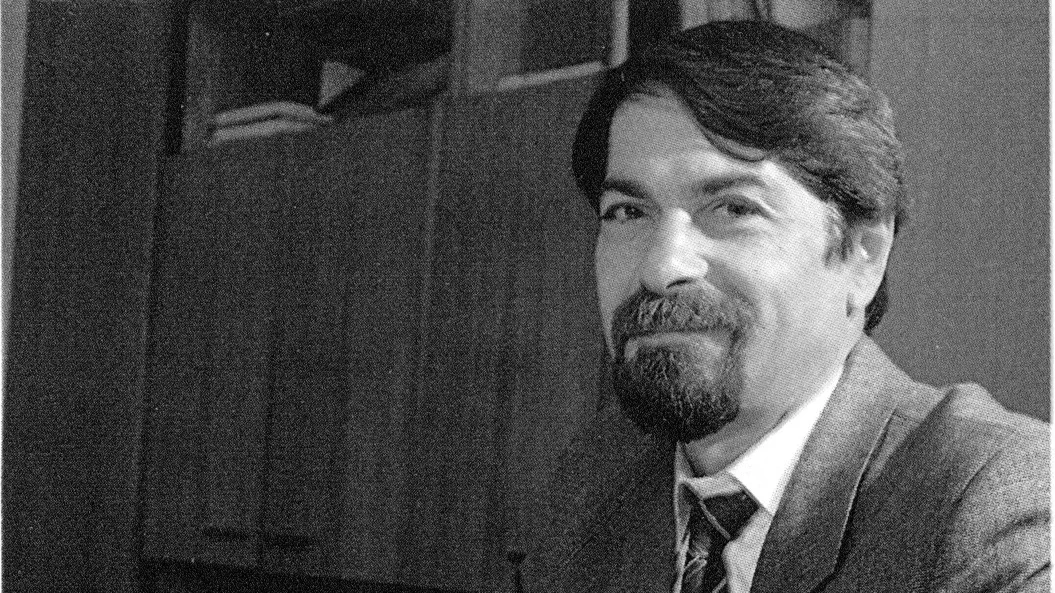
On August 15, Anatoly Kononov, the judges of the Constitutional Court of retired, was gone. He played a key role in the movement of constitutional and legal resistance, in the lost attempt to prevent the restoration of the dictatorship, the revanch of the special services and, ultimately, the war. In this movement of the resistance of the Konons, the co -author (with Sergey Kovalev and Arseny Roginsky) the famous law on victims of political repression participated for 20 years.
Kononov defended rights and freedom as the highest value as natural and inalienable as the basis of justice (positions with his arguments) with all his “special opinions” (positions, when the decisions of the Constitutional Court did not coincide with his arguments). Unlike most colleagues in the Constitutional Court, he was not concerned with the “balance of private and public interests” (deciding in favor of the state), not the interests of the state and usurpators of the authorities, but the protection of freedom and humanitarian values.
White crow
Kononov’s opponents in the KS said: “You are not a judge, but a human rights activist.” The judge, according to their ideas, must protect the interests of the state. He also heard from his colleagues in the Constitutional Court: “We must grow up”, “He always protects only criminals and oligarchs”, “Enough to flirt with human rights, there are still interests of the state” (the last phrase belongs to the chairman of the KS Zorkin), “We have no principle of justice in society or the Constitution”. Kononov constantly opposed the authority of power and other judges, feeling, according to him, as in an experiment, where everyone besides him conspired to call black white. When there is no person who stubbornly calling white white, the lawyer Ilya Novikov spoke about Kononov, it is much easier to pervert the principles of truth and law. In the KS, according to him, A.K. He played the same role that the famous judge of the US Supreme Court Antonio Scalia, who became famous for his special opinions.
According to Kononov’s special opinions written “ to purify conscience ”, one can study how freedom left the Russian legal field, how the group usurped power in Russia gradually turned the right into an instrument of retention of power. The political rights of citizens were crushing like shagren skin, and the judge was heavily worried. And the KS defended the interests of the state, considering himself part of the state system, a legal adviser to the authorities fulfilling its wishes.
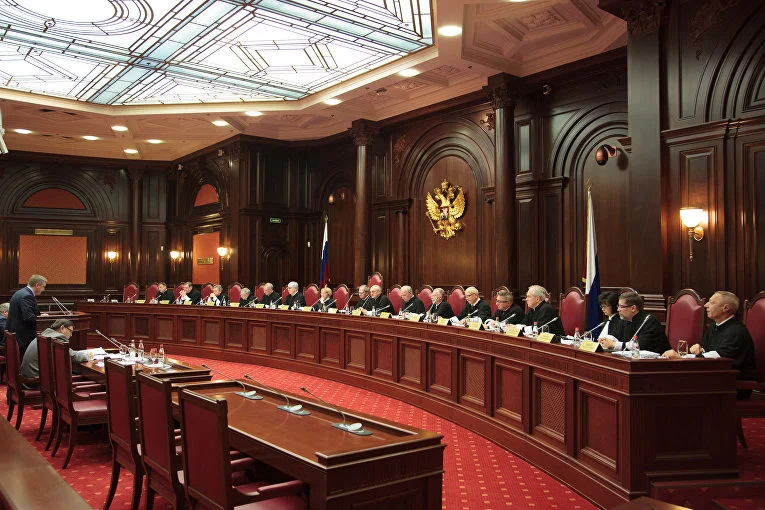
Kononov’s disagreement with colleagues in the Constitutional Court, as he himself said , was basic - in the understanding of law. They are characterized by a positivist understanding (law = the totality of the current laws), and he adhered to the concept of natural law, understanding it as a combination of the highest principles of freedom, equality and justice. This is a value difference. Understanding law as a set of laws, a lawyer inevitably falls under the charm of the state that adopts these laws (“laws are issued by the state, which means that it grants the rights to people”). Kononov was completely delivered from this seduction.
By its function, the Constitutional Court is the last way to solve the problem without resorting to international courts. It is contacted by those who believe that the legislative norm applied to them contradicts the constitution (or is incorrectly interpreted by the courts). Kononov was in the Constitutional Court by dissident No. 1: no one wrote more special opinions there.
Non -imputed evil and the rights of terrorists
The law on victims of political repression became the only law that recognized the USSR as a totalitarian state responsible for the "mass persecution of their people."
The first “special opinion” of Anatoly Kononov, dedicated to the resolution of the Constitutional Court on the suspension of the activities of the Communist Parties of the USSR and the Russian Federation, states that the Constitutional Court has evaded the analysis of the Communist Party, which “deprived the institute of the legal responsibility of the party”:
The remaining legal uncertainty in this matter can give rise to various speculations on the historical past of the CPSU, the distortion of its essence and the role, the idealization of its acts that have not received a proper constitutional assessment. In fact, the formula of decision accepted by the Constitutional Court [...] does not give any guarantees against the reconstruction of their leading structures.
As lawyer Nikolai Bobrinsky noted , Kononov said that as a speaker in the Communist Party case, he prepared a much more decisive text than the one that the Constitutional Court eventually accepted. The Kononov project was the basis of his “special opinion”. Kononov’s goal was to introduce “guarantees of non -response” of totalitarian practices: to characterize them, call them criminal and introduce barriers to the legislation against their reproduction. On the contrary, Zorkin, twice ( here and here ), the KS of the Constitutional Court of the Communists (and, as a result, special services) from lustration. Kononov did not write directly about her necessity, but it is logical that this would be the next step after the recognition of Soviet crimes. The judge proposed to do this very clearly, and perhaps it would become a barrier to return to the dictatorship:
Absolute lawlessness and arbitrariness created by the CPSU for many decades, inconceivable grave consequences of its activities, a special public danger of violation of all direct constitutional prohibitions [...], allow us to qualify this organization as a criminal one. In this case, this concept is considered by us as a kind of anti -constitutionality, since the Constitutional Court cannot go beyond the application. However, on the basis of these norms of international law, a number of CPSU acts fall under the norms on genocide, war crimes and crimes against peace and humanity.
Indeed, the crimes of the Soviet era were never called crimes, which helped the resuscitation of the dictatorial regime. In fact, Kononov then proposed to condemn Soviet crimes, as was done after the II World War in Germany. Its text is a prototype of how to condemn the authors of 70 years of the criminal Soviet regime.
Almost not interested in politics until 1998, I missed his “special opinions” of the 1990s-about the dissolution of the CPSU, that the “Chechen decrees” of Yeltsin provided the performers with unlimited powers in handling combatants and civilians,
In general, they did not have any ratio with the norms of international humanitarian law, and led to mass deaths of the population, “stripping territories”, the creation of absolutely lawless filtration points, a honant and executions, the use of torture and torture.
Reasoning after the resignation of how the authorities gradually subjugated the Constitutional Court, Kononov said after the resignation: "Both are worse." Putin KS almost did not rejoice. But in the early 1990s, when Yeltsin, to put it mildly, went far beyond the legal field in the conflict with the Parliament, the Constitutional Court tried to argue. However, then Yeltsin simply forbade him to gather until the constitution is adopted.
How important private rights are for Kononov - one can see, for example, by how he defended even the terrorists the natural right "to be buried worthy in accordance with the traditions and customs of his family." And he wrote that increased punishment cannot be justified by educational and correctional goals:
The transformation of the subject into an object of forced, albeit ethical, care is opposed to an integral basis of his rights - the dignity of his personality.
Kononov was an opponent of indefinite norms that make people dependent on the law enforcer: restrictions on rights should be clear and certain, otherwise a person cannot “clearly represent specific prohibitions and consequences that can lead to certain actions”. In recent years, this principle has been completely trampled. If the vague norm can be used to restrict rights, then this is not an “executor’s excess”, but a defect in the norm, the judge came from this.
Once again I will return to his special opinion on the Chechen decrees of Yeltsin: that war became the prototype of the present. The formula contained in one of them, which gave the government the authority to “use all the means available to the state”, ordered to achieve the desired means of massive lesions, filtration and executions. The KS then did not agree with Kononov, insisting on the Excesses of the Contractor.
The struggle for taxes
I met Anatoly Kononov, when the struggle was almost lost on the political front, and he specialized in economic affairs. In 2004, the Constitutional Court adopted scandalous definition No. 169-O , which actually prohibited companies with outstanding loans to reimburse VAT. This led to mass tax audits and refusals to return VAT, while the CS had in mind that its interpretation refers only to unscrupulous taxpayers (who paid with suppliers not money, but with outstanding bills or requirements for third parties, and trying to return the tax from the budget there). In general, the KS wrote not at all what I had in mind. The KS then for a long time refused to admit his obvious mistake, and Kononov was immediately sure that the court was mistaken:
If the unfair of the taxpayer is that he violated the law, then this is an excessive concept, and if there is no offense, then there is no dishonesty.
The case of Yukos forced the tax authorities and judges to think about how to bypass the statute of limitations of tax violations and situations where the law is not formally violated, but the companies minimize payments to the budget. This led to the emergence of concepts such as “unscrupulous taxpayer”, “unreasonable tax benefit”, “transactions that do not have a business purpose” and TP. There was even an attempt to recognize minimizing transactions tax “obviously nasty foundations of morality and law and order” and recover all income in such transactions in favor of the state. This norm made it possible to ruin any company (the statute of limitations for such offenses is 10 years, and the sanctions for crimes not provided for by the Tax Code are huge). Kononov, of course, was against it.
In the summer of 2005, Kononov defended a 3-year statute of limitations for tax offenses. Then the Federal Tax Service wanted the term to be the longer the more dangerous the offense, and the courts were happy to find good reasons for passing by tax authorities of a 3-year period: they say, the taxpayer prevented the identification of the violation. It was easy to create the appearance of obstacles from the taxpayer. It is enough to request a ton of documents that the taxpayer obviously could not provide: here is an obstacle to you. Kononov then said that the KS went beyond legal thinking.
Only Kononov and Yaroslavtsev in 2005 dared to write special opinions in the Yukos case. The judge called the absurd argument of the Constitutional Court that the taxpayer can prevent the system of state forced, and this is an occasion not to observe the statute of limitations in his case:
How can people be opposed in masks and with machine guns? What are generally good reasons for passing the statute of limitations by the tax authority with all the fullness of his power?
Arguing battles
In the mid-2000s, political affairs also reached the Constitutional Court. In 2006, Kononov and Yaroslavtsev had a special opinion about the governor’s elections canceled by Putin due to terrorism:
It is so clear here that everything is not constitutionally (this is not even clear to a lawyer) that it is not necessary to put forward special arguments. The deprivation of citizens of the opportunity to choose the head of the region does not fit into the Constitution, which directly prohibits the issuance of laws that belittling the rights of citizens.
In 2006, the judge was disturbed by the expansion of the concept of terrorist activity in the Criminal Code - in fact, the restriction of freedoms for the "security".
We already have a very sad experience, when almost everything was understood as state security, and one suspicion could be sent by bars. The use with the word “safety” of adjectives such as “informational”, “food” and even “religious” worries, ”said Kononov. Then he protested against the law, which, in fact, allowed to redraw municipalities without taking into account the opinions of the inhabitants.
In 2007, Kononov fought for “success fees” for lawyers (percentage of the amount won in court). Then, for some reason, the KS decided that the “success fee” is the payment of not only legal services, but also the court decision itself. It cannot be the object of anyone's rights and the subject of sale (this thesis in Russia has long been refuted). Kononov defended lawyers, indicating that in commercial relations the party was entitled to establish the terms of the contract themselves.
In 2009, Kononov called the KS refusal to accept the complaints of Mikhail Khodorkovsky about the norms of articles of the Criminal Code of fraud and embezzlement (this was a mechanism to condemn Khodorkovsky already in prison), and the political journalist Natalia Moral-to the law on the procedure for entry and exit to the Russian Federation. Then he did not agree with the Constitutional Court, who did not find violations to freedom of assembly in the next Putin law (this was the most huge role in the 2010s, which made the participant in rallies and demonstrations to coordinate their implementation with the executive authority):
It is the uncertainty of the contested provisions of the law that allows representatives of the authorities to prohibit certain mass shares for no significant reasons.
Labbation
Kononov left the KS at the end of 2009. Before that, the Yaroslavtsev, one of the like -minded Kononov called the then judicial system “ ruins of justice ” (which then we have now: the ruins of the ruins), and the courts - an instrument of the executive branch. Kononov actually agreed with this criticism and called the “ disrespectful and undemocratic ” procedure for the replacement of the election of the chairman of the Constitutional Court and his deputies by their appointment. The KS was finally broken. Colleagues were finally offended by Kononov, when he said that there were no independent judges in Russia, and many rights are narrowed. And he added that if Putin wished to lead the KS, then he, Kononov, would not have voted for him.
Then, in December 2009, Vedomosti elected Kononov one of the 5 or 6 Person of the Year. It was a sign of the highest respect. I no longer worked in Vedomosti, but my colleagues in the Opinion department correctly wrote: saying that Kononov resigned for health reasons, Zorkin, in fact, called the disease independence in views and legal thinking. Anatoly Kononov later said :
Both sides (that is, my colleagues and my colleagues) were so dispersed that it was difficult to exist together further.
Staying in the Constitutional Court further for Kononov meant to live with a sense of shame, to participate in meanness. A year before, the Constitutional Court decided to record in his regulations how the KS judge should write “special opinions”. Kononov after that came to Zorkin to quit:
Well, how can you indicate how to write them? Yes, then this was generally to say that no one should have a special opinion.
Finally “special opinions” in the Constitutional Court were banned in 2020.
The cleansing of the ships, poorly showing themselves in the case of Yukos, was then a systemic nature. In 2009, the Supreme Court was “cleared” (it was left by Vladimir Radchenko and Viktor Zhuykov). It became impossible to put the law above the interests of the executive branch even in “special opinions”. In 2013, the Supreme Arbitration Court was actually liquidated . Then, the judges of the Supreme Court, and Radchenko, already retired, exclaimed the prospect of reassignment.
Since the defeat of fascist Germany, there have been no cases in history when a similar replacement of judges was going on.
Results
If the opinions of Anatoly Kononov were the basis for the solutions of the KS, the economist and consultant on antimonopoly disputes Vadim Novikov wrote ,
Many cases would be resolved differently: laws would less likely limit human rights - in particular, freedom of assembly would be real. Indirect and targeted taxes would be significantly limited. In the regions, they would continue to choose governors, and the court could not on its own initiative to renew the content in custody.
To the question of what decisions of the KS caused him the greatest disagreement, Kononov answered, calling the case of Kara-Murza (a person with dual citizenship cannot go to deputies; the outrage of the operational-search activity, ensuring the complete lack of rights of those who are interested in law enforcement officers; norms on relapse and criminal record (repeated punishment for one crime) and numerous tax laws, including tax laws, including tax laws, including the case. Yukos.
The KS, in which Kononov was in a clear minority, gradually allowed the state to reduce itself to the instrumental function, and it took advantage of this. They just bought many: high salaries, 2-story cottages in St. Petersburg, personal drivers: “We are offended, but this is compensated by privileges.”
In electronic form, the “special opinions” of Kononov and other judges of the KS are collected here (separately the opinion of the judge - here ), and in 2017 a collection of opinions of A.K. appeared in the form of a book. In May 2017, we organized its discussion in the Sakharov Center. Kononov then told a lot of interesting things, one of the speakers, lawyer Alexander Vereshchagin, noted in hot pursuit:
The Chairman of the Constitutional Court is censored by special opinions, insisting that certain expressions are removed;
на протяжении многих лет велись стенограммы совещаний судей КС при выработке ими решений (можно представить себе, какой это был бесценный источник сведений для будущих поколений!) — но в определенный момент весь этот архив было решено уничтожить, что и было исполнено (!);
постановление о КПСС (1992) было изначально более радикальным, но многие данные, в частности, касающиеся Афганистана и Катыни, отказались использовать, причем Зорькин сказал: «зачем нам эти Кумранские рукописи» (!);
каких-либо «фракций» в КС не было, но судьи отчетливо делились на активное меньшинство и пассивное большинство.
После отставки Кононов, как он говорил, занимался уже не правом, а газоном. Было очевидно, что мы проиграли. КС не воспрепятствовал ренессансу авторитаризма, хотя много раз должен был это сделать, отмечает специалист по конституционному праву Илья Шаблинский.
Кононов сделал все, что мог.