
Translated material
Why are the Russians so dutifully go to the front? And can the regions begin to protest after Dagestan?
Explains political scientist Vladimir Gelman
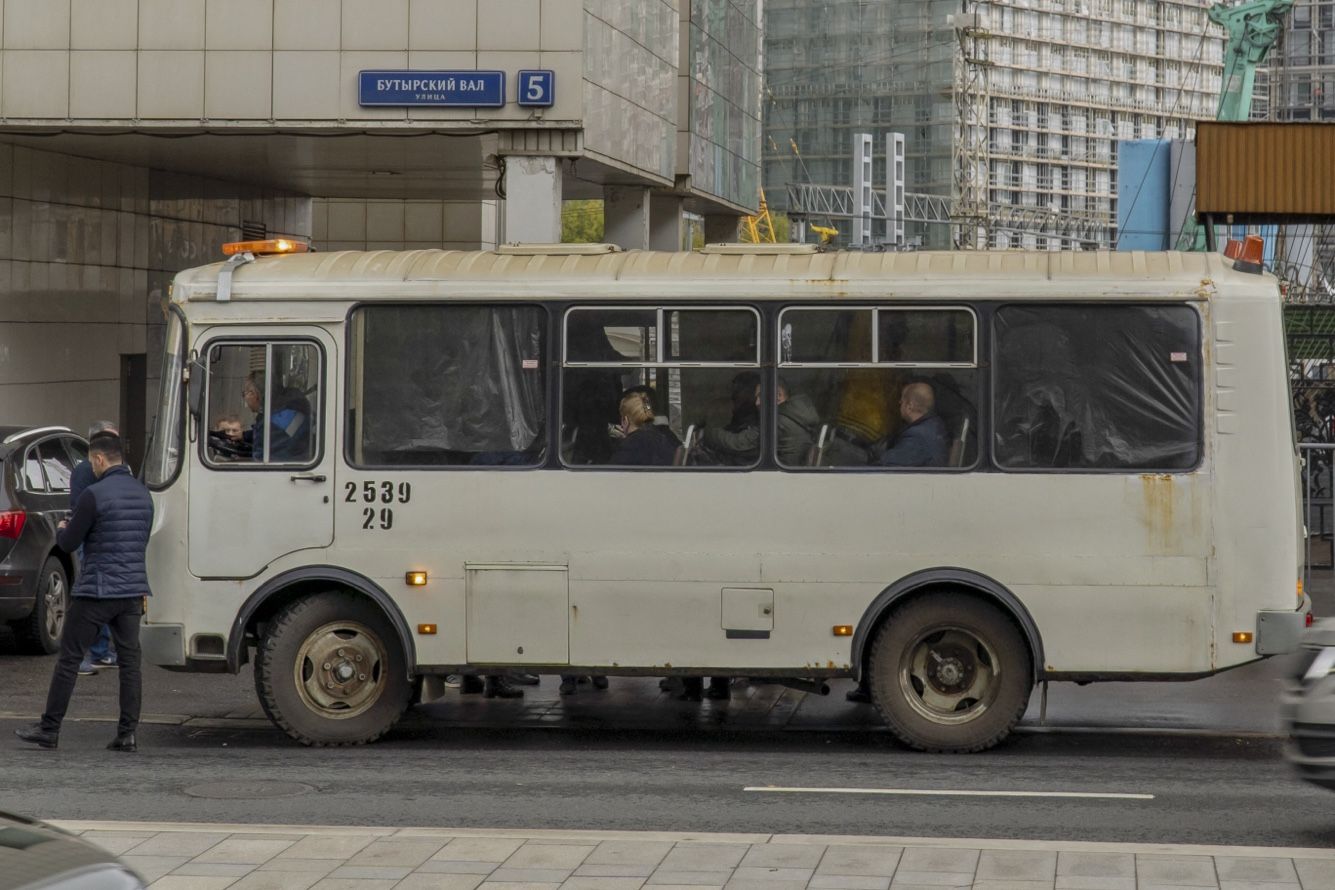
After the mobilization announcement in many large cities of Russia, protests were held. According to the OVD-Info , more than two thousand people were detained on them. The most striking (and fierce) protests happened in Dagestan - there the police had to disperse the participants, shooting into the air (and even this did not help very much). However, in most regions there was nothing like this. About why even mobilization did not provoke large -scale protests in Russia, Medusa spoke with political scientist Vladimir Gelman.
- How can one characterize the first reaction of Russian society to mobilization? Why didn't she lead to mass protests?
- [Economist, a specialist in political economy ] Albert Hirschman in his classical book “Exit, Voice and Fidelity” described as individuals, companies and entire states react to all kinds of crises. Two fundamental strategies are active resistance, protest (in its terms - “Voice”, Voice), and the departure from falling misfortunes in various forms (this is “Exit”, Exit).
But if we are not talking about individuals, but about entire communities, everything is much more complicated here. We see that the crisis associated with mobilization has become sudden for a huge number of people and, of course, they have a problem how to respond to this crisis if it threatens the well -being and their own lives, the lives of their relatives and friends. And the Russians, of course, prefer the “exit”. The fact that, according to the New Gazeta, 260 thousand people left Russia in recent days is a clear confirmation. While active protests still remain isolated cases.
However, the main problem for active protests is that they require not just individual actions - you can run abroad individually - protests require coordination and cooperation between different people. The situation is bad with this. That is, we see that at a local, non-level level, some manifestations of protests are observed. As a rule, they arise in local communities and are associated with specific private manifestations - for example, in Dagestan ,in other places .
- And what is the reason for the fact that protests arose in such local communities? The fact is that these are regions that are more suffering from the call ? Or are these communities differ in that they already had some kind of lower coordination?
- I think that, most likely, both. On the one hand, there really very zealously fulfilled the plan on the appeal, and on the other-as I suppose, some practices of local coordination existed earlier. Accordingly, there we see bursts of rather active protests.
But the fact is that the potential of these protests does not go beyond individual cases. Those heroic women who fought with the Russian Guard in Makhachkala, first of all, achieved so that their husbands, children, relatives would not mobilize. In the best case, this will lead to the fact that they are not mobilizing their husbands and children, but by someone else-where the confrontation potential is not so strong and less resistance.
This phenomenon is clearly familiar to people who study social movements. There is such an abbreviation - Nimby , Not in My Backyard, that is, "not in my backyard." The logic here is that everyone first of all fights for himself, for his own interests. We observed this before, it is not the specifics of protests against mobilization.
For example, in Russia there are many environmental protests. Sometimes they turn out to be successful - for example, the famous case of Shies. There, the heroic confrontation of local residents with representatives of the authorities entailed that the project [the garbage training ground] was closed . But in fact, this meant that in some other places where resistance is not so strong, such projects are completely implemented. And the activists simply do not have the potential in order to go beyond the scope of a particular confrontation - there is no place to get such a potential. This requires well -functioning coordination mechanisms. They can be created where it is about hundreds of people, but not where it is about millions.
- But this strategy “not in my backyard” is the specificity of Russia or societies living in authoritarian regimes?
- This is not at all the specifics of Russia. Many countries that exist in conditions of rather repressive autocracies are faced with similar problems. But in some countries there are other organizational structures that facilitate coordination. For example, the Latin American authoritarian regimes of the second half of the 20th century constantly came across resistance from the trade unions , which served as an important source of coordination.
In Russia, this kind of alternative was tried to create a team of [Alexei] Navalny, but it was actually defeated: someone underwent repression , someone was forced to escape from the country and the potential of coordination sharply decreased before February 2022. That is, the authorities understood the threats that come from any organizational structures, and tried to weaken these structures in every way - and they succeeded .
-And if you coordinate protests from abroad, online? For example, supporters of Alexei Navalny were now trying to call people to protest.
-Firstly, online coordination works as an addition to coordination in real life, that is, it is not able to replace coordination on Earth. And secondly, the threats of repression are quite serious and prevent people from participating in mass protests. People consciously or, perhaps, intuitively weigh the risks of being punished and their chances of success. And they understand that if they are participating in protests, the risks are quite high - especially now, when it comes not only about an administrative offense, but also about criminal prosecution . And the chances of achieving the goal seem very low - at least today. Naturally, this stimulates [Russians] to search for individual solutions instead of collective actions.
- Thus, the condition for mass protest is a situation in which people will either evaluate their risks to be repressed as lower or to see higher chances of success?
- Yes, today these calculations of people say that the chances of breaking the “mobilization machine”, which is based on repression, are small, therefore, it is natural that the search for an individual exit, and not a collective protest at all.
- Examples such as protest in Dagestan can affect perception in the society of this situation? Is it likely that in other regions, seeing what happened in the republic, people will decide to follow an example?
- In fact, for many people, the case of Dagestan looks more like an example to follow, but as evidence that the authorities in confronts with citizens beat protesters. That is, this kind of development of events on the scale of Russia as a whole would be possible if the repressive machine was weakened and the state simply could not cope with the flow of collective actions in one city, then in another.
But for this we need some critical mass of activists who are ready, so to speak, go to storm. So far, we do not see such a critical mass of activists, especially on the country's scale. I do not exclude that this kind of development of events is possible, but at least for now, there is no evidence that in different regions of Russia there are a large number of those who will enter into clashes with the Ministry of Internal Affairs and the Russian Guard instead of hiding their husbands, children and other loved ones.
“You, nevertheless, say that you do not exclude such an opportunity.” And under what conditions?
- Under conditions that, on the one hand, the state apparatus will weaken during hostilities, and on the other hand, this state apparatus will decrease this state apparatus.
The canonical example is in February 1917 the military units in Petrograd, fearing that they themselves would be sent to the front, did not go to defend the tsarist government, and it was eventually fell. Such a deep decline in the potential of suppression [civil activity] in Russia has not yet been noted. On the contrary, we can say that the Ministry of Internal Affairs and the Russian Guard are even interested in the need for their presence in the field to suppress protests - then they will definitely not be sent to the front. That is, the situation is the opposite.
And of course, the level of general discontent should be much higher than now. Until we are observing this. I think that the delay in hostilities can somehow affect the situation, but how exactly-we do not know yet.
- There is a common idea that the level of general dissatisfaction with mobilization will significantly grow when, as they say, “coffins will go” and people will react more acutely to what is happening. Is this a realistic script?
- As I said, an acute reaction is one thing, and collective actions are different. In order for an acute reaction to turn into collective actions, the time and coordination mechanisms are needed. Until they have developed yet. It is impossible to expect that such mechanisms are formed by clicking a finger.
Of course, the deterioration of the situation - and associated not only with the death of the battlefield, but also with the fall of the economy, which is likely to intensify, can push this coordination, but it would be too premature to build forecasts, because too much is decided on the battlefield.
- For such coordination, the presence of a bright, popular leader is required? Or such a structure could grow from some horizontal social movement?
- There is no exact answer to this question. In different countries, it is very different. Somewhere, such movements grow from the grassroots initiatives-as in Sudan , where local performances against Omar al-Bashira spread throughout the country. Somewhere there are new organizers who take on this difficult role-like, for example, Koruson Akino in the Philippines after the murder of her husband.
And Russia, among other things, is also a large country. Many manifestations of protests were and are local. This is very convenient for the authorities, because you can pursue a policy "share and reign." Yes, and if something happens in the same Makhachkala, the probability that these protests will spread to Moscow and St. Petersburg is lower than it would be in the country with a not very large territory, where, roughly speaking, one could expect the Mother's Mother to the capital. In Russia, Dagestan mothers will not reach Moscow.
- Such a coordinating organization or such a leader could arise from nowhere?
- Again, we do not know. There is no pattern that would say that with a certain set of factors, one or another occurs. Any assessments that we make on the basis of what we know about other cases are probabilistic. In medical diagnostics, the doctor knows that in 30% of cases with such symptoms the patient helps such a treatment, in 20%-it is not necessary to treat, it will pass, and another 20%-as a patient is not treated, still a deadly disease. In political diagnosis, this does not work like that, because each “patient” has a very large set of characteristics, many of which are unknown to us, and moreover, there is an element of accident.
Therefore, we often cannot predict, and in the best case we can explain the post -factum. This applies not only to protests. We can talk about more or less likely to develop events, but it is impossible to say that the leader will appear under such conditions.
- If we talk about the analysis of past experience. You have given the assessments of one of the studies of authoritarian regimes, according to which mass protests themselves do not always lead to the overthrow of power, since a conflict inside the elites is also needed. Nevertheless, according to these estimates, in 30% of cases since the Second World War, authoritarian regimes collapsed precisely due to mass discontent and public protests. Thirty percent is, it would seem, not so little. Did these cases have some kind of specificity?
- Here, for example, the revolution in Iran in 1979: there were many protests, but the elites remained faithful to Shah [Mohammed Reza Pekhlevi] and did not want to switch to the side of the protesters. Nevertheless, as Vladimir Vysotsky sang, “Shah signed in complete inability” and left the country - the revolution won.
Another example-in the sameCzechoslovakia in 1989, the regime was quite quickly swept by mass performances without any special resistance. There are examples of this kind, but we cannot say that there is a set of ingredients for an unconditional recipe, because a lot depends on how the ruling groups evaluate the risks [lose power] and what resources are available to them.
In Eastern Europe, it was a very important aspect that the communist regimes in these countries could not count on power support from the Soviet Union, and their own potential was too low to confront protest movements. This was known both in society and in power. So partly this is a combination of objective factors, and partly, expectations and representations from the ruling groups, they will resist or not. Where this line passes - we do not know.
- If you look at the history of modern autocracies, what is known about how the elite split takes place? Are there any prerequisites for him in Russia?
- The difference between the types of authoritarian regimes is important here. Some of them are characterized by a collective leadership, which in itself suggests the presence of different players with different positions and different potential. Sometimes these intra -elite conflicts lead to couples. In order not to go far for examples: in 1957 there was an elite conflict in the Soviet Presidium of the Central Committee, when the so -called anti -party group of Molotov, Malenkov and Kaganovich tried to shift Khrushchev. This attempt was unsuccessful, Khrushchev won and resigned his opponents.
However, in 1964, Khrushchev’s opponents were still able to achieve their . This became possible, because there was such an organ as the Presidium of the Central Committee, which resolved important issues collectively and had the opportunity to get rid of certain characters, it was an important decision arena.
Something similar took place in some military regimes. In Latin America [in the second half of the 20th century], for example, it was supposed, relatively speaking, that there is a commander of the Ground Forces, and there is a fleet commander, they have faithful units and they are forced to solve political issues. And there were demarcation between those who, roughly speaking, wanted to shoot everyone, and those who were against such steps. Something this happened in Argentina after a defeat in the Falkland War.
In personalist political regimes , to which the Russian regime refers, the collective decision -making mechanism is not assumed. You can look at the record of the meeting of the Security Council of the Russian Federation on February 21 of this year - there was no need to talk about any organized position opposing the political leader. The participants of the elites again prefer an individual “output ” to the collective “voice”. Moreover, for them, risks are no lower and even higher than for ordinary citizens: roughly speaking, they have something to lose.
Today to expect that the elites will begin to split, do not have to. I do not exclude such a development of events, but it does not arise spontaneously, of course, simply because someone does not agree. Rather, disagreements try to stay in the shade, perhaps expecting that the situation will turn into a more favorable direction for them. And even more so they are not ready for collective actions directed against political leadership.
- But these hypothetically disagreed representatives of the elites in Russia now do not demonstrate the “exit” strategy, t *o is practically not resigned, but as if they are submitted to fate. * Something similar, with all the abyss between the elites and mobilized in the war, can now be seen in society: there are reports about people who do not really want to fight, but dutifully go to the military registration and enlistment office , they say, it is necessary. It turns out that for many in Russia - both in society and in elites - unattractive is neither the “exit” strategy, nor the “Voice” strategy?
- Hirschman, in addition to “output” and “voice” stands out, stands out another option - Loyalty (“fidelity”), that is, to accept what is happening, put up with it and follow the course of events that was set from the outside. The followers of Hirschman later highlighted another strategy - this is Neglect (“neglect”), that is, just do nothing and not react in any way.
If we talk about citizens, then in Russia it is rather a variant of “fidelity”, which proceeds from the ideas that whatever you do, you will still lose, fighting the state is pointless. For representatives of elites, the “neglect” strategy is more characteristic, that is, if, roughly speaking, nothing to do, then risks are less than if you do at least something. Опять же это рациональное поведение, исходя из того, как и отдельные граждане, и люди во власти оценивают риски своих шагов. Если вы предполагаете, что ни протест, ни попытка к бегству вас не спасут, то что еще вы можете делать?
— Вопрос в том, как у людей формируются именно такие представления о рисках и возможностях.
— Эти ожидания опираются на реальный опыт, о котором люди более-менее знают если не непосредственно, то через средства массовой информации, те же социальные сети и так далее. Вполне логично, что многие люди, столкнувшись с кризисом, выбирают либо покорно следовать ему, либо ничего не делать. Это может быть неприятно для очень многих наблюдателей, которые хотели бы видеть большую активность. Но люди ведут себя так, а не иначе, причем они ведут себя так не только в ситуации мобилизации.
Если мы посмотрим на то, как люди вели себя в ситуации пандемии, то это не так уж сильно отличалось от нынешней реакции на внешний шок. Кто мог куда-то убежать или спрятаться дома и переждать кризис, те убегали и прятались, кто был отчаянный и бесшабашный — выходили на какие-то антиваксерские акции , а большинство людей ничего особо не предпринимало: ходили на работу, потому что надо кормить детей, а если сидеть дома — зарплату никто платить не будет. Многие заболевали, умирали. На самом деле эта общая логика поведения не специфична по отношению к нынешней ситуации.
— А она специфична именно для России?
— Это относится ко многим обществам. Просто в некоторых странах есть институты, которые стимулируют людей вести себя иначе, а в некоторых обществах таких институтов нет. В условиях демократии если правительство совершило какую-то чудовищную внешнеполитическую ошибку, развязало непопулярную войну [есть возможность на это повлиять].
Например, американское вторжение в Ирак утратило популярность вскоре после его начала, и, когда в США сменилось руководство, американцы ушли из Ирака. Потери были большими, но работа над ошибками была проведена. Это стало возможным в том числе благодаря позициям американских избирателей и в то же время американских элит.
В авторитарных режимах такого механизма нет. Невозможно представить себе, что сейчас российские элиты объединятся и свергнут Путина — по крайней мере, на сегодняшний день это выглядит очень маловероятным. И у российских граждан нет возможности своими организованными протестами изменить внешнюю политику.
Это не значит, что российское общество какое-то неправильное. Оно так устроено, что для него нынешняя реакция на кризис, связанный с мобилизацией, является вполне логичной и обоснованной. В каких-то других условиях и россияне, и элиты вели бы себя иначе.
Talked by Margarita Lyutova