
Translated material
Conflict around the "cemetery of the first builders of St. Petersburg"
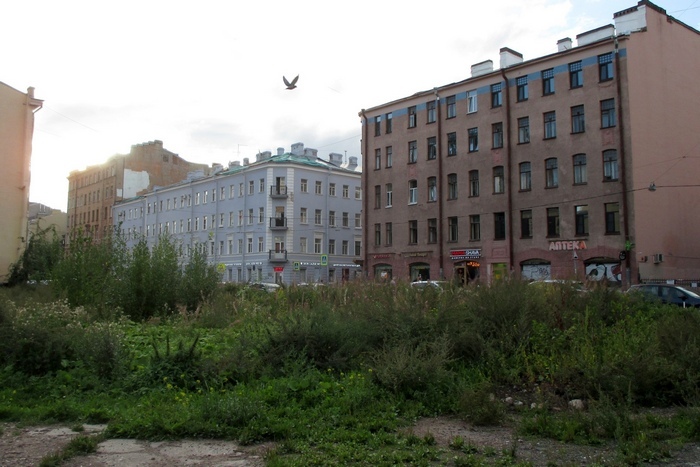
A new conflict around the "cemetery of the first builders of St. Petersburg." The unique wasteland on Petrogradka can build up, but the townspeople still have hope
In November, the Investigative Committee decided to check the possible development of the wasteland on the Petrograd side, where in 2014 the remains of the first builders of the city and the foundation of the Lutheran Church of St. Mary were found. Urgent defenders have been asking for an object of cultural heritage for eight years, but Smolny ignores them. The site can be sold and theoretically built up already in 2023, if the amendments of the activists in the general plan do not pass.
"Paper" studied the documents, talked with the defenders of the wasteland and talks about the conflict around the unique site.
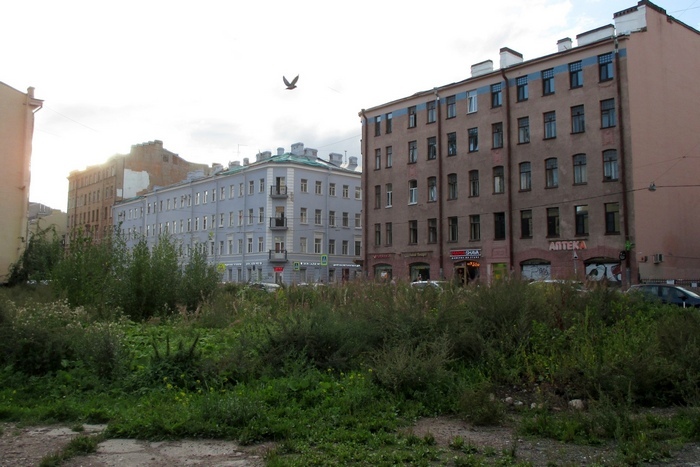
Residents of Petrogradka asked the SK to preserve the wasteland. KGIOP did not recognize the place as an object of cultural heritage - this can lead to development
In mid -November, 59 residents of Petrograd and other regions of St. Petersburg wrote the appeal to the head of the UK, Alexander Bastrykin. They asked to protect the wasteland on the corner of the Sytninsky and Kronverkskaya streets from development, where in 2014 the burial of the first builders of St. Petersburg and the foundation of the Lutheran Church of St. Mary found the burial.
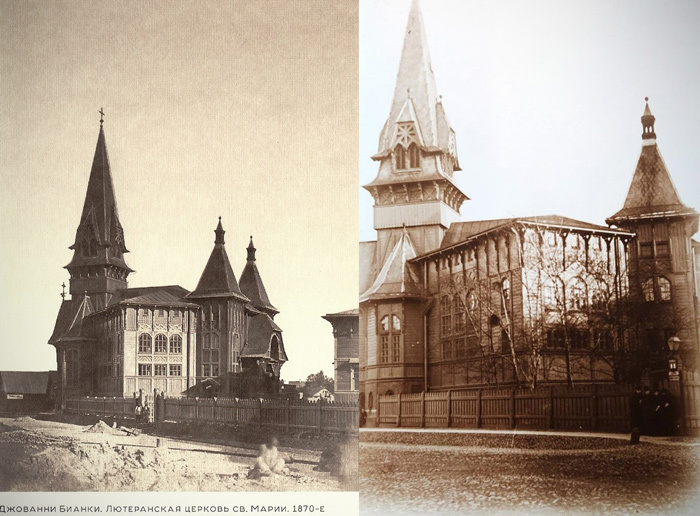
How was the burial and foundation of the Church found a wasteland? ↓
The company "Unisto Petrostal" bought a plot on the corner of the Sytninsky and Kronverkskaya streets of the Petrogradsky district along with the buildings located on it in 2012, Fontanka reported .
The company was going to demolish historical buildings and build a multifunctional center with apart-hotel, offices and shops. However, in 2014, during archaeological excavations after the destruction of buildings, it turned out that there are 255 people underground on the site.
The fact that workers who built Petersburg during the time of Peter I, as well as the foundation of the Lutheran Church of St. Mary, found out at the Institute of the History of the Material Culture of the Russian Academy of Sciences are buried.
In 2014, the Committee on State Control, the Use and Protection of Monuments (KGIOP) recognized only the preserved wooden fragments of the Church as an object of cultural heritage, TASS wrote . However, now on the KGIOP website, even the foundation of the construction is not marked as a protected object.
Activists said that since 2014 they ask KGIOP to enter a plot on Petrogradka in the list of cultural heritage objects, but they are refused. According to Petersburgers, the committee never saw the value of the site. At the same time, the citizens did not show any documentation and conclusions of the examination.
“With their refusal to take necropolis and foundations of the church for protection, officials are systematically pushing the site for development. Already in the very near future, after changing the general plan, the site will be finally given for construction-the next 9-story apartments will be built here and the monuments in the ground will forever destroy. ”
A few days later, the city -defenders of the Living City movement said that the UK began a pre -investigation check after their appeal. The department reported this in the comments under the publications of the appeal of citizens in social networks.
Does the Investigative Committee really help urban defenders? ↓
In the summer, the deputies of St. Petersburg several times asked the head of the UK Alexander Bastrykin to intervene and stop the demolition of historical buildings of the city. He instructed investigators to understand the legality of dismantling and instituted at least three criminal cases. However, only one accused is known - and that alleged.
According to Fontanka, the chairman of the KGIOP Sergei Makarov is charged with abuse of authority. The committee only reported that Makarov "collaborates with the investigation within the framework of authority."
The wasteland has become important for local residents. They equip the garden there and spend holidays
The conflict of local residents and authorities due to the wasteland on the corner of Sytninsky and Kronverkskaya streets lasted since 2014, but aggravated first in 2020–2021, and now in 2022.
Some residents of the Petrograd side since 2014 claim that the remains can still be underground and that this site is a unique archaeological find that needs to be studied. According to them, in the Petrograd district, there is too dense development, and the Petersburgers do not have enough squares and parks.
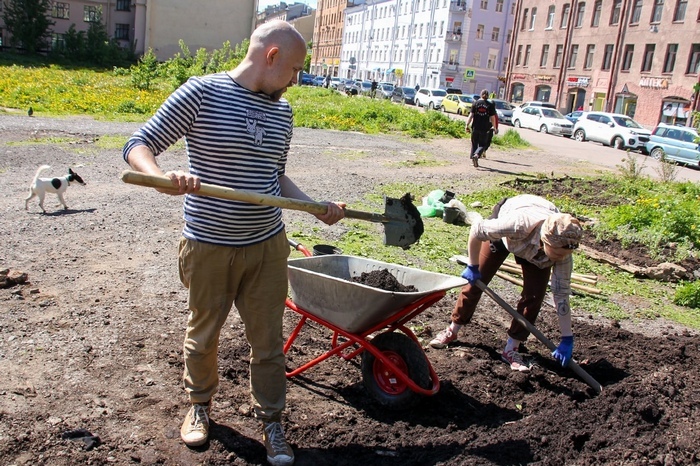
In the fall of 2020 and in the spring of 2021, local residents were cleaned several times on the site, and on the May weekend of the 2021st they dropped dozens of plants. Petersburgers created a public garden on the site to protect it from possible development and conduct poetic readings, meditation and excursions there. But already in September, the garden was impressed due to anonymous complaint on the portal “Our St. Petersburg” that weeds supposedly grew there.
The refusal of the St. Petersburg authorities to recognize the cultural significance of the object caused a new round of disagreement. “The whole situation looks like a conspiracy of the KGIOP with the developer. The committee does not take the site for protection and does not show the results of the examinations. And as a result , the square will be built up, ”says Marina Granatstein - Petersburzhezka, which protects the square.
Now in the wasteland, residents of Petrogradka are organizing exhibitions and celebrating holidays, for example, Halloween. The Public Garden initiative group also conducts lectures in a cafe near the square.
The site can really build up - Smolny cannot buy it. Activists will win only if the site is included in the general plan
Working on the wasteland is not yet underway, but they can begin at any time, activists say. This will probably happen after the administration of St. Petersburg accepts the new general plan of the city by the end of 2022.
General Plane will determine how urban areas will develop until 2050. It will also be prescribed in the General Plan of all land plots - in particular, it will be decided whether it is possible to build a square on Petrogradka or not.
After the burial of the burial, the wasteland on the corner of the Sytninsky and Kronverksky was protected: in 2015, he changed the status with the social and business, where the development was allowed, to the green spacing zone. And later, the plot was introduced into the list of green spaces of public use, where, according to the law , it is impossible to build buildings.
When the owner of the territory, the company "Unistocion Petrostal" - was forbidden to implement the development project, its representatives went to court and in four years canceled the status of the wasteland as green spaces, and later as a zone of green spaces.
As Marina Granatstein, a resident of Petrogradka, told the “paper” , the developer’s victory in court became possible, since Smolny did not appropriate the burial place and the foundation of the church status of the monument - there was no official ban on construction on the site.
How the developer has achieved construction resolution ↓
The Law on Green Generations of the Community of St. Petersburg states that only those territories that belong to the state can be included in their list. And the plot on Petrogradka was brought there when it was already bought by “unast Petrostal”.
Thanks to this, the company could claim compensation from the city, as the status of land changed after signing the contract, violating the rules of the document. The developer tried to receive payments from the city, but he failed, wrote Kommersant.
Then the developer decided to sue. Since 2015, the company sent several claims to the Arbitration Court of St. Petersburg - against the Government of the city and the Institute for the History of Material Culture of the Russian Academy of Sciences, which conducted excavations. However, none of the statements were satisfied.
“Unisty Petrostal” did not put up with this and went on to the Supreme Court. In 2018, the “daughter” of the company-“Unisto Petrostal Project-Sitninskaya” -achieved through the Supreme Court of the Russian Federation the cancellation of the inclusion of territory on Sytninskaya Street in the list of green spaces of public.
Then, in March 2019, the company won one more case in the Judicial Collegium for Administrative Affairs of the Supreme Court: the amendment to the general plan of the deputy Anokhin to assign the status of the Green Territory was recognized as invalid. In the territory of the burial and the former church, development was again allowed.
Despite the decision of the Supreme Court to remove the security status from the wasteland, in April 2019, before the elections, Alexander Beglov instructed to equip the site, wrote Fontanka. The builder even agreed to consider options. However, three years later, the administration of the Petrograd district claims that it has not found a way to equip a wasteland: you can redeem the site only together with the object of social or transport infrastructure placed on it, and they are not and are not planned there.
According to the initiative group of Petersburgers “Public Garden”, now the wasteland can be saved only if in the new general plan they will be assigned the status of a recreational zone where development is not provided. In August 2022, the city authorities opened the city plan for public discussion for public discussion. According to the townspeople, the officials listened to their wishes.
“The new general plan plans to translate it [wasteland] under socio-business development. Nevertheless, applications for adjusting the general plan and preserving the site, offered by residents of the district in August this year, were accepted for consideration by the Committee on Urban Planning and Architecture. So hope is completely, ” writes the initiative group.
Perhaps the ruin of the owner-developer will also affect the fate of the square. According to Contour. Focus, in January 2022 “Unisto Petrostal Project”, it went bankrupt: in 2019, the company began after initiating a case of theft of funds from equity holders of the residential complex “Tridevyatkino Kingdom” against businessman Vladimir Oxman, with whom, as Business Petersburg wrote , the company was connected.
Now the property is “unisty Petrostal Project”, including wasteland on the Petrograd side, sold to repay debts.
What else to read:
- “All this excursion to Petersburg will end with nothing.” As the head of the UK intervenes in urban protection and what comes of it.
- Petersburgers turn the wasteland on the Petrograd side into a public garden. See how dozens of plants were planted there on the weekend.