
Translated material
"A leader who knows when it is time to leave"
New Zealand Prime Minister Jasinda Ardern resigned ahead of schedule. She went to difficult decisions in the pandemic and fought with sexism. But in 2023 she was tired

This week, the Prime Minister of New Zealand Jasinda Arderne said that she no longer has the strength to fulfill her duties and, all the more, run for a new term,-Ardern referred to fatigue, which no longer gives her to work for the good of the country. Over five and a half years in power, the Prime Minister showed by his example that the leader’s leader as national interests could be guided by the principles of mercy and empathy and at the same time make difficult decisions like the most severe quarantine, which New Zealand during the pandemic Covid-19 became famous throughout the world. But Artern could not live to justify all the expectations of voters. "Medusa" tells her story.
“I am leaving because this privileged position [be the head of government] implies responsibility. The responsibility to realize when you are a suitable candidate to be at the helm, and when-no ”-so at a press conference on January 19, Prime Minister of New Zealand Jasinda Arden explained why she intends to resign. When Artern said that she tried to find the strength to go for the next three -year term, but could not, her voice was trembling.
Ardern must resign his authority no later than February 7-by that time the Labor Party will choose a new prime minister. Journalists announced the end of the Jasindamania era.
This era began in August 2017. A month and a half before the parliamentary elections, the ratings of the Labor Party were reduced due tothe unpopularity of her leader Andrew Little. He resigned his powers, and the party was headed by 37-year-old Ardern. In the first week, she raised the party ratings to nine percentage points - up to 33%.
In the Arran elections, it was necessary to fight with the acting Prime Minister Bill Inglish from the conservative national party. Political scientists have been defeated to the Laborists, and Inglish dismissively spoke about the competitor gaining popularity. “Now the star dust will dissipate, and we will see what its policy will actually be,” he said on the election debate, hinting at the inexperience of Ardern in the management of the country. By that time, Ardern had been a deputy for nine years, and before that she worked as an analyst at the offices of two New Zealand premiers and an adviser in the office of the British Prime Minister Tony Blair.
As a result, the Laborists formally could not win in those elections, but thanks to Ardern they received additional votes, which provided the party more places in parliament and helped to form a coalition. Ardern headed the coalition government, and the “star dust” around it has since acquired a completely different meaning: they began to write about Ardern as a political miracle.
In the second year, at the head of New Zealand, Arderne for the first time became an international star - but not so much as a statesman, but as a working mother. Ardern did not want to abandon breastfeeding and decided to take her three -month daughter on a business trip - for the Memite of the Memory of Nelson Mandela, arranged by the UN in honor of the centenary of the birth of the African leader, as well as at the meeting of the UN General Assembly. Together with Ardern, her partner and father of the child Clark Heyford, leading fishing programs on the New Zealand TV channel, went: he and the child listened to the inspirational speech of ARDERN about the Heritage of the Mandela and the struggle for equal rights directly in the hall of the meetings.
The Guardian newspaper then called the Act of Ardern “historical”, but the politician herself said that she was not the first and not the last mother who had to do several things at the same time. In addition, she added, she was lucky that she can take a child with her “to work” - unlike most women. Ardern is the second woman in the world who gave birth to a country during the leadership. The first in 1990 was Pakistan Prime Minister Benazir Bhutto.
In the spring of 2019, a mass murder in the city of Kraist Cherce made new Zealand one of the main topics of world news. On March 15, the ultranationalist armed with rifles and a shotgun during Friday prayer attacked the parishioners of two mosques and killed 51 people, dozens were injured. Before the attack, he published a “manifesto” with anti -immigrant and anti -Muslim ideas, and the attack on the air itself broadcast on his Facebook page.
After this terrorist attack, Arderne was no longer famous as a young mother at the head of state, but as a politician who overcomes one of the most difficult crises in the history of his country with dignity. Within a few days after the attack, Ardern announced that New Zealand would sharply tighten the rules for turning weapons. A complete ban on owning self -loading weapons was introduced in April, a month after the attack. At the same time, the government launched a program for ransom of the weapon to ban the population from the population.
Ardern called on world leaders and technological companies to deal with the spread of terrorist and extremist materials on social networks and together with France President Emmanuel Macron launched the Christchurch Call initiative - this agreement was signed by the government of several dozen countries (Russia did not enter) and the largest technological companies, including META and Google.
But the greatest response -both in the newest Zealand and around the world-received how the Prime Minister herself reacted to the attack. She flatly refused to pronounce the name of the criminal so that he would not go down in history - unlike the people he killed. At a meeting with members of the Muslim community of Kraistchechch, she, following the Islamic rules, covered her head with a handkerchief and personally tried to console the relatives of the dead. Speaking at a mourning event dedicated to the memory of those killed during the attack, Ardern emphasized that the country is one in this mountain. Speaking of victims, including migrants and refugees, she stated: "They are us."
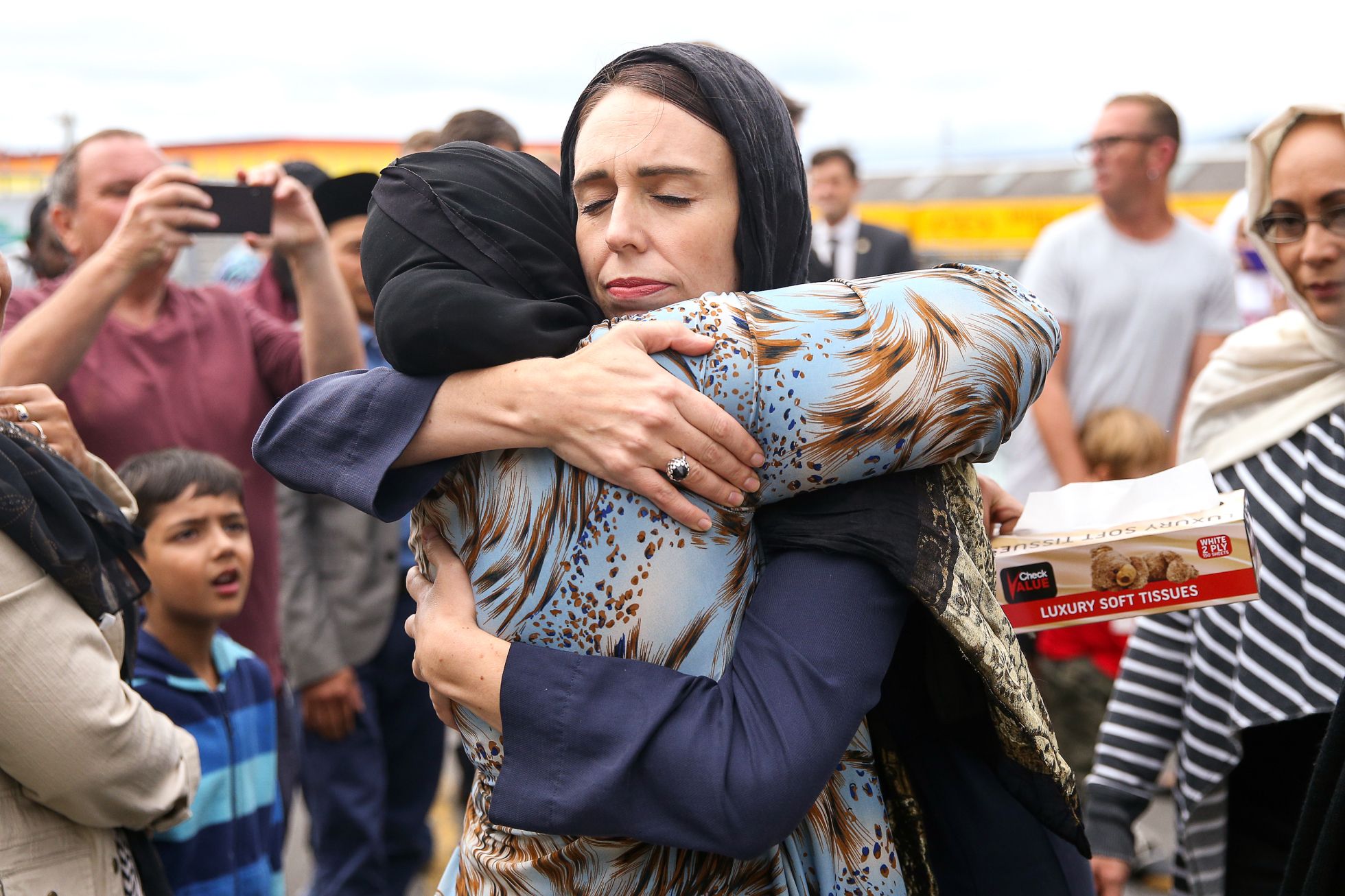
The fight against any forms of discrimination and chauvinism is an important part of Ardern’s policy and personal values. As Prime Minister, she actively supported the indigenous people of New Zealand Maori (now they make up 17% of the country's population ). She began speeches in the language of Maori, appeared in their traditional outfits - including the recent funeral of Elizabeth II.
In 2018, Ardern became the first head of the government of New Zealand to take part in the Pride, which took place in Auckland . She grew up in the family of Mormons, but, having matured, stopped relations with the church. “[In my student years] I lived in the same apartment with three geoi friends and every time I went to church I thought that I was acting inconsistently: either I betray friends or religion,” she said in an interview. Ardern chose friends.
Ardern actively fought for the rights of women. She achieved the complete decriminalization of abortion in New Zealand, and as part of the program to combat “menstrual poverty”, the ARDERN government began to purchase female hygiene funds for free distribution in schools. In addition, the Prime Minister spoke about the inadmissibility of sexism, but she herself came across him throughout her political career.
The New Zealand media called Ardern “Aunt Cindy” , “playful crumbs” and “pretty communist” , and male journalists asked her humiliating questions. At the Australian television show “60 minutes”, the host, warning that he would now ask an “important political question”, said the expected date in the pregnant woman and her partner when the child should be born. Having received the answer, the presenter continued: “I wonder how many people were now counting back, by the date of conception. Like the father of six, I, of course, understand that there is nothing like that that people start children. What is this in conceiving a child during the election campaign? "
At a press conference on recent negotiations , Ardern with the head of Finland, Sannah Marin Reporter-Muzhchina, asking both a question, suggested that they decided to meet because both of them were women and almost peers . “It is interesting when the US President Barack Obama met with the former Prime Minister of New Zealand John Ki, someone asked them if they decided to see the same age?” - said in response, Ardern. The difference in the age of Obama and Ki is only five days.
Arderne herself first met with the US President almost immediately after the Prime Minister was taking office-at the Summit of East Asia in November 2017. The United States was then headed by Donald Trump, known for his sexist statements. While the guests of the summit were waiting for an invitation to a solemn dinner, Trump, turning loudly to the man standing next to him, pointed to Ardern and noted: “This lady upset many in her homeland!” In response, the New Zealand Prime Minister jokingly reminded Trump that after her victory in the elections "at least there were no protests." At the same time, Artern itself participated in the New Zealand march for women and against Trump after his inauguration - then, in January 2017, “female marches” were held in the USA and many countries of the world, demonstrations as a sign of condemning the sex and Xenophobic statements of Trump.
However, a few years later, marches were already carried out against Ardern itself: dissatisfied with how the authorities were fighting with pandemia went to the streets of New Zealand cities. Ardern was accused of “vaccine segregation” and the country's economic problems caused by quarantine restrictions. The fight against coronavirus first again made Arderne an international star and an example to follow and helped to achieve unprecedented political successes within the country. In the elections in the fall of 2020, the Labor, led by Ardern won a huge margin - they received 64 out of 120 seats in the country's parliament. However, as a result, the government of the government Ardern with Pandemia put the end of Jasindamania, harming the popularity of the New Zealand leader.
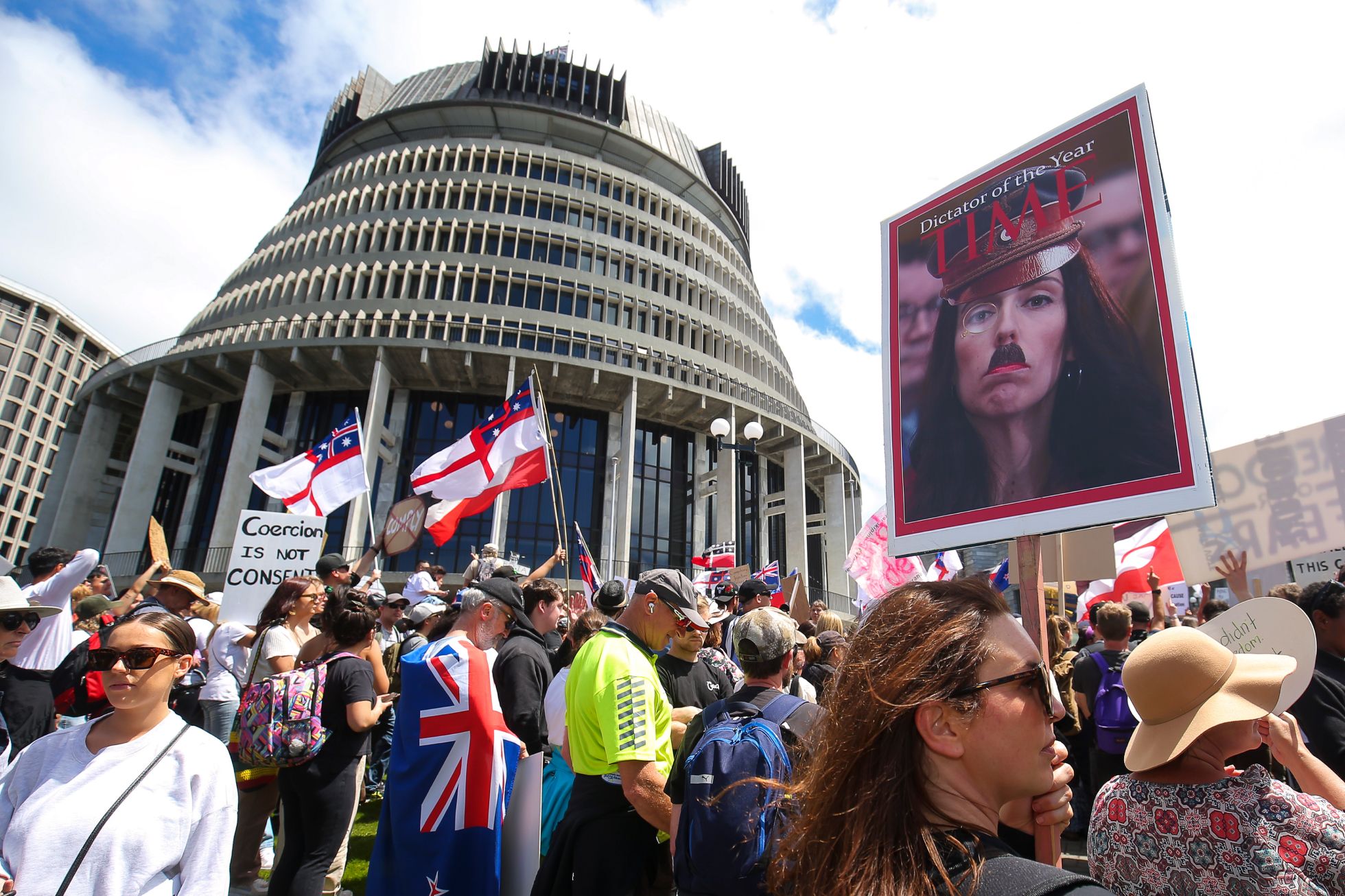
In March 2020, New Zealand was one of the first to completely closed its borders for foreigners who did not live in the country, and on March 23, when there were about 100 cases of infection in the country in total, the strict quarantine for its citizens. In May 2020, the Government Ardern carried out a law through the parliament, which was supposed to regulate measures to combat coronavirus for the future, but at the same time gave the police new powers-for example, without a warrant to enter the houses of people whom the police will suspect in violation of quarantine, because the house is held in the house. The parliamentary opposition called these measures “dragon”, and the ban on meetings in the company of over 10 people stipulated by law - “inhuman” regarding religious people who would like to visit the services, as well as those who need to hold a funeral.
At the same time, Arderne herself sought to explain as much as possible to citizens of the country that and why they were doing the authorities, self -isolated in her official residence in Wellington and regularly conducted informal broadcasts on Facebook to inspire people with her example and cheer up her “five millionth team” - this is how she addressed the New Zealanders.
New Zealand managed to go through the first outbreak of coronavirus and a flash of a delta strain with a minimum number of victims: as of March 1, 2022, only 68 people died in the country since the beginning of the pandemic from the Covid-19 (for comparison, in Finland, with the same population, the victims of coronavirus on the same date of steel became over 2.8 thousand people). But New Zealand could no longer cope with more contagious omicron . In 2022, the number of deaths from coronavirus in the country jumped more than 60 times and now exceeds 3.7 thousand cases.
At the beginning of 2022, epidemiologists warned that New Zealand is not ready for an outbreak of Omcron: there were not enough people of vaccination with boster doses of vaccination, children from five to 11 years old have not yet begun, the usual quarantines will be much less effective due to the short incubation period of this variety of coronavirus. Ardern canceled her own wedding (they still did not make an official marriage with a partner), and the government began to return the restrictions - for example, mass meetings were allowed only on condition that no more than 100 people would visit them, all of which should be vaccinated.
The accumulated fatigue from quarantine restrictions provoked a new surge in protests. One of the most high -profile episodes of those shares was the acceleration of the protesters camp in Wellington in March 2022. For three weeks, the participants in the action did not leave the square in front of the parliament in the center of the capital, and in early March the police demanded that the protesters disperse. Some of them refused to obey, clashes with the police began, which in response used rubber bullets and tear gas. In her speeches, Ardern categorically condemned the protesters: “This is an attack on our police, an attack on our parliament, an attack on our values, and this is a big mistake.”
Not only anti -Vaxers, as in the first two years of the pandemia, but also dissatisfied with the economic problems that had accumulated during all this time and worsened in 2022, when inflation began to grow accelerately growing, reached the protests of 2022. Ardern remembered her unfulfilled promises - including those that she gave at the very beginning of her premiership. She stated that she intends to sharply reduce children's poverty , but its level has practically not changed and is approximately 20%. Contrary to promises, Ardern failed to reduce property inequality: she proposed increasing taxes for the most wealthy ones, but this was never done - 10% of the richest now own about a half of the country's wealth. The population has a huge credit load, and the cost of life is increasing.
In 2017, the election program of ARDERN suggested that 100 thousand new houses for homeless and needy would be built. But after only 140 houses managed to build in 2018, the government abandoned a formal target of 100 thousand, although it promised, which would continue to solve the problem of housing and help homeless. Laws have been adopted that stimulate construction with the help of benefits and tax measures and prohibit allocating land for houses for one family in large cities.
The fight against coronavirus at the beginning of the pandemic will remain the main achievement of Ardern, New Zealand coped much better than other countries, its economy began to grow earlier, unemployment was low, the New Zealand economist Shamubil Ikube lists in the commentary of The New York Times. But now the country has caught up with the same problems that many states of the world have encountered during the pandemic, and what has long prevented the economy from developing, crawled out, and now all this has to be decided by the one who replaces Ardern. He will be the current Minister of Education Chris Hipkins - he turned out to be the only candidate from the ruling Labor Party.
Concluding the announcement of her resignation, Arderne thanked the New Zealanders for the opportunity to serve the country and described, probably, the most important part of her heritage for her: “I hope that I leave you the belief that you can be kind, but at the same time strong. Empathic, but decisive. Optimistic, but collected. The belief that you yourself can be the leaders as you consider necessary. Such leaders who know when it is time for them to leave. ”
Margarita Lutova