
Translated material
Putin’s election can still be spoiled
The voice for Slutsky or Davankov is a normal strategy. That's why
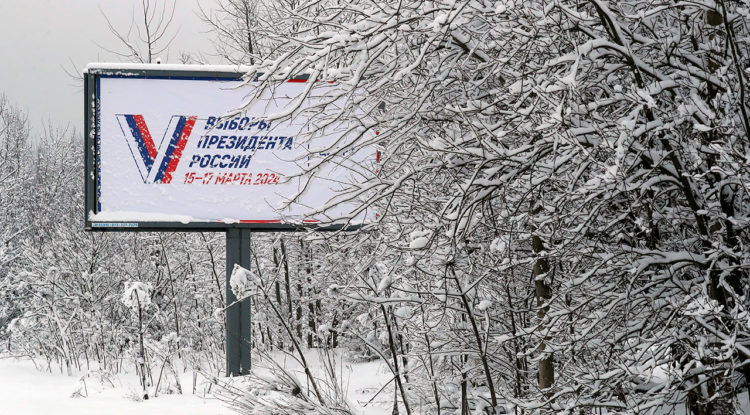
Apparently, only three candidates will compete with Vladimir Putin: known thanks to the accusations of harassment to journalists, LDPR leader Leonid Slutsky; Nikolai Kharitonov, party functionary of the second echelon from the Communist Party; As well as a native of Faberlic, a State Duma deputy from the New People party Vladislav Davankov. Can any of them become a protest candidate? Are there any prospects for the initiative of Maxim Reznik “ Nonf. AGAINST against Putin ”? Or is the correct strategy a boycott? March 2024-not the first elections in history without opposition. We explain what can be done and what it can lead to.
In order not to miss the main materials of the "cold", subscribe to our Instagram and telegram .
How dictators risk the election
Why do autocrats burden themselves with such an expensive and laborious procedure as a vote? Political scientists believe that this helps them collect information about the diligence of subordinates, resolves intra -elite conflicts, stimulates millions of people to continue working for power, and also helps to convince the opposition that it is useless to abandon the dictator.
However, the main meaning of imitation of popular will is to ensure the regime legitimacy. Voters, officials, as well as foreign observers see a formally high level of folk support and less doubt the dictator's right to occupy a high post. Statistically, the elections really help authoritarian regimes extend their own existence.
The Russians are tired. According to the October survey of the sociological company Russian Field, 48% of respondents would support the transition to peace negotiations with Ukraine. “Complete the world” - the most common answer to the question “What decision should primarily make by the President of Russia, elected in the elections in March 2024?”, Which sociologists set in January 2024. Therefore, now Putin does not just need the next extension of the “folk” mandate for power, it is necessary that the vast majority of citizens entitled to “approve” the current course. Officials have an ambitious task to provide the current president with more than 80% of support.
Yes, elections in authoritarian modes are still some risk. In rare, but memorable cases, dictators can lose their own voting and lose access to power. One of the most famous examples is Chilean General Augusto Pinochet, who was defeated at the 1988 referendum. The question was made to the vote about whether the Chileans were ready to be under the leadership of the junta for eight years. People suddenly answered: no, not ready.
Most often, such situations arise due to the gross errors of the dictators themselves. Pinochet was too confident in his abilities and therefore allowed opponents of military government to an active campaign. It was also inadequate its assessment of support from the partners in the junta. After the defeat, the generals did not agree to help him maintain control of power by force.
A much more common consequence of undemocratic elections is the protests of angry citizens. The situation is usually as follows: Autocrat admits a relatively independent opposition to the election; She receives unexpectedly a lot of support; the dictator is trying to rewrite the results of the vote; Outraged opposition supporters take to the streets. At a minimum, this seriously complicates the life of those in power, as a maximum - leads to overthrowing the regime.
Why is there a little in common between Russia-2024 and Belarus-2020 (already)?
The closest example of electoral protests for Russians is the latest presidential elections in Belarus. The actions undertaken in 2020 by the administration of Alexander Lukashenko could well have formed the basis of the manual "as it is not necessary to organize voting in authoritarian mode."
Step one: admit to the collection of signatures of independent candidates to politicize society. Among the signatures of politicians, Svetlana Tikhanovskaya, the wife of a popular (and at that time already arrested) blogger Sergei Tikhanovsky, stood out; Ex-director of the high-technology park of Belarus Valery Tsapkalo and a large banker and philanthropist Viktor Babariko.
Belarusians, annoying through this policy, began to line up in huge queues in front of the signatures collection points and closely monitor the actions of the opposition.
Step two: include the name of one of the opposition candidates in the ballot. Tsepkino failed to collect a sufficient number of signatures, Babariko was refused registration, but Tikhanovskaya reached the ballot. Apparently, Alexander Lukashenko simply did not see a real opponent in her. The President of Belarus said that Tikhanovskaya "does not understand where she had entered", and called her "housewife." Nevertheless, all dissatisfied with Lukashenko’s regime has their own candidate.
Step Three: Allow the independent policy of agitation so that the opposition can mobilize even more supporters. The headquarters of the Tskkkol and Babariko shot from the elections supported Tikhalovskaya, who began to gather thousands of voters at peaceful rallies in their support. Politics burst into the life of most citizens of the country. At the same time, Belarusians were massively recorded as independent observers. Projects “ Voice ”, “ Honest People ” and Zubr created an online system of parallel counting of voting results: voters were proposed to photograph the filled ballots and protocols of election commissions, and then send them to activists to compare this data with official results.
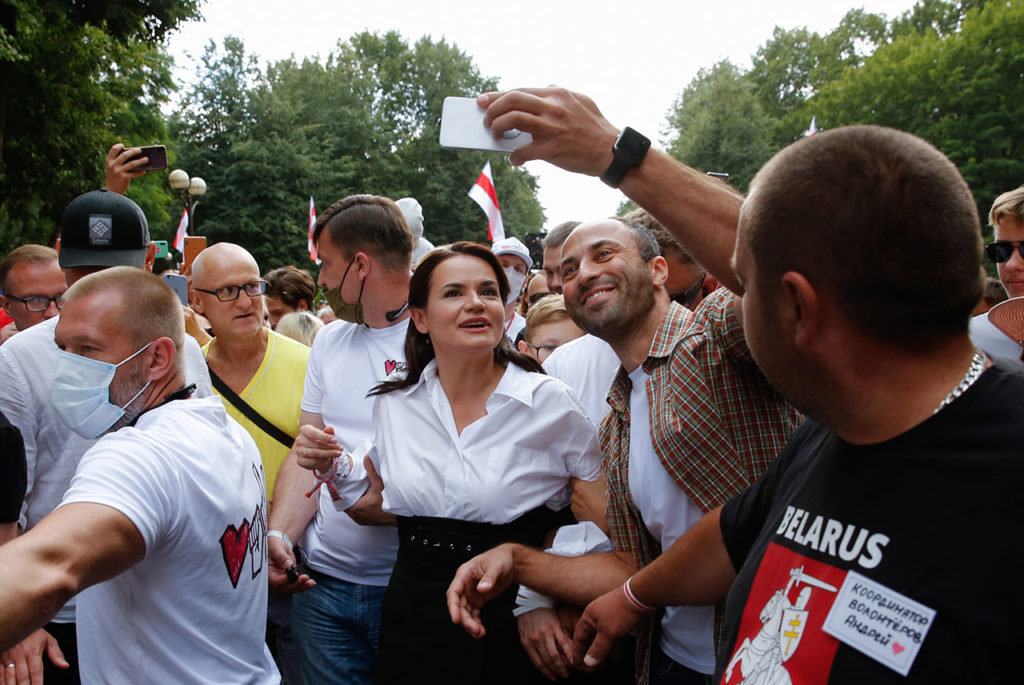
Step fourth: come up with voting results that will have nothing to do with reality. According to the CEC , Lukashenko allegedly received more than 80% of the vote, Tikhanovskaya - about 10%. This was not consistent with the calculations of observers, nor survey data. Immediately after the vote in Belarus, the largest protests in the history of the country began, which lasted many months and were suppressed only at the expense of cruel repressions .
Boris Nadezhdin called direct associations with Svetlana Tikhanovskaya. Indeed, the Russian authorities repeated Lukashenko’s first mistake and allowed the protest part of society to feel their own subjectivity. After the realization of this problem, Boris Nadezhdin received a refusal to register.
Now the oppositional Russians do not have a candidate who, with a pure conscience, could be called a representative of their interests: the truly criticizing Putin, and in general leading at least some active campaign of Davankov, Kharitonov or Slutsky seem fantastic.
Even if we assume that the Russian opposition will be able to mobilize a sufficient number of people for voting “for any other than Putin” and the regime will have to resort to mass falsifications to achieve the desired result, it is unlikely that citizens will decide to protect the voices with protest.
The remaining candidates are unlikely to become “their own” enough to take risks for their freedom. Moreover, Russia in 2024 is ahead of Belarus-2020 in terms of repression. The authorities have all the possibilities in order to suppress any manifestation of disagreement in the bud. However, hundreds of thousands of politicized by the appearance of the Nadezhdin Russians are the most valuable resource that can still cause trouble.
Boycot can be useful?
Boycott of the elections is a fairly common behavior strategy in authoritarian regimes. The opposition resorts to it in cases where it expects that its candidates will interfere with a normal election campaign, and the counting of the votes will be dishonest. The main idea of the boycott is to deprive the authoritarian regime of legitimacy. If the turnout turns out to be low, and among the alternatives, candidates who are trusting will not be presented, external and internal political forces will refuse to recognize the rights of an autocrat to power even after his formal victory. This, in turn, can lead to protests, concessions from the regime or the introduction of sanctions with international forces.
However, political scientists do not consider boycotts an effective strategy. Firstly, the analysis of 576 authoritarian elections from 1972 to 2015 showed that the appearance of voters practically does not affect the durability of authoritarian regimes. Secondly, a quantitative analysis of the Boycott cases themselves indicates their low efficiency. In the short term, they not only do not help the opposition to achieve its goals, but also deprive even the present representation in the authorities. Boycots were successful only in those few cases when they were accompanied by a wide campaign of civil protests.
The last parliamentary elections in Venezuela went with a 10% turnout , 42%of voters came to the election of the advisory assembly in Iran, 30%in Hong Kong , only 11%in Tunisia . Despite this, the undemocratic regimes of these countries continue to live.
An important disclaimer: the scientific research of electoral boycotts as a whole has little to do with modern Russia. As a rule, interest for political scientists is of those cases when the opposition is a real alternative to the regime, has a chance to be admitted to the elections, and also has the possibilities for mobilizing supporters. The prospects of the boycott in Russia should be even worse than it is assumed in research. It is difficult to imagine a situation in which even a unanimous refusal of everyone who wants real changes, from participation in the vote in fundamental, will reduce the voiced turnout.
The Russian regime has long been achieving high attendance of polling stations by pressure on voters, controlled by the state itself or “friendly” large business. And the transition from simply large to a very large turnout is provided due to a variety of falsifications.
Vote for those who you don't like is normal
Other still accessible to the Russian opposition of the Action Program is a call to vote for anyone except Putin (the bullet is spoiled into the same category), or the call to support one of the candidates admitted to the election. This option often causes the indignation of those who are not ready to cast their vote in support of unpleasant and one way or another related to the characters regime.
In fact, in the vote for those who do not correspond to your sincere preferences, there is nothing extraordinary. At different times, voters of Great Britain, Spain, Belgium, Japan and many other free democracies resorted to “strategic vote” (this is exactly what the phenomenon is called).
Imagine, for example, that you live in the district where the candidate of your beloved party has zero chances of the election, but a representative of another political force that you hate with all your heart is confident to victory. Your voting may not be a logical decision not for his party, but by the closest pursuer of the favorite. At the same time, first of all, you will evaluate it or its chances of success, and not the program, the features of the biography or the performance on the debate.
Strategic vote can lead to a change in elections, including in Russia. It is proved that in 2020, the project of Alexei Navalny “Smart Voting” brought about 5% of the vote supported by him. In the 2019 municipal elections in St. Petersburg, the effect was even greater-about 7.5%. Given that since then Russian voters have had many new reasons to be dissatisfied with the authorities, similar projects may work in 2024.
Opponents of strategic voting in Russia often resort to arguments in the spirit of " they still draw any numbers. " This is not a very correct statement. In Russia, elections are really falsify, but any manipulations with ballots are a logistics and laborious process that has the limits of effectiveness. If you rely too much on a rough deception, a “special electoral operation” may end with scandals, which authoritarian regimes try to avoid if possible.
According to the calculations , mathematician Sergei Spilkin, in 2018, direct falsification amounted to about 8.6 million votes (more than 73 million people allegedly arrived in the sites). According to official data, then Vladimir Putin received 76.69% of support, but even without falsifications, his result would still remain high (72.9%). In addition, the regions of Russia are significantly different from each other in terms of the prevalence of gross violations. In some of them, nursed areas are practically absent, in others they are a rare anomaly.
It can be assumed that rewriting the results of the elections became easier due to the wide implementation of electronic voting (DEG). In 2024, it will be used in 29 regions where 38 million voters live. DEG is indeed a “black box”, which is practically unable to control by observers. However, even such a tool is hardly able to help the authorities draw elections that will not have any grounds under them, but they will not look like too rude deception.
In addition, numerous voters' messages allow us to say that, first of all, the Russian authorities use electronic voting as a convenient way to control the appearance of state employees. In a word, falsification is an important, but not the main way of the regime to achieve victory, and its meaning is often exaggerated.
What is the useful strategy of “vote against Putin”?
Of course, in itself, neither the prevalence of strategic voting in the world, nor its past successes in Russia, nor the limited ability of the regime to falsify the elections do not say that the voting “against Putin” generally has a substantial meaning. Here are several arguments that are advanced in support of this strategy.
Firstly, a successful opposition campaign will help destroy the idea that only a marginal minority is opposed to the regime. People tend to maintain (or at least not to oppose her) a position dominant in society. Therefore, authoritarian regimes make many efforts to convince the population of the existence of wide folk support status quo.
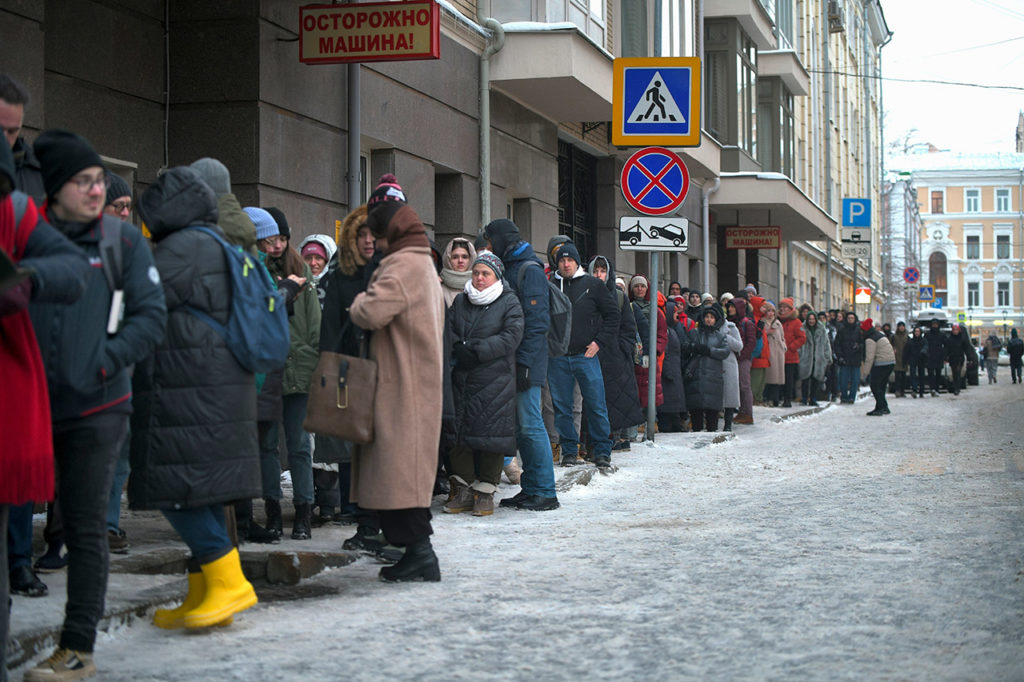
The lines before the headquarters of Nadezhdin already showed the whole world and the oppositional Russians themselves that they are far from lonely. This effect can become even stronger if on March 17 the same queues are built in front of the voting sites at 12:00, as proposed as part of the “Navy against Putin” initiative, in which it is proposed to vote for any candidate, except for the current president, to spoil the ballot or take him with him on March 17 at 12:00.
The total number of votes for “alternative candidates”, one of the remaining politicians or spoiled ballots can perform a similar function. The awareness of the voters of the “normality” of their position will allow to declare to others a little louder, to convince the doubters a little more actively, and the people who are silent are silent, to begin to share their views.
Secondly, the election campaign is a unique window of opportunities for expanding the social base of supporters of the opposition. In the pre-election period, citizens will be interested in politics. If at this moment they gain access to an alternative look at what is happening, as well as a plan of specific actions with a measurable result (which is the number of votes for other candidates, except Putin), the probability that the policy will cease to be far and uninteresting for them to increase.
From this point of view, those voters that will be in areas under pressure from officials or employer seem to be promising. It is possible to check their turnout, but the result of the will is already more difficult.
Thirdly, voting for alternative candidates complicates falsification. Sometimes political scientists offer to look at the electoral fraud not as a process that is well organized and controlled from a single center, but as the small actions of thousands of lower associates of the regime.
Indeed, Kiriyenko, but ordinary employees of election commissions, are thrown by the ballots. In the event that they see that the favorite is still gaining 70% of the vote, add an additional 10% will not seem to them a risky or socially condemned task. The winners are not judged. But if only 55% of those who came to the sites speak out in support of the current president, large -scale frauds will already see as a serious distortion of the preferences of their fellow citizens (often familiar or neighbors of a member of the election commission). Helping strong is profitable and safe, but if it becomes known that they are weak, the drowning ship is better to leave.
Fourth, participation in any vote is an important civil skill. Когда российские выборы станут свободнее и конкурентнее, от вовлеченности общества в избирательный процесс будет напрямую зависеть будущее страны. Если у россиян сохранится или появится желание участвовать в политике, новая власть столкнется с реальным гражданским контролем.
О чем еще может поспорить российская оппозиция?
Объединение демократической оппозиции, о котором так долго и так жарко спорили последние несколько месяцев, фактически состоялось, пускай и не в форме некоей зонтичной организации.
Сначала подавляющее большинство оппозиционных спикеров поддержало кампанию по сбору подписей за Бориса Надеждина, а сейчас почти столь же единодушно присоединилось к инициативе Максима Резника «Полдень против Путина». В списке сторонников акции можно обнаружить, например, Алексея Навального , Михаила Ходорковского и Юлию Галямину .
В оставшийся до выборов месяц важной темой обсуждения может стать то, стоит ли оппозиционно настроенным россиянам голосовать за какого-либо конкретного кандидата или же допустимо распыление протестного электората между путинскими «оппонентами» и недействительными бюллетенями.
С одной стороны, выбор единого кандидата сконцентрирует недовольных в одном месте. Потенциально это позволит послать обществу и режиму более четкий сигнал о доле оппозиционно настроенных россиян и усилить некоторые из упомянутых в предыдущем разделе последствий.
С другой, стратегия «за любого, кроме» хороша тем, что способна устроить большее число лидеров общественного мнения. Например, слова Максима Каца о том, Даванков «не делал явных гадостей», вызвали бурное возмущение у Любови Соболь. Да и призыв голосовать персонально за кого-либо из тройки Слуцкий-Харитонов-Даванков может показаться некоторым избирателям этически сомнительным.
Если такая дискуссия действительно возникнет, основным претендентом на роль единого «протестного кандидата» кажется Владислав Даванков.
Политик связан с администрацией президента через АНО «Россия — страна возможностей» — организацию, которая проводит конкурс кремлевского кадрового резерва «Лидеры России». Даванков голосовал за «Закон о фейках» и множество других одиозных инициатив последних лет. Вместе с этим, в сравнении с другими спарринг-партнерами Путина он обладает несколькими важными преимуществами. Владислав Даванков сравнительно молод; ни он сам, ни его партия «Новые люди» не отмечались особенно людоедскими заявлениями (в отличие от ЛДПР или КПРФ).
Команда политика даже сделала несколько робких шагов в сторону протестной аудитории. На днях Даванков сообщил «Коммерсанту», что хочет предложить Борису Надеждину сотрудничество. Сам Надеждин пока очень уклончиво отвечает на вопросы о перспективах такого альянса. Впрочем, главным вопросом для демократической оппозиции по-прежнему остается то, сможет ли она удержать внимание оппозиционно настроенных россиян до выборов и приумножить число своих сторонников.