
Translated material
Macron's last prime minister. France is again in a deep political crisis
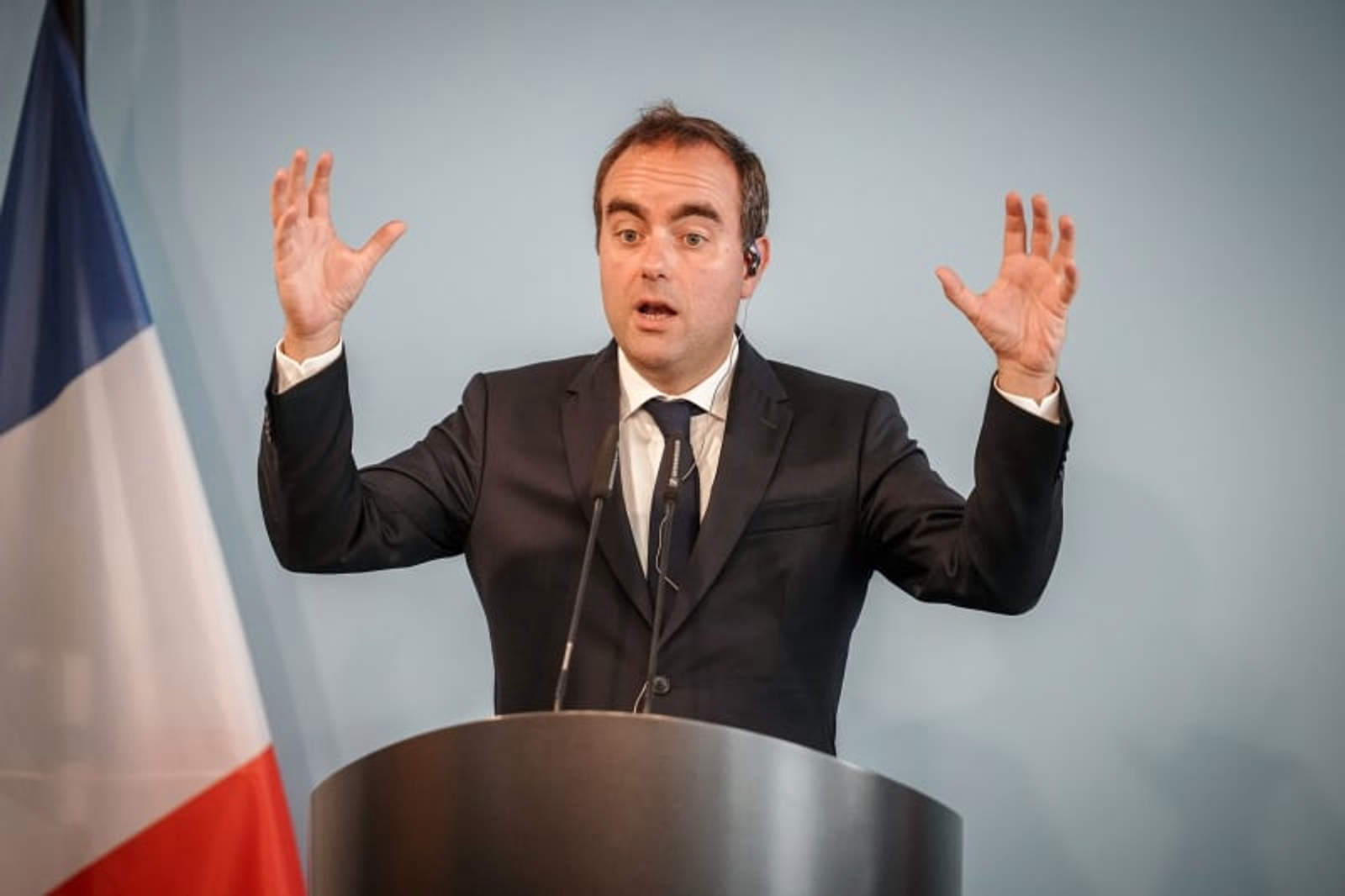
New French Prime Minister Sebastien Lecornu
Politics Sergei Mikhailov October 3, 2025In France, a nationwide strike began on October 2. Trade unions and left-wing parties are unhappy that the new Prime Minister Sébastien Lecornu has not listened to their demands with enough respect. And they can afford it: the government, and with it the French economy, are hanging by a thread. In the three weeks since his appointment, the new prime minister has been unable to guarantee parliamentary support for his government. Having refused to trust his predecessor François Bayre, the opposition, both on the left and on the right, is threatening to give Lecornu a ride. Behind this political clinch are more fundamental problems: a weakly growing economy and a divided society that does not trust anyone.
Content
No government again
Between left and right
With an eye on the presidential election
Permanent economic crisis
State of society
No government again
The leapfrog of prime ministers in France in the last couple of years is beginning to resemble the bad memory of the post-war Fourth Republic, which remained in history as an example of the loss of controllability in the state due to the petty selfishness of parliamentary parties. French President Emmanuel Macron appointed former head of the country's Ministry of Defense Sebastien Lecornu as prime minister. This was a forced decision after the lower house of the French parliament dismissed another government on September 8. The advantage of opponents of the current government was crushing: 364 versus 194.
The victim of the deputies was 73-year-old Prime Minister Francois Bayrou, a veteran of the political scene, whose rich biography includes worthy participation in three presidential campaigns as a candidate, which, it would seem, allowed him to claim popular sympathy. Nevertheless, his trust rating on the eve of the vote in the National Assembly did not exceed 13%, and the balance of political forces, which perfectly understood the mood of citizens, did not leave hope for a successful outcome. The stumbling block predictably turned out to be the budget issue.
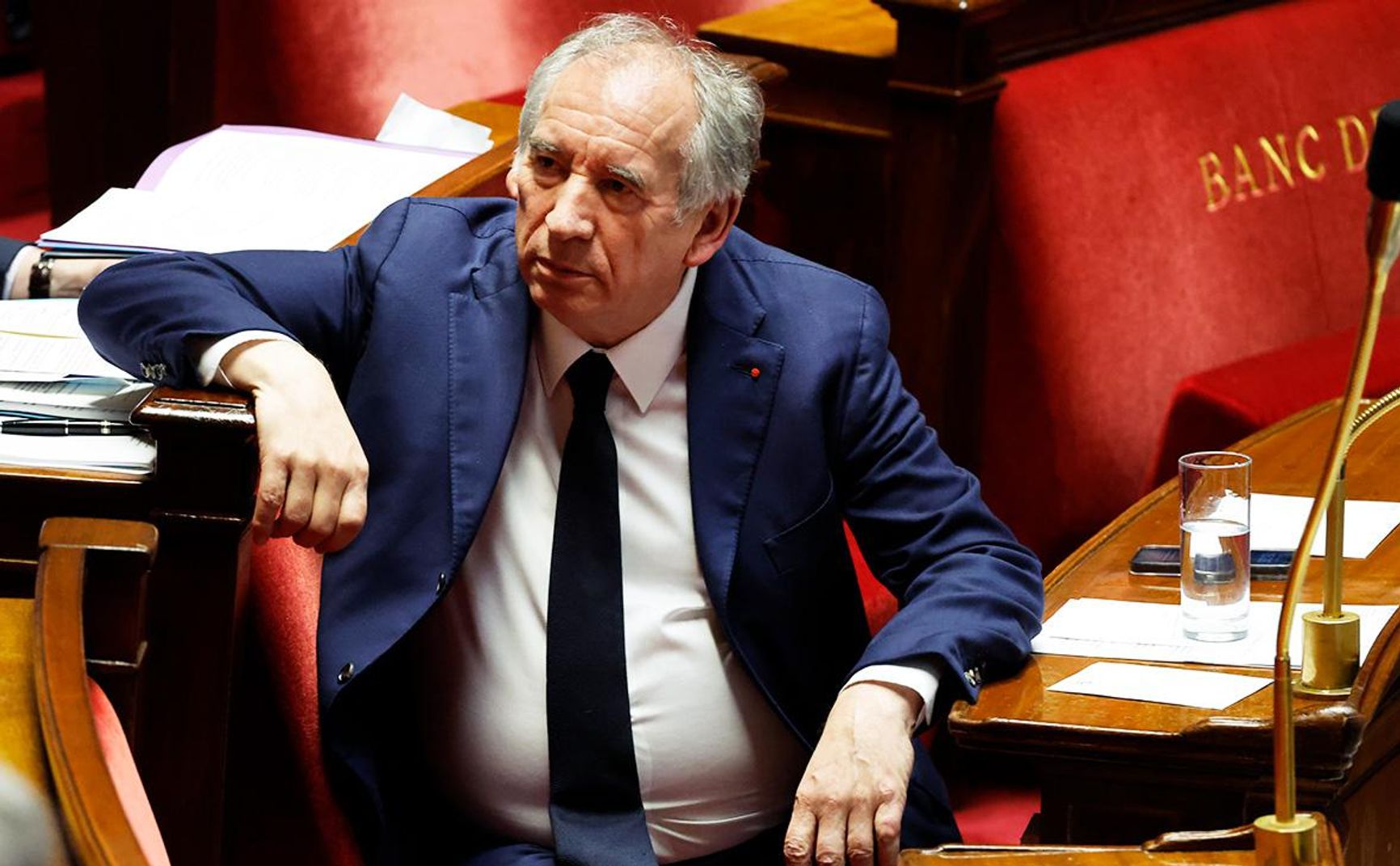
Prime Minister Francois Bayrou did not receive the confidence of parliament
The latest resignation of the government speaks, in essence, of a deep political crisis that has no short and simple explanation. France finds itself stuck in an impasse of economic, institutional and social problems, which is complicated by a growing distrust of President Macron, whose powers, according to the idea of the Fifth Republic, are intended primarily to achieve national harmony, while there is rather national division.
It is unlikely that the current crisis is fatal, despite the alarming symptoms, but correct diagnosis is necessary to find a way out of it. It is no coincidence that Lecornu immediately began the usual round of consultations with the main political forces in the National Assembly, which his predecessors had gone through. However, each time the situation only becomes more complicated, there are no simple and obvious solutions at his disposal.
Between left and right
The current crisis must begin with President Macron’s decision to dissolve the National Assembly and hold early elections, which he made on the evening of June 9, 2024, immediately after the results of the European Parliament elections appeared, in which Marine Le Pen’s RN party won a landslide victory.
It is difficult to say what Macron was counting on, but the new composition of the National Assembly, according to polls, did not promise anything other than strengthening the opposition and reducing the number of moderate factions. And so it happened. The balance of power that emerged after the elections turned out to be very unusual for the political life of France, when in parliament no one has an absolute majority of 289 seats, but there are three poles, approximately equal in representation.
We are talking about the bloc of left forces NFP (193 deputies), the bloc of centrists of the presidential coalition (166 deputies) and the National Rally (RN) party of Marine Le Pen along with allies (142 deputies). There is also the Republican Party (LR), which takes center-right positions but criticizes the policies of Emmanuel Macron (47 deputies).
At the same time, the NFP bloc was created as an electoral alliance with very significant internal differences, primarily between the Socialist Party (PS) and the “Unruly France” (LFI) of the radical Jean-Luc Mélenchon. In these conditions, when the opposition is diverse and strong, Macron found it difficult to select a candidate for prime minister that would suit both him and the National Assembly. This problem has not been solved so far.
An arithmetic approach shows that if it were possible to split the NFP leftist bloc and create a broad centrist coalition from the PS socialists to the LR Republicans, then it would only need 10 votes to reach an absolute majority - and these 10 votes would probably actually be found somewhere. But politically such a calculation is extremely problematic.
Even the moderate opposition PS and LR based their rhetoric on sharp criticism of “Macronism” in all its manifestations, and it is impossible for these parties to accept the support of the prime minister from the presidential team without including significant elements of their program in the government plans. Nevertheless, the differences in approaches, for example, to the principles of the new budget are so great that agreement in such a broad coalition is hardly achievable.
A specific historical tradition adds fuel to the fire: in the political culture of France there is no tradition of seeking a compromise between parliamentary factions, instead an “all or nothing” approach prevails.
In the political culture of France there is no tradition of seeking compromise between parliamentary factions
During election campaigns, representatives of many parties do not skimp on radical demands, which are then difficult to abandon without losing disappointed voters. Both PS and LR are unlikely to count on more than a few dozen MPs, but they prefer to maintain this level of representation, coupled with their usual intransigence, rather than risk compromise.
In these conditions, Sébastien Lecornu will most likely follow the same path as his predecessors: he will form an unstable government based on the votes of centrists and LR, and will try to agree with the RN on neutrality in the vote of confidence in the National Assembly. The price of such a maneuver will be concessions on the budget.
It is not for nothing that Lecornu has already agreed to consider introducing increased taxes on the richest citizens and enterprises with the highest incomes, as demanded by the left. But this is not a right-wing program, so the moment Marine Le Pen changes her mind and the RN denies confidence in the government, it will again be dismissed by radical opposition voices on the right and left.
Macron also has at his disposal such a tool as the dissolution of the National Assembly and new early elections. He, however, is in no hurry to use it, since all polls predict an unfavorable result for the presidential bloc. Most likely, the right is winning, the left has a chance, but not the Macronists.
Nevertheless, it cannot be ruled out that one day parliamentary elections will still be announced, since the leapfrog of prime ministers cannot continue forever. In the meantime, there remains hope that Lecornu will turn out to be a more skillful negotiator and will show outstanding abilities of political maneuvering, especially since the budget issue is urgent and cannot wait for the several months that are necessary for early elections.
With an eye on the presidential election
The Fifth Republic provides for a design with strong presidential power that is unique in Europe today. If it all came down to the formation of a ruling coalition based on the results of parliamentary elections, as happens in Germany, Italy or Spain, then the main factions would be forced to come to an agreement, albeit on the basis of a broad compromise and after difficult negotiations.
But the peculiarity of France is that it is a presidential republic, and the main political prize will be played out in 2027 at the next presidential election. Everyone knows about it, and everyone is preparing for it. In this sense, the current government crisis can be seen as a preparatory stage for the major battles to come, which makes Sébastien Lecornu's mission both delicate and problematic. The government becomes hostage to the presidential ambitions of potential candidates, who, as a rule, are also party leaders.
The current government crisis can be seen as a preparatory stage for the major battles to come
In the presidential camp alone, one can count from three to five contenders for victory in 2027, each of whom has the pros and cons of his starting position, calculates the political calendar and thinks about how to get ahead first of competitors in the centrist bloc, and then of rivals on a national scale.
There are ambitious leaders in PS and LR. There is Marine Le Pen, who is acutely worried about the court ban on standing as a candidate in elections at any level and hopes to have her case reviewed on appeal in 2026. Behind her looms Jordan Bardella, whose popularity rating is equal to that of Marine Le Pen, and both of them are leading in the polls with 36% trust.
Finally, there is LFI leader Jean-Luc Mélenchon, who set out on his last campaign without much hope of success, but with the clear intention of making some noise. Each of the potential candidates has their own tactics. Some people prefer to be visible now and make loud statements; someone remains in the shadows for now.
From the outside, however, the state of affairs looks somewhat strange: the government crisis is in full swing, consensus on the budget is urgently needed, but the thoughts of political leaders are far from everyday life and are directed towards 2027.
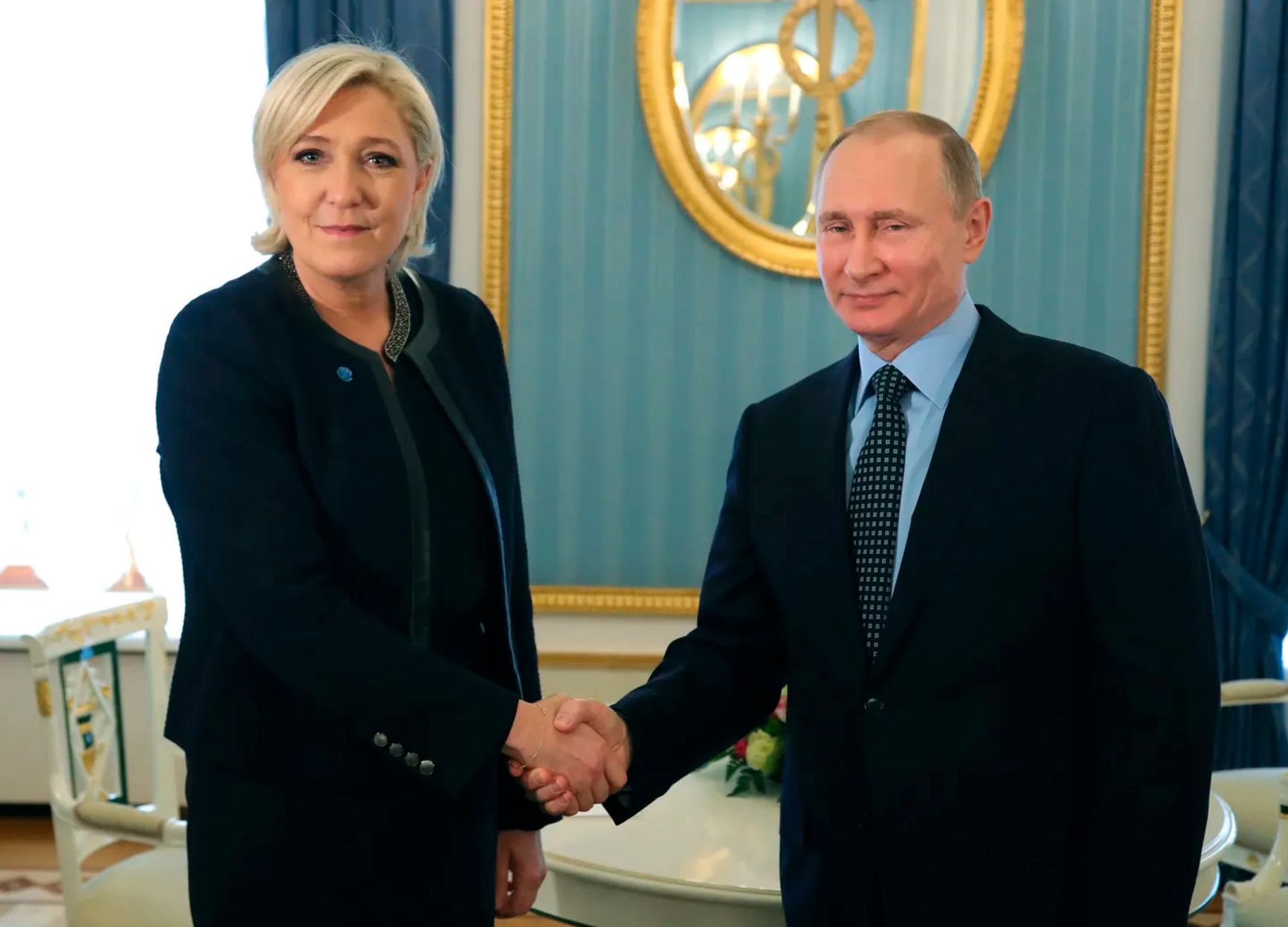
Marine Le Pen hopes the ban on participating in elections will be lifted
The main problem with the institutions of the Fifth Republic is that they were designed for a situation where the president relies on the majority of voters in society and the majority of deputies in parliament. Meanwhile, the current state of affairs is such that no one has a majority.
The main problem with the institutions of the Fifth Republic is that they were designed for a situation where the president relies on a majority
In this situation, is there a possibility of the voluntary resignation of the extremely unpopular Macron and early presidential elections, which is what not only LFI, but also some voices in the less radical opposition are calling for? They believe that a way out of such a deadlock within the institutions of the Fifth Republic is possible only through the election of a new president. At the same time, this proposal is obviously put forward most loudly by those who, in their opinion, are better prepared for the election campaign right now.
However, such a scenario seems doubtful at the moment. Macron himself hardly considers his mission exhausted, despite his unpopularity among the French, and forced resignation is almost impossible, since it requires a unique procedure and 2/3 votes in both houses of parliament.
His status as President of the Fifth Republic, directly elected by the citizens, places him in a unique position, endowing him with a legitimacy that cannot be shaken by even the most turbulent events in the National Assembly.
There are two theoretical options for early elections. Firstly, if Macron himself, for some reason, wants to further aggravate political life and announces his resignation in order to invite citizens to end the crisis by electing a new president. Secondly, if sharp and massive protests suddenly begin in France, capable of paralyzing the country, which the radical left opposition is calling for. Today, such a development of events seems extremely unlikely.
Permanent economic crisis
The French economy is growing, but slowly—current GDP growth is projected to be less than 1%. The main challenges of the economy remain the budget deficit of 6.1% of GDP (not a record for France, but the highest in the eurozone) and public debt of 115.6% of GDP (this is less than five years ago, but still the third largest public debt in Europe after Italy and Greece). Servicing the national debt today is the second item of budget expenditure after spending on the education system. Any cabinet will have to deal first and foremost with drawing up a balanced budget.
François Bayrou tried to propose a complex budget, made on the principle of patching up holes and providing for a combination of increasing revenues (due to additional tax revenues and the abolition of two holidays) and reducing expenses by about 44 billion euros (by reducing a number of social programs and temporarily abandoning the inflation indexation of pensions and benefits) necessary to reverse the crisis trend. The seemingly sound idea of the government was that all segments of the population should make their small contribution, but in reality it turned into discontent among all groups of deputies, both on the right and on the left.
Meanwhile, Fitch cut France's sovereign rating from AA- to A+, and the cost of borrowing to finance government debt became higher than for Greece or Italy. The economic growth forecast for 2025 is 0.8%. European capitals are looking with concern at the inability of France, the EU's second-largest economy, to manage its budget wisely. We are not even talking about meeting the 3% deficit standard, but at least about breaking the negative trend and a plan to normalize the budget in the foreseeable future.
Fitch has downgraded France's sovereign rating to A+; financing its public debt has become more expensive than that of Greece or Italy.
German Chancellor Friedrich Merz, choosing his words carefully, clearly expressed alarm about the situation in France, whose political weight in Europe implies a responsible attitude to its obligations. But if Francois Bayrou's plan fails to pass in the National Assembly, despite the obvious direness of the situation, then his successor Sébastien Lecorne may have to propose more modest spending cuts, which, in turn, will preserve the budget crisis and will not convince creditors of the seriousness of the French government's intentions. The first victim of political disagreements is always the budget. He is usually followed by the ruling parties.
State of society
In 2019, a book by one of the leading French sociologists, Jerome Fourquet, “Archipelago France” was published, the title of which probably gives rise to certain associations among the Russian-speaking reader. It does not, however, talk about the camp system, but about the numerous lines of cleavage in French society, which lead it into a state of separate islands, poorly connected with each other.
Society was split before, which is why a division into left and right arose, but today its fragmentation is such that it is difficult to even identify the main points of tension in it. Moreover, the real problems in society may not coincide with what society itself perceives as the main challenges.
For example, the French (like many other countries) are especially concerned about the problem of migration: 79% of citizens are in favor of tightening migration policy, which is 4% more than just a year ago. At the same time, objectively, there is no influx of migrants in France; their share in France increased from 10% in 1990 to 13% in 2025, while GDP per capita (in constant prices) over the same period increased from $40 thousand to $56 thousand, and the share of murder victims per 100 thousand people decreased by almost half (from 2.3 to 1.3), although there has been a slight increase in the last few years.
Share of migrants in the French population
PPP GDP growth per capita (constant international dollars)
Decrease in the number of murder victims per 100 thousand population
As for inequality, which remains one of the most pressing issues for countries such as the United States, in France it is lower than in most developed (and especially developing) countries, and over the past quarter century , if it has grown, it has not increased significantly :
Moreover, according to recent polls , 86% of French people believe that “the country is moving in the wrong direction.” In more detail, this criticism is deciphered as follows: 39% are concerned about the increase in crime and violence in society, 32% about inflation, 24% of dissatisfaction went to four positions at once: the health care system, inequality and poverty, migration flows and high taxes. It is obvious that any government will be in great difficulty trying to satisfy so many different wishes of the French at the same time.
86% of French citizens believe that “the country is moving in the wrong direction”
To this can be added the growing inequality of the different regions of France. While in Paris, other large cities and innovation centers the situation is generally dynamic and promising, other territories are falling into disrepair - it is difficult not only to get a job, but also to make an appointment with a doctor, get examined, or find a good school for a child.
Politically, the fragmentation of society is also expressed in the fact that citizens do not trust anyone and deny the right to represent their interests to all political forces. This state of affairs is well illustrated by the yellow vest movement, somewhat forgotten, but important for understanding the depth of the split in society. Then suddenly the France whose existence no one suspected came to the fore: angry provincials, having difficulty making ends meet, not participating in elections, conspiracy-minded and wanting to dismiss all the politicians at once. If they are not protesting now, then it does not at all follow that they have disappeared or that they are satisfied with everything. The current political crisis in parliament once again shows that a significant part of society does not yet perceive any of the current political forces as an adequate spokesman for its interests.
ARTICLES ON THE TOPIC
Farewell to mother. What Marine Le Pen's verdict means for nationalists, France and the Kremlin
Premiere season. A new government crisis in France will hit the economy and affect aid to Ukraine
We really need your help
Sign up for regular donations