
Translated material
The world order is being demolished
Europe is discussing how to live in a world that the United States is destroying. The main test of strength is further support for Ukraine
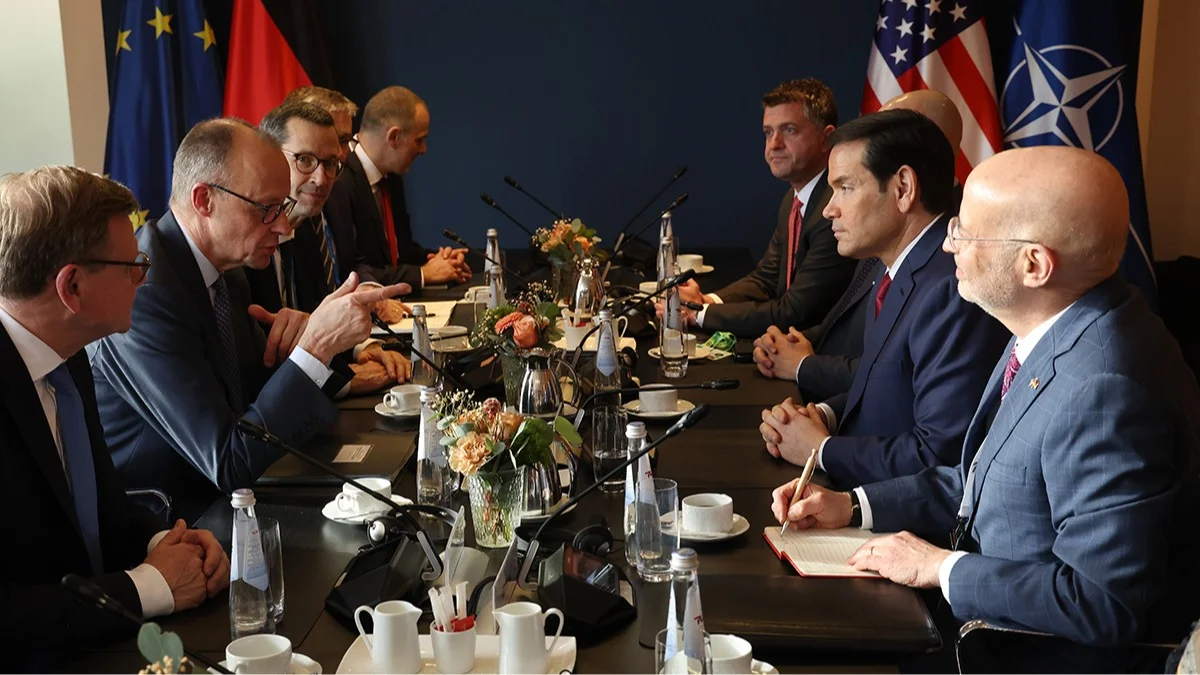
Bilateral meeting at the 62nd Munich Security Conference on February 13. Photo: Sean Gallup/EPA
An unprecedentedly busy diplomatic week in Europe ended with the Munich Security Conference, showing that the “old continent” has come to terms with the idea that the United States can no longer always be relied upon for everything. The main question that European politicians and experts have been asking these days is: what needs to be done so that concepts such as “self-sufficiency” and “unity” de facto characterize the EU, and not just flash in the speeches of European bureaucrats. The litmus test for the European Union is the present and future of support for Ukraine against the backdrop of Washington’s self-elimination. On the one hand - and this is clearly a positive sign for Kyiv - the EU is actively developing a plan for the accelerated admission of Ukraine to its membership. On the other hand, this initiative has already caused severe criticism from Hungary, so there is no need to talk about unity. Not everything is simple with the military component either. On February 12, Ukraine’s allies announced almost $38 billion in aid. However, so far, as analysts’ calculations show, Europe has not been able to fully compensate for the lack of support for Kyiv by the United States. Read more about how the Europeans discussed what they can do without relying on Washington in the diplomatic review of the week from Novaya Gazeta Europe.
Ruin architecture
A year ago, in February 2025, participants at the Munich Security Conference were not at all prepared for the fact that the election of Donald Trump to the presidency of the United States would so rapidly lead to the destruction of the previous system of transatlantic relations. The main news then was the speech of US Vice President J.D. Vance, who attacked Europe with harsh criticism and left no doubt that the paths of Brussels and Washington had significantly diverged. Diplomat Christoph Heusgen, who then completed his work as head of the conference, called what happened in Munich “in a certain sense, a European horror.”
Over the past year, the idea that we are living in a period of destruction of the previous world order has become a commonplace in the reasoning of Western experts. So, hardly anyone was surprised to see the title of the annual report of the Munich Conference - a thoughtful analysis of the foreign policy situation in the world: “Under Destruction” (“In the process of being demolished” or “To be demolished”). The key thesis of the report is that the United States - the main architects of the post-1945 world order, according to the authors - is now acting as the leading force contributing to its destruction. Not reform, but rather radical deconstruction.
The authors of the report stated: the era when Europe could rely on the United States as an unconditional guarantor of its security is a thing of the past.
It’s not just geopolitical experts who see this picture: according to the Munich Security Index data presented in the report, the G7 countries are seeing a decline in trust in the United States as an ally.
And this, according to the study, is especially alarming against the backdrop of Russian actions and plans, which are called “the most significant and immediate threat” to European security. We are talking about the war in Ukraine and hybrid activity in the EU. The report pays special attention to the assessments of European intelligence services: the Russian Federation can regain its strength to wage a “local war” against one of its neighbors within six months after a hypothetical ceasefire in Ukraine, and it will take Russia about two years to prepare for a large-scale regional war (for example, in the Baltic Sea basin).
Membership as part of guarantees
Diagnosis is usually easier than cure. In this case, take real steps to redistribute roles and responsibilities between Washington and Brussels in favor of the latter. We are talking about the widest possible range of issues: from the technology industry to foreign policy. But, perhaps, the success or failure of the new European policy is most clearly visible through the prism of the Ukrainian issue. Let us recall that the US authorities have been saying for more than a year that it is the EU that should take on the main burden of responsibility for further support for Kyiv - both political and military.
The first, in particular, means the admission of Ukraine to the ranks of EU members. As New Europe previously wrote , for this, Kiev and Brussels must work through 35 chapters of negotiations covering various areas of interaction: from legal proceedings and taxation to security and environmental protection. But this is a long process, and, as many European leaders and experts now believe, there is no time under the current conditions: such a security guarantee as joining the EU must be given to Ukraine as soon as possible. Taking this into account, the European Union, as reported by Politico, citing sources, is actively developing a plan for the accelerated admission of Ukraine to its membership. The initiative involves five points:
- Preparation. To speed up the process, Kyiv is provided with informal instructions regarding negotiation clusters even before their official opening. In this case, there will be no concessions. “Membership is only beneficial when you go through a transformation,” Politico sources note. President of Ukraine Vladimir Zelensky is confident that from a technical point of view the country will be ready to join in 2027.
- "Membership-Lite". The head of the European Commission, Ursula von der Leyen, proposed the concept of “reverse enlargement”: “First accession, then fulfillment of obligations.” That is, Ukraine could get a seat at the EU table and some rights even before it completes all the reforms.
- Expecting Orban's defeat. The main obstacle on Ukraine’s path to the EU is Hungarian Prime Minister Viktor Orban. In Brussels, according to Politico, they hope for the victory of the opposition in the April parliamentary elections in Hungary.
- Hope for Trump. Brussels believes that the US President can still play a positive role - to put pressure on Orban, who is close to him, so that he stops blocking Kyiv’s application. Vladimir Zelensky has already hinted at this, noting: the United States can act as a guarantor that no one in Europe will disrupt potential peace agreements.
- Deprivation of Hungarian voting rights. If all the above fails, the EU can use Article 7 of its founding treaty, which allows, in extreme cases, to suspend a member state's voting rights in the EU Council.
This media leak sparked an angry response from Orbán. First, he wrote on social network X that the “new war plan of Brussels and Kiev” is “an open declaration of war on Hungary,” because its authors “ignore the decision of the Hungarian people and are determined to remove the Hungarian government by any means necessary.” And then, on the same platform, he answered Zelensky in absentia: “Joining the EU is a process based on merit. The conditions are set by member states, not candidate countries.”
Loans and supplies
One way or another, EU enlargement is still a long way off. But the European Union can demonstrate support for Kyiv here and now. For example, on February 11, members of the European Parliament took advantage of this opportunity and gave the green light to allocate a loan of 90 billion euros to Kiev. The first tranche will be received at the beginning of the second quarter of 2026. 60 billion will be allocated for military assistance to Ukraine (in particular, for the purchase of weapons), and the remaining 30 billion will be financial support for the country.
The decision on the loan was agreed by the leaders of the countries at the EU summit on December 19. Then they were never able to agree on a scheme for financing Ukraine using frozen Russian assets. But we agreed on this loan, which will be secured by the EU budget. Hungary, Slovakia and the Czech Republic, however, opposed the loan, but a solution was found - the use of the so-called advanced cooperation mechanism, which allows not all 27 members to act together, but within groups of EU countries (there must be at least nine of them in a group, but in the case of the loan there were 24).
A few hours after the meeting of the European Parliament, EU defense ministers gathered in Brussels, and the topic of supporting Ukraine was also in the spotlight there. “This is not enough. The governments of EU member states must also make their contribution,” said Finnish Defense Minister Antti Häkkänen, commenting on the decision of the European deputies on a pan-European loan.
News about who could contribute what began to appear the next day, when most of the participants in the European meeting met again - at a meeting of NATO defense ministers (the Alliance includes 23 of the 27 EU countries). Towards evening, a meeting of the contact group in the Ramstein format was held at the same site - at NATO headquarters.
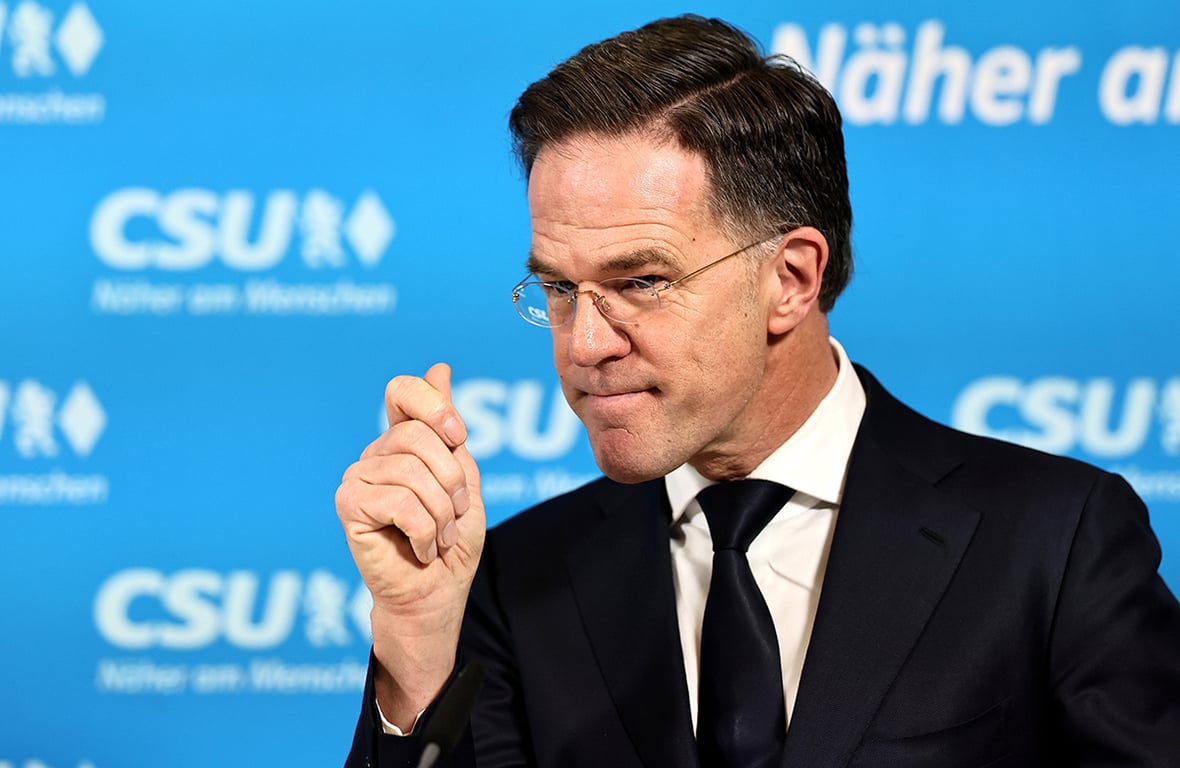
“Even if the fighting stops tomorrow, Ukraine will still need our help to create a strong, modern and well-equipped armed force.
After all, in the end, it is this - together with security guarantees - that will become the most effective deterrent against a possible new invasion from Russia,” explained the need for such meetings, Alliance Secretary General Mark Rutte.
Ukrainian Defense Minister Mikhail Fedorov, who arrived in Brussels, thanked his partners for their help and asked them to transfer scarce missiles for the Patriot systems to Ukraine from their reserves as quickly as possible. “We are in critical need of this equipment because the Russians are trying to destroy our country's infrastructure,” he said .
Following the meeting, his colleague from Germany Boris Pistorius said that Germany would provide Ukraine with five PAC-3 interceptor missiles if other partner countries would transfer a total of 30. At the same time, he expressed confidence that this bar could be overcome, and in the coming days.
In general, as Mikhail Fedorov said , the meeting participants “heard announcements [ of assistance for 2026. — Approx. ed. ] for almost $38 billion,” of which $35 billion worth of arms purchases have already been confirmed. “More than $6 billion in specific aid packages, including over $2.5 billion for Ukrainian drones, more than $500 million for the PURL program [ purchase of American weapons by NATO allies. — Approx. ed. ], $2 billion for air defense, as well as funds for artillery ammunition, training, naval capabilities and other areas,” he specified on February 13 in his Telegram channel. And he described in detail what exactly the allied countries proposed at the meeting: Great Britain, Germany, Norway, the Netherlands, Belgium, Sweden, Denmark, Spain, Canada, Iceland, Lithuania, Latvia, Estonia, Australia, Portugal, Turkey and Slovenia.
British Defense Minister John Healey was also pleased. He assured that the meeting sent a very clear signal to the Kremlin: “We are more united and determined than ever. We will increase military assistance to Ukraine. We will increase pressure on Russia."
There is still work to be done. On the same day, February 11, the Kiel Institute of World Economics (Germany) released new data on military assistance to Kiev, from which it followed: Europe - now the main donor to Ukraine - was unable to fully compensate for the lack of support from the United States.
In 2025—against the backdrop of Washington’s withdrawal—the total volume of military aid provided to Kyiv was 13% below the average level of the previous three years. As for the total volume of financial and humanitarian assistance, the decrease was about 5%.
There is another worrying aspect for Europe regarding defense and security: words about strengthening strategic independence from the United States remain just words for now. As the authors of the Munich Conference report note , Europe “remains critically dependent on the United States” in a range of areas: from air and missile defense and drones to intelligence and cybersecurity.
Mark Rutte has repeatedly called on European states to significantly accelerate the development of the defense industry, thereby increasing their own contribution to ensuring their security. However, sharply reducing dependence on arms supplies from the United States is a non-trivial task for Europe, and tangible results will not appear today or tomorrow.
Moving at different speeds
While the defense ministers were discussing the prospects for increasing self-sufficiency in their field, on the other hand, the leaders of the EU countries approached the topic of relations with the United States in 2026. On the evening of February 12, they gathered at Alden Biesen Castle, about an hour's drive from Brussels, to discuss scenarios for improving EU competitiveness.
“If we want to be a geopolitical force, we must be either a powerful economic force or a powerful military force. We are already a powerful economic force, but we need to become much stronger,” EU High Representative for Foreign Affairs and Security Policy Kaja Kallas set the tone for the discussions. “We must protect our companies from unfair competition and economic pressure, ensure their normal operations and solve the problem of high energy costs,” agreed the President of the European Council, António Costa, deciding once again not to name the source of this pressure out loud.
Following the meeting, the leaders agreed to speed up the creation of the Union of Savings and Investments, ease the rules for registering companies and cut down various bureaucratic procedures. Simply put, strengthen the single pan-European market in order to compete more effectively with the United States and China. The head of the European Commission, Ursula von der Leyen, made it clear that specifics will appear by the next summit in March, where the “One Europe - One Market” plan is to be presented.
In articles about the summit, European media wrote a lot about disagreements within the EU. For example, between the “Rome-Berlin axis” and all the others . Or between Berlin and Paris . In particular, as Politico reported , there was disagreement over how broadly to interpret the principle of “European priority” in public procurement in key sectors, with France advocating a more protectionist approach, but Germany, Italy and the Nordic countries calling for greater openness. In general, not all countries agree with the European Commission's initiatives in the area of the common market.
As a result, according to Politico, it was decided to use the advanced cooperation mechanism - the same tool that allowed the loan to be approved to Ukraine last December. And this is a fundamental change for the European Union. In essence, the leaders gave the green light to the concept of a “Europe of different speeds”, which had caused fierce debate for many years: those who want to move forward in a certain area under the leadership of the European Commission, those who don’t want to do so do not.
Essentially, Brussels admitted that it is extremely difficult to agree on anything within a family of 27 people, and this automatically puts the EU at a disadvantage in terms of global economic competition.
Although the summit agenda did not include a discussion of Ukraine, it turned out to be impossible to avoid this topic even in this format. For example, Viktor Orban noted that since the EU is so concerned about its competitiveness, two steps must be taken: “First, stop the war. War is bad for business. Seek peace. Secondly, don't send your money to anyone else. Don't send money to Ukraine." This, according to the Hungarian Prime Minister, is “the simplest recipe for victory for Europe.” As before, this position turned out to be marginal at the summit.
Finding inner strength
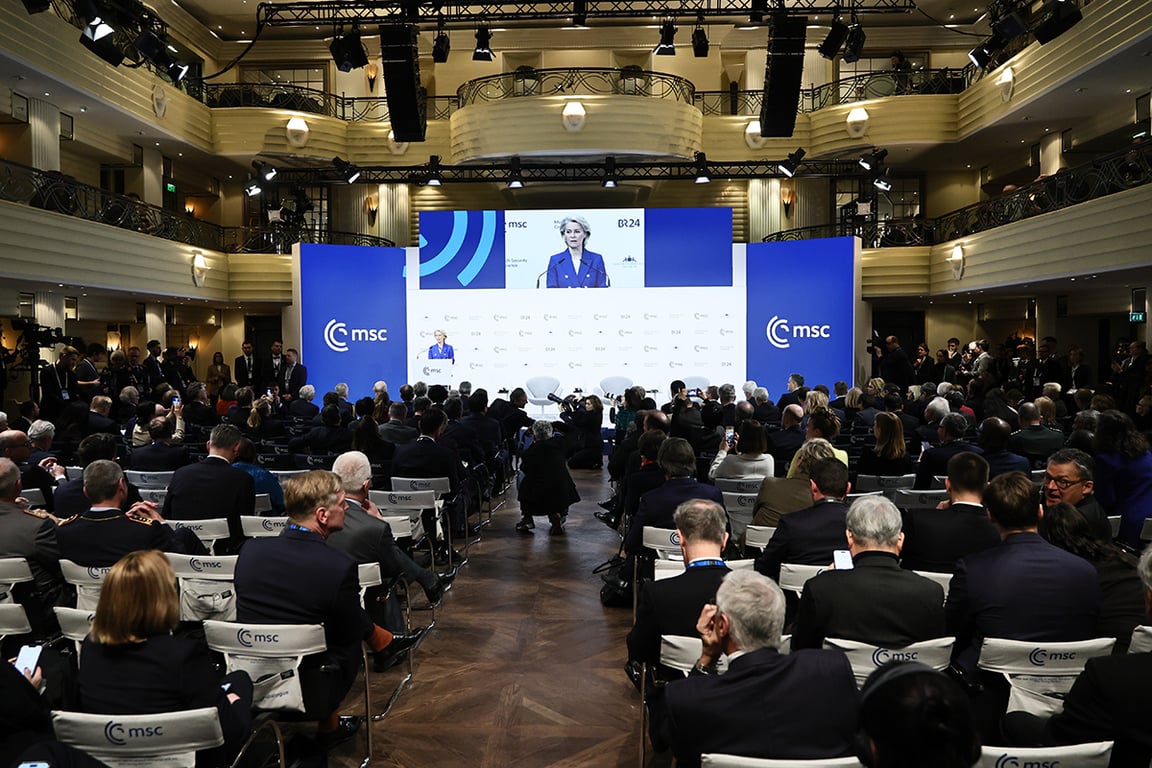
By Friday, February 13, all these threads had woven into one big ball of discussion and debate at the three-day Munich Security Conference, the largest international forum on this topic. The organizers noted that the more than a thousand delegates from 120 countries included six dozen heads of state and government, as well as about 100 ministers of foreign affairs and defense. The agenda was also as broad as possible: from space exploration, artificial intelligence and access to water resources to the problems of the Arctic, Iran, Palestine, Venezuela, Syria, Sudan, Belarus and, of course, Ukraine (Chairman of the Munich Conference Wolfgang Ischinger made it clear in advance that this topic would be at the top of the agenda).
Almost all discussions in one way or another echoed the idea expressed by German Chancellor Friedrich Merz at the opening of the conference: the “vacation from world history” (that is, a relatively calm period without many wars and upheavals) is over, and “the international order based on rights and rules - no matter how imperfect it may be even in the best of times - no longer exists.”
In general, the speech was devoted to the need for European unity, given the rapid growth of China’s power and the unreliability of Washington, with which Europe “has a deep rift.” Among other things, Merz drew attention to the following point: the EU economy is about ten times larger than the Russian economy, but “Europe does not act ten times stronger.” This is what Merz called the continent's key strategic weakness.
French President Emmanuel Macron also spoke a lot about the need for “strategic autonomy.” “Now is the time for courage. Now is the time for a strong Europe." - he said, calling for "to ensure all components of geopolitical power: defense, technology and reducing the risks of dependence on major powers." Among other things, the French leader noted that Europe must get serious about its own nuclear deterrence program, develop defense projects (such as the stalled FCAS next-generation fighter initiative) and “show the world an unwavering commitment to protecting its own interests.” “This, of course, starts with continued support for Ukraine, but could also include a response to unjustified tariffs and a polite rejection of unfounded claims to European territory,” he explained, alluding to Trump's statements about Greenland.
In conclusion, Macron called on Europeans to show courage, put more pressure on Russia and “be absolutely clear” in their support for Ukraine. “Such a Europe will be a good ally and partner for the United States. This will be a partner who is respected. We must be respected: we have already done a lot and will do even more,” Emmanuel Macron tried to inspire the audience to their deeds.
“Can you imagine Putin without war?”
Ukrainian Foreign Minister Andrey Sibiga, who had a busy program of speeches and meetings in Munich, also discussed this. “We have entered a new era. Security outsourcing for Europe is over. It's time to build inner strength,” he said on Friday. And he added: “And this is only possible if Ukraine becomes an integral part of the new European security architecture.”
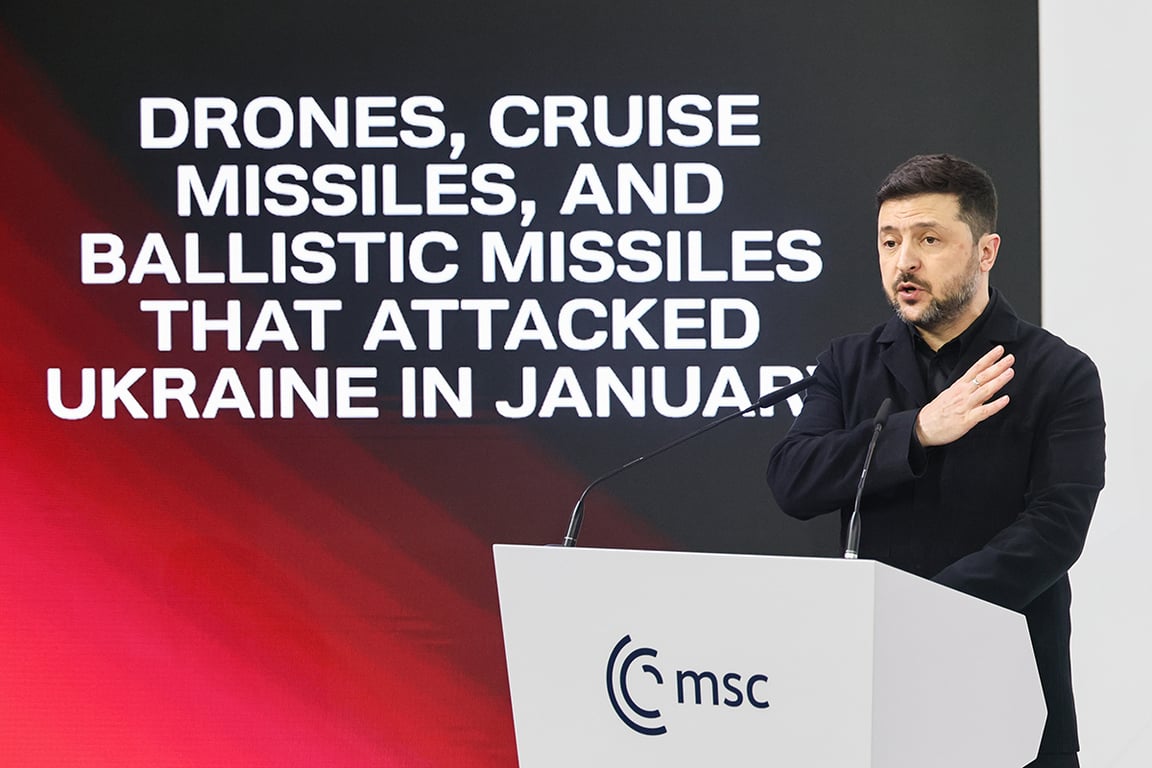
President Vladimir Zelensky, speaking at a conference on Saturday, developed this idea. In particular, he noted: “Wars are not fought alone. A full-scale war requires technology and money for defense. No one can stand alone. So while we are investing in interceptors and defense, Russia is investing in destroying our unity—our unity with you, unity in Europe, unity in the Euro-Atlantic community.”
After that, Vladimir Zelensky thanked all partners in Europe and beyond “for every strong decision and for all the joint work.” He especially noted that “most of the missiles capable of stopping Russian ballistic missiles come from the PURL program,” that is, purchases of American weapons with European money.
Meanwhile, the Ukrainian leader called not to slow down the pace of assistance and, in general, not to relax. Firstly, because there are not enough weapons and ammunition. He cited the example of an air attack on the night of February 12. “Russia launched 24 ballistic missiles and 219 attack drones. Our air defenses used interceptor missiles that had arrived from our partners just days earlier. They arrived on Sunday, and on Thursday night these missiles were already protecting our sky,” said Vladimir Zelensky.
Secondly, as the Ukrainian leader pointed out, technology is constantly developing and “the longer the war continues, the more resources the aggressor receives, the more dangerous the consequences become.” For example, the first Shahed drones that Iran gave Russia were primitive, but have since become much more lethal.
Speaking about the prospects for a settlement, Vladimir Zelensky tried to convey to the audience a simple idea that the key problem on the path to peace in Ukraine is Putin: “He cannot imagine life without power and after power. Normal things don't interest him. Putin consults more with Peter the Great and Empress Catherine than with anyone else alive.”
“Can you imagine Putin without war? Be honest…” the Ukrainian leader asked a rhetorical question to the audience.
At the same time, he repeated in one way or another the idea that not only Ukraine, but all of Europe cannot feel safe. For example, Zelensky commented on the words of conference chairman Wolfgang Ischinger, who previously said in an interview with DW: “As long as this war is waged - decisively and courageously - by our Ukrainian friends, Europe is safe.” “It was straightforward and probably a little cynical. But look at the price, at the pain that Ukraine is going through,” Vladimir Zelensky answered him.
According to him, the Ukrainian people now really have European countries behind them: “Independent Poland and the free Baltic countries, Moldova and Romania, which are rapidly developing, without dictatorship...” “And even Viktor alone can think about how to grow his belly, and not about how to build up his army to stop Russian tanks from returning to the streets of Budapest,” he added sharply, referring to Viktor Orban. But, the Ukrainian leader continued, “it is wrong to think that this is a permanent arrangement, an arrangement in which others can remain safe behind Ukraine.” “Ukrainians are people, not terminators,” Vladimir Zelensky explained his thought.
That is why, the president emphasized, Ukraine and Europe need real and strong security guarantees, which must be agreed upon and provided before the end of the war. At the same time, he added, probably primarily addressing the Trump administration, that “Russia cannot be given hope that it will not be punished.” In the meantime, Zelensky stated, the Americans “too often discuss concessions [ possible as a result of the negotiations. — Approx. ed. ] only in the context of Ukraine, not Russia.”
Children of Europe
Meanwhile, shortly before Vladimir Zelensky, another key guest of the conference appeared on stage - US Secretary of State Marco Rubio. Answering questions from Wolfgang Ischinger, he assured: Washington will continue to do everything possible to help end the war, in particular, to explore the possibilities of achieving a result that Ukraine can come to terms with and that will be acceptable to Russia.
At the same time, the head of American diplomacy made it clear that everything is not easy: “We don’t know whether the Russians are serious about ending the war. The Russians say they are serious. But it is unclear on what conditions they are ready to end the war, and whether it is possible to find conditions that will be acceptable for Ukraine.”
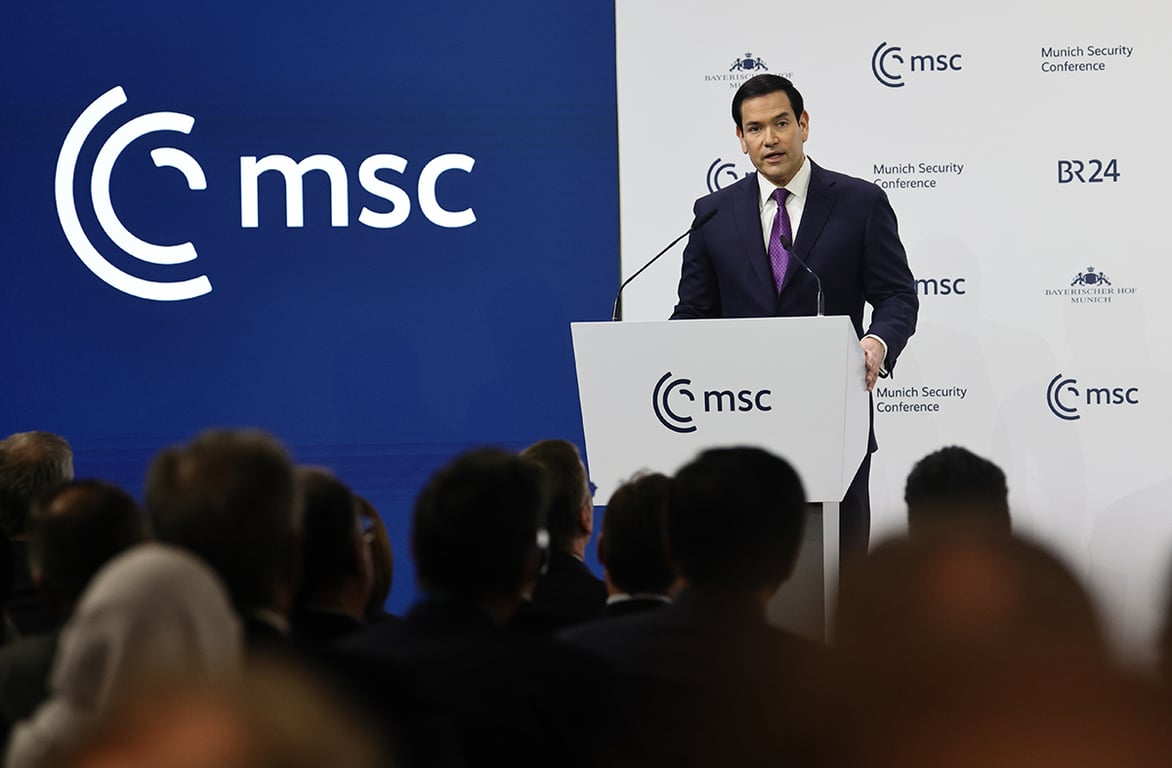
Marco Rubio's speech itself was mainly focused on another extremely relevant topic all these days - transatlantic unity. The fact that it was Rubio who came to Munich was perceived by European participants as a positive sign: the head of the State Department is considered much more restrained and diplomatic than Vice President J.D. Vance. In the end, Rubio lived up to expectations.
His speech was dedicated to the “inextricable connection between the Old and New Worlds”: “For us Americans, home may be in the Western Hemisphere, but we will always be children of Europe.” The diplomat spoke about the world heritage of Europe (“Mozart and Beethoven, Dante and Shakespeare, Michelangelo and da Vinci, The Beatles and The Rolling Stones appeared here”), and about his distant ancestors, who lived 250 years ago in Italy and Spain, and about what Europeans brought to the United States “as a sacred heritage of memory, traditions and the Christian faith.”
Of course, Marco Rubio did not ignore the differences between the US and the EU: for example, he criticized measures to combat climate change, as well as migration policy and free trade. But overall it was clear that the head of American diplomacy was trying to heal the wounds inflicted last year by J.D. Vance. “I am here to make it clear: America is leading the way to a new century of prosperity. And we want to do it again with you, our dear allies and oldest friends,” he said. And he ended his speech with these words: “Yesterday has passed. The future is inevitable. And our common destiny awaits us.” After that, everyone present in the hall stood up from their seats and applauded him for a long time.
Marco Rubio was not alone in Munich. The conference was attended by members of the US Congress, as well as the governors of Michigan and California. And the last one, Democrat Gavin Newsom, received special attention. His speeches were announced at two panel discussions: on transatlantic cooperation and on climate change.
After the January forum in Davos , where the politician called on Europe to stop being “so spineless” and refuse to play by Trump’s rules, they began to write about him as the voice of that part of the United States with which Europe would prefer to deal. Before his current trip, Gavin Newsom said that his goal was to convey to Europeans the thesis that “California is a stable and reliable partner.” The idea that the entire United States would become such a partner if he came to power was not stated, but was clearly implied. And even during a completely non-core climate discussion, Newsom managed to appeal to the audience not to perceive Donald Trump as something eternal: “He will not be [ in the White House. — Approx. ed. ] in three years."
According to current opinion polls , Newsom is the clear favorite among potential participants in the 2028 presidential campaign from the Democratic Party and could pose a serious challenge to the Republican candidate (J.D. Vance is now most often called this). So, perhaps, at the Munich Conference 2029, no one will even think of questioning the “inextricability of the connection between the Old and New Worlds.” You just have to endure it.