Translated material
Vulnerability of the Arctic LNG 2 project
Ice restrictions and dependence on China
By mid-2026, Arctic LNG 2 export logistics had changed. Under the conditions of sanctions and changes in the geography of supplies, the export of liquefied natural gas from the Gydan Peninsula faced a number of restrictions.
Arktida analyzed data on vessel traffic in the Northern Sea Route, technical specifications of the Arctic fleet and commercial terms of deliveries to the Asia-Pacific region and identified a discrepancy between the original plan for the project and its actual status . The current operating model requires adaptation of supply chains and entails a decrease in profitability.
Ice navigation practice: the voyage of "Alexey Kosygin"
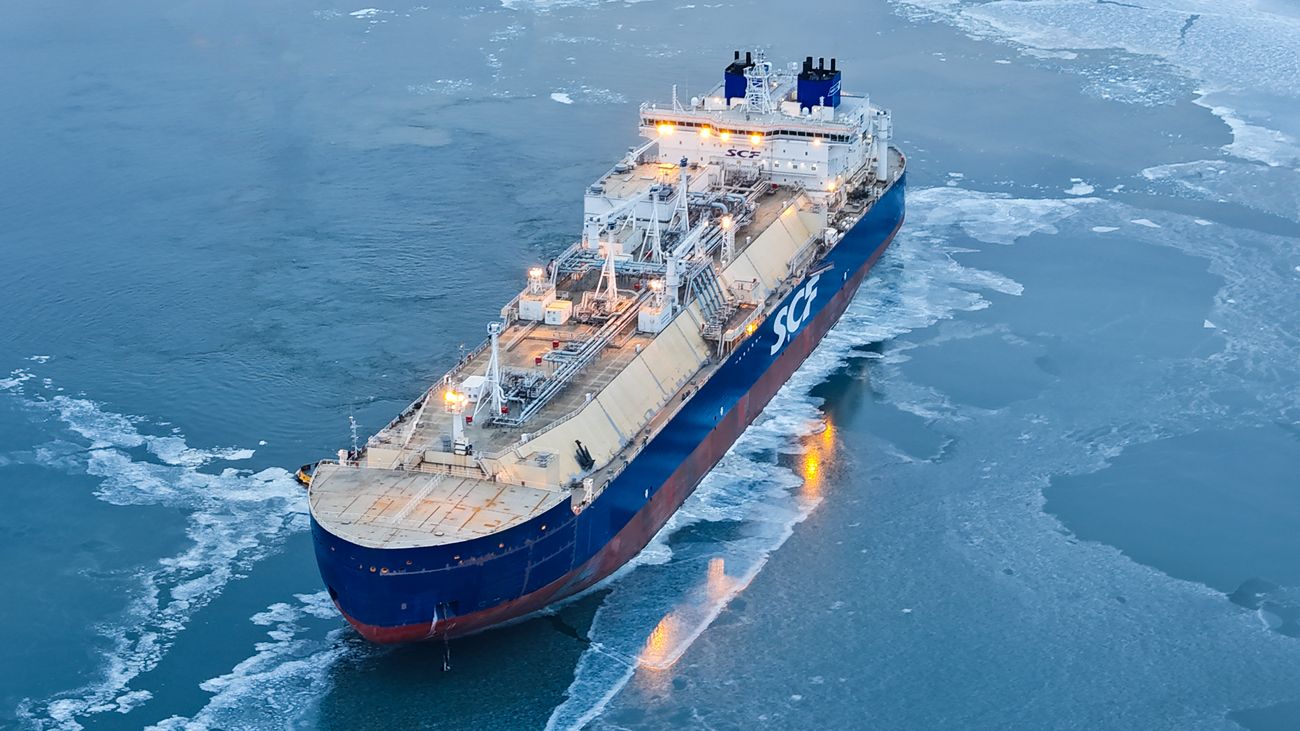
The project export strategy of PJSC Novatek's flagship project Arctic LNG 2 was based on the use of a specialized fleet of gas carriers of the Yamalmax project (SN 2366). The lead vessel of the series, the tanker Alexey Kosygin, was commissioned at the Zvezda shipbuilding complex at the end of December 2025.
According to the design documentation, the Arc7 ice-class vessel is designed to independently overcome ice more than two meters thick. The concept of the double-action vessel provides for stern-first movement in heavy ice, in which three full-rotating Azipod-type thrusters with a total power of 45 MW should ensure maneuverability without the involvement of icebreakers.
This condition is key to ensuring direct year-round export of LNG to Asian countries.
Automatic Identification Systems (AIS) data for January 2026 show different performance characteristics. The first commercial flight of the Alexey Kosygin in the eastern direction required constant escort. On the morning of January 13, the gas carrier stopped near the Gulf of Lawrence to await the nuclear-powered icebreaker Arktika, unable to make its own passage through the Bering Strait in ice conditions classified as “mostly light.”
Later, when approaching the Aion ice massif in the East Siberian Sea, the ship encountered old high-density ice and was unable to continue moving. Further navigation was carried out through the canal: the tanker followed strictly behind the nuclear icebreaker. This means that in winter navigation conditions, the vessels of this project do not have the declared autonomy, and gas export is impossible without escort by Rosatom icebreakers.
Ice fleet construction pace
The lack of ice autonomy increases the requirements for the number of available vessels. To service the Arctic LNG 2 lines in a continuous cycle mode, a fleet of at least 15 Arc7 class gas carriers is required.On June 18, 2026, SSK Zvezda handed over to the customer the second Arctic tanker of the series, Konstantin Posyet. The vessel was completed and tested in a shorter period of time compared to the lead gas carrier. The process was accelerated by the use of Russian specialized “tanker plywood” (produced by Segezha Group) to create tank insulation panels, which made it possible to replace the technology of the French engineering company GTT.
Despite the delivery of the second vessel, the total specialized fleet of the project by the summer of 2026 consists of three units: the gas carrier Christophe de Margerie transferred from Yamal LNG, as well as the tankers Alexey Kosygin and Konstantin Posyet. Three more vessels (“Pyotr Stolypin”, “Sergei Witte” and “Viktor Chernomyrdin”) are on the slipways in varying degrees of readiness. Taking into account the current production dynamics of the shipyard - about one vessel every six months - the formation of a flotilla of 15 units will take from five to seven years. Until this moment, the project will operate in conditions of a severe shortage of specialized tonnage.
Changes in transit patterns and restrictions on the conventional fleet
Reaching gas production rates of about 14 million cubic meters per day at the beginning of 2026 with only three ice-based gas carriers forced the project operators to switch to a double-circuit logistics model.
- The first circuit is a shuttle route. Arc7 class vessels are used for short voyages: they pick up LNG at the Utrenny terminal and deliver it to floating gas storage units (FSU) - Saam FSU in the Murmansk region and Koryak FSU in Kamchatka. The ship-to-ship (STS) transshipment process takes from 12 to 24 hours, after which the LNG carriers return to the Gulf of Ob.
- The second circuit is responsible for delivering LNG from transshipment points to end consumers. At this stage, conventional vessels without ice reinforcement (such as Pioneer, Asya Energy, Everest Energy, Buran) are used, which navigate through clear water.
The impossibility of using conventional vessels on NSR routes in winter was confirmed in December 2025. The gas carrier Buran attempted to reach the Utrenny terminal as part of a caravan with two nuclear icebreakers (50 Let Pobeda and Arktika) and two Arc7 tankers. After four attempts to enter the ice, the ship aborted the voyage due to the risk of destruction of the hull by the closing ice.
The incident confirmed that the presence of a powerful icebreaker escort does not compensate for the lack of ice class on the slave vessel.
As a result, in winter, shipment volumes from the plant are limited by the throughput of three shuttle ships, which is 20–30% of the design capacity of the first line.
You can see the scale of ship movement along the NSR on the Arctida map:
04/16/2026 International s... Consequences of sanctions +2Monitoring vessel traffic along the Northern Sea Route
Chinese vector: infrastructure and commercial conditions
Under the current international sanctions, China has become the systemic market for LNG from the Gydan Peninsula. Actual fuel deliveries through floating storage facilities to China have been carried out since August 2025.
The main hub for receiving this volume of gas is the Beihai LNG terminal in Guangxi province, operated by the Chinese state-owned company PipeChina. As of the summer of 2026, the terminal received 41 shipments with a total volume of about 2.6 million tons of LNG produced at Arctic LNG 2. At the same time, PipeChina is preparing to commission the Longkou Nanshan LNG terminal in Shandong province (capacity - five million tons per year). Its geographical location allows us to reduce the logistics burden when transporting gas from the Koryak FSU transshipment point in Kamchatka.
At the same time, the sale of products is accompanied by significant changes in commercial conditions. Due to the risk of applying secondary sanctions to receiving companies, the supplier provides the Chinese side with a discount on LNG shipments reaching 30–40%. The need to maintain a complex logistics chain with transshipment to FSU, combined with significant discounts for a single large buyer, increases transaction costs and directly affects the final profitability of Novatek PJSC’s operating activities within this project.
Cover photo: SSC "Zvezda"